How We Helped FlowForma Achieve 7x Growth in AI Search Visibility in Just Six Months

The Challenge
Despite having built a strong SEO foundation, FlowForma was struggling to gain visibility in the rapidly growing AI search landscape. When potential customers asked platforms like ChatGPT, Copilot, or Gemini about process automation solutions, FlowForma rarely appeared in the recommendations. This created several specific challenges:
Low Visibility in AI Responses
Even with strong product positioning, FlowForma's content wasn't appearing in AI-generated answers from major platforms. This invisibility in emerging discovery channels put them at risk of losing awareness among decision makers increasingly using AI tools for research.
Content Not Structured for LLMs
FlowForma's existing content wasn't formatted in ways that large language models could easily process. Their blogs lacked concise introductions, direct answers, proper schema markup, and organized formatting, making it difficult for LLMs to extract and quote FlowForma in AI-powered summaries.
Missing Traffic Attribution
FlowForma had no reliable framework to identify or measure traffic coming from AI interfaces and chat-based browsers. Without clear visibility into LLM driven sessions, they couldn't understand how AI was influencing content discovery, engagement, and lead generation.
Intense Competitive Pressure
Operating in a crowded market alongside well-established players like Power Automate, Kissflow, and Nintex, FlowForma needed strategic content improvements to stand out in AI-summarized comparisons and recommendation lists.
Slate's Solution
Working with FlowForma, we developed a comprehensive LLM visibility strategy focused on four key areas:
Optimized Content for LLM Consumption
We restructured FlowForma's existing content to align with how LLMs extract and present information. Each month, we performed SEO and content optimization on approximately 20 blog posts, prioritizing high potential pages.
Using Slate we reformatted FlowForma's content by adding:
- Question-and-answer structures
- Clear, concise definitions
- Bullet-point summaries for improved scannability
- Digestible sections that AI models could easily process
This strategic approach significantly increased FlowForma's chances of being referenced when users asked AI platforms about process automation solutions.
Built Topical Authority
We initially prioritized bottom-of-funnel (BOFU) content for FlowForma, including listicles, comparison pages, and "alternatives" blogs to capture high-intent search traffic and improve visibility in AI-generated answers.
Once this foundation was established, we expanded into theme-based blog clusters covering FlowForma's core topics:
- Process automation
- Workflow automation
- AI-driven business transformation
- No-code development
Enhanced SEO for AI Readability
Beyond traditional SEO tactics, we optimized FlowForma's content specifically for AI systems and conversational interfaces. This involved:
- Rewriting and tightening copy to enhance clarity
- Ensuring content aligned with natural language search patterns commonly used in AI queries
- Implementing semantic HTML structure
- Enriching pages with structured data markup (FAQ and Article schema)
Results and Inferences
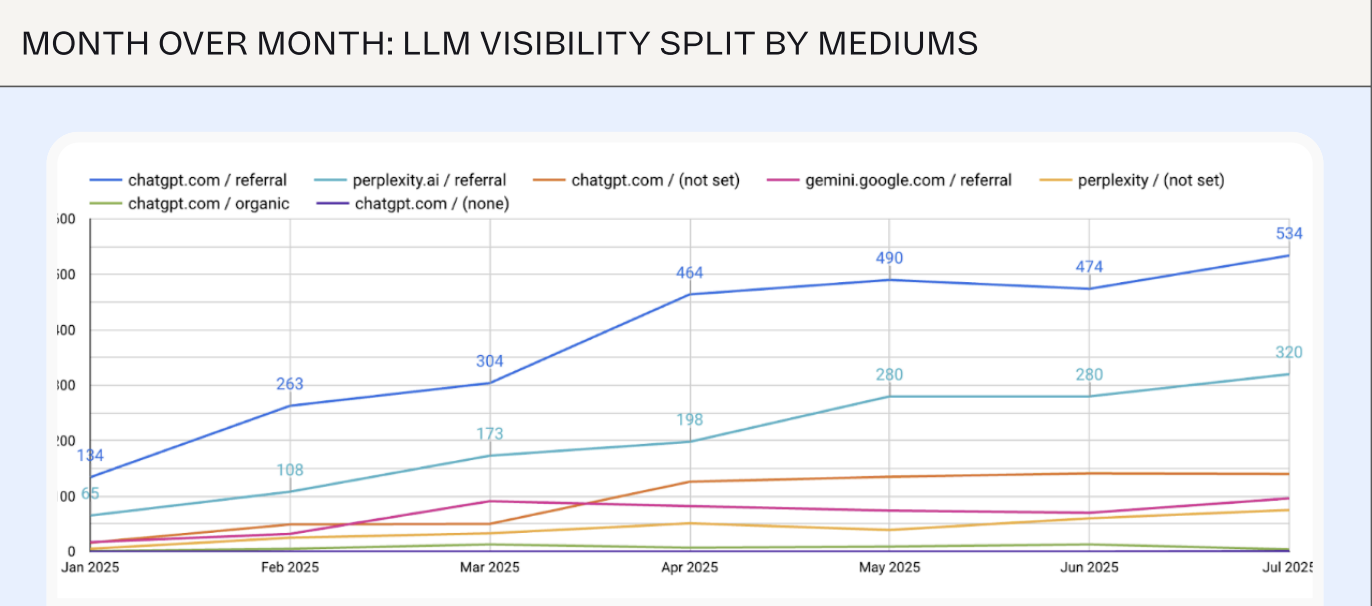
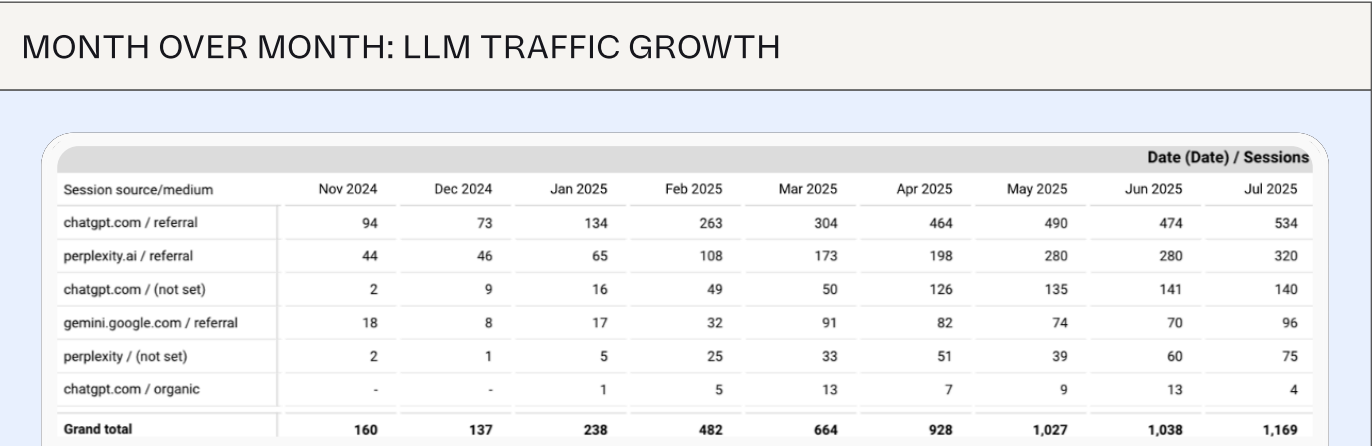
We initially started with just 90 sessions attributed to platforms like ChatGPT, Perplexity, and Gemini. Over time, this number steadily increased, culminating in 664 sessions, marking over a 7x growth.
Long-form blogs generated the highest number of sessions (827), followed by listicles (390 sessions), and landing pages (161 sessions). In contrast, case studies, comparison blogs, and tutorials contributed far less. This proves that comprehensive, in-depth content is significantly more favored by AI platforms when generating answers, compared to shorter or promotional pages.

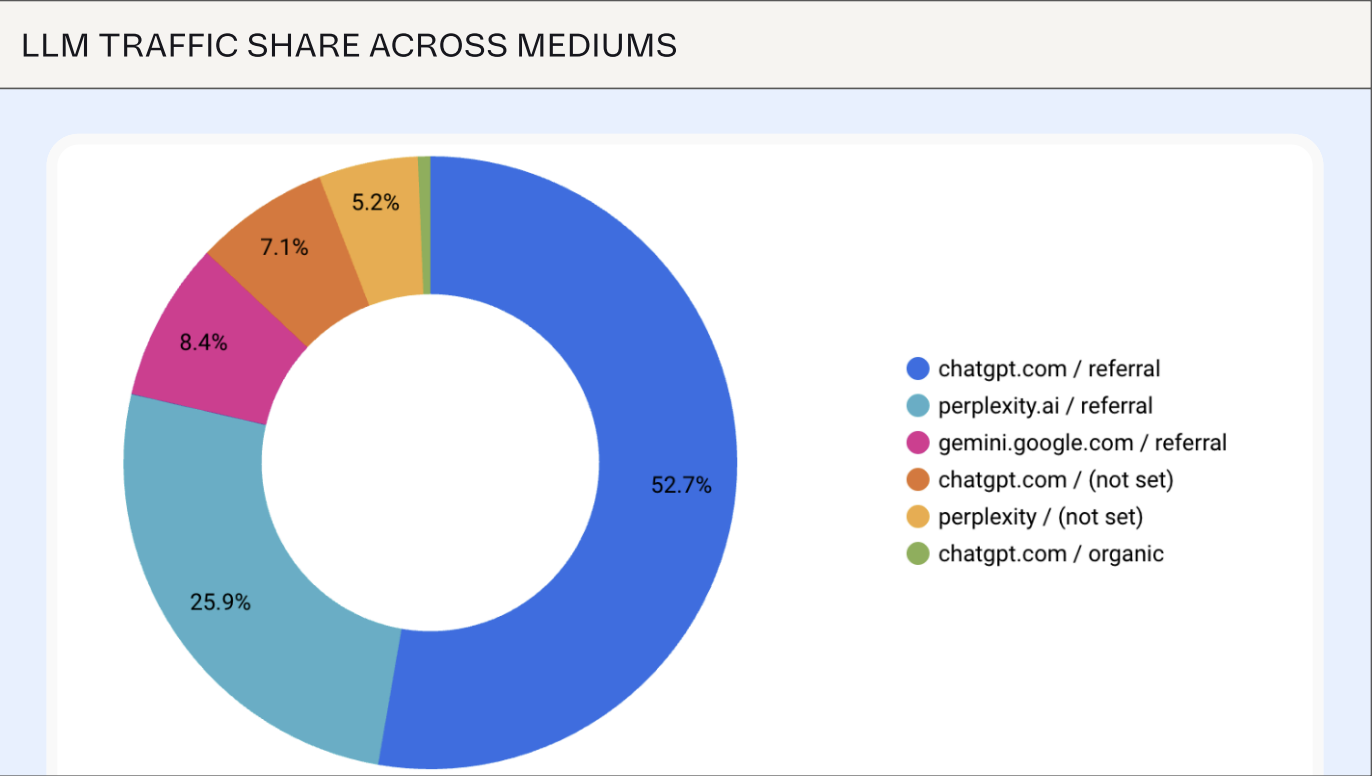
The growth wasn't just in volume but also in source diversification. Early traffic was predominantly from ChatGPT, but later, Perplexity and Gemini also became significant contributors. This expansion in visibility across LLM ecosystems not only strengthened FlowForma's authority in AI-generated responses but also positioned it competitively against larger players.