
n8n vs Make.com vs
Relevance AI vs Slate - for
scaling AEO content production
You are trying to build a content factory with tools designed for data transfer
Standard automation platforms excel at moving data between systems. However, chaining them together for AEO creates a fragile web of dependencies. If one integration link breaks - your whole system collapses.
But if you ignore that, and try duct-taping a solution together, you get hit by immediate bottlenecks.

n8n is code-first, which means every minor adjustment (tweaking a prompt, fixing a format, adding a quality check) requires a ticket to engineering or a session on Claude Code. This doesn't work when your content strategist needs to adapt to algorithm changes daily.

Make excels at data transfers, but its operation-based pricing model actively penalizes the complexity required for high-quality AEO content. A single article workflow involving SERP analysis, competitive research, drafting, citation verification, and optimization can consume 40-50 operations per piece.

Relevance AI excels at building individual autonomous agents, but it lacks the infrastructure needed for bulk production operations. Agents work brilliantly for one-off tasks but struggle with the structured, linear pipelines required to track status, manage versions, and publish hundreds of articles simultaneously.
Super Blocks: Quality control at scale
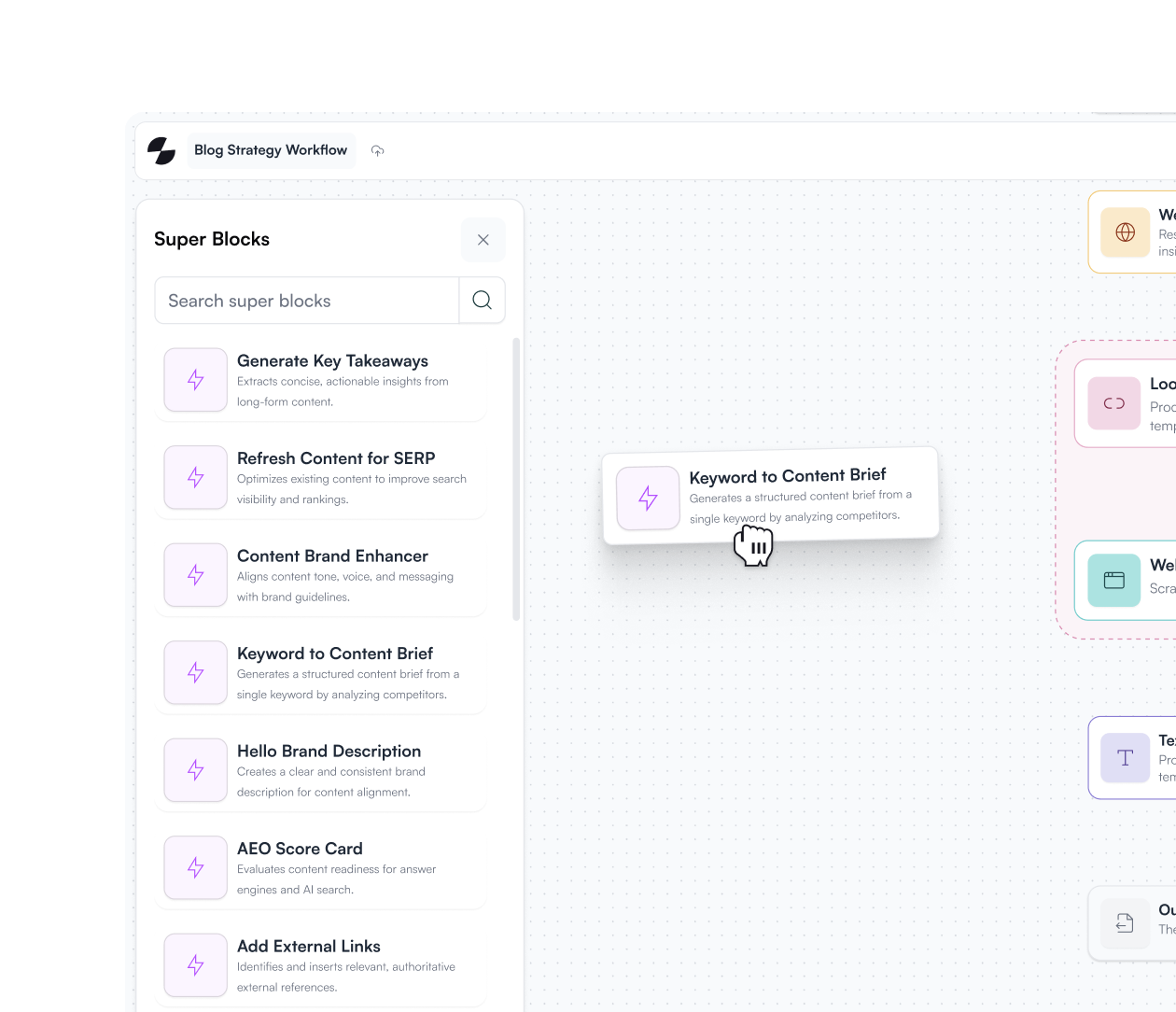
Pre-built components handle SERP analysis, competitive positioning, content brief generation, AEO optimization scoring, citation verification, and metadata creation.
Sheets: The editor's command center
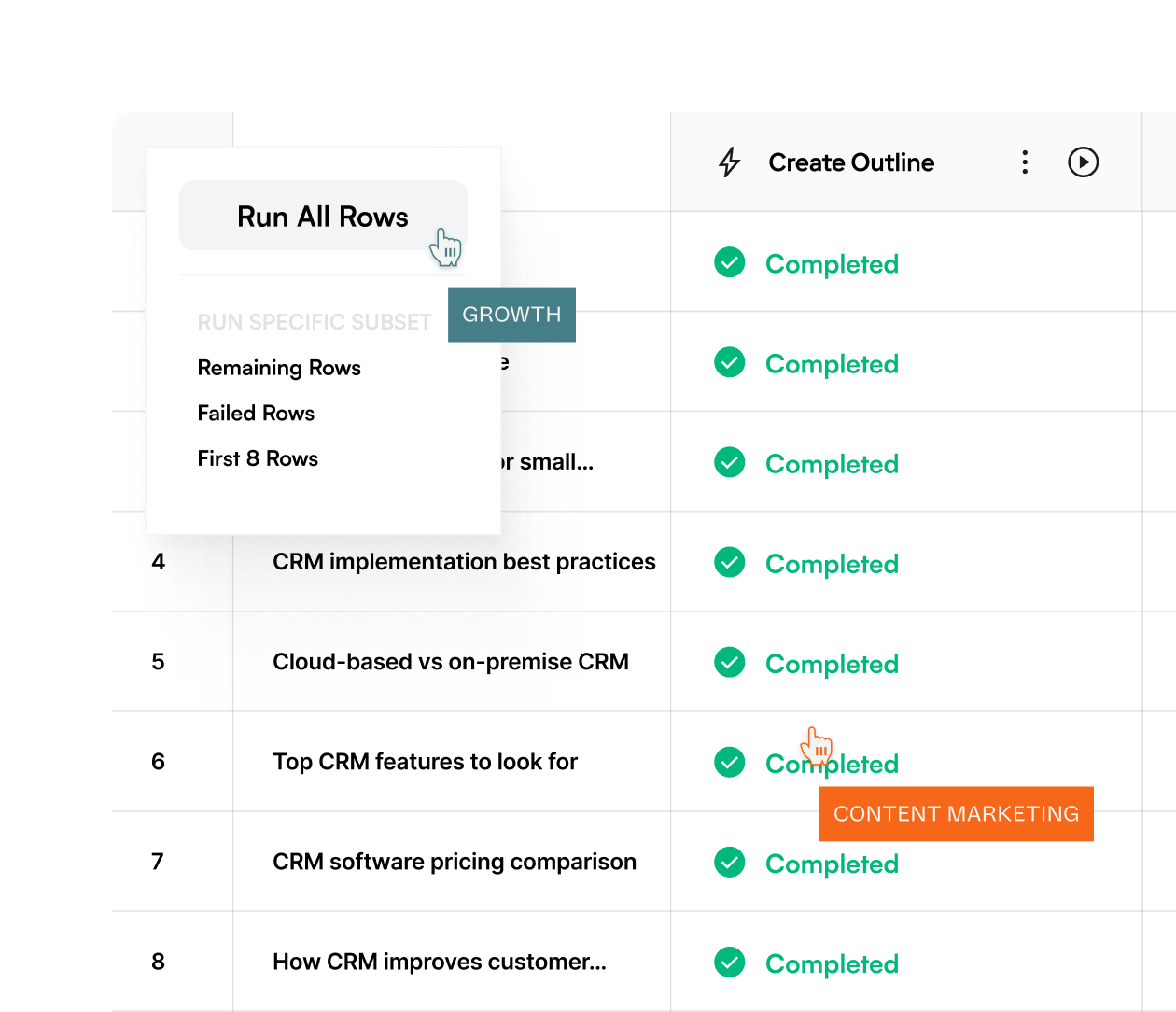
Familiar spreadsheet interface for managing content production at volume. Run workflows across thousands of topics simultaneously. Add review gates at moments requiring editorial judgment.
Built for production content velocity
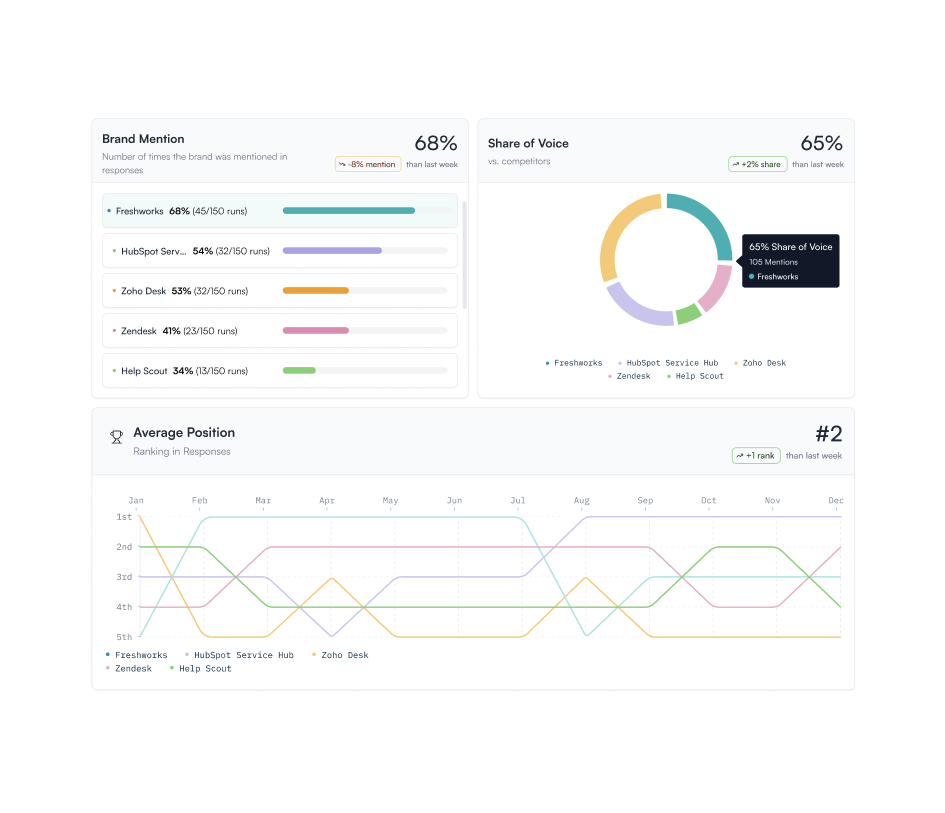
Over 40 native integrations connect your existing content stack. Pull keyword data from Semrush and Ahrefs, sync with Google Docs and Sheets, push finished content to WordPress, Webflow, and Shopify. Deploy production workflows in under 30 minutes.
Workflows: Custom automation without operation penalties
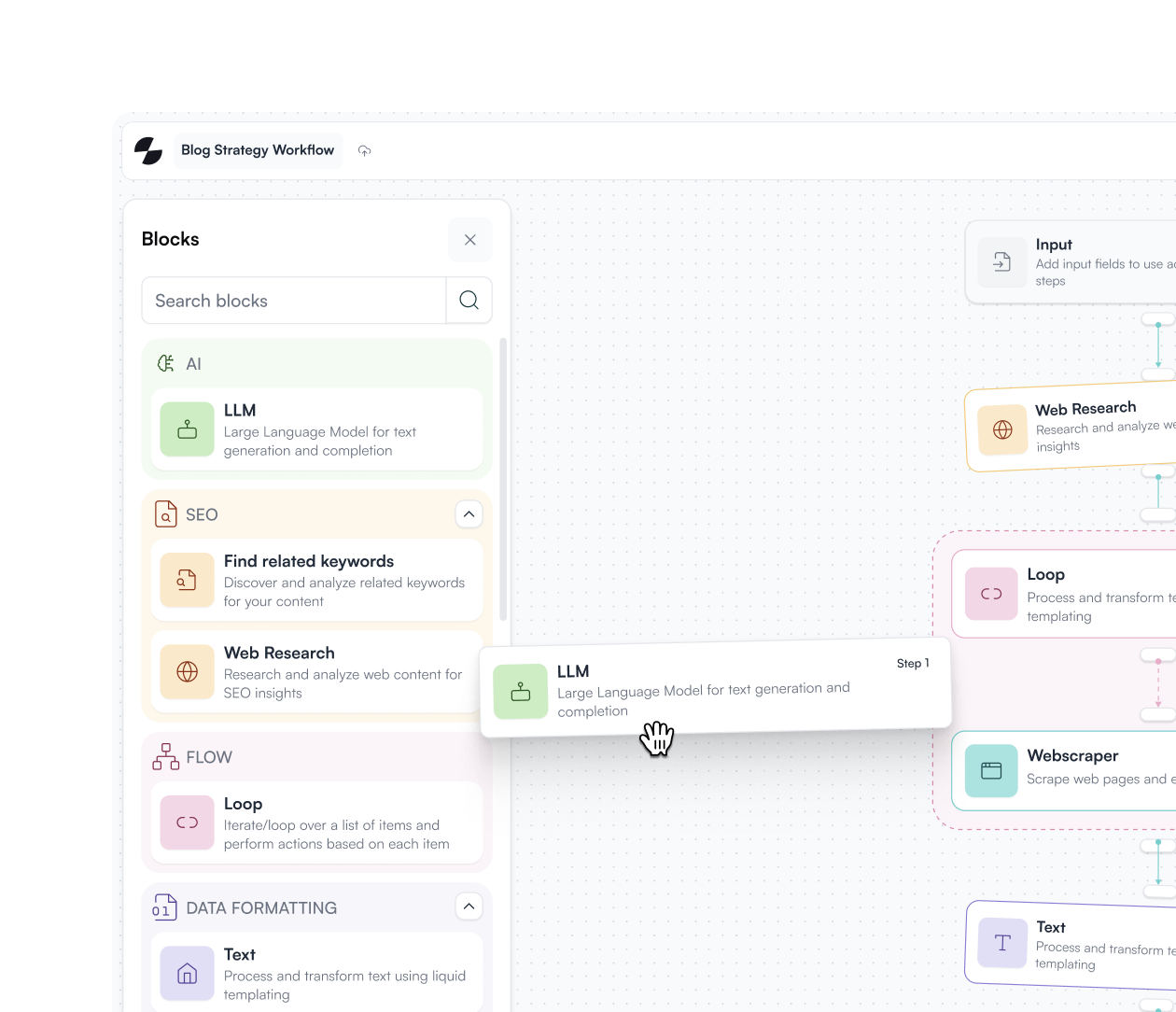
Visual builder chains research, analysis, drafting, optimization, and publishing steps together. Connect any AI model, data source, or API. Pay for workflow executions only.
Platform comparison for AEO content operations
DevOps Engineers
General Automation
AI Developers
Marketing Teams
Weeks (requires devs)
Days (learning curve)
Hours (agents only)
Under 30 minutes
3-6 month dev project
Custom scenarios
Not specialized
Native Super Blocks
Custom code
Limited by operations
External spreadsheets
Native Sheets UI
Custom logic
Complex routing
Manual coordination
Native review steps
Infrastructure + engineering salaries
Budget doubles with quality
Credit consumption
Flat per-task
$200 infra + engineering time
$899-2,999 (operation limits)
Enterprise tier
Predictable volume pricing
Engineering-dependent
Medium
Agent-dependent
Self-service
Next sprint (2 weeks)
Hours (if you know scenarios)
Agent rebuild
Minutes (drag-and-drop)
Engineering headcount
Workflow complexity
Output volume only
Output volume only
Stop building infrastructure.
Start publishing content at scale.
Frequently Asked Questions
Which platform is best for scaling AEO content production?
If you have abundant engineering resources and require self-hosted infrastructure, use n8n. If you need simple data movement between apps, use Make. If you're building conversational AI agents, use Relevance AI. If you need a high-volume content factory with editorial oversight and no engineering dependencies, use Slate.
How do costs compare at 500+ articles monthly?
n8n: $50-200/month infrastructure plus engineering salaries for building and maintaining content workflows. Total cost depends on how much engineering time content operations consume. Make.com: Every research step, optimization pass, and quality check burns operations. At 500 articles consuming 40 operations each (20,000 operations monthly), you're paying $899-2,999/month. Costs spike when you add necessary quality steps. Relevance AI: Credit consumption scales with workflow complexity. Processing hundreds of articles weekly moves into enterprise pricing tiers as credit requirements grow. Slate: Predictable volume-based pricing. Your costs don't spike because you added a fact-check step to your workflow. A 50-step sophisticated workflow costs the same as a 5-step simple one.
Do I need a developer to run Slate?
No. n8n requires engineers for every workflow modification. Make requires scenario-building expertise for complex workflows. Relevance AI requires agent development skills. Slate allows content strategists to build, modify, and deploy complex AEO workflows in minutes using drag-and-drop Super Blocks. Marketing owns content velocity without engineering dependencies.
How does quality control work at scale?
n8n: Engineering builds custom quality gates using conditional logic and external review systems. Make.com: You build complex routing scenarios for approvals. Every approval step consumes operations. Relevance AI: Manual coordination. You review agent outputs in external tools and manually approve before publishing. Slate: Native review gates. Workflows automatically pause for editorial judgment (brand voice, fact verification, tone alignment) and resume only when approved. Quality control embedded in the execution environment.
How quickly can we start producing AEO-optimized content?
n8n: Engineering builds custom workflows. 3-6 months for comprehensive content operations infrastructure. Make.com: Days to weeks learning scenario building and managing operation economics for complex workflows. Relevance AI: Hours for individual agents. Weeks to build production infrastructure for bulk management, quality review, and publishing. Slate: Under 30 minutes. Pre-built Super Blocks eliminate custom development. Drag-and-drop Workflows and familiar Sheets interface mean immediate productivity.
Can we migrate existing content workflows without production disruption?
Yes. We provide workflow analysis, custom built workflows to map for existing operations, parallel testing to validate outputs, and staged rollout strategies. Most content teams complete migrations within one to two weeks while maintaining production schedules.