How RateGain Grew AI Overview Citations 12x and Ranking Keywords by 34%

RateGain sells revenue management, distribution and rate intelligence software to hotels, airlines and travel agencies. They held 46 organic top three positions across their core categories. Google was in the middle of putting an AI Overview above every one of them.
The Challenge
The Top of the Page Was Being Taken
RateGain's most valuable rankings sat on exactly the queries Google was converting to AI Overviews first. A top three organic position on "hotel booking engine" still existed, but it had moved below an answer box that most searchers would never scroll past.
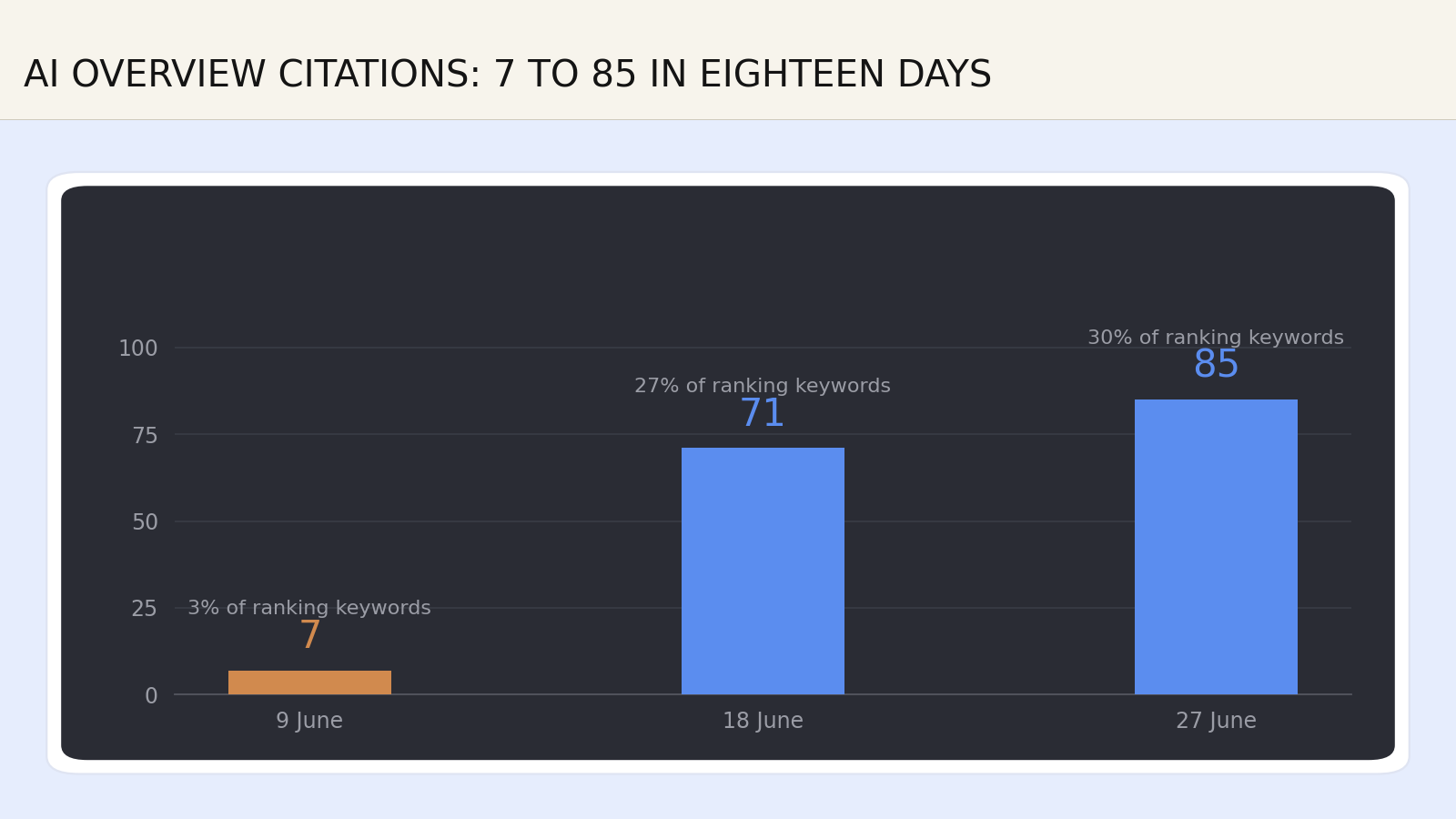
Across 484 tracked keywords, RateGain appeared in just 7 AI Overviews. Everything else was competing for a click that was becoming harder to earn.
More Than Half the Keyword Set Was Invisible
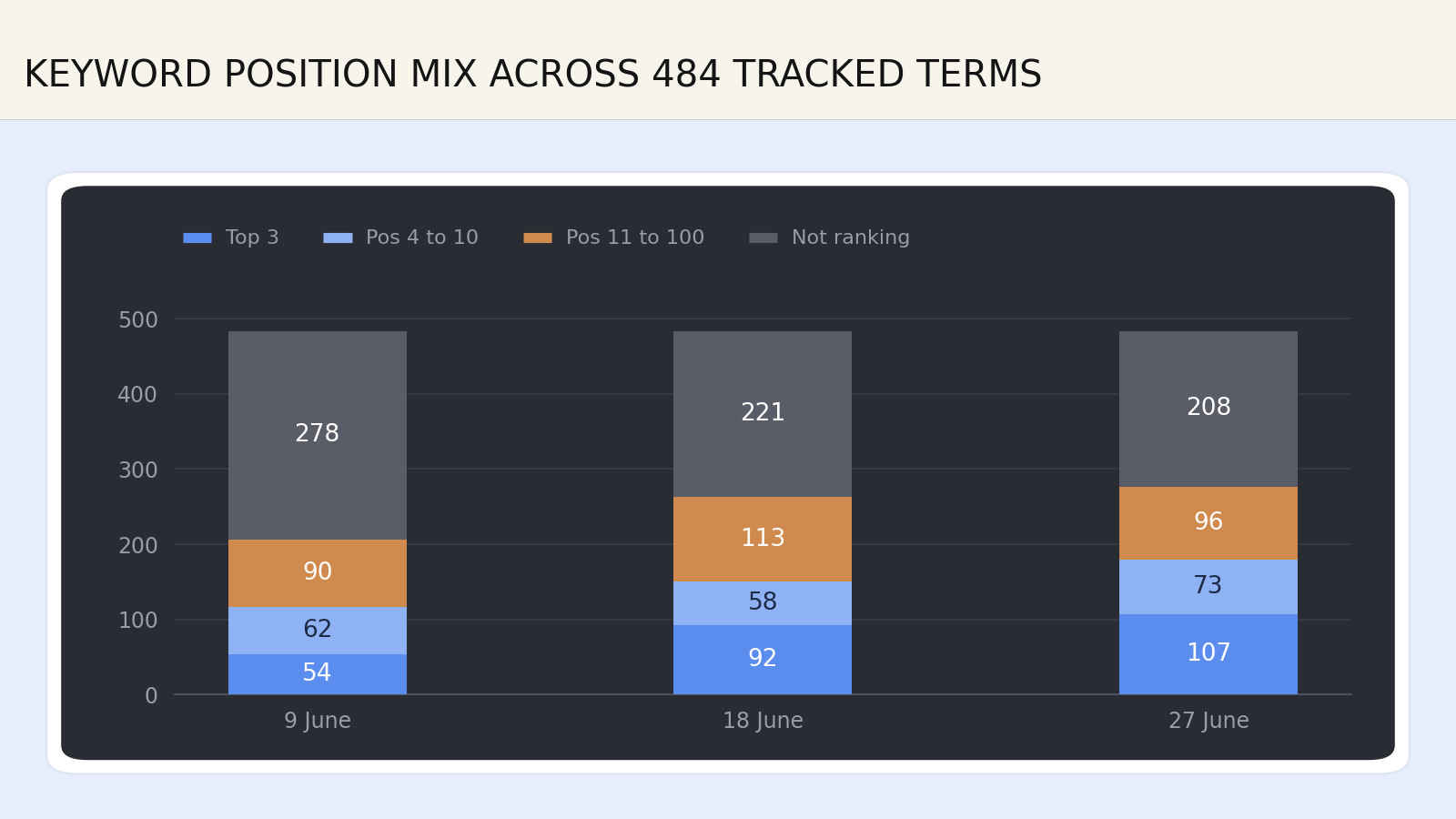
278 of the 484 tracked keywords were not ranking anywhere in the top 100. Whole clusters had coverage on paper and nothing on the page.
The Content Already Existed
RateGain had years of published material across booking engine, channel manager, rate parity, direct bookings and hotel marketing. It was written for a search results page that no longer existed.
Our Approach
We did not write a new content library. We re-optimised the one RateGain already had, using Slate's content refresh workflow, and structured it for how AI Overviews select and cite sources.
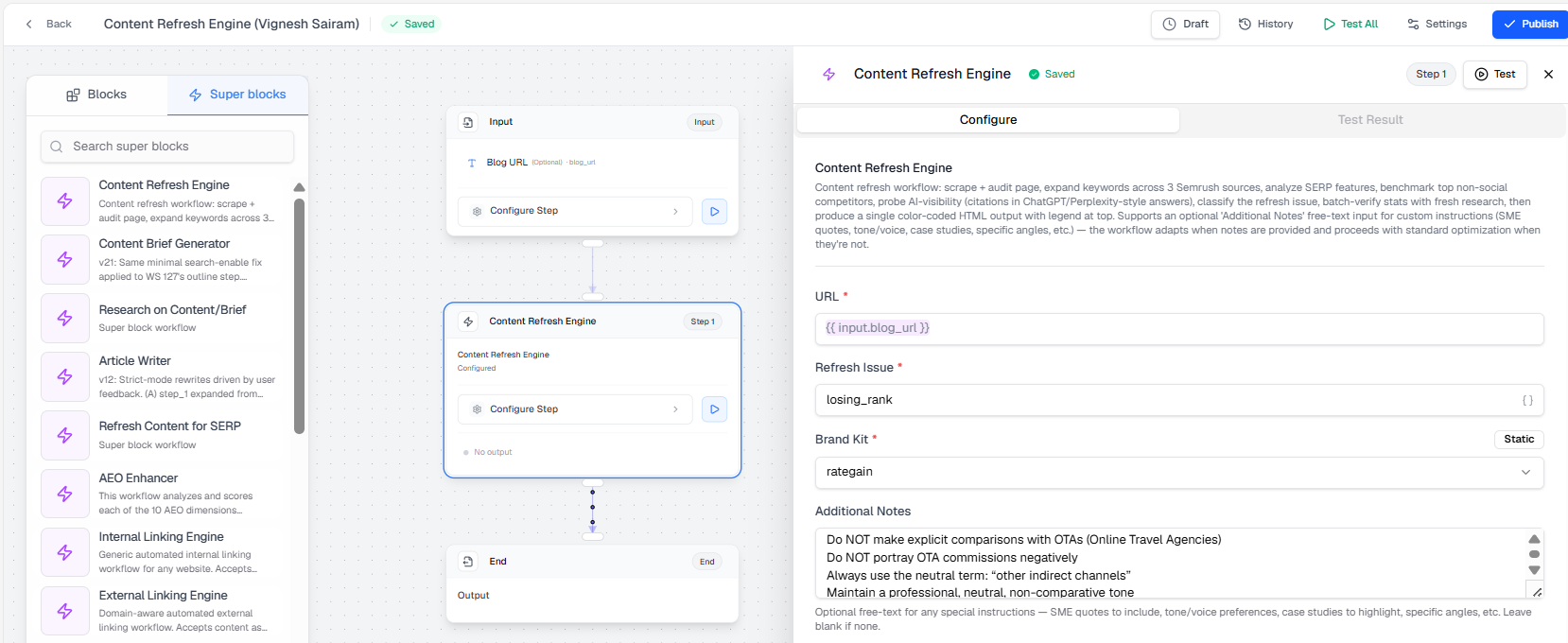
Reoptimisation is also the fastest lever available. Google recrawls URLs it already knows far quicker than it discovers new ones, which is why this engagement is measured in days rather than quarters.
Here's how we did it:
Starting With Pages That Already Ranked
Pages holding a position have already cleared Google's quality bar. That makes them the cheapest thing to move.
Here's what we did:
- Prioritised the five clusters where RateGain had existing coverage: booking engine, channel manager, rate parity, direct bookings and hotel marketing
- Ran Slate's content refresh workflow across the ranking set rather than commissioning new pieces
- Restructured content into the question and answer shape AI Overviews pull from, with direct answers in the first fold
Result
AI Overview citations grew from 7 keywords to 85, moving from 3% of RateGain's ranking keywords to 30%.
Earning Citations, Not Just Converting Them
Some of that movement was Google reclassifying pages RateGain already owned. Most of it was not.
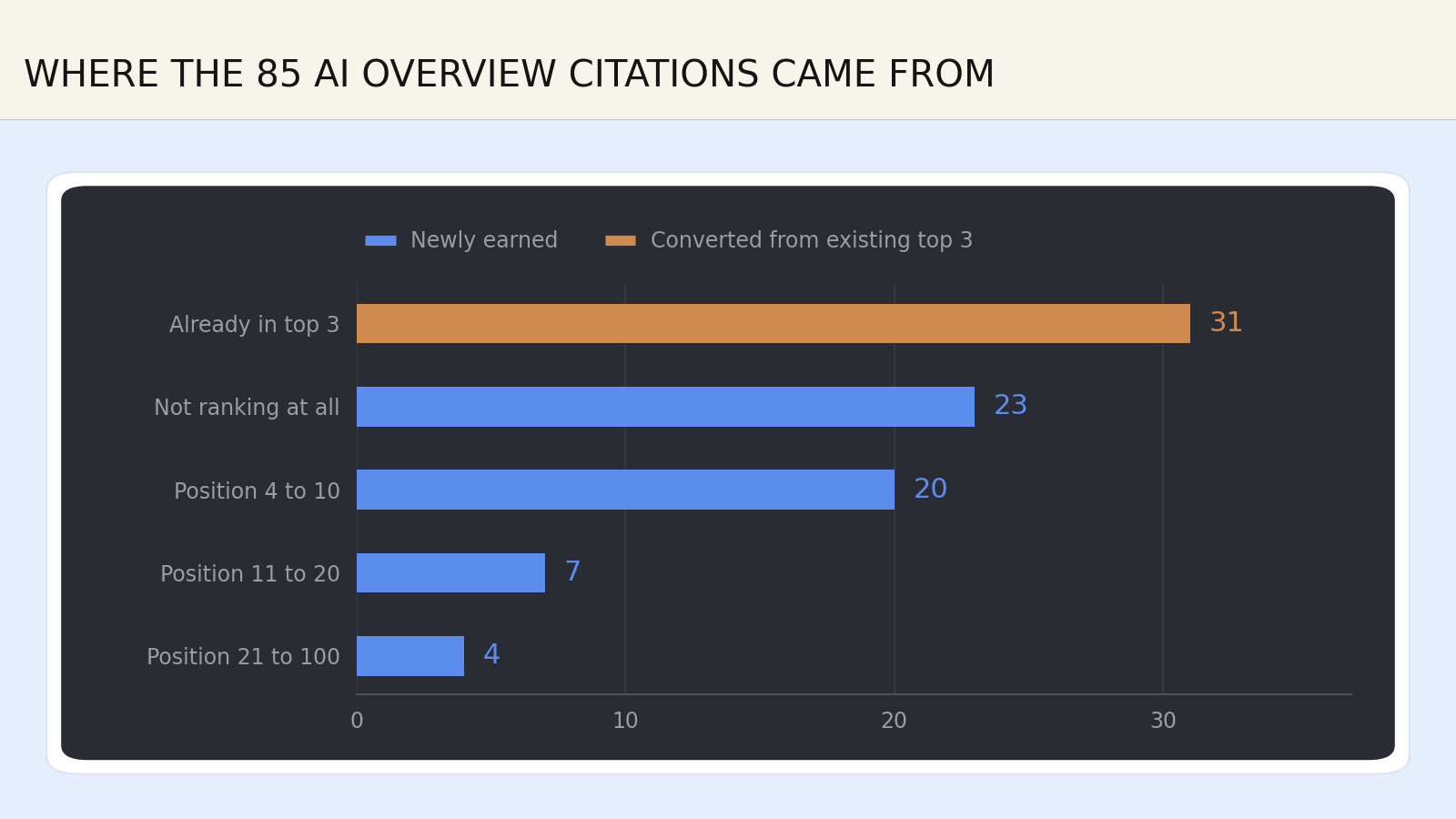
Of the 85 keywords carrying an AI Overview citation on 27 June, 31 had already been in the top three. The other 54 were earned: 20 climbed from positions four to ten, 11 came from further down page two and beyond, and 23 had not been ranking at all eighteen days earlier.
Result
54 of the 85 citations were newly earned rather than converted, including 23 on keywords that had no ranking at all when the work began.
Filling the Gaps in Coverage
The same refresh pass moved a large block of keywords out of the not ranking bucket entirely.
Here's what we did:
- Rebuilt internal linking so unranked pages inherited authority from the cluster pillars
- Expanded thin pages to cover the adjacent questions each cluster actually gets asked
- Left the weakest cluster alone rather than spreading effort evenly
Result
70 keywords moved out of the not ranking bucket, and ranking keywords grew from 206 to 276, adding 4,340 in monthly search volume.
Concentrating Where It Would Work
Effort was not spread evenly across the five clusters, and the results were not even either.
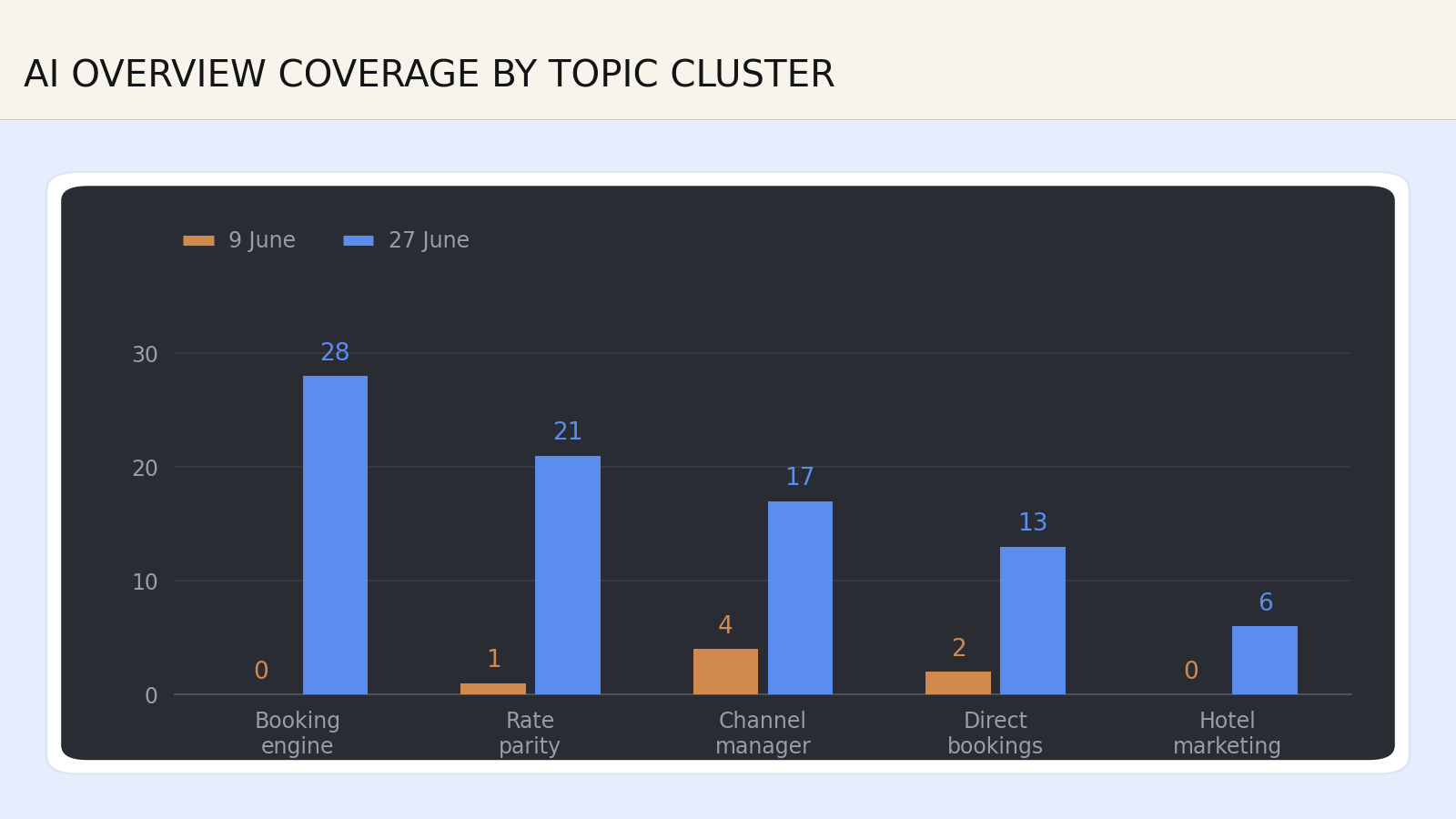
The booking engine went from zero AI Overview citations to 28. Rate parity, the smallest cluster at 39 keywords, reached 21, the highest coverage rate of any group at 54%. Hotel marketing, the cluster with the least existing authority, moved least.
Result
Booking engine, the priority cluster, went from 0 to 28 AI Overview citations and grew its top ten presence from 28 keywords to 63.
The Results
Eighteen days, 484 tracked keywords, no new content commissioned.
Movement Across the Tracked Set
Among keywords that held an organic position at both ends of the window, average position improved from 21.8 to 13.5 and median position from 13 to 11.
By Cluster
Hotel marketing was the one cluster that did not respond. It has the largest keyword count after channel manager and the least existing authority, and it finished the window with two fewer ranking keywords than it started. Clusters with something to build on moved fastest, which is the argument for re-optimisation over net new content in the first place.
Conclusion
RateGain did not publish its way to this. The pages were already there, written for a results page that had since changed shape around them.
Eighteen days of structured re-optimisation took AI Overview citations from 7 keywords to 85, pulled 70 keywords out of the not ranking bucket, and raised the search volume RateGain ranks for by 66%.
The pages did not need to be better than they were. They needed to be readable by something that was never going to send a click for reading them.