Your target buyer opens ChatGPT and types the exact question they used to Google, but your brand doesn't show up there. A competitor's paragraph gets cited instead.
This is happening to thousands of B2B brands right now, every day.
And the mental model that governed SEO for two decades (rank higher, get more visibility) stops working the moment AI engines start synthesizing answers from multiple sources instead of listing blue links.
The problem has a name. And it has a research-backed solution.
In 2023, researchers coined the term Generative Engine Optimization (GEO).
Back then it was an academic concept. Today it's an operational necessity for any brand that depends on organic discovery.
GEO is the discipline of optimizing content so that AI search engines discover, evaluate, and cite it in their generated responses.
This guide covers the research foundations behind GEO, the 9 techniques that emerge from that research, and a practical framework for executing them across your content operation - grounded in Slate’s first-party research.
Here's what you walk away with:
- Definitions grounded in primary research
- A clear comparison of GEO with SEO and AEO
- The mechanics behind how AI engines select sources
- The 9 proven optimization techniques
- A step-by-step audit-optimize-monitor framework
But first-
What Is Generative Engine Optimization (GEO)?
“GEO is the practice of optimizing web content so that AI-powered search engines discover it, evaluate it as trustworthy and relevant, and cite it within their generated responses,” according to Shiyam, our co-founder.
Content creators have historically had zero control over when or how their work appears in generative engine responses. These engines operate as black boxes. GEO provides a framework to change that.
The reason GEO can't simply be "SEO with extra steps" is that the underlying system works differently:
Traditional search engines index pages and rank them in a list.
Generative engines retrieve relevant passages from multiple sources, evaluate those passages for authority and relevance, then synthesize a new response that weaves information from those sources together with inline citations.
The content that wins in this system is not necessarily the page that “ranks highest.” It's the passage the AI model judges as most citation-worthy for that specific query context.
You'll see GEO referred to by other names in the industry:
- AEO (Answer Engine Optimization)
- LLMO (Large Language Model Optimization)
- GSO (Generative Search Optimization)
- AISEO (AI Search Engine Optimization)
- and so on.
These terms overlap heavily. But GEO has become the dominant framing among enterprise marketing teams.
For this guide, we use GEO as the umbrella term while addressing AEO as a related but distinct concept in the next section.
GEO vs. SEO vs. AEO: Where Each Discipline Starts and Stops
Think of it as layers.
SEO helps you get discovered in search results.
AEO helps your content get selected as the direct answer (featured snippets, voice responses, AI Overviews).
GEO helps your content become the source that AI engines cite when they generate their own answers.
These are sequential layers of visibility in a search ecosystem that now operates across both traditional and generative surfaces.
Most GEO tactics strengthen SEO and AEO simultaneously. And that’s because the underlying quality signals are interrelated: well-structured content with clear headings, authoritative sources, and high factual density serves all three.
The divergence appears at the edges:
- SEO rewards backlink volume and technical site health in ways that GEO does not directly measure.
- GEO rewards passage-level citation-readiness and freshness signals that SEO historically underweighted.
For teams running with limited resources: focus on content structure, data density, and source attribution. Those three do the most work across all layers.
A note on AEO specifically:
It originated in the voice search era, built around optimizing for Alexa, Siri, and Google Assistant to select your content as "the" answer. In 2026, most voice queries route through the same generative response mechanisms that GEO targets.
The distinction is simple:
- AEO focuses on being the answer to a specific question (featured snippet, direct answer box).
- GEO focuses on being a cited source within a synthesized, multi-source response.
How AI Search Engines Discover, Evaluate, and Cite Content
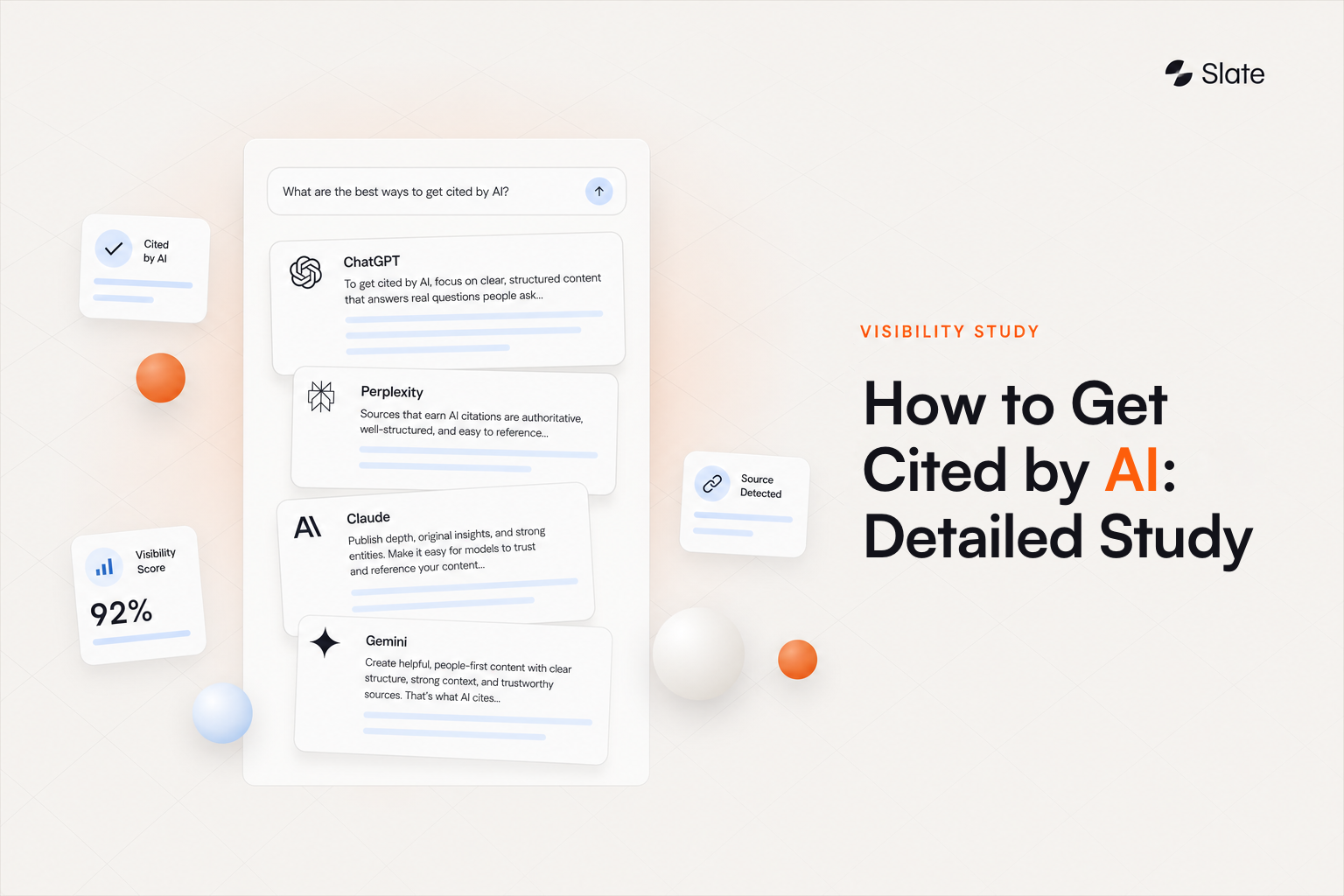
Every major AI search engine follows a variant of the Retrieval-Augmented Generation (RAG) pipeline:
Stage 1: Query Interpretation
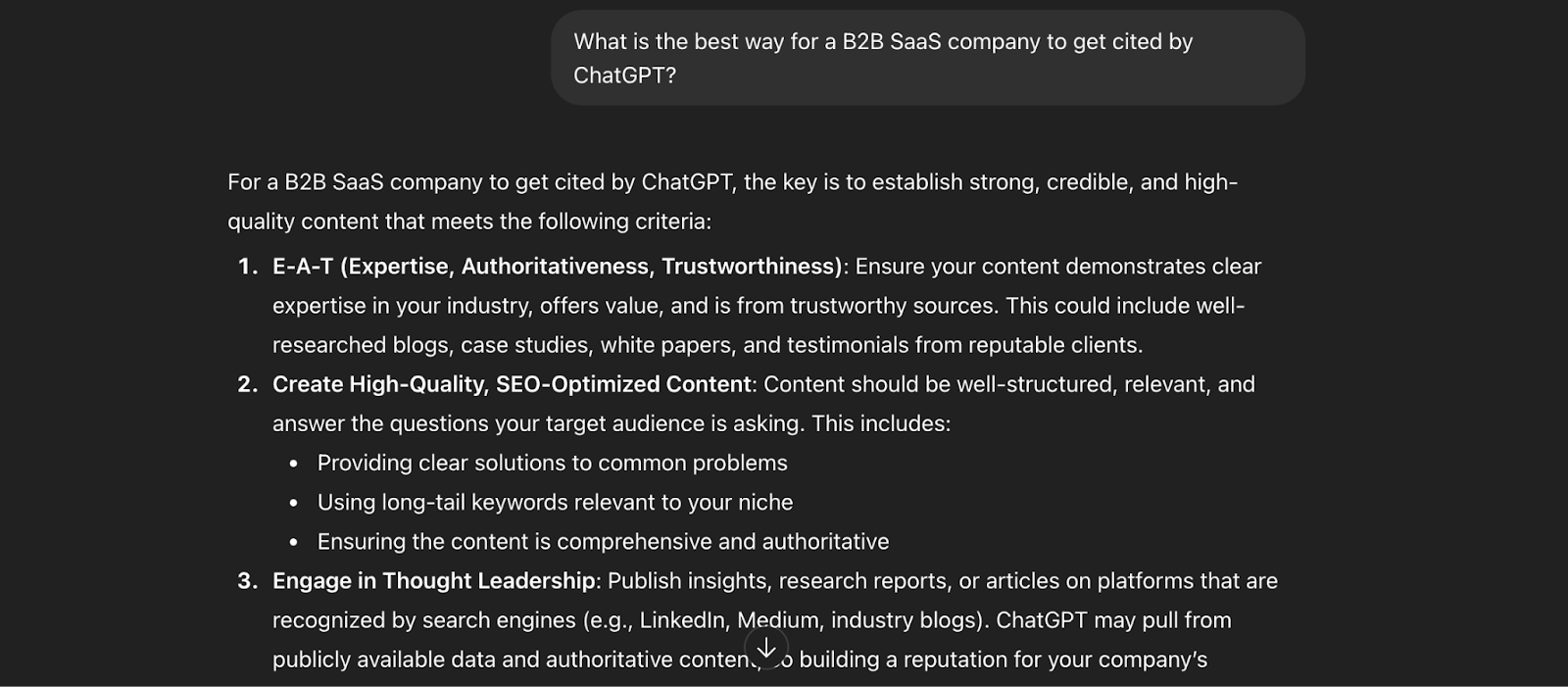
The AI interprets the user's prompt, identifying intent, key entities, and sub-questions. Unlike Google, the AI parses conversational queries that may contain multiple implicit questions.
A prompt like "What is the best way for a B2B SaaS company to get cited by ChatGPT?" gets decomposed into sub-queries about GEO strategies, platform-specific behaviors, and B2B-specific considerations.
Stage 2: Retrieval and Ranking
The engine searches its training data and/or live web index to pull relevant passages. This is passage-level retrieval, not page-level.
That distinction matters more than almost anything else in this guide.
The AI is not evaluating your entire 3,000-word article.
It's evaluating individual paragraphs and sections for semantic match to the query. High-authority, recent, and topically dense passages get prioritized. This is why a mediocre page with one excellent paragraph can beat a comprehensive page with diffuse, unfocused content.
Stage 3: Synthesis and Citation
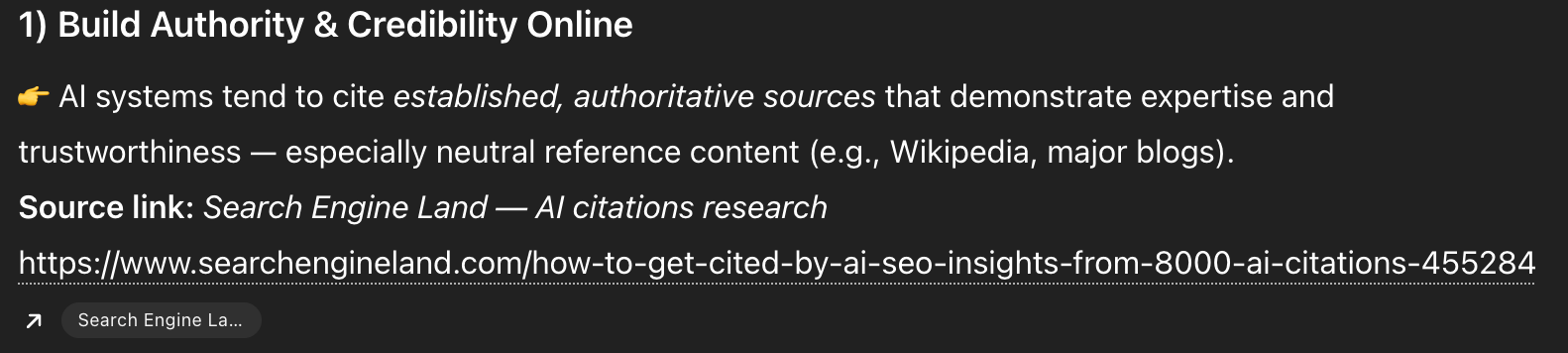
The AI combines information from multiple retrieved passages into a single coherent response, deciding which sources to cite inline.
Citation decisions hinge on three factors:
- Factual specificity: Does this passage contain a verifiable claim?
- Source authority: Is this from a recognized domain?
- Uniqueness: Does this passage say something no other source says?
Content that makes it easy for the AI to extract a specific, attributable claim earns citations.
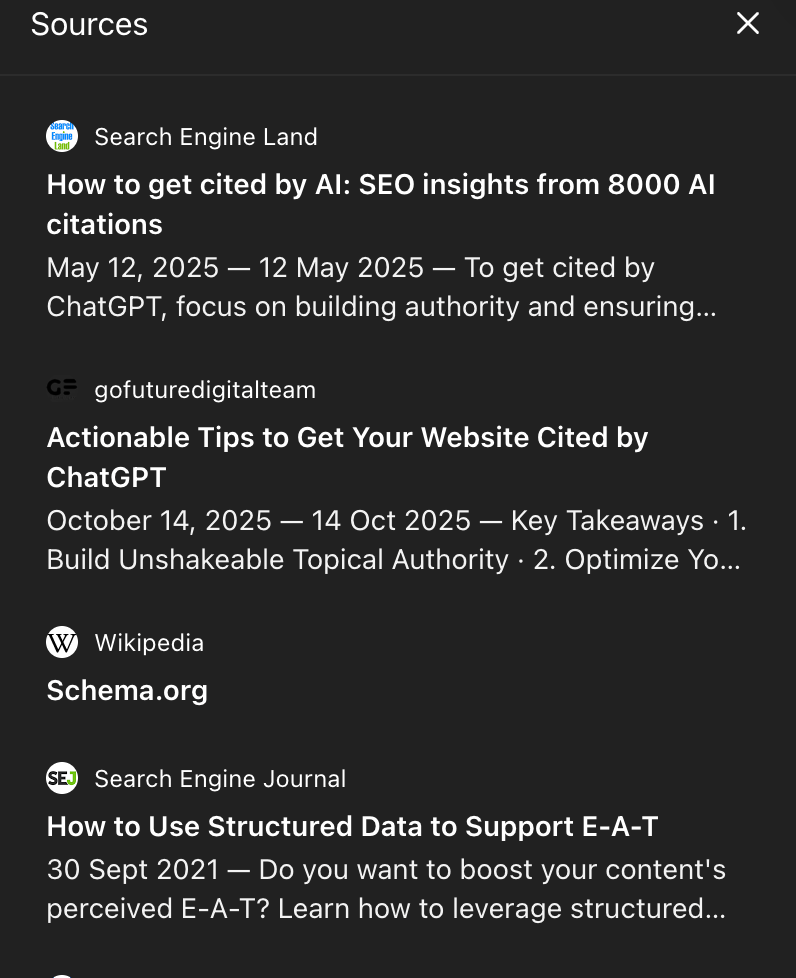
Platform-Level Differences
Not all AI engines behave identically:
- ChatGPT draws heavily from its training data for general knowledge and uses real-time web retrieval for current queries. It favors encyclopedic, comprehensive content. High domain authority matters here.
- Perplexity always retrieves live web results. It rewards recency heavily, with content updated within 2 months earning significantly more citations. Every response includes explicit source citations.
- Google AI Overviews doesn’t correlate as strongly with existing Google rankings. A new Ahrefs study of 863,000 keywords found that only 38% of cited pages appeared in the top 10 results. Triggered most heavily by informational queries.
- Gemini varies between Search-integrated mode and standalone. Entity recognition and structured data play a larger role here than on other platforms.
The variance between platforms is not marginal:
One email security brand in our portfolio shows 20% visibility on Gemini but only 5% on ChatGPT.
An eSignature brand we monitor appears in 7.4% of Claude's responses but just 1.17% of ChatGPT's.
This pattern holds consistently: ChatGPT tends to surface fewer challenger brands relative to Perplexity, Gemini, and Claude, likely because of how it weights domain authority within its training data versus live retrieval.
Research-Backed GEO Techniques (and How to Apply Each One)
Not every technique works equally across all domains. Research shows variation based on query type and content category.
Below is each technique with its mechanism, measured impact, and practical application for B2B content teams.
1. Citation Addition: Make Your Claims Verifiable
Adding citations to credible external sources is one of the most consistent visibility boosters across all domains.
The mechanism is straightforward. AI engines are under constant pressure to avoid hallucination. When your content already includes citations, the AI can attribute claims with confidence. Your passage becomes a lower-risk selection.
2. Statistics Injection: Give AI Engines Data It Can't Generate
AI models cannot generate novel data. They can only reference data that exists in their training set or retrieved sources. Content with specific, current statistics becomes uniquely valuable because the AI needs your passage to make a data-backed claim.
The practical rule: Don't lead with the stat. Make the qualitative argument first, then anchor it with a number. Freshness matters here, too. A 2024 stat in 2026 content signals decay.
3. Quotation Addition: Provide Concrete, Attributable Language
Direct quotations from named experts give AI engines something concrete and attributable to include in their responses.
For B2B content, embed expert quotes from named industry leaders, analysts, or your own subject matter experts. Frame quotes around specific claims or predictions, not generic platitudes.
4. Fluency Optimization: Remove Friction from AI Parsing
Clear, well-structured prose that flows logically outperforms dense, jargon-heavy writing.
If the AI model struggles to parse your content (ambiguous pronouns, convoluted sentence structures, undefined acronyms), it moves to a source it can extract cleanly.
Write at a professional but accessible reading level. Short paragraphs, 3 to 4 sentences. Lead each section with a direct statement before adding nuance.
5. Technical Term Usage: Signal Domain Expertise
Using precise, industry-standard terminology signals to AI models that your content comes from a domain expert. Instead of "make your site faster," write "optimize Core Web Vitals including LCP, FID, and CLS metrics."
We've seen this play out directly in our AI visibility data:
One mail authentication brand we track achieves a 28% mention rate and 12.9% visibility score across AI platforms because of its targeted content. That significantly outperforms brands in broader categories like workflow automation (4.6% mention rate) or eSignature (7.8% mention rate).
When your content uses precise, authoritative language in a well-defined domain, AI engines treat you as the default expert.
6. Authoritative Claims: Write with Earned Confidence
Modifying your content's tone to be more confident and direct (without crossing into unsupported assertions) improves how AI models weight it when selecting citations.
This does not mean “hype.” It means replacing hedging language ("it could be the case that...") with direct claims backed by evidence ("The data shows that...").
7. Source Quality: Link to High-Trust Domains
The quality of the sources you cite within your content directly affects whether AI engines trust your page as a citation candidate.
Citing peer-reviewed research, government data, and recognized industry sources elevates your content's authority signal. Citing other blog posts or unknown domains dilutes it.
When building content, apply a source hierarchy:
primary research > institutional reports > recognized industry analysis > trade publications
8. Unique/Original Insights: Say What No One Else Is Saying
Content that contains genuinely original information (proprietary data, novel frameworks, unique case studies) gives AI engines a reason to cite you specifically over a dozen similar pages.
If your content says the same thing as 50 other guides, the AI has no reason to prefer your passage.
9. Easy-to-Understand Language: Don't Sacrifice Clarity for Sophistication
Content written in simple, direct sentence structures that mirror how users ask questions is easier for AI to extract and present. This complements fluency optimization but focuses specifically on readability level.
For B2B audiences, the sweet spot is professional but plain: explain complex concepts in the simplest accurate terms possible.
How These Work Together
These 9 techniques work best in combination.
A content piece that includes sourced citations, specific statistics, expert quotes, and clear technical terminology, all written in fluid, well-structured prose, covers multiple optimization vectors simultaneously.
The common thread: make your content easy for AI to discover (structure), easy to evaluate (authority and data), and easy to cite (specificity and attribution).
GEO Execution Framework: Audit, Optimize, Monitor
GEO is not a one-time content optimization. It's an operational discipline.
Consistently earning AI citations is not achieved through complex or novel methods. Instead, successful teams establish systematic, repeatable processes for:
- Auditing current visibility.
- Optimizing content based on GEO criteria.
- Monitoring performance continuously.
Here's a three-phase framework designed for content and SEO teams.
Phase 1: Audit Your AI Visibility Baseline
Before optimizing anything, you need to know where you currently stand. The audit phase maps your brand's existing citations (or absence) across AI search.
1. Map your high-value queries.
Identify the 20 to 30 queries your ICP is most likely asking AI engines. Prioritize conversational, long-tail queries (6+ words) and comparison/recommendation prompts.
2. Run each query across ChatGPT, Perplexity, Gemini, and Google AI Overviews.
Document whether your brand is cited, mentioned, or absent. Note which competitors appear and which sources the AI cites.
Doing this manually works for the initial audit. But for ongoing tracking at scale, you need a system that runs these prompts automatically across platforms on a recurring schedule and captures the full response, including citations, sentiment, and competitor mentions.
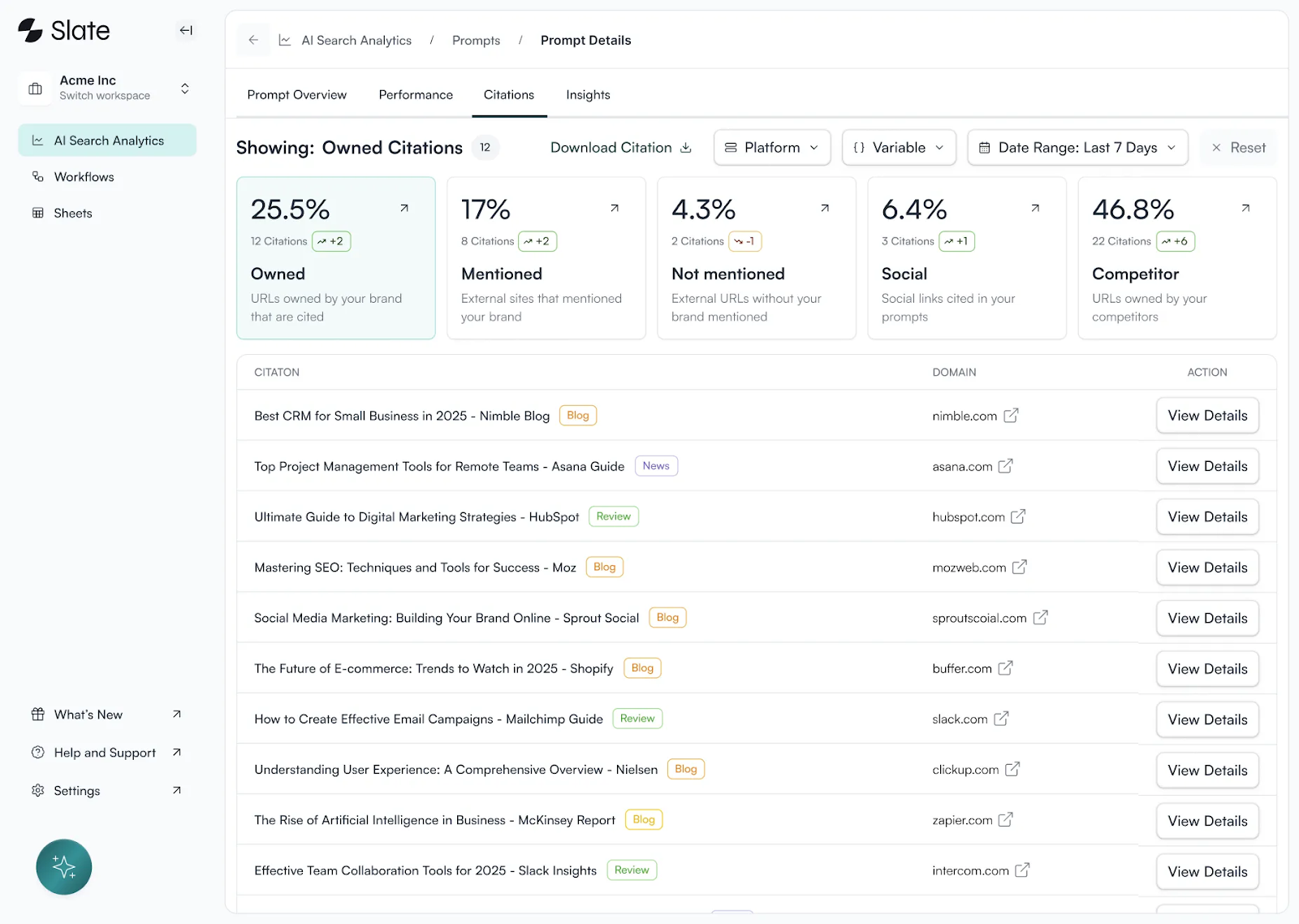
AI visibility platforms like Slate handle this by scheduling prompt runs across all major AI engines, tracking changes over time, and surfacing the citation sources AI models pull from.
3. Identify your "trust nodes."
Which third-party URLs does the AI cite when answering queries relevant to your brand?
These are the domains AI already trusts in your space: G2 reviews, industry publications, Reddit threads, partner sites.
Your content strategy needs to include presence on these sources.
When we analyze citation sources across client workspaces, a clear pattern emerges:
YouTube, Reddit, and industry review sites like G2 and Gartner consistently appear as the most-cited third-party domains regardless of vertical.
In one B2B SaaS category we tracked, YouTube alone accounts for over 1,100 citations, Reddit over 280, and LinkedIn over 560, all appearing as third-party sources in AI-generated responses about the client's market.
Here's what's even more revealing: the vast majority of domains AI engines cite when answering brand-relevant queries don't mention the brand at all.
In one client's citation analysis, over 73% of all citations came from sources categorized as "not mentioned," meaning the AI pulled supporting context from sources that were authoritative in the topic space but had no affiliation with the brand being asked about.
Understanding which domains AI already trusts in your space, and securing your brand's presence on those sources, is one of the highest-leverage GEO moves available.
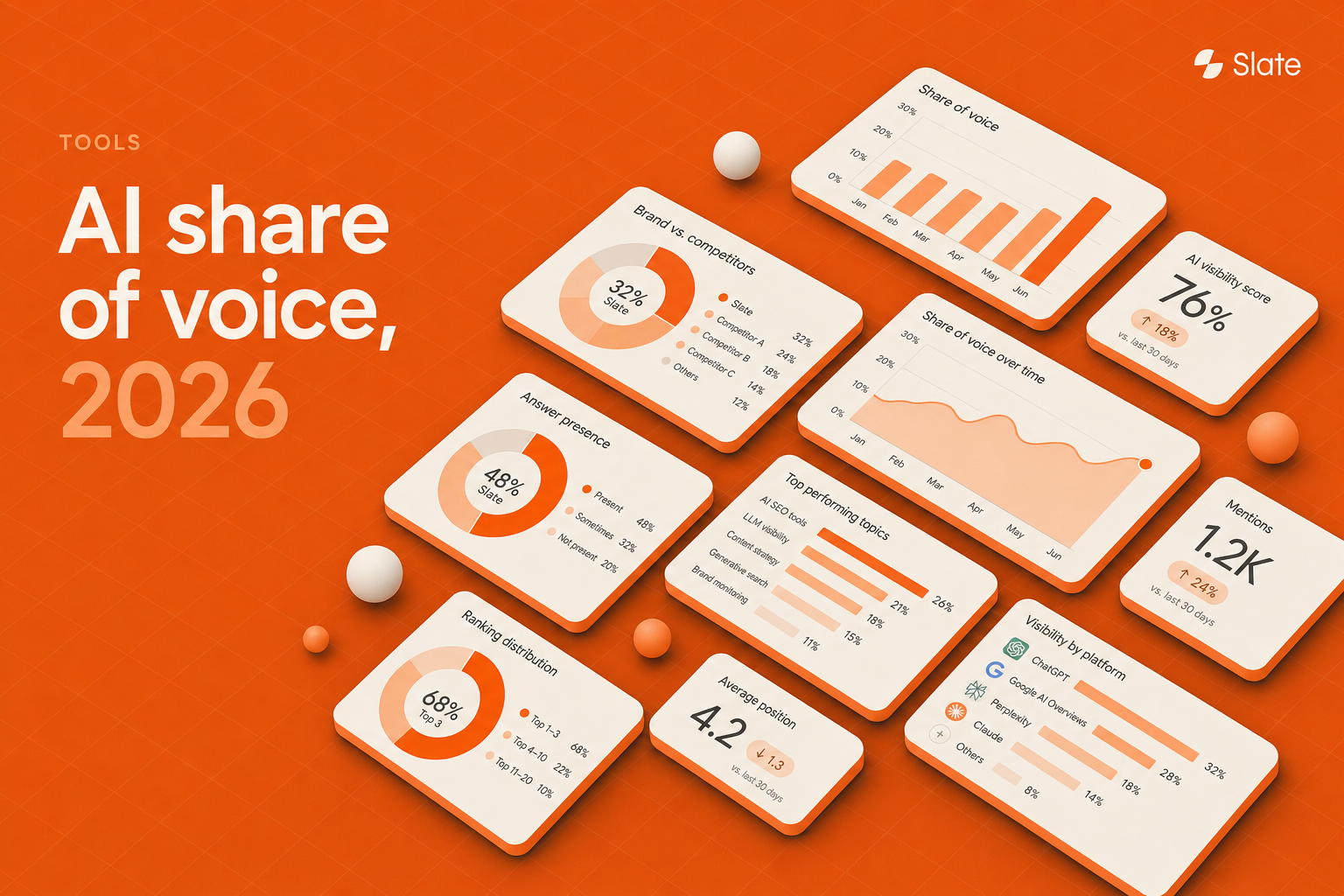
4. Benchmark your share of voice.
What percentage of your priority queries result in your brand being cited versus competitors? This becomes your baseline metric for measuring GEO progress.
Phase 2: Optimize Content for AI Citation-Readiness
With your audit complete, prioritize content optimization.
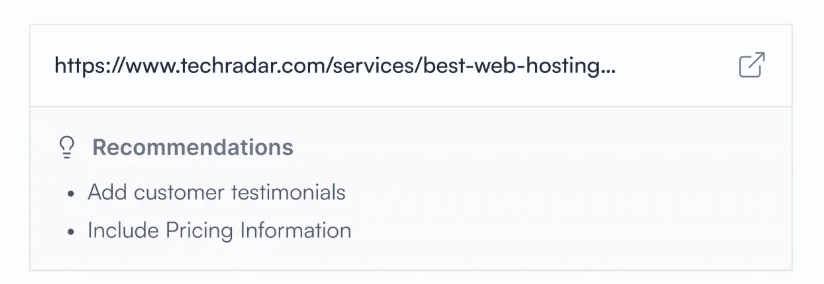
1. Start with your highest-traffic pages.
Pages that already rank well on Google have the strongest foundation for AI citation. They're already in the retrieval pool.
Apply the above GEO techniques to make them citation-ready:
- Add sourced statistics
- Embed expert quotes
- Front-load direct answers in each section
- Ensure every paragraph can stand alone as a citation candidate
The most efficient way to do this at scale is through automated content workflows that ingest your existing page, run competitive analysis against top-ranking content, generate an optimization brief, and produce a refreshed version with citations, statistics, and structural improvements baked in.
The refresh should include your brand context (voice guidelines, product positioning, audience definitions) as structured inputs, so the output is production-ready rather than generic.
2. Fix structural issues at the passage level.
Review each H2 section: does it open with a clear, direct statement? Can someone extract a useful, specific answer from the first two sentences?
If not, restructure.
3. Add citation infrastructure.
Every factual claim should reference a named source. Every data point should include recency (year). Every section should include at least one specific, quotable insight that an AI engine could extract verbatim.
4. Refresh stale content.
AI engines weight recency heavily, especially for time-sensitive queries. Pages with outdated statistics, old screenshots, or "2021" references signal decay.
Update data, add a visible "Last Updated" timestamp, and incorporate current examples.
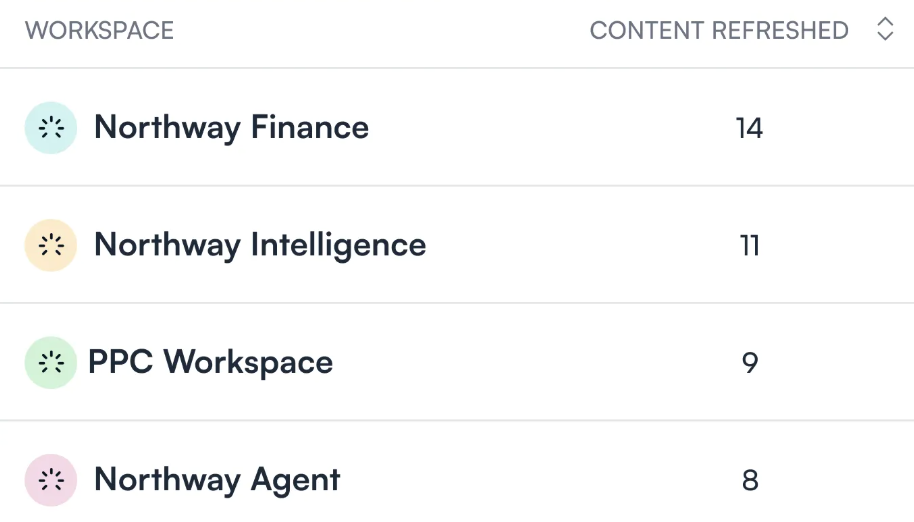
For teams managing 200+ blog pages, manually performed quarterly refreshes are unsustainable. The math:
Modern content refresh infrastructure - such as Slate - solves this by scoring pages based on traffic decay, SERP movement, and AI citation gaps, then running automated refresh workflows at scale.
Hundreds of pages processed with the same operational effort as ten.
5. Create net-new content for citation gaps.
Where your audit reveals queries where you're absent entirely, create new content specifically optimized for AI citation.
Structure it around the exact conversational queries your ICP asks, with depth, data, and sources built in from the start.
The most effective approach: automated content engineering workflows that combine keyword intelligence, competitive analysis, SERP structure data, and brand context to generate publish-ready articles optimized for both traditional search and AI citations, from research to publish.
Phase 3: Monitor, Measure, and Iterate
The biggest gap in most GEO strategies is measurement. Traditional SEO metrics (rankings, organic traffic, CTR) don't capture AI citation performance. You need a parallel measurement layer.
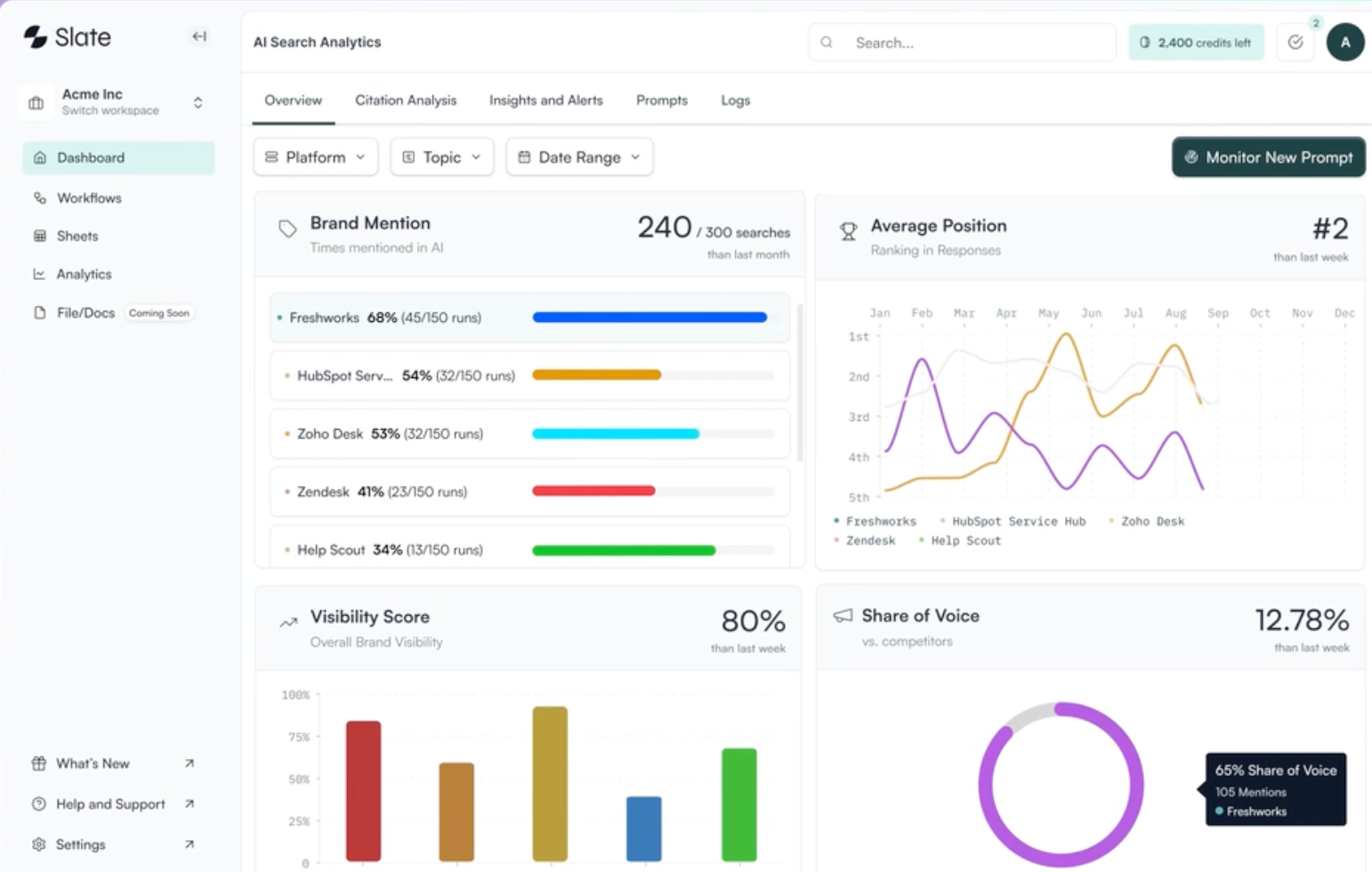
Core GEO metrics to track monthly:
- Citation frequency: How often is your brand or URL cited in AI-generated responses across your priority queries?
- Share of voice: What percentage of your tracked queries result in your brand being cited versus competitors?
- Sentiment analysis: Is your brand cited as a primary source (positive) or mentioned tangentially alongside competitors (neutral)?
- Platform distribution: Which AI engines cite you most? Which ones ignore you? Platform-specific gaps require platform-specific interventions.
- Freshness correlation: How quickly do content updates translate into citation changes? Track the lag between publishing/refreshing and citation appearance.
Manual prompt audits work for an initial baseline. At scale, you need automated tracking that:
- Runs scheduled prompts across all major AI engines
- Captures full response transcripts with citation sources
- Tracks changes in visibility, sentiment, and competitive positioning over time
- Connects directly to content workflows, so that when a visibility gap is detected, it can trigger an automated optimization pipeline
Sentiment: The Dimension Most Teams Miss
One dimension of AI visibility that monitoring surfaces, and that most teams overlook, is sentiment.
AI engines don't just decide whether to mention your brand. They decide how to characterize it.
Across the brands we track, the sentiment distribution in AI-generated responses varies enormously between competitors in the same category:
In one eSignature market, the challenger brand we monitor receives an 89% positive sentiment rate in AI responses. The dominant market leader (with 6x more total mentions) sits at just 60% positive, with "more expensive" surfacing as the top negative keyword.
The smaller brand is winning the qualitative narrative even when the larger brand wins on volume.
Monitoring citation sentiment alongside citation frequency gives you the full picture: not just whether AI engines talk about you, but what they say when they do.
How to Get Started with GEO
GEO can feel overwhelming when approached as a net-new discipline. It isn't.
If your team already produces quality content, optimizes for traditional search, and maintains an editorial calendar, you have 80% of the infrastructure in place. GEO adds a specific lens, citation-readiness, on top of what you're already doing.
The teams building this discipline into their content operations now are capturing citation share while competition remains relatively low.
Here's a prioritized starter list:
- Run your top 10 buyer queries through Slate. Document where you appear and where you're absent. This is your visibility baseline.
- Pick your 5 highest-traffic blog posts. Audit each section for citation-readiness: does it contain sourced statistics, expert quotes, direct answers, and clear technical terminology?
- Add a "Last Updated" timestamp to every content page. Begin a quarterly refresh cycle for your top-performing content.
- Identify the 3 to 5 "trust node" domains that AI engines already cite in your space. Develop a plan to increase your brand's presence on those sources (reviews, guest articles, community participation).
- Set up monthly AI visibility tracking. Whether through a dedicated platform or manual prompt audits, you need recurring measurement to catch changes before they become crises.
A Note on Timing
When we look at AI visibility data across the brands in our portfolio, the competitive landscape in generative search is still far less saturated than traditional SERPs.
In many B2B categories, the same 3 to 5 brands dominate AI citations across all platforms, and they're not always the same brands that dominate page-one rankings.
The window to establish your brand as a trusted citation source is open now. It narrows as more teams operationalize GEO.
The change from page rankings to passage citations is the most significant change in search since mobile-first indexing. But unlike past algorithm updates that punished first and forced reactive scrambling, GEO rewards proactive investment in content quality, structural clarity, and authoritative depth. The same qualities that make content useful to human readers.
And this is the exact problem Slate solves - it is a complete GEO execution engine that does the whole job for you from research to tracking. We’re marketers ourselves - so we understand exactly what teams need in GEO, and Slate was built to be your own GEO engine.
Frequently Asked Questions
1. What exactly is GEO and how is it different from SEO?
SEO gets your page ranked in a list of blue links. GEO gets your content cited inside an AI-generated answer. They operate on different logic: SEO rewards backlinks and technical health; GEO rewards passage-level authority, data density, and citation-readiness. You need both. SEO is the foundation, GEO is the layer on top.
2. Does ranking #1 on Google guarantee I'll appear in AI responses?
No. The overlap between top Google links and AI-cited sources has dropped from 70% to below 20%. A page ranked #5 with a well-structured, data-rich paragraph can beat the #1 result in an AI citation. Position on a SERP and citation in a generative response are increasingly separate competitions.
3. Which AI platforms should I prioritize for GEO?
All four major ones: ChatGPT, Perplexity, Google AI Overviews, and Gemini. But they behave differently. Perplexity rewards recency and always pulls live results. Google AI Overviews still correlate closely with organic rankings. ChatGPT tends to favor high domain authority. Check all four, because your visibility can vary 4-6x across platforms for the same query set.
4. What content changes have the biggest impact on AI citations?
The Princeton research identified three highest-impact moves: adding sourced statistics, embedding direct quotes from named experts,, and citing credible external sources. Applied together on the same piece of content, the compounding effect is significant.
5. Does my content need to be freshly published to get cited?
Not freshly published, but actively maintained. AI engines weigh recency heavily: a guide published in 2024 with no updates will lose ground to a 2026 article on the same topic. Add a visible "Last Updated" timestamp, refresh statistics annually, and replace outdated examples. Staleness is a citation killer.
6. How do AI engines actually decide what to cite?
They operate on a Retrieval-Augmented Generation (RAG) pipeline: decompose the query into sub-questions, retrieve relevant passages (not full pages), then synthesize a response citing the most specific, authoritative, and attributable extracts. The AI is evaluating individual paragraphs, not your page as a whole. Every section needs to stand alone as a viable citation candidate.
7. Can a smaller brand with lower domain authority compete in AI citations?
Yes, and the research supports it. Lower-ranked pages benefit more from GEO optimization than top-ranked pages. Owning a narrow technical niche with precise, expert-level language consistently outperforms broader brands with generic content across all major AI platforms. Citation authority compounds over time, just like domain authority did before it.
8. What's a "trust node" and why does it matter for GEO?
A trust node is any third-party domain AI engines already cite when answering queries in your space: G2, Reddit, YouTube, industry publications. Reddit, LinkedIn, and YouTube were among the top cited sources by major LLMs in 2025. If your brand has no presence on those domains, you're invisible in a large share of AI responses even when the topic is directly relevant to your product.
9. How do I measure GEO performance if I can't use Google Search Console?
Track four core metrics: citation frequency (how often your brand is cited across priority queries), share of voice (your citations vs. competitors'), citation context (are you cited as a primary source or a passing mention?), and sentiment (are you being characterized positively?). Purpose-built AI visibility platforms like Slate handle this at scale.
10. If I'm already doing AEO, do I still need GEO?
AEO was built for voice search, optimizing to be the single direct answer. GEO is broader: optimizing to be cited within a multi-source synthesized response. For teams already doing AEO well (structured FAQs, schema, direct answer formatting), GEO is the natural next step, not a replacement. The structured habits of AEO are exactly the right foundation to build on.