Search has split in two. Google still matters, but ChatGPT, Perplexity, Gemini, and AI Overviews now decide what gets cited, summarized, and trusted alongside it - and most "best AI writing tools" roundups still rank by drafting speed, not by whether a tool actually fits a modern content operation.
The best AI writing tools for SEO in 2026 are the ones that help teams plan, optimize, refresh, govern, and scale content for both Google and AI search - not just generate drafts.
Lighter tools fit solo creators; specialist optimizers like Surfer and Clearscope still win for on-page work.
This piece ranks eleven tools tested against the real jobs SEO and content teams do today, from briefs to refreshes to AI citation readiness.
Key Takeaways
- The "best" AI writing tool for SEO depends on whether your team needs drafting help, optimization guidance, or a full content engineering system. These are three different categories, and they're often confused.
- Slate ranks #1 for B2B SaaS and scale-up teams that need AI search visibility, content workflows, and brand-safe scaling in one platform. Starting price is $199/month.
- ChatGPT is useful for ideation and drafting, but rarely enough on its own for SEO teams - it lacks SERP analysis, on-page scoring, internal linking guidance, and AI visibility tracking.
- Content refreshing now matters as much as new content creation. Very few tools are explicitly built for refresh workflows at scale.
- AI search platforms reward citation-ready, extractable content. That structural shift is a new evaluation criterion most listicles ignore.
- Pricing varies sharply: solo writer tools start under $30/month; team-grade SEO platforms and content engineering systems typically begin around $129–$199/month and scale from there.
- Human review remains non-negotiable for accuracy, brand voice, and intent alignment.
Quick Comparison of the Best AI Writing Tools for SEO
The table below gives a fast read on each tool, with use-case and AI search posture front and center. Tool order reflects the rankings used throughout this article.
How We Evaluated the Best AI Writing Tools for SEO
Most "best of" lists score AI writing tools by how clean the first draft looks. That's the wrong lens. In 2026, the cost of a draft is approaching zero - the real cost is everything before and after it: the brief, the optimization, the refresh cycle, the governance layer, and whether the published content actually earns visibility in both Google and AI answers.
So tools here were assessed against the jobs SEO and content teams actually do, not just the prompt-to-paragraph step.
Search Intent and Brief Quality
Can the tool generate briefs that match the underlying job behind a query, not just keyword density? Strong briefs are the single biggest predictor of how much editing the draft will need later.
On-Page and Optimization Guidance
Real-time scoring, SERP analysis, internal linking suggestions, and topical coverage - these reduce editing cycles and help mid-tier writers produce upper-tier output.
Content Refreshing Capability
Most content programs in 2026 have more value locked in existing pages than in new ones. Tools were scored on whether they support refresh workflows, not only net-new drafting.
Brand Voice and Editorial Governance
Style guides, knowledge bases, review steps, and accuracy controls. Without governance, AI output reverts to a generic mean - and brands notice before search engines do.
Workflow Automation and Integrations
Does the tool fit into a CMS, docs, and project stack - or does it create another silo your team has to babysit?
AI Search Visibility and Citation Readiness
Whether the tool helps create content that gets cited in ChatGPT, Perplexity, Gemini, and AI Overviews. This is the criterion most legacy SEO writers were never designed for. For a deeper view of what citation readiness involves, see Slate's notes on content engineering.
Pricing and Team Scalability
Headline price matters less than seat structure, usage caps, and whether the workflow holds up at 10x volume.
Output Quality and Human Review Load
How much editing the draft realistically needs before publication - the truest measure of whether a tool saves time or just shifts it.
The Best AI Writing Tools for SEO in 2026
The list is ranked by overall fit for modern SEO and AI-search workflows, with explicit best-for labels so readers can self-select rather than read top-to-bottom.
1. Slate - Best for AI Search Visibility and Content Engineering
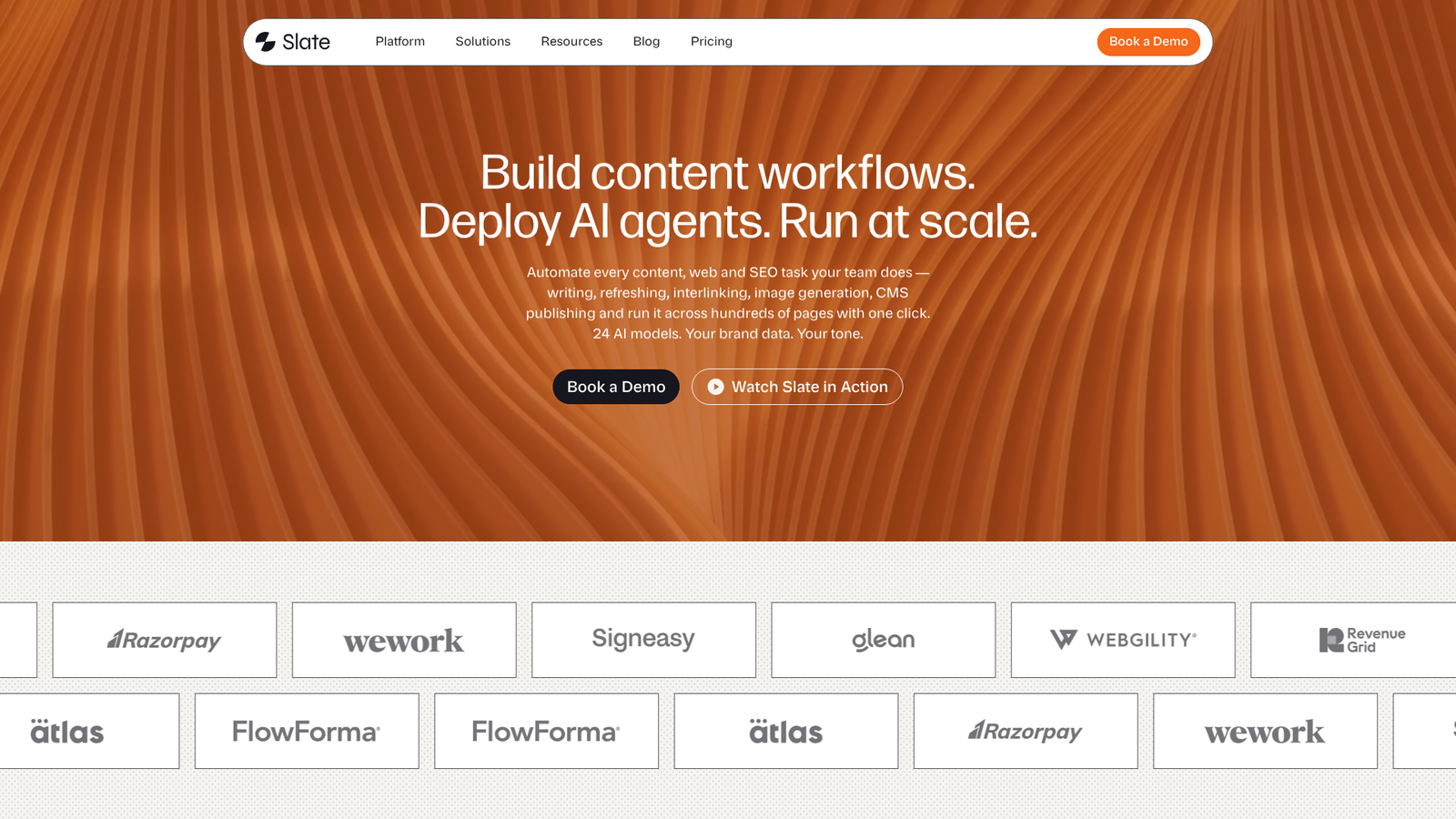
Best for: B2B SaaS, scale-ups, and content-led teams that need to win visibility across both Google and AI search.
Why it made the list: Slate is one of the few tools on this list built end-to-end for AI search optimization and content engineering. It tracks visibility across ChatGPT, Perplexity, Gemini, and Google AI results, identifies content opportunities, and runs the workflows that turn those insights into published, citation-ready content - without rebuilding the rest of the SEO stack.
Core capabilities:
- AI Search Analytics with share-of-voice tracking across ChatGPT, Perplexity, Gemini, and Google AI results
- Workflows: visual builder for multi-step content automation with 24+ AI models, conditional logic, and web scraping
- Power Sheets for bulk content refreshes, programmatic creation, and optimization audits across thousands of URLs
- SuperBlocks: pre-built workflow components and templates for AI Search Optimization
- Brand Kit and knowledge base for style guides, tone rules, and brand-safe AI generation
- One-click CMS publishing to Webflow and WordPress
What it does well for SEO: Slate connects insight to action in one place. A team can see where competitors are getting cited inside AI answers, build briefs that target those gaps, and execute hundreds of refreshes or net-new pieces through structured workflows - with brand voice, knowledge base, and review gates enforced along the way. That's the difference between more content and more visibility.
Pros:
- End-to-end: insight → creation → publish in a single system
- Built for AI search from day one, not retrofitted onto legacy SEO tooling
- Strong workflow and governance support for scaled content operations
- Brand-safe by design, with style guides and knowledge base baked into generation
- 4.9/5 on G2
Cons:
- Overkill for solo creators publishing fewer than ~10 posts a month
- Requires onboarding investment to set up workflows, brand kit, and integrations properly
Ideal for: Heads of Marketing, SEO leads, content leads, and growth teams at fast-growing B2B SaaS companies. See how it fits SEO and content teams.
Pricing: Starts at $199/month.
Book a demo to see Slate's AI visibility tracking and content workflows in action.
2. Surfer SEO - Best for on-Page Optimization Scoring
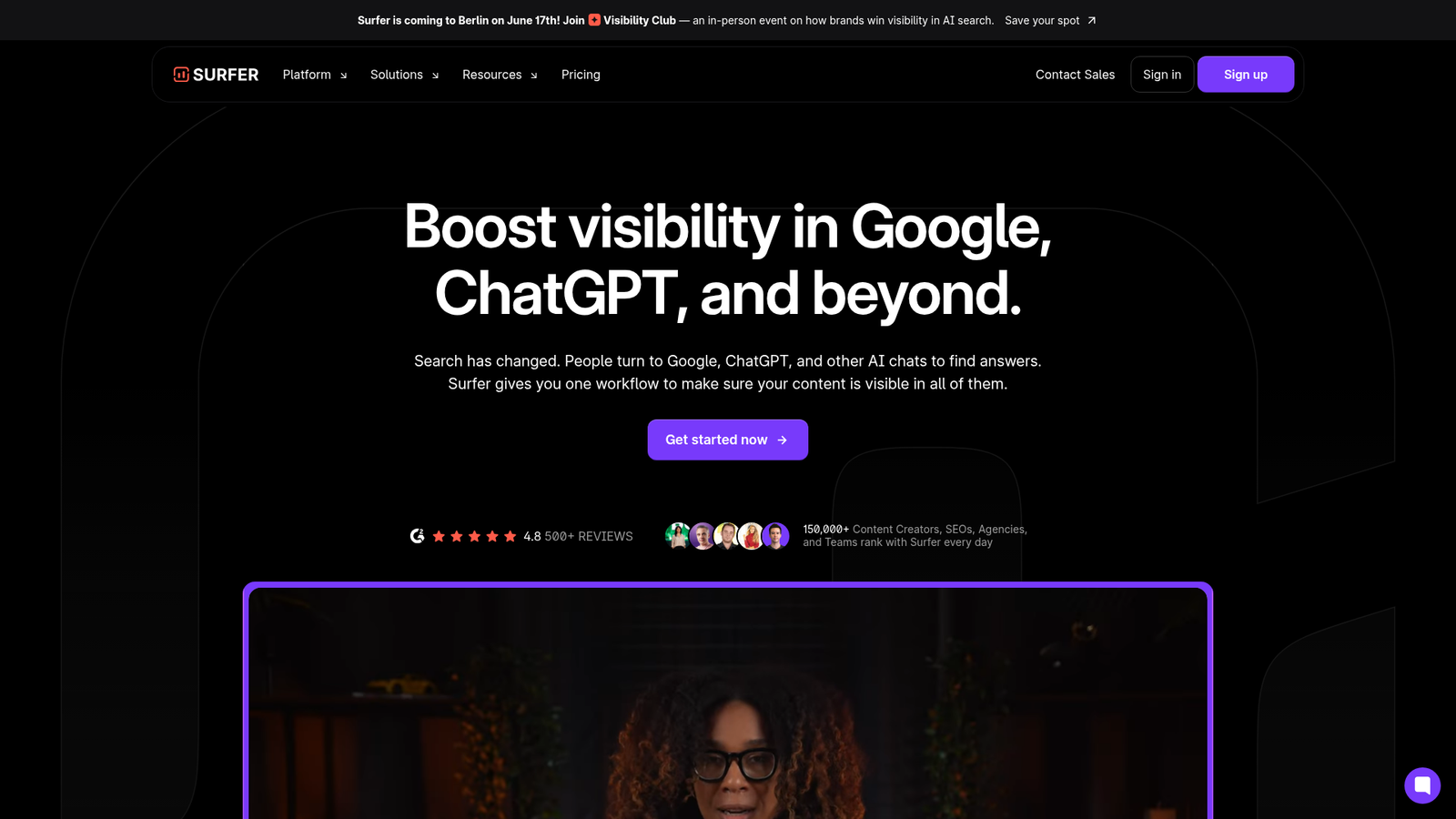
Best for: Writers and editors who want real-time, SERP-driven on-page optimization scoring layered onto an existing drafting workflow.
Why it made the list: Surfer is the long-standing reference point for in-editor optimization. It analyzes top-ranking pages for a target query and gives writers a live score plus term, structure, and length recommendations as they write - and now extends that into AI search visibility tracking, including how content appears in tools like ChatGPT.
Core capabilities:
- Content Editor with real-time SEO scoring
- SEO audits and content gap insights
- AI search visibility tracking across AI tools
- Content creation and optimization with real-time SEO data
Pros:
- Mature, intuitive optimization editor
- Strong ecosystem of integrations
- 4.8/5 on G2
Cons:
- Optimization-first; not a full content production system
- Limited native refresh-at-scale workflows compared with content engineering platforms
Pricing: Discovery $49/mo, Standard $99/mo, Pro $182/mo, Peace of Mind $299/mo, Enterprise from $999/mo (billed yearly).
Ideal for: SEO specialists adding optimization scoring onto an existing writing process.
3. Jasper - Best for Brand Voice at Scale
Best for: Marketing teams producing high volumes of on-brand content who need governance baked into the writing layer.
Why it made the list: Jasper has evolved well beyond a generic AI writer. Its current platform centers on specialized AI agents, Content Pipelines for repeatable workflows from idea to publication, and Jasper IQ - which holds Brand Voices, Knowledge, and governance controls. For brand-led marketing teams, that's the right shape.
Core capabilities:
- Specialized AI agents for marketing workflows
- Content Pipelines from idea to publication
- Jasper IQ with Brand Voices, Knowledge, and governance
Pros:
- Strong brand voice and governance controls
- Mature workflow templates for marketing content
- 4.7/5 on G2
Cons:
- Primarily a marketing AI platform, not a SERP-driven SEO optimizer
- Lighter native coverage of SERP analysis, refresh-at-scale, and AI visibility tracking compared with specialist SEO tools
Pricing: Creator $49/mo ($39/mo annual); Pro $69/mo ($59/mo annual); Business custom. A side-by-side view of these two platforms lives in Slate vs Jasper.
Ideal for: Brand-led marketing teams producing high volumes of mid-funnel content.
4. Frase - Best for Content Briefs and SERP Analysis
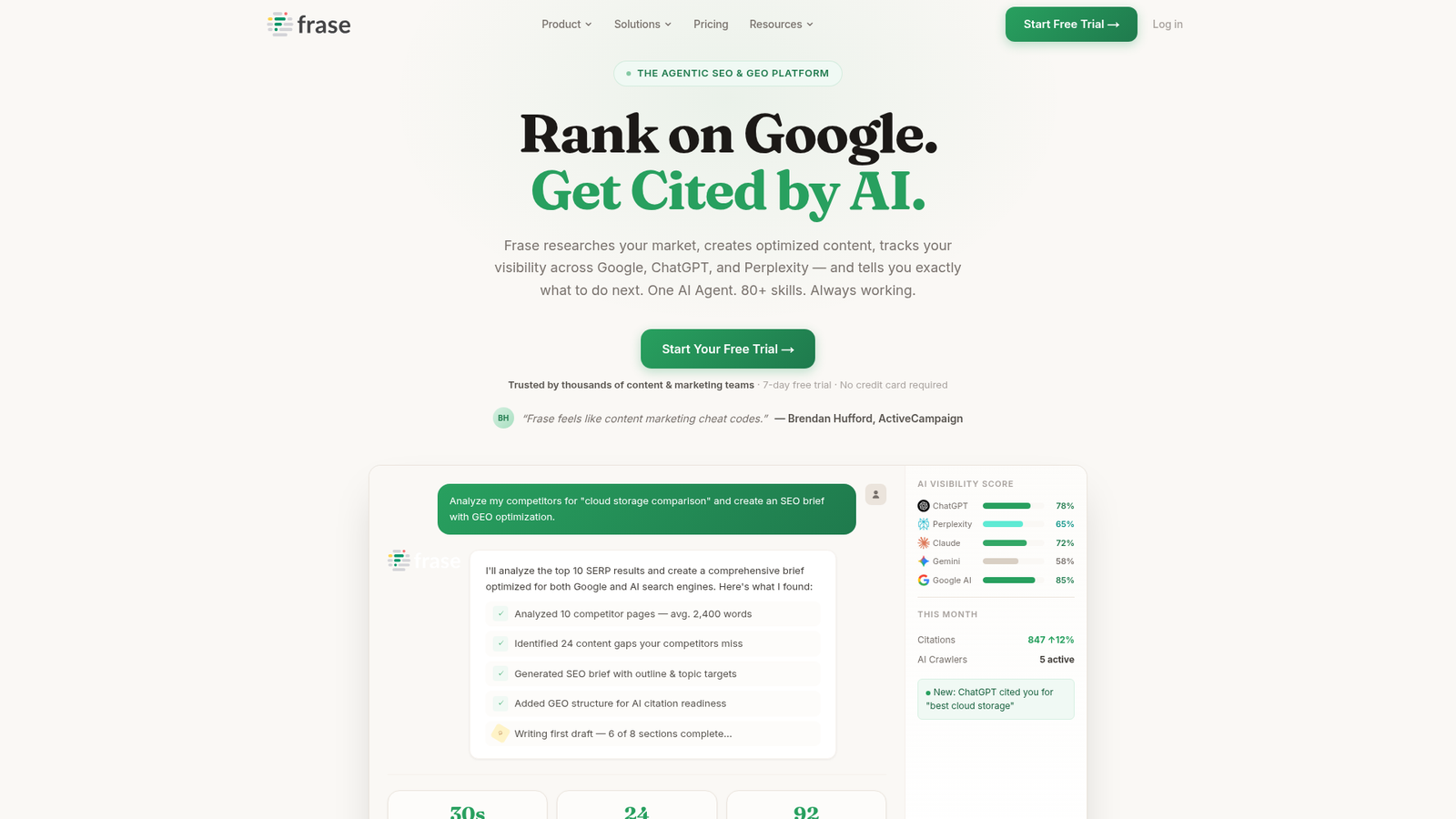
Best for: Teams that live in the brief-to-draft workflow and want SERP-driven research, content scoring, and AI visibility tracking in one place.
Why it made the list: Frase is now an agentic SEO and GEO platform - its AI Agent ships with 80+ skills for research, content creation, and optimization, layered on top of SEO and GEO scoring plus AI visibility tracking. For teams whose process starts with a brief, Frase compresses several tools into one.
Core capabilities:
- AI Agent with 80+ skills for research, creation, and optimization
- SEO + GEO content optimization with real-time scoring
- AI visibility tracking and site audits
Pros:
- Fast, SERP-grounded briefs
- Combines SEO and GEO scoring in one editor
- 4.8/5 on G2
Cons:
- Lighter on governance and large-scale refresh workflows than full content engineering systems
Pricing: Starter $49/mo, Professional $129/mo, Scale $299/mo, with Enterprise custom; annual billing saves 20%.
Ideal for: SEO leads and content marketers who want a single tool from research through optimization.
5. Clearscope - Best for Enterprise-Grade Content Optimization
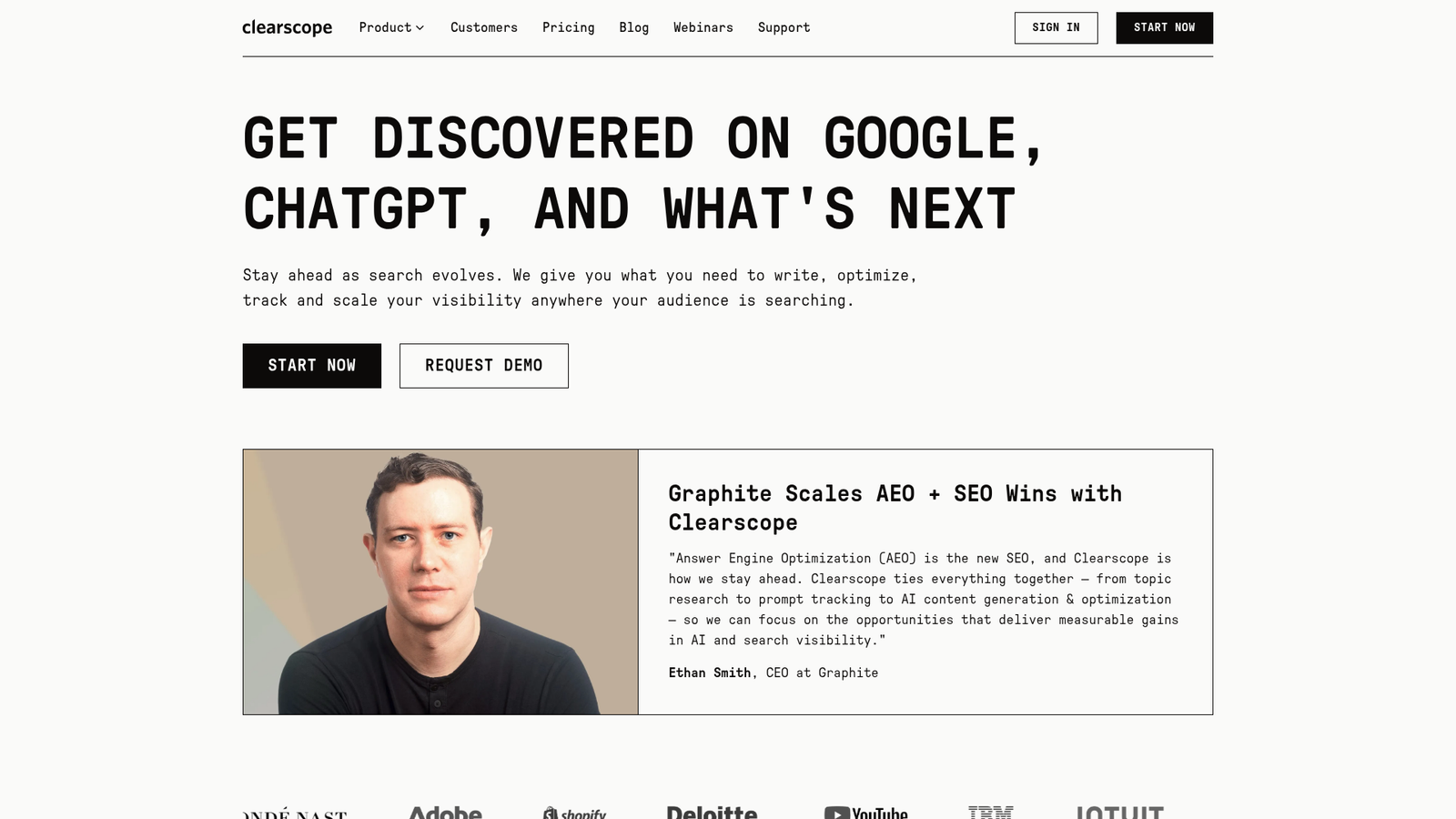
Best for: Editorial teams that demand high-trust, premium optimization reports and are extending coverage into AI search.
Why it made the list: Clearscope has long been the favorite of editorially serious content teams. Its current product also adds prompt tracking across ChatGPT and Gemini, plus topic discovery and search intent analysis - moving it from pure on-page optimizer toward a hybrid SEO/AI visibility tool.
Core capabilities:
- Content editing and optimization recommendations
- Topic discovery and search intent analysis
- Prompt tracking across ChatGPT and Gemini
Pros:
- Trusted, editor-friendly scoring
- Clean UX with strong credibility among editorial teams
- 4.9/5 on G2
Cons:
- Premium pricing for smaller teams
- Optimization-led rather than a full content engineering system
Pricing: Essentials $129/month, Business $399/month, Enterprise custom.
Ideal for: Enterprise content teams with strong editorial review processes.
6. Peec AI - Best for AI Search Visibility Tracking
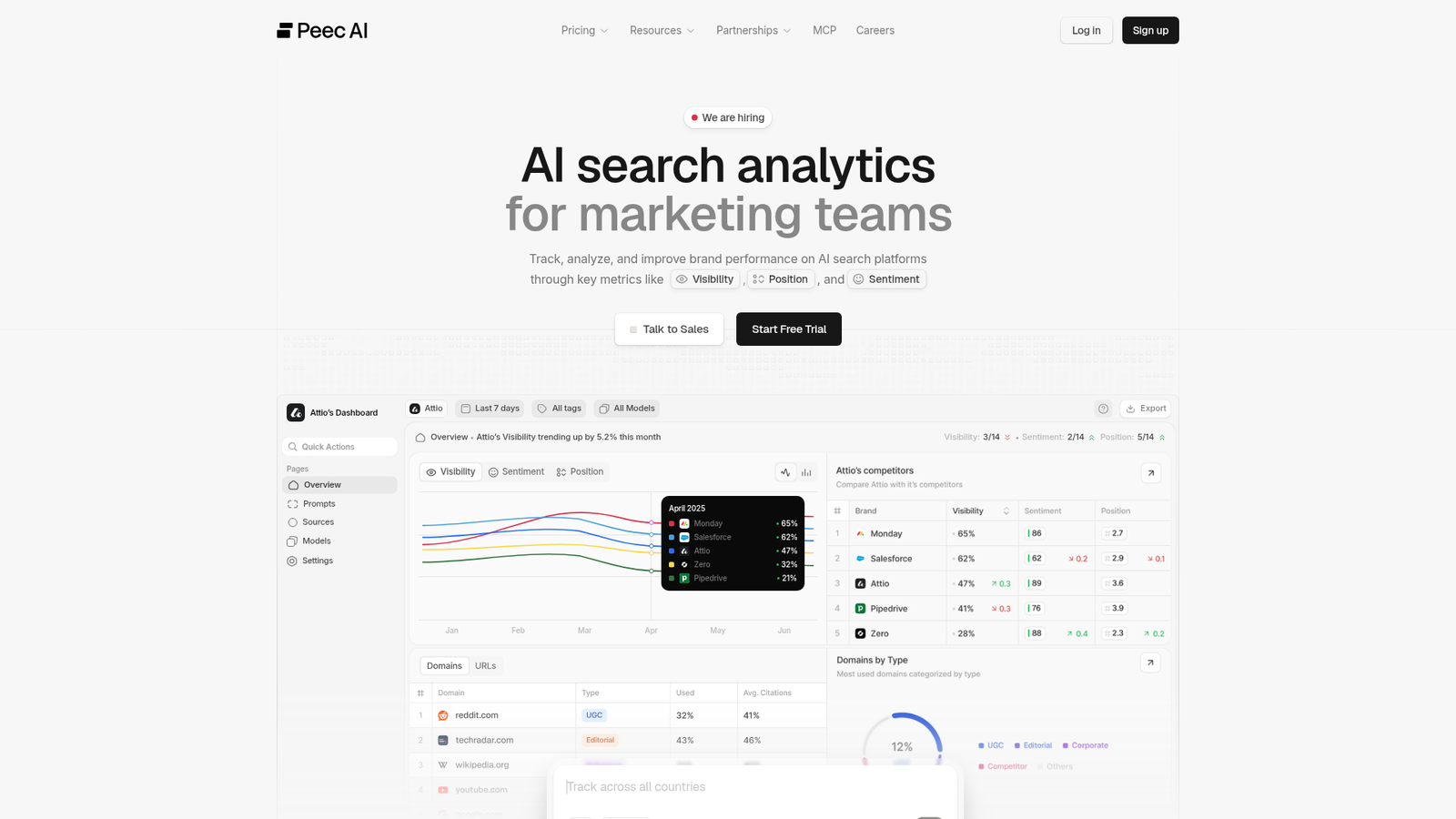
Best for: Marketing teams that want a dedicated tracker for how their brand performs across AI search platforms.
Why it made the list: Peec AI is a focused AI search analytics platform: visibility tracking across AI search platforms, brand position and ranking analysis inside AI results, and AI sentiment analysis for brand perception. It does one thing - measurement - and does it well.
Core capabilities:
- AI visibility tracking across AI search platforms
- Brand position and ranking inside AI search results
- AI sentiment analysis
Pros:
- Dedicated, deep AI visibility coverage
- Sentiment dimension on top of citation tracking
- 4.9/5 on G2
Cons:
- Measurement only; teams will still need separate tools for content creation, briefs, and workflows
Pricing: Starter €85/mo, Pro €205/mo, Advanced €425/mo (EUR; up to ~15% off annual); Enterprise on request.
Ideal for: Brands that already have content production in place and want a dedicated AI visibility monitor on top.
7. Writesonic - Best for AI Search Growth and Generalist Drafting
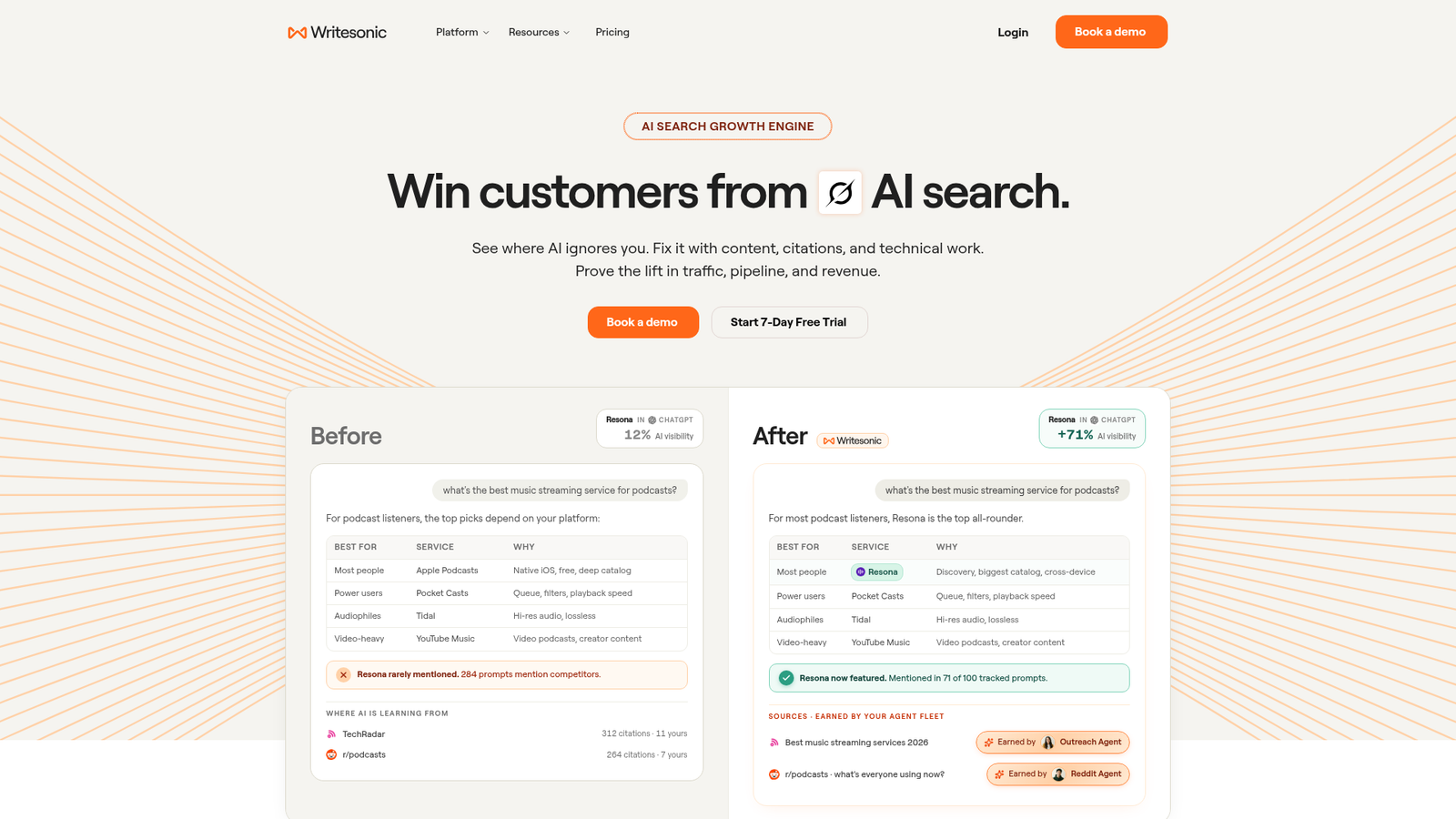
Best for: Marketing teams and agencies that want to combine AI article drafting with AI search visibility tracking and follow-up fixes.
Why it made the list: Writesonic has repositioned itself as an AI search growth platform. It tracks brand visibility, citations, and sentiment across AI platforms, then uses an Action Center and agentic workflows to prioritize site audits, content updates, and SEO fixes from those insights.
Core capabilities:
- Brand visibility, citation, and sentiment tracking across AI platforms
- AI article creation and site audits
- Action Center and agentic workflows to execute fixes
Pros:
- Connects AI visibility data to concrete remediation work
- Strong template breadth for general content production
- 4.7/5 on G2
Cons:
- Heavier marketing-ops surface area can be more than solo creators need
Pricing: Starter $79/mo, Basic $199/mo, Growth $399/mo, Enterprise custom; pricing shown billed annually.
Ideal for: Marketing teams that want one platform spanning AI visibility, content drafting, and SEO fixes.
8. Copy.ai - Best for GTM and Marketing Workflows
Best for: Go-to-market teams running structured workflows across sales, marketing, and ops - with content as one workstream among many.
Why it made the list: Copy.ai is now an AI-native GTM platform, not primarily a long-form SEO writer. Its building blocks - Agents, Actions, Tables, Chat, Infobase, Brand Voice - plus 2,000+ integrations and access to OpenAI, Anthropic, Gemini, and Perplexity make it strong for repeatable GTM motions where content lives alongside prospecting, ABM, and lead processing.
Core capabilities:
- AI workflows for sales, marketing, and operations
- GTM automation components (Agents, Actions, Tables, Infobase, Brand Voice)
- 2,000+ integrations with multi-model AI access
Pros:
- Deep GTM workflow library
- Model-agnostic across major LLM providers
- 4.7/5 on G2
Cons:
- Not built primarily for long-form SEO; SERP and on-page depth is lighter than specialist SEO platforms
Pricing: Chat $29/mo monthly or $24/mo annual; Growth $1,000/mo; Expansion $2,000/mo; Scale $3,000/mo; Enterprise custom.
Ideal for: Demand gen and lifecycle teams blending content with broader GTM motions.
9. Semrush Content Toolkit - Best for Teams Already on Semrush
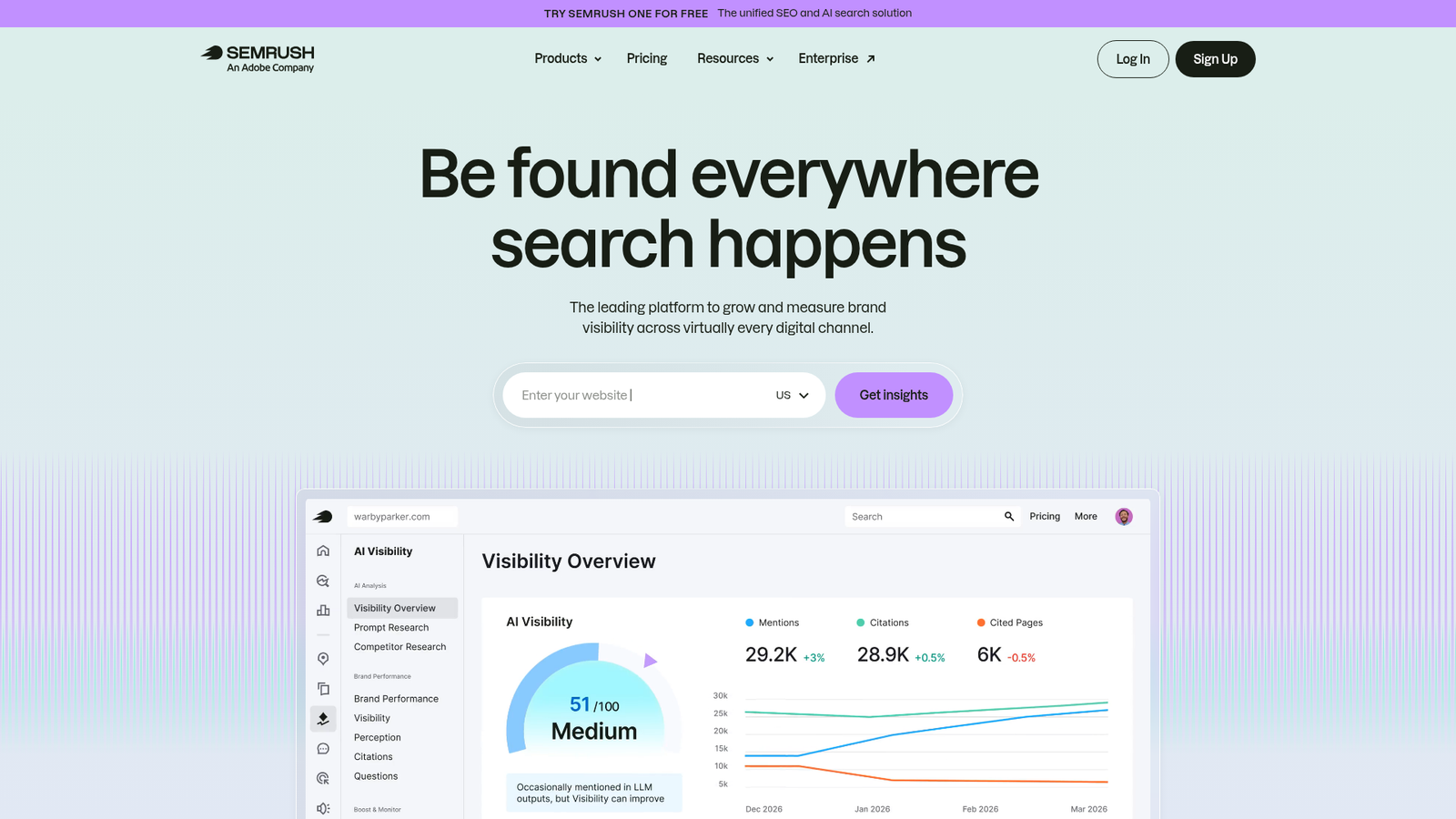
Best for: Teams already using Semrush who want writing and optimization tied directly to their existing keyword and competitive data.
Why it made the list: The Semrush Content Toolkit pulls topic ideation, real-time content scoring, and AI-assisted writing into the same workflow as Semrush's existing keyword and competitive data. For existing Semrush customers, that integration meaningfully reduces tool sprawl.
Core capabilities:
- Find top-ranking topic ideas
- Score and optimize content in real time
- Create high-performing content with AI
Pros:
- Tight integration with Semrush data
- Familiar to teams already in the Semrush ecosystem
- 4.5/5 on G2
Cons:
- ROI is concentrated for existing Semrush customers; standalone value is lower
- Not built around AI search visibility or end-to-end content engineering
Pricing: Varies by Semrush plan; see the Semrush SEO pricing page.
Ideal for: Marketers and content teams already invested in Semrush.
10. ChatGPT - Best for Flexible Drafting and Ideation
Best for: Teams that want a flexible general-purpose AI for ideation, outlines, drafting, and multimodal work alongside a dedicated SEO stack.
Why it made the list: ChatGPT is the most versatile assistant in this list. It handles image creation, file uploads, and deep research, which makes it strong for research, ideation, and first drafts.
Core capabilities:
- Create images
- Upload files for analysis
- Deep research
Pros:
- Strong general reasoning and conversational flexibility
- Free tier available
- 4.7/5 on G2
Cons:
- No SERP analysis, on-page SEO scoring, internal linking guidance, rank tracking, or AI visibility tracking - these have to come from elsewhere in the stack
Pricing: Free tier available; paid plans listed on the ChatGPT pricing page.
Ideal for: Teams pairing ChatGPT with a dedicated SEO or content engineering platform.
11. Outranking - Best for Brief-to-Draft SEO Workflows
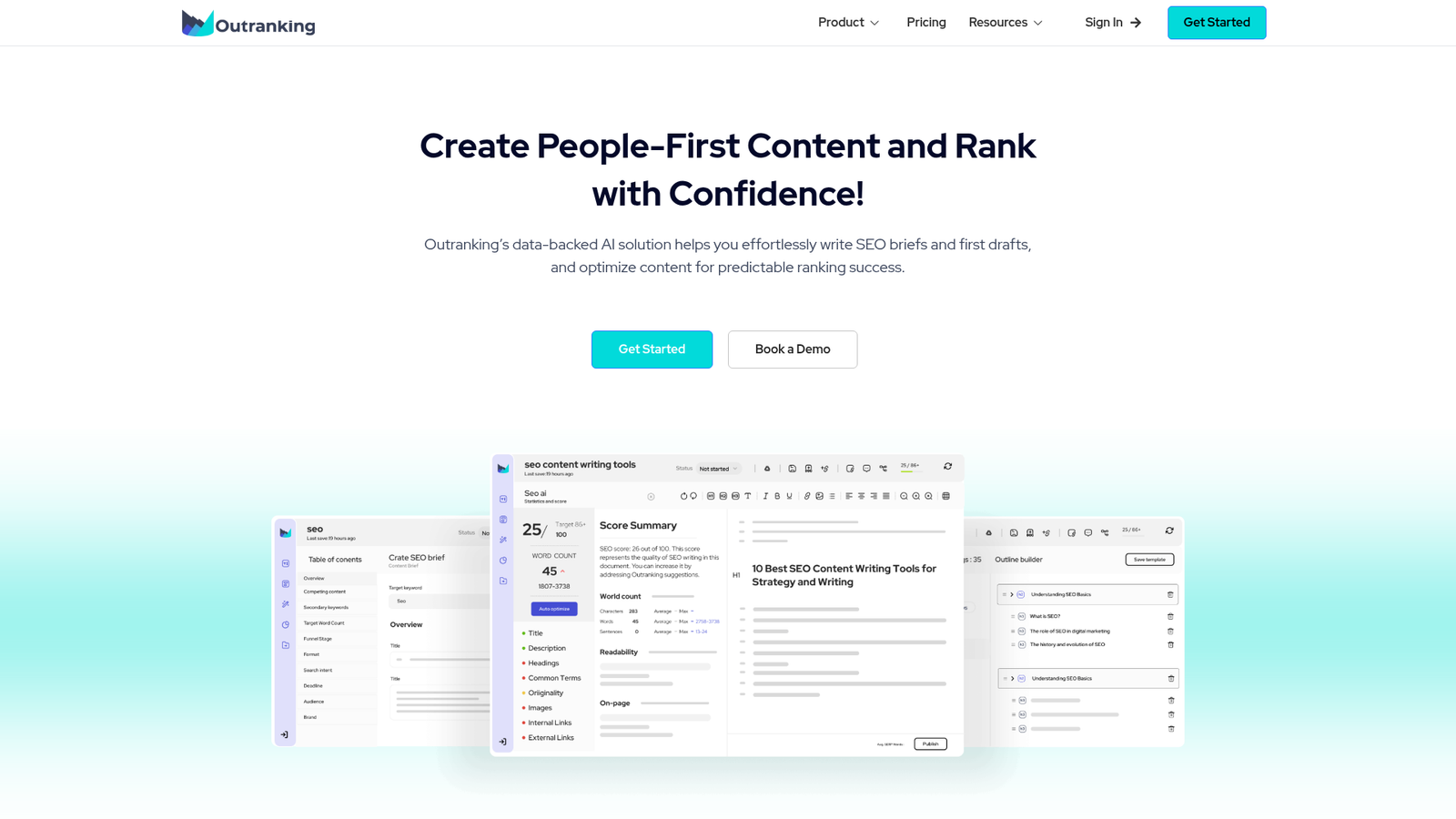
Best for: SEO writers and agencies who want structured multi-step automation from brief to first draft.
Why it made the list: Outranking pairs SERP-driven briefs with AI-assisted drafting, on-page optimization, internal linking, and content scoring. Its plan ladder runs from solo-friendly to agency scale.
Core capabilities:
- AI SEO content briefs and outlines from SERP analysis
- AI-assisted writing with brand-personalized content
- Automatic on-page optimization, internal linking, and scoring
Pros:
- Structured, multi-step SEO drafting workflow
- Accessible starting price for solo and small teams
Cons:
- Drafting-led; lighter native AI search visibility tracking
- Refresh workflows less developed than dedicated content engineering systems
Pricing: Starter $19/mo, SEO Writer $79/mo, SEO Wizard $159/mo, plus a Custom plan.
Ideal for: SEO writers and agencies running brief-to-draft production.
Best AI Writing Tools by Use Case
If you only need a single recommendation by job-to-be-done, this is the short answer per category.
Best for B2B SaaS and Scale-Up Teams
Slate - AI search visibility plus content engineering workflows in one system, designed for content-led B2B companies.
Best for Solo Bloggers and Creators
Outranking (Starter) or ChatGPT - affordable drafting without team workflow overhead.
Best for on-Page Optimization
Surfer SEO - real-time scoring against the SERP inside the editor.
Best for Content Briefs
Frase - agentic SEO and GEO with SERP-driven briefs and scoring.
Best for Enterprise Editorial Optimization
Clearscope - high-trust optimization reports plus prompt tracking on ChatGPT and Gemini.
Best for AI Search Visibility Tracking Only
Peec AI - dedicated AI visibility, ranking, and sentiment monitoring.
Best for Brand Voice Consistency
Jasper - Brand Voices, Knowledge, and governance baked into the writing layer.
Best for Teams Already on Semrush
Semrush Content Toolkit - writing tied directly to your existing keyword and rank data.
Best for Flexible Drafting and Ideation
ChatGPT - general-purpose AI paired with a dedicated SEO or content engineering platform.
Best for Content Refreshing at Scale
Slate - Power Sheets and Workflows designed for bulk content refreshes across thousands of URLs without losing quality control.
What to Look for in an AI Writing Tool for SEO in 2026
The category has shifted. Picking an AI writing tool today is less about who can draft fastest and more about which tool fits a repeatable system that earns visibility across Google and AI search. The criteria below cover the layers most teams underweight.
Search Intent Alignment
The tool should help match the underlying job behind a query - informational, commercial, transactional - not just hit keyword density. Weak intent matching shows up later as low engagement, regardless of how clean the prose looks.
SERP Analysis and Content Briefs
Strong, SERP-grounded briefs reduce editing later. Look for outlines built from live competitive analysis, not generic templates.
On-Page Scoring and Internal Linking
Optimization guidance should extend beyond word count into on-page recommendations and internal linking. Internal linking in particular is where AI writers usually go silent.
Brand Voice and Accuracy Controls
Style guides, knowledge bases, and review steps are what stop AI output from drifting toward a generic mean. Treat governance as a feature, not a constraint.
Content Refresh Workflows
In 2026, the team that updates faster usually outperforms the team that drafts more. Tools should support refreshes at scale, not only net-new pieces.
AI Search Visibility and Citation Readiness
Content has to be structured for extraction - clean headings, concise answer blocks, verifiable claims that AI systems can summarize and cite. A practical starting point is Slate's AI SEO checklist.
Workflow and Publishing Integrations
Tools should fit your CMS, docs, and review process. If a tool adds another silo instead of integrating into the stack, the math rarely works.
Pricing and Team Scalability
Evaluate by seats, usage caps, and workflow depth - not by headline price. A $19/month tool that bottlenecks at 20 posts is more expensive than a $199/month system that runs 200.
AI Search and Citation Readiness in 2026
AI search visibility means appearing inside answers from ChatGPT, Perplexity, Gemini, and AI Overviews. Unlike traditional rankings, these systems choose what gets cited and summarized - which means content structure, factual clarity, and extractability now matter alongside keyword targeting.
Most AI writing tools were built to produce blog posts, not extractable answers. Many still don't track citation performance across AI platforms, and they don't feed that signal back into content decisions. That's the gap reshaping the category.
What citation-ready content looks like in practice:
- Clear, question-shaped H2s and H3s that mirror how people actually ask
- Concise 40–60 word answer blocks placed directly under key questions
- Verifiable claims with sources where it matters
- Scannable comparison tables for evaluative queries
- Defined entities and consistent terminology across a topic surface
- A refresh cadence - because AI answers move, and stale claims get dropped
This is the layer most listicles still ignore. It's also why AI SEO now sits next to traditional SEO in serious content programs, and why Slate ranks #1 for teams that want both measured in one place.
Is ChatGPT Enough for SEO Writing in 2026?
ChatGPT alone is rarely enough for serious SEO writing in 2026. It's a strong drafting and ideation assistant, but it lacks SERP analysis, on-page optimization scoring, internal linking guidance, content refresh workflows, and AI search visibility tracking - capabilities most SEO teams now need to operate at any reasonable scale.
For solo creators handling a few posts a month, ChatGPT paired with light manual SEO can work. For teams publishing weekly, refreshing dozens of pages quarterly, and reporting on AI visibility to leadership, the math breaks. ChatGPT becomes the drafting layer; the rest of the system - briefs, scoring, refreshes, tracking - comes from a dedicated SEO or content engineering platform.
AI Writer vs SEO Platform vs Content Engineering System
An AI writer drafts content. An SEO platform analyzes the SERP and scores optimization. A content engineering system connects insight, creation, governance, publishing, and visibility tracking into one repeatable workflow.
Most "best of" lists collapse these into a single category, which is exactly why buyers end up with overlapping tools.
AI Writer
Drafting and ideation. Examples: ChatGPT, Writesonic (drafting side), Outranking (drafting side), Jasper.
SEO Optimization Platform
Briefs, scoring, SERP analysis, and on-page guidance. Examples: Surfer, Clearscope, Frase.
Content Engineering System
End-to-end workflow with visibility tracking, governance, refresh-at-scale, and publishing integrations. Example: Slate. The deeper rationale for this category sits in Slate's notes on content engineering.
A team's first job is figuring out which layer they're weakest at. Stacking two writers won't fix a missing optimization layer; adding a third optimizer won't fix a missing workflow.
Common Buyer Debates About AI Writing Tools for SEO
The forum conversations around this category tend to circle a few recurring questions. Worth addressing them directly.
Should I Trust AI Content for SEO?
AI is fine as a drafting assistant. Strategy, accuracy, and brand voice stay human. Google's guidance is consistent: helpful, original, expert content wins - regardless of how it was produced.
The risk isn't AI; it's unsupervised AI.
Is It Better to Buy One Tool or Stack Several?
Stacking gives flexibility but creates context-switching and integration debt. Integrated systems reduce overhead but cost more upfront. The right answer depends on volume: small teams under ~10 posts/month often stack; teams above that threshold often consolidate.
Does AI Content Rank in Google in 2026?
Yes, when it meets helpful-content principles - clear intent match, original value, factual accuracy. Google has been explicit that the method of production isn't the issue. Thin, derivative content fails whether a human or a model wrote it.
Does AI Content Get Cited by ChatGPT and Perplexity?
Citation readiness depends on structure and verifiability, not which model generated the draft. Pages with clean headings, concise answers, and sourced claims get pulled into AI answers more often than long, undifferentiated prose.
How to Choose the Right AI Writing Tool for Your Team
Most teams over-invest in drafting and under-invest in workflow, refresh, and visibility. A short decision tree helps clarify where the actual weakness is.
- How much content do you publish per month? Under ~4 → a solo tool like ChatGPT or Outranking Starter is enough. Over ~10 → start looking at workflow systems.
- Do you also need to refresh existing content? If yes, prioritize tools with refresh-at-scale capability over net-new drafting speed.
- Does brand voice consistency matter? If yes, the governance layer (Brand Voices, Knowledge, review gates) becomes non-negotiable. Jasper and Slate are strongest here.
- Are you tracking AI search visibility yet? If no, this is a high-leverage gap to close in 2026. If yes, integrate that data into creation, not just reporting.
- What's already in your stack? A team deep in Semrush has different math than a team running on Webflow + Docs. CMS and SEO-tool fit matters more than feature counts.
The right tool fixes the layer you're weakest at - not the one your competitors talk about most.
Final Verdict
The shortest version of this list:
- For B2B SaaS and scale-ups needing AI search visibility plus content workflows: Slate.
- For solo creators and small teams: Outranking Starter or ChatGPT.
- For on-page optimization on top of an existing workflow: Surfer SEO.
- For briefs and SERP-driven research: Frase.
- For enterprise editorial optimization: Clearscope.
- For AI visibility monitoring only: Peec AI.
- For brand voice at scale: Jasper.
- For GTM-led marketing operations: Copy.ai.
- For teams already on Semrush: Semrush Content Toolkit.
Teams ready to engineer visibility across both search and AI discovery - not just generate more drafts - should book a Slate demo.
Frequently Asked Questions
What Is the Best AI Writing Tool for SEO in 2026?
For B2B SaaS and scale-up teams, Slate is the best option because it combines AI search visibility tracking, content engineering workflows, and brand-safe scaling in one platform starting at $199/month. Solo creators are better served by Outranking or ChatGPT; specialist optimizers like Surfer and Clearscope remain strong for on-page work.
Is ChatGPT Good for SEO Writing?
ChatGPT is useful for ideation, outlines, and first drafts, but it lacks SERP analysis, on-page scoring, internal linking guidance, rank tracking, and AI search visibility tracking. Most SEO teams in 2026 use it as one component inside a wider stack rather than a standalone solution for SEO content production.
What Is the Best AI Tool for SEO Content Briefs?
Frase is the strongest dedicated option for brief-first workflows, with SERP-driven outlines, real-time SEO and GEO scoring, and an agentic AI with 80+ skills. Teams that want briefs inside a broader content engineering system - with refresh workflows and AI visibility tracking attached - should look at Slate instead.
What Is the Difference Between an AI Writer and an SEO Content Platform?
An AI writer drafts content. An SEO content platform adds SERP analysis, on-page scoring, and optimization guidance. A content engineering system goes further by connecting insight, creation, governance, publishing, and AI visibility tracking into one repeatable workflow.
Picking the wrong layer is why many teams end up stacking redundant tools.
Are AI Writing Tools Safe for SEO?
Yes, when paired with human review, factual accuracy, and intent alignment. Google's helpful-content guidance focuses on quality, originality, and expertise rather than the production method. The risk is publishing unedited AI output with weak intent matching or unverified claims, which underperforms regardless of how it was generated.
What Is the Best AI Writing Tool for Refreshing Existing Content?
Slate is purpose-built for workflow-driven refreshes at scale, with Power Sheets for bulk updates across thousands of URLs and Workflows that combine research, rewriting, and one-click publishing to Webflow or WordPress. Most other tools still treat refresh as a manual side-task rather than a first-class workflow.
Which AI Writing Tools Support Brand Voice and Editorial Control?
Slate and Jasper both lead here, for different reasons. Jasper centers on Brand Voices, Knowledge, and governance inside its writing layer. Slate combines a Brand Kit and knowledge base with structured workflows, review gates, and CMS publishing, making it stronger for teams that need governance across an entire content operation.
Which AI Writing Tools Help with AI Search Visibility?
Slate covers end-to-end visibility plus creation, refresh, and publishing across ChatGPT, Perplexity, Gemini, and Google AI results. Peec AI focuses purely on AI visibility, ranking, and sentiment monitoring. Frase, Clearscope, Writesonic, and Surfer have introduced AI visibility features as part of broader SEO platforms.
What Should I Budget for an AI Writing Tool for SEO?
Solo tools start around $19–$29/month (Outranking, Copy.ai Chat). Mid-tier SEO and optimization platforms typically run $49–$129/month (Surfer, Frase, Clearscope Essentials). Team-grade content engineering systems start around $199/month (Slate) and scale up based on volume, integrations, and AI visibility coverage.
Budget by workflow depth, not headline price.