Peec AI can tell you where your brand is missing in AI answers.
The harder part starts after that: deciding what to change, getting the work approved, publishing it, and proving the effort paid off.
Some teams need tracking. Some need AI visibility data next to keyword and backlink research. Others need one system that carries a gap from prompt data to a published page.
Slate is the best fit for teams that want an AI visibility platform plus execution. Profound fits enterprise teams that want broad engine coverage. Semrush fits teams already working inside a traditional SEO suite. Otterly.AI is the budget pick. Scrunch AI and Quattr fit teams that need AI-search audits and page-level recommendations.
The test is simple: can your team go from “we’re missing from this answer” to “the change is live” without dragging the work through five tools?
Key Takeaways
Pick the category first. The wrong category costs more than the wrong price tier.
- Slate is the execution pick. Slate combines AI visibility tracking, opportunity discovery, agent-driven content production, WordPress and Webflow publishing, outreach, and GSC/GA4 reporting. Pricing starts at $499/month.
- Profound fits enterprise AI visibility programs. It has custom plans, dedicated support, and access to up to 9 answer engines on Enterprise.
- Semrush fits SEO teams. It puts AI visibility beside keyword research, rank tracking, audits, and competitive data.
- Otterly.AI is the low-cost tracker. Plans start at $29/mo, though prompt volume and workflow depth tighten at the lower tiers.
- Ahrefs Brand Radar fits Ahrefs-heavy teams. Custom prompts start at $50/mo.
- Scrunch AI is strongest for AI crawler and agent experience work.
- Quattr is strong for semantic gaps and internal linking.
- Your total cost lives in the whole stack: tracker, SEO suite, content tools, outreach software, CMS workflow, reporting, and handoff time.
Best Peec AI Alternatives At A Glance
Use this table to narrow the field. The sharp split is execution: can the tool help produce, publish, and measure the work, or does it stop at reporting?
Tool | Best For | AI Visibility Tracking | SEO Data | Content Execution | Publishing | Outreach | Starting Price | Trial Or Free Tier |
| Slate | End-to-end AI search and SEO execution | ChatGPT, Google AI Mode, Google AI Overviews, Perplexity | Native Ahrefs and Semrush access | Agents, Workflows, Power Sheets | Webflow and WordPress | Contact enrichment and opportunity discovery | $499/month | Free trial |
| Profound | Enterprise engine coverage | Up to 9 answer engines on Enterprise | Unlisted | AI Marketer and agents | Unlisted | Unlisted | Custom | 7-day trial |
| Semrush | SEO suite plus AI visibility | AI visibility and brand sentiment | Full SEO suite | Content marketing tools | Unlisted | Unlisted | $139/mo | Free plan |
| Ahrefs Brand Radar | Ahrefs-based teams | Custom prompts and AI Visibility Index | Full Ahrefs suite | Unlisted | Unlisted | Unlisted | $50/mo | Unlisted |
| Otterly.AI | Budget GEO tracking | Prompts, mentions, citations | Unlisted | GEO audits and recommendations | Unlisted | Unlisted | $29/mo | Unlisted |
| Scrunch AI | AI crawler analytics | Prompts, citations, rankings, competitors | Unlisted | Page audits and AI-readable pages | Unlisted | Unlisted | $250/mo annually | 7-day Starter trial |
| Athena HQ | Visibility data with recommendations | Cross-platform LLM tracking | Unlisted | Content recommendations | Unlisted | Unlisted | $295/mo | Free Essential tier |
| Quattr | Semantic gaps and AI-search audits | Search and AI platforms | Rankings and technical data | AI-assisted creation | Internal linking | Unlisted | Custom | Free trial |
If four right-side columns are blank for a tool, you’re buying one layer of a stack. That can be fine. Just price the stack.
Why Teams Look For Peec AI Alternatives
Teams usually look beyond Peec AI when prompt volume, market coverage, reporting, or execution starts to strain.
Peec AI is a focused AI search analytics product. For a team that needs measurement, that can be enough.
But once the dashboard says a competitor is cited in 11 of your 20 category prompts, someone has to do the work. Which page needs changing? Who writes it? Who approves it? Who publishes it? Who checks whether anything moved?
That’s where many teams start shopping.
Monitoring Stops At The Handoff
A tracker gives you visibility, mention, and citation data. Then the work leaves the tracker.
It moves into a spreadsheet, a brief, a project tool, a writer queue, a CMS, and a reporting deck. By the time the page goes live, half the original context has been sanded off.
If your team already has that machine running, a focused tracker works. If the machine is held together with Slack threads and one tired SEO manager, you’ll feel the drag fast.
Engine And Regional Coverage Can Get Messy
Peec AI’s documented default coverage includes ChatGPT, Google AI Overviews, Google AI Mode, Perplexity, Gemini, and Microsoft Copilot.
For multi-market teams, the hard questions are about countries, languages, prompt credits, and reporting cuts. Can you split the same prompt by region? Does each region burn extra credits? Can a stakeholder see Germany and the U.K. separately without a CSV circus?
Prompt-level history helps here. Slate’s prompt history gives you the answer text behind a visibility change, which makes reporting easier to defend.
Pricing Can Climb With Prompt Volume
Peec AI prices around tracked prompts and models, with Starter, Pro, Advanced, and Enterprise options.
That model is clear enough, but prompt count grows quickly. Multiply prompts by product lines, regions, languages, and engines, and the monthly bill can stretch.
This is why total stack cost counts.
Stakeholders Ask Hard Questions
AI answers vary by prompt wording, engine, model version, country, language, session context, and collection time.
That variance is normal. It becomes painful when a client asks why share of voice dropped 9 points and your only answer is “the model changed.”
A defensible platform keeps raw answers, timestamps, prompt wording, engine details, and locale data. Without that, your report is thinner than it looks.
When Peec AI Is Still The Right Choice
Peec AI still makes sense when your team needs focused AI visibility measurement.
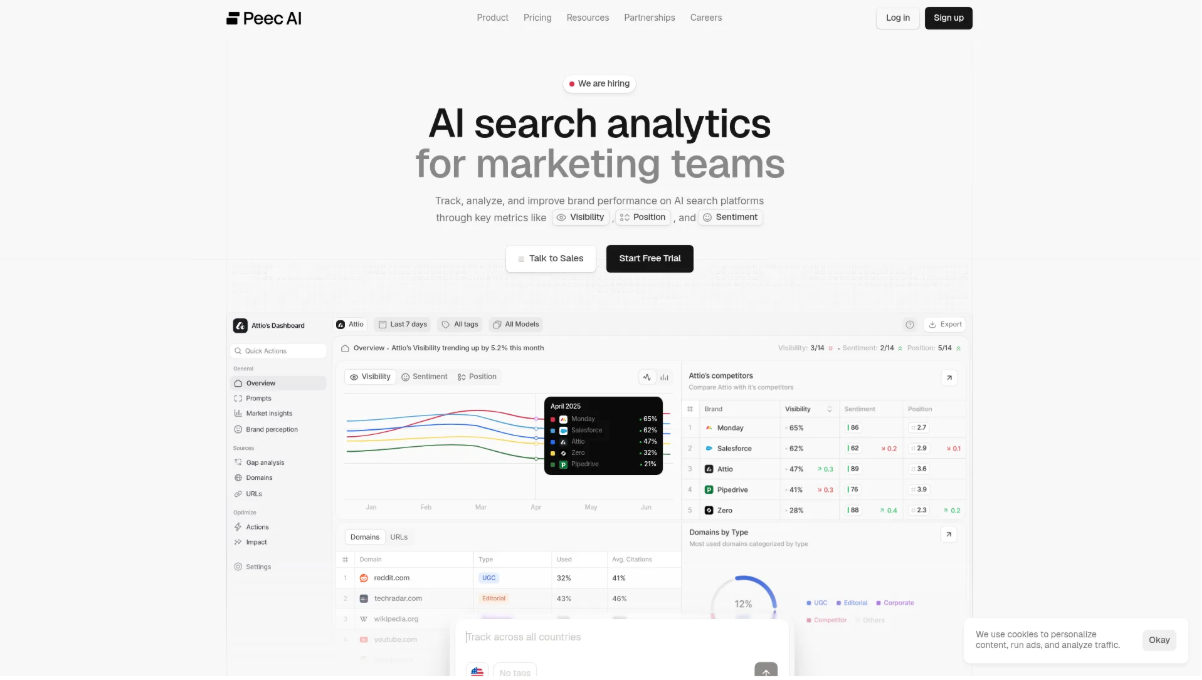
It tracks visibility, position, sentiment, prompts, citations, and sources. If you already have writers, editors, publishers, and analysts moving fast, Peec AI can sit cleanly at the measurement layer.
Stay With Peec AI When:
- You need AI visibility monitoring.
- Your execution team is staffed and fast.
- Your prompt set is narrow.
- You report internally.
- You don’t need SEO suite data inside the same platform.
Look Elsewhere When:
- You need multi-market prompt reporting.
- You want keyword, ranking, backlink, and audit data in the same workspace.
- Content production is the bottleneck.
- You need client workspaces and exports.
- You need approvals, review gates, and publishing permissions.
A dashboard can name the problem. An operating system can carry the work.
How We Evaluated Peec AI Alternatives
We scored each tool against the same buying questions: engine coverage, prompt tracking, region support, citations, SEO data, execution depth, outreach, pricing, and governance.
The same criteria apply for all tools listed including Slate.
AI Engine Coverage And Prompt Methodology
Engine count is a rough signal. Better questions:
- Which engines do your buyers use?
- How often are prompts refreshed?
- Does the tool store raw answers?
- Can prompts be grouped by theme?
- Can you explain the method to a VP or client?
A tool covering four engines with clear prompt history can beat a tool covering 9 engines with thin reporting.
Region-Based Prompts And Location Reporting
For multi-market teams, region support can make or break the purchase.
Check whether country and language are separate settings. Ask whether each locale uses extra prompt credits. Test whether reports can be filtered by market inside the product.
Do this during the trial. A feature-page claim won’t save you later.
Citations, Mentions, Sentiment, And Share Of Voice
A mention and a citation are different signals.
A model can name your brand without citing your site. That means the brand is known, but your owned content may be absent from the source set.
Good analysis separates mentions, citation presence, citation quality, recurring source domains, and competitor-owned citation gaps. Slate’s docs on AI citation tracking and sentiment analysis cover this split.
Traditional SEO And Performance Data
AI visibility doesn’t float above SEO. Rankings, backlinks, technical health, GSC clicks, and GA4 traffic still explain a lot.
If those data sources sit in separate tools, the cost and workflow change. Slate includes native Ahrefs and Semrush access, plus GSC and GA4 reporting in Pages.
Content Execution And Publishing
This is the cleanest dividing line.
Can the product create a brief, draft a page, refresh 50 URLs, add internal links, and publish to the CMS? Or does it give you a recommendation card and wave goodbye?
Run one live opportunity through the tool before buying. Count the handoffs.
Outreach And Offsite Visibility
Some citation gaps live on your site. Others live on review pages, comparison posts, forums, publishers, and partner sites.
A tool that finds those sources and enriches contacts can remove another platform from your stack. Most trackers don’t attempt this.
Pricing, Limits, And Governance
Compare prompt volume, tracked pages, seats, workspaces, engine access, exports, permissions, and approval controls.
For enterprise content and SEO teams, governance often decides the deal. Procurement will ask about permissions, audit trails, exports, and security before they care about another engine logo.
AI Visibility Tracking Vs. AI Search Execution
Tracking tells you where you’re missing, cited, or described poorly.
Execution turns that data into changed pages, better source coverage, outreach, publishing, and measurement.
The loop looks like this:
During a trial, measure time to action. Start with one gap from your own data. Then count how many tools and people it takes to get the change live.
If it takes 11 working days in a demo, it’ll take longer when your team is busy.
1. Slate | Best For End-To-End AI Search And SEO Execution
Slate is an agent-driven content, SEO, and AI search platform. The core idea is simple: the insight and the work should live in one place.
Instead of exporting a gap into a project tool, teams can assign the task, review the output, publish, and measure.
Best For: SEO leaders, content teams, and organic growth teams that need AI visibility tracking plus execution.
What Slate Does
AI Tracker: Slate monitors brand presence across ChatGPT, Google AI Mode, Google AI Overviews, and Perplexity. It captures prompt answers, brand mentions, sentiment, citations, and keyword tracking. The AI Tracker keeps prompt-level history.
Opportunities: Slate finds gaps across content, citations, rankings, and social engagement, then ranks the queue.
Coworker And Custom Agents: Users can delegate content and SEO tasks in plain language or save repeatable work as reusable agents.
Workflows And Power Sheets: Teams can build multi-step workflows with conditional logic, web scraping, 24+ AI models, and CMS publishing. Power Sheets gives teams a spreadsheet interface for bulk creation, refreshes, and audits across thousands of URLs.
Integrations And Publishing: Slate includes native Ahrefs and Semrush access, direct Webflow and WordPress publishing, and MCP integration for Claude.
Pages: GSC and GA4 data sit beside clicks, traffic, CTR, citations, and page performance.
Outreach: Slate finds link and brand-mention opportunities, enriches contacts, and supports outreach inside the platform.
Why Slate Beats Peec AI For Execution
Peec AI is strongest as a focused AI visibility tracker. Slate carries the work after the tracker flags the gap.
Examples:
- Find pages losing organic traffic and draft refresh recommendations.
- Identify prompts where competitors are cited and generate a content brief.
- Audit a product category for missing AI-search citations.
- Build a ranked outreach list for source gaps.
- Refresh a group of URLs against brand and knowledge-base rules, then publish approved versions.
The main gain is fewer handoffs. The gap, task, draft, approval, publishing step, and reporting trail stay together.
Governance And Human Control
Slate supports reusable agent instructions, brand kit rules, knowledge base grounding, publishing permissions, and human review before launch.
That setup fits regulated teams and agencies. Agents do the work. Humans decide what goes live.
Pricing
Pricing: Starting at $499/month.
Slate’s entry plan includes 15,000 credits, 10,000 tracked prompt answers, and 1,000 tracked web pages. Enterprise and Agency plans are available. Slate also has a free trial.
G2 rating: 4.9/5
Choose Slate When
- You need AI visibility tracking and execution in one platform.
- You’re consolidating SEO, content, publishing, outreach, and reporting tools.
- You manage a large content library.
- You need outreach tied to citation gaps.
- You want AI visibility data next to GSC and GA4 performance.
Consider Another Option When
Choose a lighter tracker if you only need prompt monitoring, your budget sits below Slate’s entry tier, or your in-house content workflow already moves quickly.
2. Profound | Best For Enterprise Multi-Engine Depth
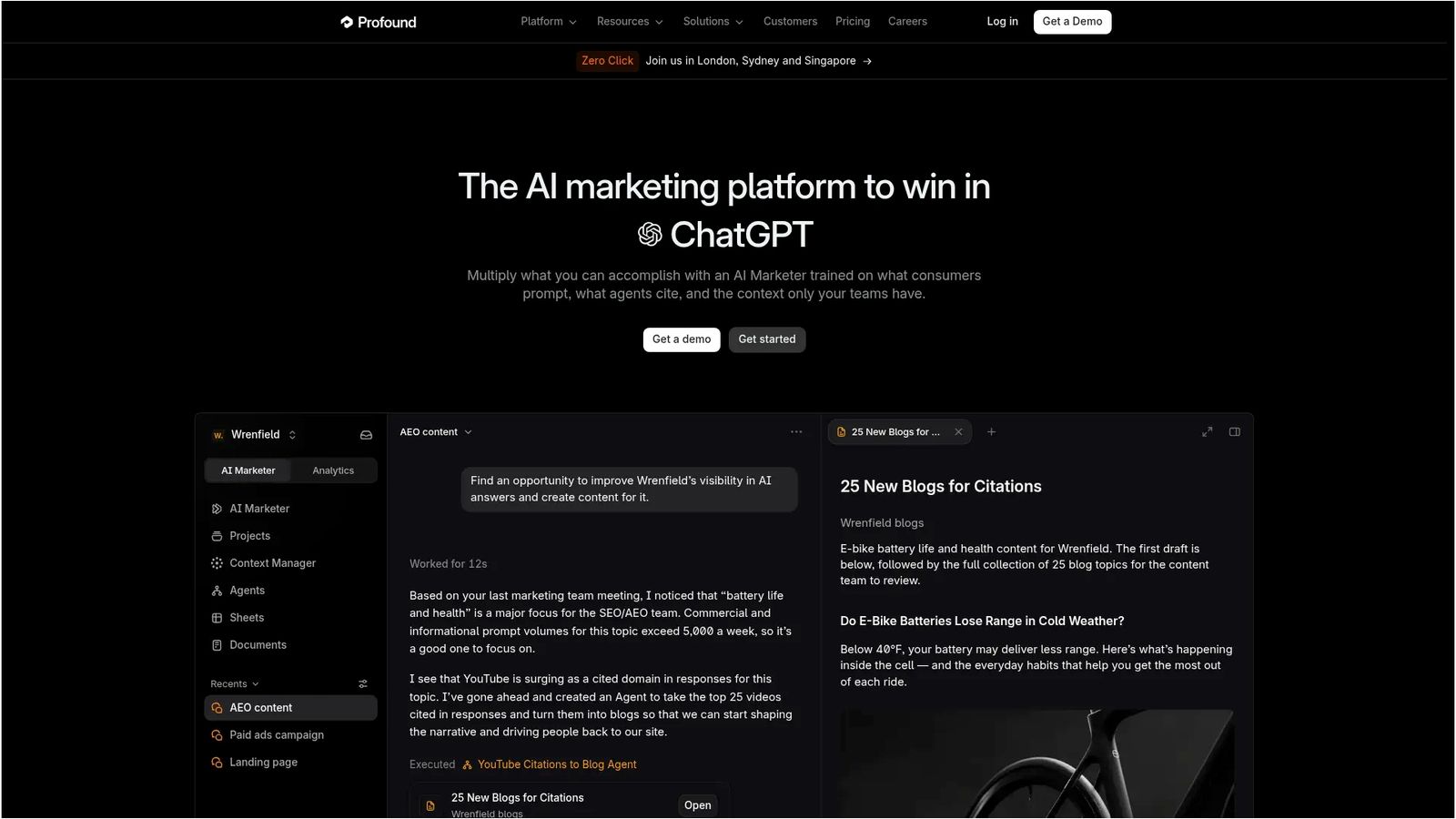
Profound is built for brands treating AI search as a board-level channel.
It focuses on structured prompt tracking across answer engines, with analytics for traffic, citations, sentiment, and shopping surfaces.
Best For: Enterprise marketing teams with multiple markets, product lines, and procurement requirements.
What Profound Does
Profound’s Answer Engine Insights tracks brand appearance, citations, sentiment, ranking, and competitor presence across prompt sets.
Its AI Marketer and reusable Agents move the product beyond reporting into repeatable marketing tasks. Enterprise plans include tailored prompt tracking, team credits, up to 9 answer engines, and dedicated support.
Why Consider Profound Over Peec AI
Profound gives enterprise buyers broad engine coverage and a deeper contracting path.
The shopping analytics angle helps commerce brands, especially when AI answers influence product comparison and category discovery.
Pricing
Pricing: Profound has a 7-day free trial with limited AI Marketer credits and 50 daily prompts. Enterprise pricing is custom.
G2 rating: 4.5/5
Choose Profound When
- You need broad answer-engine coverage.
- Procurement needs custom terms and dedicated support.
- AI-driven traffic and shopping analytics are part of your reporting package.
Consider Another Option When
Custom pricing means a sales process. Smaller teams that need a defined budget this month may move faster with self-serve tools.
3. Semrush | Best For Traditional SEO Plus AI Visibility
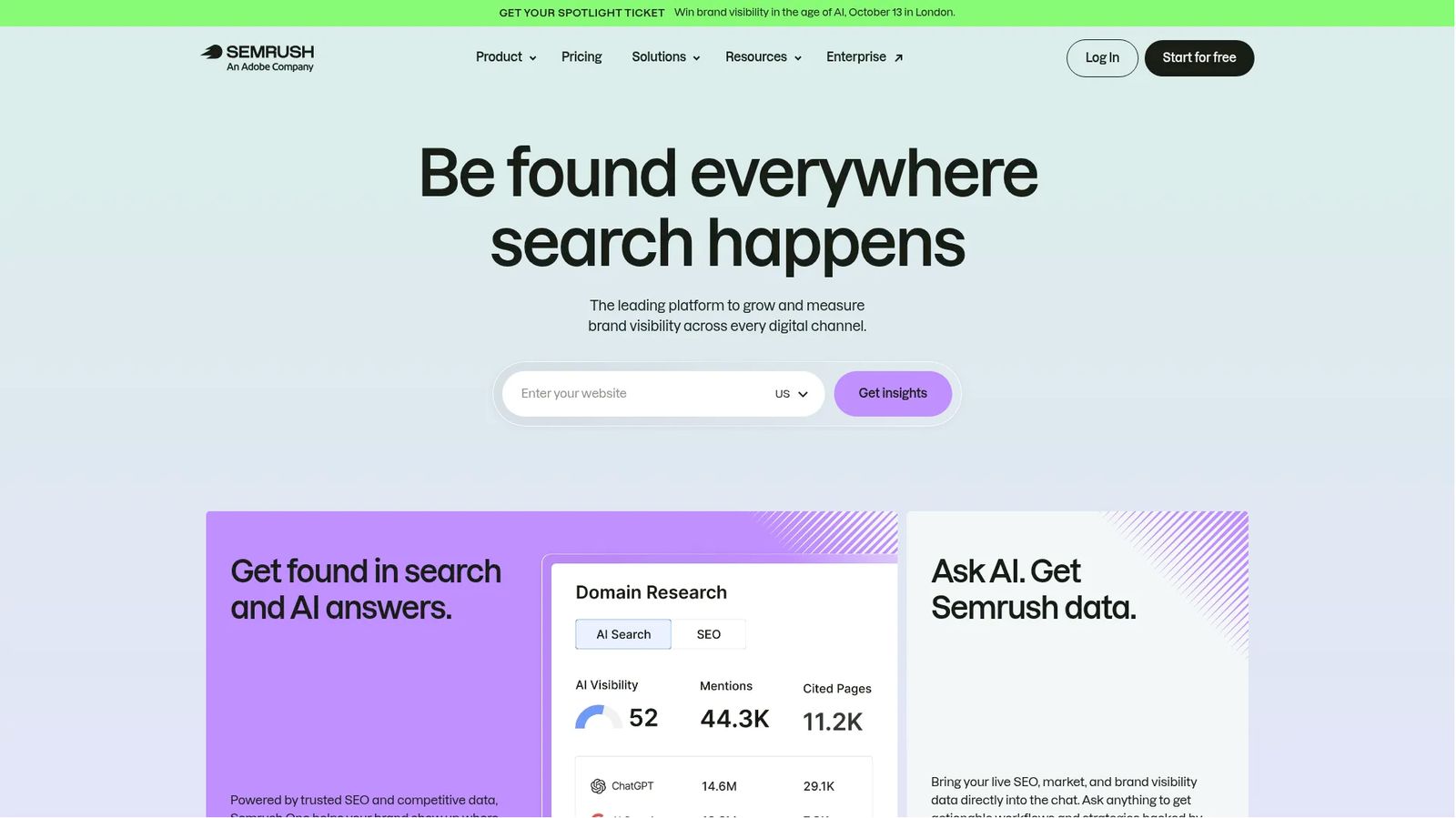
Semrush is the natural pick when your SEO reporting already lives there.
AI visibility appears beside keyword research, audits, rank tracking, backlink data, and competitor analysis.
Best For: SEO teams and agencies already standardized on Semrush.
What Semrush Does
Semrush covers keyword research, competitor analysis, site audits, backlink analysis, and rank tracking.
Its AI visibility and brand sentiment monitoring help teams see how a brand appears in generated answers next to conventional SEO data.
Why Consider Semrush Over Peec AI
Semrush gives you one reporting surface for classic SEO and AI visibility.
That helps when a citation drop might connect to rankings, backlinks, or technical issues. The trade-off is workflow depth: Semrush gives research and visibility signals, while large-scale page production still needs another process.
Pricing
Pricing: Semrush has a free plan. Paid SEO plans start at $139/mo, with higher tiers and custom Enterprise pricing.
G2 rating: 4.5/5
Choose Semrush When
- Your team already uses Semrush.
- You want AI visibility next to keyword, ranking, and audit data.
- You need a free tier to test the category.
Consider Another Option When
Teams needing deep prompt history, market segmentation, CMS publishing, or outreach may need a dedicated AI-search execution platform.
4. Ahrefs Brand Radar | Best For Teams Standardized On Ahrefs Data
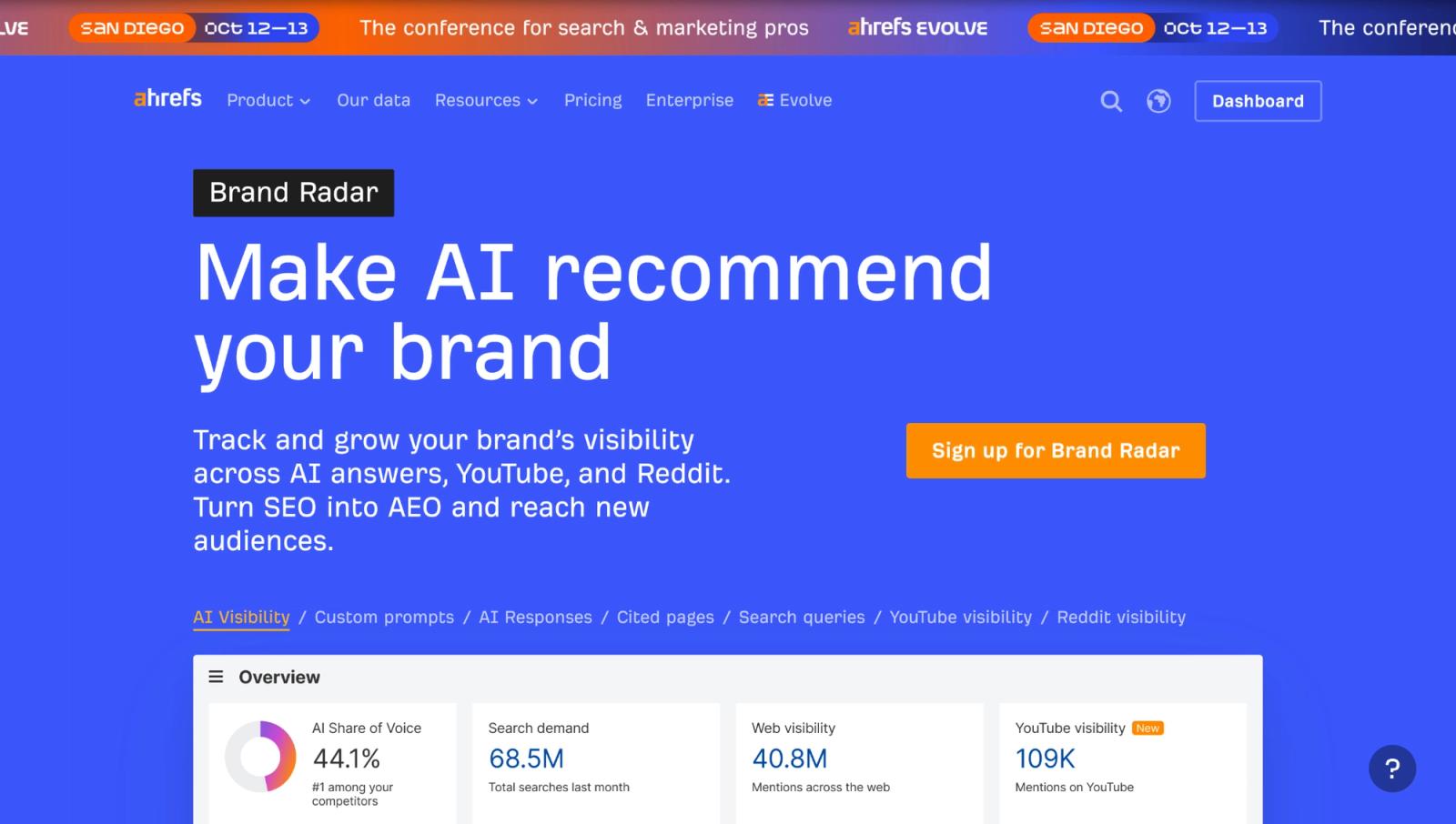
Ahrefs Brand Radar fits teams whose backlink, ranking, and competitor reporting already lives in Ahrefs.
It keeps AI visibility close to the authority data many SEO teams already trust.
Best For: SEO teams that want AI visibility tracking inside an Ahrefs-based workflow.
What Ahrefs Brand Radar Does
Brand Radar supports custom prompt tracking, AI visibility benchmarking, and citation source discovery.
It also tracks visibility across surfaces like YouTube and Reddit, which can matter because AI answers often cite community and media sources.
Why Consider Ahrefs Brand Radar Over Peec AI
The main reasons are price flexibility and data continuity.
Custom prompts start at $50/mo, which gives teams a low-friction entry point. And if Ahrefs is already your reporting baseline, adding AI visibility there reduces reconciliation work.
Pricing
Pricing: Custom Prompts start at $50/mo. All-model access is listed at $699/mo.
Brand Radar is an add-on, so your full cost depends on your Ahrefs subscription.
Choose Ahrefs Brand Radar When
- Ahrefs is your SEO system of record.
- You want to start with a small custom prompt set.
- Reddit and YouTube visibility affect your citation strategy.
Consider Another Option When
Teams needing regional prompt reporting, workflow automation, or content production may need extra tooling.
5. Otterly.AI | Best Lower-Cost GEO Tracking
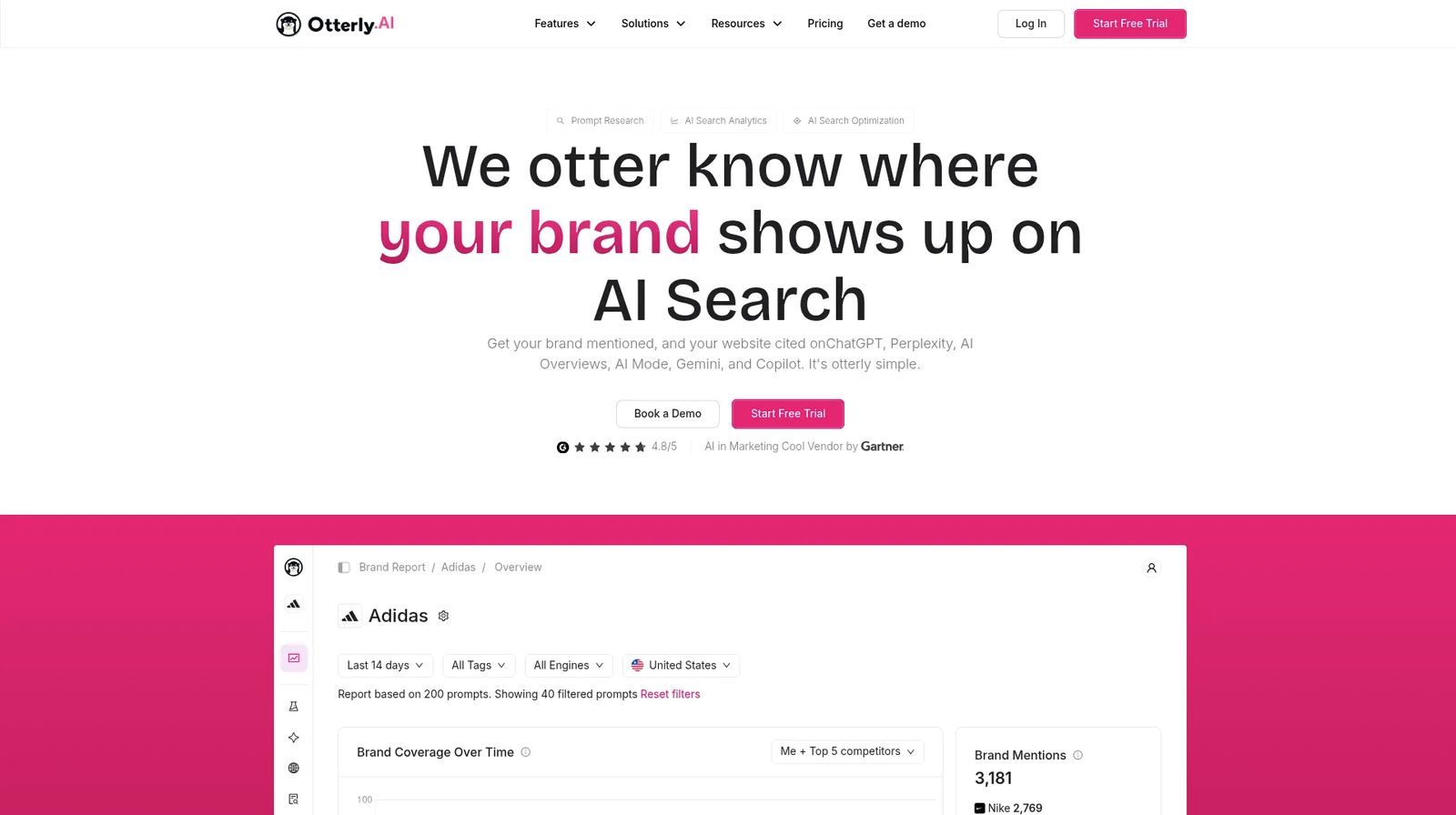
Otterly.AI is the easiest entry point on price.
At $29/mo for Lite, it lets a team build an AI visibility baseline without a large budget request.
Best For: Marketing teams and agencies starting a GEO program.
What Otterly.AI Does
Otterly.AI covers prompt research, brand visibility tracking, citation analytics, and GEO content audits.
The audit layer gives teams recommendations tied to the gaps they see in AI answers.
Why Consider Otterly.AI Over Peec AI
Price and simplicity.
Lite starts at $29/mo, Standard is $189/mo, Premium is $489/mo, and Enterprise is custom. For a single-market brand with a focused prompt set, that can be enough.
Pricing
Pricing: Lite $29/mo, Standard $189/mo, Premium $489/mo, Enterprise custom. Annual billing is 15% off.
G2 rating: 4.7/5
Choose Otterly.AI When
- Budget is tight.
- Your prompt set is focused.
- You want GEO audit recommendations beside tracking.
Consider Another Option When
Otterly.AI doesn’t list a traditional SEO suite, CMS publishing, or outreach layer.
6. Scrunch AI | Best For AI Crawler Analytics And Agent Experience
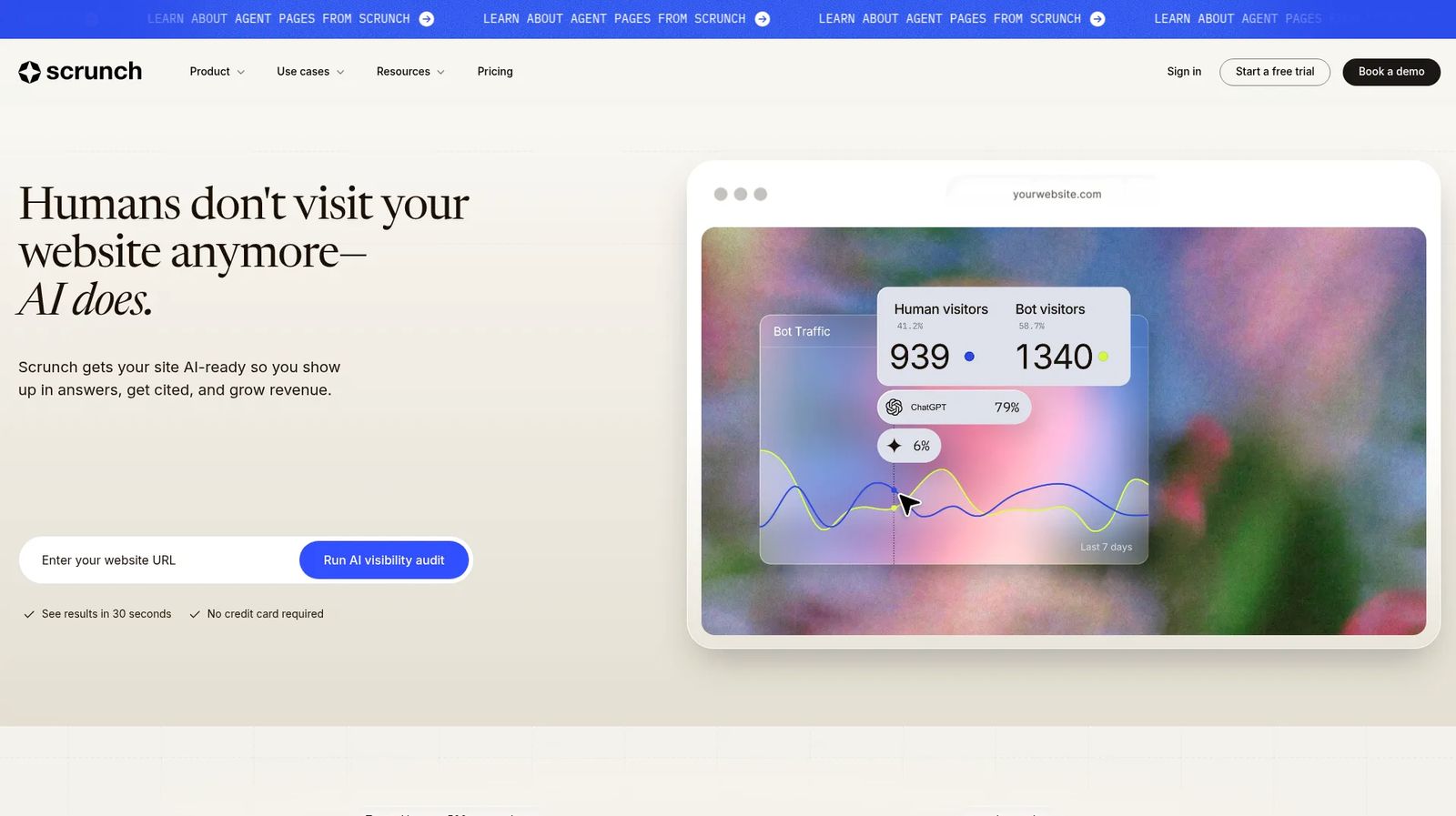
Scrunch starts with a technical question: can AI systems access and understand your site?
For JavaScript-heavy, documentation-heavy, or complex commerce sites, that layer can block visibility before content quality even enters the conversation.
Best For: SEO and marketing teams dealing with AI readability problems.
What Scrunch AI Does
Scrunch provides prompt, citation, ranking, and competitor monitoring.
Its Agent Experience Platform creates AI-readable versions of website pages. That’s useful when complex site structures make pages harder for AI systems to parse.
Why Consider Scrunch AI Over Peec AI
Scrunch is stronger when the problem sits in access, crawlability, or AI readability.
If your content is strong but absent from AI answers, Scrunch’s technical lens can find issues a prompt tracker may miss.
Pricing
Pricing: Starter is $250/mo billed annually or $300 month-to-month. Growth is $417/mo billed annually or $500 month-to-month. Enterprise is custom. A 7-day Starter trial is available.
G2 rating: 4.6/5
Choose Scrunch AI When
- AI systems may struggle to access your content.
- Your site is JavaScript-heavy or structurally complex.
- You want technical AI-readiness analysis beside tracking.
Consider Another Option When
Scrunch doesn’t list a full SEO research suite or content production system.
7. Athena HQ | Best For Turning Visibility Data Into Recommended Actions
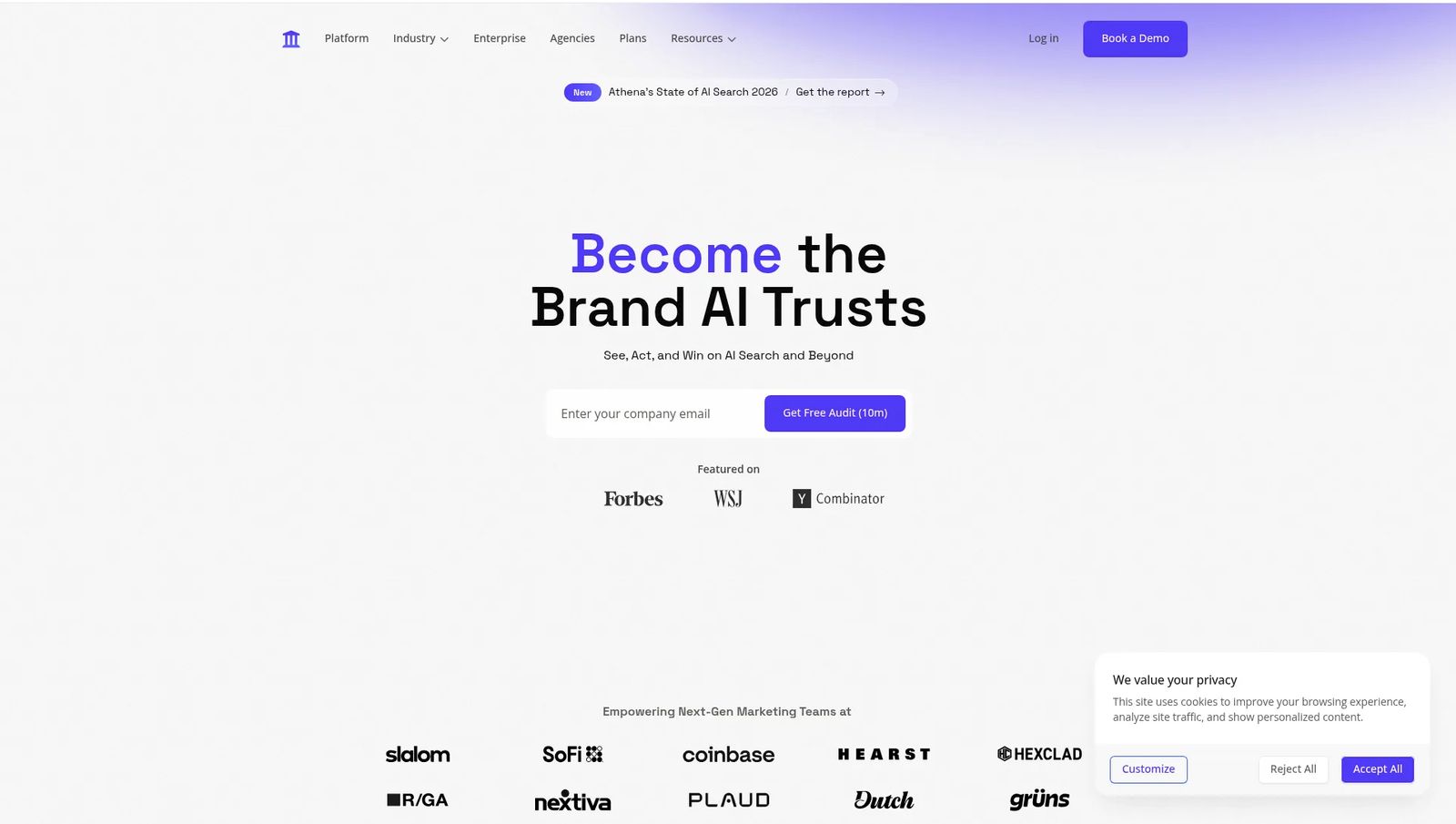
Athena HQ goes one step past pure tracking.
It tracks visibility across major LLMs, then gives recommendations tied to the gaps.
Best For: AEO and GEO teams that want visibility tracking with content recommendations.
What Athena HQ Does
Athena HQ covers cross-platform AI visibility tracking, competitor analysis, citation analysis, content-gap analysis, and AI-powered content recommendations.
The free Essential tier gives teams a low-risk way to test the workflow.
Why Consider Athena HQ Over Peec AI
Athena HQ leans into prescription.
During a trial, test whether it only recommends the work or helps complete it. Those are different purchases.
Pricing
Pricing: Essential is free with 300 credits. Starter is $295/mo with 3,600 credits. Enterprise is custom.
G2 rating: 4.9/5
Choose Athena HQ When
- You want recommendations tied to visibility data.
- Citation and content-gap analysis are central to your plan.
- You want a free tier before buying.
Consider Another Option When
Credit usage needs careful planning. Athena HQ doesn’t list a traditional SEO suite, CMS publishing, or outreach layer.
8. Quattr | Best For Semantic Gap Analysis And Technical AI-Search Auditing
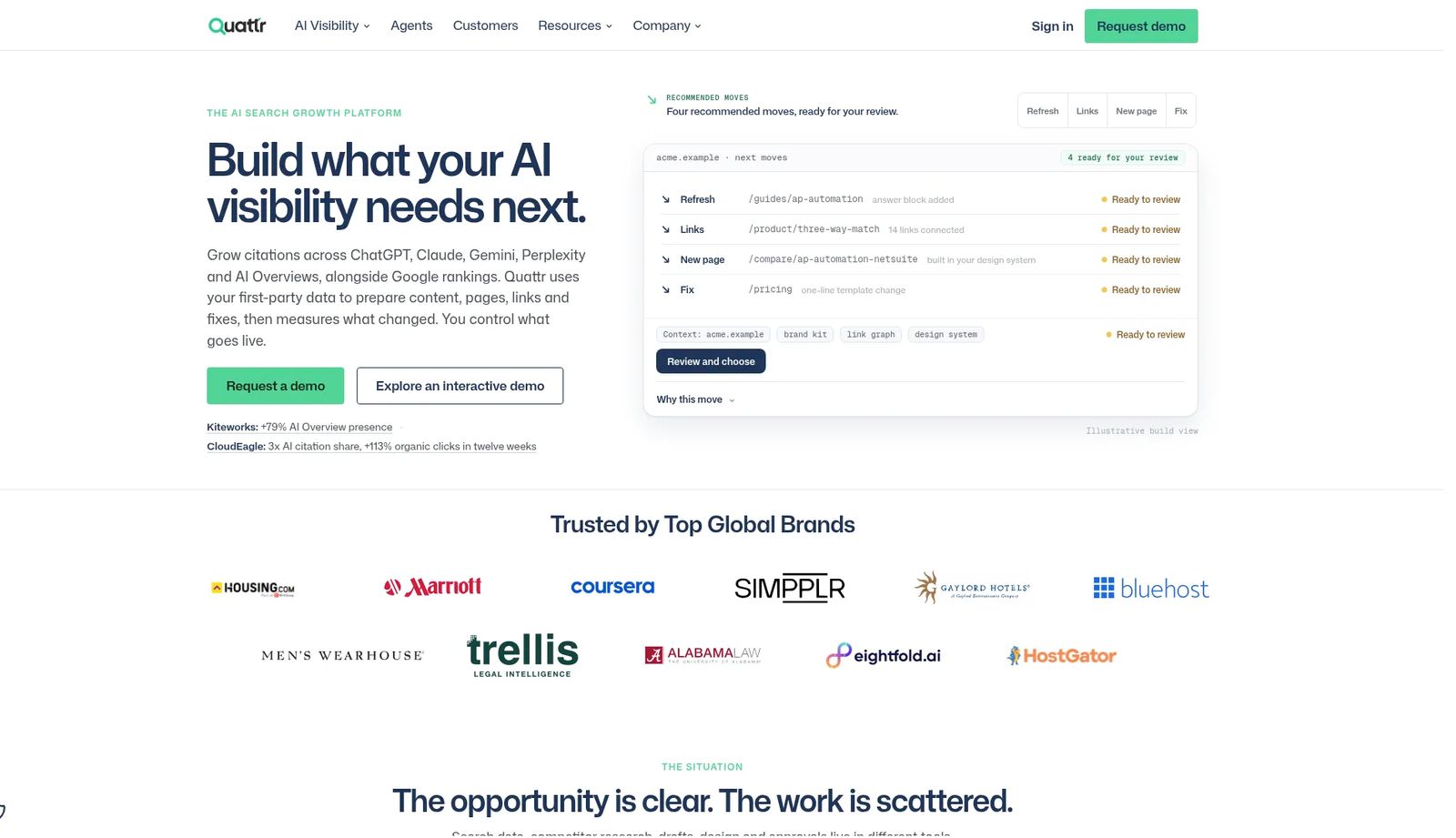
Quattr connects traditional search work with AI answer visibility.
It’s useful for teams that want Google rankings and AI citations managed together.
Best For: SEO and content teams working across search rankings and AI citations.
What Quattr Does
Quattr covers AI visibility tracking across search and AI platforms, AI-assisted content creation, and automated internal linking.
The internal linking piece is valuable for large sites. Manual internal linking across hundreds or thousands of URLs is the kind of task that makes calendars sad.
Why Consider Quattr Over Peec AI
Quattr covers more of the work loop than a pure tracker.
It pairs visibility data with semantic gap analysis, creation support, and internal linking, which can reduce handoffs for SEO teams.
Pricing
Pricing: Quattr doesn’t list public pricing. It has demos and a free trial.
G2 rating: 4.9/5
Choose Quattr When
- You want search ranking growth and AI citation growth in one platform.
- Semantic content gaps are a priority.
- Automated internal linking would save your team time.
Consider Another Option When
You’ll need a sales conversation before budgeting. Confirm publishing and outreach scope during the demo.
For more tools in this category, see our roundup of the best AEO tools.
Standalone Tracker Vs. SEO Suite Vs. Execution Platform
Ask these questions before you buy:
- Do you need tracking alone, or tracking plus execution?
- Do you already pay for an SEO suite?
- Who owns the work after a gap appears?
- Does that person or team have capacity?
If the answer to question 3 is “one overloaded person,” another dashboard won’t save the quarter.
For deeper tracking comparisons, see our guides to generative engine optimization tools and AI brand monitoring tools.
How To Calculate The Cost Of An AI Search Stack
A low tracker price can hide the cost of the surrounding stack.
Build the model with your numbers.
Add your tracker, SEO suite, content tools, outreach software, contact data, CMS workflow tools, and seats. Then compare that total against Slate’s $499/month starting price.
Also count handoff time. If a gap takes 15 working days to become a live page change, the drag is part of the cost.
How To Read AI Visibility Data You Can Defend
AI visibility varies by prompt wording, engine, model, country, language, search grounding, source availability, and collection time.
So report the method first. Then report the score.
Keep the raw prompt wording, engine, locale, timestamp, captured answer, cited sources, and brand mentions. When someone challenges a number 6 weeks later, you’ll need the source material.
A defensible version sounds like this:
“Across 60 category prompts in 3 markets, sampled weekly, our presence moved from 22% to 31%. Our top competitor moved from 48% to 44%.”
That’s stronger than a lone visibility score with no denominator.
For more, see our guides to AI search analytics tools and AI search metrics.
What To Export Before You Switch AI Visibility Tools
Export the raw material before canceling anything.
- Prompt Inventory: Branded, category, comparison, and purchase-intent prompts.
- Brand And Competitor Lists: Keep entity names consistent across tools.
- Market And Language Settings: Mismatched locales ruin trend comparisons.
- Engine Coverage And Refresh Cadence: Make sure your new setup is comparable.
- Historical Reports: Export raw files, screenshots aren’t enough.
- Citation Source Domains: These often become outreach targets.
- Tracked URLs And Baselines: Connect AI visibility to page performance.
- Dashboards And Report Recipients: Don’t break someone’s Monday report.
- Ownership Map: Assign prompts, content, publishing, outreach, and reporting.
- Approval Rules: Preserve review gates and publishing permissions.
Run both tools for at least one full reporting cycle. Use the same prompt set in both so methodology differences don’t get mistaken for performance changes.
How To Choose The Right Peec AI Alternative
Start with your bottleneck.
Best For Enterprise Reporting And Multi-Market Teams
Profound is strong here, with custom Enterprise plans, up to 9 answer engines, team credits, and dedicated support.
Slate Enterprise fits teams that need governance plus content production and publishing in the same system. That’s especially useful for enterprise content and SEO teams managing thousands of URLs.
Check region settings, workspaces, permissions, exports, API access, and methodology documentation before signing.
Best For Lower-Cost AI Visibility Tracking
Otterly.AI starts at $29/mo. Ahrefs Brand Radar custom prompts start at $50/mo. Athena HQ has a free Essential tier with 300 credits.
Entry tiers can tighten prompt volume, engine access, refresh cadence, and region reporting. Model your prompt count before buying.
Best For Traditional SEO Plus AI Visibility
Semrush and Ahrefs Brand Radar are natural picks when you already use those suites.
Slate takes a different path by including native Ahrefs and Semrush access inside an execution platform. That works for teams that want the data without another suite subscription and another seat count.
Best For Content Creation And Bulk Refresh Programs
For a 2,000-page library, the deciding factors are URL prioritization, bulk operations, review rules, and publishing.
Slate’s Power Sheets handles creation, refreshes, and audits across large URL sets. Brand kit and knowledge base rules keep output consistent. Quattr’s AI-assisted creation and internal linking can help here too.
Best For Publishing And Outreach Workflows
Citation gaps split into owned-site gaps and source gaps.
Owned-site gaps need page changes. Source gaps need outreach to publishers, review sites, comparison pages, and partners.
Slate combines direct Webflow and WordPress publishing with link and brand-mention opportunity discovery plus contact enrichment.
For the diagnostic side, see our guide to AI citation tracking tools.
Best For Agencies And Multi-Client Operations
Agencies need client workspaces, per-client prompt sets, client-ready exports, clear methodology, seat economics, and publishing controls.
Slate has Agency plans. Peec AI has agency pricing on monthly credit blocks. Semrush and Ahrefs both have mature agency footprints through their SEO suites.
Model cost at your client count, not the vendor’s cleanest pricing example.
Frequently Asked Questions
What Are The Best Peec AI Alternatives In 2026?
Slate is best for end-to-end execution, with AI visibility tracking, content production, publishing, outreach, and GSC/GA4 reporting from $499/month.
Profound fits enterprise multi-engine programs. Semrush fits SEO teams that want AI visibility inside a broader suite. Otterly.AI is the budget tracker.
Ahrefs Brand Radar fits Ahrefs-heavy teams. Scrunch AI fits technical AI readability work. Athena HQ fits teams that want recommendations beside tracking. Quattr fits semantic gaps and internal linking.
What Is The Best Peec AI Alternative For Enterprise Teams?
Profound is a strong enterprise pick because it has custom plans, dedicated support, team credits, and access to up to 9 answer engines.
Slate Enterprise fits teams that want enterprise controls plus production, publishing, outreach, and reporting in one platform.
What Is The Cheapest Alternative To Peec AI For GEO?
Otterly.AI has the lowest published entry price at $29/mo.
Ahrefs Brand Radar custom prompts start at $50/mo. Athena HQ has a free Essential tier with 300 credits. Semrush also has a free plan.
Before choosing on price, check prompt count, markets, languages, engine coverage, seats, refresh cadence, and exports.
Which Peec AI Alternatives Support Region-Based Prompts And Reporting?
Many tools support country and language settings, but the details vary.
Test three things during the trial:
- Can country and language be configured separately?
- Does each locale use extra prompt credits?
- Can reports be filtered by market inside the tool?
Set up the same prompt in two countries and run it for a week. The reporting view will tell you more than the sales page.
Which Tools Track ChatGPT, Google AI Overviews, Gemini, Perplexity, Copilot, And Claude?
Coverage varies by vendor and tier.
Peec AI’s documented default coverage includes ChatGPT, Google AI Overviews, Google AI Mode, Perplexity, Gemini, and Microsoft Copilot. Profound has access to up to 9 answer engines on Enterprise. Slate tracks ChatGPT, Google AI Mode, Google AI Overviews, and Perplexity. Ahrefs Brand Radar lists all-model access at $699/mo.
Pick coverage based on buyer behavior. Deep tracking on ChatGPT and Google AI Overviews can beat shallow tracking across a long engine list.
Is AI Visibility Tracking Enough To Improve AI Search Performance?
Tracking gives you the gap. Improvement comes from prioritizing, creating, publishing, earning citations, and measuring.
During a demo, take one gap from your own data and run it through the product. Count tools, handoffs, and days. That number is the truth.
How Many Prompts Should I Track When Starting Out?
Start with four groups:
- Branded prompts
- Category prompts
- Comparison prompts
- Purchase-intent prompts
For a single-market B2B company, 10 to 15 prompts per group is enough to build a baseline.
Then add segments for product line, audience, funnel stage, and region. Prompt counts grow fast, so price the expanded set before choosing a plan.
How Do I Measure The Impact Of AI Search Work?
Track mentions, citations, sentiment, and share of voice beside GSC clicks, CTR, and GA4 traffic.
Keep a dated log of the content changes, publishing dates, and outreach work. Slate’s Pages brings GSC and GA4 data into the same view as AI visibility tracking.
Use careful language. A content refresh followed by more citations is useful evidence. Direct revenue attribution from AI answers needs more infrastructure than most teams have today.
What Is The Best Peec AI Alternative For Combined Content And SEO Teams?
Slate. It covers the full loop: opportunity discovery, agent-driven creation, bulk refreshes, Webflow and WordPress publishing, outreach, and GSC/GA4 reporting.
Pricing starts at $499/month, with Enterprise and Agency plans available.
Book a demo to see the workflow on your own data.