Manual topic clustering doesn't scale.
If you're spending hours organizing keyword spreadsheets, second-guessing pillar page structures, or rebuilding cluster maps every time your content strategy shifts, you already know the problem. AI tools for building topic clusters exist precisely to take that work off your plate - handling semantic grouping, gap analysis, and cluster architecture so you can focus on actually creating content.
This guide covers 12 tools worth your attention in 2026, with honest trade-offs included.
What topic clusters actually are
A topic cluster content architecture model is built around one pillar page (a broad, authoritative piece on a core topic) supported by multiple cluster pages (deeper dives into related subtopics), all internally linked together.
The model works because search engines reward topical authority. When your site covers a subject comprehensively and links those pieces together logically, you signal expertise across the entire topic - not just for a single keyword.
AI changes the execution. Instead of manually mapping semantic relationships between hundreds of keywords, AI SEO tools analyze search intent, identify content gaps, and generate cluster structures in minutes. The result is a repeatable, data-driven process rather than a best-guess exercise.
When AI topic clustering tools make sense
You're managing more than 50 target keywords
At small scale, a spreadsheet works fine. Once you're dealing with 50+ keywords across multiple topics, manual grouping becomes error-prone and time-consuming. AI tools handle the semantic analysis automatically.
You're building topical authority from scratch
If you're entering a competitive niche or launching a new content program, AI cluster tools help you map the full topic landscape quickly - identifying which pillar topics to prioritize and which subtopics to cover first.
Your existing content isn't ranking despite solid production
Sometimes the problem isn't content quality - it's structural. AI tools can audit your existing content, identify cluster gaps, and show you which pieces are competing against each other for the same keywords (keyword cannibalization).
You're running an agency or managing multiple clients
Cluster mapping for one client is manageable. Doing it for 10 clients simultaneously is not. AI tools that support bulk processing and team collaboration make agency-scale content operations viable.
Quick comparison: 12 AI tools for topic clusters
The 12 best AI tools for building topic clusters in 2026
1. Slate
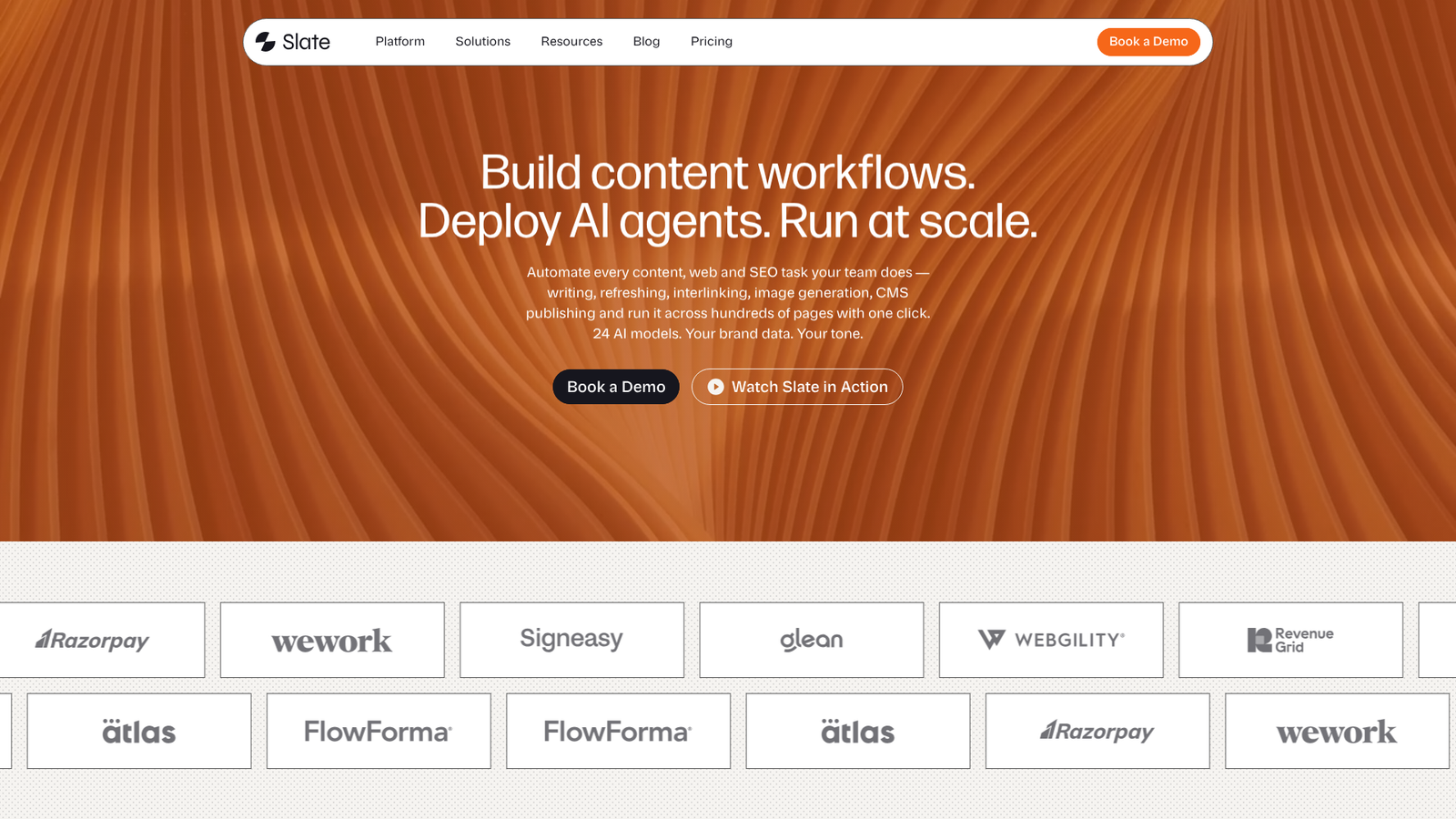
Slate is a content workflow automation platform that connects topic cluster planning directly to content production, briefing, and publishing - without requiring you to jump between five different tools.
Where most cluster tools stop at the strategy layer, Slate's workflow automation carries the work forward: once your cluster is mapped, automated workflows handle brief generation, content assignments, and status tracking. It works particularly well for content teams that need cluster strategy and execution to live in the same system.
Best for: Content teams that want cluster planning and production automation in one place
Key strengths
- Automated cluster-to-brief-to-publish workflow pipelines
- Built-in content gap identification across existing site content
- Team collaboration with role-based access and task assignment
- Integrates with CMS platforms to reduce manual publishing steps
- Tracks cluster coverage progress over time with visual dashboards
Pricing: Starting at $199/month
2. MarketMuse
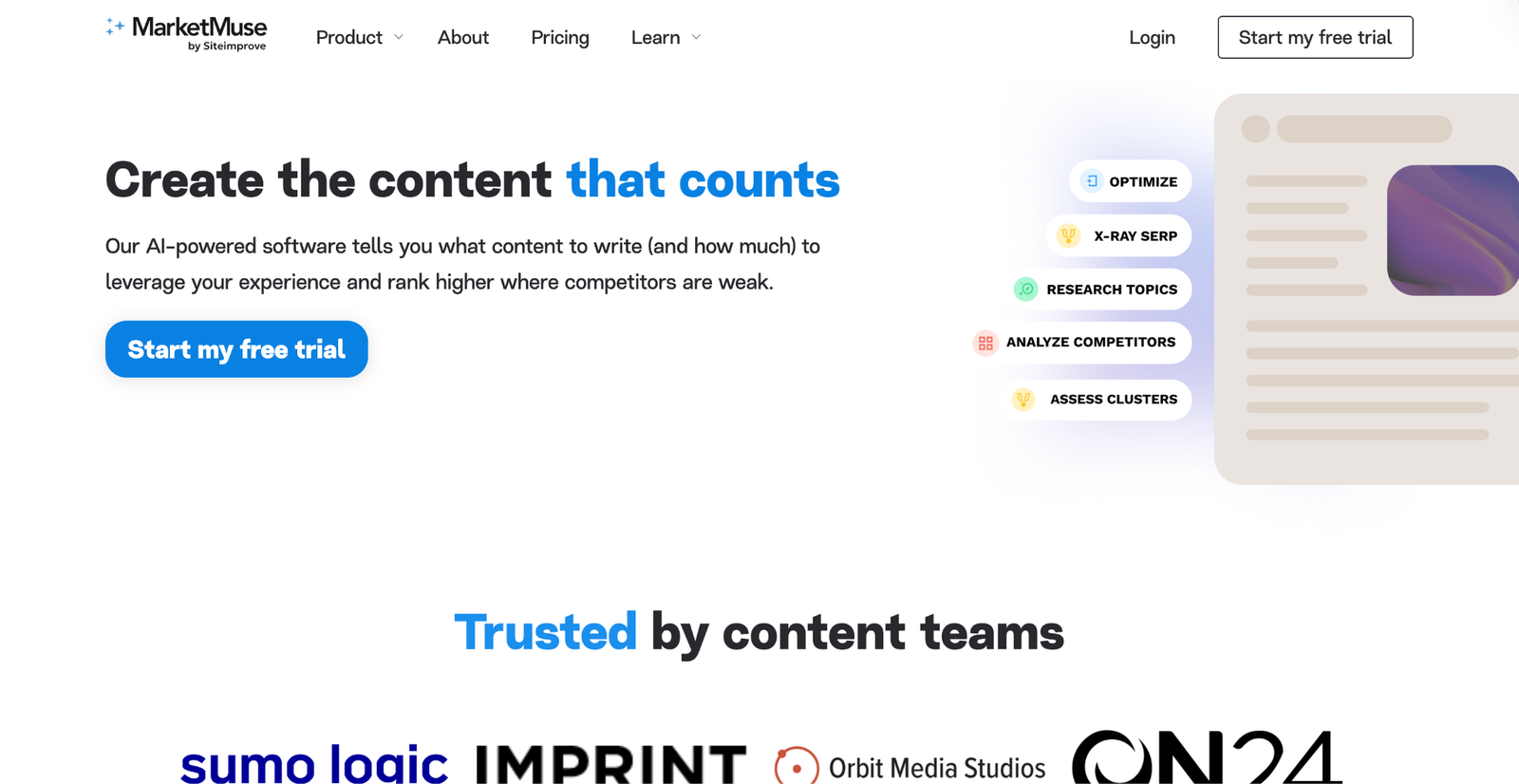
MarketMuse is an enterprise content intelligence platform that scores your content against competitors and identifies exactly where your topic clusters have gaps.
Its Content Score metric gives you a quantifiable benchmark - you can see how thoroughly a given topic is covered on your site versus the top-ranking pages. That makes it easier to prioritize which cluster pages to build next rather than guessing.
Best for: Enterprise SEO teams that need data-backed content prioritization
Key strengths
- Competitive content scoring with gap analysis at the page level
- AI-generated topic models for any target keyword
- Cluster visualization showing pillar-to-subtopic relationships
- Inventory analysis of existing content mapped to topic clusters
- Personalized difficulty scores based on your site's existing authority
Pricing:
$99/mo (Optimize plan)
Research $249/mo
Strategy $499/mo
free tier available (10 queries/month)
3. Keyword Insights
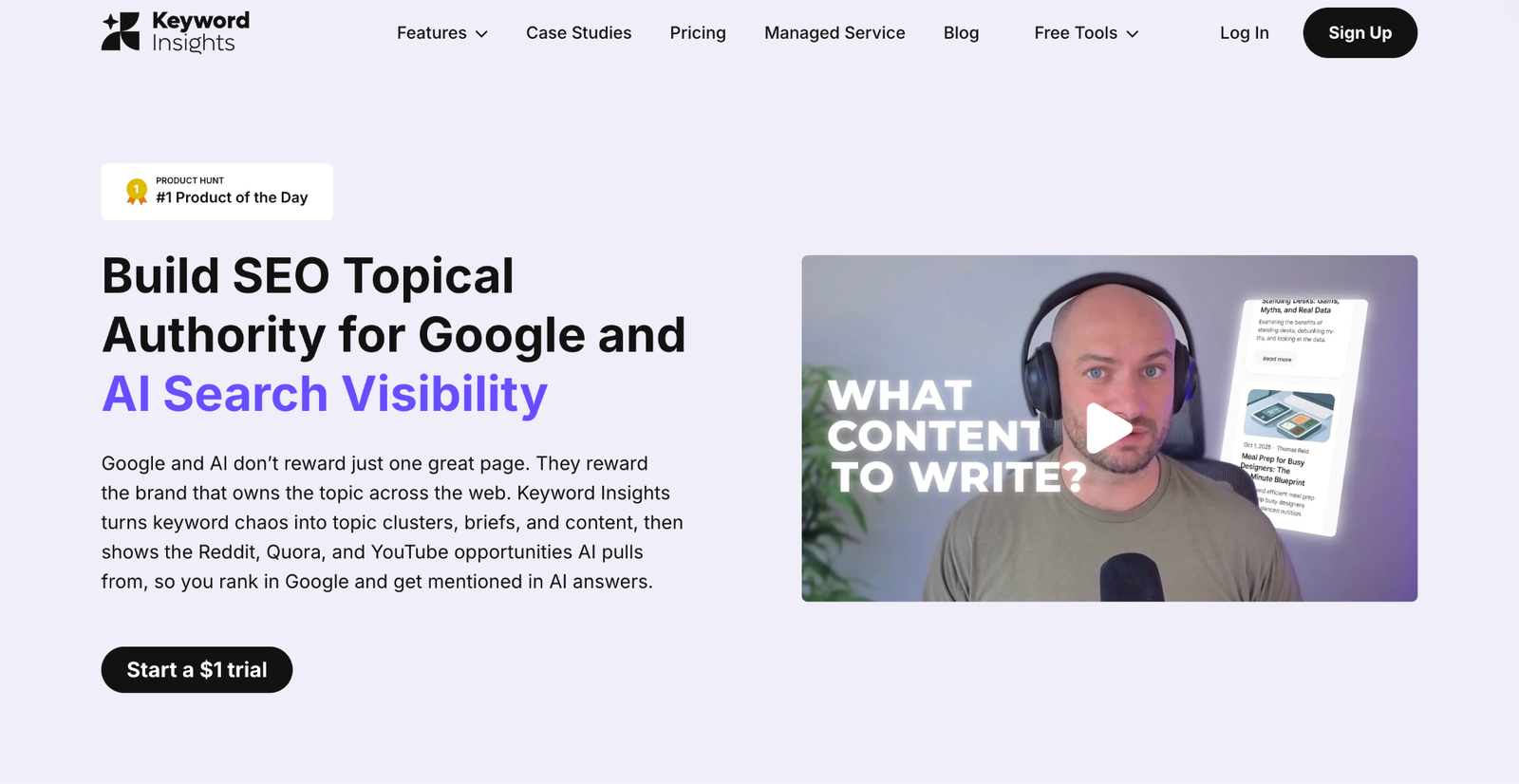
Keyword Insights is a dedicated keyword clustering tool that groups keywords based on SERP similarity - meaning it clusters by actual search intent rather than just semantic overlap.
This distinction matters. Two keywords can be semantically related but serve different intents, which means they belong on separate pages. Keyword Insights catches that nuance, which reduces cannibalization risk significantly.
Best for: SEO managers dealing with large keyword lists who need intent-accurate clustering
Key strengths
- SERP-based clustering that groups by actual search intent
- Bulk processing for thousands of keywords at once
- Content type classification (informational, commercial, transactional)
- Cluster reports exportable to CSV for team handoff
- Identifies keyword cannibalization across existing content
Pricing:
Starts at $49/mo (Basic plan, limited clustering runs).
Other tiers: $58/mo (12,000 keyword clustering credits), $99/mo (Standard), $145/mo (36,000 credits + more briefs).
Custom enterprise pricing available.
4. Semrush Topic Research
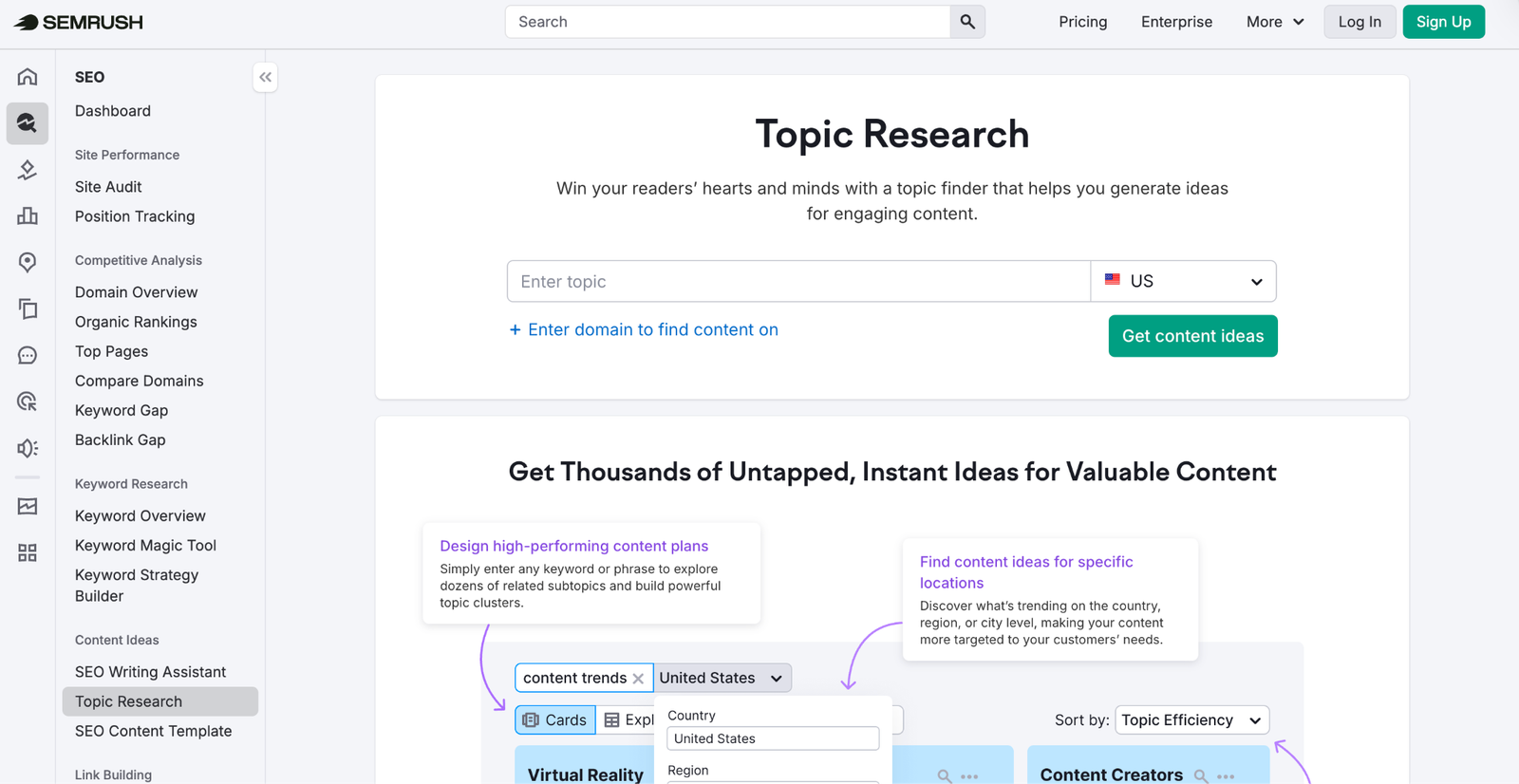
Semrush Topic Research is the cluster-building module inside the broader Semrush platform, giving you a visual map of subtopics, questions, and related searches around any pillar topic.
If your team already uses Semrush for rank tracking and backlink analysis, the Topic Research tool adds cluster planning without requiring a separate subscription. The trade-off: it's less specialized than dedicated clustering tools and works best as a starting point rather than a complete solution.
Best for: Teams already on Semrush who want cluster planning without adding another tool
Key strengths
- Visual topic map with search volume and difficulty data
- "Mind Map" view for presenting cluster structures to stakeholders
- Trending subtopic identification based on recent search behavior
- Integration with Semrush's keyword database of 26+ billion keywords
- Content ideas organized by engagement potential
Pricing: Starting at $139.95/month (included in Semrush Pro plan)
5. Surfer SEO
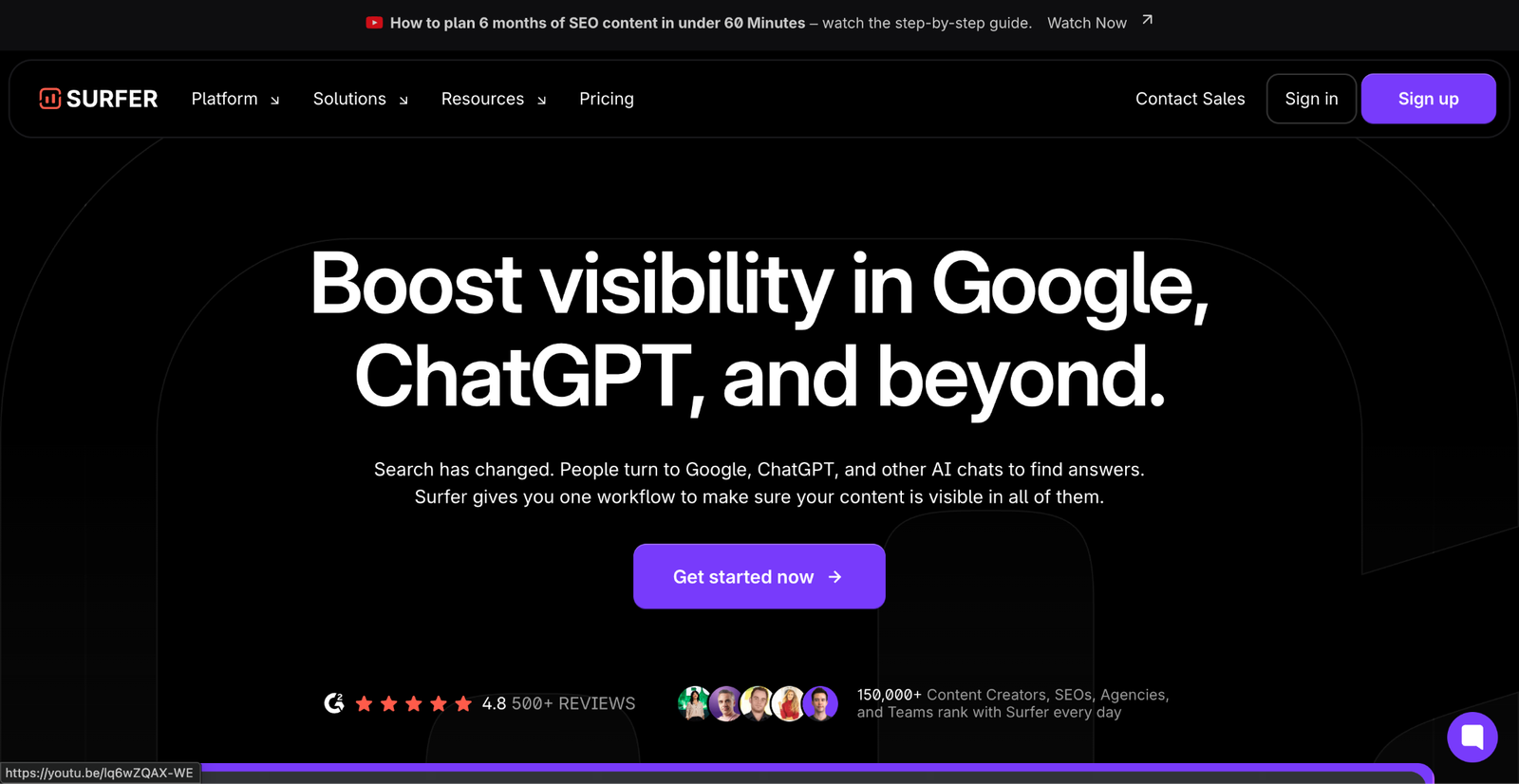
Surfer SEO combines keyword research, cluster planning, content briefs, and an AI writing editor in a single platform - making it one of the more complete end-to-end options for content teams that want fewer tools in their stack.
The Topical Map feature generates a full cluster structure for any niche, showing which pillar pages and supporting articles to create and in what order. It's particularly useful for teams launching new content programs who need a full roadmap quickly.
Best for: Content teams that want cluster strategy and content creation in one tool
Key strengths
- Topical Map feature generates full cluster structures automatically
- AI-powered content briefs tied directly to cluster positions
- Content Editor with real-time NLP optimization scoring
- Keyword research integrated with cluster planning workflow
- Audit tool identifies existing content that fits into clusters
Pricing:
Starts at $49/mo (Discovery plan)
Standard $99/mo; Pro $182/mo
Peace of Mind $299/mo
Enterprise custom.
6. Ahrefs

Ahrefs is primarily known for backlink analysis, but its Keywords Explorer includes clustering functionality that groups keyword ideas by parent topic - useful for identifying which keywords can be targeted on a single page versus which need separate cluster pages.
It's not a dedicated clustering tool, and the cluster features are less sophisticated than tools like Keyword Insights or MarketMuse. But if you're already paying for Ahrefs, the clustering data is worth using before adding another subscription.
Best for: SEO teams that rely heavily on Ahrefs and want basic clustering without extra cost
Key strengths
- Parent topic grouping inside Keywords Explorer
- Content gap analysis comparing your site to competitors
- Site Explorer shows which existing pages could serve as cluster hubs
- Keyword difficulty scores calibrated to realistic ranking potential
- Large keyword database with accurate search volume data
Pricing: Starting at $129/month
7. Clearscope
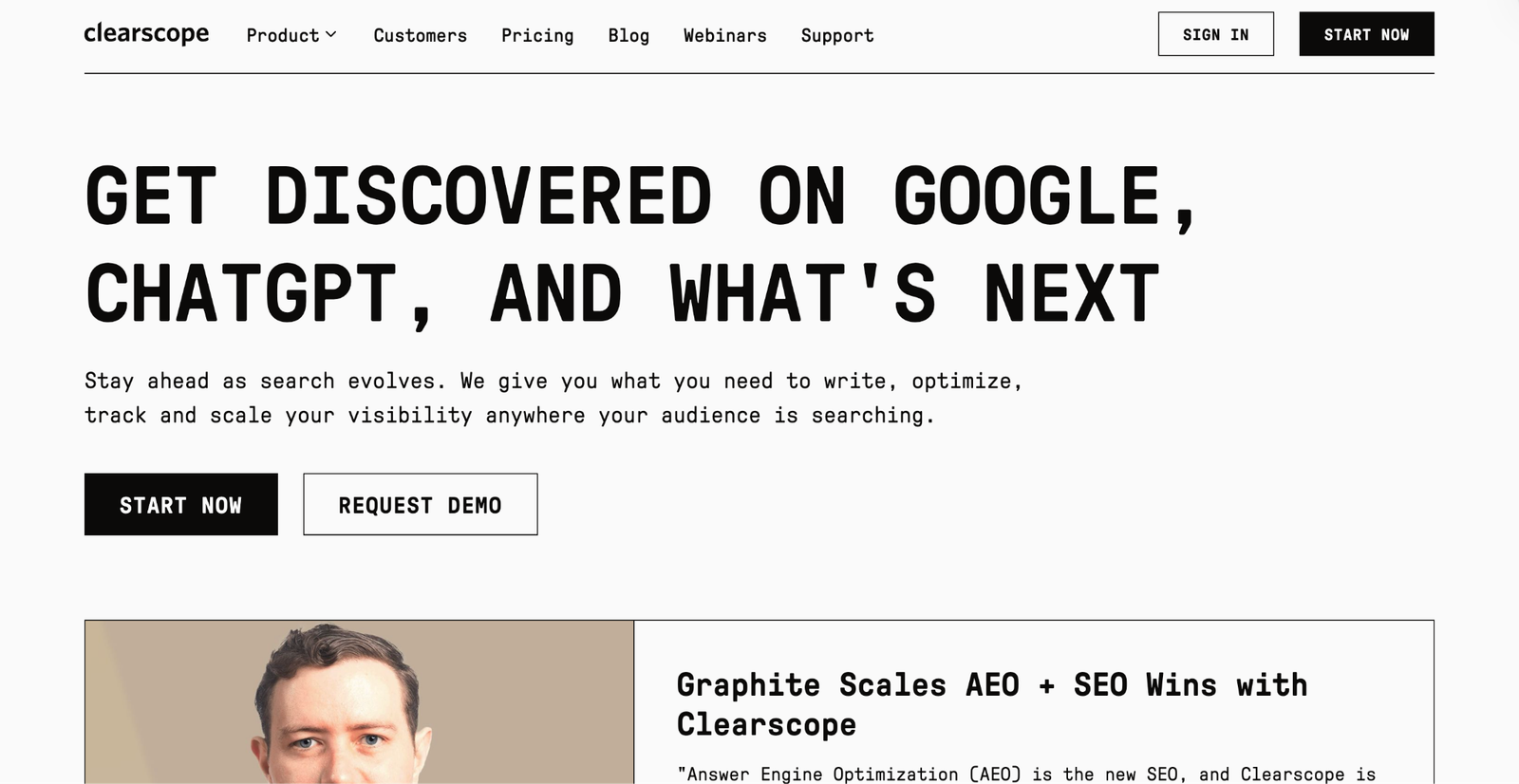
Clearscope focuses on content optimization depth - it analyzes top-ranking pages for a keyword and tells you exactly which related terms and subtopics your content needs to cover to compete.
For topic cluster work, Clearscope helps you ensure each cluster page is genuinely comprehensive rather than thin. The grading system (A+ to D) gives writers a clear target, which reduces back-and-forth between strategists and content creators.
Best for: Content teams that prioritize depth and topical completeness over cluster architecture
Key strengths
- Letter-grade scoring system for topical coverage completeness
- Related term recommendations sourced from top-ranking SERP pages
- Content inventory tracking across all cluster pages
- Google Docs and WordPress integrations for in-editor optimization
- Team reporting to track content grade improvements over time
Pricing:
Starts at $129/mo (Essentials plan, unlimited users).
Business $399/mo
Enterprise custom.
8. Frase
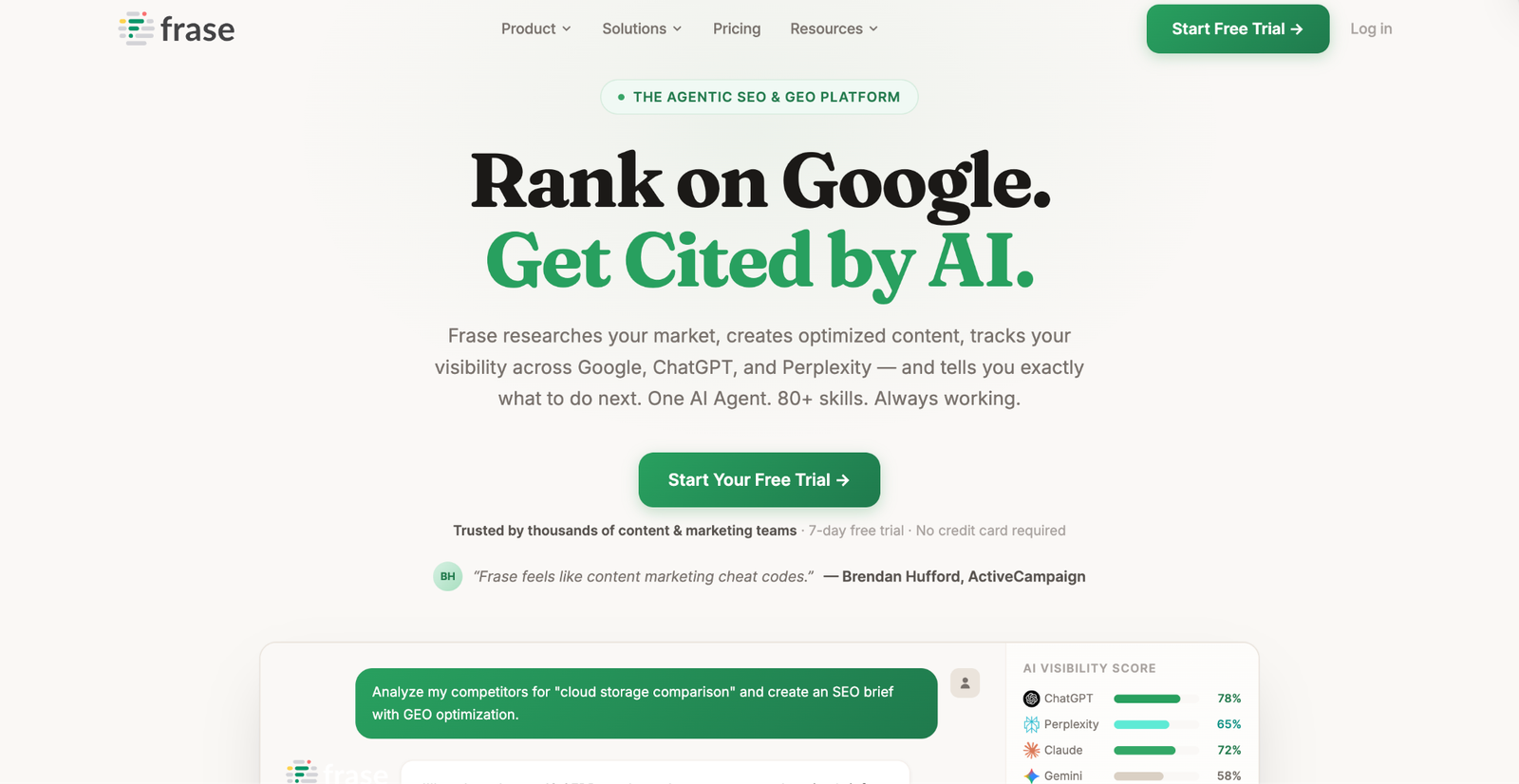
Frase combines AI research, cluster-aware outlining, and content generation in a mid-market package that costs significantly less than enterprise alternatives like MarketMuse or Clearscope.
The research workflow is particularly strong: Frase pulls SERP data, identifies common subtopics across top-ranking pages, and generates outlines that reflect the full cluster context. It's a practical choice for teams that need solid cluster research without a four-figure monthly budget.
Best for: Mid-market content teams that need research and outlining without enterprise pricing
Key strengths
- SERP-based research that surfaces subtopics from top-ranking pages
- AI outline generation with cluster context built in
- Content scoring against competitors for each cluster page
- Answer engine for identifying question-based cluster opportunities
- Team workspace for collaborative cluster planning
Pricing:
Starts at $49/mo (Starter, monthly billing) or $39.20/mo (Starter, billed annually).
Professional $129/mo; Scale $299/mo
Enterprise custom.
9. RankYak
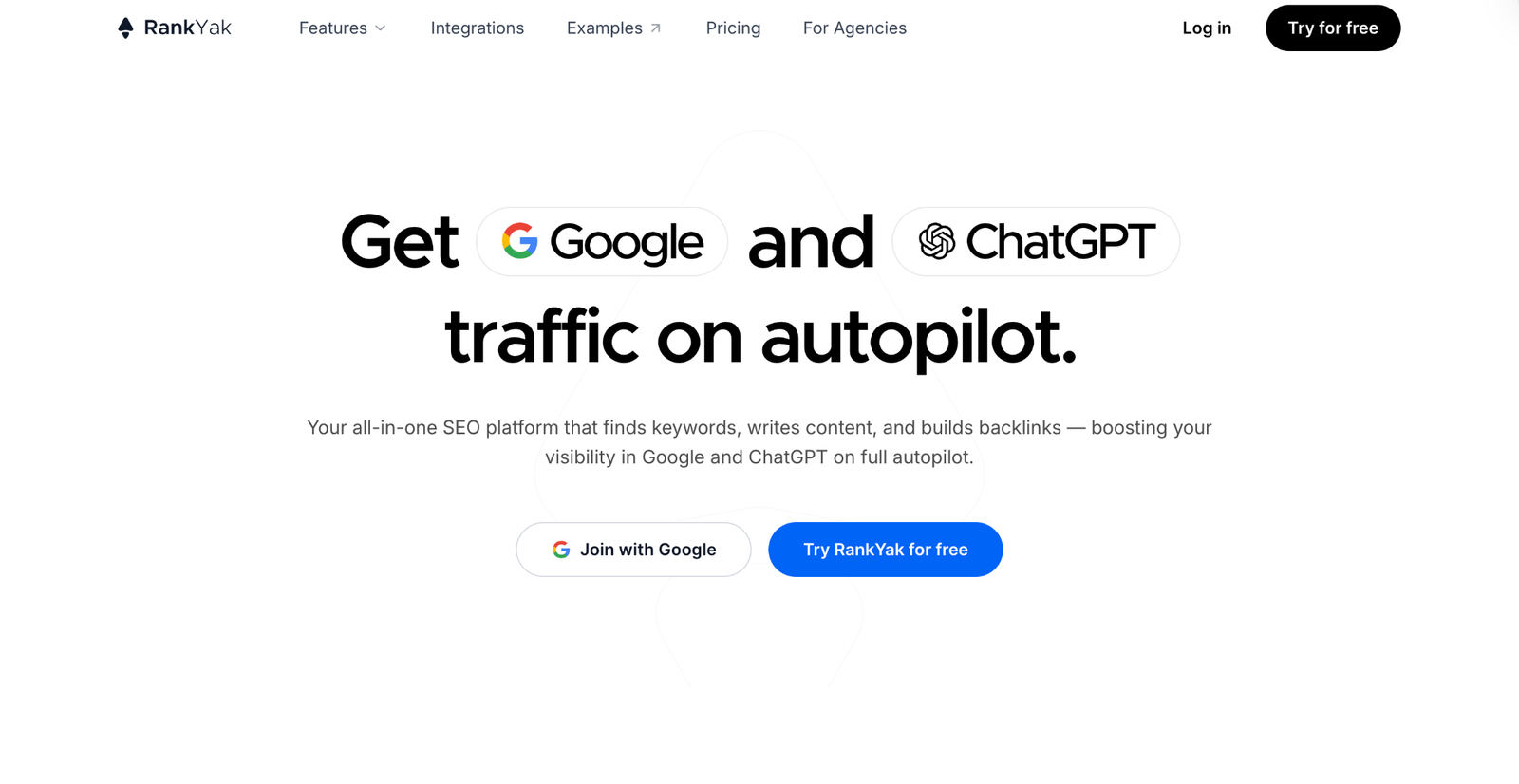
RankYak is a topic cluster tool built specifically for global content strategies, supporting over 40 languages - making it one of the few options that works well for teams targeting non-English markets.
The tool generates cluster structures automatically from a seed keyword, identifies content gaps, and produces briefs in the target language. For international SEO teams or agencies with multilingual clients, that language coverage is a meaningful differentiator.
Best for: International SEO teams and agencies managing multilingual content programs
Key strengths
- 40+ language support for global topic cluster generation
- Automated cluster structure from a single seed keyword
- Content gap identification across existing multilingual content
- Brief generation in the target language, not just translated
- Free tier available for smaller projects or testing
Pricing:
No free tier. RankYak has a single plan at $99/month with a 3-day free trial (cancel anytime). Unlimited keyword research, 1 daily article up to 5,000 words, auto-publishing, multi-language support, and platform integrations are all included. Multi-site and agency discounts available.
10. Juma
Juma is an AI-powered keyword clustering platform with team collaboration features and customizable AI model selection - meaning you can choose which underlying AI model handles your cluster analysis based on your preferences or existing subscriptions.
That flexibility is unusual. Most tools lock you into a single AI model. Juma's approach works particularly well for agencies or power users who have strong opinions about which AI models produce better semantic analysis for their specific niche.
Best for: Agencies and power users who want control over AI model selection in clustering
Key strengths
- Customizable AI model selection for cluster analysis
- Team collaboration with shared cluster workspaces
- Keyword grouping with intent classification built in
- Exportable cluster maps for client presentations
- Integrates with existing keyword research workflows
Pricing:
Free plan available (up to 5 seats). Paid plans start at $20/user/month (Business tier)
Higher tiers $20–$35/user/month for Business/Growth
Enterprise for 150+ users. Unlimited seats on every plan (no per-seat pricing on a hard cap). Usage is credit-based — simple tasks cost 1–10 credits; complex multi-step Flows cost 10–150 credits.
11. NeuronWriter
NeuronWriter is an NLP-based content optimization tool that uses semantic analysis to suggest cluster structures and identify which related topics your content is missing.
It's priced for freelancers and small teams, which makes it one of the more accessible options on this list. The trade-off is depth: NeuronWriter's cluster features are less comprehensive than enterprise tools, but for solo consultants or small agencies, the NLP-driven suggestions are genuinely useful.
Best for: Freelance SEO consultants and small agencies on a limited budget
Key strengths
- NLP-based semantic cluster suggestions from any seed topic
- Content scoring with competitor comparison for each cluster page
- Internal linking recommendations tied to cluster structure
- SERP analysis integrated into cluster planning workflow
- Lifetime deal options available through AppSumo periodically
Pricing: Starting at $23/month
12. Writesonic
Writesonic is primarily an AI writing platform, but its keyword research and topic clustering features have matured enough to make it a viable option for teams that want cluster planning and content creation in one affordable package.
The cluster functionality is less specialized than dedicated tools, but the integration between cluster context and AI-generated content is tighter than most. If your primary bottleneck is content production rather than cluster strategy, Writesonic's balance of features at its price point is hard to argue with.
Best for: Content teams prioritizing volume and speed over deep cluster strategy
Key strengths
- Integrated cluster planning and AI content generation
- Keyword research with topic grouping built into the writing workflow
- Brand voice settings applied consistently across cluster content
- Bulk content generation for populating cluster pages quickly
- Affordable entry point for teams with tight budgets
Pricing:
Starts at $39/mo (Lite, billed annually) or $49/mo (monthly billing).
Standard $79/mo (annual); Professional $249/mo; Advanced $499/mo
Enterprise from $1,499/mo.
Key features to look for in AI topic cluster tools
Semantic clustering accuracy
The core job of any cluster tool is grouping keywords by meaning and intent - not just surface-level similarity. Look for tools that use SERP data (not just NLP alone) to validate their groupings, since actual search results reflect real user intent better than algorithmic similarity scores.
Content gap identification
A cluster map is only useful if it shows you what's missing. The best tools compare your existing content against a complete topic model and flag the gaps - so you're building toward comprehensive coverage rather than just adding more pages.
Integration with your existing workflow
A tool that produces great cluster maps but requires manual export, reformatting, and re-entry into your CMS adds friction. Prioritize tools that connect to your content production process, whether that's through direct CMS integration, API access, or workflow automation like Slate's workflow automation.
Scalability for your keyword volume
Some tools handle hundreds of keywords well but slow down or become expensive at thousands. Know your keyword volume before committing - and check whether the tool's pricing scales per keyword, per project, or per seat.
How to choose the right AI topic cluster tool
Start with your team size and workflow
Solo consultants and small teams have different needs than 20-person content departments. Tools like NeuronWriter and Writesonic are built for individual workflows. Tools like Slate, MarketMuse, and Juma are built for team collaboration, role-based access, and multi-project management.
Match the tool to your primary bottleneck
If your bottleneck is organizing existing keyword data, Keyword Insights or Ahrefs will solve the problem efficiently. If it's identifying what content to create next, MarketMuse or Frase are better fits. If it's connecting cluster strategy to content production, Slate handles the full pipeline.
Consider your budget honestly
Enterprise tools like MarketMuse and Clearscope are genuinely powerful, but they're priced for teams with significant content budgets. If you're spending $189/month on a tool but only publishing four pieces of content per month, the math doesn't work. RankYak's free tier and Writesonic's $16/month entry point exist for a reason.
Test before committing
Most tools on this list offer free trials or free tiers. Run the same seed keyword through two or three tools and compare the cluster structures they produce. The quality difference between tools is often more visible in practice than in feature lists.
Conclusion
Manual clustering does not scale anymore.
AI tools have turned what used to be a slow, error-prone process into something fast, repeatable, and strategic. But tools alone are not the advantage.
Execution is.
Teams that win are:
- Building clusters consistently
- Filling gaps systematically
- Linking content intelligently
- Updating clusters continuously
Pick one tool, build your workflow, and start compounding authority.
That is what actually drives results in 2026.
Frequently asked questions
What is a topic cluster in SEO?
A topic cluster is a content structure where a central pillar page covers a broad topic and links to multiple related subpages that explore subtopics in depth. This helps search engines understand topical authority.
Why are topic clusters important for SEO?
Topic clusters improve internal linking, reduce keyword cannibalization, and signal expertise across a subject. This leads to stronger rankings across multiple related queries.
How do AI tools help with topic clustering?
AI tools automate semantic grouping, identify content gaps, and generate cluster structures based on search intent and SERP data. This reduces manual effort and improves accuracy.
What is the difference between keyword clustering and topic clustering?
Keyword clustering groups similar keywords together. Topic clustering goes further by organizing content into structured relationships between pillar and subtopics.
Which tool is best for topic clustering?
It depends on your use case.
- Slate for workflow and execution
- MarketMuse for strategy
- Keyword Insights for clustering accuracy
- Frase for affordability and content workflows
How many keywords should a cluster include?
There is no fixed number. A cluster should include all keywords that share the same search intent. The focus should be on coverage, not volume.
Do topic clusters help with AI search visibility?
Yes. AI models prefer content that fully answers a topic. Well-structured clusters improve completeness, which increases chances of being cited in AI-generated answers.