Your brand is invisible in AI responses. You just don't know it yet.
That's the problem Profound was built to solve - and it does a credible job of it. But as AI-assisted search matures in 2026, "knowing your score" isn't enough. Marketers need tools that help them act on that data, not just stare at it.
Whether you're frustrated by Profound's custom enterprise pricing, its monitoring-only approach, or its single-seat design that makes agency workflows awkward, there are now strong alternatives worth evaluating. This guide covers 12 of them - with a pricing comparison table, an AI engine coverage matrix, and a framework for choosing the right tool based on whether you need tracking, execution, or both.
Why marketers are looking for Profound alternatives in 2026
Profound pioneered the AI visibility tracking category and still holds strong brand recognition. It covers 10+ AI engines, maintains enterprise-grade security certifications and has built a meaningful G2 presence with over 100 customer reviews. For pure monitoring, it's a capable tool.
The friction starts when you ask: "Now what?"
Profound is designed around visibility tracking rather than content creation and publishing workflows. Competitors like GetMint explicitly differentiate by moving "from monitoring to publishing in one workflow," and that gap matters more as teams shift from measuring AI visibility to improving it. Knowing your brand appears in 12% of relevant ChatGPT responses is useful. Knowing what to do to get to 30% is what drives outcomes.
Beyond the execution gap, there are three other reasons teams explore alternatives:
- Pricing accessibility - Profound's custom enterprise pricing model may exceed budget constraints for mid-market teams, whereas alternatives like GetMint start at €99/mo and Hall AI at $239/mo
- Single-seat design - Profound is designed as a single-seat solution, limiting multi-client management compared to alternatives like AthenaHQ, which offers 3 user seats on self-serve plans
- Emerging platform coverage - While Profound tracks 10+ AI engines, teams requiring coverage of emerging platforms like DeepSeek or specialized models may find alternatives offer more customizable engine selection on base plans
The core problem: Profound tells you where you appear in AI responses. It doesn't tell you how to appear more.
How we evaluated these Profound alternatives
We assessed each tool across seven dimensions, weighted toward the criteria that matter most for mid-market and enterprise teams in 2026.
Evaluation criteria
AI engine coverage - Which platforms does the tool monitor? At minimum, we looked for ChatGPT (GPT-4o/GPT-5), Perplexity, and Google Gemini. Broader coverage of Claude, Copilot, Meta AI, Grok, and DeepSeek earned higher marks.
Tracking accuracy - There's a meaningful difference between mention tracking and citation tracking (the AI specifically recommends or attributes information to your brand). We noted which level each tool operates at.
Action layer - Does the tool provide optimization recommendations, content gap analysis, or suggested improvements? Or does it stop at the dashboard? This is the single most important differentiator in 2026.
Reporting and analytics - Dashboard quality, data exportability, and whether client-facing reports are available without manual work.
Agency and enterprise features - Multi-client management, white-labeling, SSO, API access, and seat flexibility.
Pricing and value - Cost per query, tier structure, and total cost of ownership - not just the headline number.
Integrations - Compatibility with existing martech stacks: Google Analytics, Ahrefs, Semrush, HubSpot, and similar tools.
Our evaluation combined hands-on testing, demo walkthroughs, and aggregated user reviews from G2 and similar platforms.
Most mid-market teams spend $50–$200/month on AI visibility tools. Agencies managing multiple clients typically land in the $150–$400/month range depending on client volume and reporting needs.
Hidden costs to watch for: Overage charges on query-based pricing models, per-seat fees that compound quickly for larger teams, and API access tiers that are often gated behind enterprise plans.
The 12 best Profound AI alternatives for 2026
Tools are ordered by overall recommendation strength, with the top pick being the tool that best addresses Profound's core limitation: the absence of an execution layer.
1. Slate - best for AI visibility tracking + execution
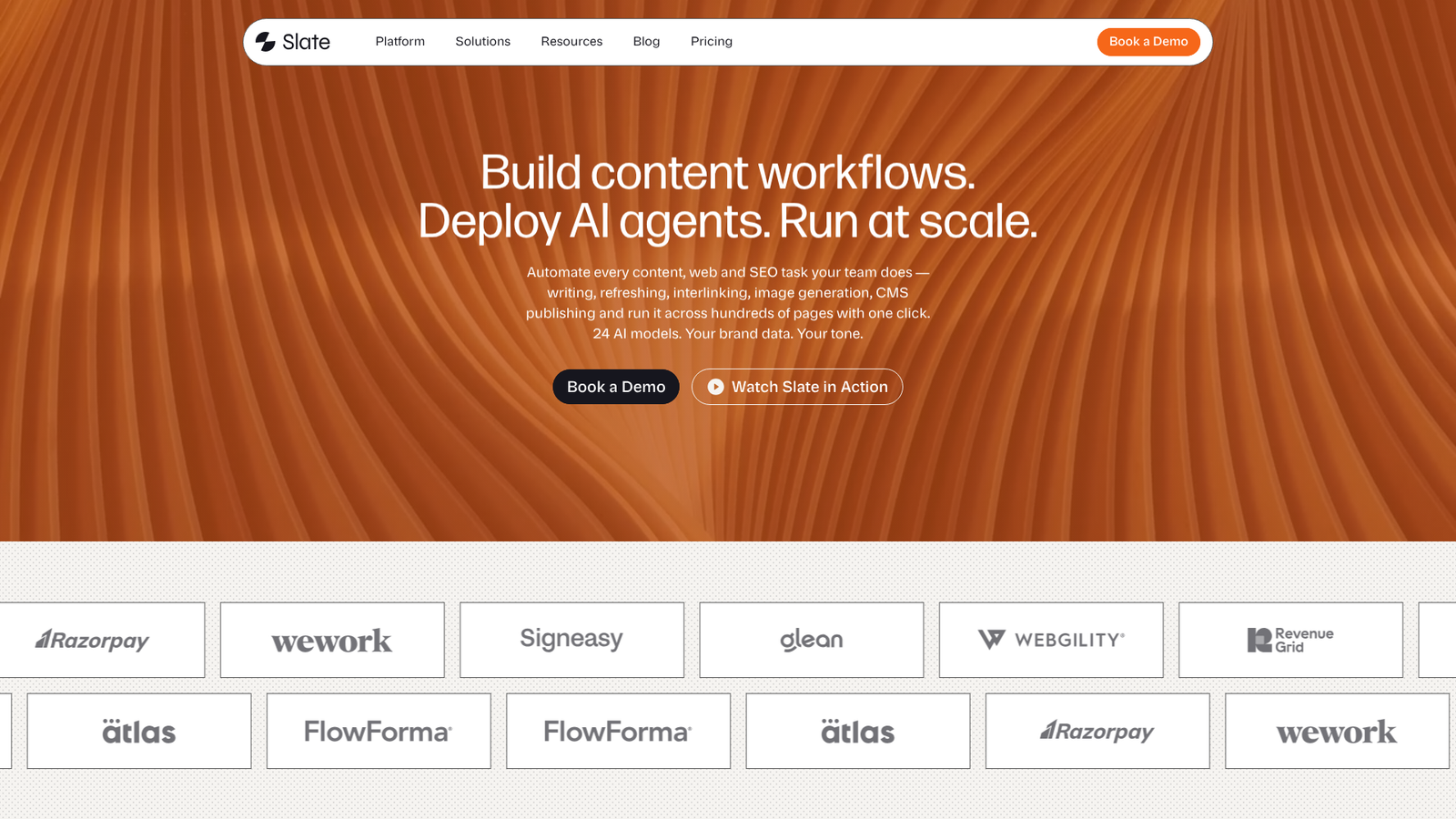
Slate is the only AI visibility tool in this category that combines tracking with an execution layer - meaning it doesn't just show you where your brand appears in AI responses, it helps you improve that visibility through content recommendations and optimization actions.
While every other tool on this list operates as a monitoring dashboard, Slate bridges the gap between data and outcomes. If your team is asking "we know our AI visibility score - now what?", Slate is built to answer that question.
Best for: Marketing teams and agencies that want to move beyond passive monitoring and actively improve their AI visibility across ChatGPT, Perplexity, Gemini, and beyond.
Key strengths
- Tracks brand visibility across 8+ major AI engines including emerging platforms
- Action layer provides specific content recommendations to improve AI citation rates
- Content gap analysis identifies which topics and assets are underrepresented in AI responses
- Agency-friendly multi-client management with client-facing reporting
- Unified dashboard connects tracking data directly to optimization workflows
Pricing: Contact Slate for current pricing - free trial available
2. SE Visible - best for agencies with large client portfolios
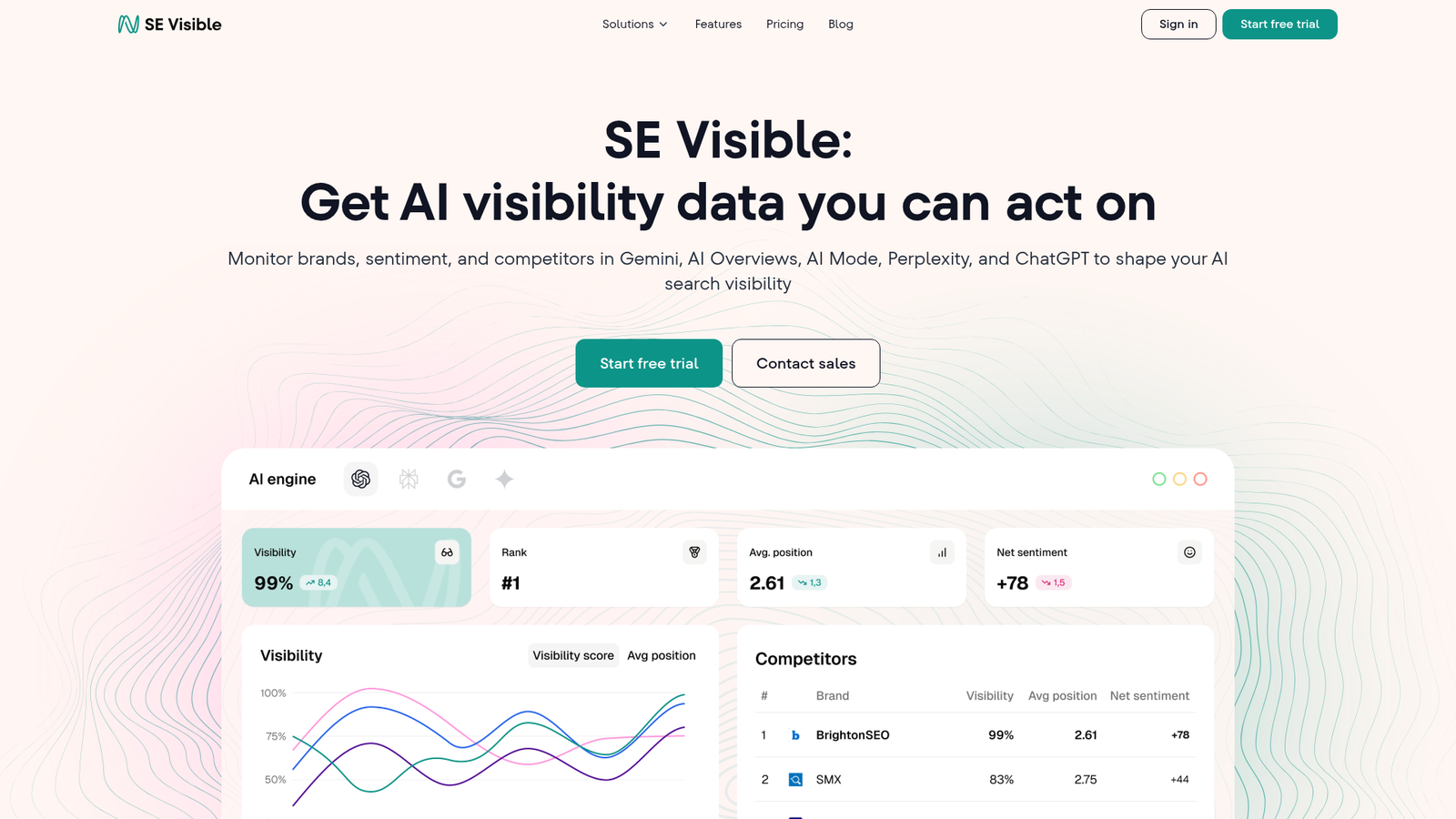
SE Visible is SE Ranking's dedicated AI visibility module, built for agencies that already manage client SEO through the SE Ranking platform and want AI monitoring layered into the same workflow.
Its multi-client dashboard and regional prompt tracking make it particularly well-suited for agencies running campaigns across different geographies. The integration with SE Ranking's broader SEO data - keyword rankings, backlinks, site audits - means you're not context-switching between tools to build a complete picture.
Best for: Agencies managing 10+ client brands that are already using SE Ranking for traditional SEO.
Key strengths
- Multi-client dashboard with per-client AI visibility reporting
- Regional prompt tracking for location-specific AI response monitoring
- Native integration with SE Ranking's full SEO data ecosystem
- White-label report exports for client-facing deliverables
- Covers ChatGPT, Perplexity, Gemini, Claude, and Copilot
Pricing: Available as an add-on to SE Ranking plans, starting around $29/mo - see SE Ranking pricing
3. Otterly.ai - best for simple, visual AI visibility monitoring
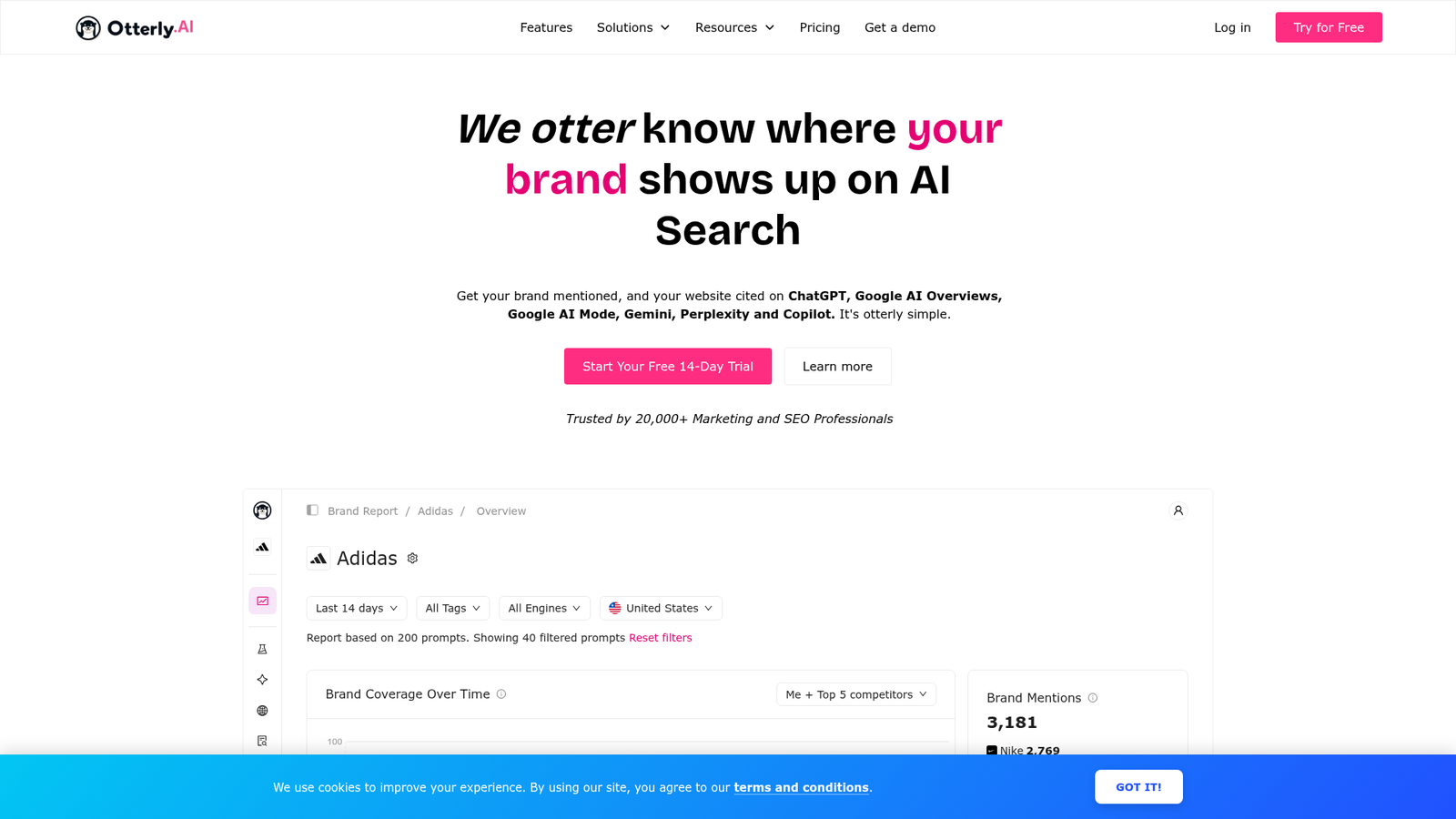
Otterly.ai is a clean, visually intuitive AI visibility tracker designed for teams that want quick insights without a steep learning curve. Setup takes minutes, and the snapshot-based tracking interface makes it easy to see how your brand's AI presence changes over time.
The trade-off is depth. Otterly doesn't offer an action layer or deep competitive analysis - it's a monitoring tool, and a good one, but you'll need to pair it with something else if you want optimization guidance.
Best for: Small marketing teams or individual marketers who want straightforward AI visibility monitoring without complexity.
Key strengths
- Clean visual interface with snapshot-based trend tracking
- Fast onboarding - functional within minutes of signup
- Covers ChatGPT, Perplexity, Gemini, and Claude
- Limited free plan available for initial testing
- Prompt library for tracking brand mentions across custom query sets
Pricing: Starting around $49/mo - see Otterly pricing
4. Scrunch AI - best for competitive AI share-of-voice analysis
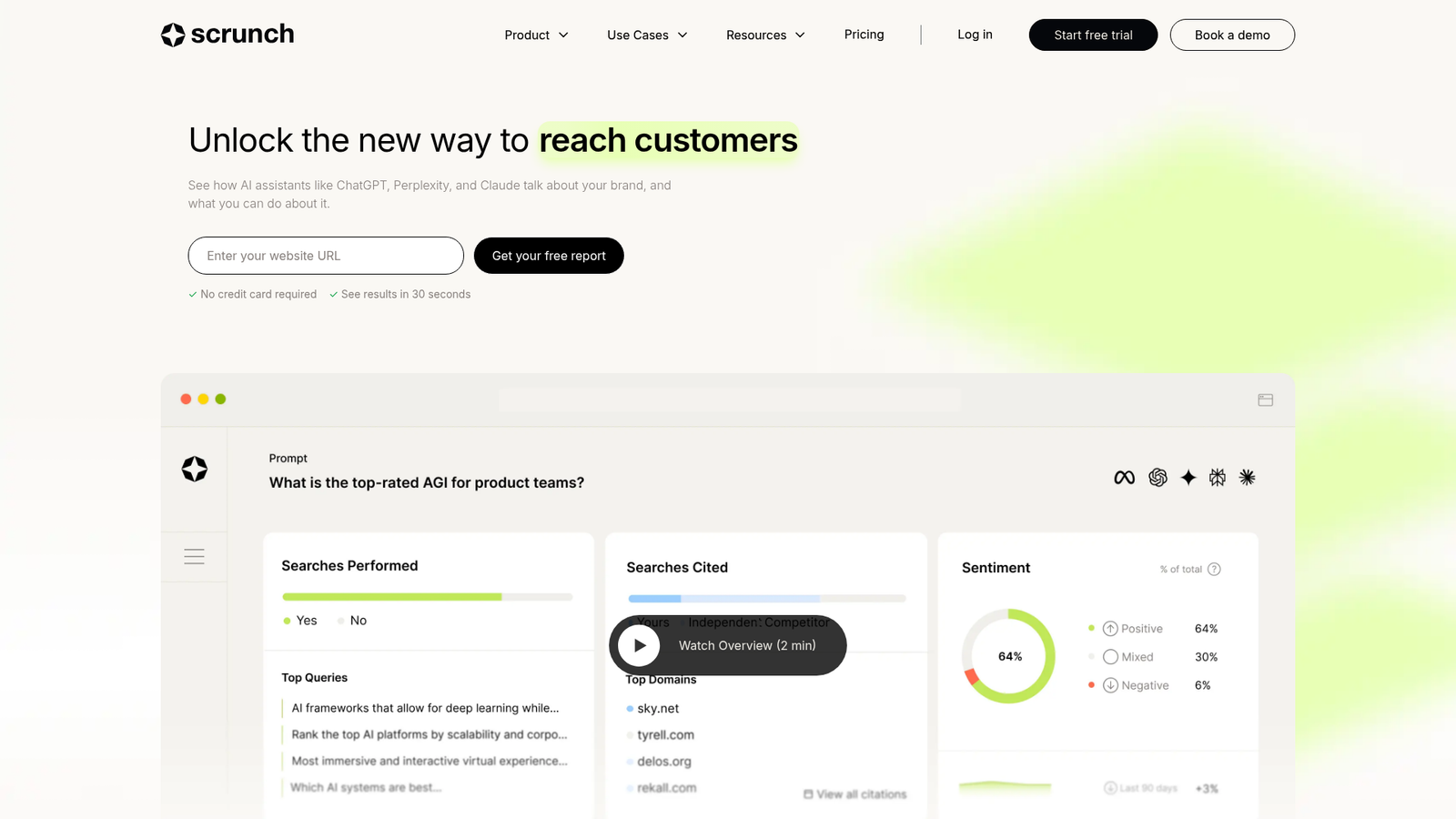
Scrunch AI focuses on competitive intelligence - tracking not just your brand's AI visibility but how it stacks up against rivals in the same category. Its share-of-voice metrics give you a clearer picture of whether you're gaining or losing ground relative to competitors in AI-generated responses.
When comparing Profound vs Scrunch AI for AEO, Scrunch's competitive benchmarking is its clearest differentiator. Profound's strength is depth of your own brand's data; Scrunch's strength is contextualizing that data against the competitive landscape.
Best for: Brands in competitive markets that need to benchmark AI visibility against specific rivals, not just track their own numbers.
Key strengths
- Share-of-voice tracking across AI engines for competitive benchmarking
- Category-level analysis showing brand positioning within topic clusters
- Competitor mention frequency tracking across ChatGPT, Perplexity, Gemini, Claude, and Copilot
- Trend analysis for tracking competitive shifts over time
- Customizable prompt sets for category-specific monitoring
Pricing: Starting around $99/mo - see Scrunch AI pricing
5. Peec AI - best for content-level AI visibility insights
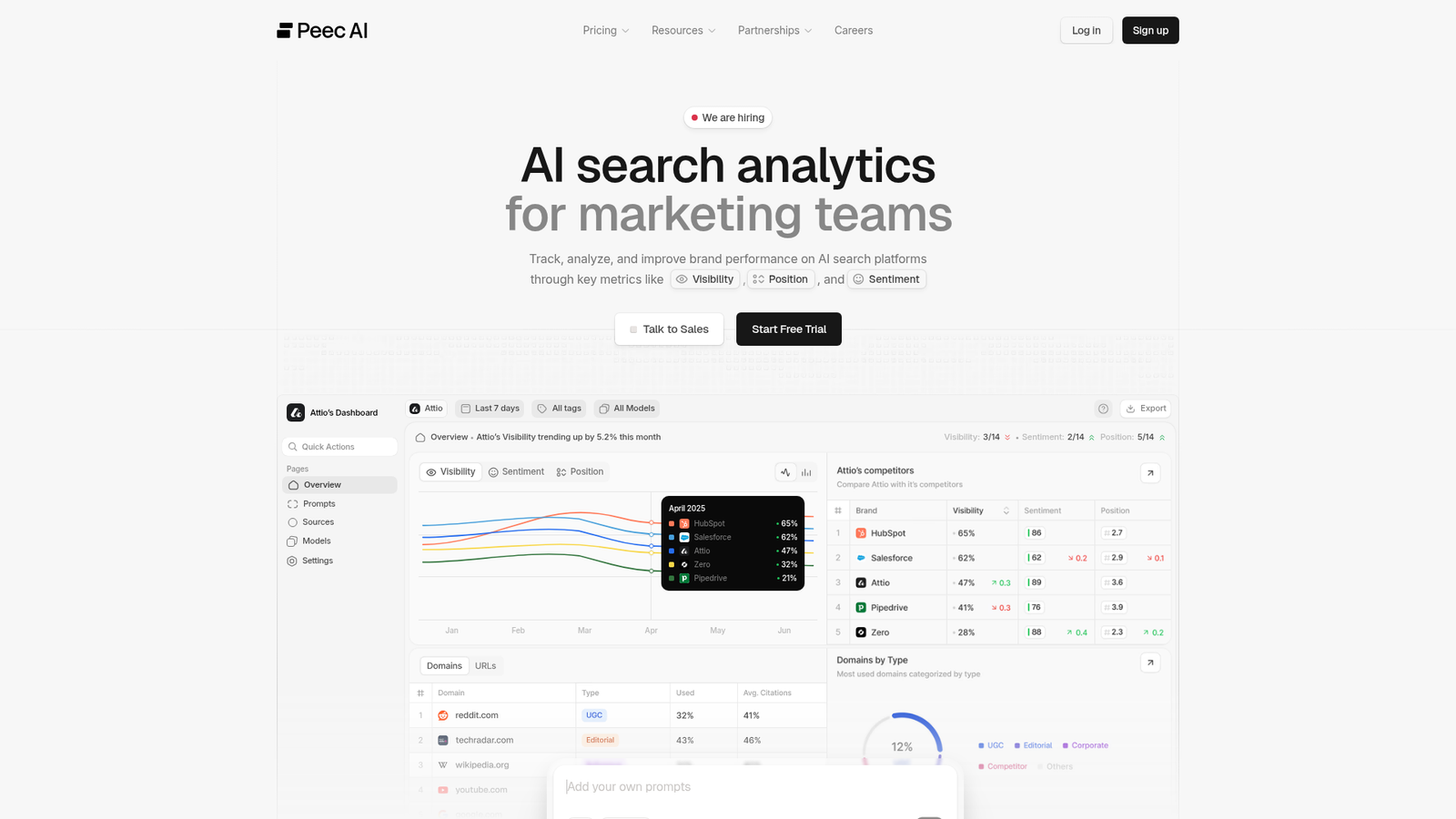
Peec AI goes deeper than brand-level tracking by identifying which specific pages and content pieces are being cited by AI engines. That granularity is valuable for content teams that want to understand not just whether they're visible in AI responses, but which assets are driving that visibility.
When evaluating Profound vs Peec AI for AEO, Peec's page-level attribution is the key differentiator. Profound gives you brand-level visibility data; Peec tells you which blog post, landing page, or resource is actually getting cited. Starter plans cover ChatGPT, Perplexity, and Gemini - Claude and Copilot require higher tiers.
Best for: Content teams that want to understand which specific assets drive AI citations and where content gaps exist.
Key strengths
- Page-level citation tracking showing which URLs appear in AI responses
- Content attribution analysis linking specific assets to AI visibility outcomes
- Granular prompt-level reporting for detailed query analysis
- Covers ChatGPT, Perplexity, and Gemini on base plans
- Content gap identification for underperforming topic areas
Pricing: Starting around $49/mo - see Peec AI pricing
6. Ahrefs Brand Radar - best for teams already using Ahrefs
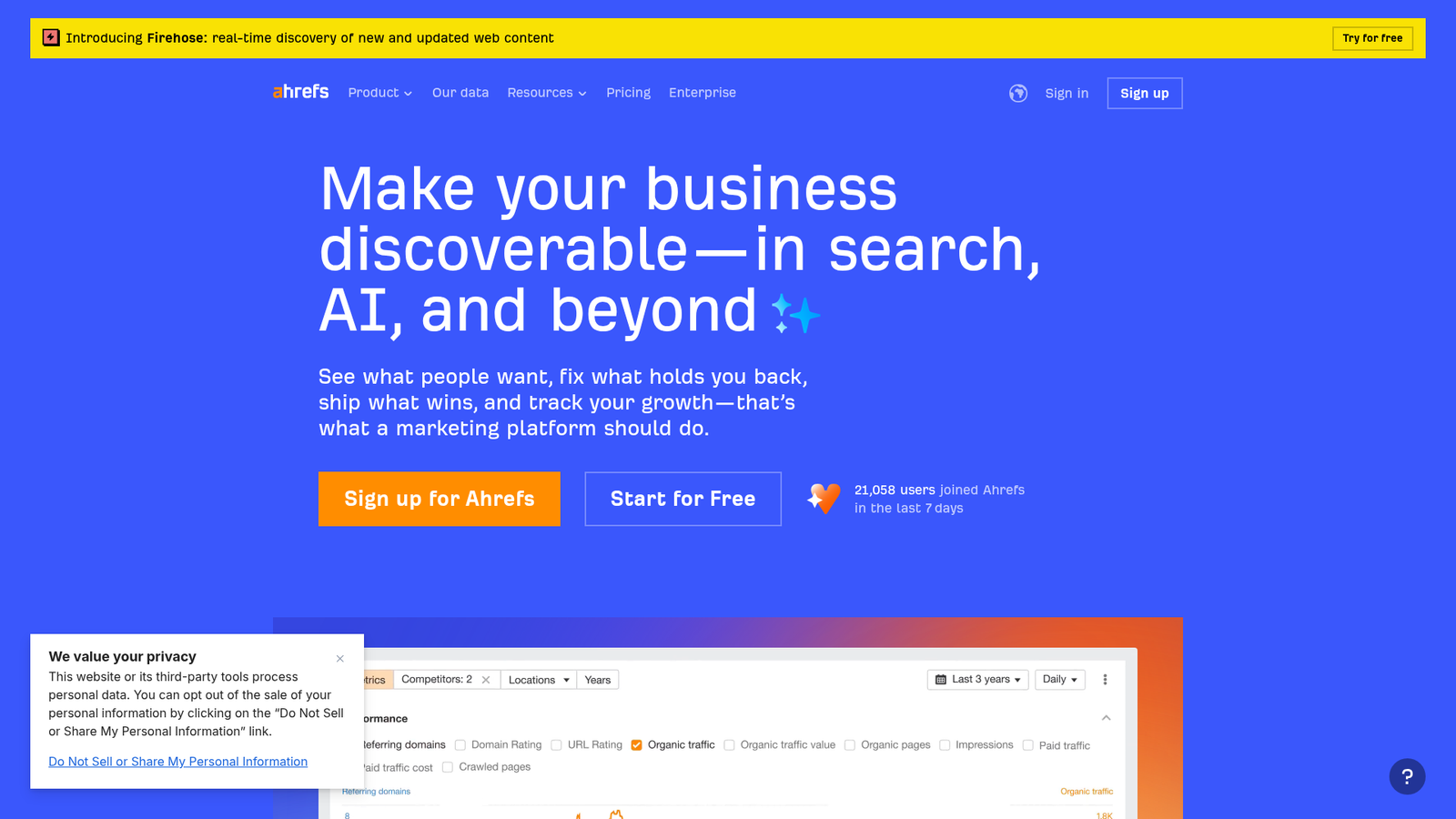
Ahrefs Brand Radar is the natural choice for teams already embedded in the Ahrefs ecosystem. Rather than adding a standalone AI visibility tool, you get AI mention tracking layered into the same platform where you're already managing keyword research, backlink analysis, and site audits.
The limitation is that Brand Radar is a newer feature within a broader tool, so it doesn't yet match the depth of dedicated AI visibility platforms. Coverage is currently limited to ChatGPT, Perplexity, and Gemini. But for Ahrefs users who want a consolidated view without adding another subscription, it's a practical starting point.
Best for: Existing Ahrefs subscribers who want AI visibility data without adding a separate tool to their stack.
Key strengths
- Fully integrated with Ahrefs' existing SEO data for unified reporting
- Brand mention tracking across ChatGPT, Perplexity, and Gemini
- No additional subscription required for existing Ahrefs users
- Familiar interface reduces onboarding time to near zero
- Connects AI visibility trends to keyword and backlink data in one view
Pricing: Included in Ahrefs plans starting around $129/mo - see Ahrefs pricing
7. Brandlight - best for enterprise brand monitoring across AI
Brandlight is built for large organizations managing multiple brands or product lines simultaneously. Its enterprise-grade architecture handles complex brand hierarchies, and its analytics go deeper than most tools in this category on sentiment analysis and brand narrative tracking across AI engines.
Compliance and security features make it a viable option for regulated industries. The trade-off is cost - Brandlight's pricing reflects its enterprise positioning, and it's likely overkill for teams managing a single brand.
Best for: Enterprise organizations managing multiple brands, product lines, or regional brand variants that need centralized AI visibility oversight.
Key strengths
- Multi-brand management with hierarchical dashboard structure
- Advanced sentiment analysis for brand narrative monitoring in AI responses
- Covers ChatGPT, Perplexity, Gemini, Claude, Copilot, and Meta AI
- Enterprise security and compliance features for regulated industries
- Detailed analytics with custom reporting and data export options
Pricing: Starting around $199/mo - contact Brandlight for enterprise pricing
8. Semrush AI Toolkit - best for integrated SEO + AI visibility
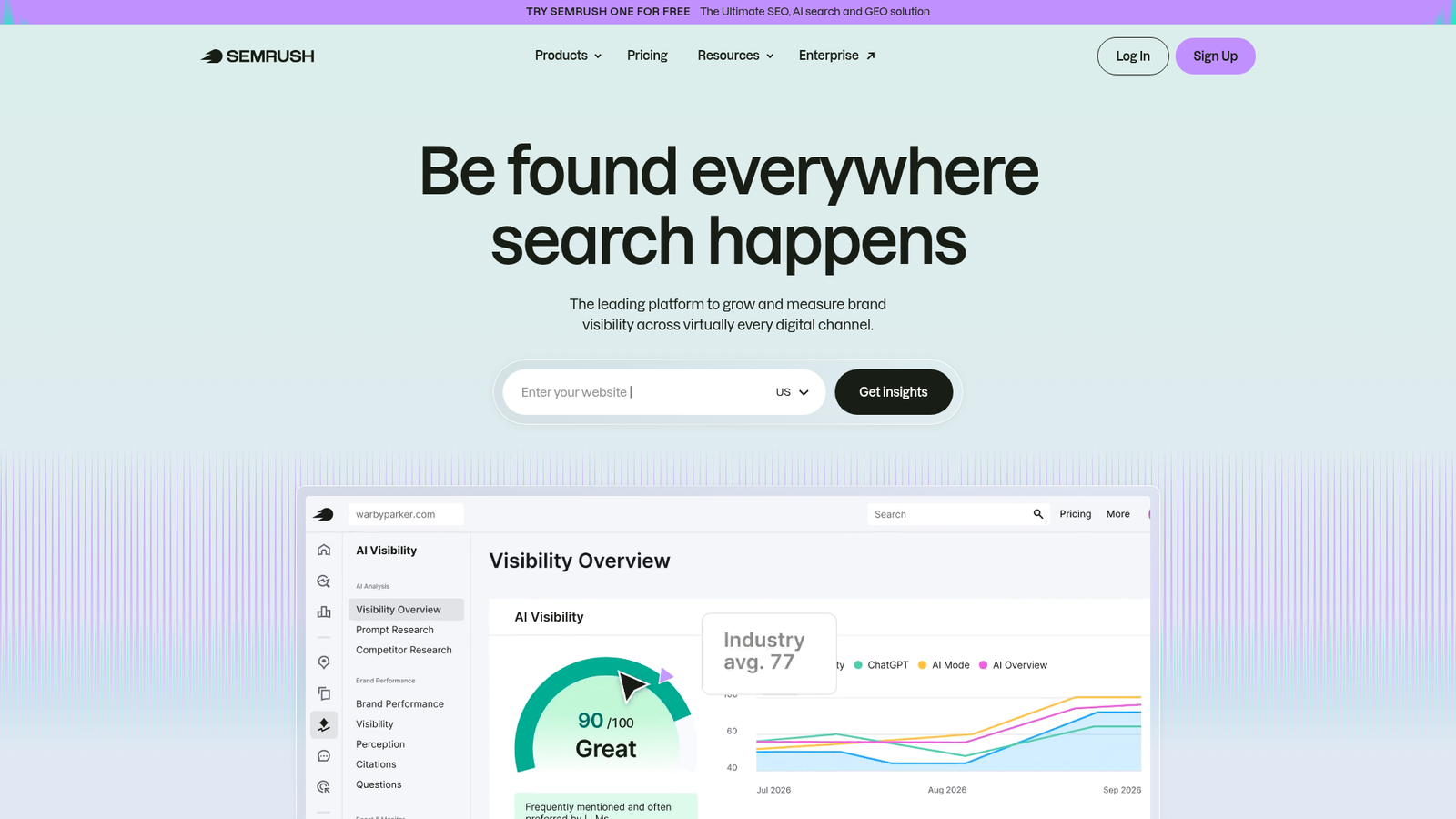
Semrush's AI Toolkit follows the same logic as Ahrefs Brand Radar: if you're already a Semrush power user, adding AI visibility tracking within the same platform is more efficient than managing a separate subscription. The advantage here is Semrush's broader data ecosystem - you can correlate AI visibility trends with keyword rankings, content performance, and competitive data in a single workflow.
Coverage currently spans ChatGPT, Perplexity, Gemini, and Copilot. Like Ahrefs Brand Radar, it's a monitoring tool without a dedicated action layer, but the integration with Semrush's content optimization features partially bridges that gap.
Best for: Semrush power users who want to add AI visibility monitoring to their existing SEO workflow without a separate tool.
Key strengths
- Native integration with Semrush's keyword, content, and competitive data
- AI visibility tracking across ChatGPT, Perplexity, Gemini, and Copilot
- Correlates AI mention trends with organic keyword performance
- Familiar Semrush interface for teams already trained on the platform
- Content optimization features partially complement AI visibility data
Pricing: Included in Semrush plans starting around $140/mo - see Semrush pricing
9. AthenaHQ - best for AI visibility strategy and recommendations
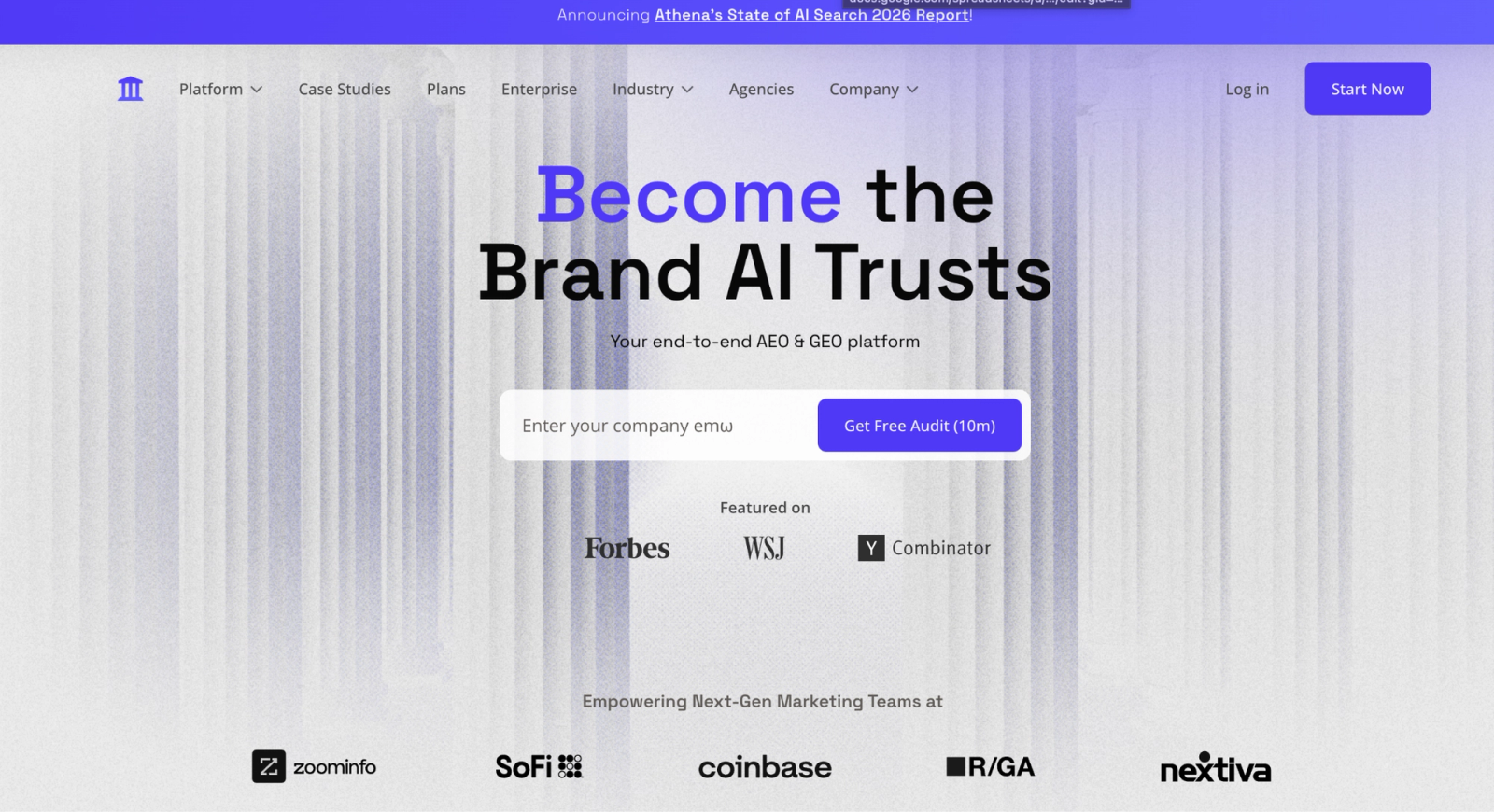
AthenaHQ sits closer to the "execution" end of the spectrum than most monitoring tools, offering AI-powered strategic recommendations alongside its tracking data. It covers 8+ AI engines on starter plans and 10+ AI models on higher tiers, making it one of the broader-coverage options in this list.
AthenaHQ also addresses one of Profound's structural limitations: it offers 3 user seats on self-serve plans compared to Profound's single-seat design, making it more practical for small teams and agencies. The strategic recommendation layer is less developed than Slate's action layer, but it's a meaningful step beyond pure monitoring.
Best for: Teams that want strategic guidance and optimization suggestions alongside their AI visibility data, without committing to a full execution platform.
Key strengths
- 8+ AI engines on starter plans, 10+ models on higher tiers
- AI-powered strategic recommendations for improving visibility
- 3 user seats on self-serve plans - better for small teams than single-seat tools
- Covers ChatGPT, Perplexity, Gemini, Claude, Copilot, Meta AI, and Grok
- Prompt customization for category-specific and brand-specific monitoring
Pricing: Starting around $199/mo - see AthenaHQ pricing
10. Goodie AI - best for quick AI visibility audits
Goodie AI is a lightweight, audit-focused tool designed for teams that need fast answers without a lengthy onboarding process. Its free tier makes it one of the most accessible entry points in the AI visibility category, and its instant audit capability is useful for initial assessments before committing to a paid platform.
The limitation is depth. Goodie AI is built for quick snapshots, not continuous monitoring or competitive analysis. It covers ChatGPT, Perplexity, Gemini, and Claude, which covers the core platforms for most use cases.
Best for: Teams wanting quick one-off AI visibility audits or initial assessments before investing in a full monitoring platform.
Key strengths
- Free tier available for initial testing and one-off audits
- Fast setup with near-instant visibility audit results
- Covers ChatGPT, Perplexity, Gemini, and Claude
- Lightweight interface with minimal configuration required
- Useful for benchmarking before committing to a paid tool
Pricing: Free tier available; paid plans starting around $49/mo - see Goodie AI pricing
11. ZipTie.dev - best for developer-friendly API-first tracking
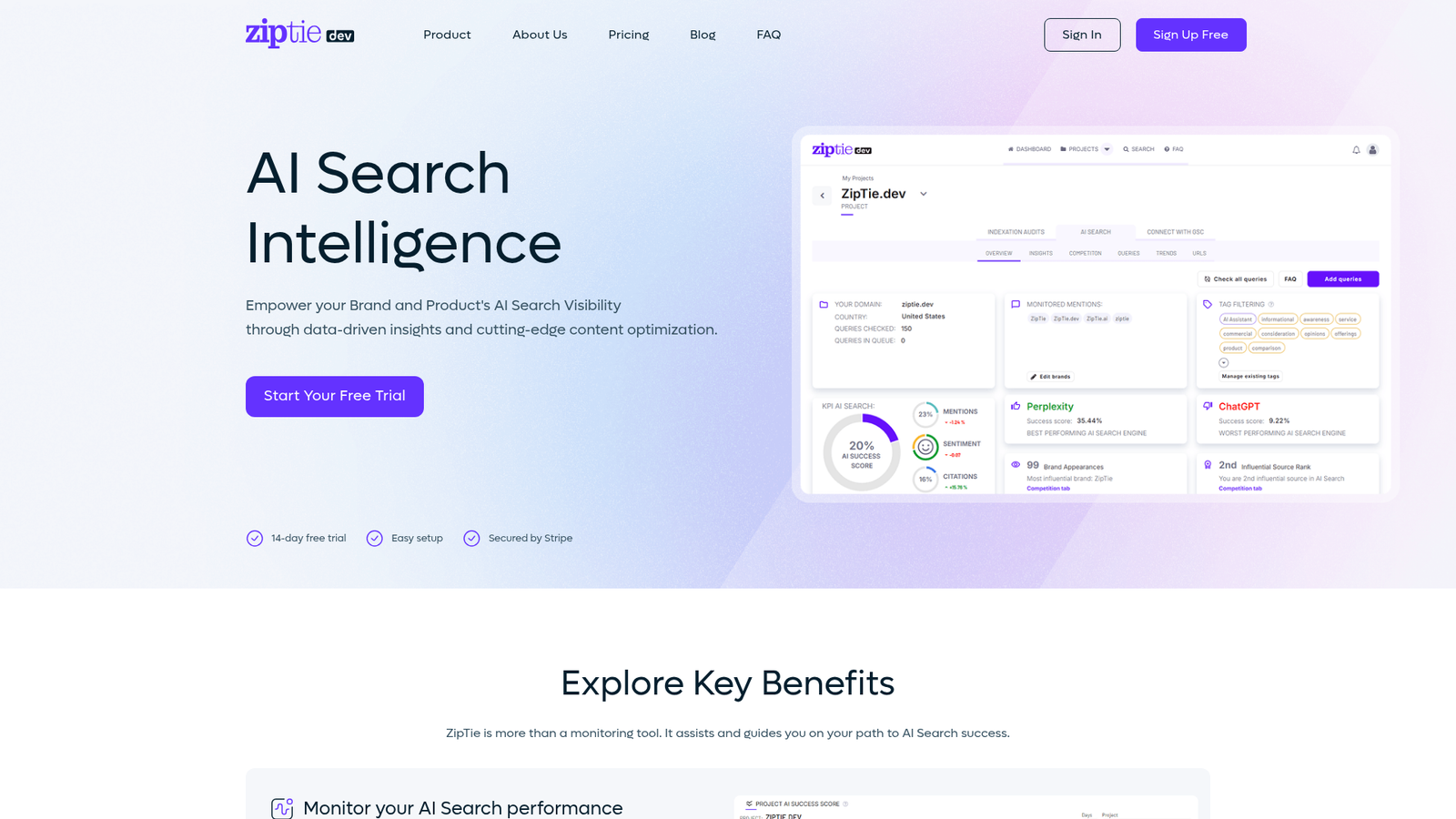
ZipTie.dev takes a fundamentally different approach from every other tool on this list. Rather than a pre-built dashboard, it's an API-first platform designed for technical teams that want to build AI visibility tracking directly into their own workflows, dashboards, or internal tools.
If your team has engineering resources and wants custom integrations - pulling AI visibility data into your analytics stack, CRM, or product dashboard - ZipTie.dev offers a level of flexibility that no GUI-based tool can match. The trade-off is that non-technical users will find it inaccessible without developer support.
Best for: Technical teams, SaaS companies, and engineering-led organizations that want to build custom AI visibility workflows rather than use a pre-built dashboard.
Key strengths
- API-first architecture for custom integration into any tech stack
- Flexible query structure for highly customized tracking configurations
- Covers ChatGPT, Perplexity, Gemini, Claude, and Copilot via API
- Detailed developer documentation and integration support
- Usage-based pricing scales with actual query volume
Pricing: Starting around $79/mo, usage-based - see ZipTie.dev pricing
12. GetCito - best budget-friendly Profound alternative
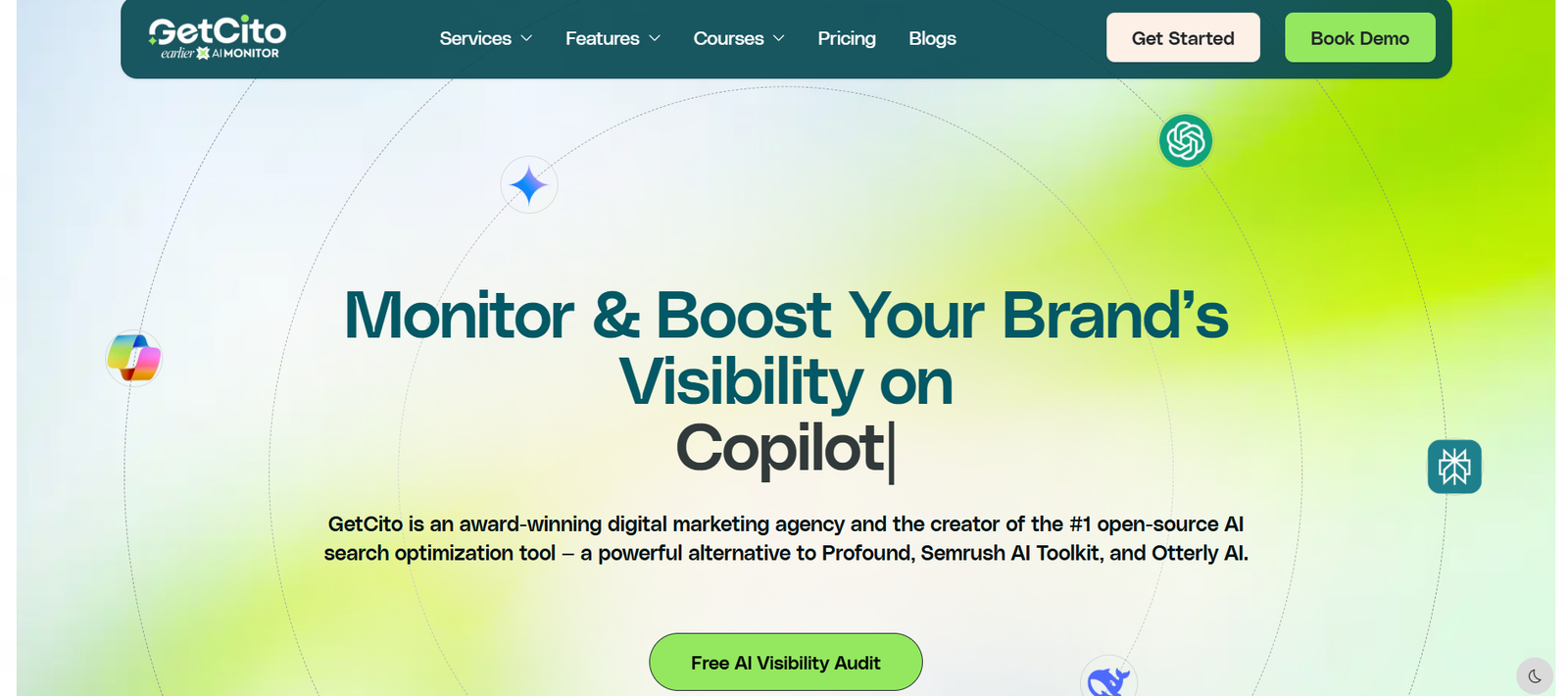
GetCito is the most accessible entry point in this category for teams on tight budgets. It covers the core three AI engines - ChatGPT, Perplexity, and Gemini - and provides brand mention tracking at a price point that makes it viable for bootstrapped startups and small teams.
You're trading depth for affordability. GetCito doesn't offer competitive analysis, an action layer, or advanced reporting. But if your primary need is knowing whether your brand is showing up in AI responses and you're not ready to invest in a full platform, it's a reasonable starting point.
Best for: Bootstrapped startups, small teams, or individual marketers who need basic AI visibility tracking at a minimal cost.
Key strengths
- Free tier available for initial testing
- Covers ChatGPT, Perplexity, and Gemini on base plans
- Simple, low-friction setup with minimal configuration
- Lowest paid entry point in the category at around $29/mo
- Sufficient for basic brand mention monitoring without advanced features
Pricing: Free tier available; paid plans starting around $29/mo - see GetCito pricing
Honorable mentions - other tools worth watching
These tools didn't make the top 12 but are worth knowing about, particularly if you're building a comprehensive shortlist or tracking the category's evolution.
LLMClicks.ai
LLMClicks.ai takes an accuracy-first approach to AI visibility tracking, with a testing methodology that distinguishes between genuine citations and incidental brand mentions. It's a niche positioning that appeals to teams who want high-confidence data over broad coverage.
Evertune
Evertune focuses on AI brand narrative management - tracking not just whether your brand appears in AI responses, but how it's characterized and what associations AI models make with your brand. When comparing Profound vs Evertune AI for AEO, Evertune's narrative layer is a meaningful differentiator for brand-sensitive organizations.
Bluefish AI
Bluefish AI is a newer entrant building toward a broader AI visibility and optimization platform. Features are still maturing, but the roadmap is worth watching for teams evaluating the category's direction.
Gumshoe
Gumshoe takes an investigative approach to AI visibility analysis, going deeper on the reasoning behind why certain brands appear in AI responses. It's a more analytical tool suited to teams that want to understand the "why" behind their visibility data.
GetAiso
GetAiso focuses specifically on AI search optimization, positioning itself at the intersection of traditional SEO and AI visibility. It's worth evaluating if your primary concern is optimizing for AI-assisted search rather than broad brand monitoring.
Waikay.io
Waikay.io is an emerging platform with limited publicly available data at this point. It's one to watch as the category matures, but not yet ready for primary tool evaluation.
Advanced Web Ranking (AWR)
Advanced Web Ranking is a well-established rank tracking platform that has begun expanding into AI visibility monitoring. For teams already using AWR for traditional rank tracking, its AI features offer a convenient extension of an existing workflow.
AIclicks
AIclicks focuses on measuring click-through behavior from AI-generated responses - a distinct angle from standard mention or citation tracking. It's a useful complement to broader monitoring tools for teams that want to connect AI visibility to actual traffic outcomes.
AI Product Rankings
AI Product Rankings specializes in product-specific AI ranking tracking, making it particularly relevant for e-commerce brands and SaaS companies that want to monitor how their products are positioned in AI-generated recommendations and comparisons.
Tracking vs. execution - the framework for choosing the right tool
Every AI visibility tool in this category falls into one of two categories. Understanding which you're looking at changes how you evaluate them.
Tracking-only tools monitor where your brand appears in AI responses. They give you mention frequency, share of voice, engine coverage, trend lines. Most tools in this list - including Profound - operate at this level. They're valuable, but they create a problem: dashboard fatigue. You're watching numbers move without a clear path to changing them.
Track + execute tools do both. They monitor your AI visibility and provide specific actions to improve it - content recommendations, gap analysis, optimization suggestions tied directly to the tracking data. Slate is the clearest example of this category in 2026.
The right question isn't "which tool has the best dashboard?" It's: do you need another dashboard, or do you need a tool that helps you act on the data?
If your team has the internal resources to translate monitoring data into content strategy independently, a tracking-only tool may be sufficient. If you want the tool to close that loop, you need an execution layer.
Which tool is right for you? recommendations by use case
Best for marketing agencies
If your agency manages 10+ client brands, SE Visible is the most practical monitoring choice - multi-client dashboards, regional tracking, and white-label reports are built into the workflow. If your clients are asking "what should we do about our AI visibility?" rather than just "what is our AI visibility?", Slate adds the execution layer that turns monitoring data into client deliverables. Many agencies that track brand mentions in ChatGPT and Perplexity for clients find the combination of a broad monitoring tool and an action-oriented platform more effective than either alone.
Best for SaaS companies
Slate works particularly well for SaaS teams that want to connect AI visibility data to content strategy and product positioning. For engineering-led teams that want to build AI visibility tracking into their own analytics stack, ZipTie.dev offers the API flexibility to do that without adopting a pre-built dashboard.
Best for enterprise brands
Brandlight handles the complexity of multi-brand enterprise architectures well, with the compliance features that regulated industries require. For enterprises that want to move beyond monitoring into active optimization, Slate provides the action layer that most enterprise-grade tools still lack.
Best for small teams and bootstrapped startups
GetCito is the most accessible entry point at around $29/mo. Goodie AI is worth testing first via its free tier before committing to any paid plan. Otterly is the right choice if visual simplicity and fast onboarding matter more than depth.
Best for teams already using SEO suites
If you're already paying for Ahrefs, Brand Radar is the obvious starting point - zero additional cost, familiar interface, and sufficient coverage for initial AI visibility monitoring. The same logic applies to Semrush users with the AI Toolkit. Neither replaces a dedicated AI visibility platform at scale, but both are sensible first steps before investing in a standalone tool.
The AI visibility landscape is evolving fast
The biggest shift in 2026 isn't that more tools are tracking AI visibility - it's that the best tools are starting to close the loop between data and action. The category is moving from "here's your score" to "here's what to do about it," and that distinction will define which tools matter in the next 12 months.
If you're ready to move beyond monitoring and start actively improving your AI visibility, Slate is the only tool built for that. Try Slate free →
Test two or three tools before committing - most offer free trials, and the right fit depends heavily on your team's workflow and whether you need tracking, execution, or both.
Frequently Asked Questions
Is there a free Profound alternative?
Yes - GetCito and Goodie AI both offer free tiers that cover basic AI visibility monitoring across the core platforms. Otterly also has a limited free plan. Full-featured monitoring with competitive analysis and reporting generally requires a paid plan, but most tools offer 7–14 day free trials that give you enough time to evaluate fit before committing.
How is AI visibility tracking different from traditional SEO?
Traditional SEO focuses on ranking in Google's organic search results, while AI visibility tracking monitors whether and how your brand is mentioned, cited, or recommended in AI-generated responses from platforms like ChatGPT, Perplexity, and Gemini. They're complementary disciplines, not substitutes - in 2026, you need both, because AI-assisted search and traditional organic search serve overlapping but distinct audiences.
Do I still need traditional SEO tools if I use an AI visibility tracker?
Yes, absolutely. AI visibility tools are an additional layer on top of your existing SEO stack, not a replacement for it. Traditional SEO still drives the majority of organic traffic, and tools like Ahrefs Brand Radar and Semrush AI Toolkit are specifically designed to integrate both data streams. For standalone AI visibility tools, you'll run them alongside your existing SEO platform rather than instead of it.
Can I use multiple AI visibility tools together?
Yes, and many teams do - particularly agencies. A common combination is a broad monitoring tool like SE Visible or Otterly paired with an action-oriented platform like Slate. The main risk is tool sprawl: paying for overlapping capabilities without a clear workflow for each. Consolidate where you can, and be deliberate about which tool owns which part of your AI visibility workflow.
Which AI engines should I track my brand's visibility on?
At minimum, track ChatGPT (GPT-4o/GPT-5), Perplexity, and Google Gemini - these represent the largest share of AI-assisted search queries. For B2B audiences, add Microsoft Copilot. For technical or developer audiences, add Claude. The AI engine coverage matrix earlier in this article shows which tools cover which platforms, so you can match your engine priorities to the right tool.
What's the difference between AI mention tracking and AI citation tracking?
Mention tracking detects when your brand name appears anywhere in an AI response. Citation tracking goes deeper - it identifies when the AI specifically recommends, links to, or attributes information to your brand as a source. Citation tracking is more valuable because it indicates genuine influence rather than incidental name-dropping. Most tools in this list offer mention tracking; fewer offer true citation-level attribution, with Peec AI being one of the stronger options for page-level citation analysis.
How much should I budget for AI visibility tracking tools?
Expect to spend $0 for free tiers and trials. Realistic mid-market budgets: $19–$295/month for single-brand tracking (GetCito $19, Otterly Lite $29, ZipTie Basic $69, Peec AI $89, SE Visible add-on $89, AthenaHQ Starter $295). Agency/multi-brand budgets start at $300–$1,148/month (Scrunch Explorer $300, Ahrefs Brand Radar all-platforms $699, Brandlight entry $199–$750). The previously stated $50–$200/month range understates current mid-market pricing.
What does "action layer" mean in AI visibility tools?
An action layer means the tool doesn't just show you data - it provides specific recommendations, content suggestions, or optimization actions you can take to improve your AI visibility. The majority of tools in this category are monitoring-only: they tell you where you stand but not what to do about it. Slate is the clearest example of a tool with a built-in action layer, which is why it leads this list for teams whose goal is improving AI visibility rather than just measuring it.