Choosing a content brief generator in 2026 is less about who can produce the prettiest outline and more about which tool fits the way real content teams actually work. The strongest platforms turn a keyword into a writer-ready plan, support brand governance, and prepare content for both traditional search and AI-driven discovery.
The best content brief generator in 2026 depends on workflow. Slate ranks first for B2B SaaS and content-led teams that need AI search visibility, scalable workflows, and citation readiness in one system. Frase suits solo SEOs, Content Harmony fits agencies, and MarketMuse anchors refresh-heavy programs with topic intelligence.
Key Takeaways
- Slate ranks #1 for B2B SaaS and content-led teams that need AI search visibility plus workflow execution.
- The strongest brief generators do more than outline - they support writer handoff, internal links, and refresh workflows.
- Paid brief tools typically start between $49–$199/month, while MarketMuse offers a limited free tier and Surfer SEO offers free access alongside paid plans.
- Buyers in 2026 should evaluate AI-search readiness - answer clarity, citation-ready structure, and question coverage - not just traditional SERP analysis.
- A good content brief generator shortens the brief-to-first-asset cycle without sacrificing brand control.
What Is A Content Brief Generator?
A content brief generator is software that turns a target keyword or topic into a structured plan for writers: search intent, recommended outline, headings, questions to answer, competitor coverage, and internal link suggestions. It standardizes how briefs are produced so writers and editors work from the same blueprint.
Brief generators differ from AI writers. A brief generator decides what should be written and how it should be structured. An AI writer drafts the prose itself. The strongest 2026 workflows use both - the brief defines strategy, the writer turns it into a first draft, and editors handle refinement. For a broader view of the category, see this roundup of the best AI content marketing tools used by modern teams.
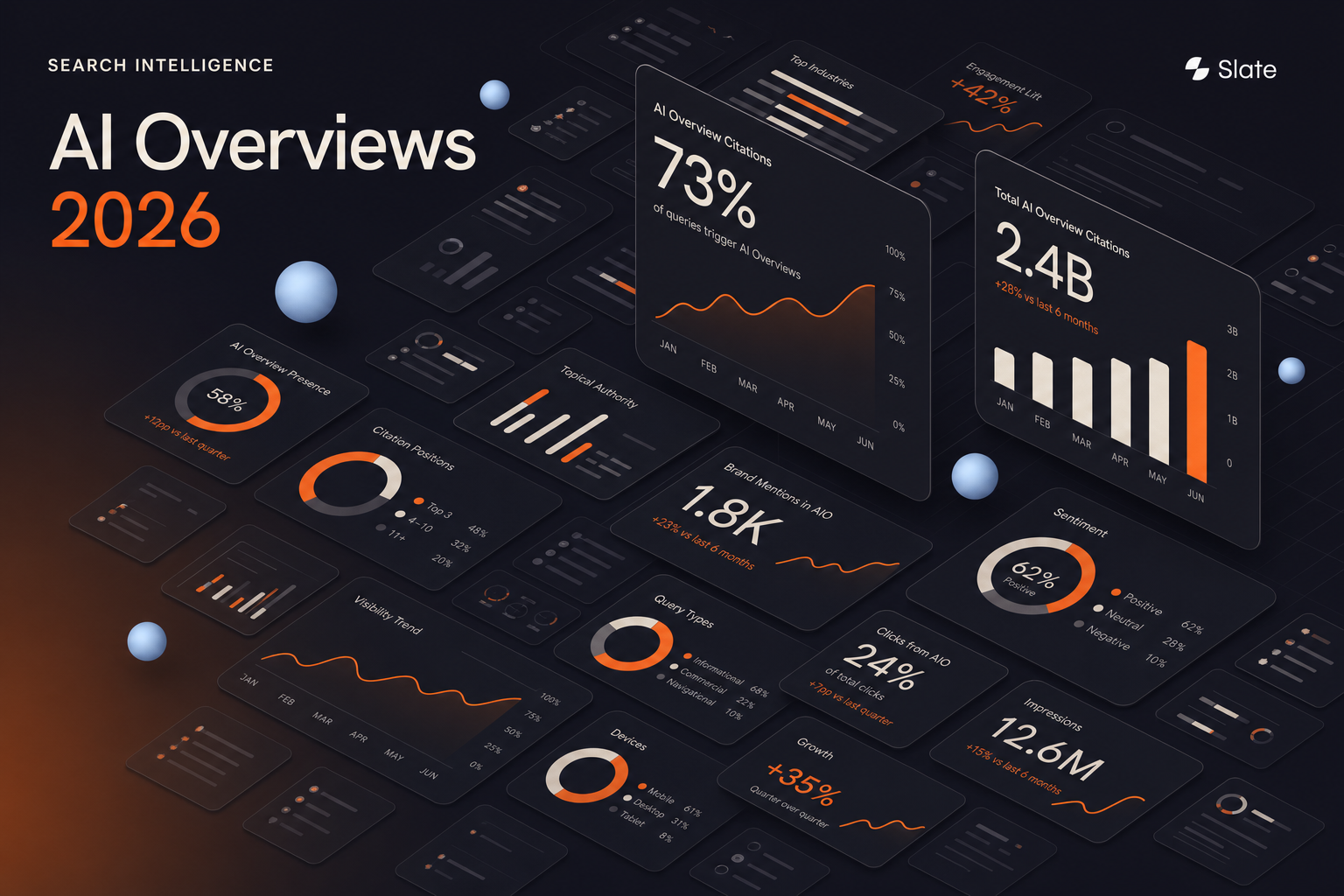
In 2026, briefs also need to support AI-driven discovery. That means clear answer blocks, question-mapped sections, and extractable structure that systems like ChatGPT, Perplexity, Gemini, and Google AI Overviews can cite. Teams investing in generative engine optimization tools are already adapting their briefs to this reality.
Comparison Table: Best Content Brief Generators At A Glance
A quick side-by-side view of the ten tools covered in this guide, focused on the factors that matter most for editorial workflow fit.
How We Evaluated The Best Content Brief Generators
This roundup is built around how briefs perform inside real editorial workflows, not isolated feature checklists. Each tool was assessed against a consistent rubric so buyers can compare like-for-like across solo, team, and enterprise use cases.
- Brief depth and usefulness: How complete the output is - outline, intent, questions, links, structural cues - and how writer-ready the brief feels without manual cleanup.
- Search intent and SERP analysis: Whether the tool pulls live competitor and SERP data, or relies on generic AI guesses about what should rank.
- Workflow fit: Templates, comments, approvals, exports, CMS integrations, and how the tool fits writer handoff for distributed teams.
- Brand and governance controls: Support for style guides, internal knowledge, and review steps that keep AI-assisted output on-brand.
- AI-search readiness: Whether briefs encourage extractable answer blocks, question-mapped structure, and citation-ready formatting.
- Pricing transparency: Clarity on seats, usage caps, free plans, and how cost scales as teams grow.
- Speed to first usable brief: Minutes from keyword input to a writer-ready document.
The rubric does not measure draft generation quality. This guide focuses on planning tools - the brief, not the prose.
The 10 Best Content Brief Generators In 2026
Each entry below follows the same structure so you can scan and compare quickly: best for, key features, what the brief includes, pricing, G2 rating, and workflow fit.
1. Slate - Best For B2B SaaS And Content-Led Teams Engineering Visibility Across Search And AI
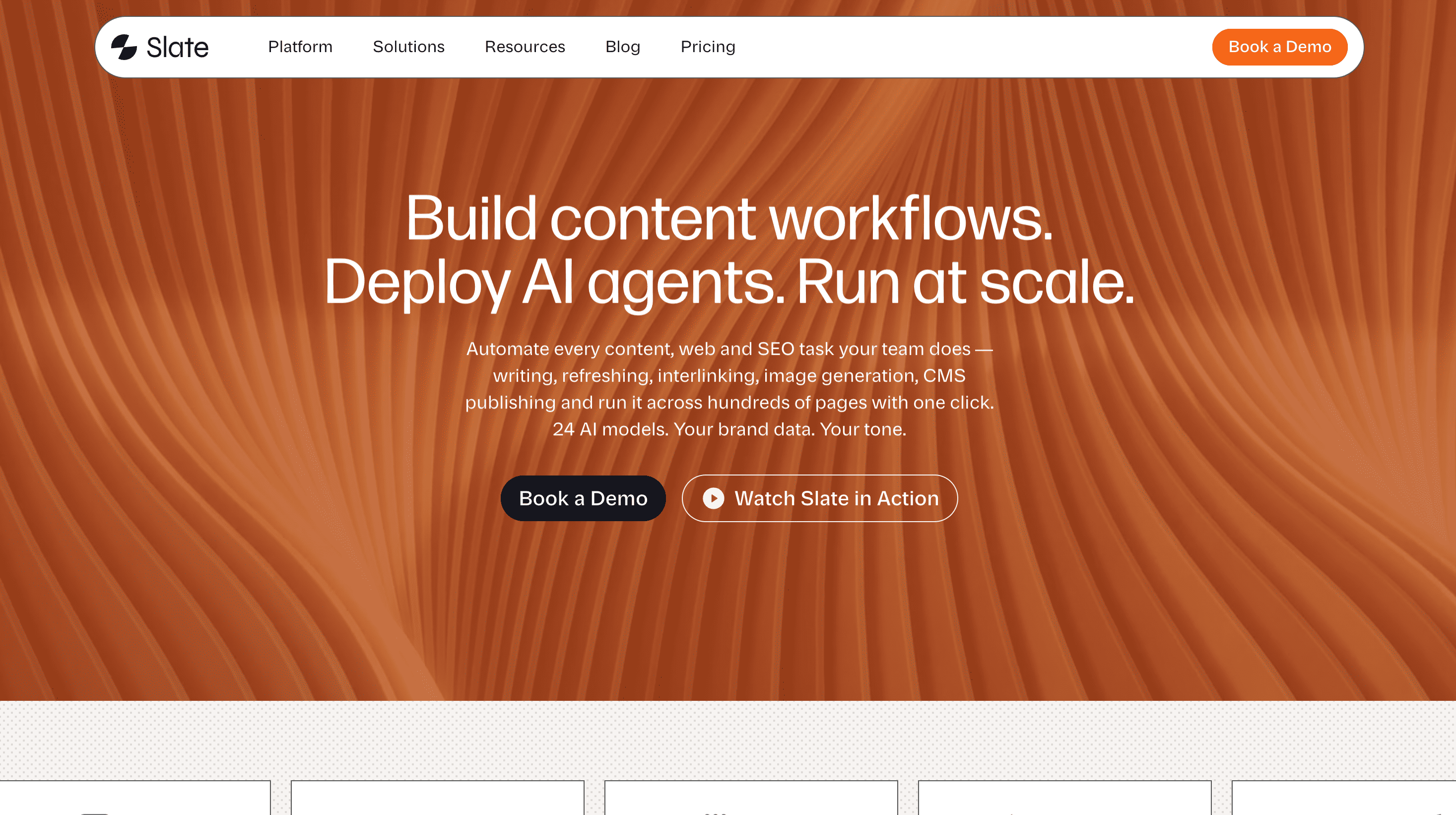
Slate is an AI search optimization and content engineering platform built for teams that need to win visibility across both traditional search and AI discovery platforms - in one system.
Best for: B2B SaaS, scale-ups, and content-led companies engineering visibility across ChatGPT, Perplexity, Gemini, Google AI Overviews, and traditional search.
Key features:
- AI search visibility tracking across ChatGPT, Google AI Mode, AI Overviews, and Perplexity
- Agentic workflows for content research, briefing, writing, refreshing, and optimization
- Brand Kit and Knowledge Base for style guides, tone rules, and brand-safe generation
- Power Sheets for bulk briefing and programmatic refresh across thousands of URLs
- Direct publishing to Webflow and WordPress from inside workflows
What the brief includes: Structured outline, questions to answer, citation-ready formatting cues, and brand-tone guidance pulled directly from the team's style guide and knowledge base.
Pros: End-to-end execution from insight to publish; AI-search-first by design; workflow-driven; brand governance built in.
Cons: Built for teams scaling content operations, not casual one-off use.
Pricing: Starting at $199/month.
G2 rating: 4.9/5
Workflow fit: Slate is strongest when content production needs to scale without losing brand control - content-led B2B teams running dozens to thousands of net-new and refresh briefs per quarter. Explore the underlying Slate features that power this workflow.
Why it stands out: Most brief tools generate outlines. Slate connects the brief to AI visibility insight, workflow execution, and CMS publishing - turning briefing into a repeatable system rather than a one-off document. Book a demo to see how Slate builds AI-search-ready briefs at scale.
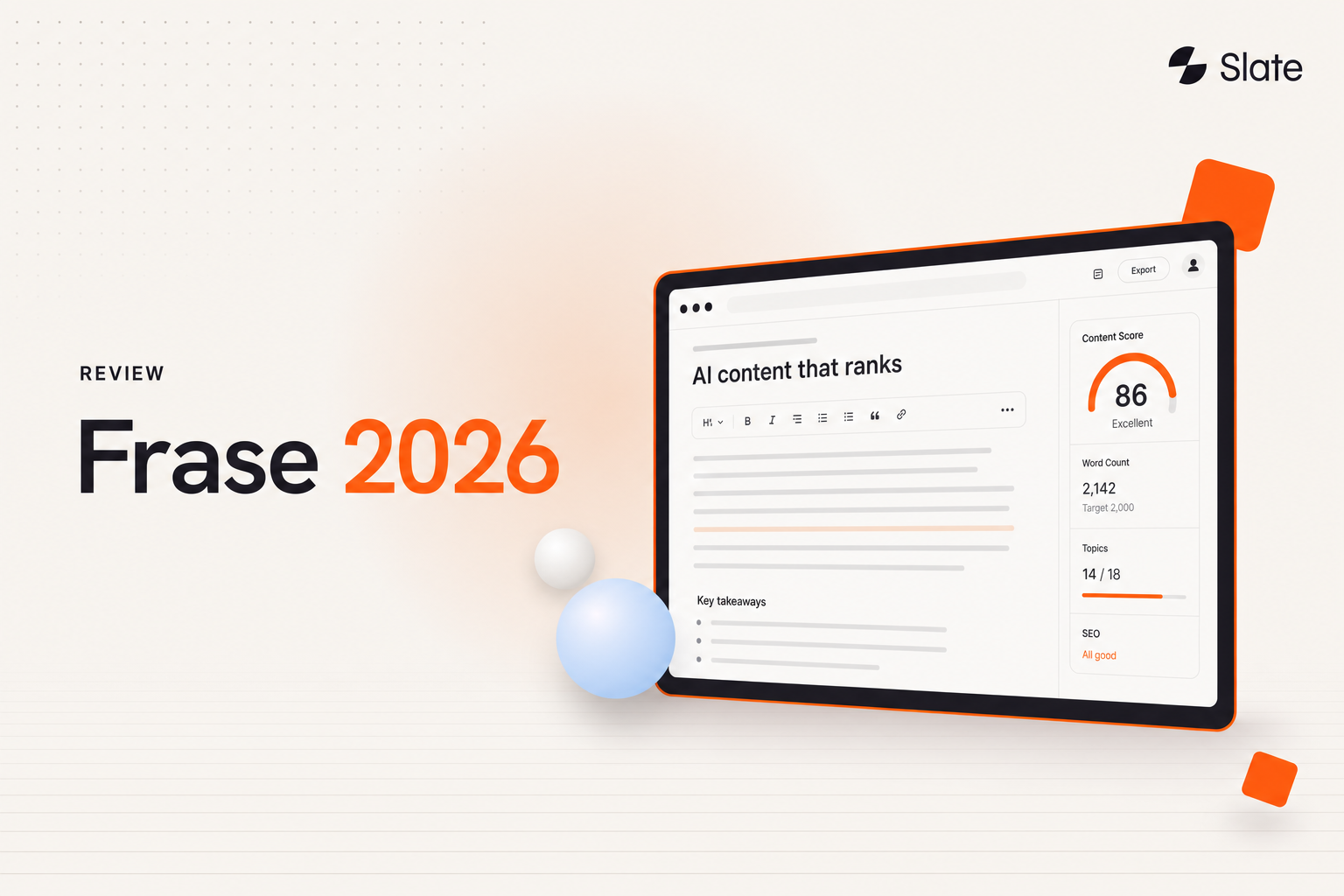
2. Frase - Best For Solo SEOs And Small Content Teams
Frase is an agentic SEO and GEO platform that combines research, briefs, content creation, and visibility tracking across Google and AI search engines in one workspace.
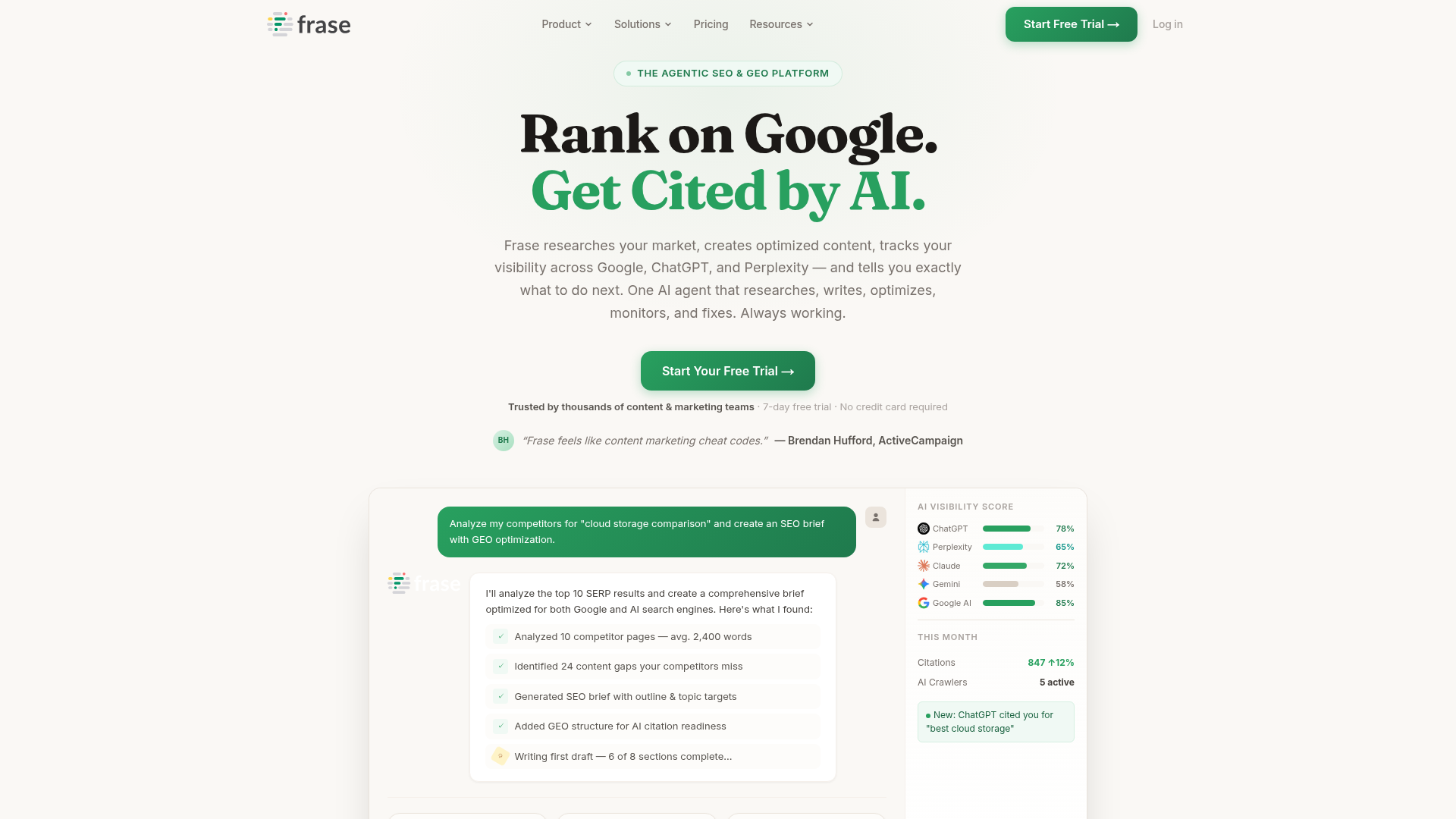
Best for: Solo SEOs, freelancers, and small content teams that want research-to-draft in a single tool.
Key features:
- AI agent for market research, briefs, and content creation
- SEO and GEO content optimization with real-time scoring
- AI visibility tracking and site opportunity monitoring
What the brief includes: SERP analysis, top-ranking page summaries, headings extracted from competitors, People Also Ask questions, and topic recommendations.
Pricing: Starter $49/mo, Professional $129/mo, Scale $299/mo; annual billing saves 20%. 7-day free trial.
G2 rating: 4.8/5
Workflow fit: A strong fit for individuals and small teams that want speed, affordability, and an integrated brief-plus-writer workflow without managing multiple tools.
3. MarketMuse - Best For Refresh-Heavy Programs And Topic Clusters
MarketMuse is content planning and optimization software built around topic authority - it tells teams what to create, what to refresh, and how much depth to add.
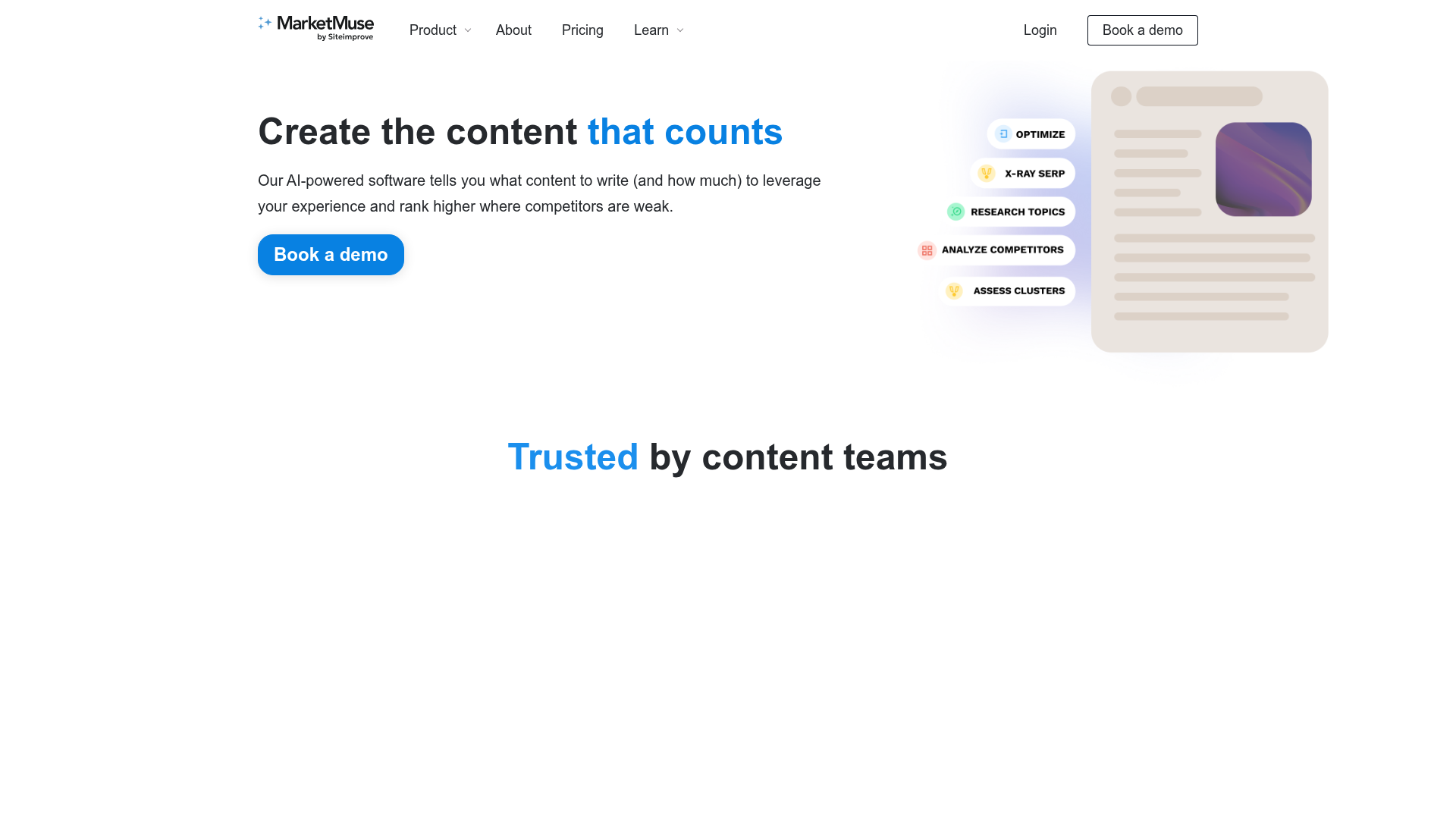
Best for: Brands, publishers, and agencies running large refresh programs and topic-cluster strategies. For comparable platforms, see this guide to the best AI tools for topic clusters.
Key features:
- Content planning with topic clusters and prioritized opportunities
- Competitive content gap analysis and SERP heatmaps
- Content briefs plus optimization recommendations
What the brief includes: Topic model, recommended subtopics, related questions, competitor coverage gaps, and content score targets.
Pricing: Custom pricing across Optimize, Research, and Strategy tiers; demo-led sales. Free plan available with 1 user and 10 queries/month.
G2 rating: 4.6/5
Workflow fit: Best for teams that prioritize topical depth and refresh workflows over net-new draft speed.
4. Content Harmony - Best For Agencies Managing Multiple Clients
Content Harmony is SEO content workflow software that combines AI and competitor data to help teams build standardized briefs and optimize content faster - with strong client-deliverable polish.
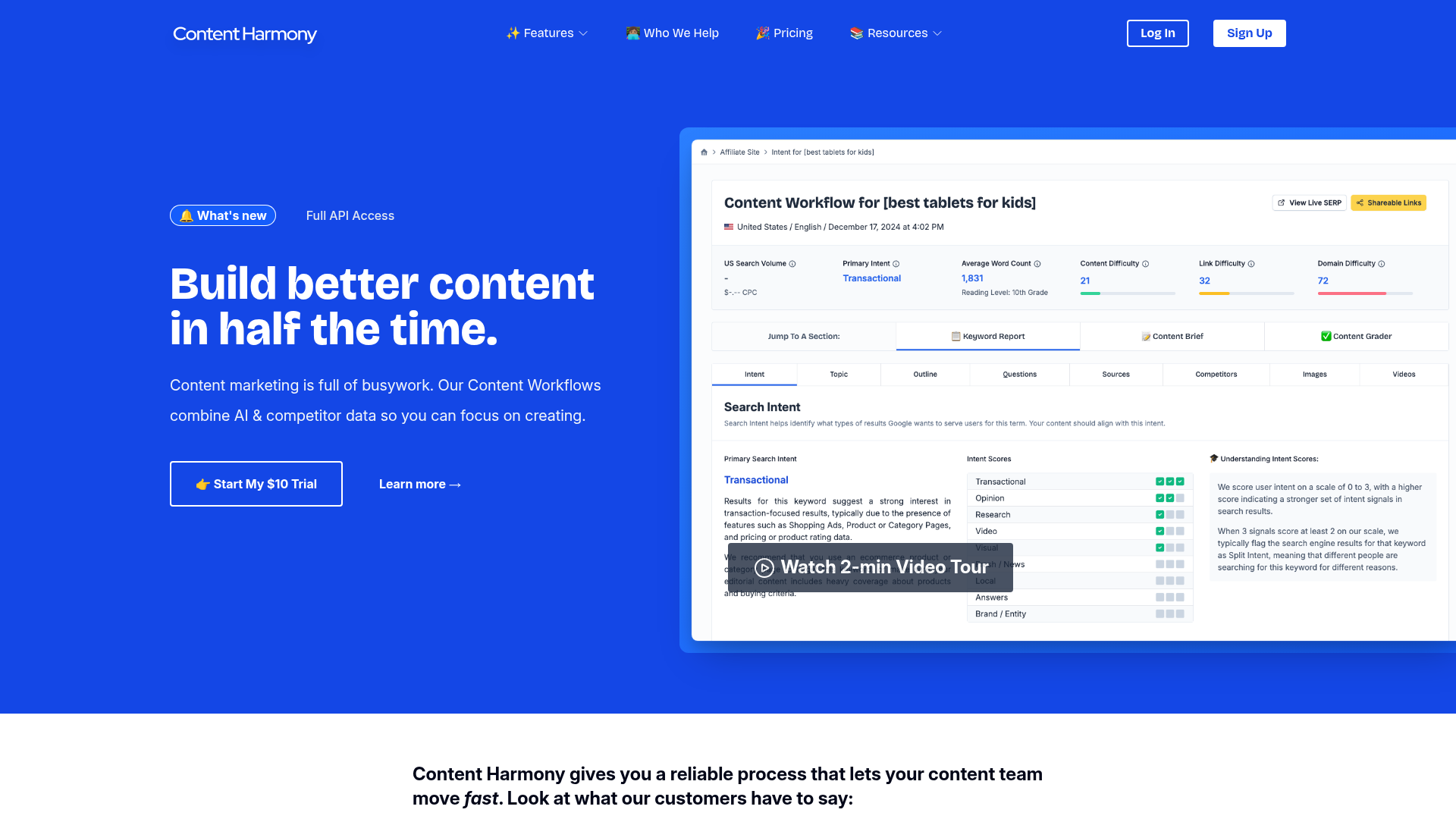
Best for: Agencies and in-house teams that need repeatable, client-ready content briefs.
Key features:
- Keyword reports with intent and SERP analysis
- Structured content brief templates
- Content optimization scoring against the brief
What the brief includes: Search intent classification, target headings, questions, image and video recommendations, and competitor content notes.
Pricing: Standard tiers from $50/mo (5 workflows), $99/mo (12), $199/mo (25), $299/mo (50), $599/mo (100), $799/mo (150); Enterprise from $1,000/mo. $10 trial for first 10 workflows.
G2 rating: 4.8/5
Workflow fit: Ideal for agencies that need consistent brief quality across writers and clients, and want client-facing deliverables out of the box.
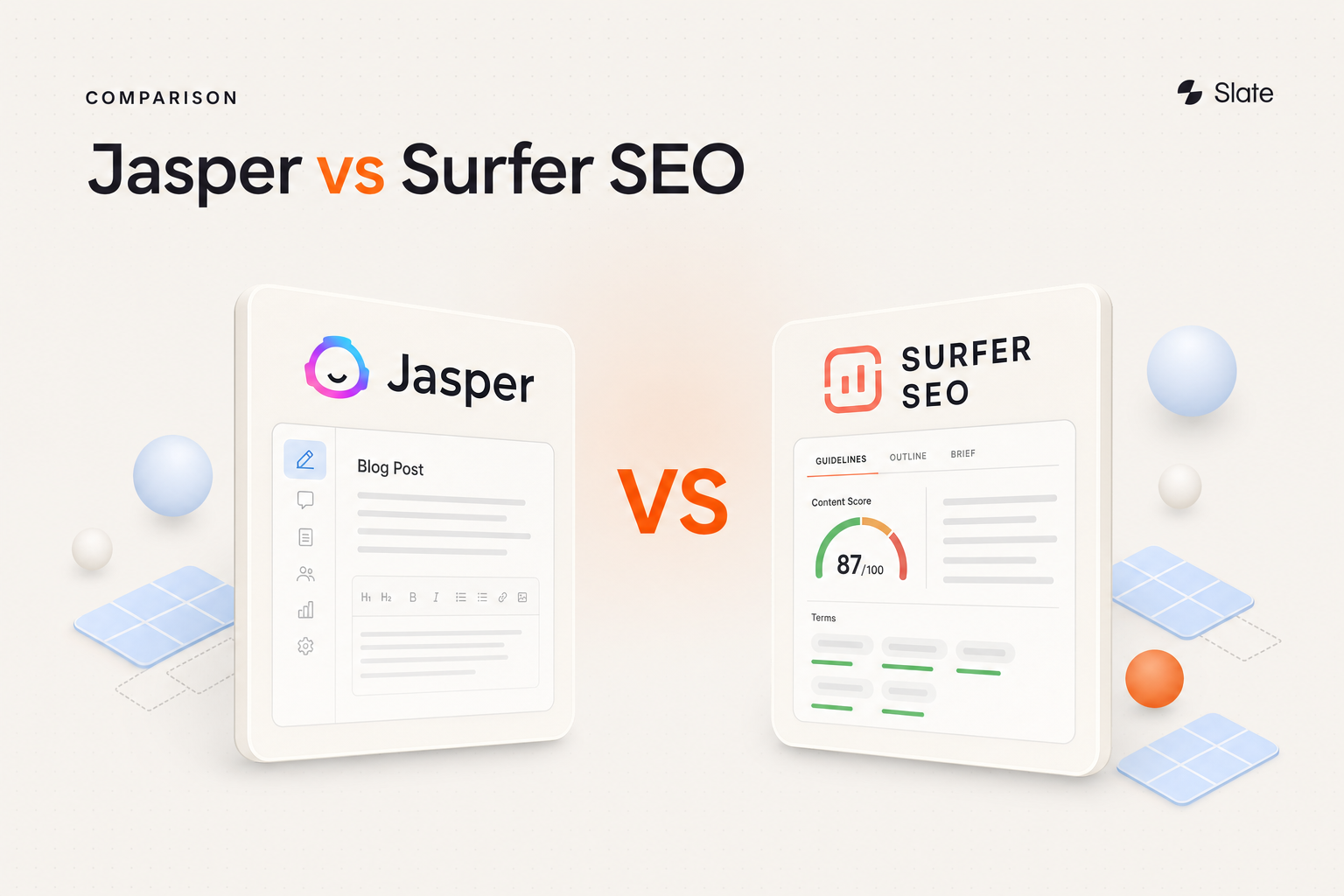
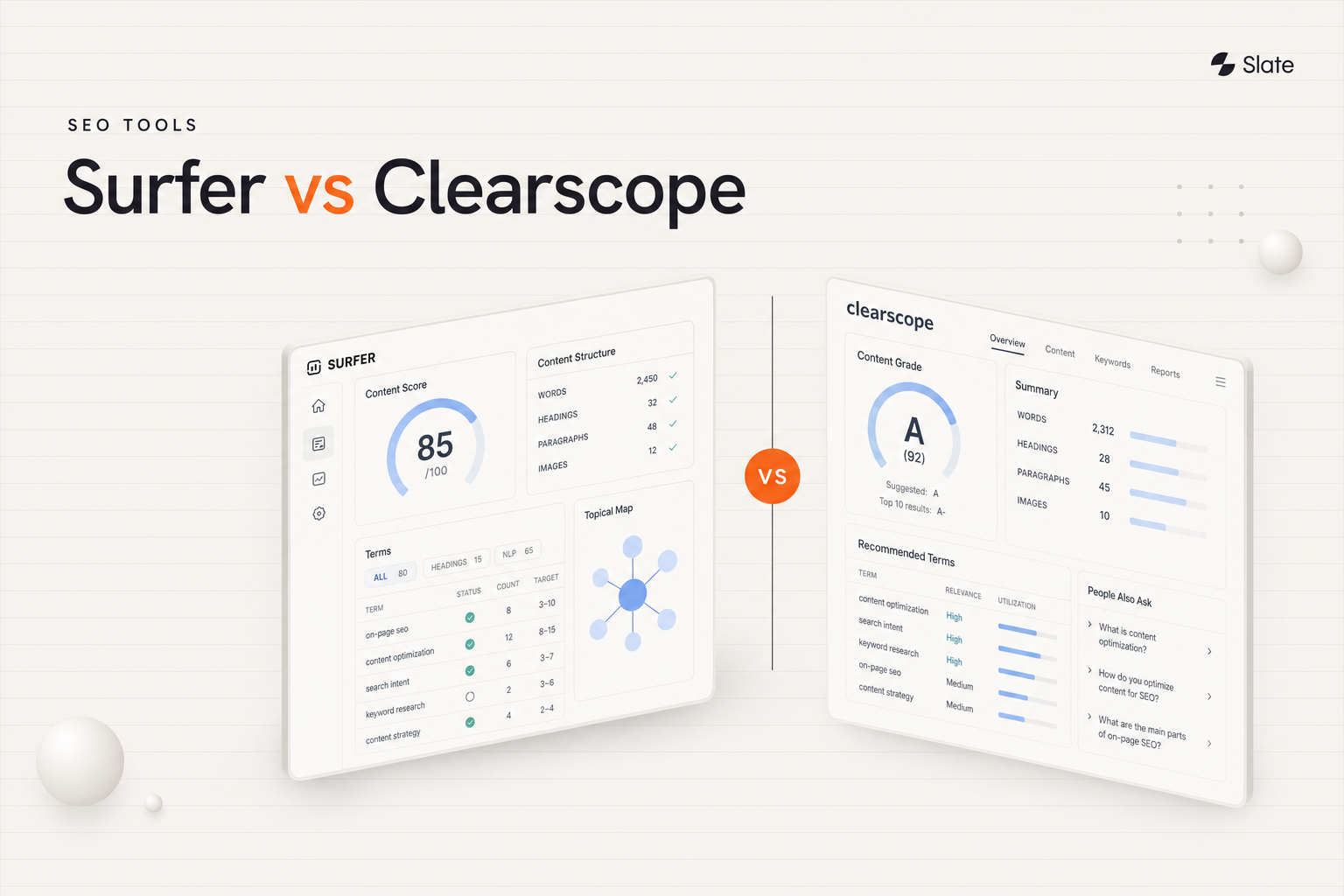
5. Surfer SEO - Best For Optimization-Led Content Teams
Surfer SEO is an AI visibility and content optimization platform for creating, improving, and tracking content across Google and AI search.
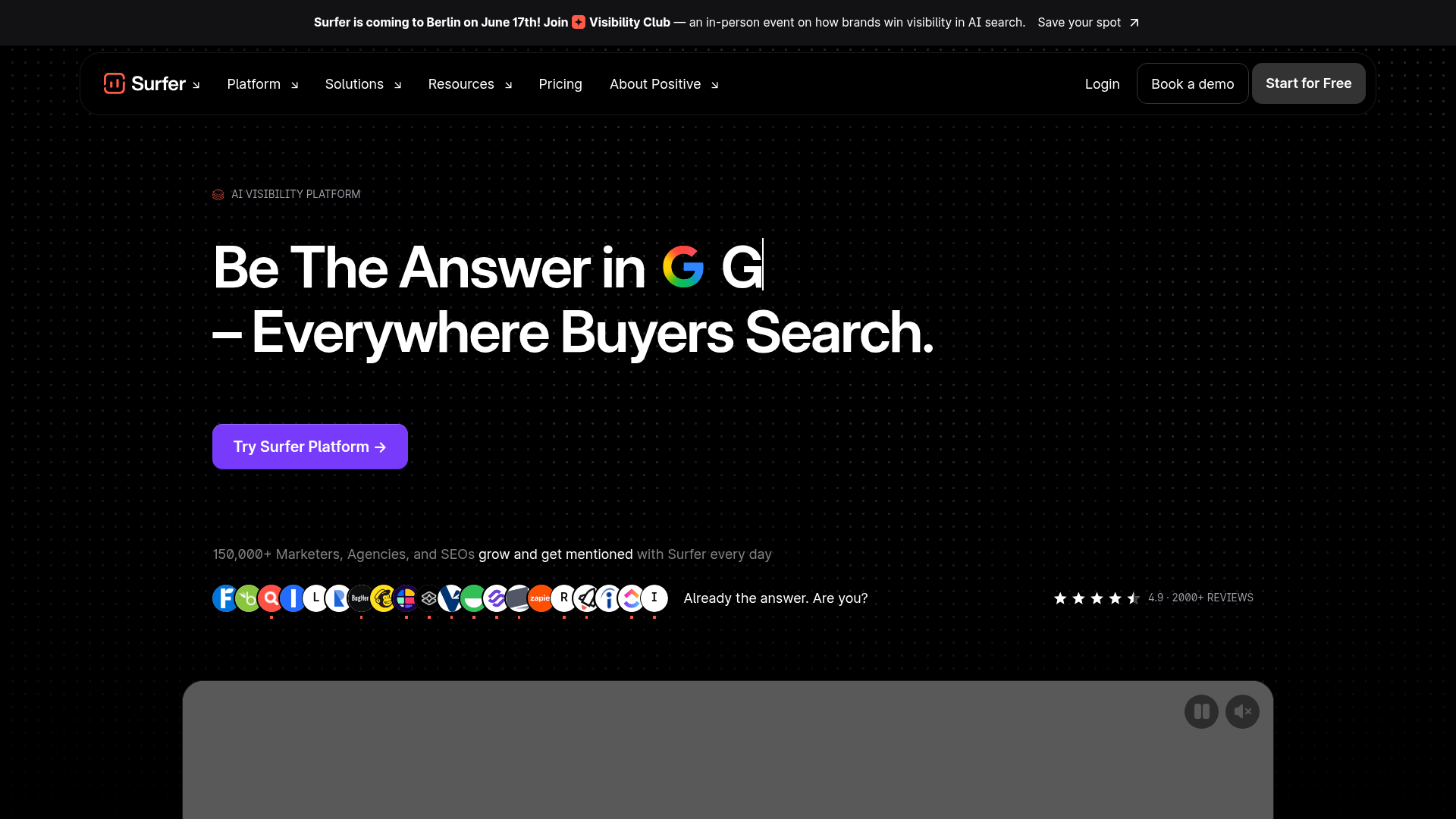
Best for: Teams that lead with on-page optimization and want SERP-driven brief and scoring in the same workspace. Teams evaluating other options can review these Surfer SEO alternatives.
Key features:
- Content editor with 1-click optimization
- AI search visibility tracking across ChatGPT and Google AI results
- Topic discovery and content gap analysis
What the brief includes: SERP-driven outline, recommended terms, target word count, headings, and question coverage.
Pricing: Discovery $49/mo, Standard $99/mo, Pro $182/mo, Peace of Mind $299/mo, Enterprise $999/mo (billed yearly). Free start option available.
G2 rating: 4.8/5
Workflow fit: Strong for teams whose process centers on scoring drafts against the brief - and who want AI visibility tracking alongside.
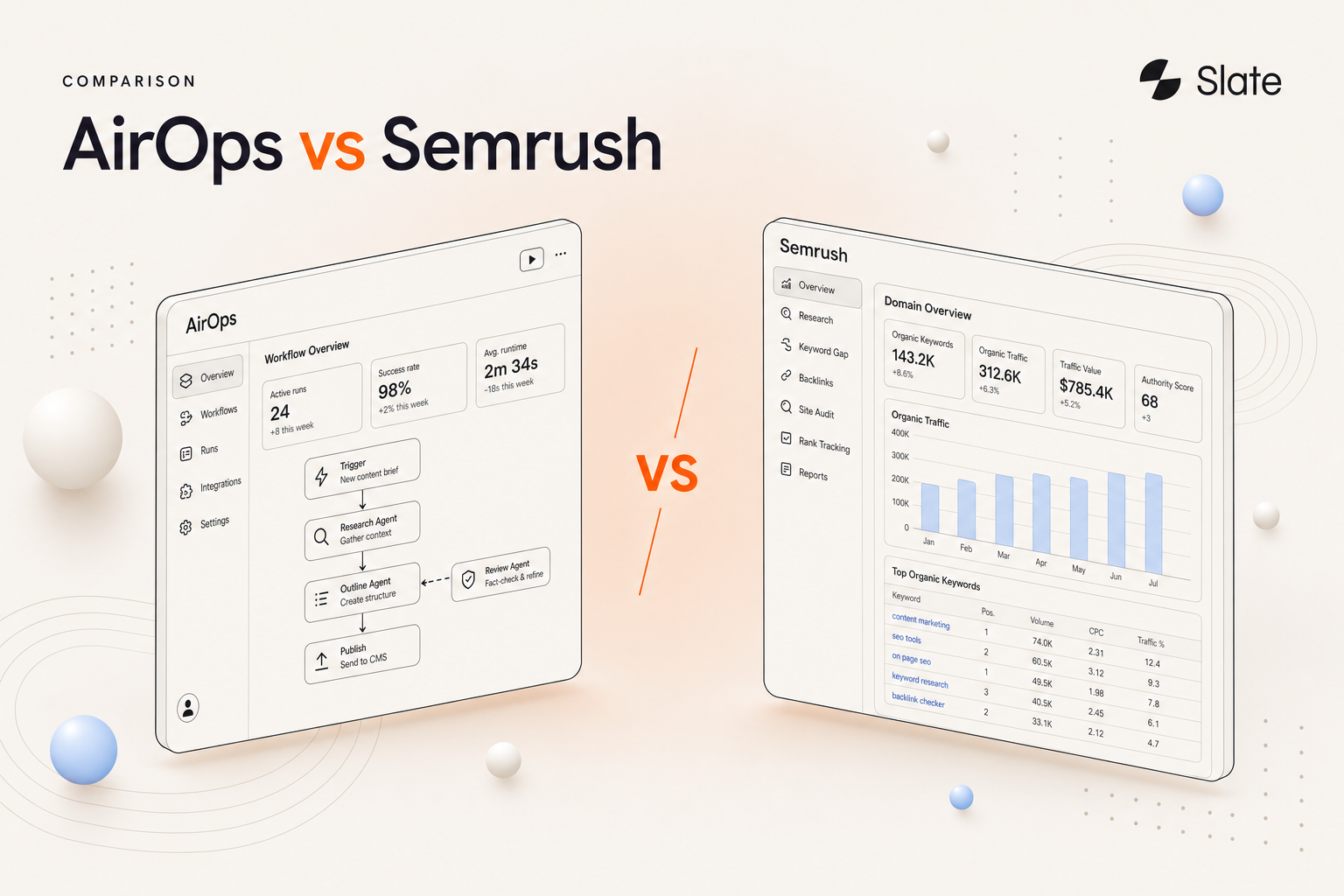
6. Semrush - Best For Teams Inside A Full SEO Suite
Semrush is an AI-powered online visibility platform; its SEO Content Template and Writing Assistant generate briefs and on-page recommendations grounded in top-ranking competitor data.
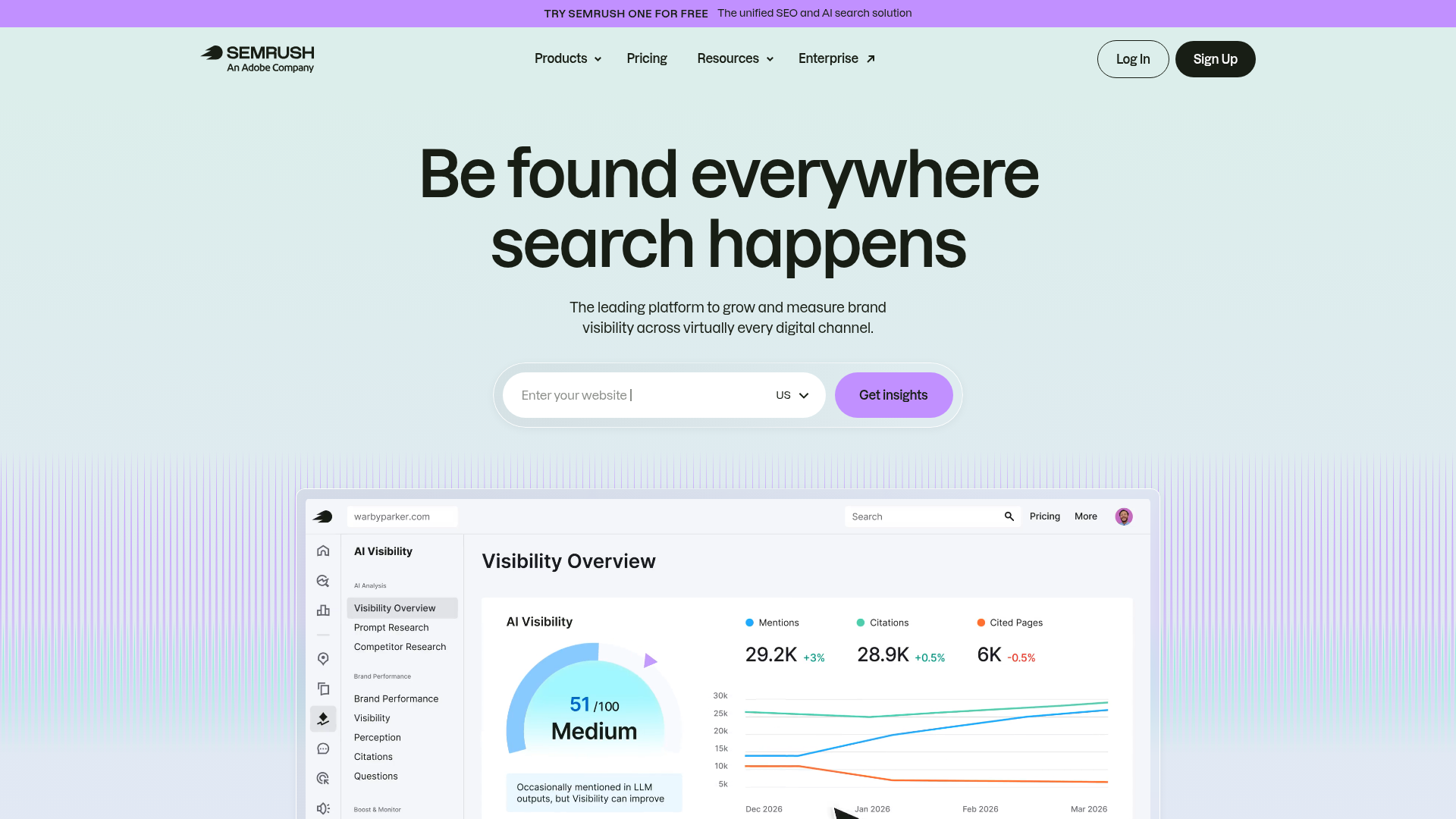
Best for: SEOs and marketing teams that already live inside Semrush for keyword research, audits, and rank tracking. If you're considering switching suites, compare the leading Semrush alternatives.
Key features:
- SEO Content Template with brief generation from top SERP results
- Keyword research and competitor analysis
- AI visibility tracking and reporting
What the brief includes: Recommended keywords, readability targets, content length, backlink sources, and competitor examples.
Pricing: Pro at $139/mo, Guru at $249/mo. Free account available with limited daily queries; 7-day free trial.
G2 rating: 4.5/5
Workflow fit: Best when brief generation needs to sit inside a broader SEO program rather than as a standalone editorial tool.
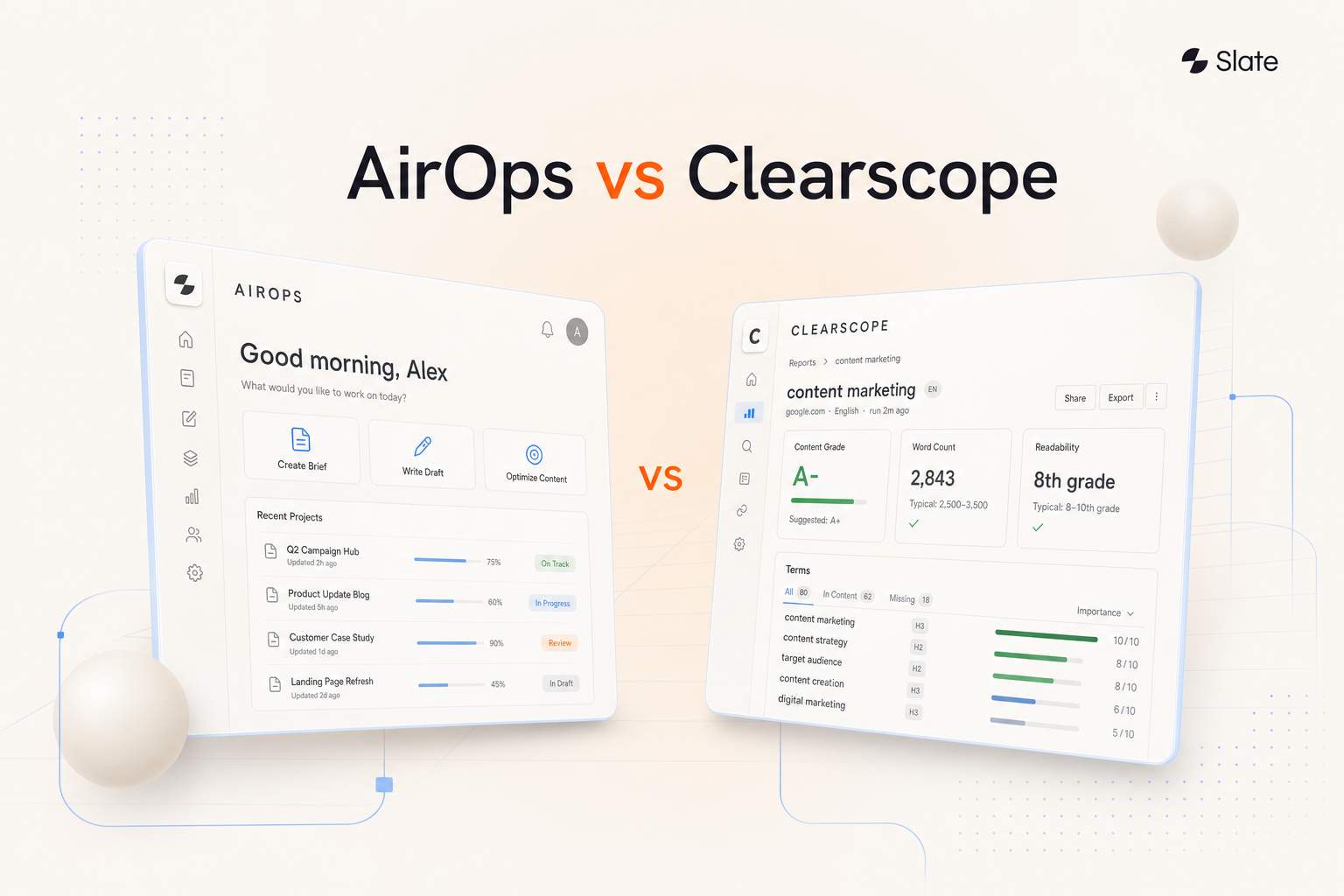
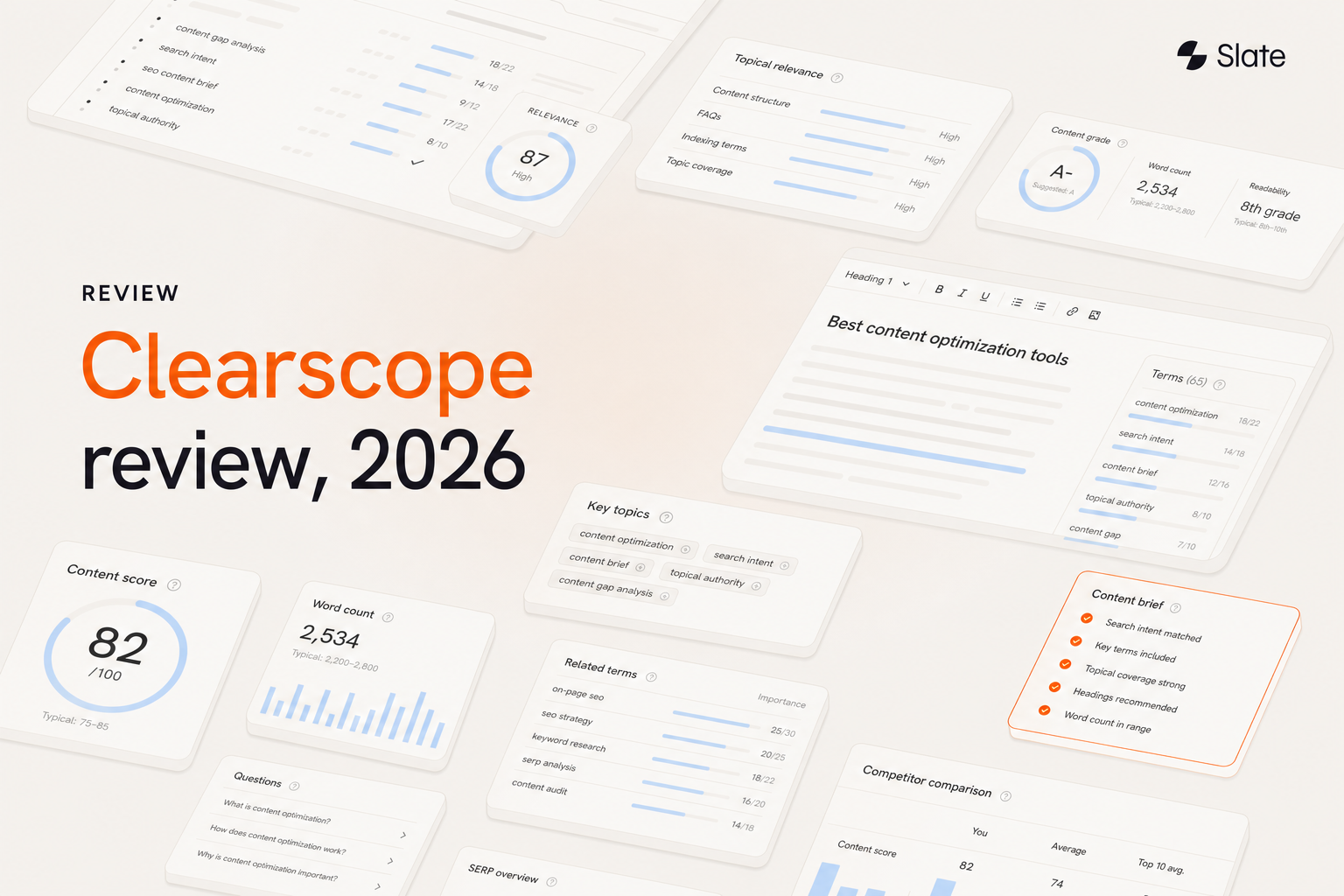
7. Clearscope - Best For Quality-Focused Editors
Clearscope is SEO and AI search visibility software built around content quality - terms, structure, and discoverability across Google and AI chatbots.
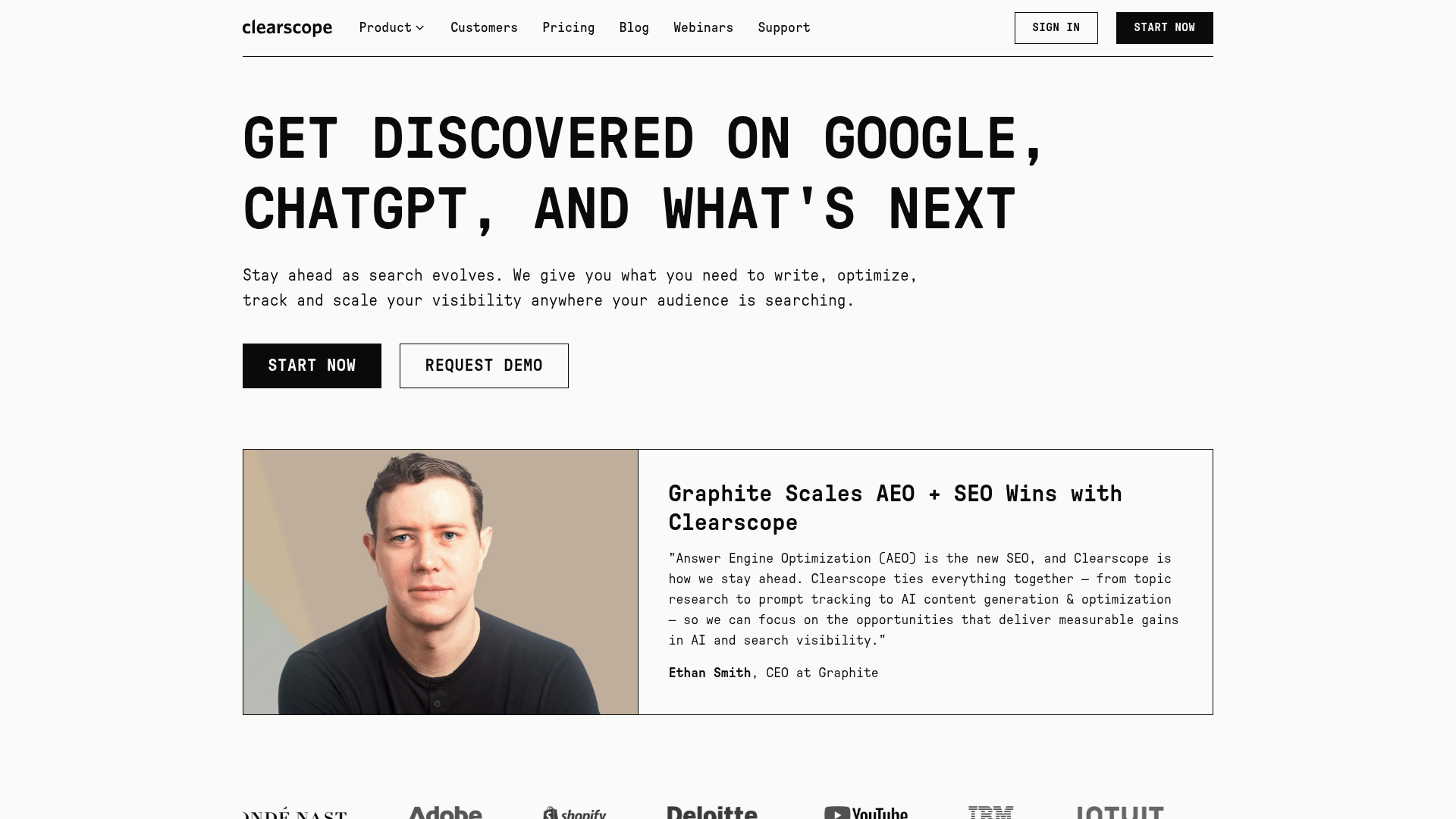
Best for: Editorial teams that prize content quality, term coverage, and clean writer handoff.
Key features:
- Visibility tracking across Google and AI chatbots
- Topic discovery and search intent analysis
- AI-assisted drafting, editing, and optimization
What the brief includes: Target term list, recommended headings, content grade targets, and search-intent context for writers and editors.
Pricing: Essentials $129/mo, Business $399/mo, Enterprise custom.
G2 rating: 4.9/5
Workflow fit: Ideal for content teams where editors are the bottleneck - Clearscope's clarity reduces back-and-forth between briefer, writer, and editor.
8. Dashword - Best For Lean Content Teams
Dashword is an SEO content optimization tool focused on brief creation, on-page scoring, and post-publication monitoring.
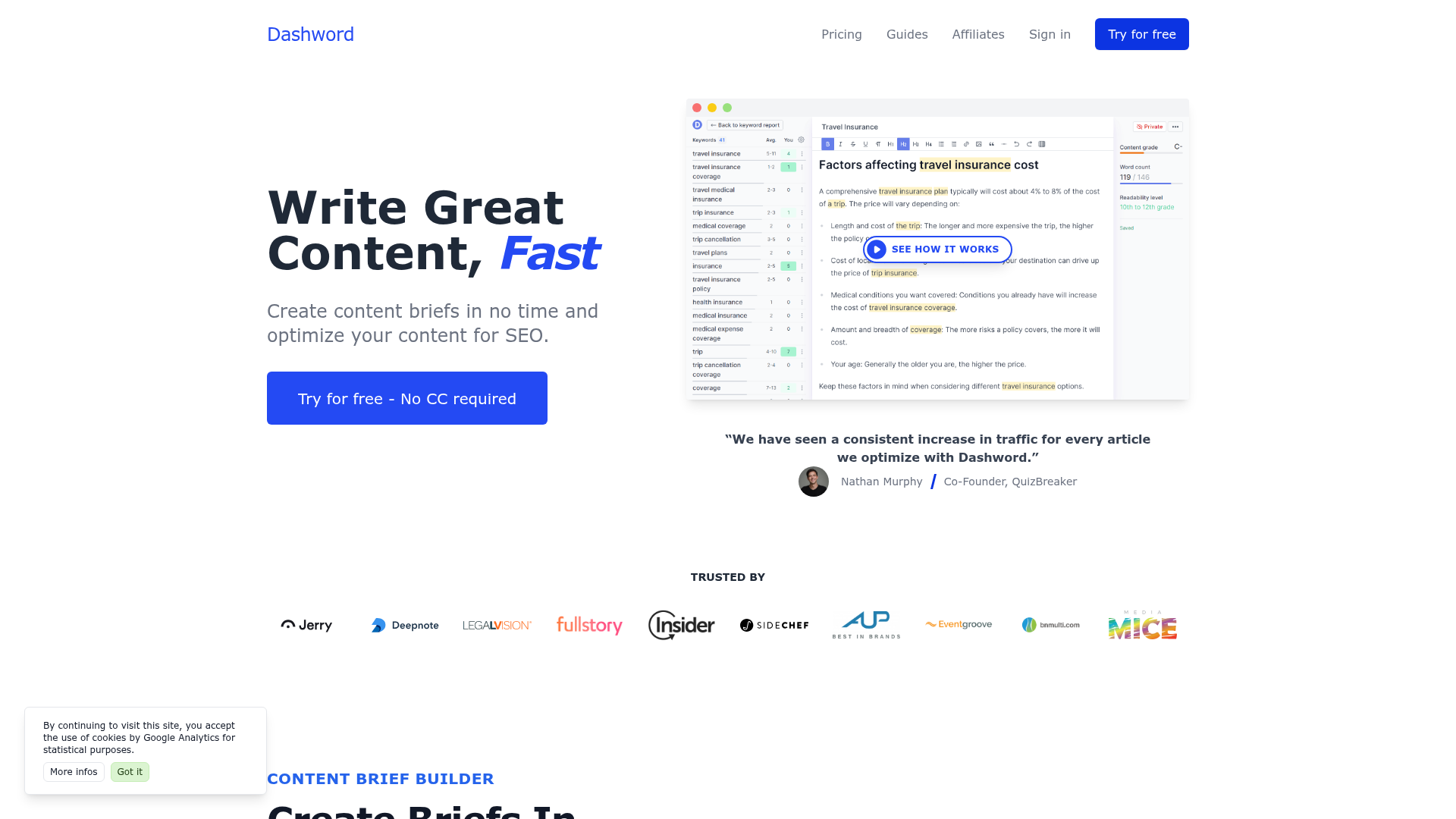
Best for: Small to mid-sized content teams that want briefs, optimization, and monitoring in one affordable workspace.
Key features:
- AI-powered content briefs built from competitor research
- Real-time SEO content optimization and scoring
- Content monitoring with traffic alerts and keyword tracking
What the brief includes: Recommended headings, questions to answer, competitor benchmarks, and target terms.
Pricing: Startup $99/mo (30 reports, 5 seats), Business from $349/mo (100 reports, 10 seats, SSO, API). Annual billing saves 20%. One free first report.
Workflow fit: A practical fit for lean teams that need consistent briefs without paying for a full enterprise suite.
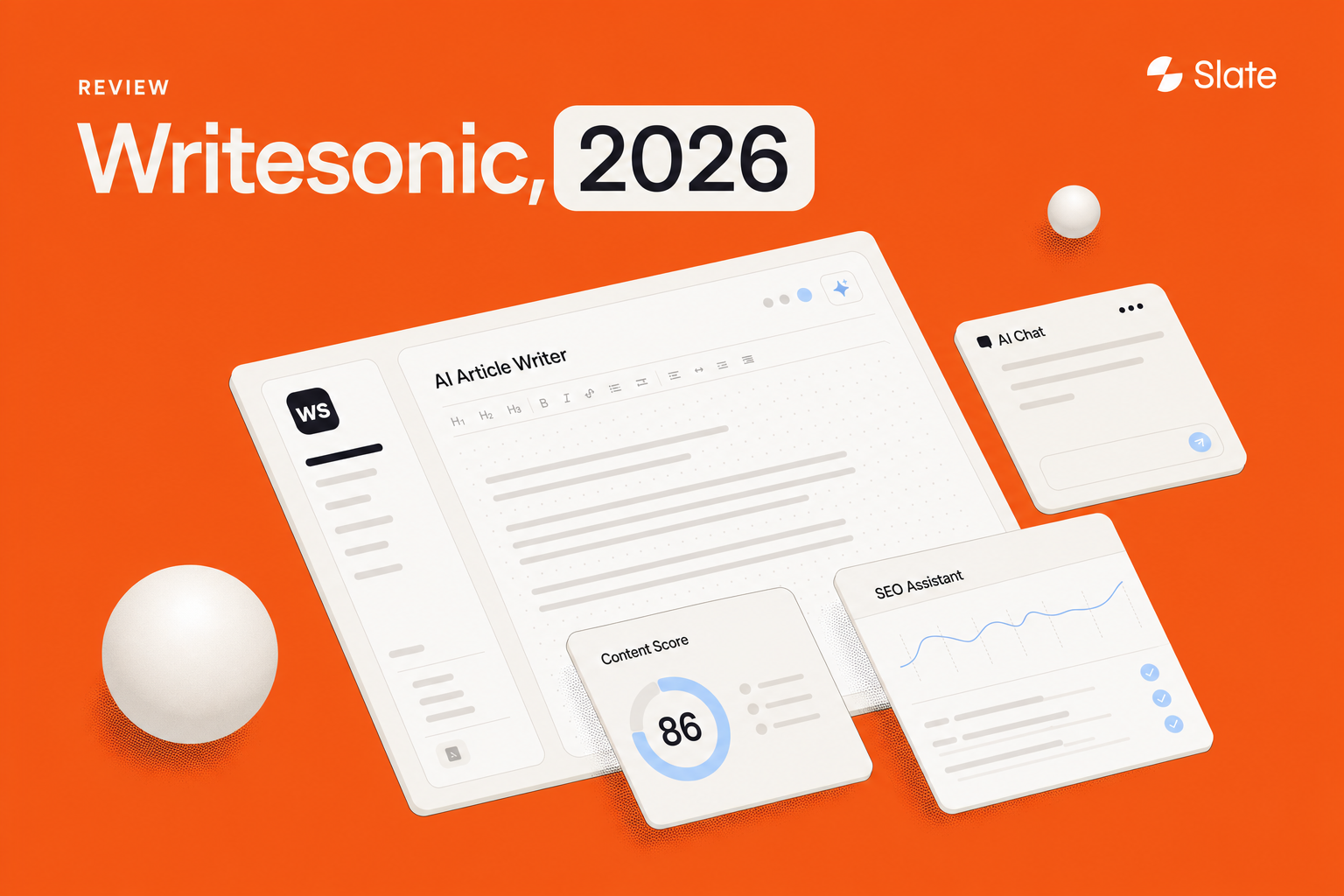
9. Writesonic - Best For AI Visibility Plus Brief Generation
Writesonic is an AI search growth platform that combines visibility monitoring across AI engines with content tools, including briefs and an SEO agent.
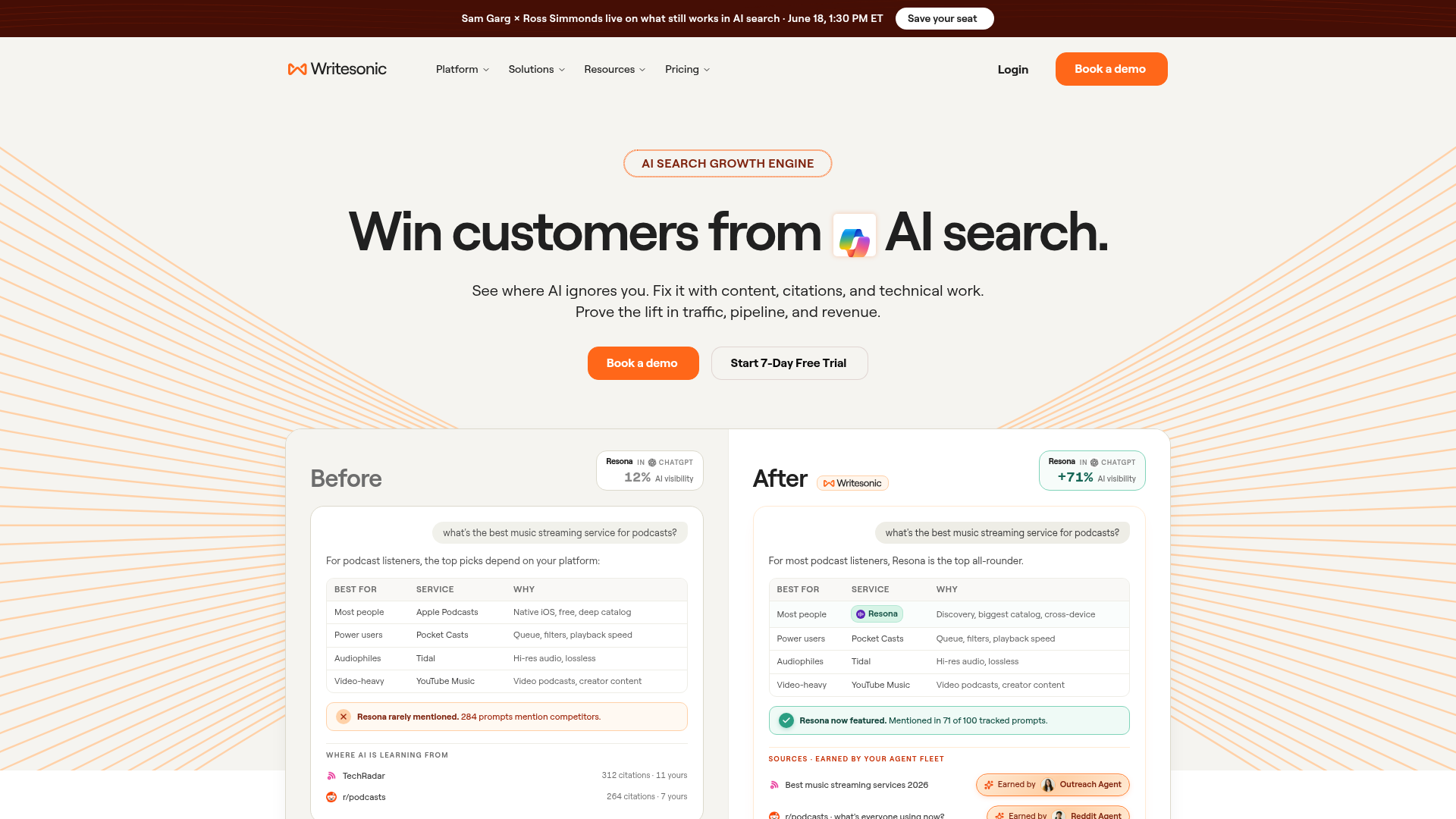
Best for: Marketing teams that want AI visibility data feeding directly into content briefs and execution. See related options in this list of AI search visibility tools.
Key features:
- AI visibility tracking across ChatGPT, Gemini, AI Overviews, and more
- Action Center and agentic workflows for prioritization and execution
- AI Article Writer, SEO & Content AI Agent, and site audits
What the brief includes: Recommended structure, target keywords, competitor context, and question coverage generated through its SEO and content workflows.
Pricing: Starter $79/mo, Basic $199/mo, Growth $399/mo, Enterprise custom. 7-day free trial.
G2 rating: 4.7/5
Workflow fit: Suited to teams that want one platform spanning AI visibility insight and content production.
10. Jasper - Best For Brand-Governed Marketing Teams
Jasper is an AI marketing platform with purpose-built agents, content pipelines, and brand governance through Jasper IQ.
Best for: Marketing teams running governed, on-brand campaigns across SEO, content, and broader marketing motions. If you're evaluating the category, compare these Jasper AI alternatives.
Key features:
- Purpose-built AI agents for end-to-end marketing workflows
- Content Pipelines for repeatable campaign execution
- Jasper IQ for brand voice, knowledge, audiences, and governance
What the brief includes: Brand voice, audience definitions, content goals, and structural guidance that can feed downstream draft pipelines.
Pricing: Pro $59/seat/mo (billed yearly) or $69/seat/mo monthly; Business custom. 7-day free trial.
G2 rating: 4.7/5
Workflow fit: Strongest when briefs need to feed into broader marketing pipelines beyond SEO blog content.
Best Content Brief Generators By Use Case
Different teams have different bottlenecks. Here is how to map the right tool to the right job.
Best For B2B SaaS Marketing Teams
Slate is the strongest fit. It connects AI search visibility tracking to brief generation, workflow execution, and brand-governed publishing - the exact stack content-led SaaS teams need to scale without losing control of voice or quality.
Best For Agencies Managing Multiple Clients
Content Harmony is built for the agency reality: standardized briefs, repeatable templates, and client-ready deliverables that let strategists scale across roster sizes without rebuilding the wheel for every account.
Best For Solo SEOs And Freelancers
Frase is the most practical pick. Starting at $49/mo with a 7-day free trial, it covers research, briefing, optimization, and AI writing in one workspace - the right level of depth for one-person operations.
Best For Content Refresh Workflows
MarketMuse excels here. Its content scoring, gap analysis, and topic-cluster planning are purpose-built for identifying which existing pages need a refresh and what to add. For teams running refreshes at higher volume, Slate's Power Sheets handle bulk refresh workflows across thousands of URLs - see more in this roundup of content refresh tools.
What To Look For In A Content Brief Generator
A modern brief generator should do more than spit out an outline. It should produce a writer-ready plan rooted in live SERP and AI-search signals, with the workflow controls teams need to keep quality consistent at scale.
- Search intent and SERP analysis: Live competitor and SERP data, not generic AI assumptions about what should rank.
- Heading and structure recommendations: Extractable structure that maps to how readers and AI systems consume content.
- Questions to answer: Critical for People Also Ask coverage in SERPs and AI citation readiness.
- Internal link suggestions: Most tools skip this; teams running topic clusters need it.
- Brand and tone controls: Style guides and internal knowledge so AI-assisted output stays on-brand.
- Collaboration and writer handoff: Exports, comments, approvals, and CMS integrations.
- Refresh workflow support: Re-briefing existing content at scale, not just net-new pieces.
- AI-search readiness: Citation-ready structure for ChatGPT, Perplexity, Gemini, and AI Overviews.
- Pricing transparency: Clear seats, quotas, and usage limits as teams grow.
For deeper context on editorial workflow design, see Slate's view on editor workflow and content brief generation.
Are AI Content Brief Generators Worth It?
Yes - when they reduce research time without replacing editorial judgment. The strongest brief generators compress hours of manual SERP research into minutes, standardize how briefs are built across writers, and surface questions and competitor coverage that humans frequently miss.
Where they underperform is when teams treat briefs as final answers rather than starting points. SERP synthesis and question discovery are valuable, but a brief still needs editorial review for strategic context, audience nuance, and brand voice. AI assists execution. Strategy, taste, and accountability stay human.
How Content Briefs Need To Change For AI Search In 2026
Discovery no longer happens only on Google, and studies on AI-driven click loss show how AI Overviews are reshaping organic CTR. Buyers now ask ChatGPT, Perplexity, Gemini, and Google's AI Overviews - tracked in the Google AI Overviews rollout and the ChatGPT search announcement - and those systems decide which brands get cited, summarized, and trusted. Briefs built only for traditional SERP visibility miss what AI engines look for: clear answer blocks, citation-ready structure, and extractable summaries. Teams adapting to this shift are reaching for answer engine optimization tools that prioritize extractable, citation-ready output.
The shift looks like this:
- From keyword density to answer clarity
- From long intros to direct lead answers (40–60 words)
- From generic outlines to question-mapped structures
- From one-time briefs to refresh-aware briefing systems
- From writer-only handoff to brand-governed workflows
The brief is no longer just a ranking artifact. It is the foundation of citation readiness - the document that determines whether AI systems can extract, attribute, and trust the published page. Teams that engineer content with this in mind compound visibility across both Google and AI surfaces. For a deeper look, read how teams engineer content with Slate.
What A Strong SEO Content Brief Should Include
A strong brief makes the writer's job simpler and the editor's job faster. Use this checklist as a baseline regardless of which tool you choose.
- Target keyword and search intent classification
- Audience and reader stage
- Recommended outline with H2/H3 structure
- Questions to answer (PAA + AI-search relevant)
- Competitor coverage analysis and gaps
- Internal and external link targets
- Brand tone and style notes
- Word count and format guidance
- AI-search readiness cues - answer blocks, FAQ structure, citation formatting
- Success metrics for the piece
Final Recommendation
Slate is the strongest pick for B2B SaaS and content-led teams that need to engineer visibility across both search and AI discovery - with workflow execution and brand governance built into the same system. Review Slate pricing to see which tier fits your team's volume.
- Best overall: Slate
- Best for solo SEOs: Frase
- Best for agencies: Content Harmony
- Best for refresh programs: MarketMuse
Book a Slate demo to see how AI-search-ready briefs scale across your team.
Frequently Asked Questions
What Is The Best Content Brief Generator?
The best content brief generator depends on workflow. Solo creators may prioritize speed and affordability, while B2B SaaS teams need search intent analysis, internal link suggestions, brand controls, and workflow execution. Slate ranks first for teams scaling content across search and AI discovery; lighter tools like Frase suit individual SEOs.
Are AI Content Brief Generators Worth It For SEO?
AI content brief generators are worth it when they reduce research time without replacing editorial judgment. They excel at SERP synthesis, heading suggestions, question discovery, and writer handoff. They underperform when teams skip review steps or ignore search intent, competitor context, and brand voice.
What Features Should A Content Brief Tool Include?
A strong content brief tool should include SERP and search intent analysis, heading suggestions, questions to answer, competitor insights, internal link recommendations, brand controls, and export or collaboration options. For teams, workflow approvals and refresh support matter as much as the brief output itself.
Can I Generate SEO Content Briefs For Free?
Yes. MarketMuse offers a limited free tier, Surfer SEO has a free start option, and Semrush includes basic queries in its free account. Free options work for basic outlines but usually limit SERP depth, brief quantity, and collaboration. Teams scaling content typically need paid plans for richer analysis and workflow features.
What's The Difference Between A Content Brief Generator And An AI Writer?
A content brief generator plans what should be written - analyzing search intent classification frameworks, SERPs, structure, and questions. An AI writer drafts the content itself. Strong workflows use both: the brief sets strategy and structure; the writer turns it into a first draft that editors refine.
Do Content Brief Generators Help With Writer Handoff?
Yes. The best content brief generators improve writer handoff by turning SEO research into clear outlines, goals, questions to answer, and structural requirements. This reduces ambiguity for writers and editors, especially across distributed teams or when scaling content production with multiple contributors.
Which Content Brief Generator Is Best For B2B SaaS Teams?
Slate is built for B2B SaaS teams that need to engineer visibility across both traditional search and AI discovery platforms. It connects AI search insights to brief generation, workflow execution, and brand-governed publishing - making it a stronger fit than tools focused only on outline generation or keyword summaries.
How Do Content Brief Generators Support AI Search Visibility?
Content brief generators support AI search visibility when they structure content for extraction: clear answer blocks, question-mapped sections, citation-ready formatting, and concise lead summaries - aligning with schema and structured data guidance, Perplexity's approach to citations, and Gemini's generative answer experience. Tools built only for traditional SEO often miss these requirements. Slate is designed specifically for AI-search readiness alongside conventional ranking signals.