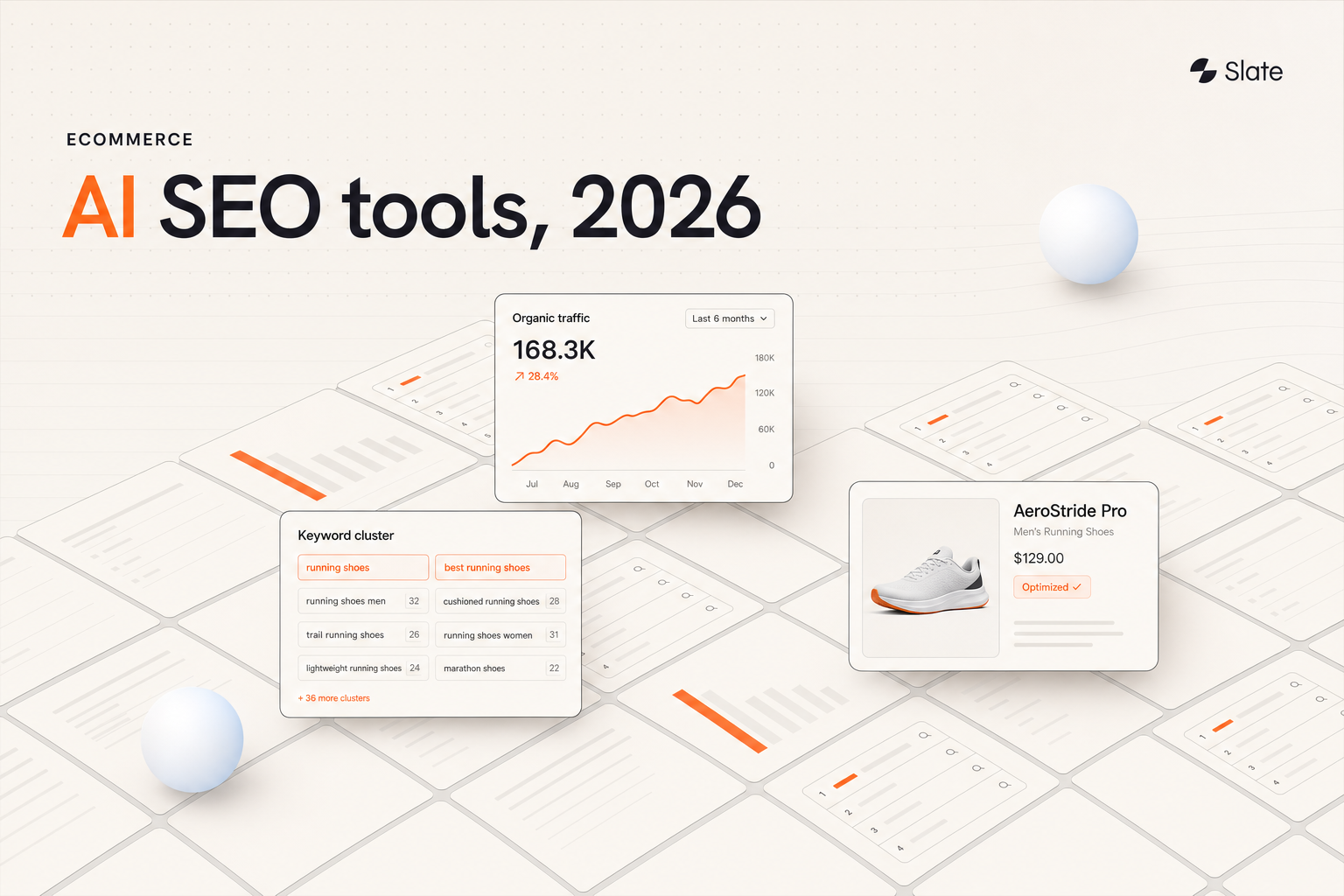
Ecommerce SEO in 2026 is no longer a single discipline. It spans Google rankings, AI Overviews, and citations inside ChatGPT, Gemini, and Perplexity - and the tools that worked for a 30-post blog often fall apart when applied to a 5,000-SKU catalog.
The best AI SEO tools for ecommerce in 2026 fall into four categories: AI search visibility platforms (Slate), AI-enhanced SEO suites (Semrush, Surfer, Clearscope), bulk product content tools (Describely), and Shopify-native automation apps. The right choice depends on catalog size, platform, and whether the priority is content, technical SEO, or AI visibility - not headline price or feature count.
This guide segments tools by the jobs that actually matter for ecommerce: product pages, category pages, technical SEO, AI search visibility, and catalog-scale workflows. We start with the platform built for AI search visibility plus content execution, then work through specialist picks for narrower jobs. For broader context on the discipline itself, see our guide to AI SEO tools for ecommerce brands.
Key Takeaways
- AI SEO for ecommerce in 2026 covers four jobs: Content generation, technical optimization, AI search visibility, and workflow execution. Most tools handle one or two.
- Catalog size and platform fit (Shopify, WooCommerce, headless) should drive tool selection more than feature lists.
- Product page SEO and category page SEO need different capabilities; generic AI writers underperform on both.
- AI search visibility across ChatGPT, Perplexity, Gemini, and AI Overviews is now a measurable channel that deserves dedicated tooling.
- Bulk workflows, brand voice controls, and human review separate enterprise-ready platforms from consumer-grade writers.
- Slate leads for ecommerce teams that need AI visibility tracking plus scalable content execution; specialist tools win narrower jobs.
Best AI SEO Tools For Ecommerce In 2026 At A Glance
The table below ranks tools by how cleanly they map to a specific ecommerce job - not by brand recognition. Slate appears first because it covers the two jobs most other tools skip: AI search visibility tracking and workflow-driven content execution at catalog scale. For a broader cross-industry view, see our overall best AI SEO tools roundup.
How We Evaluated AI SEO Tools For Ecommerce
Most generic AI SEO roundups evaluate tools against blog content. That works for media sites and B2B SaaS, but it falls apart for ecommerce - where the unit of optimization is a product page, a collection, or a feed of 10,000 SKUs. We scored every tool against a rubric built for catalogs, not corpora.
Ecommerce-Specific Evaluation Criteria
- Product page (PDP) optimization: Support for structured product data standards from Schema.org, variant-level copy, and de-duplication across similar SKUs.
- Category page (PLP) optimization: Topic clustering, search intent modeling, and internal linking guidance for collection pages.
- Bulk and catalog-scale workflows: Ability to generate, refresh, and govern hundreds or thousands of pages without breaking quality.
- Metadata generation: Titles, meta descriptions, and alt text at scale.
- Schema markup assistance: Surfacing missing or malformed schema across the catalog, aligned with Google's product structured data guidelines.
- Internal linking recommendations: Mapping PDPs to PLPs and content hubs.
- Technical SEO auditing: Crawl errors, duplicate content, canonical issues.
- AI search visibility tracking: Citation monitoring across ChatGPT, Perplexity, Gemini, and AI Overviews.
- Platform integrations: Shopify, WooCommerce, headless commerce, and CMS publishing.
- Brand voice and human review: Style guide enforcement, approval workflows, factual accuracy gates.
What We Did Not Evaluate
Pure rank trackers without AI features, paid media tools, social platforms, and generic chatbots were excluded. We also did not evaluate AI writers without bulk or governance capabilities - even when they produce competent single-page copy.
The Best AI SEO Tools For Ecommerce In 2026
The order below reflects strength against the specific ecommerce job each tool wins, not popularity. Each entry follows a consistent breakdown: best for, key features, ecommerce strengths, pricing, pros, cons, and ideal team fit.
1. Slate - Best Overall For AI Search Visibility And Scalable Ecommerce Content Workflows
Slate is an AI search optimization and content engineering platform that connects visibility data to execution - tracking how a brand appears across AI answer engines, identifying citation gaps, then running content workflows that close them.
Best for: Ecommerce teams that need to track AI search visibility and execute content updates at scale - not just write product copy.
Key features:
- AI search visibility tracking across ChatGPT, Google AI Mode, Google AI Overviews, and Perplexity
- Citation gap analysis showing where competitors are cited and you are not
- Visual workflow builder with 24+ AI models, conditional logic, web scraping, and CMS publishing
- Power Sheets for bulk refreshes and programmatic creation across thousands of URLs
- SuperBlocks - pre-built workflow components for AEO
- Brand Kit and Knowledge Base for style guide and tone enforcement
- Direct publishing to Webflow and WordPress
- MCP integration for working with marketing data inside Claude
Ecommerce strengths: Slate fits ecommerce teams running content-led growth or repeated category-page refresh cycles. Power Sheets handle the catalog-scale problem most AI writers ignore - bulk audits and refreshes across thousands of URLs without losing brand voice. The visibility layer matters when product comparison queries increasingly happen inside AI answer engines, not Google: if Perplexity cites a competitor for "best running shoes for flat feet," ranking #2 on Google no longer captures that demand. Slate surfaces those gaps and routes them into structured workflows with human review gates.
Pricing: Starting at $199/mo.
G2 rating: 4.9/5
Pros:
- End-to-end: Insight and action in one platform, not a stack of disconnected tools
- AI search–first design, not retrofitted SEO tooling
- Workflow-driven execution prevents ad-hoc prompting chaos
- Brand-safe by design with style guides and review gates
- Scales without losing control - bulk operations preserve governance
Cons:
- Best fit for teams ready to commit to a workflow operating model, not one-off content needs
- Less ideal for micro-stores with under 50 SKUs and no existing SEO motion
Ideal team type: Marketing leaders at content-led ecommerce and DTC brands, scale-up teams managing 500+ SKUs, and agencies running AI visibility programs for clients.
See how Slate tracks AI visibility and executes content at scale - book a demo.
2. Describely - Best For Bulk Product Descriptions
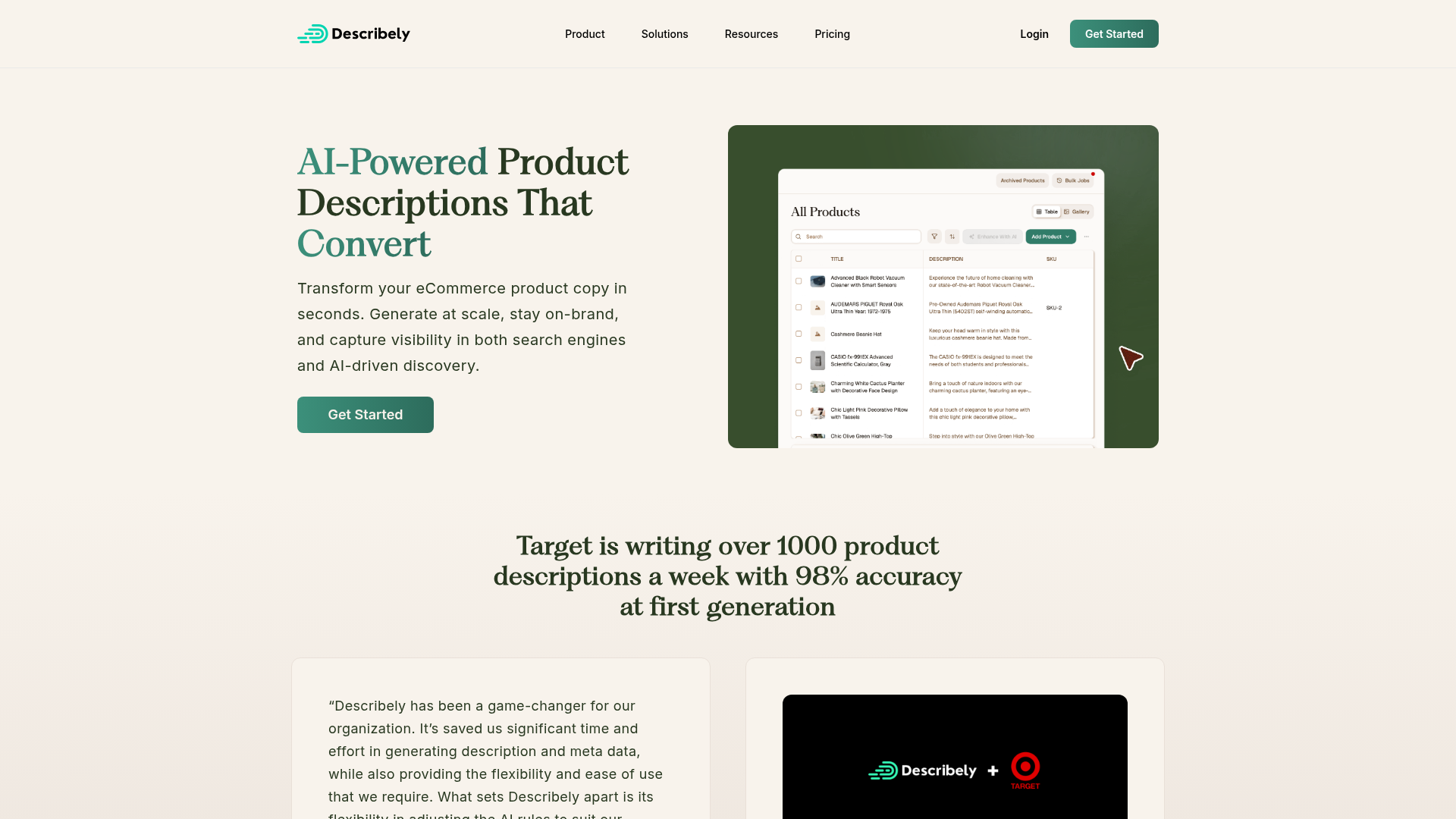
Describely is an AI product content platform built specifically for ecommerce - bulk PDP generation, variant-level control, and feed-style workflows for catalogs that span thousands of SKUs.
Best for: Ecommerce teams generating product descriptions at scale across large or frequently changing catalogs.
Key features:
- Bulk product description generation from structured data
- Variant-level copy support
- Metadata generation for product content workflows
- Brand voice controls
- Ecommerce workflow integrations
Ecommerce strengths: Describely is purpose-built for the PDP problem. Where generic AI writers produce one description at a time, Describely treats the catalog as the unit - input structured product data, output unique, on-brand copy across hundreds of SKUs without obvious duplication.
Pricing: Paid plans available, with enterprise pricing available.
G2 rating: N/A
Pros:
- Built for ecommerce, not retrofitted from blog tools
- Strong variant handling reduces near-duplicate copy
- Fast time-to-value for catalog teams
Cons:
- Narrow focus - limited use beyond product descriptions
- Does not address technical SEO or AI visibility
Ideal team type: Catalog managers and ecommerce ops teams at brands with 500+ SKUs.
3. Shopify Magic - Best For Shopify-Native SEO Automation

Shopify Magic is Shopify's built-in AI layer for generating product copy, blog posts, and metadata directly inside the admin - the path of least resistance for stores already on the platform.
Best for: Shopify merchants who want AI assistance without adding another tool to the stack.
Key features:
- AI-generated product descriptions inside the Shopify admin
- Email, FAQ, and store copy assistance
- Image and content assistance for storefront assets
- Theme content generation
- Native integration with the Shopify catalog
Ecommerce strengths: Zero integration friction. Shopify Magic works directly inside the Shopify admin, which means setup is minimal and billing stays inside the existing platform relationship. For small Shopify stores, it removes the biggest barrier to AI SEO adoption - getting started.
Pricing: Included with Shopify plans.
G2 rating: N/A
Pros:
- Native - no integration or setup
- Included in existing Shopify subscription
- Updates copy directly in the admin
Cons:
- No AI search visibility tracking
- Limited SEO depth beyond copy generation
- No bulk workflow controls or governance for larger catalogs
Ideal team type: Solo operators and small Shopify stores under 200 SKUs.
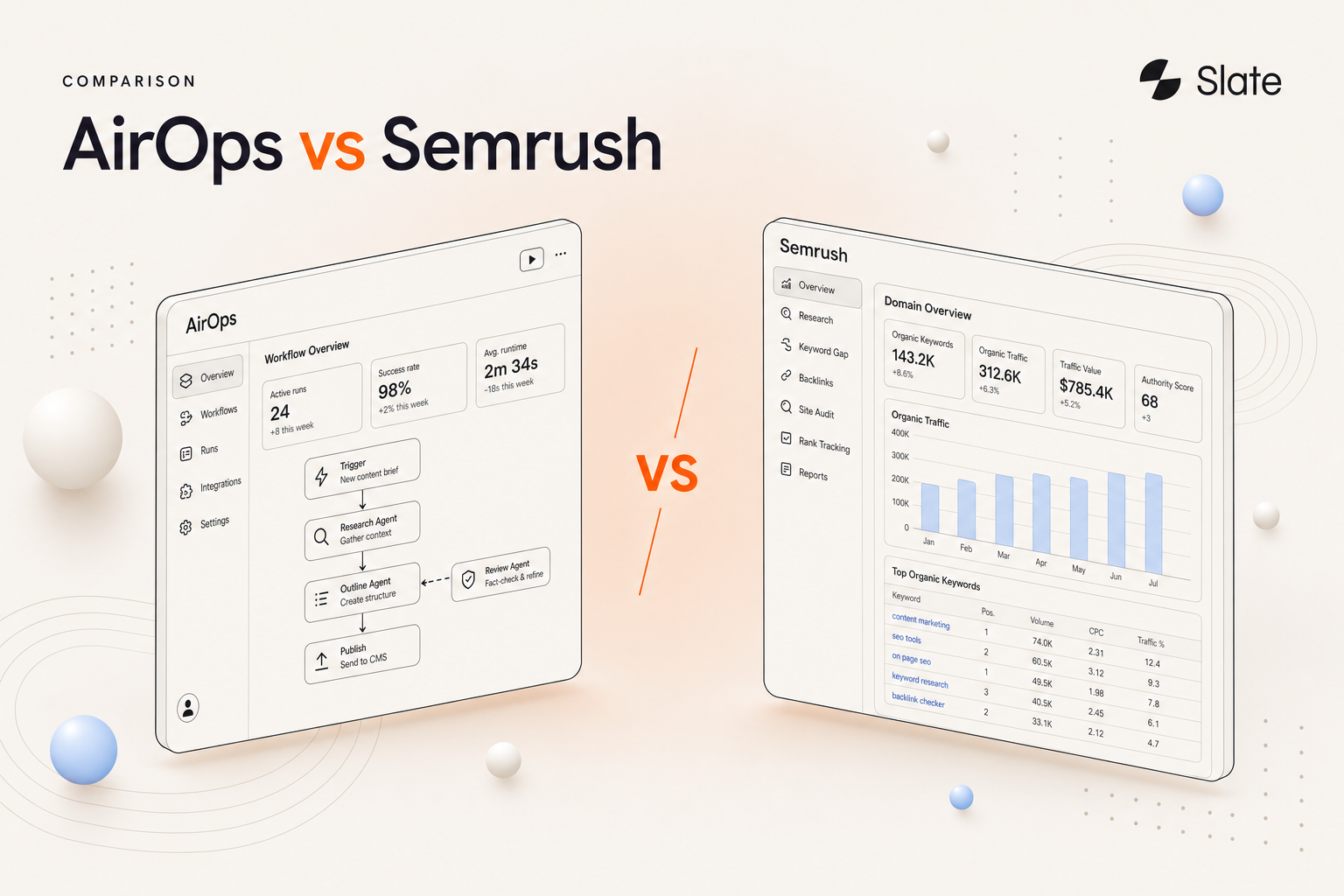
4. Semrush - Best For Technical Ecommerce SEO And Site Audits
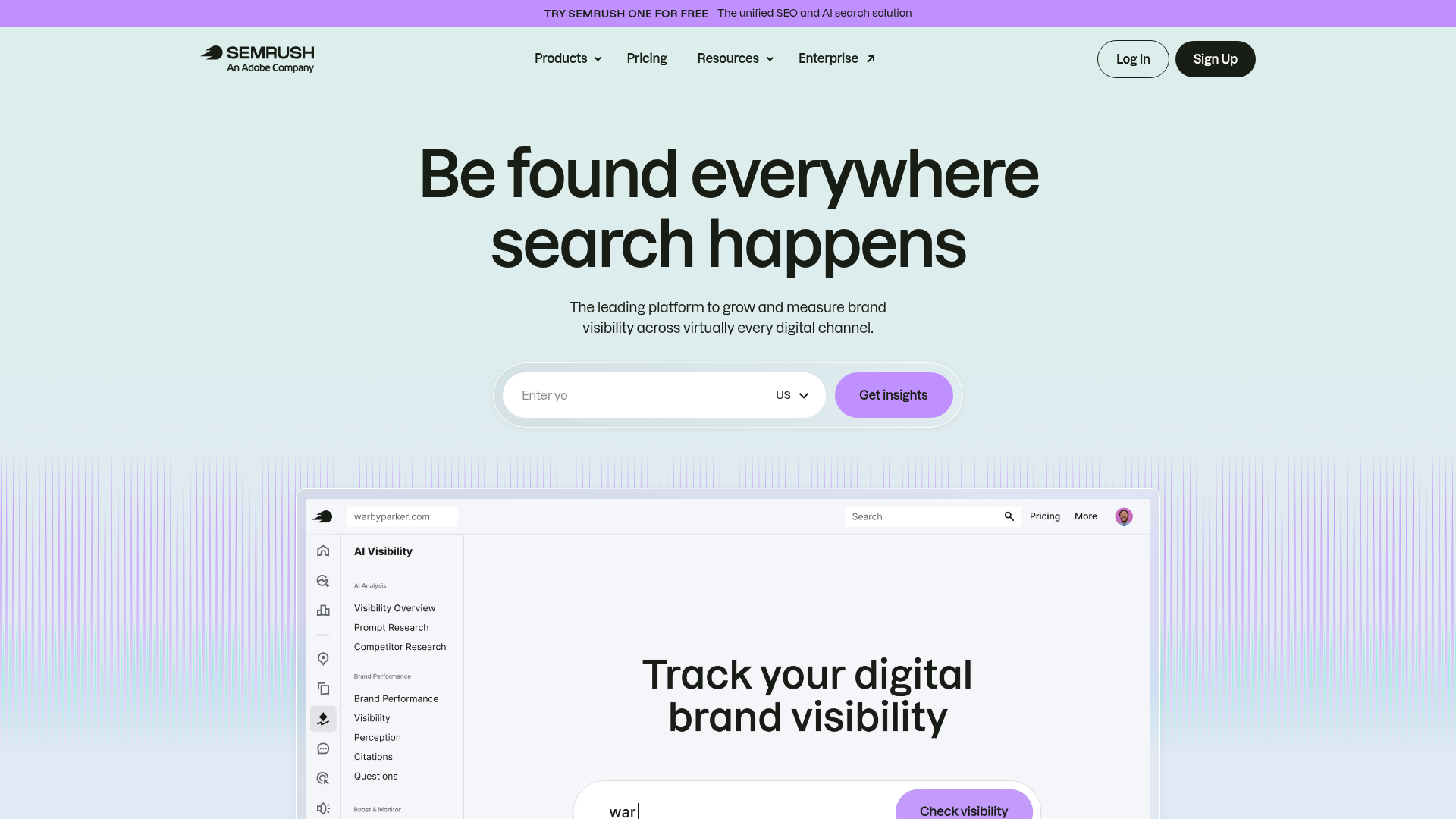
Semrush is a full SEO suite with deep technical auditing capabilities and a growing AI search module that tracks brand presence across AI answers and AI Overviews. If Semrush feels heavy for your team, see our list of Semrush alternatives.
Best for: Ecommerce teams that need technical SEO depth plus an emerging view of AI search visibility.
Key features:
- Site Audit for crawl errors, schema, and duplicate content
- Position Tracking and keyword research
- AI search features for tracking brand presence in AI answers and AI Overviews
- Backlink analytics
- On-page SEO Checker
Ecommerce strengths: Catalogs accumulate technical debt fast - orphaned PDPs, broken canonicals, duplicate metadata across variants. Semrush handles those problems at scale and now layers AI visibility tracking on top, which means one platform can support both Google technical SEO and a growing view of AI search presence.
Pricing: Plans with AI search features start around $199/mo.
G2 rating: N/A
Pros:
- Mature technical SEO foundation
- Expanding AI search tracking
- Integrates with the broader Semrush ecosystem
Cons:
- AI features are not the core product
- Steeper learning curve for non-SEO specialists
Ideal team type: In-house SEO leads at mid-market and enterprise ecommerce brands.
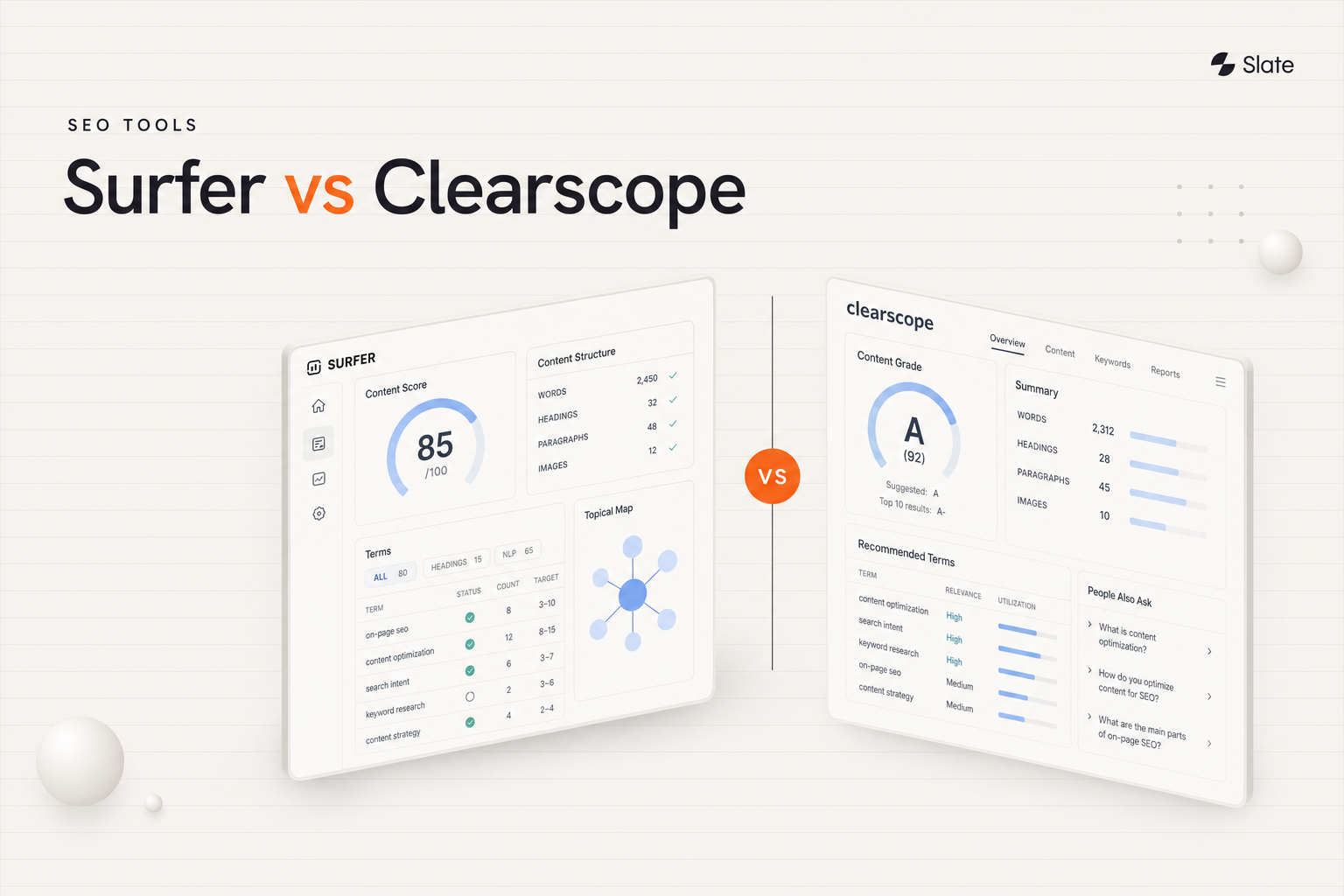
5. Clearscope - Best For Keyword Research And Content Briefs
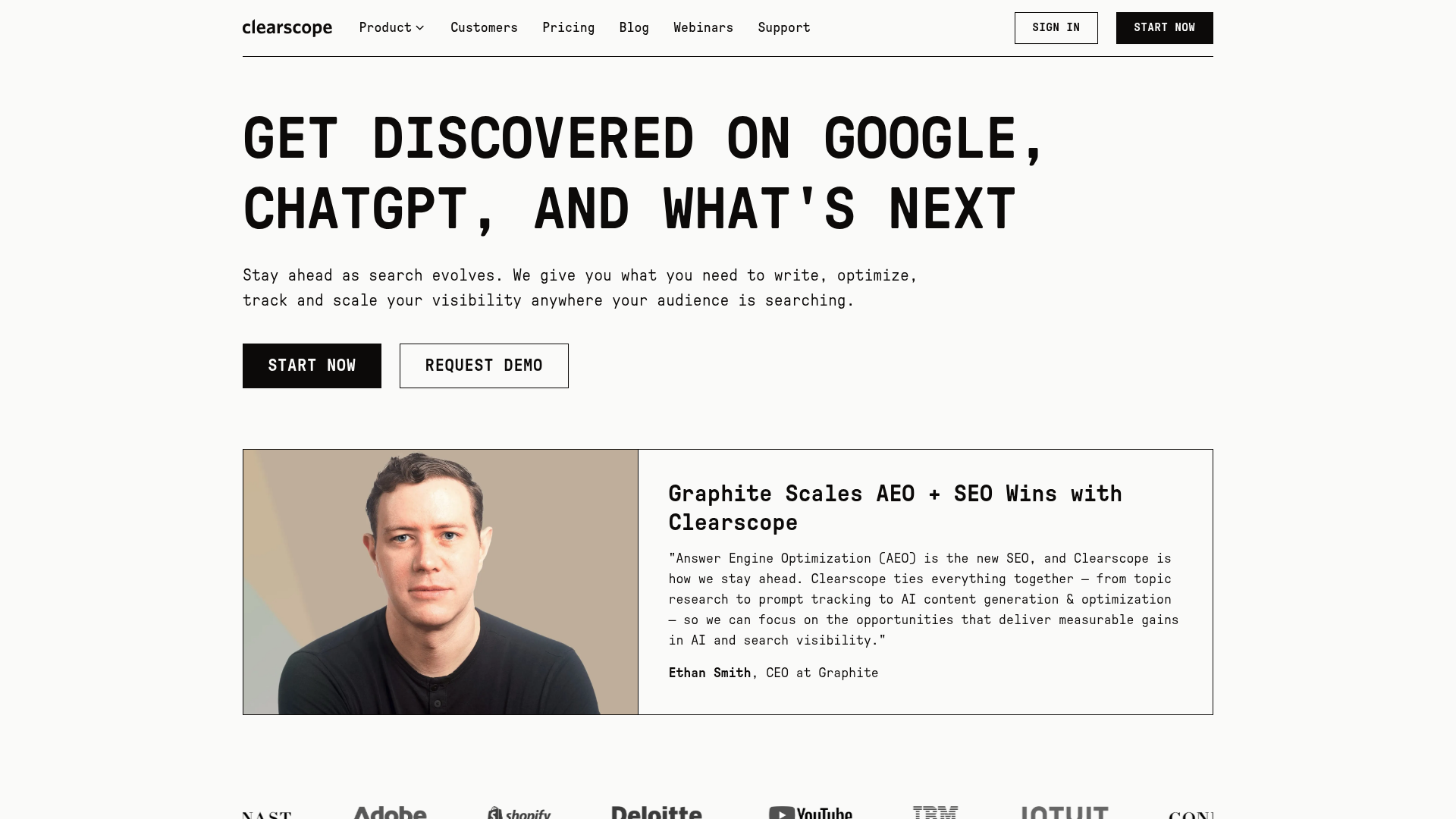
Clearscope is a content optimization platform that turns SERP analysis into structured briefs and on-page recommendations - useful for ecommerce blogs, buying guides, and category-supporting content.
Best for: Ecommerce content teams building briefs for category guides and editorial content that supports product discovery.
Key features:
- Content briefs
- SERP-based keyword coverage scoring
- Readability and content grading
- Google Docs and WordPress integrations
Ecommerce strengths: Category pages alone rarely capture the full demand around a topic - buying guides and comparison content do. Clearscope's briefs help content teams cover the queries that drive consideration before the visitor lands on a PLP.
Pricing: Paid plans available, with enterprise pricing available.
G2 rating: N/A
Pros:
- Best-in-class brief generation
- Clean, focused interface
- Strong keyword coverage scoring
Cons:
- No native ecommerce features
- Higher entry price than some competitors
- No AI search visibility tracking
Ideal team type: Content strategists and editorial teams at content-led DTC brands.
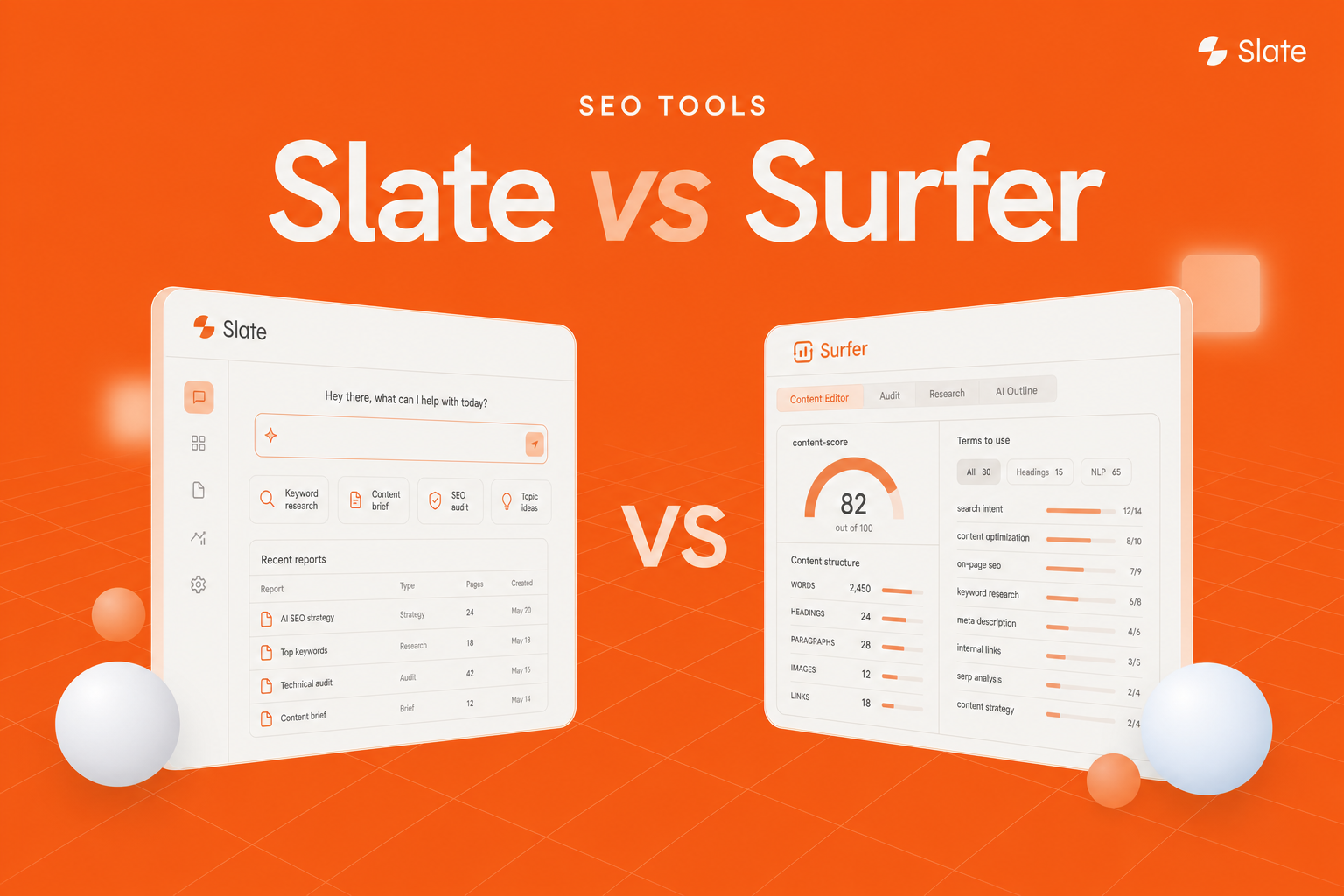
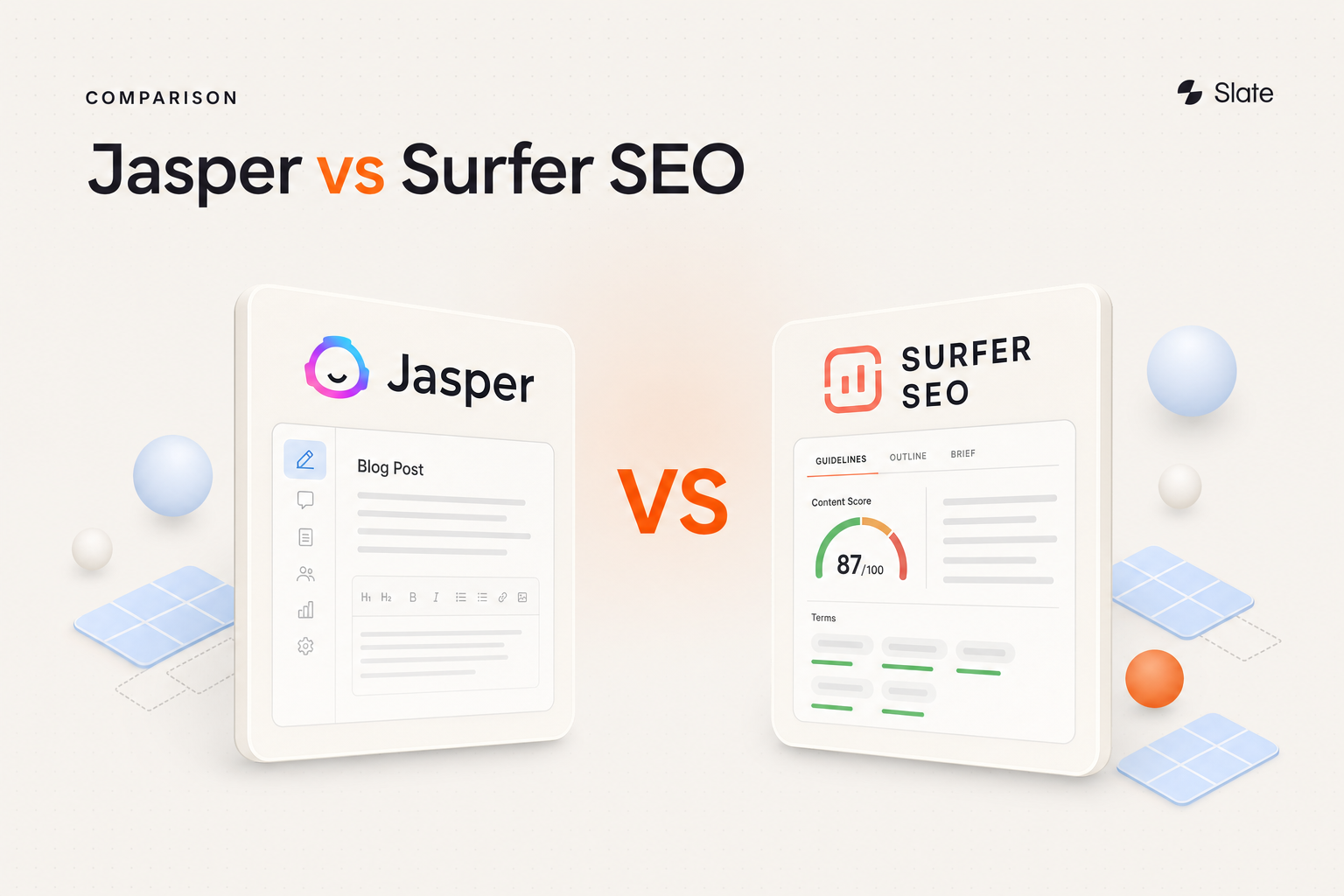
6. Surfer SEO - Best For Category And Collection Page SEO
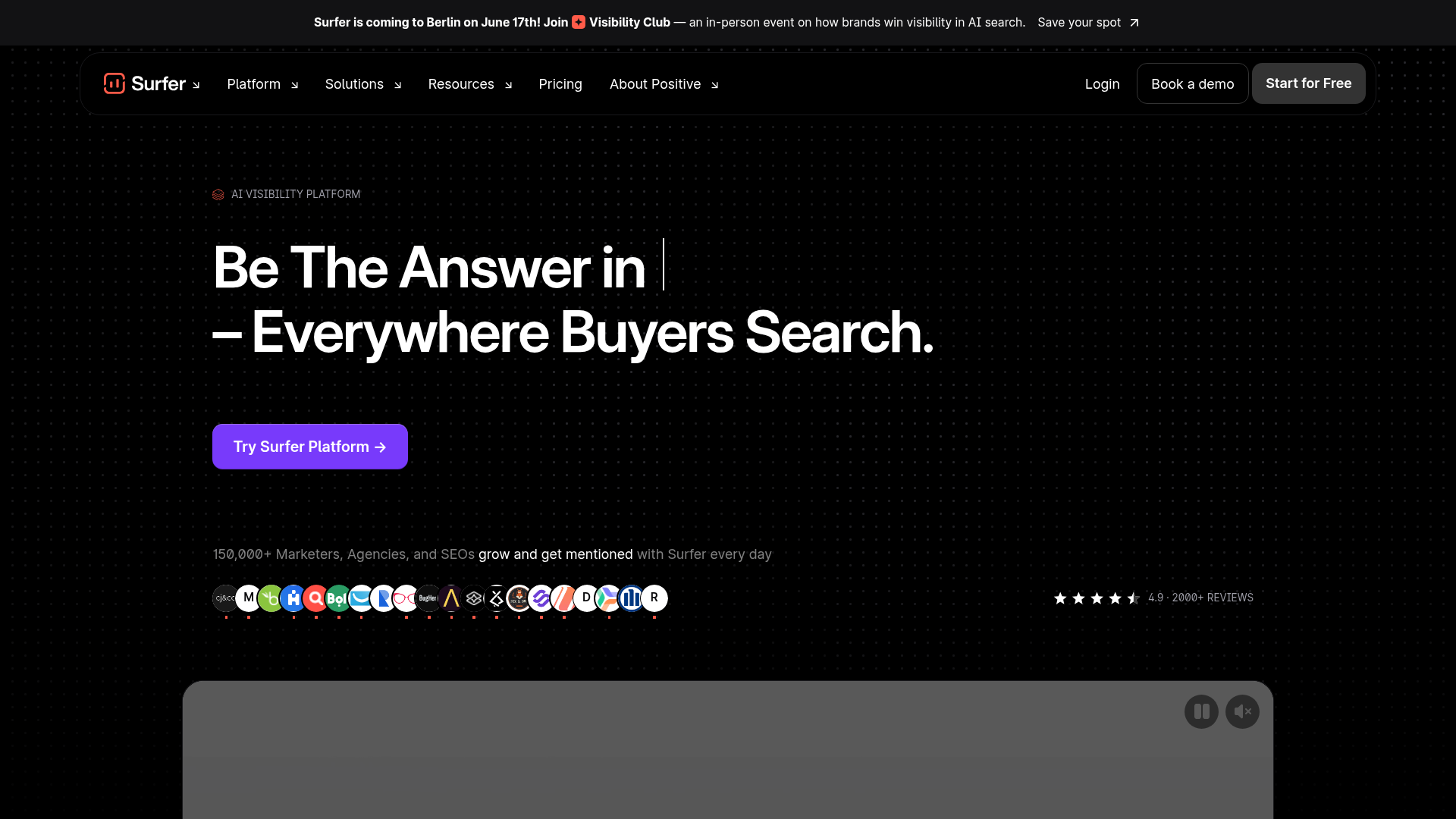
Surfer SEO combines SERP-driven content guidelines with AI writing assistance - strong for optimizing the long-form copy on category and collection pages that often gets ignored. For teams comparing options here, see our Surfer SEO alternatives comparison.
Best for: Ecommerce teams optimizing PLP copy and category-level content with data-driven recommendations.
Key features:
- Content Editor with SERP-based scoring
- Keyword clustering
- AI writing assistance
- Audit module for existing pages
- Internal linking suggestions
Ecommerce strengths: Most stores treat category pages as navigation, not content. Surfer surfaces what top-ranking PLPs include - topic coverage, supporting terms, content depth - and turns that into actionable edits. The result is collection pages that rank for category-level intent, not just product names.
Pricing: Paid plans start at $99/mo.
G2 rating: N/A
Pros:
- Strong on-page optimization data
- Works for both blog and PLP content
- Reasonable entry price
Cons:
- AI search visibility is limited compared with dedicated tools
- Less depth on technical SEO
Ideal team type: SEO managers at growing ecommerce brands focused on organic category traffic.
7. KIME - Best Specialist AI Visibility Tracker
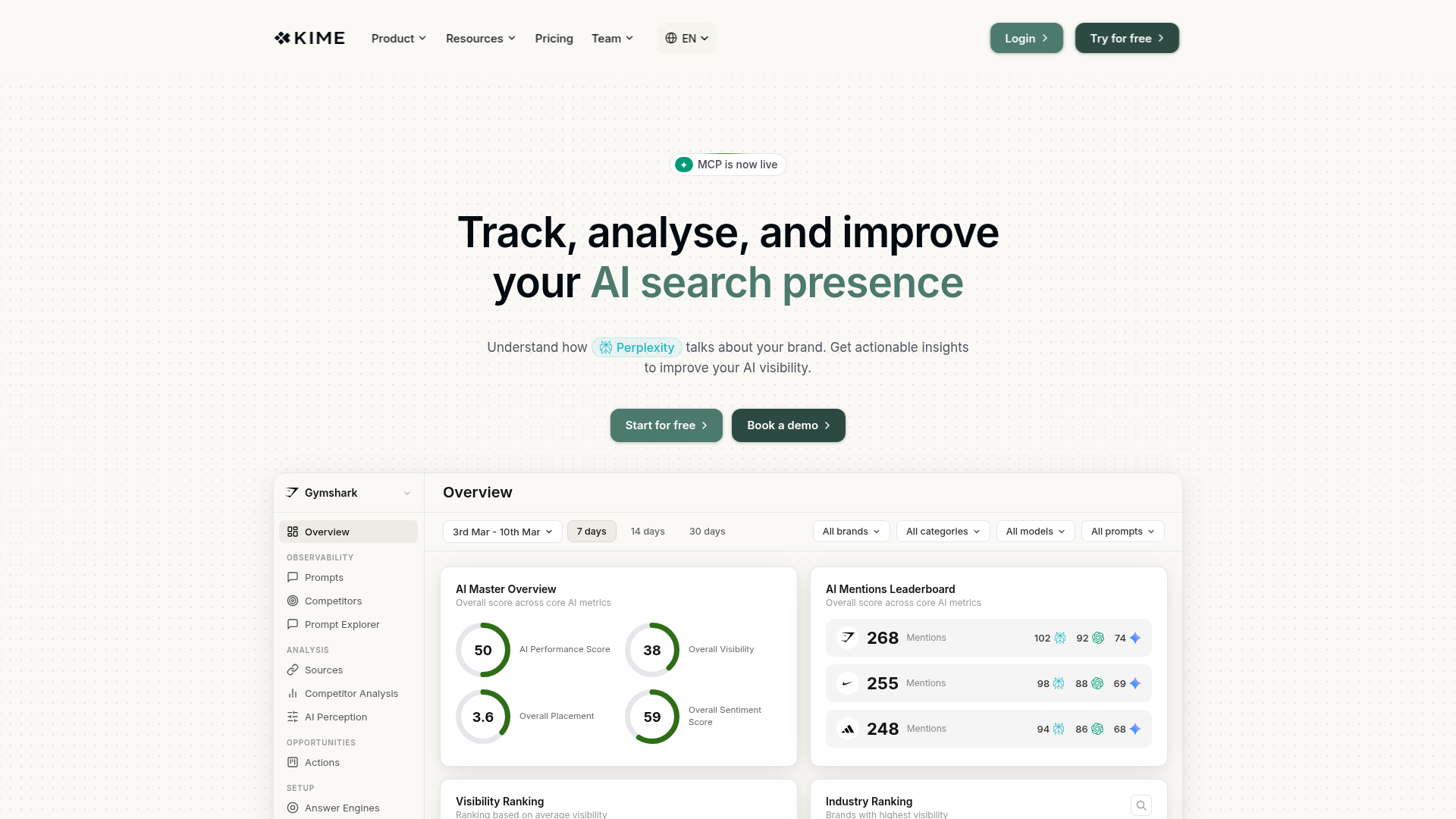
KIME is a focused AI visibility tracking tool that monitors prompts across Google AI Mode, ChatGPT, and Perplexity - useful for agencies and brands that want a pure-play visibility layer alongside their existing SEO stack.
Best for: Teams that already have an SEO platform and want to add specialist AI visibility tracking.
Key features:
- Prompt tracking across AI Mode, ChatGPT, and Perplexity
- Citation and source-level reporting
- Competitor benchmarking
- Agency-friendly reporting layout
Ecommerce strengths: For ecommerce queries - "best wireless earbuds under $100," "running shoes for plantar fasciitis" - AI engines increasingly recommend specific products. KIME shows which brands those answers cite, helping ecommerce teams quantify visibility outside Google.
Pricing: Starter €149/mo (25 prompts), with higher tiers available.
G2 rating: N/A
Pros:
- Focused AI visibility coverage
- Reasonable starting price for specialist tracking
- Clean reporting for agencies
Cons:
- Tracking only - no content execution layer
- Prompt limits can constrain larger catalogs
Ideal team type: Agencies and SEO leads adding AI visibility as a measurable channel.
8. Ubersuggest - Best For Small Stores And Solo Operators
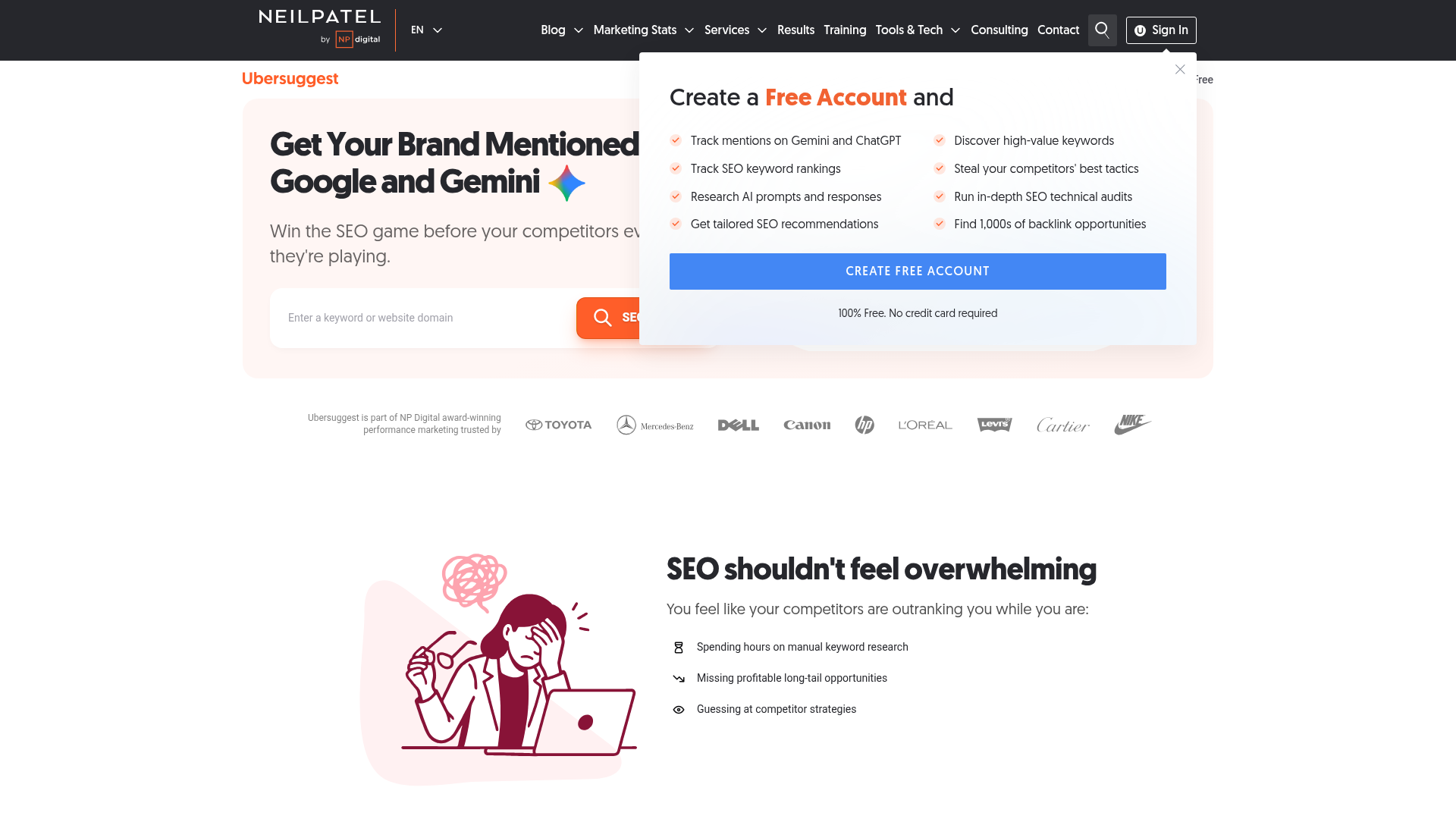
Ubersuggest packages SEO basics, AI content suggestions, and site audits at a price point that works for solo operators and small ecommerce stores.
Best for: Small Shopify or WooCommerce stores that need core SEO basics without enterprise pricing.
Key features:
- Keyword research and SERP analysis
- Site audit for technical issues
- AI-assisted content suggestions
- Backlink data
- Rank tracking
Ecommerce strengths: Small stores need coverage across keywords, content, and basic technical SEO - without an enterprise commitment. Ubersuggest hits that brief, and lifetime deal pricing has historically been available for budget-conscious operators.
Pricing: Paid plans start at $29/mo, with higher tiers available.
G2 rating: N/A
Pros:
- Affordable across all tiers
- Easy onboarding for non-SEOs
- Covers basics without sprawl
Cons:
- AI features are lightweight compared with specialists
- Less depth on technical SEO and AI visibility
Ideal team type: Solo founders and small ecommerce stores under 100 SKUs.
9. SE Ranking - Best For Agencies Managing Multiple Ecommerce Clients
SE Ranking offers multi-project SEO tooling with rank tracking, technical audits, white-label reporting, and an AI Visibility add-on for prompt tracking across LLMs.
Best for: Agencies and consultants managing SEO across multiple ecommerce clients.
Key features:
- Multi-project workspace and client management
- Rank tracking and keyword research
- Site audit and on-page checker
- White-label reporting
- AI Visibility module for prompt tracking
Ecommerce strengths: Agencies running SEO for ecommerce clients need workspace separation, client reporting, and consistent methodology. SE Ranking adds an AI visibility layer without forcing a separate tool for every account.
Pricing: Paid plans available, with AI Visibility sold as an add-on.
G2 rating: N/A
Pros:
- Strong multi-project and reporting features
- Reasonable pricing for agency workflows
- AI visibility available as an add-on
Cons:
- AI features are less mature than dedicated platforms
- Reporting-first orientation, less execution
Ideal team type: SEO and growth agencies serving multiple ecommerce clients.
10. Jasper AI - Best For Enterprise Content At Scale
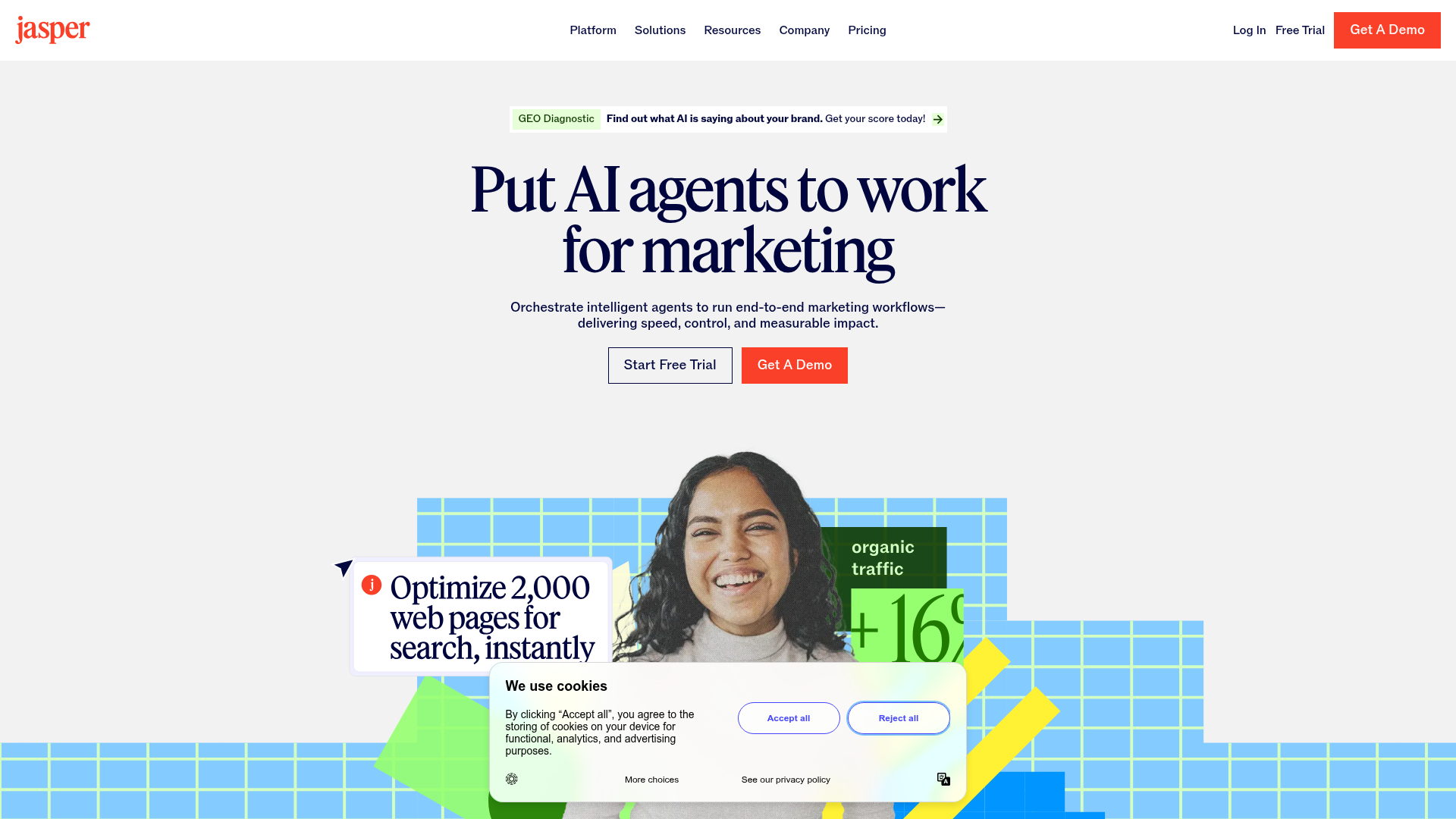
Jasper is an enterprise AI content platform with brand voice controls, knowledge management, and workflow features - strong for large catalogs that need governed copy across teams. Teams weighing other options can review our Jasper AI alternatives.
Best for: Enterprise ecommerce teams generating governed content across brands, regions, or product lines.
Key features:
- Brand voice and style guide enforcement
- Knowledge base for product and brand context
- Workflow and approval features
- Template library for PDPs, ads, and email
- Integrations with major martech platforms
Ecommerce strengths: Large catalogs and multi-brand portfolios require governance - style guides applied across teams, factual accuracy gates, and consistent voice across thousands of pages. Jasper covers that operational layer better than most pure AI writers.
Pricing: Paid plans available, with Business pricing custom.
G2 rating: N/A
Pros:
- Strong brand voice and governance features
- Mature template and workflow library
- Enterprise-grade integrations
Cons:
- No AI search visibility tracking
- Less ecommerce-specific than Describely
Ideal team type: Enterprise content and brand teams at multi-brand ecommerce companies.
Best AI SEO Tools For Ecommerce By Use Case
The right tool depends less on overall ranking and more on the specific job. Here is how the shortlist breaks down by ecommerce use case.
Best For Product Descriptions At Scale
Describely. Built for catalog-scale PDP generation with variant control and ecommerce workflow support. Generic AI writers tend to produce near-duplicate copy across similar SKUs; Describely's structured-data approach is designed to handle that problem more directly.
Best For Category And Collection Pages
Surfer SEO. PLP copy benefits from SERP-based topic coverage and internal linking guidance - Surfer's content editor surfaces both. Pair it with Slate for citation-ready category content that also wins in AI answer engines.
Best For Technical SEO And Site Audits
Semrush. Mature crawler, deep schema and duplicate content detection, and expanding AI search tracking. The right pick for catalogs with hundreds of indexed URLs and accumulating technical debt.
Best For AI Search Visibility (ChatGPT, Perplexity, Gemini, AI Overviews)
Slate. End-to-end coverage across the major AI surfaces, plus citation gap analysis and content workflows to act on the data. For specialist tracking only - without execution - KIME is a focused alternative. See more on dedicated AI visibility tools.
Best For Small Ecommerce Stores
Ubersuggest or Shopify Magic. Both keep cost low and onboarding short. Shopify Magic wins for Shopify-native simplicity; Ubersuggest wins for cross-platform SEO basics.
Best For Large Catalogs And Enterprise
Slate for AI visibility and workflow execution, paired with Semrush for technical SEO and Jasper for brand-governed content production. Few enterprises run a single tool - the question is how the stack connects. For deeper coverage, see our best AI SEO tools for enterprise content teams.
Best For Shopify Stores
Shopify Magic for in-admin basics, Describely for bulk PDP generation, and Slate for AI visibility tracking on top. The Shopify ecosystem rewards layered approaches more than all-in-one platforms.
What To Look For In An AI SEO Tool For Ecommerce
A buyer's checklist for ecommerce-specific evaluation. Generic AI SEO criteria miss the operational realities of running SEO across a catalog.
Page-Type Coverage (PDP, PLP, Blog, FAQ)
Each page type has distinct SEO requirements. PDPs need structured product data and variant handling. PLPs need topic clustering and intent modeling. Blogs need brief generation and topic coverage. FAQs need extractable, citation-ready formatting. Few tools cover all four well - match the tool to the dominant page type in your catalog.
Catalog-Scale Workflow Support
Bulk generation, de-duplication across similar SKUs, seasonal refresh cycles, and governance gates separate enterprise-ready tools from consumer writers. A 5,000-SKU catalog cannot be optimized one prompt at a time. For broader automation context, see our roundup of SEO automation tools.
Technical SEO Capabilities
Schema markup at scale, metadata audits, internal linking recommendations, and crawl prioritization matter more for ecommerce than for editorial sites. Catalogs generate technical debt faster than content teams can manually address.
AI Search Visibility Features
Citation tracking across ChatGPT, Perplexity, Gemini, and AI Overviews is now a measurable channel. The right tool surfaces which prompts cite competitors instead of you, then helps engineer content that becomes citation-ready. For dedicated coverage, see our list of best AEO tools.
Brand Voice, Governance, And Human Review
Style guide enforcement, approval workflows, and factual accuracy controls prevent AI-generated copy from drifting off-brand or hallucinating product specs. This is where many lightweight AI writers fail at scale.
Platform And CMS Integrations
Shopify often has native or app-based workflows. WooCommerce typically connects via plugins (Yoast, RankMath) or API. Headless stacks require CMS-level integration with platforms like Contentful or Sanity. Confirm integration depth before committing.
AI Writing Tools Vs. AI SEO Platforms Vs. AI Visibility Tools - What's The Difference?
Most "best AI SEO tools" lists blur three different categories. Separating them helps ecommerce buyers self-segment before evaluating individual tools.
AI writing tools generate copy. Product descriptions, blog posts, ad variants. Limited SEO depth and no visibility tracking. Useful for drafting, weak for execution at scale. Examples include consumer AI writers and most generic LLM wrappers.
AI SEO platforms combine keyword research, optimization scoring, and content generation. They evaluate content against SERPs, surface keyword opportunities, and often include rank tracking. Examples: Surfer SEO, Clearscope, Semrush.
AI visibility tools track and improve presence inside AI answer engines. They monitor prompts, citations, and competitive mentions across ChatGPT, Perplexity, Gemini, and AI Overviews. Examples: KIME, specialist trackers.
End-to-end platforms like Slate connect visibility data to content execution and publishing - the only category that closes the loop from insight to action. For more on this discipline, see generative engine optimization.
How To Choose The Right AI SEO Tool For Your Ecommerce Store
A decision framework by store stage. The right shortlist looks different for a solo operator versus a multi-brand enterprise.
If You're A Solo Operator Or Small Store
Prioritize affordability, fast setup, and platform-native integration. Shopify Magic covers in-admin basics for Shopify stores; Ubersuggest covers cross-platform SEO fundamentals. Skip enterprise platforms until you have a sustained content motion and at least 100 SKUs justifying the investment.
If You're A Growing Brand (50–500 SKUs)
Add a bulk product description tool (Describely) and either Surfer or Clearscope for category and content briefs. This is the stage where brand voice controls and human review start mattering - generic outputs become a competitive liability.
If You're Scaling Or Mid-Market (500+ SKUs)
Catalog scale and AI visibility become the dominant problems. Slate handles both - visibility tracking across AI engines plus workflow execution for refreshes. Layer Semrush for technical SEO depth. This is also the stage where content refresh workflows become an operational discipline, not an annual project. Teams building this muscle can also review our roundup of content refresh tools.
Ready to engineer visibility instead of guessing? Book a Slate demo.
If You're Enterprise Or Multi-Brand
Governance becomes non-negotiable. Multi-workspace support, audit trails, brand voice enforcement across regions, and citation readiness across language markets all matter. Slate plus Semrush plus Jasper is a defensible enterprise stack - visibility, technical depth, and governed production. For broader options, see our best AI SEO tools roundup.
Can AI Improve Ecommerce SEO?
Yes, when paired with human review. AI accelerates keyword clustering, title and meta generation, product description drafts, internal linking suggestions, and content refreshes. It works best as an assistant for repeatable tasks - not a replacement for ecommerce SEO that depends on factual accuracy, brand voice, and intent alignment.
Where AI helps most: speed across thousands of metadata fields, first-draft PDP copy from structured data, topic coverage on category guides, and surfacing technical issues at scale.
Where human review still matters: factual product specs, conversion-focused angles, brand differentiation, and category-level intent modeling. For a structured walkthrough, see the AI SEO checklist for ecommerce.
Where AI SEO Tools Fall Short For Ecommerce
A balanced view. AI accelerates execution but introduces specific risks that ecommerce teams need governance for.
- Generic outputs across similar SKUs when structured product data is missing or shallow. Without good inputs, AI produces interchangeable copy that fails to differentiate variants.
- Hallucinated product specs. LLMs can fabricate dimensions, materials, compatibility, or availability claims. Human review of factual statements is non-negotiable.
- Weak category-level intent modeling. Most tools optimize at the page level and miss the difference between PLP intent ("running shoes for women") and PDP intent ("Nike Pegasus 41 size 8").
- Over-optimization signals when tools chase keyword density. Modern ranking systems penalize this; older AI SEO tools still encourage it.
- One-click promises that don't translate. Citations in AI engines and rankings in Google emerge from systems - content structure, authority, governance - not from a single optimization pass.
These are areas where human judgment and workflow discipline carry the load.
Frequently Asked Questions
What Are The Best AI SEO Tools For Ecommerce In 2026?
The top picks are Slate for AI search visibility plus content workflows, Describely for bulk product descriptions, Semrush for technical SEO with AI tracking, and Surfer SEO for category page optimization. The right shortlist depends on catalog size, platform, and whether the priority is content, technical optimization, or AI visibility.
Are AI SEO Tools Worth It For Small Ecommerce Stores?
Often yes. Small stores benefit most from speed gains on titles, meta descriptions, category copy, and refresh cycles. Prioritize affordable tools with quick setup - Shopify Magic for Shopify-native stores, Ubersuggest for cross-platform basics. Avoid enterprise plans that require large catalogs to justify pricing.
Which AI Tool Is Best For Optimizing Product Descriptions?
Describely is purpose-built for bulk PDP generation with variant control and de-duplication across similar SKUs. The best tools for product copy support structured product data, preserve brand voice, generate in bulk, and include human review gates. Generic AI writers struggle with the duplication problem at catalog scale.
Can AI SEO Tools Help With Shopify Or WooCommerce SEO?
Yes. Shopify Magic offers native AI inside the admin, and apps in the Shopify ecosystem cover metadata and alt text automation. WooCommerce typically connects via plugins like Yoast or RankMath, or through API-based integrations. Confirm metadata, schema, and bulk publishing support before committing to any tool.
Do AI SEO Tools Handle Schema Markup And Technical SEO?
Some do. Semrush, SE Ranking, and Sitebulb surface missing schema, duplicate metadata, and internal linking gaps. Most operate as assistants rather than autonomous fixers - validate recommendations before applying changes sitewide, especially on catalogs with thousands of URLs.
How Do AI SEO Tools Help With AI Search Visibility?
Specialist tools and platforms like Slate track citations across ChatGPT, Perplexity, Gemini, and AI Overviews. They identify which prompts surface your brand versus competitors, then help engineer content to be extractable and citation-ready. This is now a measurable channel, distinct from traditional Google rankings.
What's The Difference Between An AI Writing Tool And An AI SEO Platform?
AI writing tools generate copy. AI SEO platforms add keyword research, optimization scoring, and rank tracking. End-to-end platforms like Slate add AI visibility tracking and workflow execution. Choose based on whether the priority is content production, search optimization, AI visibility, or all three connected in one system.
How Much Do AI SEO Tools For Ecommerce Cost?
Pricing spans roughly $29/mo for entry-level tools like Ubersuggest to enterprise tiers that run into the thousands. Most mid-market platforms start in the $100–$200/mo range. Slate starts at $199/mo. Match plan tier to catalog depth and team size, not headline price - and confirm whether AI features are included or paywalled at higher tiers.