Your organic traffic is shifting - and AI Overviews are why.
AI Overviews are expanding rapidly, influencing visibility and click patterns across search queries. The marketers gaining ground aren't just writing better content. They're using specific tools to structure, validate, and monitor their content in ways that make it extractable by AI systems.
This guide covers the 15 best tools for optimizing content for AI Overviews in 2026 - organized by function, with honest assessments of what each one does well and where it falls short.
Why You Need Dedicated Tools for AI Overview Optimization
Generic SEO tools weren't built for this problem. Traditional rank trackers tell you where you appear in the blue links. They don't tell you whether your content is being extracted, summarized, or cited in AI-generated responses at the top of the page.
The shift matters because AI Overviews are now a primary visibility channel, not a secondary feature. If your content isn't structured for extractability - meaning AI models can confidently pull a passage, attribute it, and surface it - you're invisible in a growing portion of search results.
"Extractability" is the core concept here. It means your content is chunked into digestible passages, supported by structured data that helps AI understand context, backed by E-E-A-T signals that establish trust, and technically accessible to crawlers. No single traditional SEO tool covers all four dimensions. That's why a dedicated stack matters.
The AI Overview Extractability Framework: What to Look for in a Tool
Before evaluating any tool, you need a consistent lens. Here's the framework we used to assess every tool in this list.
Content Structure & Chunking Analysis
Does the tool evaluate whether your content is broken into AI-digestible passages? AI models extract at the passage level, not the page level. Tools that analyze heading structure, paragraph length, and answer-first formatting directly support this.
Key extractability criteria to look for: - Heading hierarchy analysis (H2/H3 structure) - Paragraph length recommendations (2–3 sentences for extractability) - Answer-first formatting guidance - List and table usage recommendations - Content chunking scores or readability metrics
Structured Data Validation & Recommendations
Does the tool audit your schema markup and flag gaps relevant to AI Overview eligibility? The schema types that matter most are FAQPage, HowTo, Article, Speakable, and Product. Tools that validate these specifically - not just generic schema - are more useful for structured data optimization.
E-E-A-T Signal Assessment
Does the tool evaluate authoritativeness signals? Author bios, external citations, source quality, and internal linking to topical hubs all contribute to the trust signals AI models use when deciding what to cite. Tools that surface these gaps are worth prioritizing.
AI Overview Monitoring & Tracking
Can the tool tell you whether your content is appearing in AI Overviews? This is still a relatively new capability, and not every tool has it. But it's increasingly essential for measuring whether your optimization efforts are working.
Technical SEO for AI Readiness
Does the tool check crawlability, Core Web Vitals, llms.txt configuration, and preview control settings? AI can't cite content it can't access. Technical gaps are often the first thing to fix.
The 15 Best Tools for AI Overview Content Optimization
We evaluated dozens of tools against the extractability framework above. Here are the 15 that stand out in 2026, organized by primary function.
1. Slate - AI-Ready Content Optimization Platform
Slate is a content optimization platform built to help marketing teams produce structured, AI-ready content at scale.
Slate's workflow-oriented approach makes it particularly useful for teams that need to move from content brief to published article without losing structural consistency - the kind of consistency that AI models reward with citations.
Best for: Marketing teams and content strategists who want an integrated platform for producing structured, AI-optimized content without stitching together multiple tools.
Key strengths
- Structured content workflow from brief to publication
- AI-ready formatting guidance built into the editing process
- Team collaboration features for consistent content standards
- Supports the content structure patterns AI Overviews prefer
- Designed for scale across multiple content types and formats
Pricing: Starting at $199/month.
2. Surfer SEO - AI Content Scoring & Structure Optimization
Surfer SEO is a real-time content optimization tool that scores your writing against top-ranking pages while you draft.
Surfer has evolved to include AI-readiness scoring and content structure analysis, with its Content Editor providing NLP-driven term suggestions and heading structure recommendations that directly support passage optimization for AI.
Best for: Content writers and SEO teams who want live optimization guidance as they write, rather than a post-publish audit.
Key strengths
- Real-time Content Score based on SERP and NLP analysis
- Heading structure optimization for AI extractability
- NLP entity coverage recommendations
- Competitor content structure analysis
- Integrates with Google Docs and WordPress
Pricing: Starting at $49/month (Discovery); Standard $99/month; Pro $182/month; Peace of Mind $299/month; Enterprise custom.
3. Clearscope - Semantic Content Optimization for AI Extractability
Clearscope is a semantic content optimization platform that grades your content against the entities and topics AI models need to confidently extract and cite passages.
Clearscope's semantic analysis helps ensure content covers the entities and topics AI models need, and the platform has added features for tracking visibility in AI chatbots - making it one of the more forward-looking tools in this category.
Best for: Enterprise content teams focused on topical authority, comprehensive entity coverage, and AI chatbot visibility tracking.
Key strengths
- AI-powered content grading with entity coverage analysis
- Real-time optimization with Google Docs and WordPress integrations
- Topic model coverage for comprehensive semantic depth
- AI chatbot visibility tracking (added in 2026)
- Competitive content analysis at the keyword level
Pricing: Essentials plan starts at $129/month (unlimited users). Business $399/month; Enterprise custom.
4. MarketMuse - AI Content Planning & Topical Authority
MarketMuse is an AI-driven content planning platform that identifies content gaps and builds topical authority maps - critical for establishing the kind of comprehensive expertise AI models trust.
MarketMuse identifies content gaps and builds topical authority maps, giving you a strategic view of where your site has authority and where AI models might look elsewhere for answers. It's less a writing tool and more a content strategy engine.
Best for: Content strategists building topical authority hubs that AI models recognize as authoritative sources, particularly in competitive niches.
Key strengths
- Personalized difficulty scores based on your site's existing authority
- Content cluster planning for topical depth
- Automated content briefs with competitive gap analysis
- Topic authority metrics tied to AI citation potential
- Content inventory analysis for existing page optimization
Pricing: Free tier available (10 queries/month). Paid plans start at $99/month (Optimize); Research $249/month; Strategy $499/month.
5. Frase - AI-Powered Content Research & Answer Optimization
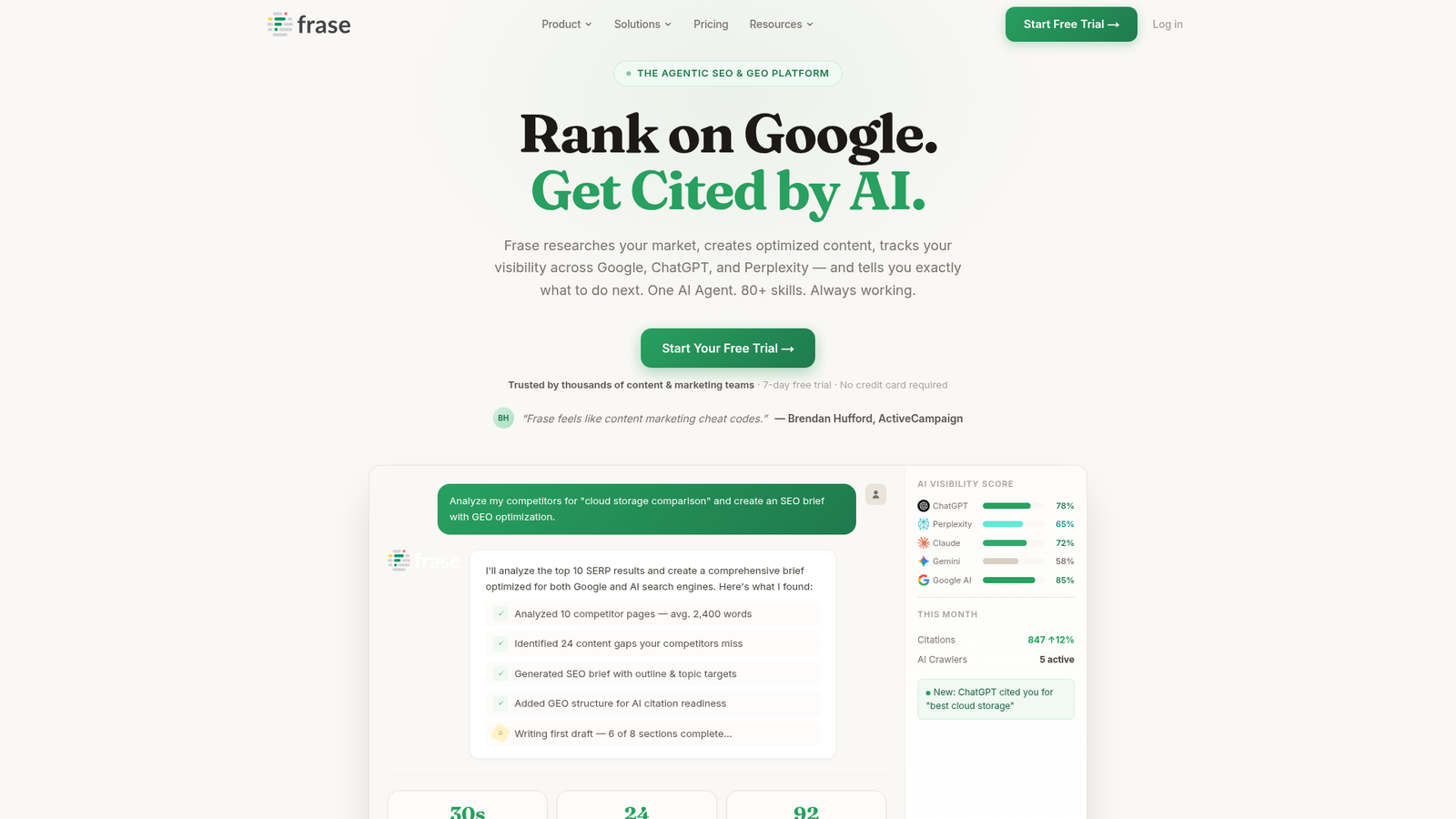
Frase excels at identifying the questions searchers ask and helping you create concise, extractable answers - exactly the format AI Overviews prefer to pull from.
Frase pulls questions from People Also Ask boxes and SERP results, then helps you structure direct answers around them. That answer-first format is one of the clearest signals you can send to AI extraction systems.
Best for: Teams focused on question-and-answer content formats, FAQ pages, and how-to content that AI Overviews consistently prefer to extract.
Key strengths
- Question clustering from PAA boxes and SERP data
- AI writing assistant for drafting concise, extractable answers
- Content scoring against top-ranking competitors
- Outline builder optimized for AI-readable structure
- SERP analysis integrated directly into the content editor
Pricing: Starter plan starts at $49/month ($39.20/month billed annually). Professional $129/month; Scale $299/month; Enterprise custom.
6. Schema Pro & Schema App - Structured Data Implementation at Scale
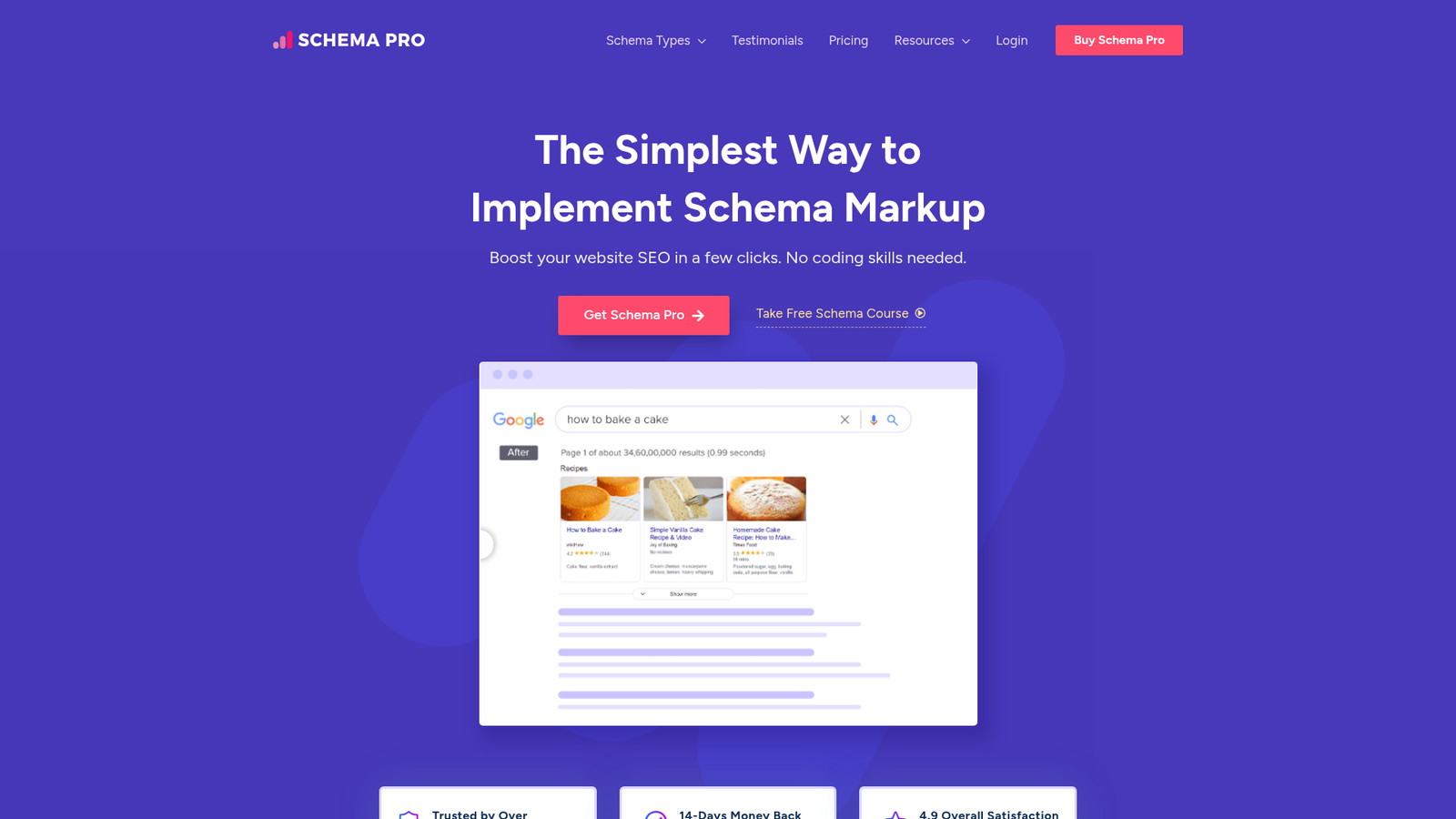
Schema Pro and Schema App make implementing and managing schema markup accessible without deep technical expertise - and schema is non-negotiable for AI Overview optimization.
Structured schema markup improves AI extractability by making entity relationships explicit. These tools let you implement FAQPage, HowTo, Article, and Speakable schema at scale, without writing JSON-LD by hand for every page.
Best for: Marketers who need to implement structured data across large sites without developer support. Schema Pro suits WordPress-heavy setups; Schema App suits enterprise and multi-site environments.
Key strengths
- Visual schema builder for non-technical users
- Automatic schema generation based on content type
- Supports FAQPage, HowTo, Article, Speakable, and more
- Google Rich Results Test integration for validation
- Multi-site management for agencies and enterprise teams
Pricing: SSchema Pro starts at $69–$79/year for the WordPress plugin (unlimited sites), depending on the current promotion (Schema Pro publishes tiered annual plans and a lifetime option). Schema App pricing is enterprise-tier — contact for a quote.
Here's a minimal example of FAQPage schema in JSON-LD format:
json { "@context": "https://schema.org", "@type": "FAQPage", "mainEntity": [{ "@type": "Question", "name": "How do I optimize content for AI Overviews?", "acceptedAnswer": { "@type": "Answer", "text": "Structure content with clear headings, concise answers, and FAQPage schema markup. Ensure pages are crawlable and pass Core Web Vitals thresholds." } }] }
7. Google Search Console - Free AI Overview Performance Monitoring
Google Search Console is the foundational free tool every marketer needs. Google's Search Console provides insights into content performance across search experiences, including AI features.
Use the Search Appearance filters to isolate AI Overview impressions and clicks. The URL Inspection tool tells you whether Google can access and index your pages. Core Web Vitals reporting surfaces the page experience issues that affect AI eligibility.
Best for: Every marketer - this is the non-negotiable baseline for monitoring AI Overview visibility, regardless of what paid tools you add later.
Key strengths
- AI Overview search appearance data (impressions and clicks)
- URL inspection for crawlability and indexing status
- Core Web Vitals reporting at the page level
- Structured data validation and error reporting
- Index coverage monitoring for content discovery
Pricing: Free.
8. Metaflow - Agentic AI Overview and AEO content platform
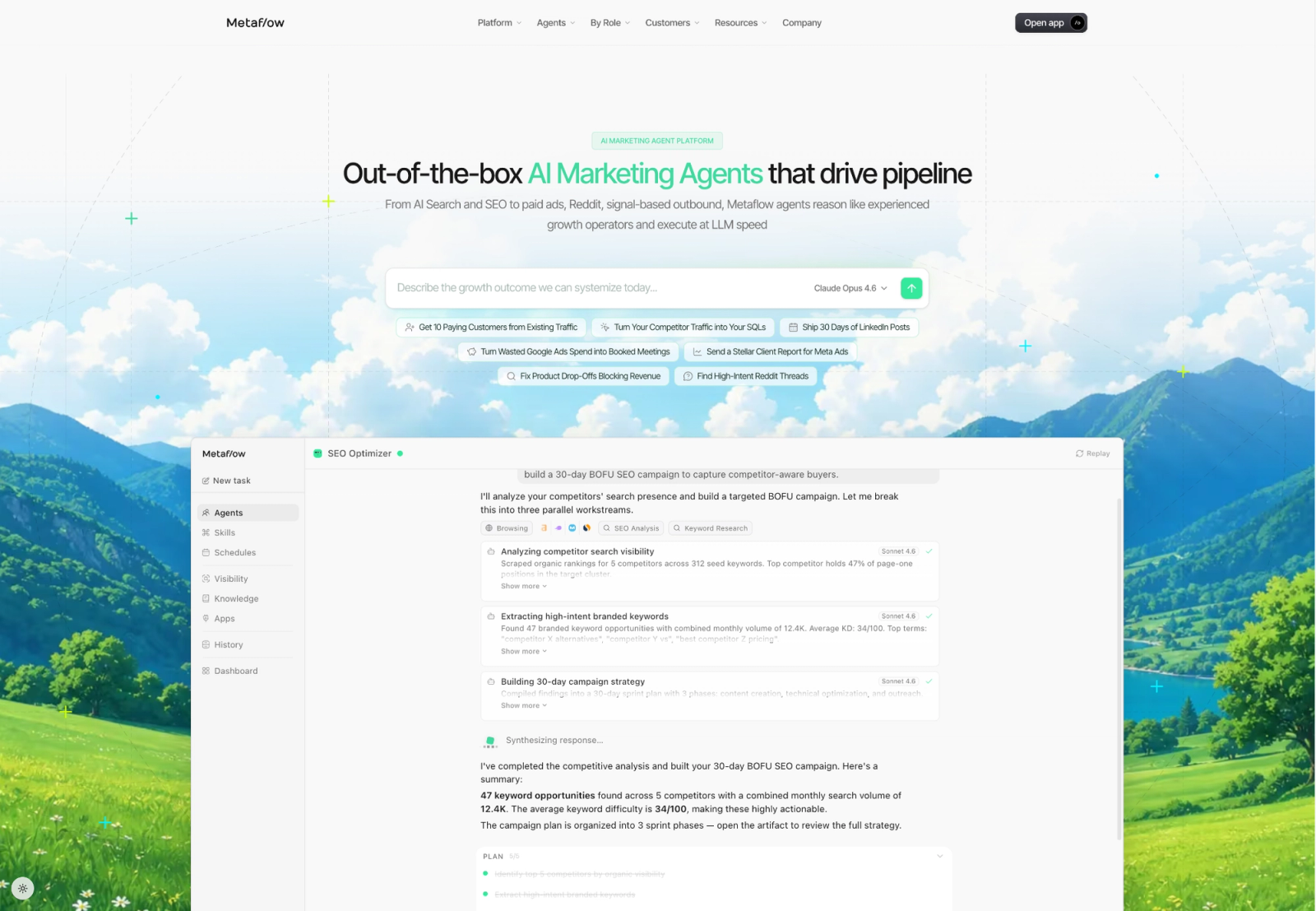
Metaflow is an agentic marketing platform for fast-moving GTM teams. Its SEO and AEO agents build and optimize content for AI Overviews, LLM visibility, and retrieval-friendly answer coverage, with guardrails, QA loops, and evaluation gates that keep output answer-ready.
Best for: Fast-moving B2B SaaS and GTM teams that want agent-powered execution across content growth, paid acquisition, and outbound automation without building their own agent infrastructure from scratch.
Key strengths
- SEO and AEO agents create answer-ready content with clear headings, comparison sections, FAQs, and extractable passages
- Supports schema, metadata, FAQ, and page-structure workflows through agentic content operations
- Uses brand context, source grounding, citations, QA loops, and review gates to improve trust signals
- Supports AEO workflows for answer visibility and citation coverage
Pricing: 14-day free trial, then $100/month (Solo Growth); Scale Pro $299/month.
9. Semrush - AI Overview Tracking & Competitive Intelligence
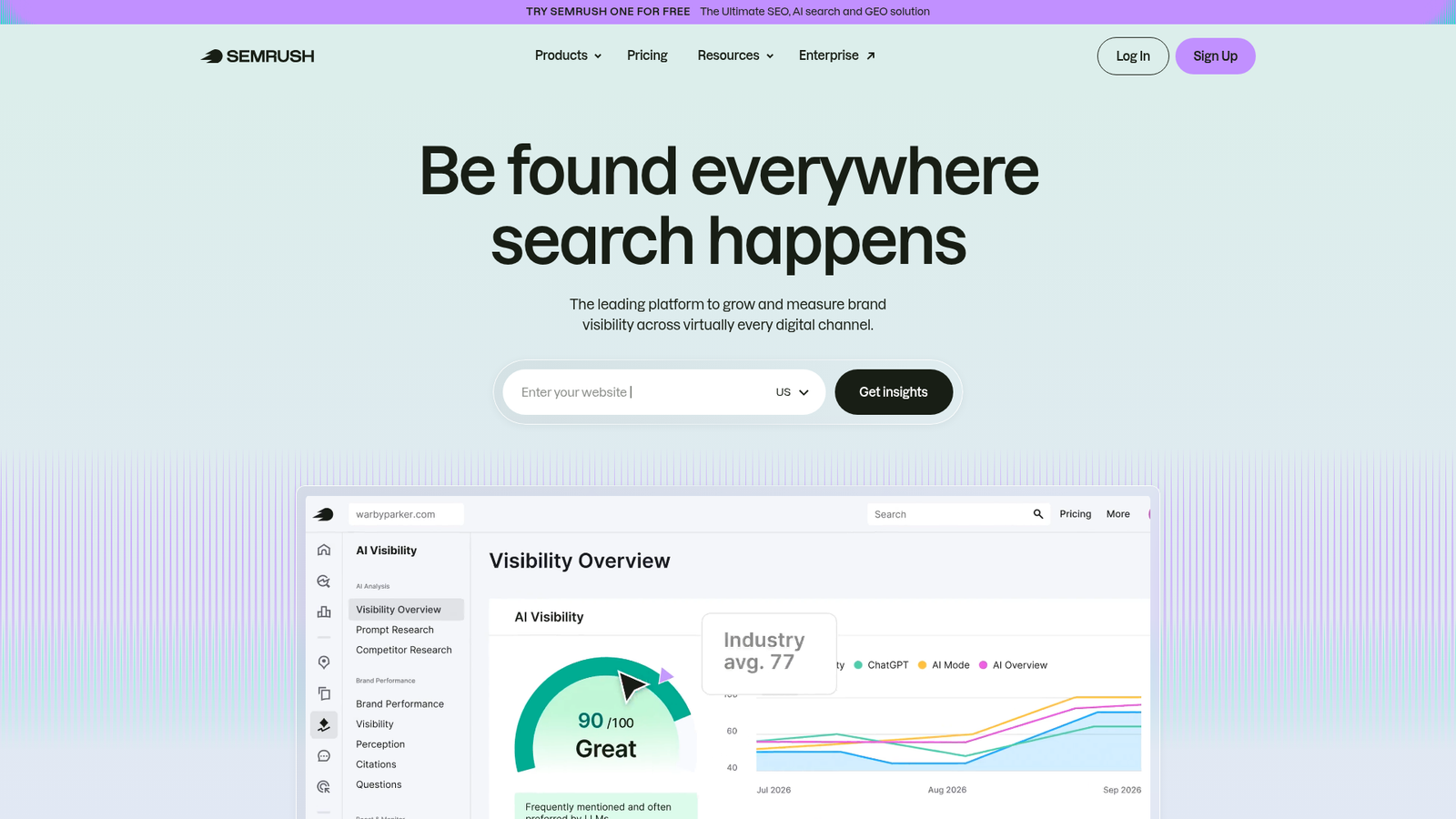
Semrush has added AI Overview tracking to its position tracking suite, and its AI Visibility Toolkit lets you monitor brand mentions across AI-generated responses - a capability few all-in-one platforms match.
For teams that need to track how to improve brand visibility in AI search engines alongside traditional SEO metrics, Semrush is the most comprehensive single-platform option available in 2026.
Best for: SEO teams who need an all-in-one platform covering AI Overview monitoring, competitive intelligence, technical audits, and content optimization in one subscription.
Key strengths
- AI Overview SERP feature tracking in Position Tracker
- AI Visibility Toolkit for brand mention monitoring in AI responses
- Content optimization templates with NLP recommendations
- Technical site audits with actionable fix prioritization
- Keyword gap and competitive content analysis
Pricing: Pro plan starts at $139.95/month. Guru at $249.95/month. Business plans available.
10. Ahrefs - Content Explorer & AI Citation Research
Ahrefs is best known for backlink analysis, but its Content Explorer and SERP analysis tools help identify high-performing content formats and structures for search features - including the patterns that tend to earn AI Overview citations.
Use Content Explorer to find the best-performing pages in your niche, then reverse-engineer their structure. Ahrefs' Site Audit also surfaces technical issues that block AI accessibility. It's a strong complement to a dedicated content optimization tool.
Best for: SEO professionals who want to reverse-engineer high-performing content structures and pair deep backlink data with content gap analysis.
Key strengths
- Content Explorer for identifying top-performing content patterns
- SERP analysis tools for search feature identification
- Site Audit with technical SEO issue prioritization
- Keyword research with SERP feature filters
- Competitive content gap analysis at scale
Pricing: Starter plan starts at $29/month for basic competitive research; Lite $129/month; Standard $249/month; Advanced $449/month; Enterprise $1,499/month (annual commitment required).
11. Limy.ai - Purpose-Built AI Overview Optimization

Limy.ai supports optimization for generative search engines like AI Overviews, making it one of the few tools built specifically for this use case rather than adapted from traditional SEO workflows.
Where most tools in this list treat AI Overview optimization as a feature, Limy.ai treats it as the product. That focus means the recommendations are more specific to generative search behavior, though the overall feature set is narrower than all-in-one platforms.
Best for: Teams that want a tool purpose-built for AI search optimization rather than a traditional SEO platform with AI features bolted on.
Key strengths
- Generative search optimization (GSO) scoring
- AI Overview monitoring and citation tracking
- Content structure recommendations for AI extractability
- Competitive AI visibility analysis
- Focused workflow without the noise of broader SEO platforms
Pricing: Starting at $449/month (subscription; pricing aligned with business size and feature needs). Contact sales for custom enterprise tiers.
12. Google Rich Results Test & Schema Markup Validator - Free Structured Data Auditing
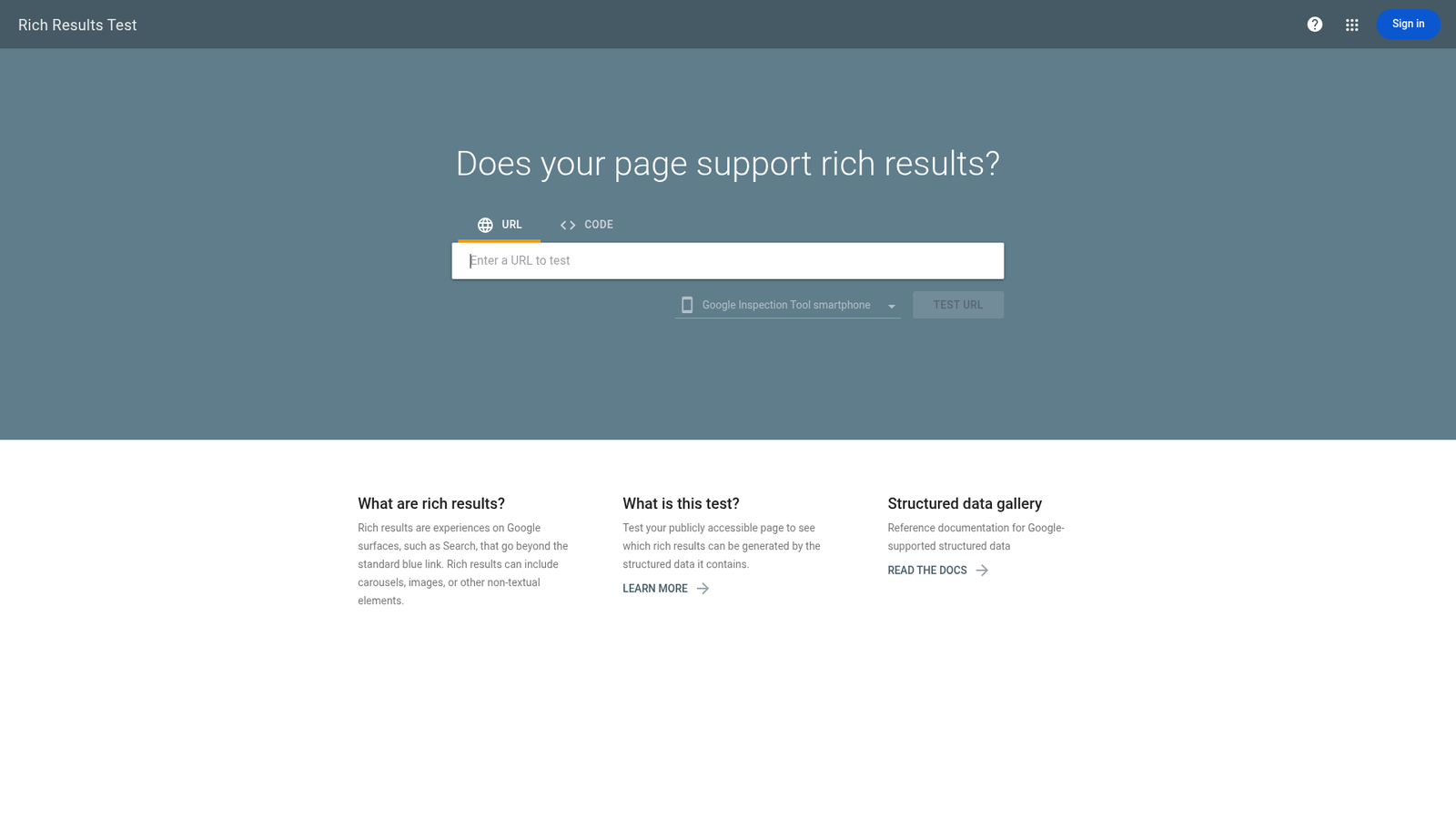
Google Rich Results Test and the Schema Markup Validator are the quality-control step every page needs before it goes live. They validate that your structured data is correctly implemented and eligible for rich results and AI extraction.
Run every page through the Rich Results Test after adding or updating schema. It shows you exactly which schema types are detected, flags errors, and previews rich result eligibility. It's not a strategy tool - it's a publishing gate.
Best for: Every marketer as a mandatory pre-publish check, regardless of which schema implementation tool you use.
Key strengths
- Real-time schema validation against Google's requirements
- Error and warning reporting with specific fix guidance
- Supported schema type detection (FAQPage, HowTo, Article, etc.)
- Rich result eligibility preview
- Free and authoritative - straight from Google
Pricing: Free.
Structured data best practices: - Always use JSON-LD format (Google's preferred method) - Match schema markup exactly to visible on-page content - Prioritize FAQPage, HowTo, Article, and Speakable schema for AI Overview eligibility - Test every page before and after publishing - Monitor structured data errors in Google Search Console weekly
13. Screaming Frog - Technical SEO Crawling for AI Readiness
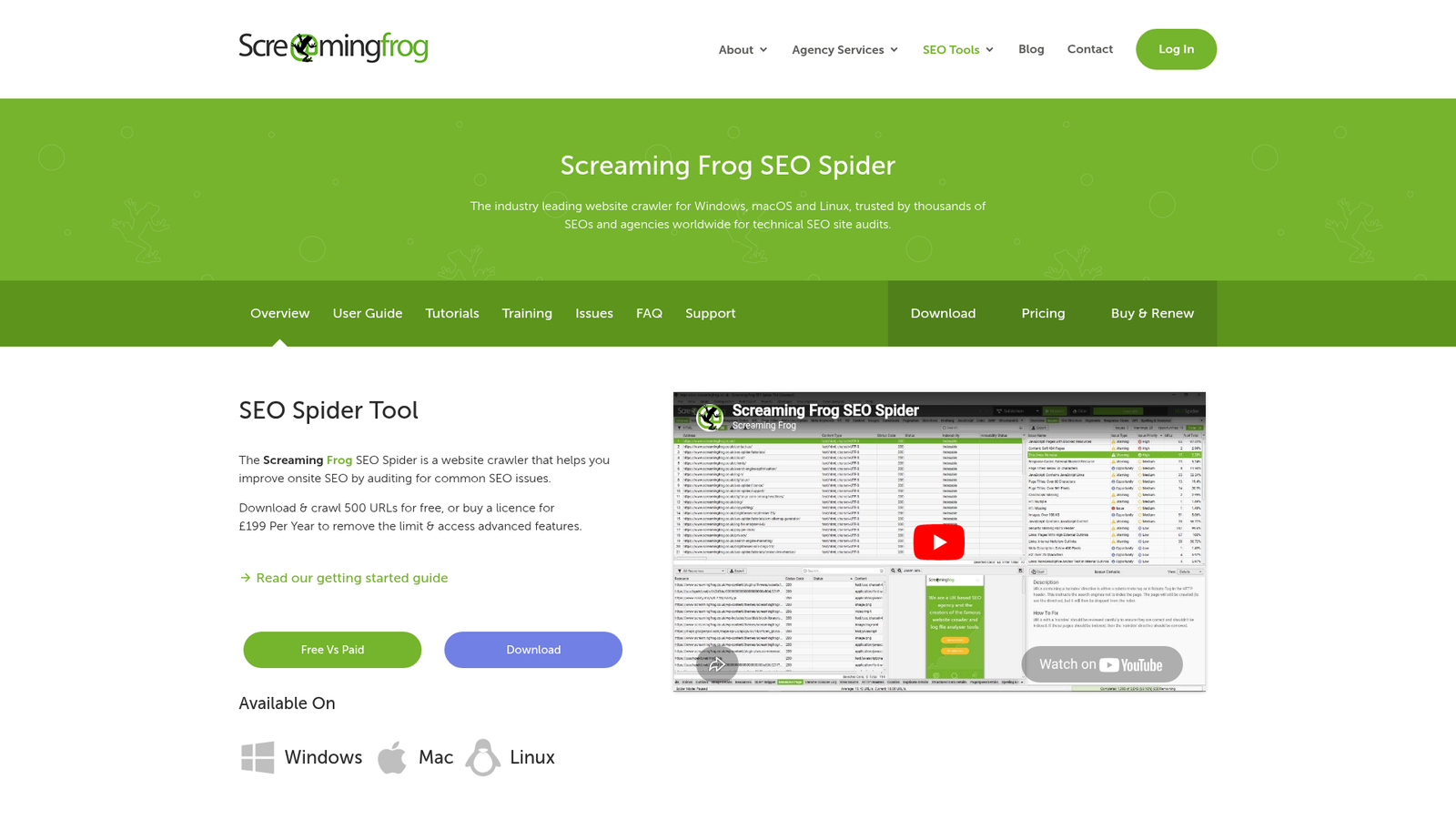
Screaming Frog is the industry-standard site crawler for technical SEOs. It crawls your site to identify crawlability issues, missing structured data, page speed problems, and broken internal links that prevent AI from accessing your content.
For AI readiness specifically, Screaming Frog's custom extraction feature lets you verify llms.txt configuration across your site. Its JavaScript rendering mode ensures you're auditing what AI crawlers actually see, not just the raw HTML.
Best for: Technical SEOs and developers who need granular crawl data to diagnose and fix AI accessibility issues at scale.
Key strengths
- Full site crawl with structured data extraction and auditing
- Custom extraction for llms.txt verification
- Redirect chain identification and internal link analysis
- JavaScript rendering for accurate AI crawler simulation
- Integration with Google Search Console and Google Analytics
Pricing: Free up to 500 URLs. Paid license at £199/year (approximately $259 USD/year). Licenses are per user; renewing is required annually.
Technical SEO items to crawl for AI readiness: - Pages blocked by robots.txt unintentionally - Missing or malformed structured data - Broken internal links disrupting content discovery - Redirect chains longer than two hops - Pages with no H1 or duplicate H1s - llms.txt accessibility and configuration
14. PageSpeed Insights & Lighthouse - Page Experience Optimization
PageSpeed Insights and Lighthouse measure Core Web Vitals and provide actionable recommendations to improve the page experience signals that influence AI Overview eligibility.
Google has explicitly tied page experience to AI search performance. These free tools give you the data you need to fix LCP, INP, and CLS issues before they become AI visibility problems.
Best for: All marketers as a baseline page experience check - run these before and after any significant site changes.
Key strengths
- Real-time Core Web Vitals measurement (LCP, INP, CLS)
- Mobile and desktop performance comparison
- Specific optimization recommendations with priority guidance
- Accessibility scoring alongside performance metrics
- Lighthouse available in Chrome DevTools for on-demand testing
Pricing: Free.
MetricGoodNeeds ImprovementPoorLCP (Largest Contentful Paint)< 2.5s2.5s – 4.0s> 4.0sINP (Interaction to Next Paint)< 200ms200ms – 500ms> 500msCLS (Cumulative Layout Shift)< 0.10.1 – 0.25> 0.25
15. ChatGPT, Claude & Perplexity - Manual AI Extractability Testing
ChatGPT, Claude, and Perplexity are the most direct way to test whether your content is extractable by AI - query topics your content covers and see if/how your content is cited or summarized.
Perplexity is particularly useful because it shows source citations directly, giving you a real-time proxy for AI Overview citation behavior. ChatGPT and Claude reveal how AI models interpret and summarize your content, surfacing gaps that structured data and heading analysis tools might miss.
Best for: Content strategists who want qualitative, direct feedback on how AI models interpret their content - especially useful for identifying which passages are being extracted and which are being ignored.
Key strengths
- Direct AI response testing without intermediary tools
- Perplexity shows source citations for citation analysis
- Conversational query simulation matching real user behavior
- Content gap identification based on AI response patterns
- Cross-model comparison reveals consistency of extractability
Pricing: Free tiers available on all three. Paid plans (ChatGPT Plus at $20/month, Claude Pro at $20/month, Perplexity Pro at $20/month) unlock more powerful models.
Test prompts to copy and use:
1. "What does [your brand/site] say about [topic]?" 2. "Explain [topic your content covers] in detail." 3. "What are the best [tools/methods] for [your target keyword]?" 4. "Summarize the key points about [topic] from authoritative sources." 5. "What do experts recommend for [specific problem your content solves]?"
Run these monthly across ChatGPT, Claude, and Perplexity. Compare which sources each model cites. If your content isn't appearing, that's your optimization signal.
AI Overview Optimization Checklist
Use this as your repeatable workflow before publishing or updating any content targeting AI Overview visibility.
Content Structure Checklist
- [ ] Every key point has its own H2 or H3 heading
- [ ] Paragraphs are 2–3 sentences max for extractability
- [ ] Lists and tables are used for comparative or sequential information
- [ ] Each section opens with a direct, concise answer before expanding
- [ ] Content is organized in a logical, progressive structure
Structured Data Checklist
- [ ] JSON-LD schema markup is implemented on every page
- [ ] FAQPage schema is added to pages with Q&A content
- [ ] HowTo schema is added to instructional content
- [ ] Article schema includes author, datePublished, and dateModified
- [ ] Speakable schema is implemented for voice-search-ready content
- [ ] Schema markup matches visible on-page content exactly
- [ ] All schema passes Google Rich Results Test without errors
E-E-A-T Checklist
- [ ] Author bios with credentials are visible on every article
- [ ] Claims cite authoritative, external sources
- [ ] Content demonstrates first-hand experience where applicable
- [ ] Internal links connect to topical authority hubs
- [ ] Backlink profile includes high-authority, relevant domains
Technical SEO Checklist
- [ ] Core Web Vitals pass "Good" thresholds (LCP < 2.5s, INP < 200ms, CLS < 0.1)
- [ ] Pages are mobile-friendly and responsive
- [ ] Site is fully crawlable (no unintentional robots.txt blocks)
- [ ] llms.txt is configured and accessible
- [ ] Preview controls are set to allow AI snippet generation
- [ ] Internal linking structure supports content discovery
Monitoring Checklist
- [ ] Google Search Console AI Overview filters are configured
- [ ] SERP tracking tool monitors AI Overview appearances weekly
- [ ] Content is tested against ChatGPT/Claude/Perplexity monthly
- [ ] Content freshness is reviewed and updated quarterly through a consistent content refresh process.
- [ ] Performance metrics are benchmarked and tracked over time
How to Choose the Right Tool for Your Team
The right stack depends on your budget, team size, and where you are in your AI search optimization journey. Here's how to think about it.
For Solo Marketers & Freelancers (Budget-Friendly Stack)
Start with what's free. Google Search Console gives you AI Overview performance data. Frase's entry-level plan covers question research and content scoring. Google Rich Results Test validates your schema. Manual testing with ChatGPT and Perplexity rounds out the workflow.
Recommended stack: Google Search Console + Frase (from $49/mo Starter) + Google Rich Results Test + ChatGPT Plus/Perplexity Pro manual testing ($20/mo each) — Estimated monthly cost: $49–$89.
For In-House SEO Teams (Mid-Market Stack)
Add real-time content optimization and competitive intelligence. Surfer SEO or Clearscope handles content scoring. Semrush or Ahrefs covers AI Overview tracking and competitive analysis. Screaming Frog handles technical audits. Schema Pro manages structured data without developer dependency.
Recommended stack: Surfer SEO or Clearscope + Semrush or Ahrefs + Screaming Frog + Schema Pro Estimated monthly cost: $200–$500
For Agencies & Enterprise (Full-Coverage Stack)
At scale, you need strategic content planning, AI-specific monitoring, quality assurance, and enterprise-grade schema management. MarketMuse drives content strategy. Semrush covers competitive AI visibility. Limy.ai adds generative search-specific monitoring. Screaming Frog handles technical audits. Originality.ai gates content quality. Schema App manages structured data at enterprise scale.
Recommended stack: MarketMuse + Semrush + Limy.ai + Screaming Frog + Originality.ai + Schema App Estimated monthly cost: $500–$1,500+
Full Tool Comparison Table
The best tools for optimizing content for AI Overviews aren't a single platform - they're a stack that covers content structure, structured data, E-E-A-T signals, technical readiness, and monitoring. Start with the free tools: Google Search Console, Rich Results Test, and manual AI testing with Perplexity. Layer in paid tools as your content volume and competitive intensity grow.
Bookmark the checklist above and use it as your publishing gate. Every piece of content you optimize with this framework is a piece that AI models can actually find, understand, and cite.
For teams looking to implement these optimization strategies at scale, consider exploring Slate's content optimization platform which provides structured workflows for producing AI-ready content consistently across your team.
Frequently Asked Questions
How can I tell if my content is appearing in AI Overviews?
Check Google Search Console's Search Appearance filters - there's a specific filter for AI Overview impressions and clicks. Semrush and Ahrefs both offer SERP feature tracking that flags AI Overview appearances for your tracked keywords. You can also manually search your target queries in an incognito window, and use Perplexity to check citations directly since it shows source URLs alongside every response.
Is structured data (schema markup) necessary if my content is already well-written?
Yes - structured data is a signal, not a substitute for good writing. Well-written content gets you considered for AI extraction; schema markup helps AI models understand, categorize, and extract your content with confidence. Schema markup enables 300% higher accuracy in LLM content interpretation (ZipTie.dev, 2026), and Google's own guidance explicitly recommends matching schema to visible on-page content as a best practice for AI search performance.
What types of media work best for AI search results?
Infographics with descriptive alt text, data tables, short-form video with transcripts, and original images with informational value all perform well. AI models are increasingly processing multimodal content, so media that adds genuine informational context - not decorative stock photos - strengthens your extractability signals. Charts and comparison tables are particularly effective because they present structured information AI can reference directly.
How do I balance writing for humans with optimizing for AI-driven summaries?
The overlap is larger than most people assume. Clear structure, concise answers, logical progression, and authoritative sourcing serve both audiences equally well. The key addition for AI is ensuring your content is "chunked" into extractable passages with clear heading labels - each section should open with a direct answer before expanding into detail, which is both readable for humans and extractable for AI models.
How often should I update content to stay relevant for AI Overviews?
Review and update high-priority content at least quarterly. Refresh high-priority content at least quarterly; content older than ~90 days risks losing AI Overview citations as newer sources are surfaced. When you update, refresh statistics, add new tools or methods, update publication dates, and ensure your structured data reflects the current content accurately.
What is llms.txt and do I need it for AI Overview optimization?
llms.txt is a plain-text file placed in your site's root directory that provides guidance to LLM crawlers about your content, structure, and access permissions - similar in concept to robots.txt but designed specifically for AI crawlers. It's emerging as a best practice in 2026, and implementing it is a low-effort, proactive measure that signals AI-readiness. Adoption is still early, but getting it in place now puts you ahead of sites that haven't considered it yet.
Can I opt out of AI Overviews, and should I?
Yes - Google provides preview controls including nosnippet, max-snippet, and data-nosnippet directives that let you manage AI snippet visibility at the page level. However, opting out means forfeiting a significant and growing visibility channel. The main reasons to opt out are paywalled content, legal or compliance concerns, or content where partial extraction would be misleading. For most sites, staying opted in and optimizing for citation is the better strategy.
Do free tools work well enough, or do I need paid AI optimization tools?
Free tools - Google Search Console, Rich Results Test, PageSpeed Insights, Lighthouse, and manual AI testing - cover the fundamentals of AI Overview optimization and are sufficient for sites with modest content volume and lower competitive intensity. Paid tools add automation, competitive intelligence, deeper content scoring, and scale. The practical approach is to start with the free stack, measure your AI Overview performance in GSC, and invest in paid tools when the volume of content you're managing makes manual optimization impractical.