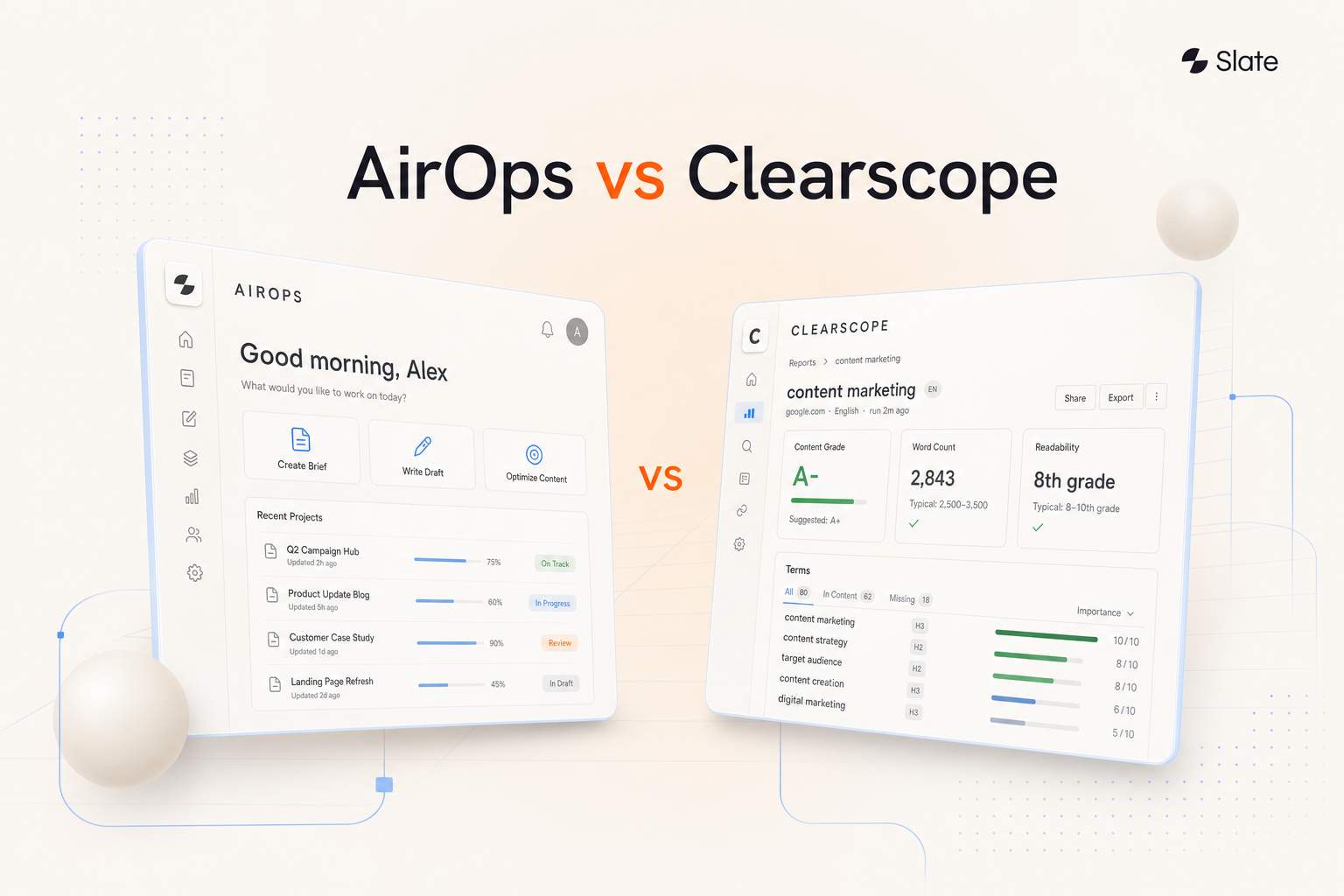
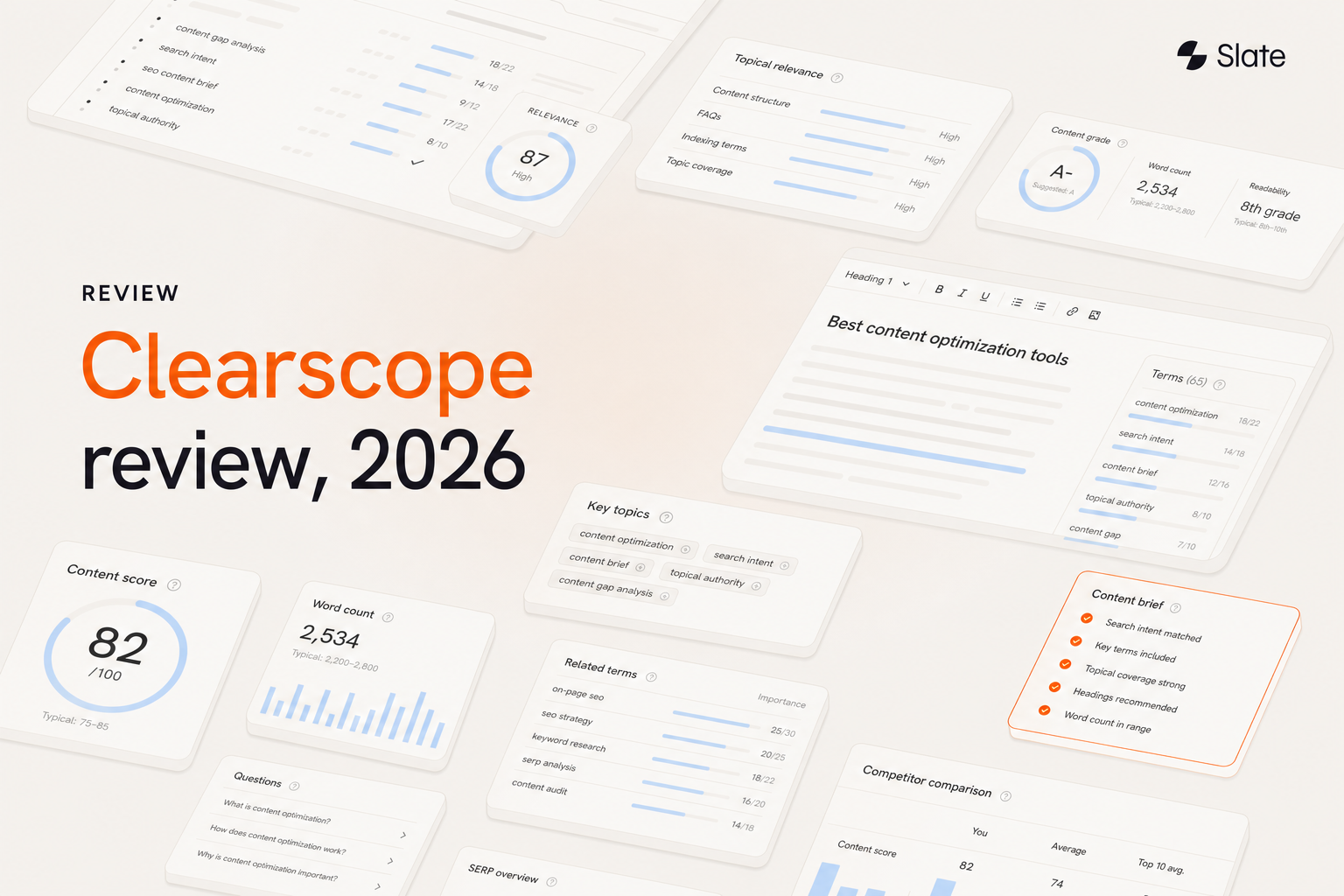
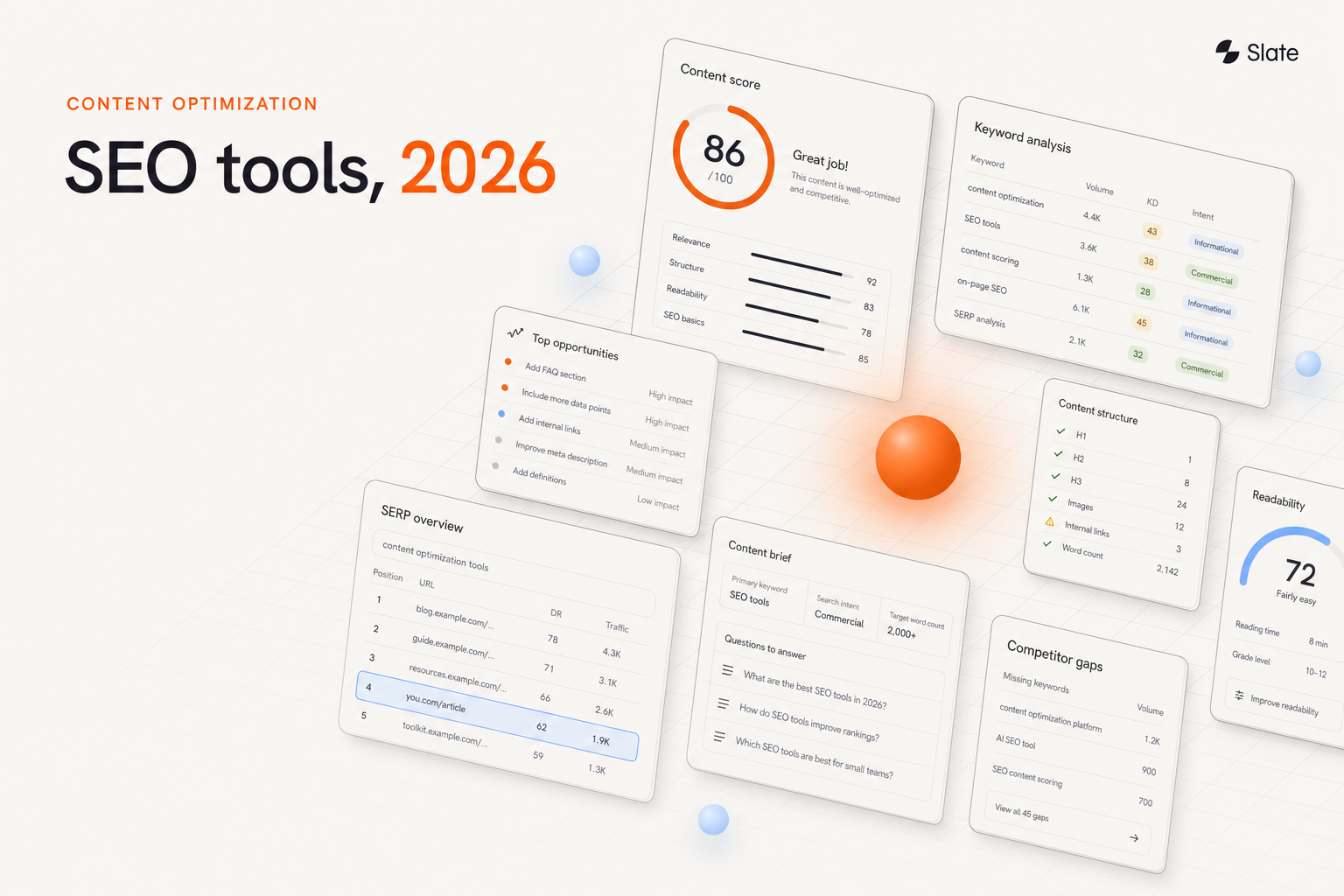
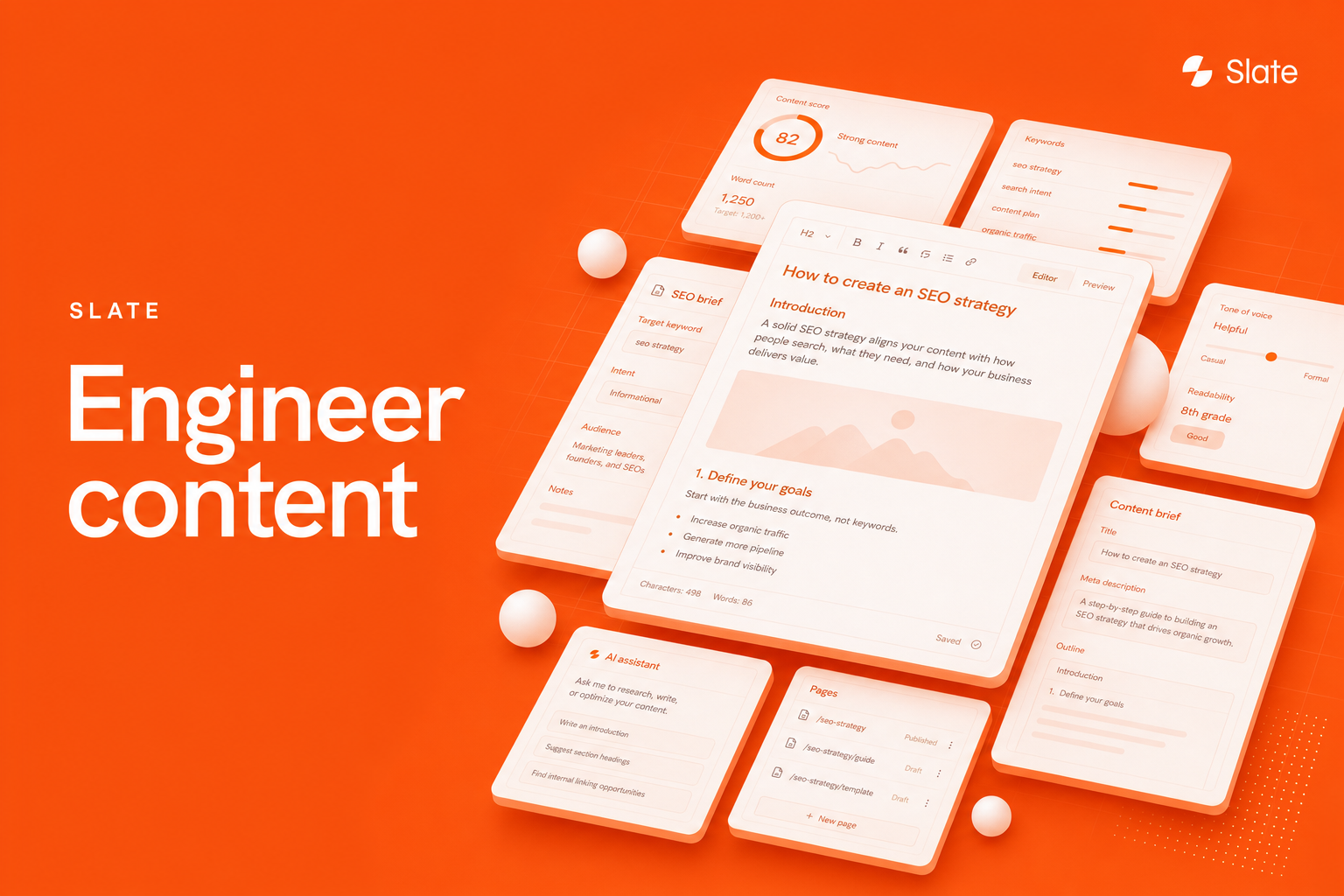
A deep, evidence-based Clearscope review for 2026. Features, pricing, pros and cons, alternatives, and who should buy. Verdict inside.
Clearscope is one of the most established content optimization platforms in the market, and in 2026 it has evolved well beyond keyword grading into what it now calls a content intelligence and discoverability platform. The question for buyers is no longer "does it work?" - it's whether content scoring and editorial workflow tooling justify the price when AI search is reshaping how brands earn visibility.
Direct answer: Clearscope is worth the investment in 2026 for mid-market in-house SEO and content teams, plus agencies, that publish consistently and need structured briefs, real-time grading, Google Docs workflows, and Inventory-based refresh tracking. It is less suitable for solo writers, low-volume startups, or teams whose primary need is full AI search visibility tools rather than on-page optimization.
Key Takeaways
- Clearscope is a mature content optimization and discoverability platform, not a full SEO suite.
- Best fit in 2026: Mid-market in-house SEO/content teams and agencies with multiple writers and an active publishing cadence.
- Not the best fit for: Solo operators on tight budgets, low-volume startups, or teams whose primary need is AI-search citation governance.
- Starting price: $129/month (Essentials), with Business at $399/month and Enterprise custom.
- Biggest strength: Writer-friendly content reports, real-time grading, and a Google Docs experience that doesn't disrupt editorial flow.
- Biggest limitation: Scope. Teams still need adjacent tools for technical SEO, backlinks, and deeper AI-search visibility tracking.
- AI search fit: Clearscope has added AI Prompt Tracking and LLM visibility features, but dedicated AI-search platforms like Slate go deeper on cross-engine governance and execution.
How We Evaluated Clearscope For This Review
This review is built for buyer evaluation, not feature recap. The analysis combines a structured audit of Clearscope's publicly documented capabilities, recent practitioner walkthroughs of the 2026 product, and aggregated sentiment from active user reviews across software directories. The goal is to evaluate Clearscope as one layer in a 2026 content stack - not in isolation.
Evaluation Criteria And Weighting
The weighting reflects what most mid-market buyers actually care about: can writers produce better content faster, and does the tool earn its place in a broader stack?
What Is Clearscope?
Clearscope is a content-first SEO and discoverability platform that helps teams plan, brief, draft, optimize, and monitor web content. It analyzes top-ranking pages for a target query, generates content reports with recommended terms and questions, scores drafts in real time, and uses Google Search Console data to surface refresh opportunities.
The product has expanded over the last two years from a content grading tool into what its team now positions as a content intelligence platform. The 2026 product covers five core areas: Topic Exploration, AI Drafting, the Content Editor with real-time grading, Content Inventory monitoring, and AI Prompt Tracking for LLM visibility across ChatGPT, Perplexity and Gemini.
What it isn't: A technical SEO platform, a backlink analyzer, or a full AI-search governance system. Clearscope sits between research and publishing - strong at that layer, but one component of a larger stack.
Who Clearscope Is Best For In 2026
Clearscope works best for mid-market in-house SEO and content teams, multi-writer agencies, and editorial teams that live inside Google Docs and need structured briefs, real-time grading, and refresh workflows tied to GSC. The unlimited-user model across every plan makes it especially efficient for teams with 3+ writers.
Best Fit: In-House SEO And Content Teams At Mid-Market Brands
If you're running a content program that publishes 10 or more pieces a month, Clearscope earns its seat. The content reports give writers clear term targets, the grading keeps optimization consistent across freelancers and staff, and Inventory turns content refresh from a quarterly cleanup project into an ongoing system. For enterprise content optimization tools decisions, Enterprise plans add SSO and crawler controls.
Best if:
- You publish 10+ articles per month
- You have a dedicated editorial process and writer team
- Refresh cycles are part of your strategy, not an afterthought
Strong Fit: Agencies Managing Multiple Content Programs
Clearscope's unlimited-user pricing is the agency unlock. When you're running content for three or more clients with rotating freelancers, per-seat tools quickly become expensive coordination headaches. Clearscope lets you bring every writer, editor, and account manager into the platform without each new login costing extra. This is part of why Slate for agencies and similar tools have rethought seat economics - and Clearscope is one of the few mature optimization tools that already operates this way.
Decent Fit: Editorial Teams That Live In Google Docs
If your writers already draft in Google Docs and you don't want to migrate them to a new editor, Clearscope's add-on is one of the cleanest experiences in the category. Optimization happens in the sidebar; the writing experience stays familiar. Editorial leads who have tried to enforce optimization through standalone tools know the friction this removes.
Who Clearscope Is Not For
- Solo operators on tight budgets: $129/month is meaningful overhead for a freelancer producing fewer than five pieces a month.
- Teams needing full technical SEO: No site audits, no backlink data, no crawl-level diagnostics.
- Teams whose primary goal is AI-search citation visibility: Clearscope has LLM visibility features, but it isn't a governance system for AI search execution.
- Early-stage startups with low publishing volume: The credit-based limits are designed for active programs, not occasional output.
Clearscope Features: A Workflow-Stage Walkthrough
Clearscope is easier to understand when you map its features to the actual stages of content production - plan, brief, draft, refresh - rather than listing them flat. Here's how each stage holds up.
Plan Stage - Topic Discovery And Keyword Research
Topic Exploration is Clearscope's planning layer. Enter a broad topic - say, "website builders" - and the tool maps related subtopics, the angles competitors are covering, and the questions real users are asking. It's useful for mapping a cluster before committing to individual briefs, especially when you're entering a new category and don't yet know which subtopics carry weight.
Where it shines: Quick exploration of established topics with rich SERP data. Where it falls short: Very niche or technical queries where SERPs are thin produce thinner exploration results - a limitation common to all SERP-driven tools, not unique to Clearscope. For teams looking to identify missed coverage, content gap analysis tools can complement this stage.
Brief Stage - Content Reports And AI Outlines
The content report is the heart of the product. For a target keyword, Clearscope analyzes the top-ranking pages and returns recommended terms, related questions, competitive coverage data, and a target word count. From the report, you can spin up an AI Draft as a first pass, or hand the report to a writer as a structured brief.
Most reviews frame this as materially faster than building briefs manually. The AI Drafts feature is more useful as a structural starting point than a finished draft; treat it as scaffolding, not output.
Draft And Optimize Stage - Content Grading And Term Coverage
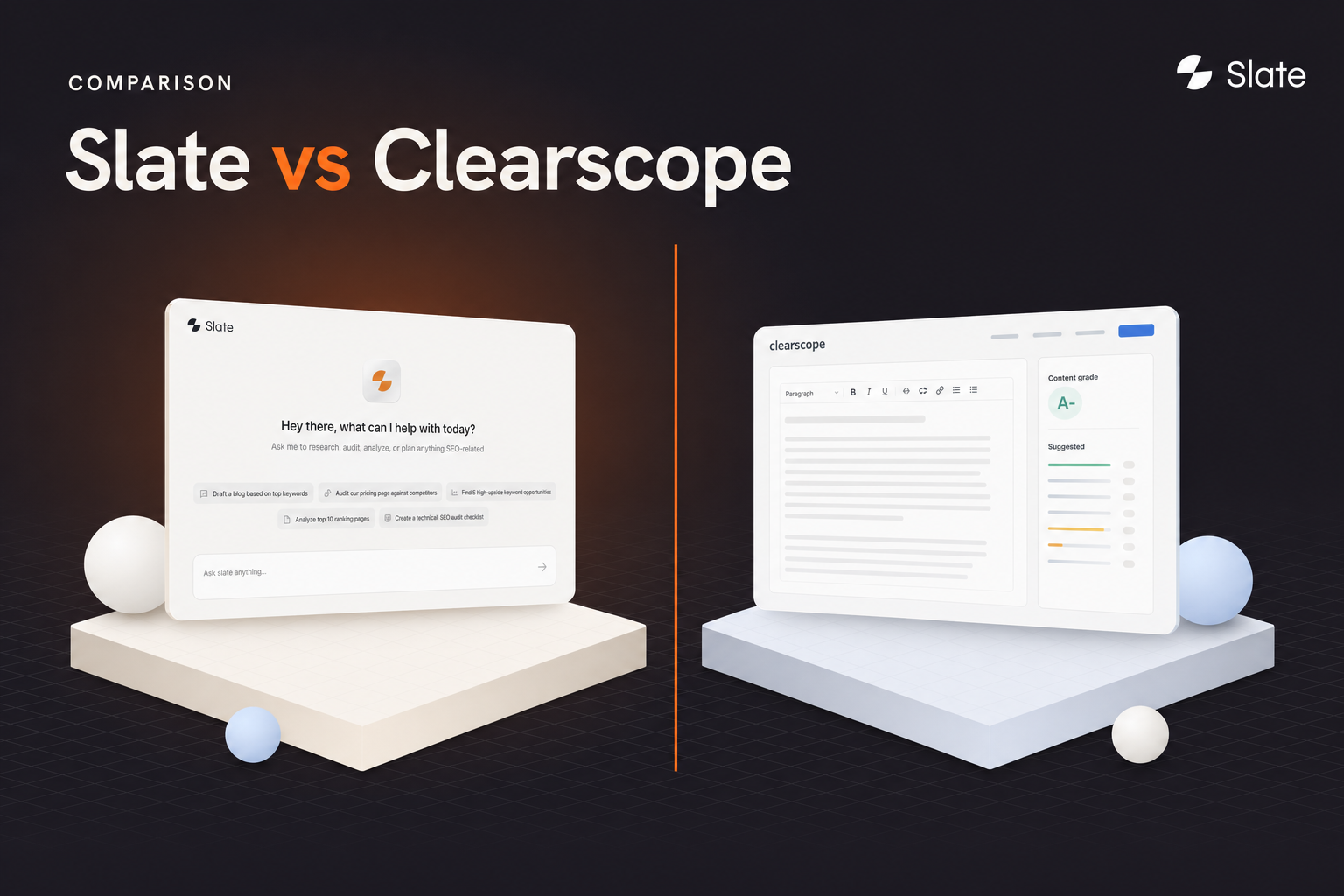
This is what Clearscope is best known for. As a writer works in the editor (or in the Google Docs add-on), a real-time content grade updates based on term coverage, depth, and structure. Recommended terms appear in the sidebar with usage counts, so writers can see exactly which concepts are missing.
The honest tradeoff: Grade-chasing is a real risk. A grade of A+ means nothing if the content reads like a term-stuffed checklist. The best teams use the grade as a directional signal, not a hard requirement, and pair it with editorial judgment. Use the AI SEO checklist as a counterweight to keep extractability and clarity in focus, not just coverage.
Refresh Stage - Content Inventory And Decay Tracking
Content Inventory connects to Google Search Console (and typically Google Analytics) to monitor your existing library and surface pages that are decaying or underperforming. It prioritizes refresh candidates by traffic potential, which is exactly the operational layer most teams lack when running content refresh workflows across hundreds of URLs.
This is one of Clearscope's strongest differentiators against newer optimization tools. If you have an existing content library, Inventory turns refresh from a one-time audit into an ongoing system. For teams looking at dedicated content refresh tools, Clearscope's Inventory holds its own when paired with the editor.
Integrations And Workflow Fit
- Google Docs add-on: Optimize inside Docs without switching tools.
- WordPress plugin: Connect via API key from your dashboard.
- Google Search Console: Powers Inventory and decay tracking.
- Google Analytics: Often paired with GSC for richer performance data.
The integration list is focused rather than sprawling, which fits the product's positioning as a layer in a stack, not the whole stack.
AI Visibility And Citation Tracking (2026 Update)
The newest layer is AI Prompt Tracking, which monitors where your brand and content appear as mentions or citations inside ChatGPT, Gemini, and Perplexity. You can tie those mentions back to specific topics and URLs to identify gaps and opportunities. It's a genuine step into AI SEO territory.
The honest assessment: This is a strong start, not a full governance system. Dedicated AI-search platforms cover more answer engines (AI Overviews, Claude), provide deeper citation analytics for AI answers, and connect visibility insights to execution workflows. Clearscope's prompt tracking is useful additional context; it isn't a replacement for an AI-search-first system.
Clearscope Pricing In 2026: Plans, Costs, And Value Analysis
Clearscope offers three tiers in 2026: Essentials at $129/month, Business at $399/month, and Enterprise at custom pricing. Every plan includes unlimited users - a meaningful detail for teams of three or more writers. Credit-based limits apply to Topic Explorations, Drafts, AI Tracked Topics, and Inventory pages, with paid add-ons available for overages.
Clearscope Pricing Breakdown
Add-ons include 100 extra Inventory pages for $25/month on Essentials ($15/month on Business) and extra Drafts ($50 on Essentials, $20 on Business). There are no contracts on monthly plans.
Is Clearscope Worth The Price?
Clearscope is worth it if you publish at least 10 pieces per month, have a dedicated editorial process, and need writer-friendly optimization plus refresh tracking in one tool. It is not worth it if your output is sporadic, your primary need is technical SEO or backlink analysis, or your core problem is AI-search citation visibility rather than on-page optimization.
Worth it if:
- Publishing 10+ articles per month
- Multi-writer team that needs consistent optimization standards
- Active refresh program tied to GSC data
- Agency model with multiple clients and rotating freelancers
Not worth it if:
- Solo writer producing fewer than five pieces a month
- Primary need is technical SEO, backlinks, or competitive crawl data
- Looking for full AI-search citation governance and execution workflows
Total Cost Of Ownership Beyond The Subscription
Subscription is only part of the cost. Most teams pair Clearscope with a broader SEO suite for backlinks and technical audits, an analytics layer, and - increasingly in 2026 - an AI-search visibility platform. Training time is typically light: the editor is intuitive enough that non-SEO writers can ramp quickly. The bigger investment is editorial discipline. Teams that don't define what "good" looks like beyond the grade end up over-optimizing for the score and underdelivering on clarity. Thinking about content budget allocation holistically helps avoid stacking redundant tools.
Clearscope Pros And Cons (Honest Assessment)
Clearscope's biggest pros are its writer-friendly grading, mature Inventory workflow, and unlimited-user pricing. Its biggest cons are its narrow scope (no technical SEO or backlinks), the price point for small teams, and AI-search features that are useful but not as deep as dedicated platforms. The right answer depends entirely on what role Clearscope plays in your stack.
Pros For SEO And Content Leads
- Strong content reports and term coverage: Widely regarded as strong semantic recommendations in the category.
- Writer-friendly Google Docs workflow: Reduces tool-switching friction.
- Content Inventory and decay tracking: Operationalizes refresh, which most teams struggle to systematize.
- Reliable, mature product: One of the longest-standing tools in the category, with broad market trust.
- Unlimited users on every plan: Per-writer economics improve as teams scale.
Pros For Writers And Editors
- In-Docs grading: No editor migration required.
- Clear term recommendations: Writers can see exactly which concepts are missing.
- Doesn't disrupt editorial flow: Sidebar UX rather than full takeover.
- Real-time feedback: Optimization becomes a continuous adjustment, not a final-pass chore.
Limitations To Weigh Seriously
- Pricing entry point for small teams: $129/month is steep if you publish fewer than five pieces a month.
- Not a full SEO suite: No backlinks, no technical audits, no site-level crawl data.
- Niche topics can produce weaker recommendations: A limitation of SERP-driven tools generally.
- AI-search coverage newer than dedicated platforms: Prompt tracking exists, but governance and cross-engine depth are limited.
- Grade-chasing risk: Without editorial judgment, the score becomes a substitute for quality rather than a signal of it.
What Clearscope Does Not Solve
Clearscope does not handle citation readiness across the full AI answer engine landscape (AI Overviews, Claude). It doesn't provide brand voice governance at scale or workflow orchestration across teams. It doesn't replace technical SEO tools, and it isn't designed to connect AI visibility insights directly to execution. For teams whose 2026 strategy depends on AI search, those gaps matter - and they're the reason most buyers end up with Clearscope plus an answer engine optimization tool.
How Clearscope Fits Into A 2026 AI-Search Workflow
Clearscope helps with the foundations of AI-search readiness - topical depth, extractable structure, refresh discipline - and adds visibility insights through AI Prompt Tracking. It doesn't replace a dedicated AI-search visibility-to-execution system. The real buyer question in 2026 isn't whether content scoring is useful; it's whether scoring alone is enough.
What Changed In Search Since 2023
What used to be a game of tactical execution - tweaking title tags, chasing keyword density - now looks more like content engineering for extractability. When someone asks ChatGPT a question and gets a direct, nuanced answer, going back to scanning ten blue links feels like a downgrade. AI systems decide what gets cited, summarized, and trusted, and that decision runs on different signals than traditional rankings.
On-page optimization is still necessary. It's just no longer sufficient.
Where Clearscope Helps
Term coverage and topical depth still matter for AI extraction. If your content doesn't comprehensively cover the concepts an answer engine expects, it won't be selected as a source. Clearscope's content reports and grading enforce that depth. Brief structure supports extractable content. Inventory keeps content fresh and helps teams stay aligned with emerging queries and answer surfaces.
Where Clearscope Leaves Gaps
- No tracking of brand citations across the full AI answer engine landscape (AI Overviews, Claude in addition to ChatGPT and Gemini)
- No workflow system for citation readiness at scale
- No portfolio-level governance for AI-assisted drafting and brand voice
- No execution layer that turns AI visibility insights into automated refresh or creation workflows
These aren't criticisms of Clearscope's roadmap - they're a recognition that the product is built for content optimization, not AI search infrastructure.
The New Buying Question
The right question in 2026 isn't "is Clearscope good at content scoring?" It clearly is. The question is whether scoring is the bottleneck for your organic growth, or whether the real bottleneck is visibility-to-execution: knowing where you're cited, knowing where you should be, and having the system to close the gap at scale. Teams that have solved optimization but still can't see or act on their AI search position need a different layer - often a generative engine optimization platform that connects insight to action.
Best Clearscope Alternatives In 2026
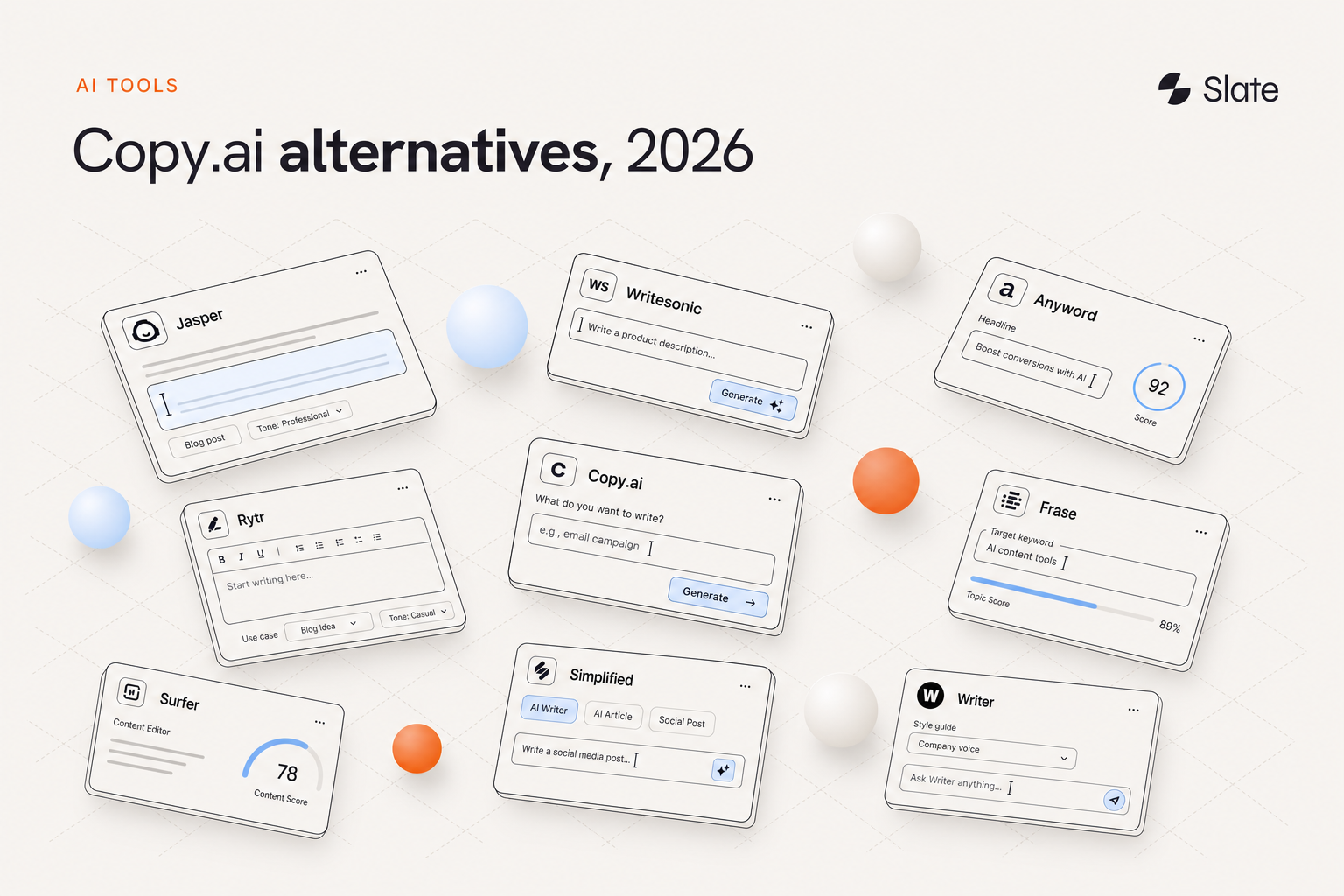
The strongest Clearscope alternatives in 2026 are Slate for AI-search-first content teams, Surfer SEO for on-page SEO-led workflows, MarketMuse for topic authority planning, Frase for AI-driven brief automation, and Semrush ContentShake for teams already on the Semrush stack. The right choice depends on whether your primary need is optimization, planning, automation, or AI-search visibility. For a broader view, see the best AI SEO tools roundup.
Alternatives At A Glance
1. Slate - Best Clearscope Alternative For AI-Search-First Content Teams
Where Clearscope stops at content optimization, Slate extends into AI search visibility and execution.
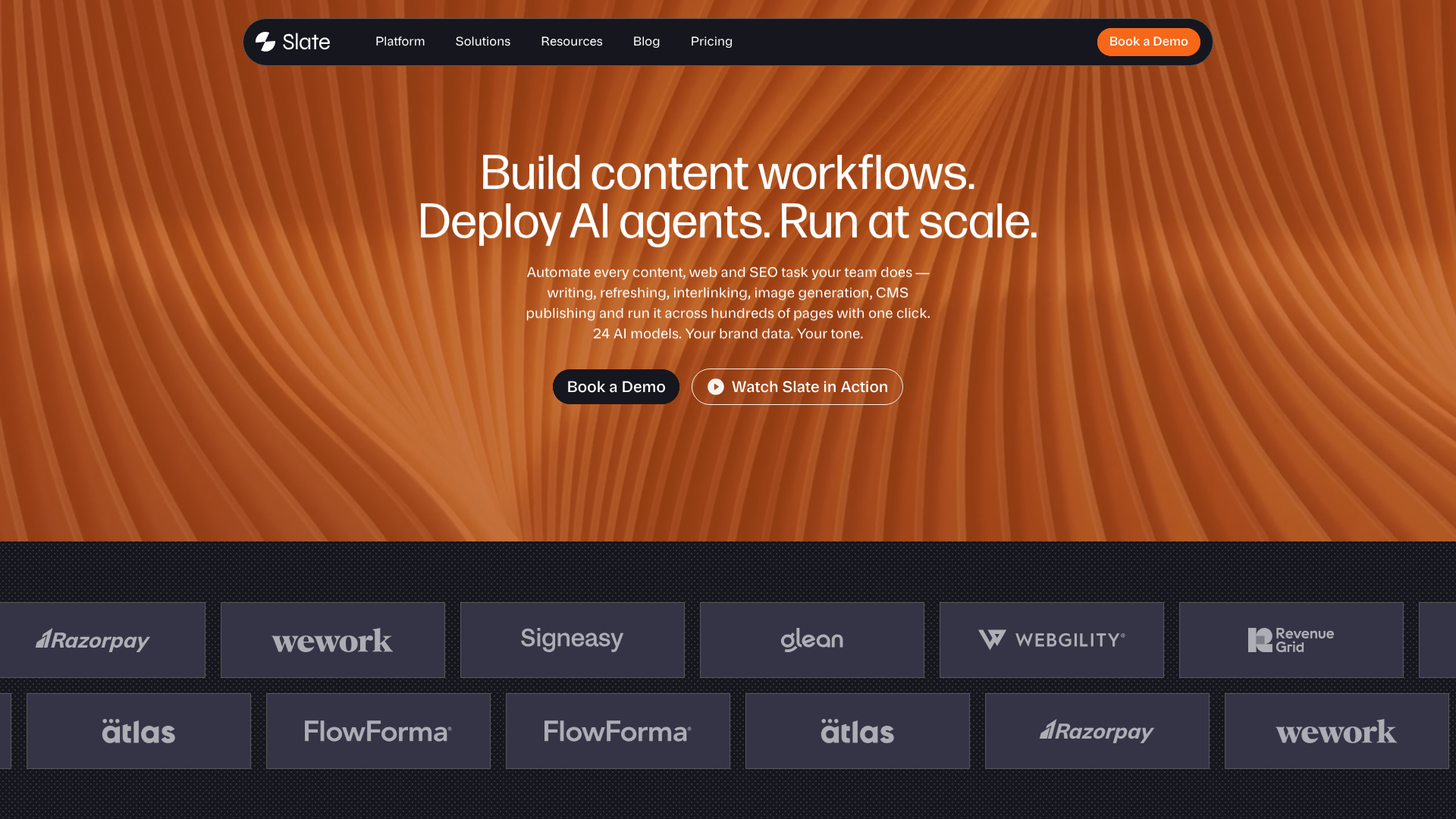
Best for: B2B SaaS, scale-ups, and content-led companies whose organic growth depends on being cited across both Google and AI answer engines.
Key features:
- AI search visibility tracking across ChatGPT, Google AI Mode, Google AI Overviews, and Perplexity
- Agentic workflow automation for research, writing, refreshing, and publishing
- Power Sheets for bulk content refreshes and programmatic creation across thousands of URLs
- Brand Kit and Knowledge Base for brand-safe AI content generation
- CMS publishing direct to Webflow and WordPress
- Integrations with GSC, GA4, Semrush, and Ahrefs
Pricing: Starting at $199/month.
G2 rating: 4.9/5
Verdict: Slate is the right choice for teams who have outgrown content scoring as their primary optimization layer and need a system that connects AI visibility insight to execution. Clearscope tells you whether your draft hits a grade; Slate tells you whether AI systems are citing you, where competitors are taking your place, and gives you the workflows to fix it at scale.
2. Surfer SEO - Best For On-Page SEO-Led Workflows
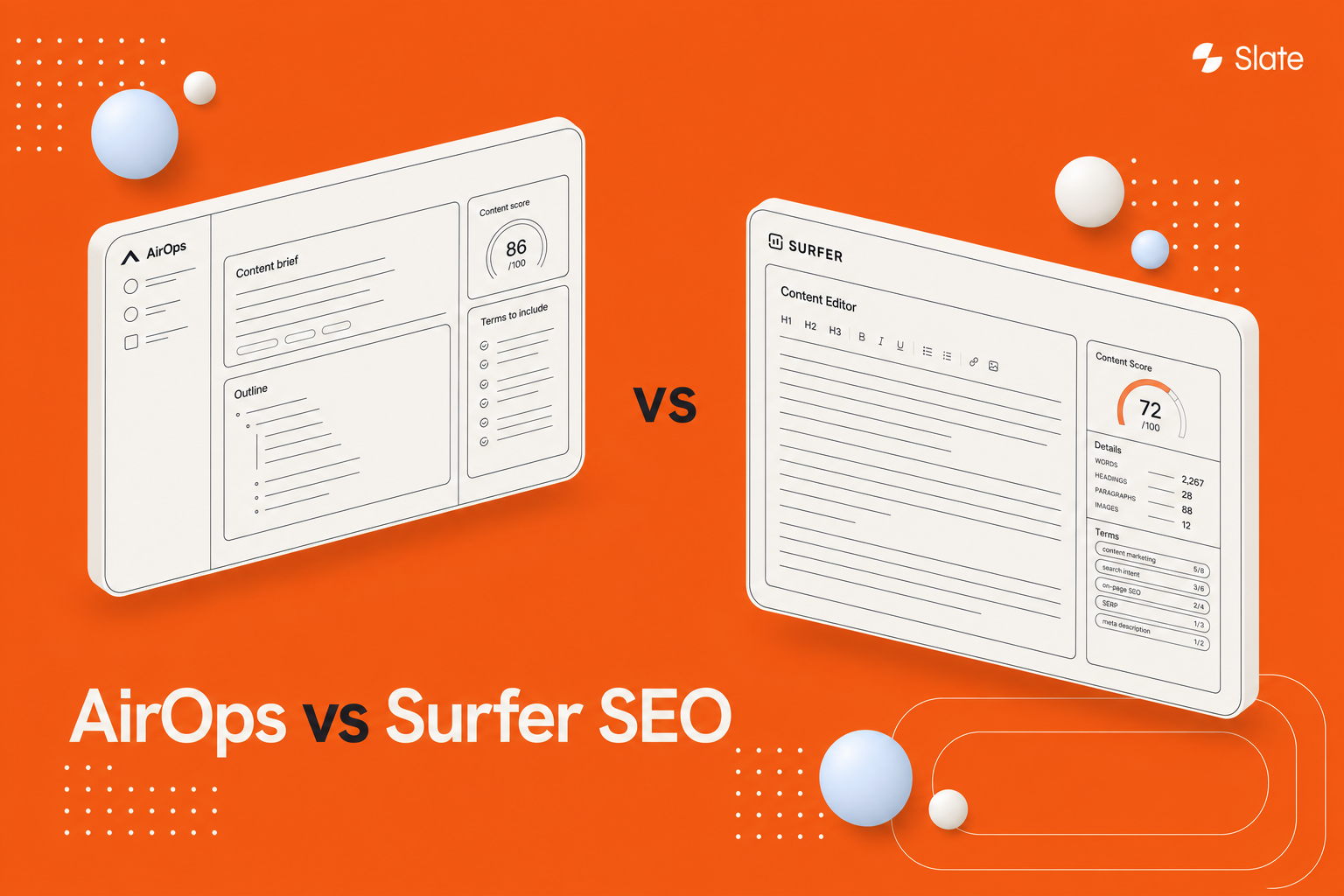
Surfer is a SERP-driven content optimizer with a content editor, optimization guidelines, and tighter coupling to broader on-page SEO tasks. It's prescriptive in a way Clearscope isn't - more rules, more directives - which some SEO teams prefer and some editorial teams find restrictive.
Choose Surfer if: Your workflow is SEO-led rather than editorial-led, and you want guidelines that read more like instructions than suggestions. For deeper comparison, see Surfer SEO vs Clearscope.
3. MarketMuse - Best For Topic Authority And Content Planning
MarketMuse focuses on topic modeling and authority mapping. If your strategic problem is "what should we publish to build authority in this category?" rather than "how do we optimize this specific draft?", MarketMuse covers ground Clearscope doesn't.
Choose MarketMuse if: You're investing in topic cluster tools and need cluster-level planning more than draft-level optimization.
4. Frase - Best For AI-Driven Brief Automation
Frase is strong at fast, AI-generated outlines and briefs. It tends to be more budget-friendly than Clearscope at entry tiers, with a focus on automation rather than deep editorial integration.
Choose Frase if: Brief automation speed is your primary need and you don't require Clearscope's depth in content grading or Inventory-style refresh tracking.
5. Semrush ContentShake - Best For Teams Already On Semrush
ContentShake combines keyword research, content tools, and AI writing inside the broader Semrush suite. It's a natural fit for teams already paying for Semrush who want content tooling without adding another vendor. For teams reconsidering the suite entirely, see Semrush alternatives.
Choose Semrush ContentShake if: You're already a Semrush customer and want consolidation. Choose Clearscope if optimization depth matters more than suite breadth.
Final Verdict: Should You Buy Clearscope In 2026?
Clearscope is a mature, well-built content optimization platform that earns its place for mid-market and agency teams publishing consistently. It is one layer of a modern content stack, not the whole stack. For teams whose 2026 strategy depends on AI search visibility, Clearscope is a useful complement to - not a replacement for - an AI-search-first platform.
Decision Matrix By Team Type
Slate's Recommendation
Clearscope is strongest where on-page optimization and editorial workflow matter most. Buy it if those are your priority problems and you can justify the price point with publishing volume. Recognize what it doesn't solve: cross-engine AI citation governance, visibility-to-execution workflows, and portfolio-level brand voice control at scale. Those gaps are real, and they widen as AI search continues to reshape how brands earn discovery.
For teams whose 2026 goal is AI-driven organic growth, evaluate Slate alongside Clearscope. The two solve different problems - and increasingly, mid-market and enterprise content teams need both layers. To see how Slate's AI search visibility tracking and content workflows complement (or replace) tools like Clearscope, book a demo.
Frequently Asked Questions
Is Clearscope Worth It In 2026?
Clearscope is worth it for mid-market in-house SEO and content teams or agencies publishing 10+ pieces per month that need structured content reports, real-time grading, and Inventory-based refresh workflows. It is less compelling for solo writers, low-volume teams, or teams whose primary need is full AI-search citation governance rather than on-page optimization.
How Much Does Clearscope Cost?
Clearscope starts at $129/month for Essentials, with Business at $399/month and Enterprise at custom pricing. All plans include unlimited users. Add-ons include extra Inventory pages ($25/month on Essentials, $15/month on Business) and extra Drafts ($50 on Essentials, $20 on Business). Monthly plans have no contracts.
What Is The Difference Between Clearscope And Surfer SEO?
Clearscope is editorial-first: writer-friendly grading, unlimited users, strong Google Docs and Inventory workflows. Surfer SEO is more SEO-led and prescriptive, with tighter coupling to broader on-page optimization tasks. Choose Clearscope for editorial teams and agencies prioritizing seat economics and refresh tracking. Choose Surfer for SEO-led workflows that want directive guidelines.
How Does Clearscope Compare To MarketMuse?
MarketMuse goes deeper on topic authority planning and cluster modeling - useful when your strategic problem is "what to publish" at the category level. Clearscope is more streamlined for editorial optimization and ongoing refresh, with content reports, grading, and Inventory. Choose MarketMuse for cluster planning; choose Clearscope for high-velocity brief, draft, and optimize workflows.
Does Clearscope Help With AI Search Visibility?
Partially. Clearscope offers AI Prompt Tracking that monitors mentions and citations across ChatGPT and Gemini and ties them back to topics and URLs. It does not provide full cross-engine governance covering AI Overviews, and Claude, or workflow orchestration to act on visibility insights. Dedicated AI-search platforms like Slate go deeper on both fronts.
Can Freelancers And Solo Writers Use Clearscope?
Yes - many freelance writers use Clearscope's editor and grading. The question is fit. At $129/month, the cost is hard to justify unless you produce meaningful volume or bill it into client retainers. Solo writers with sporadic output usually find lighter-weight tools more economical.
Does Clearscope Integrate With Google Docs And WordPress?
Yes. Clearscope offers a Google Docs add-on that brings optimization into the writing surface most editorial teams already use, and a WordPress plugin you can install from your dashboard or the WordPress repository via API key. It also connects to Google Search Console (and typically Google Analytics) to power Content Inventory and refresh tracking.
Do I Still Need Ahrefs Or Semrush If I Use Clearscope?
For most teams, yes. Clearscope focuses on content optimization, on-page discoverability, and refresh tracking - not technical SEO, backlinks, or full competitive crawl data. Treat Clearscope as one layer of the SEO stack alongside a broader SEO suite for technical audits, link analysis, and rank tracking.
What Is The Best Clearscope Alternative For AI-Driven Content Teams?
Slate is the strongest Clearscope alternative for content teams whose 2026 priority is AI search. It tracks visibility across ChatGPT, Google AI Mode, AI Overviews, and Perplexity, and connects insights to agentic workflows for research, writing, refreshing, and publishing - covering the visibility-to-execution gap that content optimization tools leave open. Book a demo to see it in action.