Every marketing dollar now carries more weight than it did two years ago.
The board (or the management) wants more pipeline.
But your team is the same size. Maybe smaller.
Same with your budget situation.
Cherry on top: the channels that reliably produced leads even a year ago are giving a lower ROI. AI is killing them, and is becoming the all-new “Big Bet” channel by itself.
In this article, we discuss an often-ignored impact of AI-driven search: on content budgets.
For most teams, budgets haven't grown to match the marketing complexity needed today.
In fact, Gartner found budgets flatlined at 7.7% of company revenue for the second consecutive year in 2025, with 59% of CMOs saying they have insufficient budgets.
This sentiment is very much understandable.
Your budget in 2026 should not only account for ranking on ChatGPT, Perplexity, AI Overviews and the likes...but it should also do so within a similar cost.
This guide is built for CMOs, growth leaders, and content directors who need to make those allocation decisions for 2026.
We’ll holistically cover the 101s (and much more) of how to get a bang for your buck this year, including what’s working, what’s giving ROI, as well as a budget framework you can follow.
Why Budget Allocation is Important in 2026
The old "portfolio approach" of publishing 50 articles and hoping 10 perform is now too expensive for what it returns.
In previous years, a content team could afford to spread bets more widely.
Publish broadly, see what sticks, double down on winners: It worked because organic search reliably drove traffic to a wide range of content.
AI, however, redistributes attention toward a smaller number of trusted, authoritative sources.
Generic content that once ranked on page one and drove "okay" traffic is increasingly invisible, buried below AI Overviews, and outperformed by deeper competitors.
Every piece needs a clearer purpose and a higher bar for quality. Content that doesn't earn its visibility becomes dead weight on a budget.
And leadership has noticed this.
CFOs and CEOs are asking harder questions about content marketing spend.
The CMO Survey found that "demonstrating the impact of marketing actions on financial outcomes" remains the top challenge for 64% of marketing leaders.
Factors to Consider When Budgeting in 2026
There are five factors, apart from obvious ones like your bank balance, to consider while budgeting:
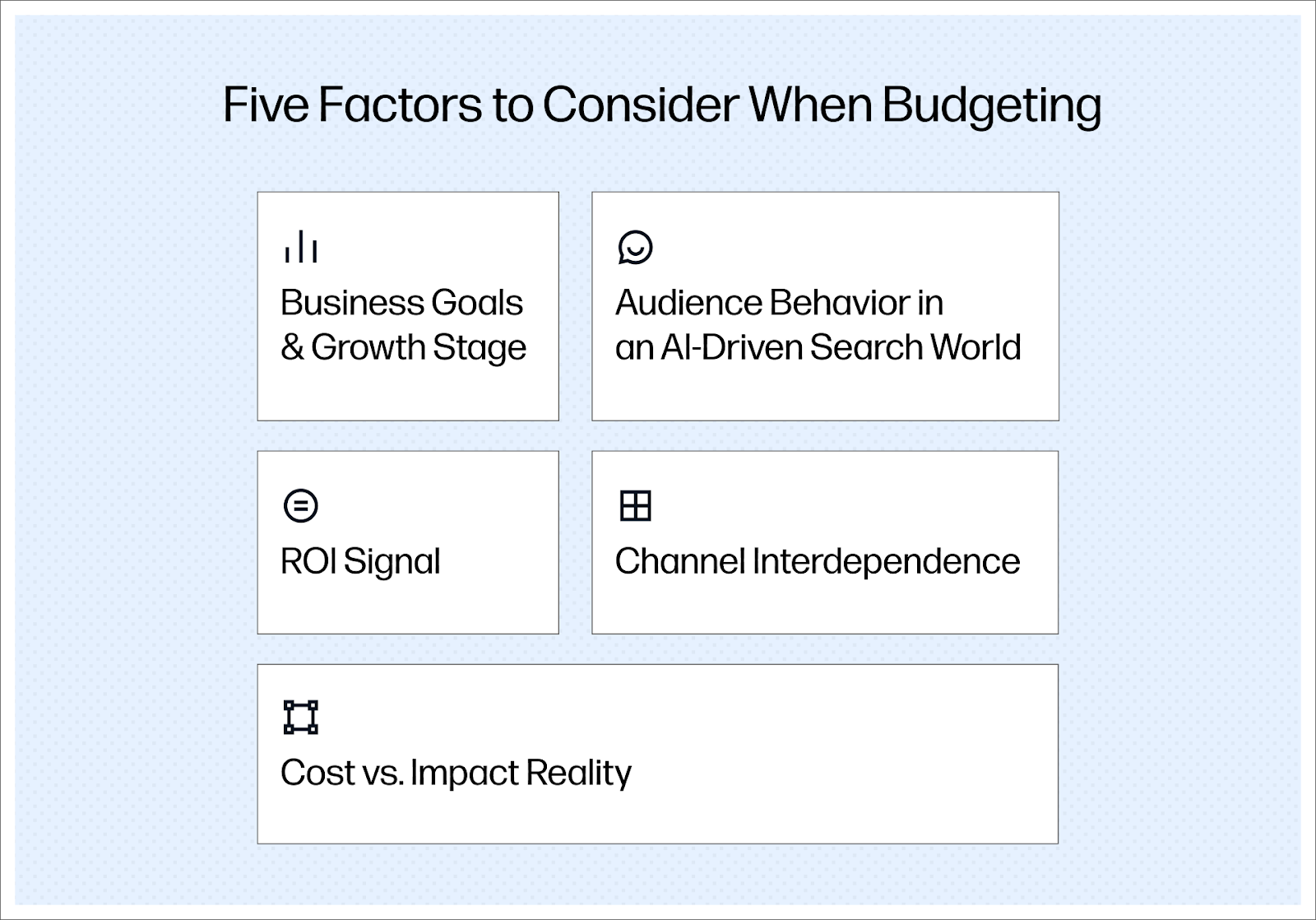
Business Goals & Growth Stage
Not every company needs the same content investment mix.
Acquisition-focused teams lean heavily into net-new content and paid amplification.
Retention-focused teams invest more in product education, customer enablement, and thought leadership.
Expansion-stage companies in particular (the ones fighting for category leadership) need to spend more on topical authority and expert-led content because AI systems reward brands they recognize as category experts.
Audience Behavior in an AI-Driven Search World
We are all well aware that B2B buyers aren't just Googling keywords anymore; they're asking ChatGPT for vendor comparisons, using Perplexity to research solutions, and encountering brand recommendations in AI-generated answers.
The discovery path is more conversational, less linear, and increasingly mediated by AI systems that curate recommendations.
Your budget allocation needs to reflect this.
If your audience is discovering brands through LLM responses, you need to invest in content that gets cited by those systems, not just content that ranks on a Google SERP.
For these reasons, allocate a budget for dual-system optimization, from strategy, implementation, to measurement.
ROI Signals
Traditional ROI signals like keyword rankings, organic sessions, and page views are becoming lagging indicators.
The specific new signals teams should budget measurement tools around:
- AI citation frequency
- Share of voice in AI responses, engagement depth
- Influenced pipeline
- Cost per visibility
If your measurement stack can't track these, your budget decisions are based on incomplete data.
Channel Interdependence
Paid, organic, and AI-driven discovery reinforce each other.
Paid distribution can accelerate the signals (links, engagement, brand mentions) that build organic authority.
Organic authority is what AI systems use to decide who to cite.
And AI citations drive brand recognition that improves paid conversion rates.
Budget allocation should reflect this shared ecosystem.
Cost vs. Impact Reality
To be honest, producing genuinely authoritative, expert-reviewed, well-structured content is more expensive per piece than churning out AI-generated posts.
But when you look at the ROI profile, it’s worth it.
One well-executed pillar page that earns AI citations and drives qualified traffic for 18 months delivers far more value than 20 thin articles that decay in 90 days.
The 2026 budget allocation is about shifting from cost-per-unit to cost-per-outcome.
With this context set, here are the core principles that should guide every allocation decision.
Core Principles for Smart Budget Allocation
What Still Drives ROI in the AI Era
This is one question that teams have been grappling with. Based on our experience, these four things are guaranteed to give returns:
Topical Authority & Depth
Being the expert on a topic cluster, not just ranking for a keyword, is what wins visibility in both traditional and AI search.
AI systems build entity-level understanding: they don't just match keywords, they recognize which brands and domains are authoritative on specific subjects.
Investing in comprehensive topic coverage (pillars, clusters, supporting content, FAQs) builds the kind of authority that both Google and LLMs reward.
Structured Content & Strong Information Architecture
AI systems need to understand your content in order to cite it. That means:
- Clear information architecture
- Logical heading structures
- Schema markup
- Structured data
- Content organized around entities and relationships
This is more of an ongoing investment in how your content is organized, labeled, and interconnected.
Budget should include dedicated resources for content engineering: the technical work of making content AI-discoverable.
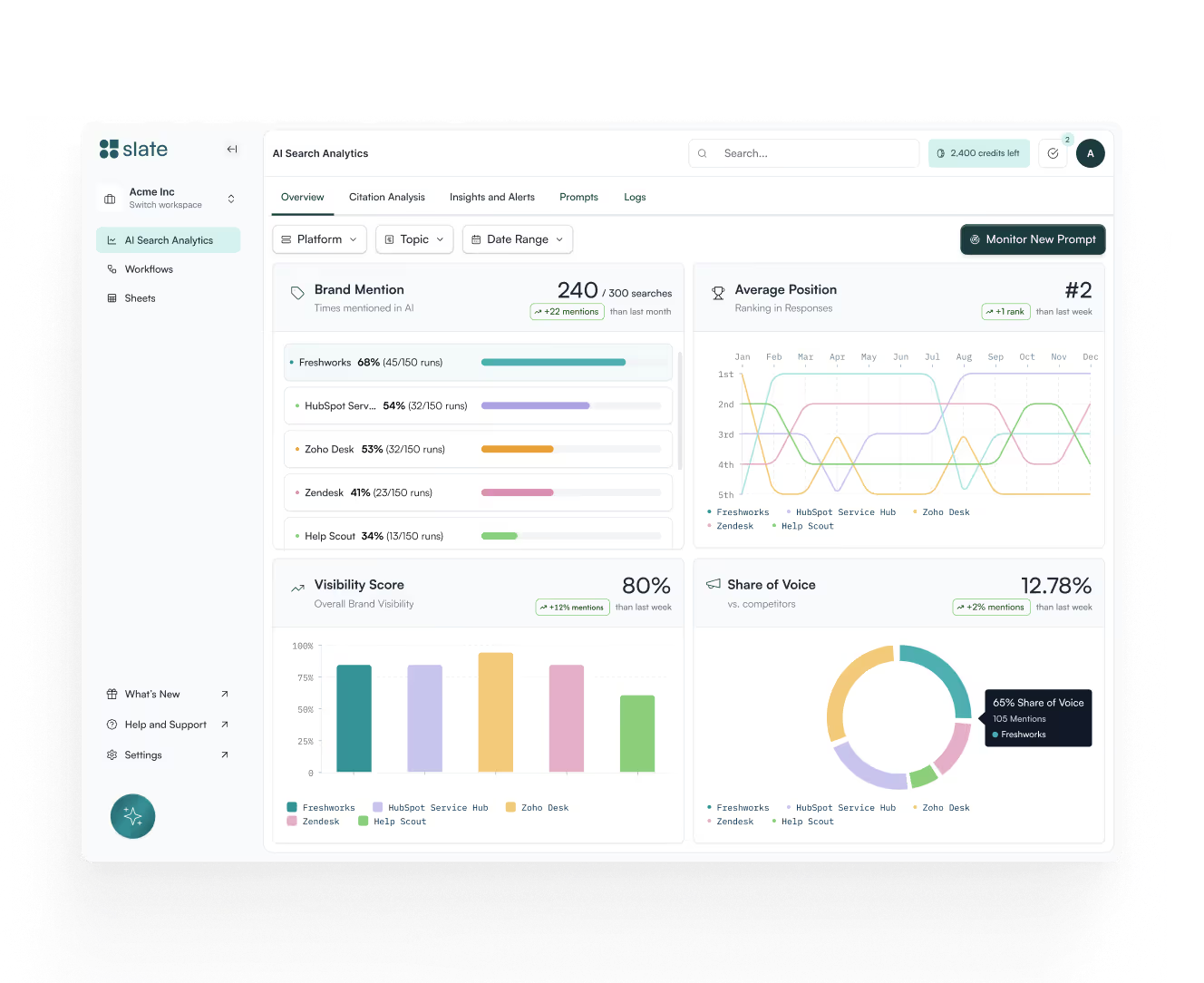
Slate's AI Search Analytics, for instance, connects this structured approach with visibility monitoring so teams can see exactly where their content architecture creates, or misses, citation opportunities.
Subject-Matter Expertise
The content that AI systems tend to cite, and that B2B buyers tend to trust, comes from genuine expertise.
This is the single biggest differentiator in 2026.
Budget for expert sourcing, interview-based content, and editorial review by SMEs.
It costs more per piece, but it produces content that earns citations, trust, and links.
The economics work in your favor as we discussed before: one expert-informed article that gets cited across AI platforms generates more qualified visibility than ten generic posts.
User Experience
Speed, clarity, and intent alignment still matter, in fact, more than before.
When someone does click through, whether from a search result, an AI citation, or a social share, the experience on your site determines whether that visit converts.
Budget for UX improvements, page speed, mobile optimization, and CRO.
Now let's get specific: where should content and SEO budgets increase in 2026?
Where Content & SEO Budgets Should Increase in 2026
1. Analytics & AI Visibility Measurement
Most measurement stacks are still built for a pre-AI world.
Budget for tools that track:
- AI citations
- LLM brand mentions
- Share of voice in AI responses
- Multi-touch attribution
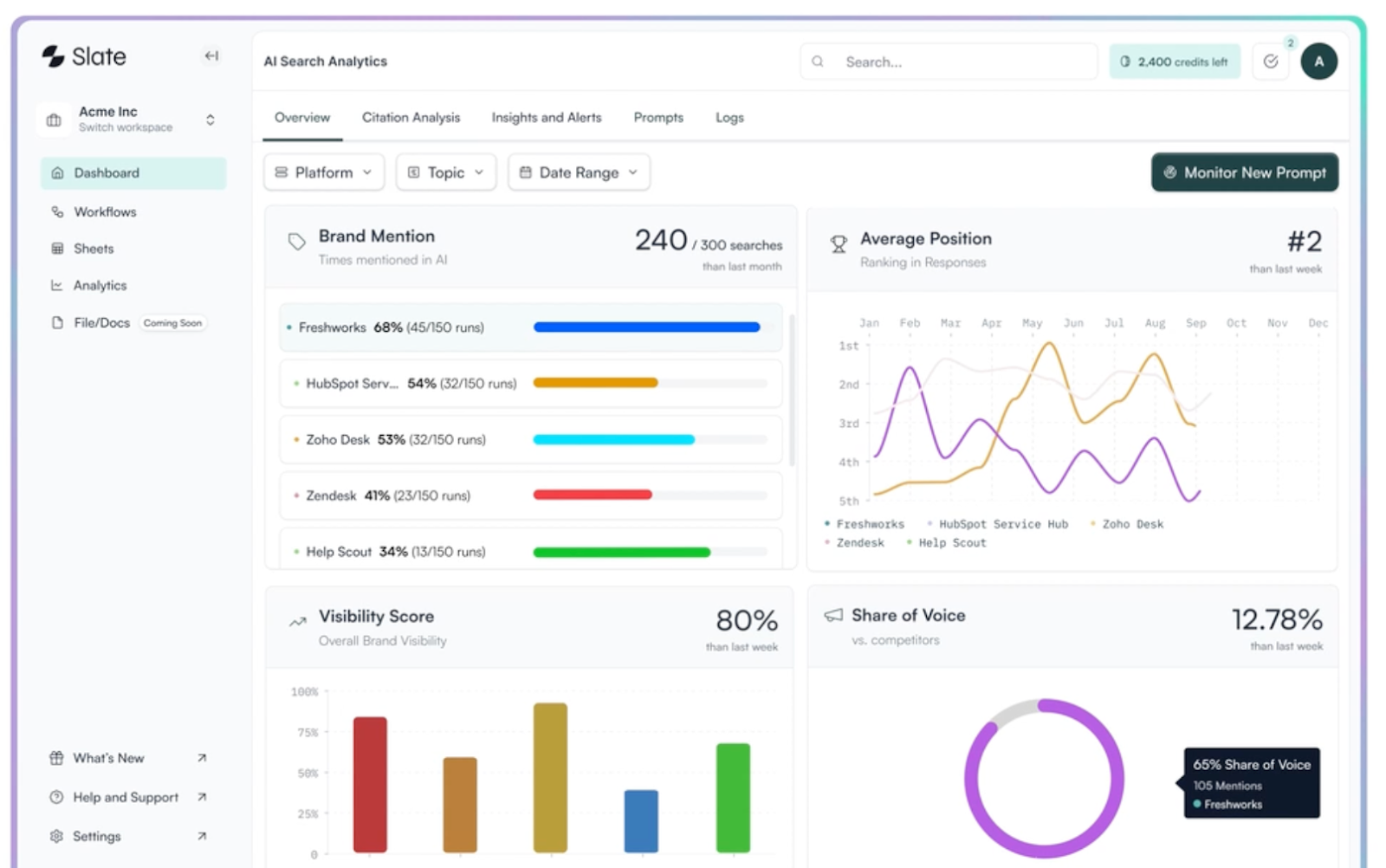
This will be the foundation for defending and growing your content budget.
When leadership asks, "Is this working?", your answer needs to include AI visibility data alongside traditional metrics.
2. Programs That Increase Topic & Entity Authority
This is the single largest area of recommended budget increase.
Build comprehensive topic clusters around the subjects your brand needs to own: pillar pages, supporting explainers, comparative content, FAQ hubs, and data-backed deep dives.
The goal is not just to get rankings, it's to get entity recognition.
3. Structured, AI-Discoverable Content
Allocate budget for content engineering:
- Schema markup implementation
- Information architecture audits
- Structured data deployment
- Content formatting that AI systems can easily parse (definition blocks, comparison tables, step-by-step frameworks, FAQ schema)
This is a technical-editorial hybrid.
It requires both SEO engineers and content strategists working together.
Many teams underinvest here because it doesn't produce visible "new content," but they forget that this improves the discoverability of everything you already have.
4. Expert-Led Content Production & Review
Invest in the human layer.
By that, we don’t mean “hire extra people.”
Budget for subject-matter expert interviews, practitioner contributions, editorial review processes, and fact-checking workflows.
This is what separates content that earns AI citations from content that gets ignored.
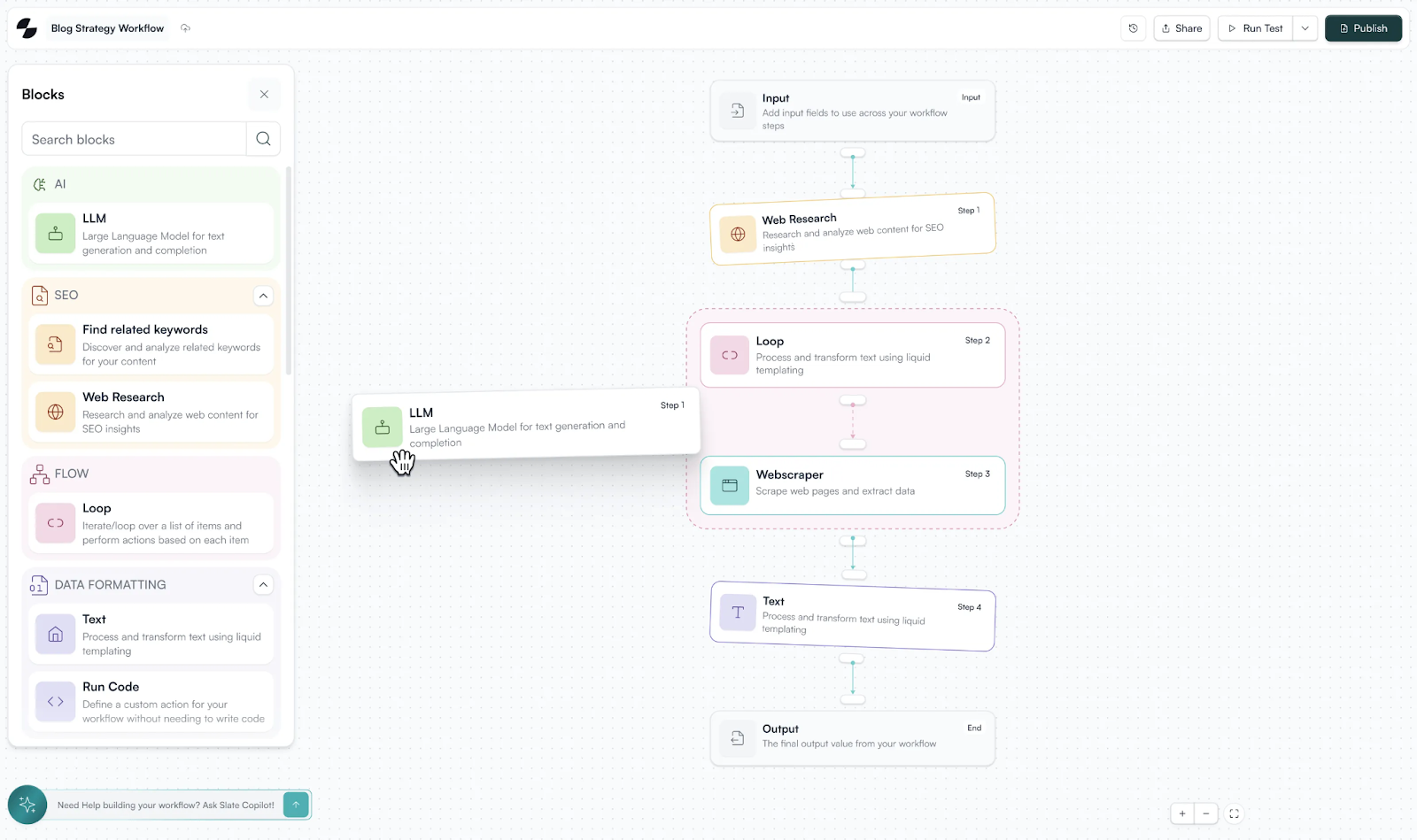
Build a network of internal and external SMEs and create a production workflow that makes their expertise scalable.
Slates’ own Workflows help teams build this kind of production pipeline without the manual bottlenecks that typically slow expert-led content.
5. Content Refresh & Optimization Programs
Systematic content refresh is one of the highest-ROI investments available.
Audit your existing library quarterly
- Pages losing traffic
- Pages with outdated info
- Pages that could be restructured
Refreshing existing content retains its accumulated authority signals while restoring relevance and recency, both of which AI systems weigh heavily.
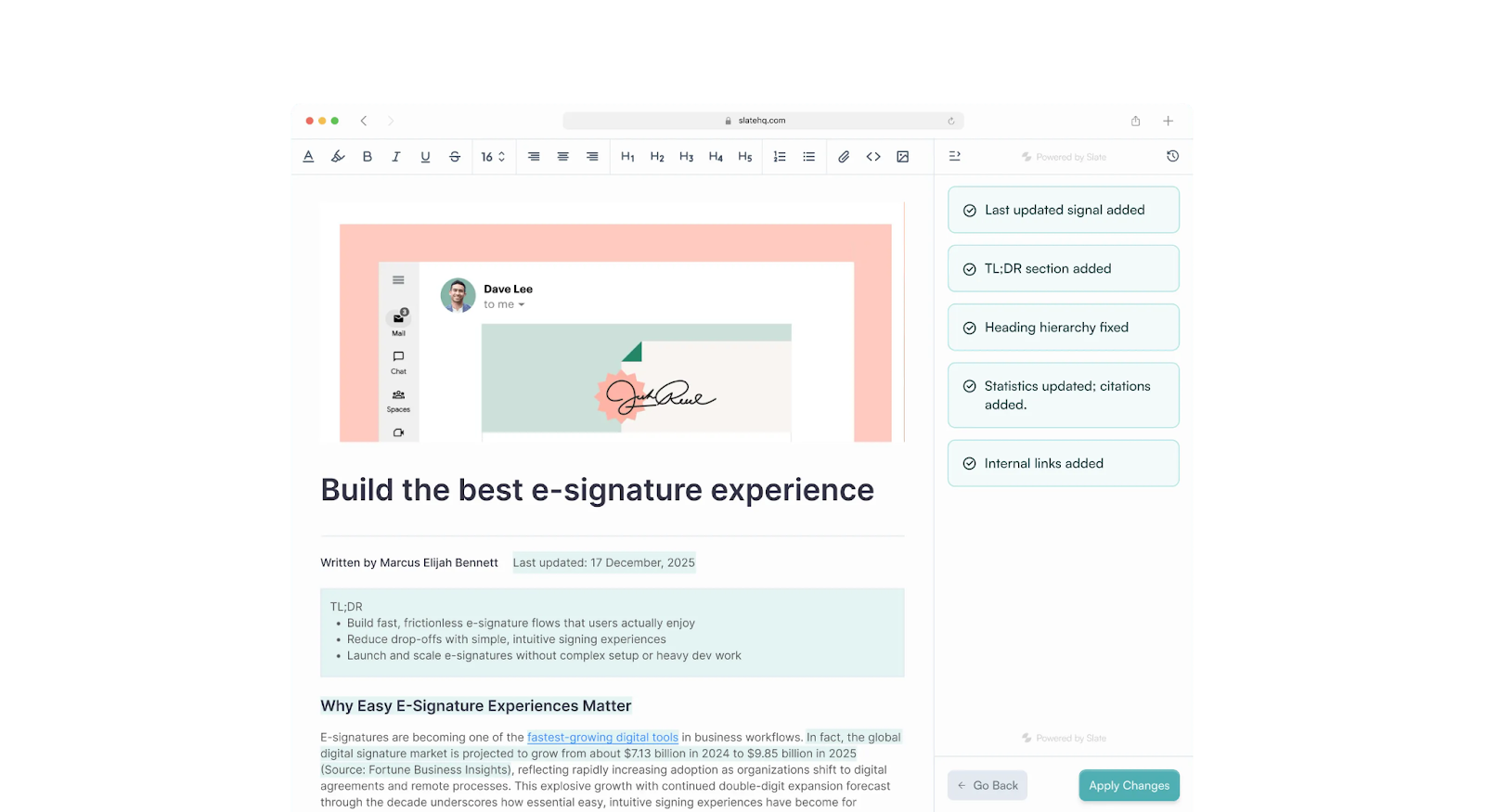
Use tools like Slate's for a Content Refresh solution that automates this by:
- Scanning for freshness decay
- Prioritizing updates by business impact
- Processing bulk refreshes
…all while maintaining brand voice
6. Paid Amplification Supporting Organic Authority
Use paid distribution strategically to boost high-value content:
- Promote pillar pages
- Drive traffic to gated research
- Amplify thought leadership on LinkedIn
The goal is to generate engagement signals, social shares, and backlinks that compound into organic and AI authority.
Where Budgets Can Be Reduced or Rebalanced
Here's where teams can typically pull back without hurting pipeline:
Now, let's move from what to invest in to how to plan the actual allocation.
Tips for Allocating Your Digital Marketing Budget
Start with “Outcomes”
Most budget planning starts with "how much for SEO, how much for paid, how much for content."
This approach fragments spend and creates silos.
Start instead with business outcomes: pipeline targets, revenue goals, retention metrics, market expansion priorities.
Then work backward.
What content and SEO investments move those outcomes?
Allocate Budget Quarterly
Annual budget planning with rigid allocations is too slow for a landscape that's changing every quarter.
Plan broad allocations annually but reserve 15–20% for quarterly reallocation based on performance data.
If your Q1 content refresh program is delivering 3x the ROI of net-new creation, you should be able to shift dollars accordingly in Q2.
Use Zero-Based Budget Thinking
Don't allocate budgets based on what you spent last year.
Start from zero and justify every line item based on expected contribution to outcomes.
This is especially important in 2026 because the channels and tactics that justified their spend in 2024 may no longer deliver the same returns.
Fund Short-Term Wins + Long-Term Equity
A common mistake is tilting the entire budget toward either quick wins (paid campaigns, conversion optimization) or long-term plays (topical authority, thought leadership).
Both are necessary.
A healthy budget balances both, typically 40–50% toward long-term equity and 50–60% toward performance and shorter payback cycles.
Reserve Budget for Experimentation
Set aside 5–10% of content budget for experiments
- New content formats
- Emerging platforms
- AEO tactics
- AI-native content strategies
Integrate Paid + Organic
If your paid media team and organic/content team have separate budgets, separate reporting, and separate goals, you're leaving value on the table.
Shared learning is what leads to compounding impact: Which topics convert in paid + which organic content builds brand recognition
So, create shared KPIs and visibility with the overall growth team.
Now, let's put these principles into a practical framework.
A Practical Content Budget Framework for 2026
This model best suits a mid-maturity B2B SaaS company with an established content presence investing in growth.
Adjust based on your reality: earlier-stage companies may tilt more toward new content creation (authority building) and less toward refresh.
Companies in highly competitive categories may need to over-index on thought leadership and expert differentiation.
The key principle is that no single category should consume more than 35%.
In practice, most teams can't overhaul their budget allocation overnight.
Hence, shift 5–10% of current volume-content spend toward authority and refresh programs each quarter.
Common Budgeting Mistakes to Avoid
1. Cutting quality to "save cost": When budgets tighten, the first instinct is often to reduce per-piece spend: cheaper writers, less editing, skip expert review.
This saves money per article but produces content that underperforms.
2. Over-funding content volume: The opposite error: maintaining or increasing the number of pieces produced without raising the quality bar.
3. Treating AI tools as a cost-cutting measure instead of a capability upgrade: AI writing tools are best used to enhance expert-driven workflows: faster research, better outlines, draft acceleration.
Using them to replace human expertise is ineffective at building authority.
4. Ignoring content refresh programs: Most teams spend the vast majority of their budget on new content creation and almost nothing on refreshing existing pages.
Refreshed content retains authority and recovers traffic at a fraction of the cost of new creation.
5. Treating SEO and paid as separate budget categories with separate goals: When these teams don't share insights, both underperform.
6. Measuring only traffic: Traffic is declining structurally due to zero-click trends. Measuring only traffic makes content look like it's failing even when it's building brand authority and influencing pipeline through AI-mediated channels.
The teams getting this right share some common patterns.
What the Best Teams Are Doing Differently
They are treating content as a product, not an output:
They apply product thinking to content:
- They have roadmaps
- They prioritize based on impact
- They track usage metrics
- They iterate based on performance data
- They sunset content that no longer serves a purpose
Aligning marketing leadership with performance operators:
In high-performing orgs, the CMO and the SEO/content lead operate with shared KPIs. They report pipeline influence, revenue attribution, and AI visibility.
Building category-level expertise instead of chasing keyword gaps:
Instead of reactively filling keyword gaps, the best teams proactively decide which topics their brand needs to own, and then build comprehensive authority around those topics.
Investing in editorial governance and quality systems:
Style guides, fact-checking workflows, expert review processes, brand voice governance.
Playing the compounding game:
The biggest differentiator: thinking in quarters and years, not weeks and months.
They understand that topical authority compounds, that refreshed content retains value, and that the investment they make today builds an asset that delivers returns for 12–24 months.
They budget accordingly, and they have the measurement systems to prove it.
The Future of Content Budgeting Beyond 2026
AI assistants and LLM-based search will only continue to grow in influence, so the time to invest is now.
Measurement will evolve: as AI visibility tracking matures and multi-touch attribution improves, the connection between content investment and revenue will become clearer.
This actually works in content teams' favor: better measurement means better budget justification.
The AI search era raises the bar for where and how you invest.
Content teams need to spend more deliberately: on authority, expertise, structure, refresh, and measurement. They need to treat content as a revenue-generating system, not a production line.
If you want a platform that connects AI search monitoring directly to automated content execution so your budget works across both systems, try Slate.
Frequently Asked Questions
1. What percentage of my content budget should I allocate to different areas in 2026?
Allocate 30-35% to authority and pillar content, 20-25% to content refresh, 15-20% to thought leadership, 10-15% to structured data and technical SEO, 10-15% to analytics and AI tools, and 5-10% to experiments.
2. How should I split my budget between new content and content refresh?
Allocate 20-25% to content refresh and optimization. Refreshing existing content is more cost-effective than creating new, as it retains authority signals and recovers traffic at a fraction of the cost.
3. Is high-volume content production still worth the investment?
No. High-volume content mills should be reduced. One well-executed pillar page that earns AI citations and drives qualified traffic for 18 months delivers far more value than 20 thin articles that decay in 90 days.
4. Should I budget separately for SEO and paid media?
No. Integrate them with shared KPIs. Paid distribution accelerates engagement signals that build organic authority, organic authority helps AI systems decide who to cite, and AI citations drive brand recognition that improves paid conversion rates.
5. How much should I allocate to analytics and measurement tools?
Reserve 10-15% of your content budget for AI visibility tracking, multi-touch attribution, and measurement tools. Traditional metrics like rankings and traffic are no longer sufficient to justify content spend.
6. What budget allocation works best for thought leadership and expert content?
Allocate 15-20% to thought leadership and expert voice, including SME interviews, bylined content, and industry commentary. Expert-informed content is the single biggest differentiator. AI systems cite content from genuine expertise.
7. How should I balance long-term content equity with short-term performance?
A healthy budget balances both: typically 40-50% toward long-term equity (topical authority, thought leadership) and 50-60% toward performance and shorter payback cycles. Reserve 5-10% for experimentation.
8. Where can I safely reduce my content budget without hurting pipeline?
Cut high-volume content production, purely AI-written content without editorial review, keyword-only strategies, programmatic pages with thin content, and rank-only reporting tools. These reductions often improve ROI by freeing budget for higher-impact investments.