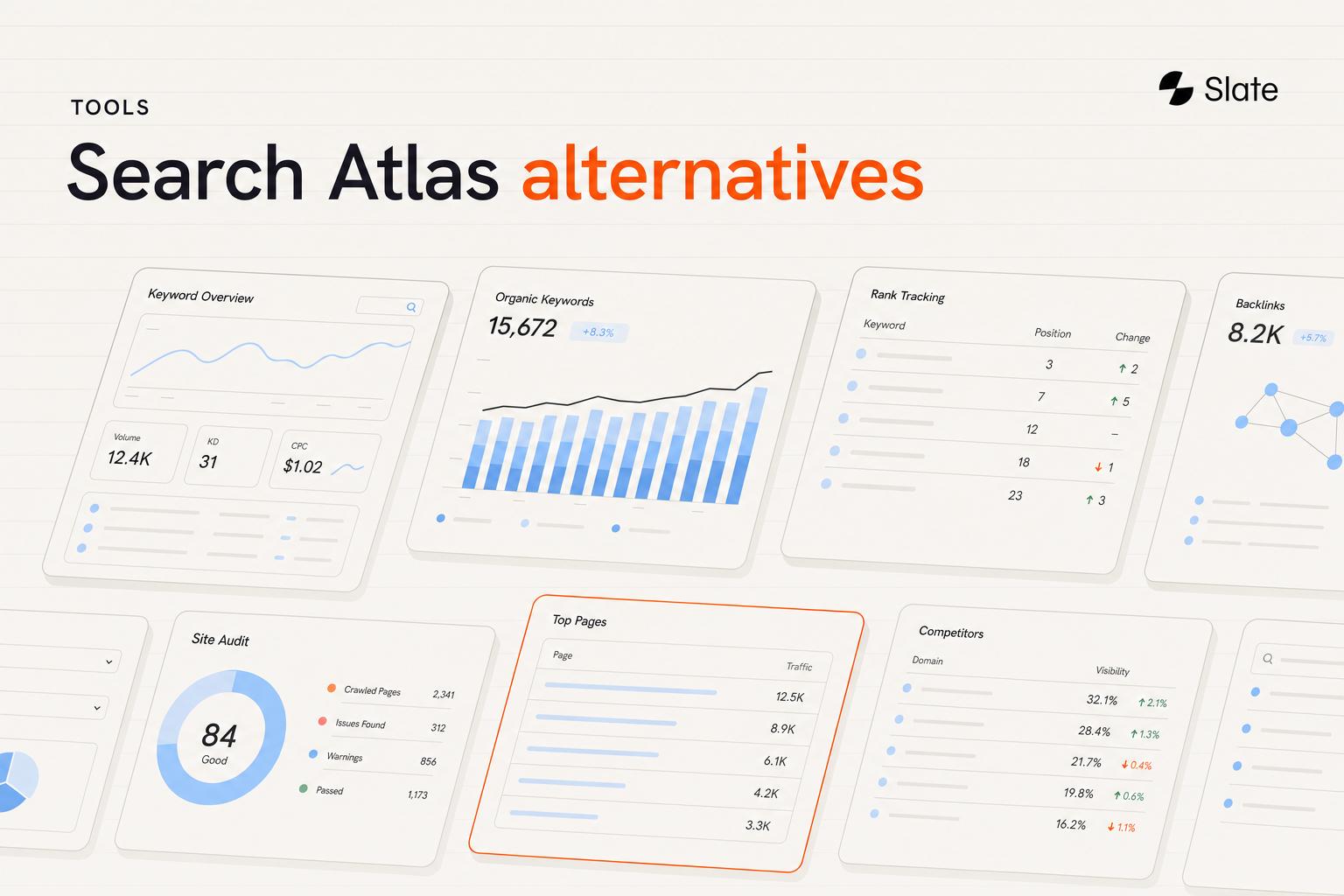
Search Atlas bundles SEO, AI visibility, OTTO automation, and Content Genius into one suite, but most teams only use one or two of those modules - and that mismatch is why the alternatives market keeps growing. The best Search Atlas alternative depends on the job you're actually replacing: all-in-one SEO, content optimization, local SEO, automated deployment, question research, or AI search visibility. For B2B SaaS teams that need AI search visibility plus scalable content operations in one platform, Slate is the strongest fit; Semrush and SE Ranking lead the all-in-one suite category, Surfer and Frase replace Content Genius, BrightLocal and Local Dominator cover local SEO, and Alli AI is the closest match for OTTO-style deployment.
Key Takeaways
- The best Search Atlas alternative depends on which job you're replacing - not which tool has the longest feature list.
- Slate is the strongest alternative for B2B SaaS and content-led teams that need AI search visibility plus scalable content workflows in one platform.
- Semrush and SE Ranking remain the leading all-in-one SEO suite replacements.
- Surfer and Frase are the closest Content Genius alternatives for editor-first content workflows.
- BrightLocal and Local Dominator are better fits for map pack and local SEO use cases.
- Alli AI is the most direct OTTO SEO alternative for automated on-page deployment.
- Pricing, workflow fit, and AI search readiness should drive the decision in 2026 - not feature count.
Why Teams Are Looking For Search Atlas Alternatives In 2026
Teams switch from Search Atlas when they outgrow its all-in-one model, find specific workflows better served by specialist tools, hit pricing or learning-curve friction with features like OTTO, or need stronger AI search visibility coverage than legacy SEO suites provide. The shift from Google-only optimization to multi-engine answer discovery has changed what teams actually need from their stack.
A few patterns show up over and over:
- Pricing-to-value mismatch: Search Atlas's lower tier excludes AI visibility tracking, pushing teams toward higher-tier plans they may not fully use.
- Learning curve on OTTO: Automated deployment features can require JavaScript implementation work that smaller teams can't easily support.
- Single-feature usage: Many buyers only use Content Genius, OTTO, or local - making a full suite hard to justify.
- AI search visibility is now a buying criterion: Legacy SEO suites are adding AI features, but content-led teams want platforms built for ChatGPT, Perplexity, Gemini, and AI Overviews from the start. Explore the top generative engine optimization tools built for this shift.
- Workflow fit varies by team type: B2B SaaS, agencies, and local businesses have different priorities, and one suite rarely wins on all three.
How We Evaluated The Best Search Atlas Alternatives
This list was built around how teams actually buy SEO and AI search tools in 2026 - not generic feature counts. Each tool was scored against the criteria below.
- Workflow fit: Does it connect insight to execution, or stop at reporting?
- AI search visibility: Coverage of ChatGPT, Perplexity, Gemini, and AI Overviews.
- Content engineering capability: Support for repeatable, brand-safe workflows.
- Pricing transparency: Published plans and clear usage limits.
- Use-case coverage: All-in-one suite vs. specialist depth.
- Integrations and CMS publishing: Direct connections to WordPress, Webflow, and headless stacks.
- Reporting depth: Citation tracking, refresh queues, and dashboards.
- Team scalability: Governance, review gates, and multi-client support.
Search Atlas Alternatives Comparison Table
The 12 Best Search Atlas Alternatives In 2026
Each tool below is reviewed using the same template so you can compare apples to apples: what it replaces in Search Atlas, why it stands out, key features, pricing, and the conditions under which it's the right (or wrong) choice.
1. Slate - Best Search Atlas Alternative For B2B SaaS And AI Search Visibility
Slate is an end-to-end AI search optimization and content engineering platform built for B2B SaaS marketing teams that need to track AI visibility and execute content at scale in one system.
Best for: B2B SaaS marketing teams, scale-ups, and content-led companies adapting to AI-driven discovery.
What it replaces in Search Atlas: AI search visibility tracking, content opportunity discovery, and content workflow execution (a Content Genius + AI visibility replacement).
Why it stands out: Most legacy SEO suites are bolting AI visibility onto tools designed for blue-link rankings. Slate was engineered for AI-driven discovery from the start - connecting visibility insights directly to agent-based content engineering workflows and one-click publishing. That means a team can see where they're losing share in ChatGPT or Perplexity, build a refresh, and ship it to Webflow or WordPress without leaving the platform.
Key features:
- AI search visibility tracking across ChatGPT, Google AI Mode, Google AI Overviews, and Perplexity
- Visual Workflow builder with 24+ AI models, conditional logic, and web scraping
- Power Sheets for bulk content refreshes and programmatic creation across thousands of URLs
- SuperBlocks templates for repeatable AEO workflows
- Brand Kit and Knowledge Base for brand-safe AI output
- Direct CMS publishing to Webflow and WordPress
Pricing: Starting at $199/mo.
G2 rating: 4.9/5
Choose this if: You need to track AI search visibility and execute content refreshes at scale without losing brand control.
Skip this if: Your primary need is backlink analysis depth or local map-pack tracking.
Book a demo to see how Slate replaces both AI visibility tracking and content execution in one system.
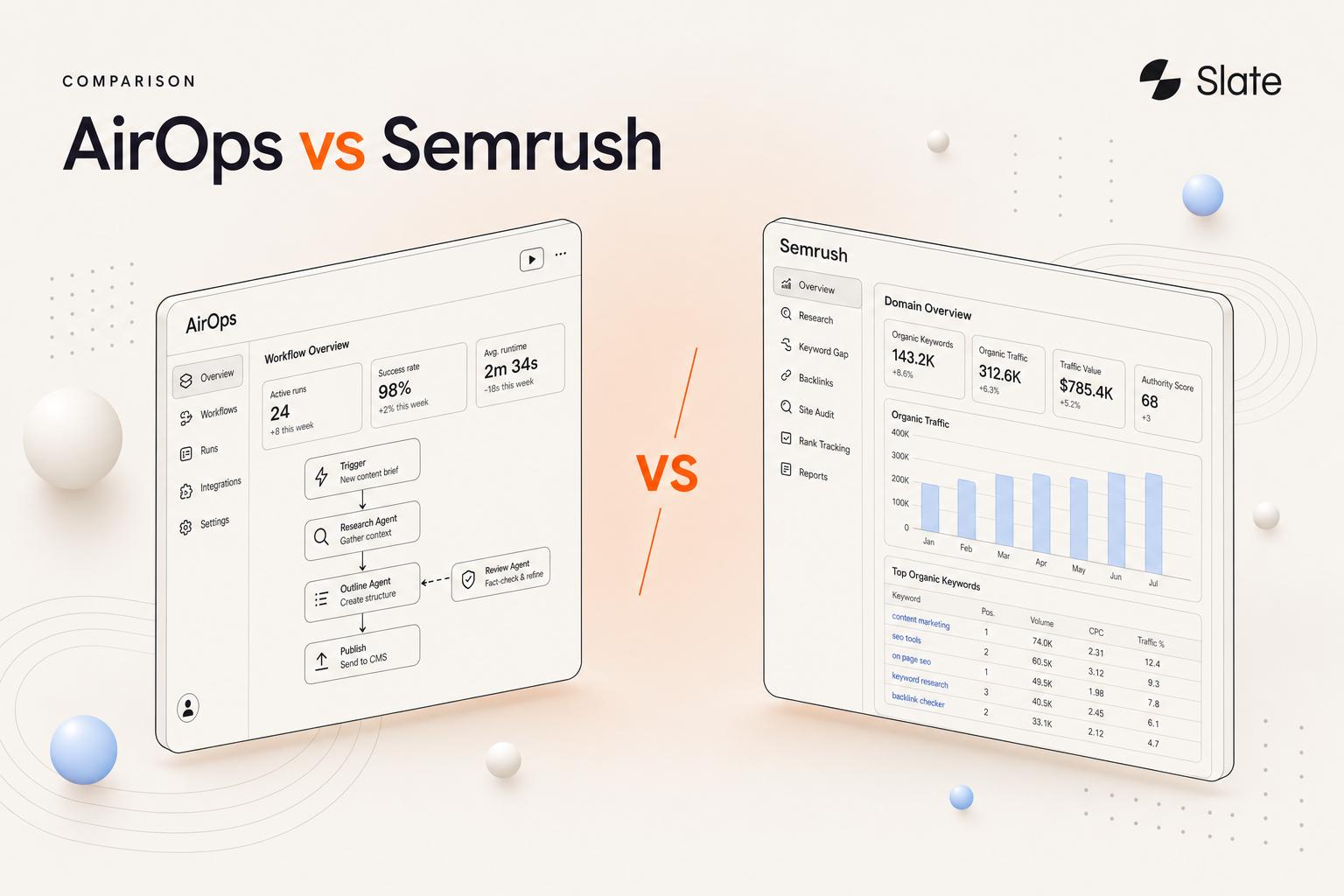
2. Semrush - Best All-In-One SEO Suite Alternative
Semrush is the most mature all-in-one SEO and marketing visibility platform, now extended with an AI Visibility Toolkit for tracking brand presence across AI Overviews and chat systems.
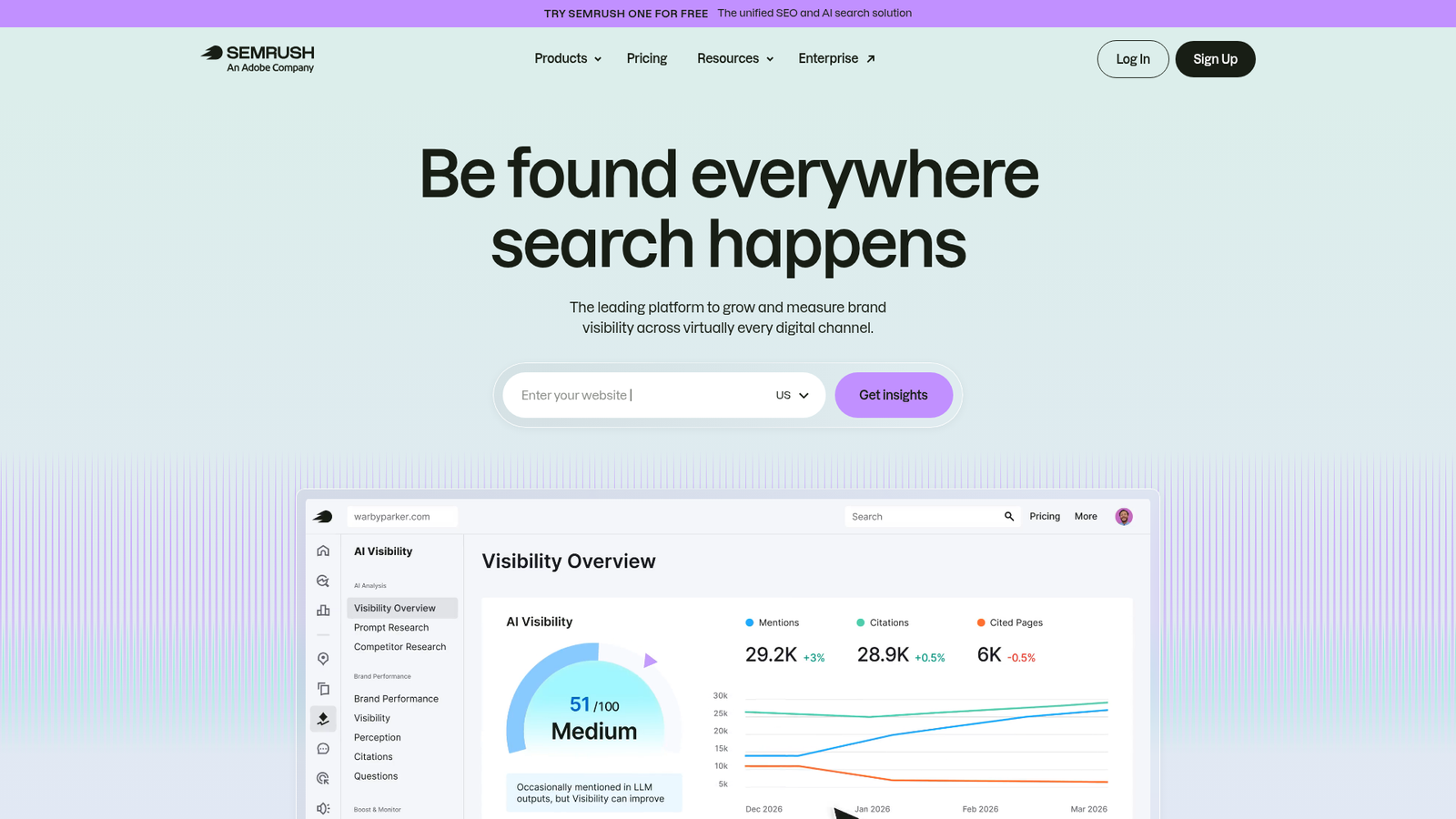
Best for: Agencies and in-house teams that want one suite for SEO, PPC, and competitive intelligence.
What it replaces in Search Atlas: The full all-in-one suite - keyword research, rank tracking, site audit, backlink analysis, and AI visibility.
Why it stands out: Semrush's keyword and backlink databases remain among the largest in the category, and the AI Visibility Toolkit adds a structured layer for AI search reporting. For teams comparing search atlas vs semrush, the trade-off is breadth and data maturity vs. Search Atlas's heavier automation focus.
Key features:
- Keyword Magic Tool, Keyword Strategy Builder, and Organic Research
- Site Audit and Position Tracking
- Backlink Analytics and Link Building Tool
- AI Visibility Toolkit for ChatGPT, Gemini, and AI Overviews
Pricing: Semrush One Starter $199/mo, Pro+ $299/mo, Advanced $549/mo. Free account available; annual billing lowers effective monthly cost.
G2 rating: 4.5/5
Choose this if: You want one mature platform covering SEO, PPC, content, and AI visibility.
Skip this if: You only need one module (e.g., content optimization or local) and don't want to pay for the rest.
3. SE Ranking - Best Affordable All-In-One Alternative
SE Ranking offers the breadth of an all-in-one suite at a lower entry price, with AI visibility tracking as part of the platform.
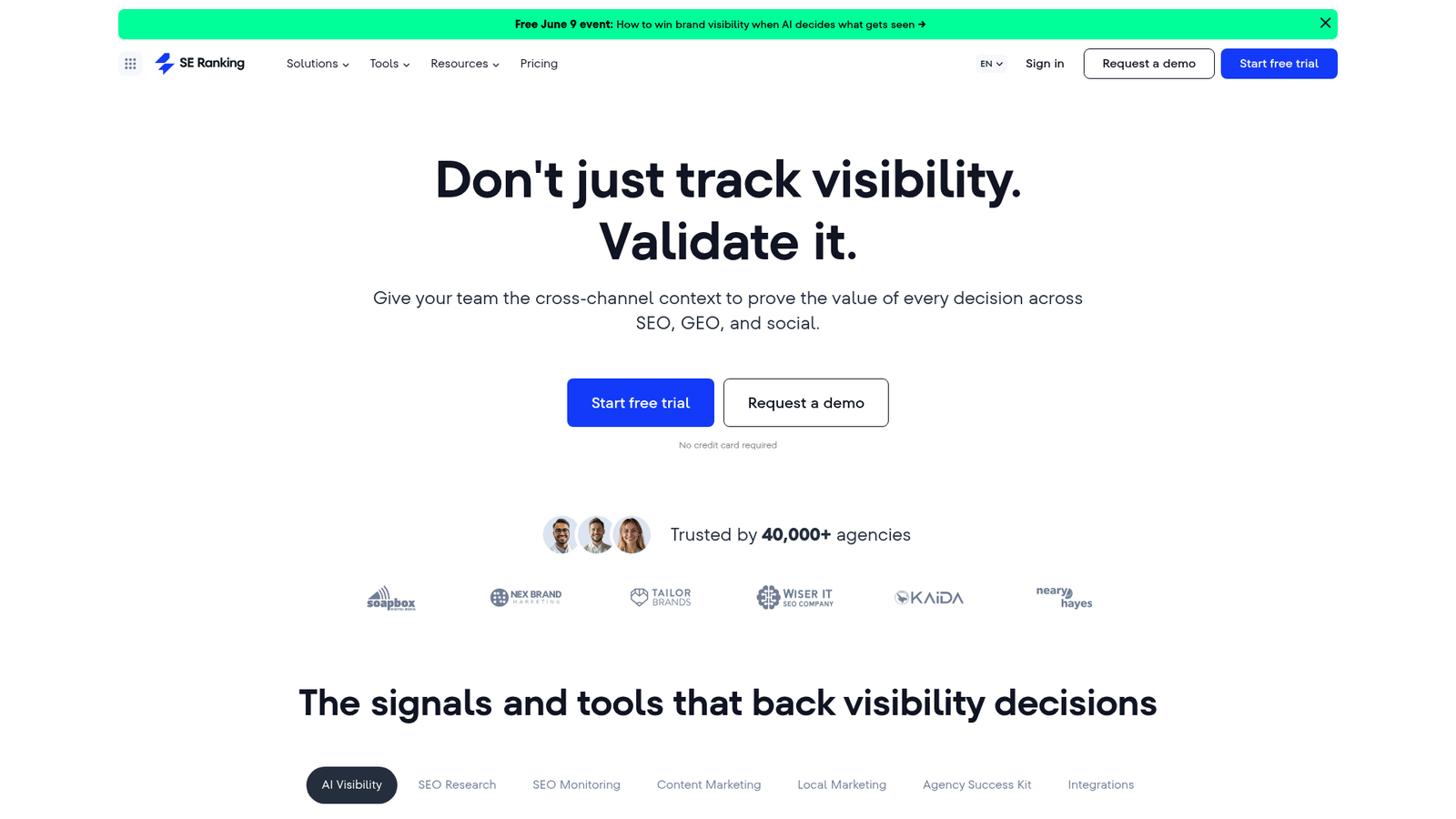
Best for: Marketing teams and agencies that want a full-suite Search Atlas replacement without enterprise pricing.
What it replaces in Search Atlas: Rank tracking, keyword research, site audit, backlinks, and AI visibility monitoring.
Why it stands out: SE Ranking has steadily expanded from a rank tracker into a credible Semrush competitor, and the pricing gap matters when teams are consolidating their stack. For teams comparing se ranking vs search atlas, the appeal is lower starting cost and full-suite SEO coverage without stepping up to higher-priced platforms.
Key features:
- Rank tracking across major search engines and locations
- Keyword, competitor, and backlink research
- Website and on-page SEO audit
- AI visibility and SERP feature tracking
Pricing: Core $129/mo, Growth $279/mo, Enterprise custom. Annual billing saves up to 20%; 14-day free trial.
G2 rating: 4.8/5
Choose this if: You want full-suite coverage at a lower starting price.
Skip this if: You need the largest possible keyword or backlink dataset.
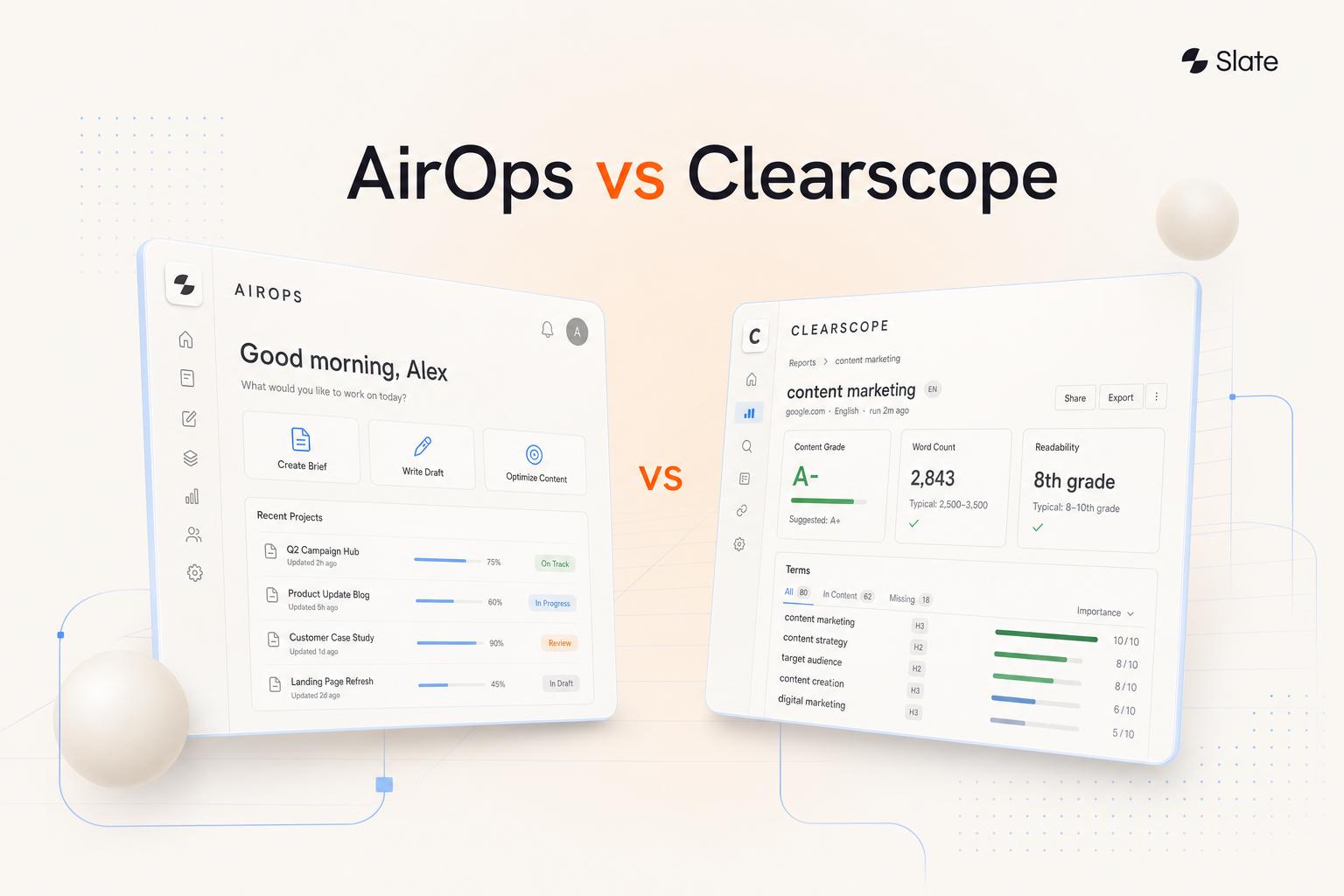
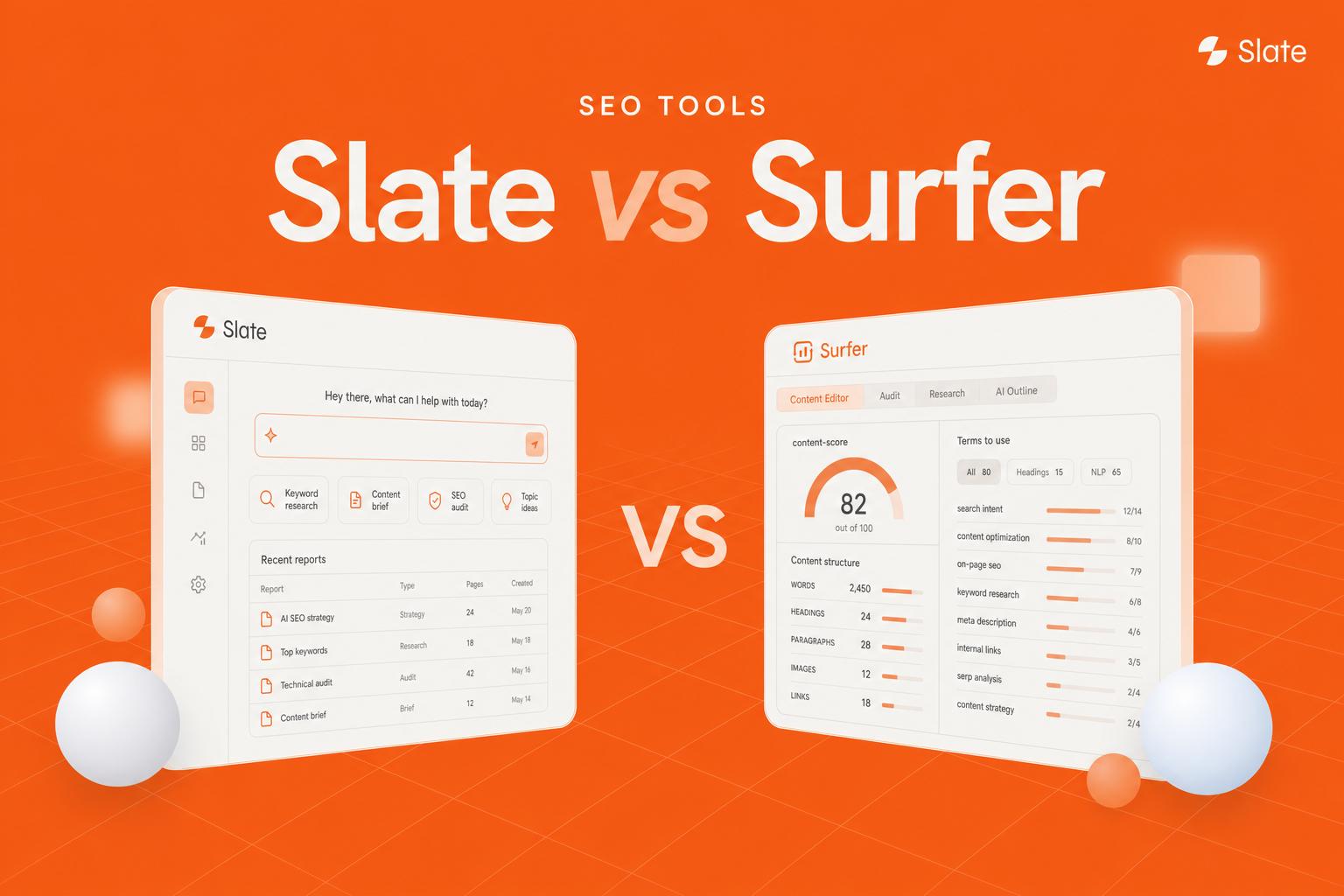
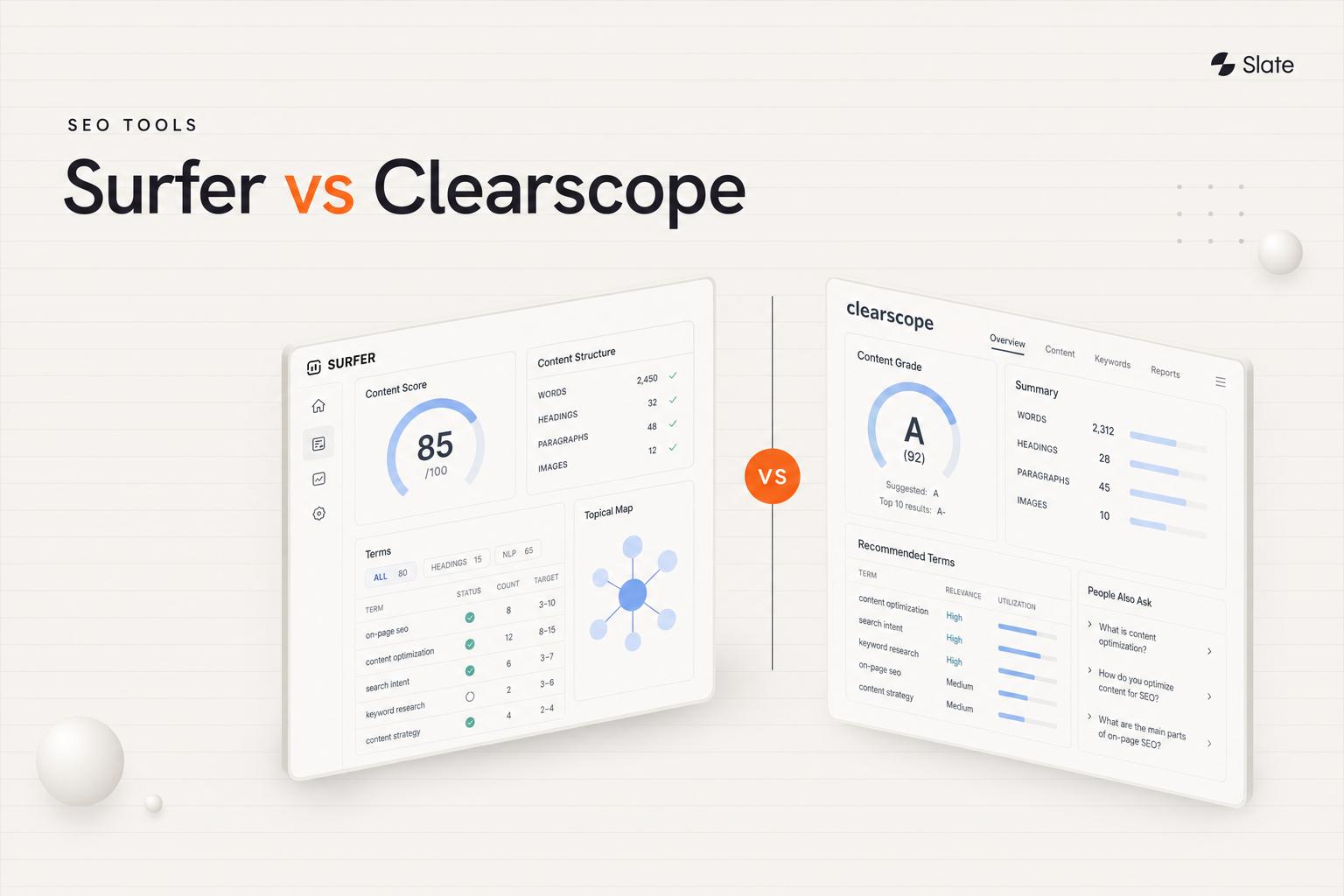
4. Surfer - Best Content Genius Alternative For Editor Workflows
Surfer is the closest "score-as-you-write" replacement for Content Genius, with real-time SERP-based scoring and AI visibility tracking layered on top.
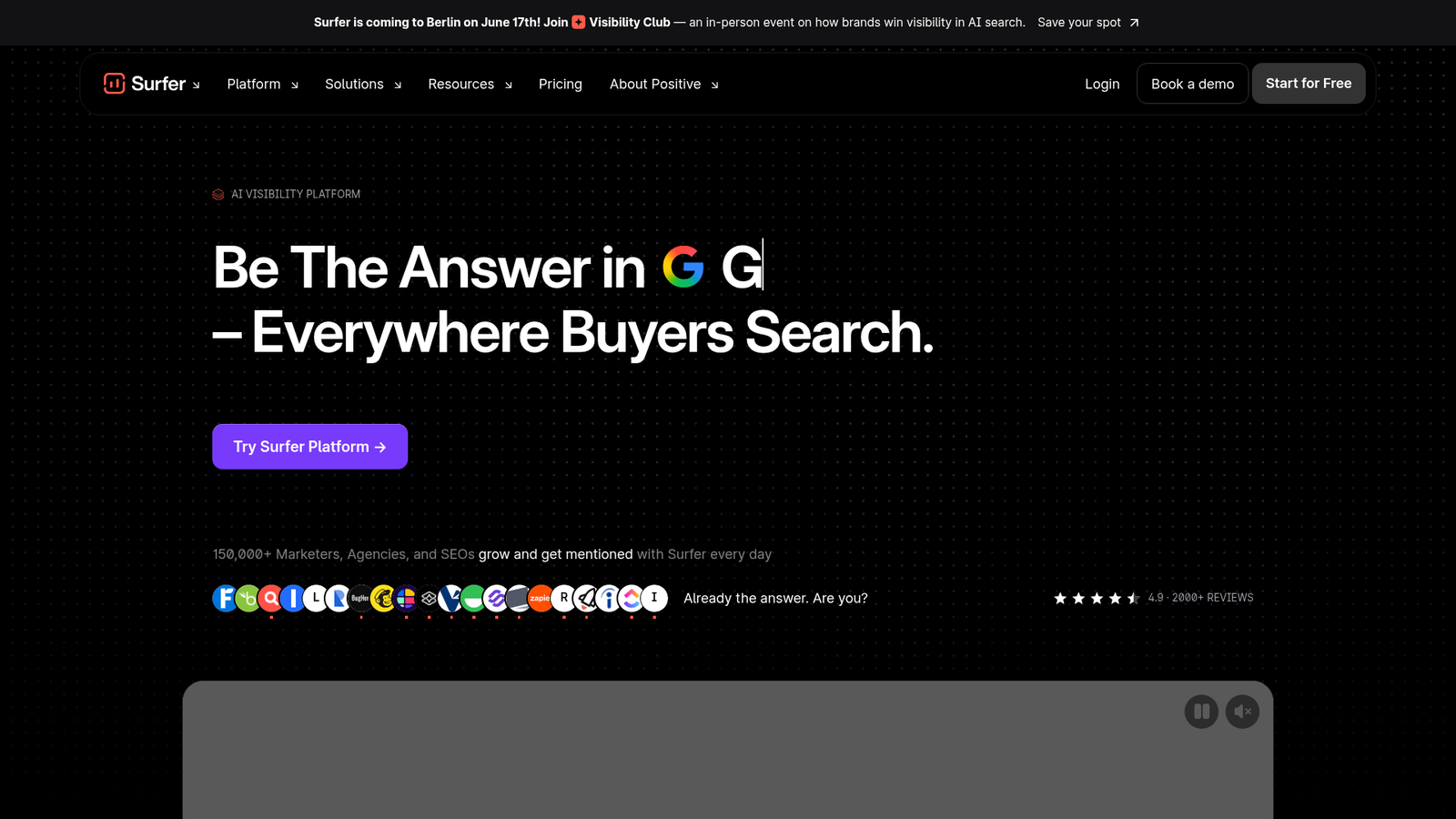
Best for: Writers and content teams who want guided optimization inside an editor.
What it replaces in Search Atlas: Content Genius and on-page optimization workflows.
Why it stands out: Surfer's editor remains a category benchmark for live content scoring, and its expansion into AI visibility tracking across ChatGPT, Gemini, Claude, and Perplexity makes it more than a pure SEO optimizer. For teams evaluating content genius alternatives, Surfer is usually the first stop.
Key features:
- Real-time content score and SERP-based recommendations
- Content audit for weak pages and gap analysis
- Brief generation and outline builder
- AI visibility tracking across major answer engines
Pricing: Discovery $49/mo, Standard $99/mo, Pro $182/mo, Peace of Mind $299/mo (billed yearly), Enterprise $999/mo. Free account available.
G2 rating: 4.8/5
Choose this if: Your writers live inside an editor and want immediate optimization feedback.
Skip this if: You need agent-based workflows or bulk refreshes across thousands of URLs.
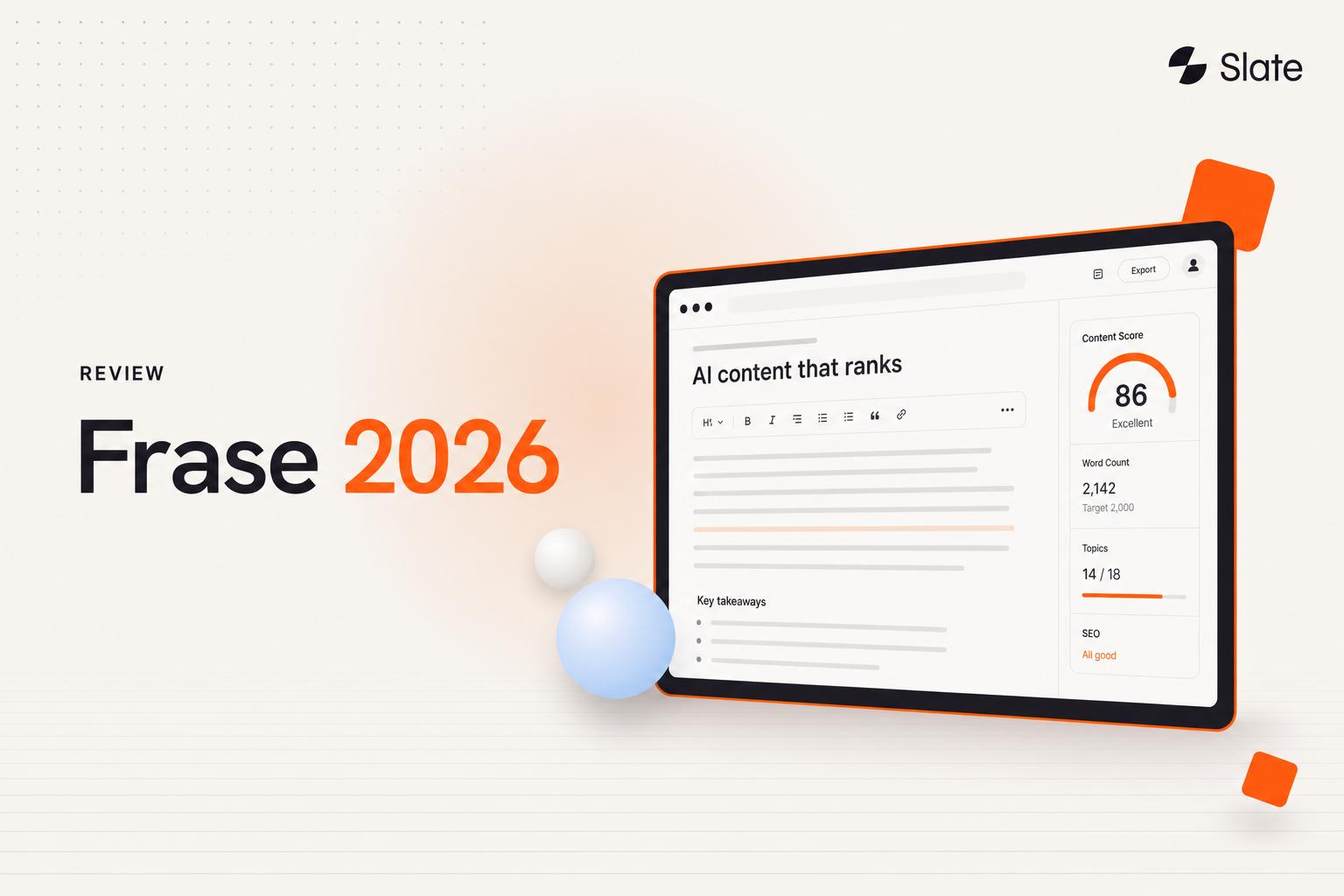
5. Frase - Best For AI-Assisted Briefs And Research
Frase combines SERP research, AI-generated briefs, and an SEO-aware editor into a single workflow, making it a strong fit for research-heavy content teams.
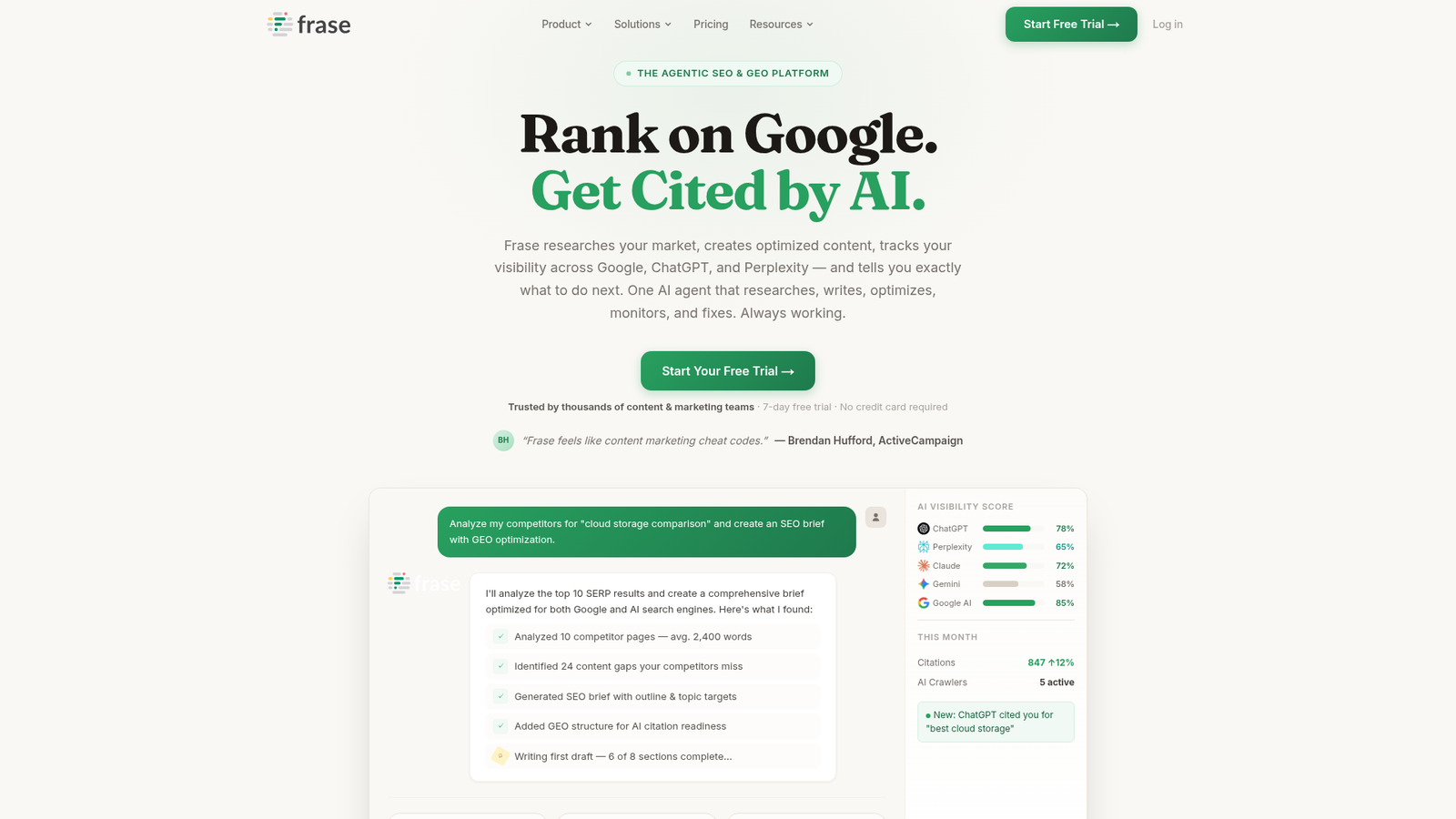
Best for: Content marketers and SEO teams that brief out a high volume of articles.
What it replaces in Search Atlas: Content Genius (specifically the research and brief side) and topic discovery.
Why it stands out: Frase's strength is the research-to-brief pipeline. Its AI Agent pulls SERP context, generates structured briefs, and layers AI visibility tracking on top - useful for teams that want to align briefs with answer-engine queries, not just Google SERPs. Pair it with a content gap analysis tool to find the queries worth briefing.
Key features:
- AI Agent for research, writing, and optimization
- SERP analysis with extracted headings and questions
- Content brief generation and editor
- AI visibility tracking across major AI/search platforms
Pricing: Starter $49/mo, Professional $129/mo, Scale $299/mo, Enterprise custom. 7-day free trial; annual billing saves 20%.
G2 rating: 4.8/5
Choose this if: Briefs and structured research are the bottleneck in your content workflow.
Skip this if: You want full content engineering with CMS publishing and bulk refresh operations.
6. BrightLocal - Best For Local SEO And Citation Management
BrightLocal is the most established local SEO platform, covering local rank tracking, citation management, and review monitoring in one workspace.

Best for: Local businesses, multi-location brands, and agencies managing local clients.
What it replaces in Search Atlas: The local SEO toolkit, including citations, reviews, and local rankings.
Why it stands out: BrightLocal scales by active location, which makes it cost-efficient for both single-location SMBs and agencies with hundreds of clients. Citation Builder and review monitoring are mature in a way that bolt-on local modules in all-in-one suites rarely match.
Key features:
- Local rank tracking with geo-grid visibility maps
- Citation and listings monitoring and management
- Review monitoring and reputation management
- White-label local SEO reports
Pricing: Track $39/mo, Manage $49/mo, Grow $59/mo (per location, billed monthly). Citation Builder is pay-as-you-go; annual billing saves 25%.
G2 rating: 4.6/5
Choose this if: You need citations, reviews, and local rankings in one local-first platform.
Skip this if: You need geo-grid map-pack visualization as your primary use case.
7. Local Dominator - Best For Map Pack Rank Tracking
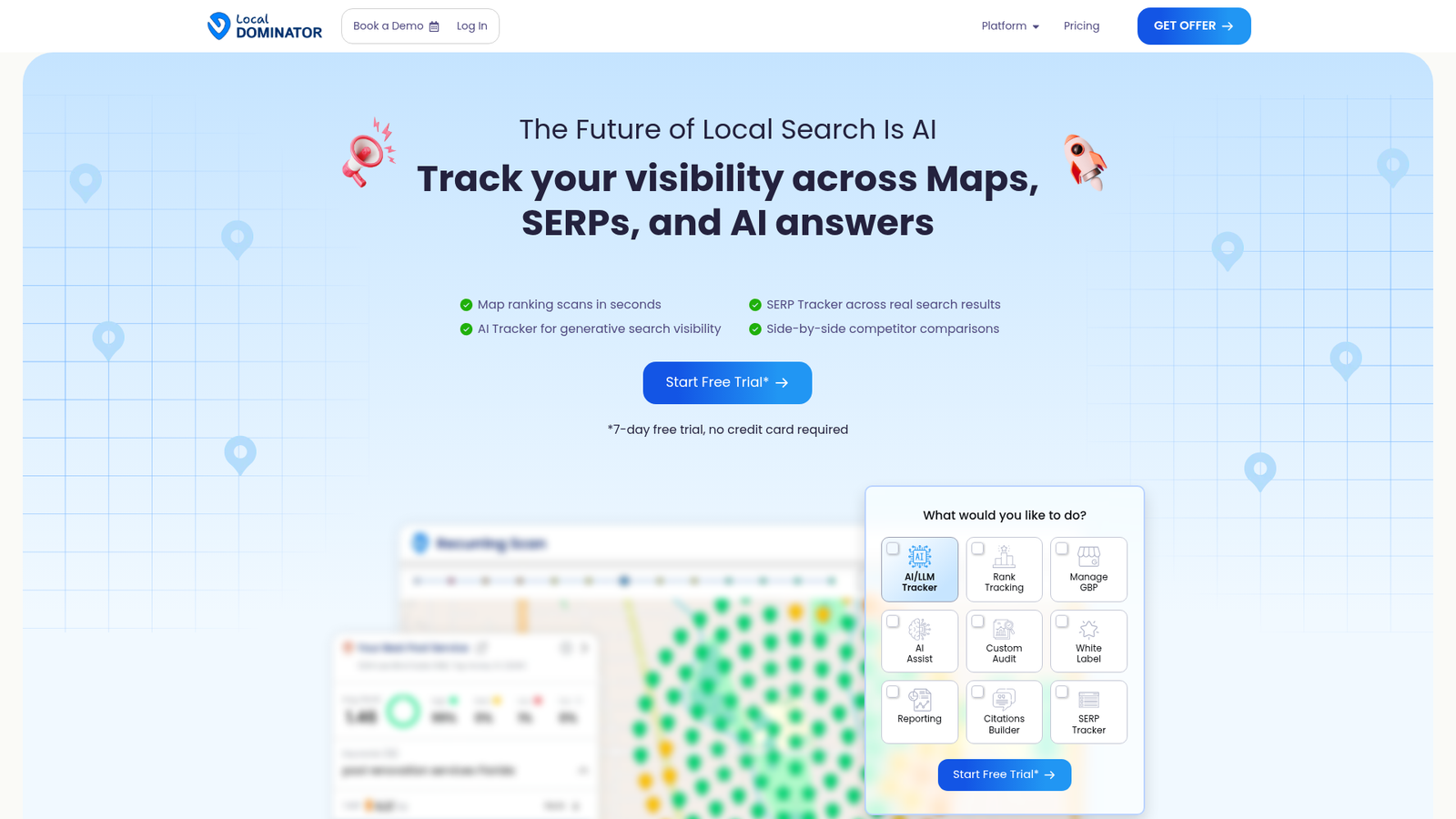
Local Dominator is a specialist tool focused on Google Maps, SERP, and AI visibility tracking, with built-in Google Business Profile management.
Best for: SEO agencies and multi-location businesses that need granular geo-grid tracking.
What it replaces in Search Atlas: Local SEO and map-pack tracking modules.
Why it stands out: Where BrightLocal optimizes for breadth, Local Dominator goes deep on geo-grid map pack visibility and shareable scan reports - useful for agencies that need to show clients exactly where they rank across a service area.
Key features:
- Google Maps, SERP, and AI visibility tracking
- Google Business Profile (GBP) management
- White-label and shareable scan reports
- Citation building tools
Pricing: Lite $39/mo ($32.50/mo annual), Advance $59/mo, Pro $97/mo, Powerhouse $197/mo, Enterprise from $399/mo. 7-day free trial.
G2 rating: Not yet rated
Choose this if: Map-pack and geo-grid reporting is your highest-leverage local use case.
Skip this if: You need broader local reputation and citation campaigns at scale.
8. Alli AI - Best OTTO SEO Alternative For Automated Deployment
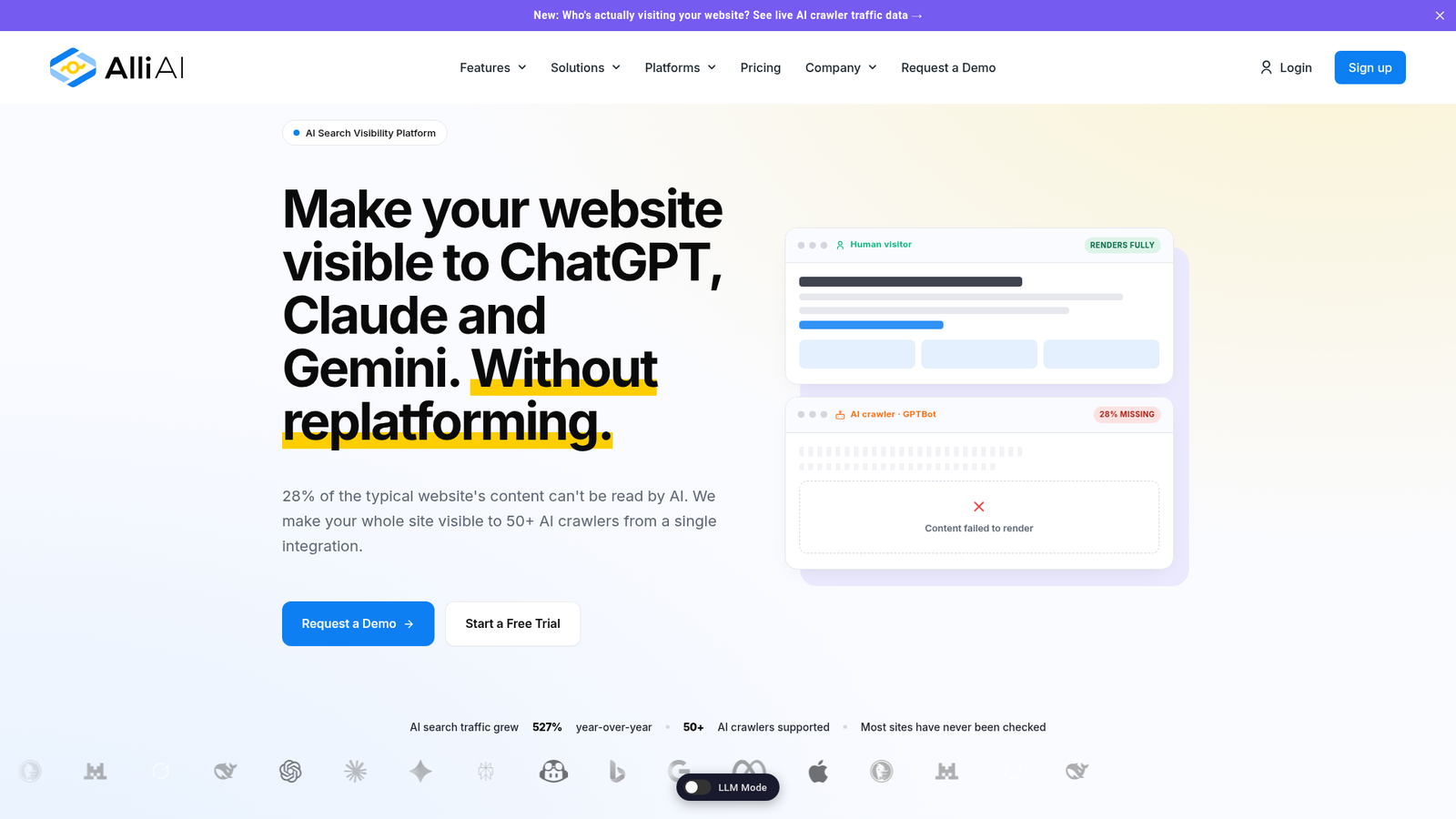
Alli AI is the closest match for OTTO-style automated deployment, using a JavaScript snippet to push on-page SEO changes across any CMS at scale.
Best for: SEO agencies and multi-site businesses that want hands-off on-page automation.
What it replaces in Search Atlas: OTTO SEO and automated on-page deployment.
Why it stands out: Alli AI's snippet-based approach removes the dev bottleneck that often stalls OTTO rollouts. The platform also includes AI crawler enablement, helping pages get read by 50+ AI search platforms - a useful complement to a dedicated AI visibility tool. For broader context, see this seo automation platform alternative guide.
Key features:
- JavaScript-snippet deployment of on-page SEO changes
- Bulk automation across multiple sites
- Visual SEO editor for live changes without backend access
- AI crawler enablement for 50+ AI search platforms
Pricing: Business $299/mo ($249/mo annual) for 5 sites, Agency $599/mo ($499/mo annual) for 15 sites, Enterprise custom. 10-day free trial.
G2 rating: 3.6/5
Choose this if: You used Search Atlas mainly for OTTO and want automated on-page deployment.
Skip this if: You want a content workflow platform, not a deployment layer.
9. Answer Socrates - Best For Question And Keyword Research
Answer Socrates is a focused question-research tool that combines Google Suggest, People Also Asked data, and trend signals into content ideas.
Best for: SEO and content teams that need question-led topic research at low cost.
What it replaces in Search Atlas: Question and keyword discovery features.
Why it stands out: For teams whose only Search Atlas use case was question research and clustering, Answer Socrates is a dramatic cost reduction with a focused interface that doesn't force a full-suite purchase. Teams building hub-and-spoke models often pair it with the best AI tools for topic clusters.
Key features:
- Keyword generation from Google Suggest
- Keyword clustering
- People Also Asked extractor
- Trends data for content planning
Pricing: Socrates Lite $15/mo, Seneca $29/mo, Aurelius $49/mo. Free tier includes 5 keyword generations and 5 recursive searches per day.
Choose this if: Question research is your dominant use case.
Skip this if: You need rank tracking, backlinks, or content optimization in the same tool.
10. Rankability - Best For Focused Content Scoring
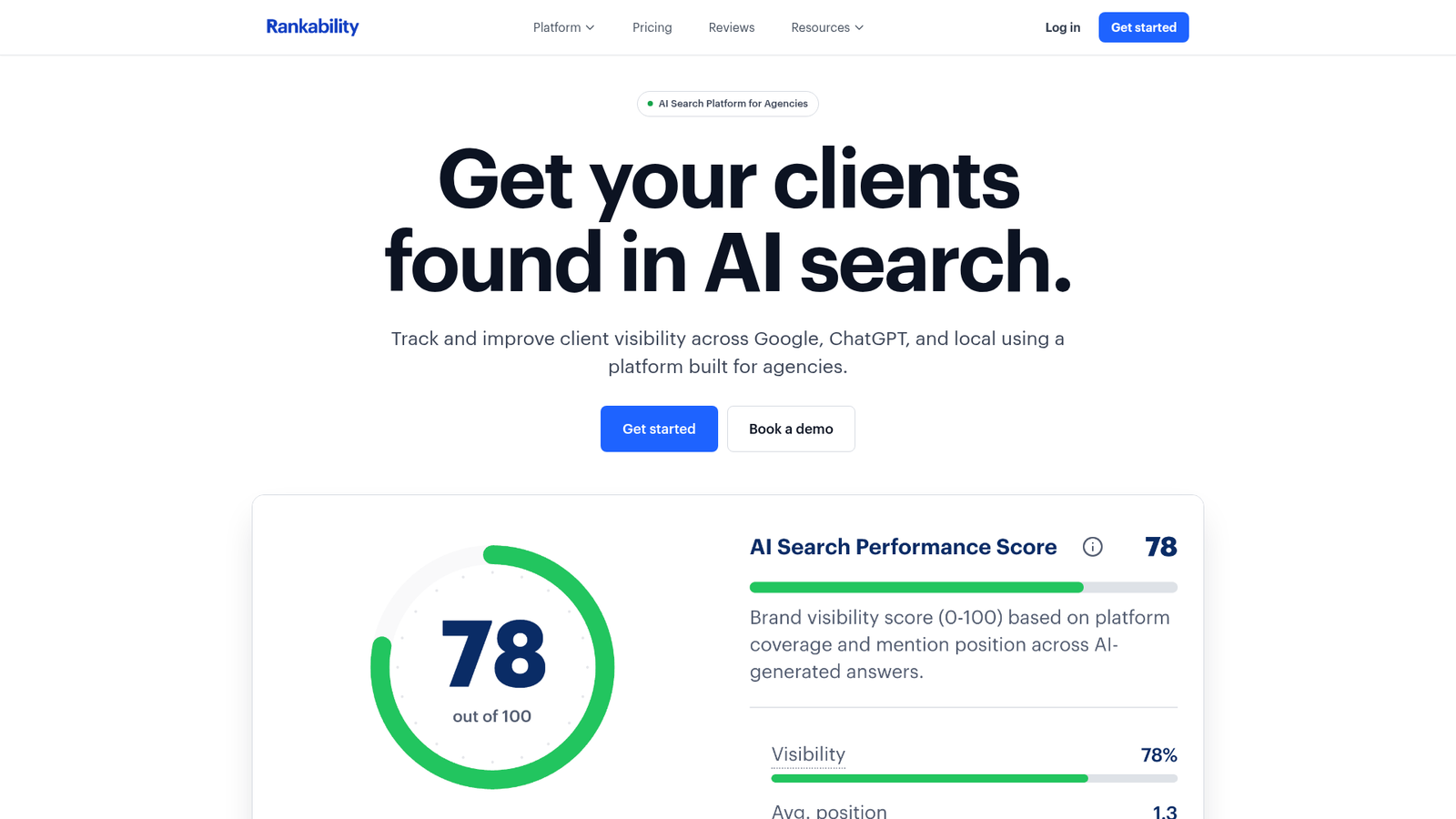
Rankability is built for agencies that need to track, optimize, and report client performance across both traditional search and AI platforms.
Best for: SEO and content agencies managing multiple clients.
What it replaces in Search Atlas: Content Genius scoring plus client reporting.
Why it stands out: Rankability's pricing model includes unlimited clients and unlimited users on every plan, which removes the per-seat math that makes multi-client setups expensive elsewhere. The credit-based system also makes usage predictable.
Key features:
- Visibility tracking across Google, ChatGPT, and local search
- AI-assisted keyword research and content optimization
- Auditing and backlink monitoring
- Multi-client workspace and reporting
Pricing: Starter $99/mo (10,000 credits), Growth $199/mo (30,000 credits), Scale $399/mo (75,000 credits), Enterprise custom. Annual billing; unlimited clients and users included.
G2 rating: 5.0/5
Choose this if: You run an agency and want one credit-based platform for visibility and content.
Skip this if: You're a single brand looking for deeper content engineering and CMS publishing.
11. Ahrefs - Best For Backlink And Competitor Analysis
Ahrefs remains a leading backlink and competitor research platform, now with brand and AI visibility monitoring layered into the core suite.
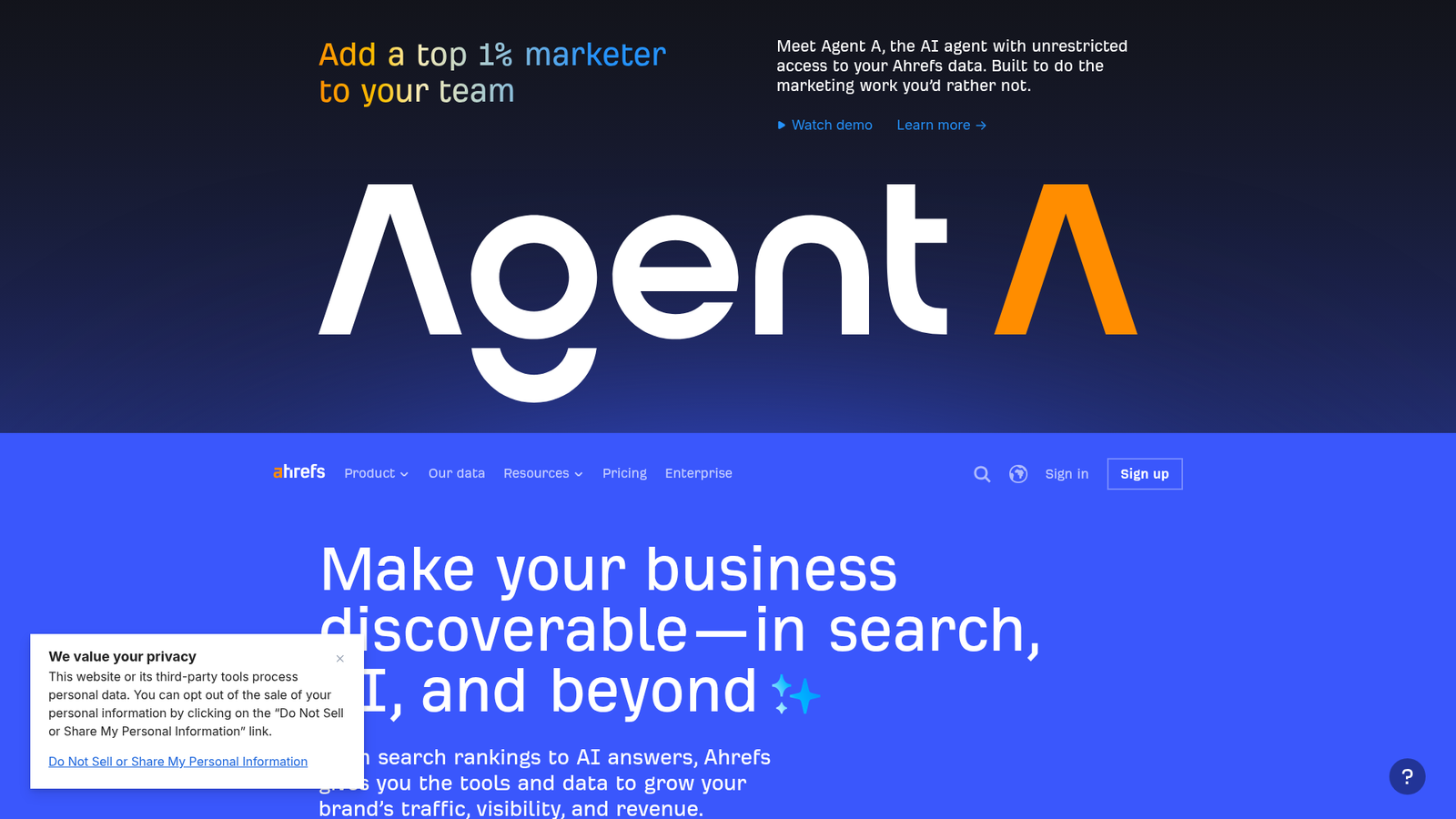
Best for: SEO teams that need rigorous link data and competitive intelligence.
What it replaces in Search Atlas: Backlink analysis, competitor research, and rank tracking.
Why it stands out: Site Explorer and Content Explorer remain go-to tools for link and content research. Where Ahrefs lags is execution - it tells you what to do, but doesn't ship the content for you.
Key features:
- Site Explorer and backlink index
- Keywords Explorer across multiple engines
- Site Audit and Rank Tracker
- Brand and AI visibility monitoring
Pricing: Ahrefs Free (limited), Starter $29/mo, Lite $129/mo, Standard $249/mo, Advanced $449/mo, Enterprise from $1,499/mo. Annual billing saves up to 17%.
G2 rating: 4.5/5
Choose this if: Backlinks and competitor research are your highest-priority data needs.
Skip this if: You want a content execution layer, not just intelligence.
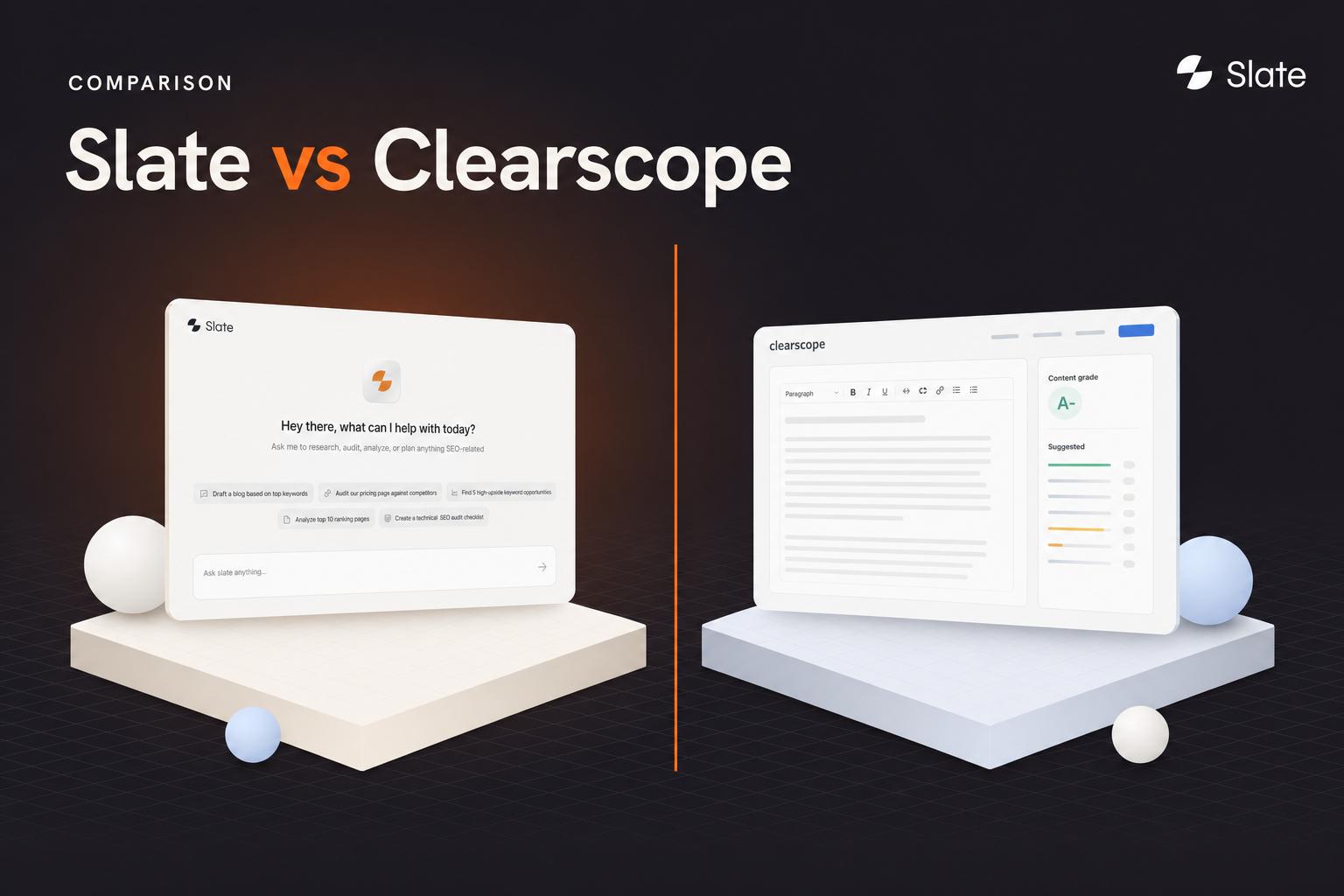
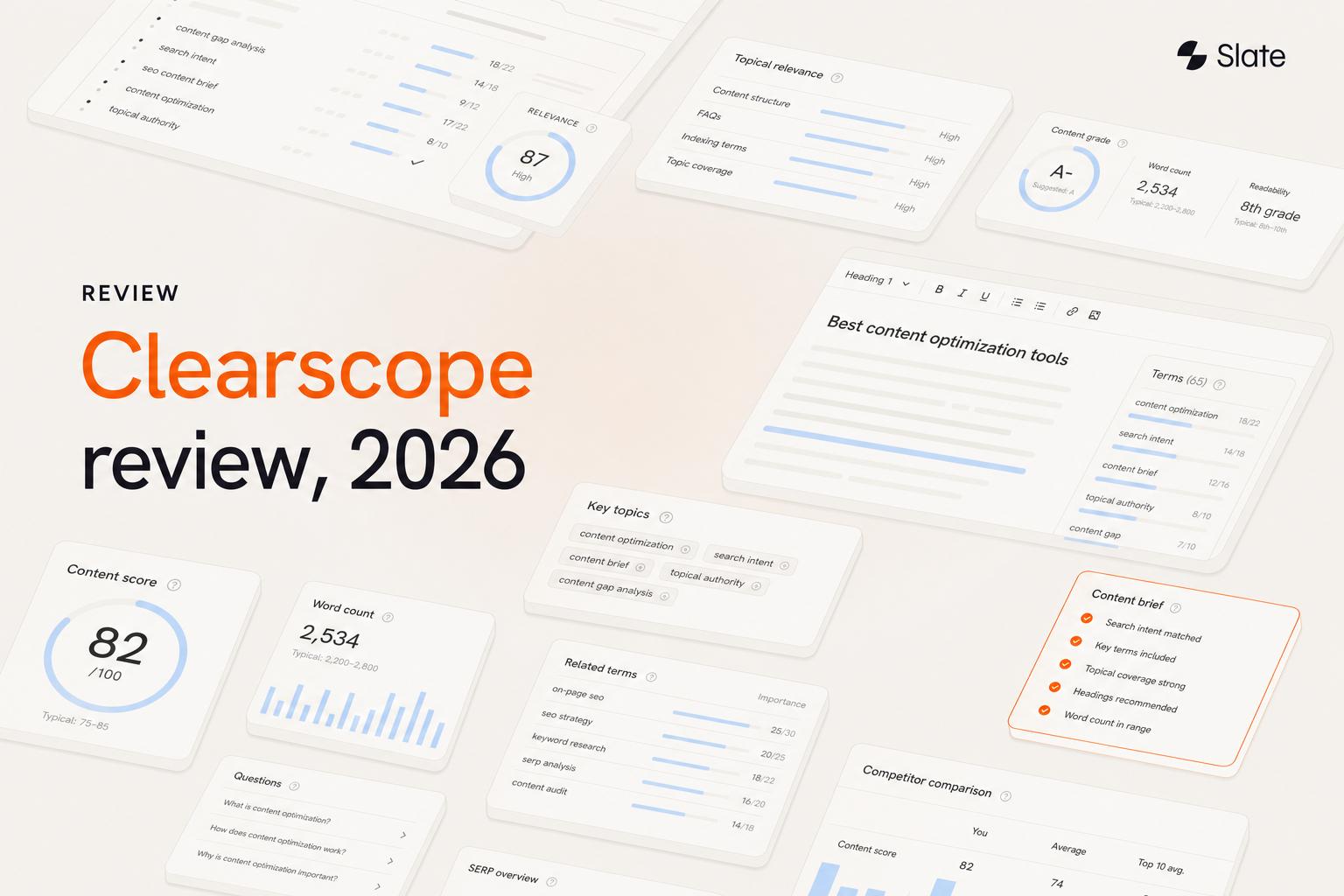
12. Clearscope - Best For Enterprise Content Optimization
Clearscope is a content optimization platform built for editorial teams that need consistent grading and high-quality output across many writers.
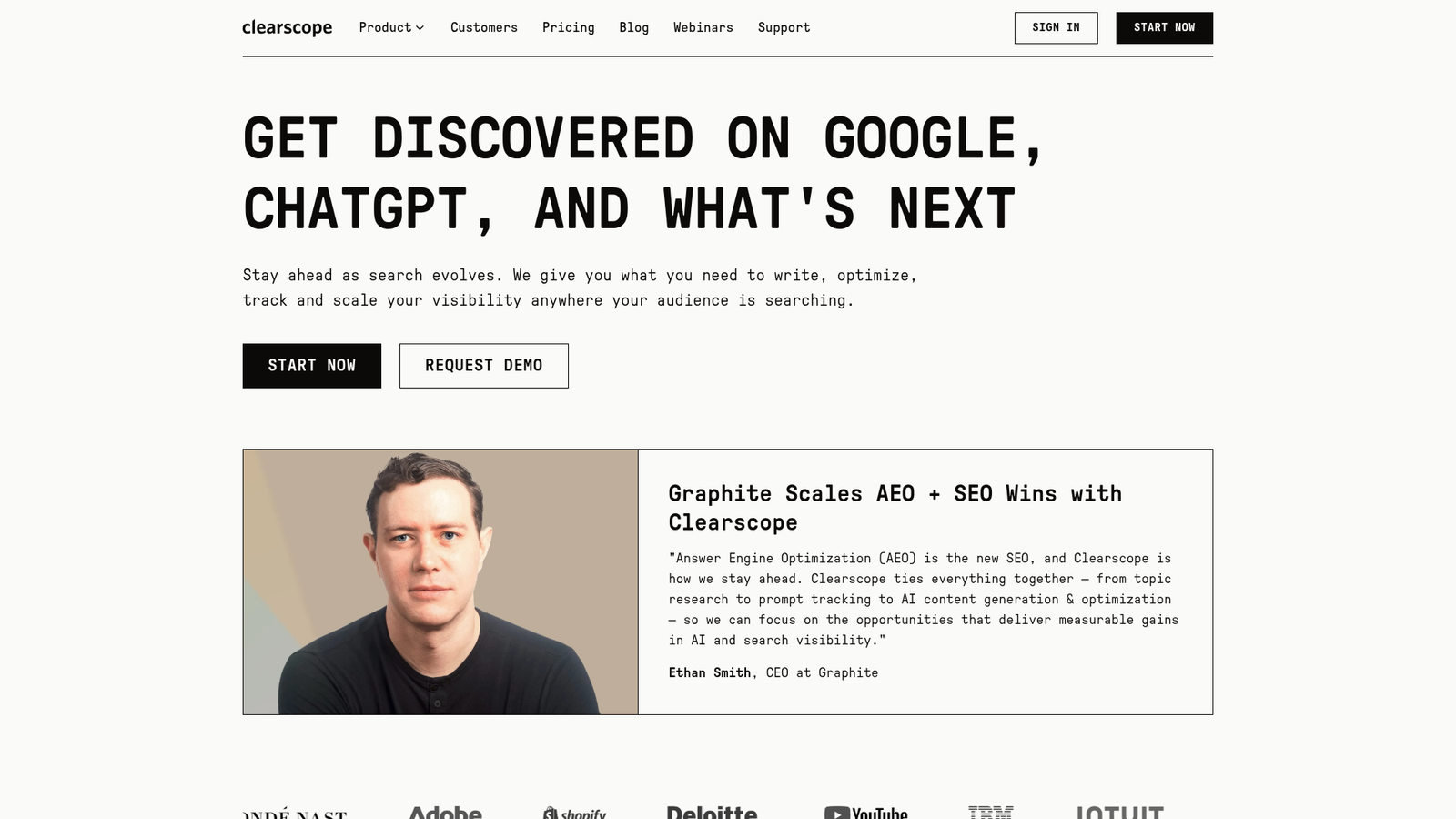
Best for: Content teams that hold themselves to editorial-grade standards.
What it replaces in Search Atlas: Content Genius for editorial-grade optimization.
Why it stands out: Clearscope keeps the bar high for content grading and integrates cleanly into Google Docs workflows. Its platform also includes visibility tracking across Google, ChatGPT, and Gemini, helping teams connect optimization quality to AI search outcomes. Enterprise buyers often shortlist it alongside the best AI SEO tools for enterprise content teams.
Key features:
- Topic discovery with search intent analysis
- AI drafting, editing, and optimization workflows
- Content grading with keyword recommendations
- Visibility tracking across Google, ChatGPT, and Gemini
Pricing: Essentials $129/mo, Business $399/mo, Enterprise custom. Monthly plans with no minimum contract.
G2 rating: 4.9/5
Choose this if: Editorial consistency across a large content team is your top priority.
Skip this if: You need agent-based workflows, bulk refresh, or direct CMS publishing.
Best Search Atlas Alternatives By Use Case
If you're replacing one specific job rather than the entire platform, here's the fastest way to map your use case to the right tool.
If You Used Search Atlas As An All-In-One SEO Suite
Choose Semrush or SE Ranking. Semrush wins on data depth and marketing breadth; SE Ranking wins on price-to-value. Both cover rank tracking, audits, backlinks, keyword research, and AI visibility in one platform - the same surface area Search Atlas's full plan provides.
If You Used Search Atlas Content Genius For Content Optimization
Choose Surfer, Frase, or Slate. Surfer is the strongest editor-first scoring tool, Frase wins on research-and-brief workflows, and Slate is the right choice when you need optimization tied to AI search visibility and CMS publishing in one system. For ongoing maintenance, see the best content refresh tools roundup.
If You Used Search Atlas For Local SEO
Choose BrightLocal or Local Dominator. BrightLocal is better for citations, reviews, and broad local SEO programs. Local Dominator is better when geo-grid map-pack tracking and Google Business Profile management are your primary needs.
If You Used Search Atlas OTTO For Automated Deployment
Choose Alli AI. It's the closest functional match - JavaScript-snippet deployment of on-page SEO changes across any CMS, with bulk automation and a visual editor. The platform also adds AI crawler enablement for 50+ AI search platforms.
If You Need AI Search Visibility (ChatGPT, Perplexity, Gemini, AI Overviews)
Choose Slate. It's the only platform in this list built specifically for B2B SaaS teams that need to track AI search visibility and execute content refreshes at scale in one system. Most competitors either track AI visibility or run content workflows - Slate does both, with brand-safe governance baked in. Explore more options in this ai search visibility tools breakdown.
If You Used Search Atlas Primarily For Keyword And Question Research
Choose Answer Socrates or Ahrefs. Answer Socrates is the cheapest path for question-led research and clustering. Ahrefs is the right call when you need keyword volume, difficulty, and SERP data at scale alongside backlinks and competitor analysis.
Book a demo to see how Slate fits your specific use case.
All-In-One Suite Vs Specialist Stack - Which Is Right For You?
Choose an all-in-one Search Atlas alternative like Semrush or SE Ranking if you need rankings, audits, backlinks, and research in one place. Choose a specialist stack - combining Slate, Surfer, and a local SEO tool - if your primary jobs are content engineering, AI search visibility, and workflow execution.
When suites win:
- Generalist needs across multiple SEO functions
- Smaller team that benefits from one login and one invoice
- Budget consolidation when removing 2-3 tools
- Reporting consistency across departments
When specialist stacks win:
- Content-led growth model with high refresh velocity
- AI search visibility is a core KPI, not a nice-to-have
- Multi-client agency operations
- Workflow fit matters more than feature breadth
The real cost question isn't suite vs. specialist - it's how much suite breadth you'll actually use. A single all-in-one plan often costs roughly the same as two or three focused specialist tools combined. If you're only using 30% of an all-in-one platform but paying 100% of the price, the specialist stack usually wins on both cost and workflow fit. For a wider comparison, see the best ai seo tools guide.
How To Choose The Right Search Atlas Alternative
Most buyers over-index on feature count and under-index on workflow fit. Run through this six-step decision framework before signing a contract.
- Identify the one job you actually used Search Atlas for - Content Genius, OTTO, local, AI visibility, or research.
- Map your end-to-end workflow - research → brief → draft → optimize → publish → refresh. Find the bottleneck.
- Define your team type - B2B SaaS, agency, local business, or enterprise. Each weights features differently.
- Weigh AI search visibility needs - Do you need to track ChatGPT, Perplexity, Gemini, and AI Overviews citations as a KPI? If yes, prioritize platforms built for it.
- Compare total cost honestly - single platform vs. two or three specialist subscriptions, including seats and usage caps.
- Validate workflow fit with a trial or demo - feature lists lie; running a real workflow doesn't.
If you need execution at scale, prioritize workflow-driven platforms over reporting-heavy suites. Reports don't ship content - workflows do.
Migration Checklist - How To Switch From Search Atlas Without Losing Momentum
Switching SEO platforms is risky when reporting, automations, and content drafts are entangled with the existing tool. Run this checklist before sunsetting Search Atlas.
- Export keyword lists, tracked queries, and project data.
- Export Content Genius drafts and briefs.
- Document any OTTO automation rules currently running.
- Audit which Search Atlas features your team actively uses - not what's available, but what's used weekly.
- Map each used feature to a replacement tool in your new stack.
- Run the new tool in parallel for 30 days before cancelling.
- Rebuild reporting templates and dashboards in the new tool.
- Re-establish citation and AI visibility baselines so you can measure post-migration progress.
- Set up CMS publishing integrations and test on low-stakes pages first.
- Train the team on new workflows before the Search Atlas sunset date.
What To Look For In A Search Atlas Alternative In 2026
The decision criteria for SEO tools have changed. If you're still evaluating platforms on database size and rank tracker accuracy alone, you're optimizing for a search environment that's shrinking. Here's what actually matters now.
- AI search visibility tracking: Coverage across ChatGPT, Perplexity, Gemini, and AI Overviews - not just a "ChatGPT mentions" report.
- Citation readiness and extractable content structure: Clear headings, FAQs, and unambiguous claims that AI systems can extract and cite.
- Workflow-driven execution: Tools that connect research, briefs, drafts, optimization, publishing, and refresh - not just dashboards.
- Brand-safe content governance at scale: Style guides, knowledge bases, and review gates that prevent generic AI output.
- Content refresh systems: Refresh queues and monitoring, not one-off optimizations.
- Integration with answer engines, not just Google: Direct measurement of how your brand appears across multiple discovery surfaces.
The teams winning in 2026 aren't the ones with the most data. They're the ones with the cleanest systems for turning insight into shipped content. Tools like the ones in this ai overview optimization tools breakdown are designed for exactly this shift.
Frequently Asked Questions
What Is The Best Search Atlas Alternative?
The best Search Atlas alternative depends on the job you're replacing. For B2B SaaS teams that need AI search visibility plus scalable content operations, Slate is the strongest fit. For all-in-one SEO suites, Semrush and SE Ranking lead. For Content Genius workflows, choose Surfer or Frase. For local SEO, choose BrightLocal or Local Dominator.
Is Search Atlas Worth It In 2026?
Search Atlas is worth it for agencies that want an all-in-one suite with built-in automation like OTTO, and that have the technical resources to handle JavaScript implementation. For teams using only one module - Content Genius, OTTO, or local - a specialist tool is usually cheaper and better fitted to the workflow.
What Is The Cheapest Search Atlas Alternative?
The cheapest Search Atlas alternative depends on the job. For question research, Answer Socrates starts at $15/mo. For backlink and SEO data, Ahrefs Starter is $29/mo. For local SEO, Local Dominator Lite is $32.50/mo billed annually. For full content optimization, Surfer Discovery is $49/mo billed yearly.
How Does Search Atlas Compare To Semrush?
Search Atlas leans on automation features like OTTO and bundles AI visibility into its Growth plan, while Semrush offers broader marketing data and a dedicated AI Visibility Toolkit on top of mature SEO, PPC, and content modules. Semrush wins on data depth and ecosystem; Search Atlas wins when teams need built-in automation. See more in this search atlas vs semrush comparison.
What Is The Best Search Atlas Content Genius Alternative?
For editor-first scoring workflows, Surfer is the closest match. For research and brief generation, Frase is the strongest replacement. For multi-client agency content scoring, Rankability is built for that use case. For B2B SaaS teams that need content engineering tied to AI search visibility and CMS publishing, Slate is the right choice.
What Is The Best OTTO SEO Alternative?
Alli AI is the most direct OTTO SEO alternative. It uses a JavaScript snippet to deploy on-page SEO changes - titles, meta descriptions, internal links, and content tweaks - across any CMS, with bulk automation across multiple sites and AI crawler enablement for 50+ AI search platforms.
Which Search Atlas Alternative Is Best For Local SEO?
BrightLocal is best when you need a broad local SEO platform covering citations, reviews, and local rankings, especially across many locations. Local Dominator is best when geo-grid map-pack tracking and Google Business Profile management are your highest-priority use cases. Many agencies run them side by side for clients with different needs.
Which Search Atlas Alternative Is Best For AI Search Visibility?
Slate is the strongest Search Atlas alternative for AI search visibility. It tracks brand visibility, citations, and average position across ChatGPT, Google AI Mode, Google AI Overviews, and Perplexity, and connects those insights directly to content workflows, bulk refresh, and CMS publishing - so teams can act on what they see, not just report on it.
Ready to track and scale AI search visibility? Book a Slate demo.