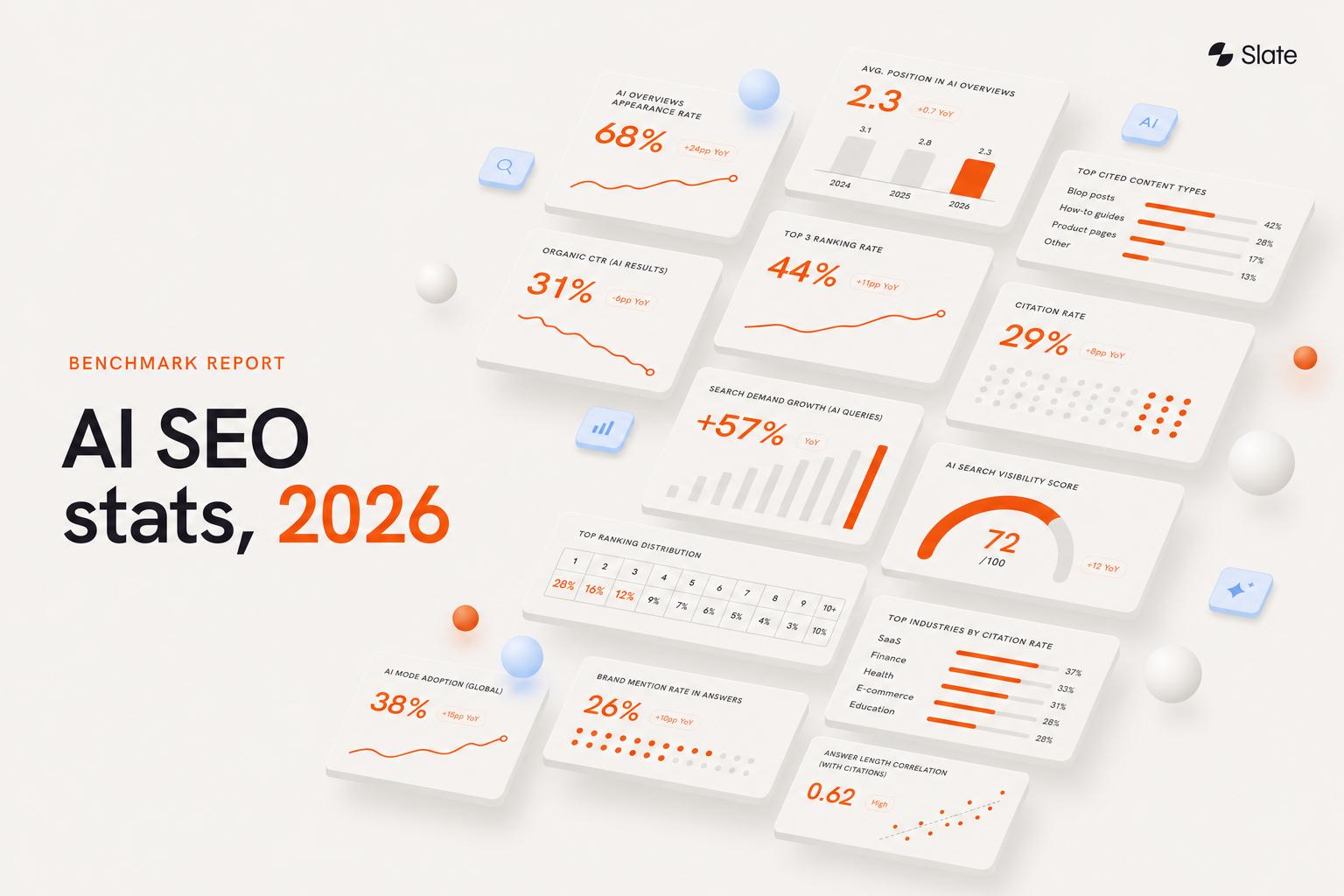
The AI SEO market in 2026 looks nothing like the keyword-and-backlink toolbox of 2022. B2B SaaS teams are now juggling traditional rankings, AI search visibility across ChatGPT and Perplexity, and content refresh systems that have to run continuously across pricing, comparison, and integration pages. This guide ranks the 12 tools worth shortlisting and shows how to assemble the right stack by use case, growth stage, and existing tool overlap.
Direct answer: The best AI SEO tools for B2B SaaS in 2026 are Slate (AI search visibility and content engineering), Semrush and Ahrefs (research suites), Surfer SEO and Clearscope (content optimization), and Profound (standalone AI visibility tracking). Most SaaS teams end up with a stack of two to three tools rather than a single all-in-one platform.
Key Takeaways
- The AI SEO category has split into four practical types: SEO suites, AI content optimizers, AI search visibility trackers, and content engineering platforms.
- Most B2B SaaS teams run a stack of two to three tools, not one all-in-one suite.
- AI search visibility across ChatGPT, Perplexity, Gemini, and Google AI Overviews is now a required evaluation criterion, not a nice-to-have.
- The right tool depends on growth stage, team size, and existing stack overlap - not on which vendor has the loudest marketing.
- Content engineering and refresh workflows remain the most underserved capabilities in the market.
- Slate is positioned for teams that want AI search visibility tracking and content execution in one system.
Quick Comparison: Best AI SEO Tools For B2B SaaS At A Glance
The table below summarizes each tool's primary job-to-be-done, AI capabilities, and B2B SaaS fit. Read it as a shortlisting filter - full reasoning, pros, and cons appear in the ranked entries below. For a broader category view, see this AI SEO tools comparison.
How We Evaluated AI SEO Tools For B2B SaaS
The evaluation framework below weighs the criteria that actually decide whether a SaaS team gets ROI from an AI SEO tool - not just feature parity. If you want a deeper explainer on the category itself, see this AI SEO explainer.
Our Evaluation Criteria
Each tool was scored across eight weighted dimensions:
- AI search visibility coverage: Tracking across ChatGPT, Perplexity, Gemini, and Google AI Overviews.
- Content workflow depth: Briefing, drafting, optimization, publishing, and refresh capability.
- B2B SaaS fit: Support for comparison pages, integration pages, pricing pages, and long sales cycles.
- Brand governance: Style controls, knowledge grounding, approval flows, and hallucination prevention.
- Stack overlap and replacement potential: What the tool actually displaces in your existing stack.
- Pricing transparency: Realistic total cost at typical SaaS team sizes.
- CMS and integration support: Native fit with WordPress, Webflow, HubSpot, GSC, GA, and CRM tools.
- Evidence of measurable outcomes: Documented organic growth or workflow efficiency lift.
Who This Article Is For
This guide is written for Heads of Marketing, SEO leads, Content leads, and Growth marketers at B2B SaaS companies from early-stage through mid-market. It is not aimed at ecommerce operators, affiliate publishers, or hobbyist bloggers - those teams have different page economics, content velocity needs, and reporting workflows.
Transparency Note
Slate is included because Slate built this guide. Direct competitors are included with clear notes on where they win and where Slate is the better fit, so readers can shortlist honestly.
The 12 Best AI SEO Tools For B2B SaaS In 2026
Each entry below follows the same structure: positioning, key capabilities, pros, cons, pricing, B2B SaaS fit verdict, and a "not ideal for" note. Tools are ranked by overall fit for a B2B SaaS team that cares about AI search visibility plus content execution.
1. Slate - Best For AI Search Visibility And Content Engineering At Scale
Slate is an AI search optimization and content engineering platform built for B2B SaaS teams that need to track visibility across AI answer engines and act on those insights inside the same system. It connects the track → decide → execute loop without forcing teams to glue together separate tools for analytics, briefs, drafting, and publishing.
Best for: SaaS marketing teams that want AI visibility data and scalable content execution in one platform.
Key features:
- AI Search Analytics across ChatGPT, Google AI Mode, Google AI Overviews, and Perplexity.
- Workflows: Visual builder for multi-step content automation with 24+ AI models, conditional logic, web scraping, and CMS publishing.
- Power Sheets for bulk refreshes, programmatic creation, and optimization audits across thousands of URLs.
- Brand Kit & Knowledge Base for style guides, tone rules, and grounded AI generation.
- Direct CMS publishing to Webflow and WordPress; MCP integration with Claude.
Pros:
- Closes the gap between AI visibility insight and content execution.
- Refresh workflows scale across pricing, comparison, and integration pages.
- Brand governance prevents generic AI output at scale.
Cons:
- Not a traditional keyword database - best paired with Ahrefs or Semrush for deep research.
- Heavier than needed for solo bloggers or non-SaaS content programs.
Pricing: Starting at $199/mo. See full Slate pricing details.
G2 rating: 4.9/5
Ideal team type: B2B SaaS marketing teams from Series A through mid-market that already publish regularly and need to operationalize AI search visibility.
Not ideal for: Teams that only need a classic keyword research database with no execution layer. Learn more at Slate for SEO and content teams.
2. Surfer SEO - Best For On-Page Content Optimization
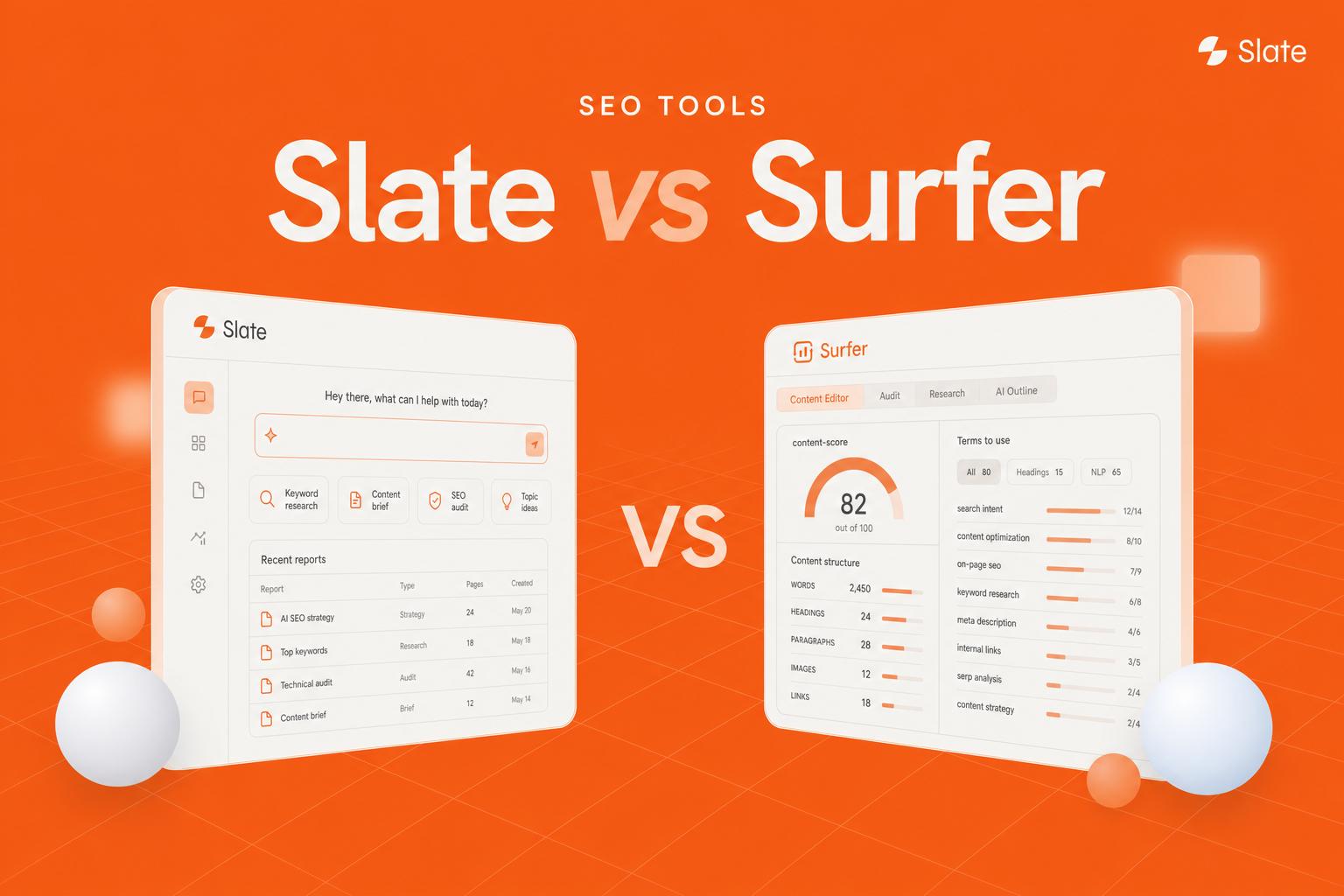
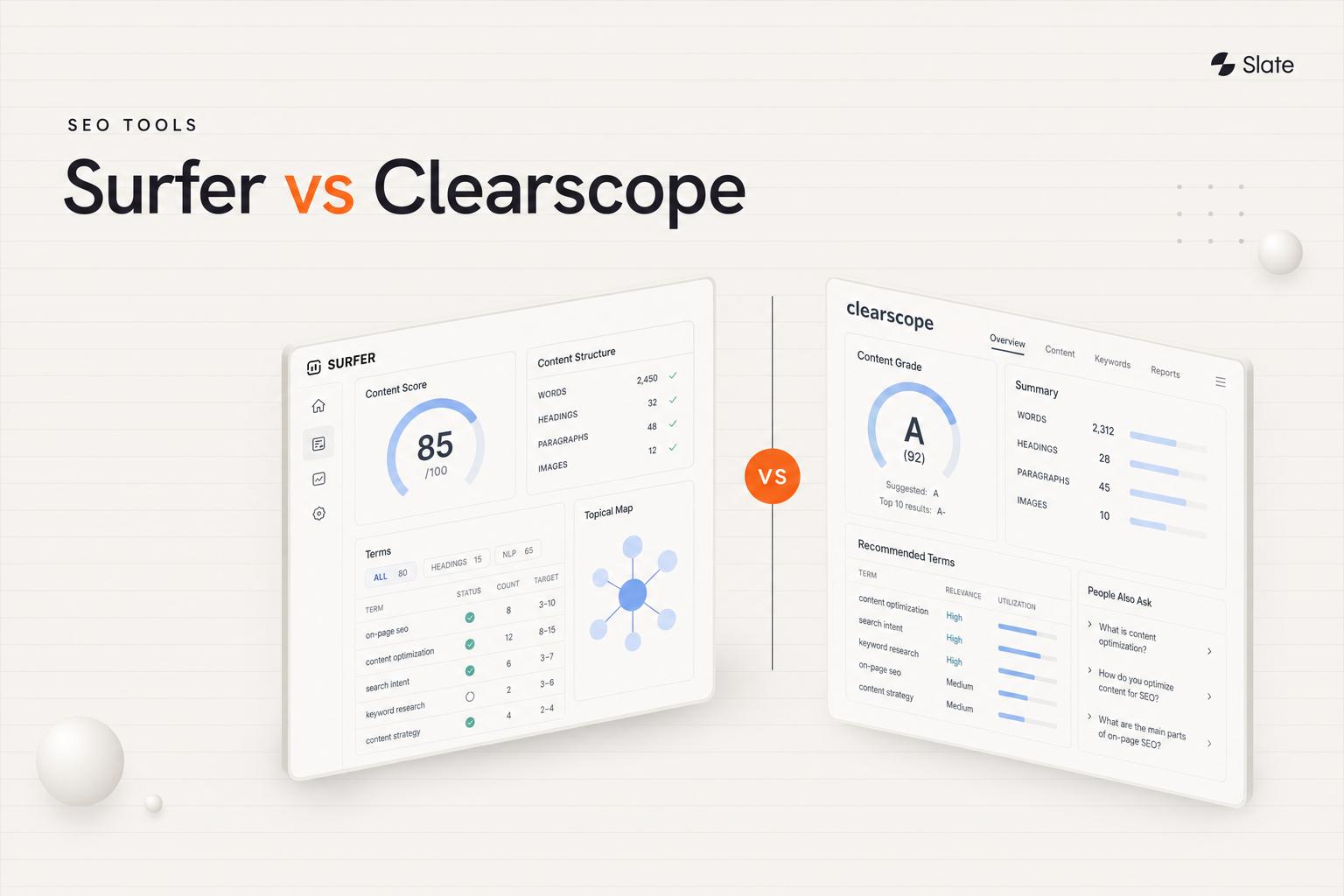
Surfer SEO is a content optimization platform that scores drafts against live SERP data and monitors visibility in AI-driven search results. It remains one of the easiest editors to put in front of writers.
Best for: Editorial teams optimizing individual posts against live SERPs.
Key features:
- Content Editor with real-time SEO scoring.
- Topical maps and keyword research.
- AI visibility monitoring across tools like ChatGPT and Google AI results.
- Google Docs and WordPress integrations.
Pros:
- Fast adoption curve for writers and editors.
- Strong on-page guidance with clear scoring.
- Expanding into AI-driven search measurement.
Cons:
- AI visibility coverage is shallower than dedicated trackers.
- Limited workflow orchestration for refresh programs.
Pricing: Discovery $49/mo, Standard $99/mo, Pro $182/mo, Peace of Mind $299/mo (billed yearly); Enterprise from $999/mo. Free starter account available.
G2 rating: 4.8/5
Not ideal for: Teams needing end-to-end content operations or deep AI engine citation tracking. For alternatives, see Surfer SEO alternatives.
3. Semrush - Best All-In-One SEO Suite With AI Features
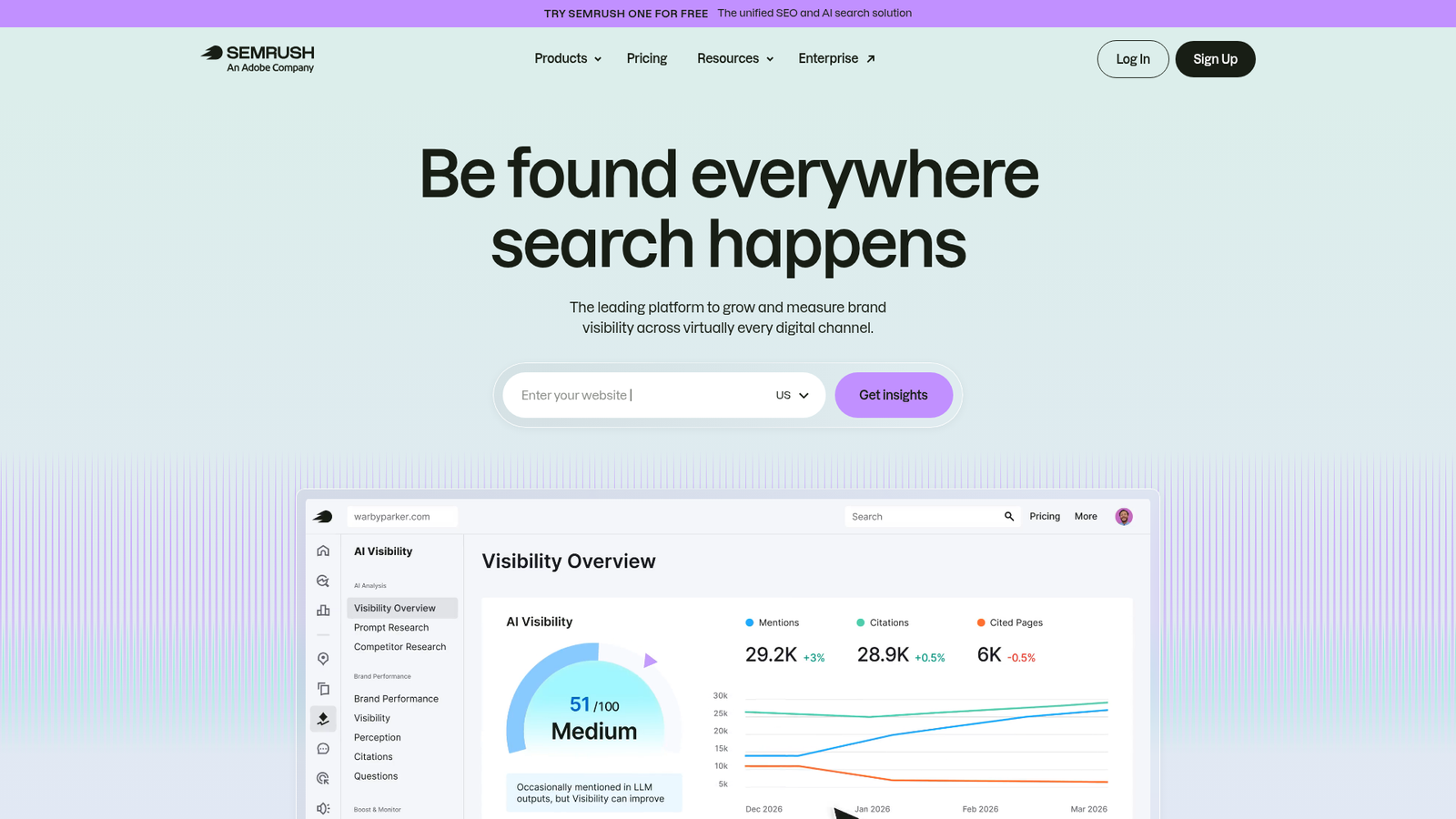
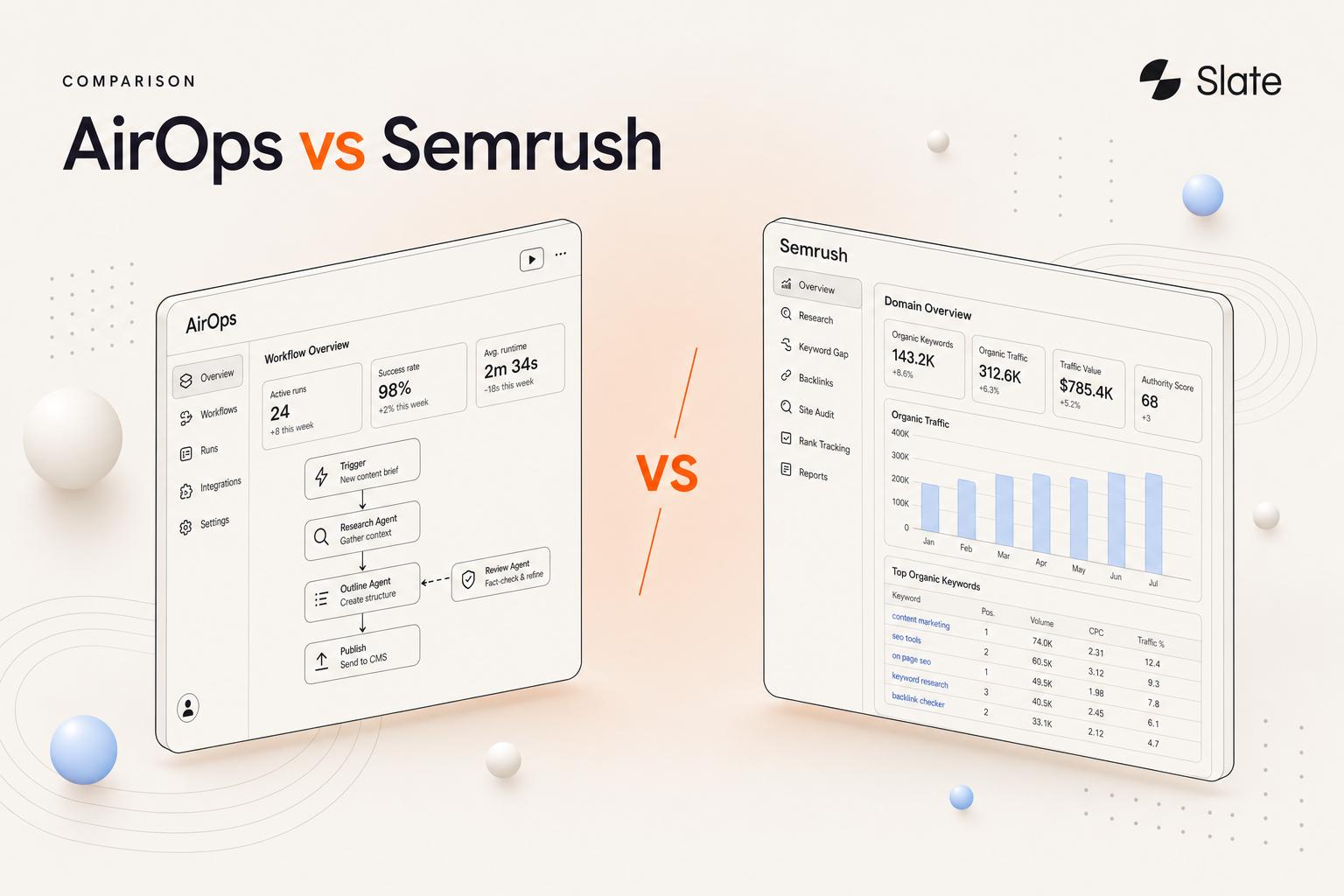
Semrush is one of the broadest SEO platforms on this list, with research, rank tracking, audits, and a growing set of AI features including AI Visibility tracking across ChatGPT, Gemini, and Perplexity. It's a common choice for teams that want one vendor for most SEO needs.
Best for: Marketing teams that want one platform spanning SEO, AI visibility, and competitor research.
Key features:
- Keyword research, rank tracking, and technical site audits.
- AI search visibility tracking across major engines.
- Competitive intelligence for organic, paid, traffic, and backlinks.
- Semrush Copilot for AI-driven insights.
Pros:
- Deep, mature feature set across SEO disciplines.
- Strong competitive intelligence.
- Modular pricing for AI Visibility and other add-ons.
Cons:
- Stack overlap with Ahrefs is significant - teams rarely need both.
- Suite sprawl can quickly inflate total cost.
Pricing: Standalone toolkits start at $20/mo. Core SEO Toolkit plans are Pro $139.95/mo, Guru $249.95/mo, Business $499.95/mo. Semrush One: Starter $199/mo, Pro+ $299/mo, Advanced $549/mo. AI Visibility add-on from $99/mo/domain. Free limited account available.
G2 rating: 4.5/5
Not ideal for: Teams that want a specialized content execution and AI visibility system rather than a research suite. For alternatives, see Semrush alternatives.
4. Ahrefs - Best For Keyword Research And Backlink Intelligence
Ahrefs is a research workhorse for SEO teams, with one of the strongest backlink databases in the category and strong keyword tools. It now layers AI features and Brand Radar on top of its classic suite.
Best for: Research-heavy SaaS SEO teams that prioritize keyword and backlink depth.
Key features:
- Site Explorer for backlinks and organic keywords.
- Keywords Explorer with broad database coverage.
- Site Audit and Rank Tracker.
- Brand Radar for brand mention and visibility monitoring.
Pros:
- Strong backlink data.
- Reliable, fast keyword research workflows.
- Strong API access for custom reporting.
Cons:
- Limited content workflow and publishing capabilities.
- AI engine citation tracking is less mature than dedicated GEO tools.
Pricing: Starter $29/mo, Lite $129/mo, Standard $249/mo, Advanced $449/mo, Enterprise $1,499/mo. Annual billing saves up to 17%. Limited free tier available.
G2 rating: 4.5/5
Not ideal for: Teams expecting built-in content engineering, briefs, or CMS publishing.
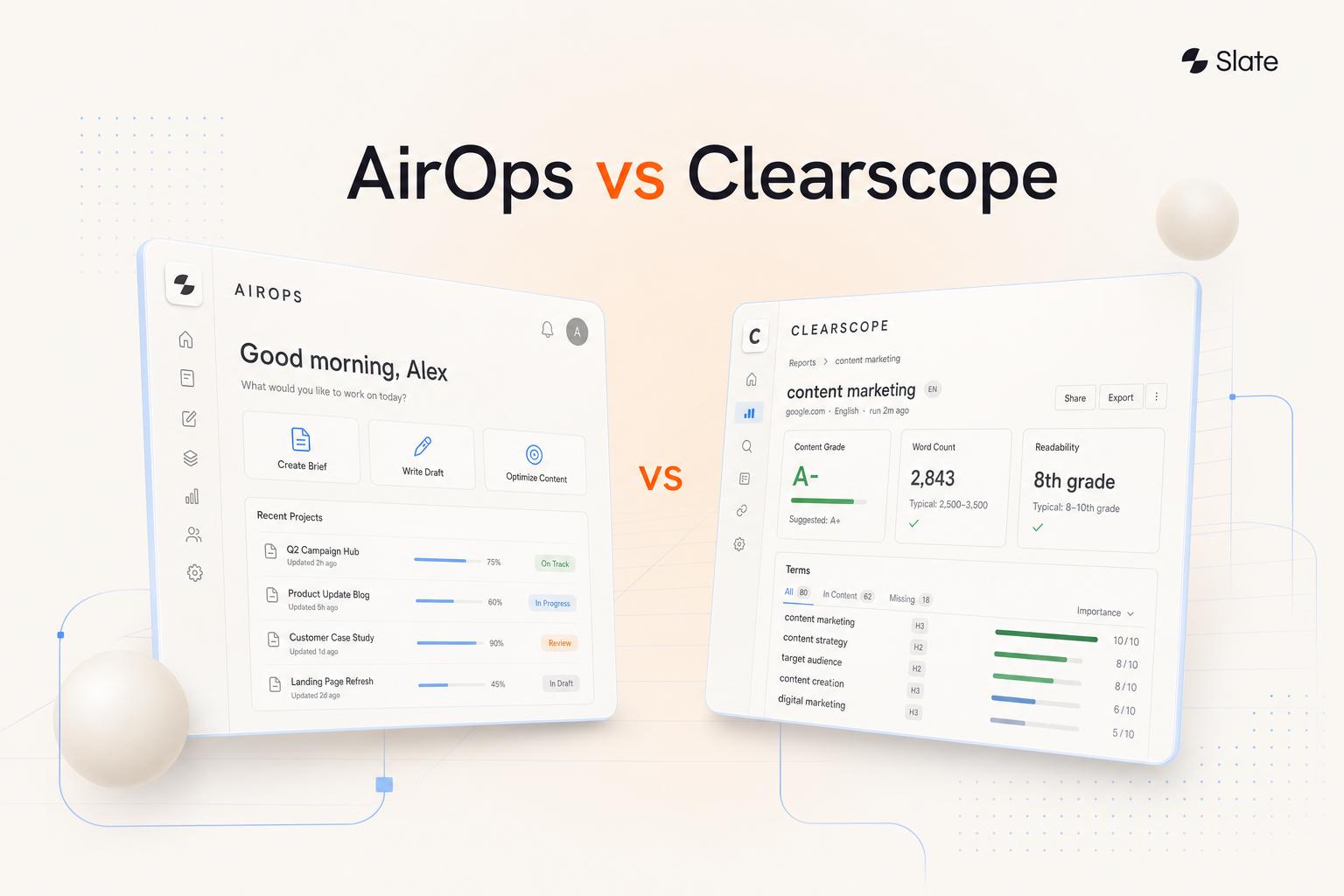
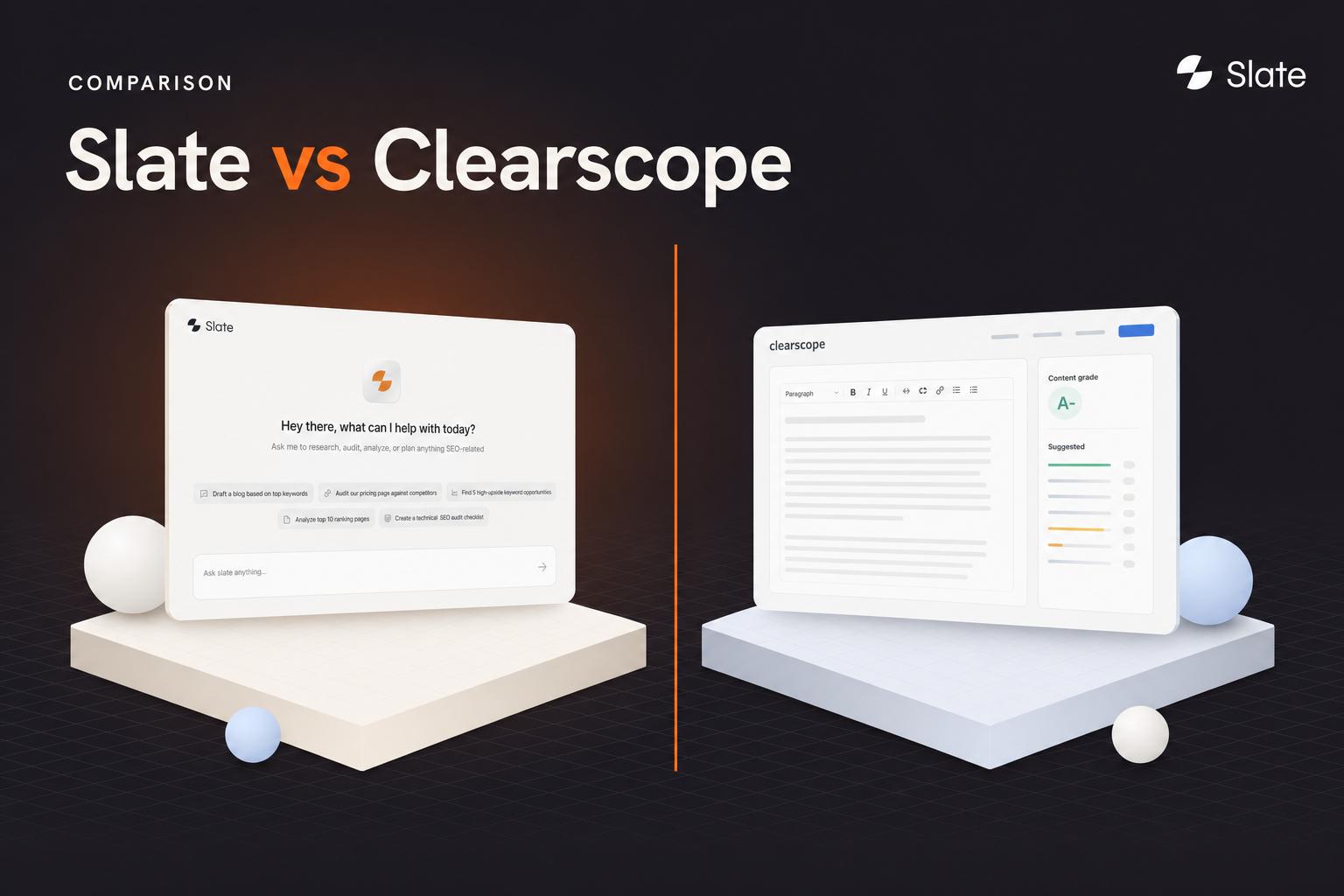
5. Clearscope - Best For Editorial Content Scoring
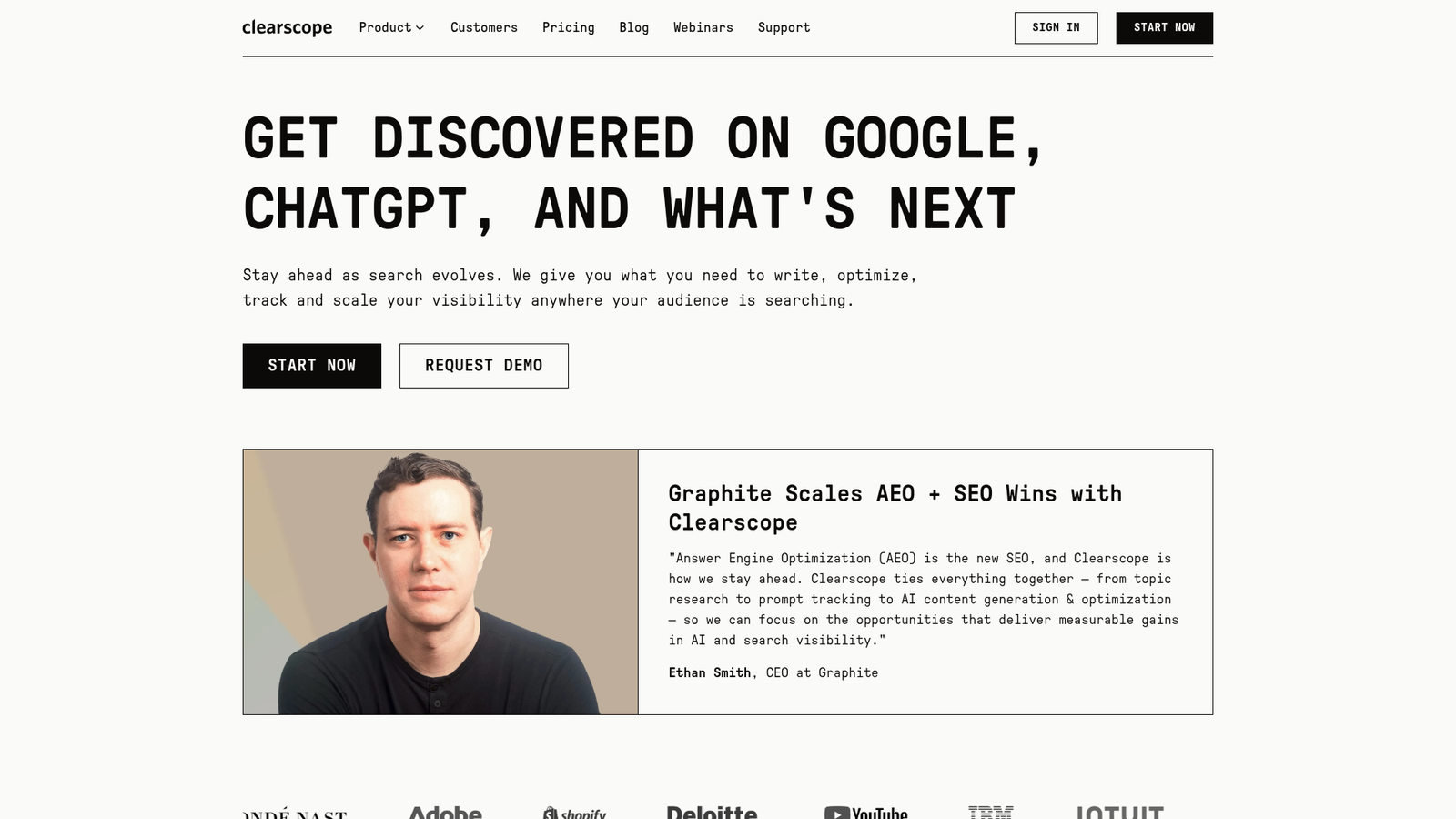
Clearscope is the editor-friendly content optimization tool that writers and content leads tend to like immediately. It also tracks brand and prompt visibility across Google, ChatGPT, and Gemini.
Best for: Editorial teams optimizing high-value SaaS pages with strict quality standards.
Key features:
- Content grading and NLP-driven term recommendations.
- Topic discovery with search intent analysis.
- Prompt and brand visibility tracking across Google, ChatGPT, and Gemini.
- Google Docs and WordPress integrations.
Pros:
- Clean, opinionated editor interface.
- Strong content quality signal.
- Visibility tracking integrated with optimization workflows.
Cons:
- Higher cost per report than budget tools.
- Limited technical SEO and broader suite functionality.
Pricing: Essentials $129/mo, Business $399/mo, Enterprise custom.
G2 rating: 4.9/5
Not ideal for: Teams needing technical SEO automation or large-scale content refresh workflows.
6. MarketMuse - Best For Topical Authority Planning
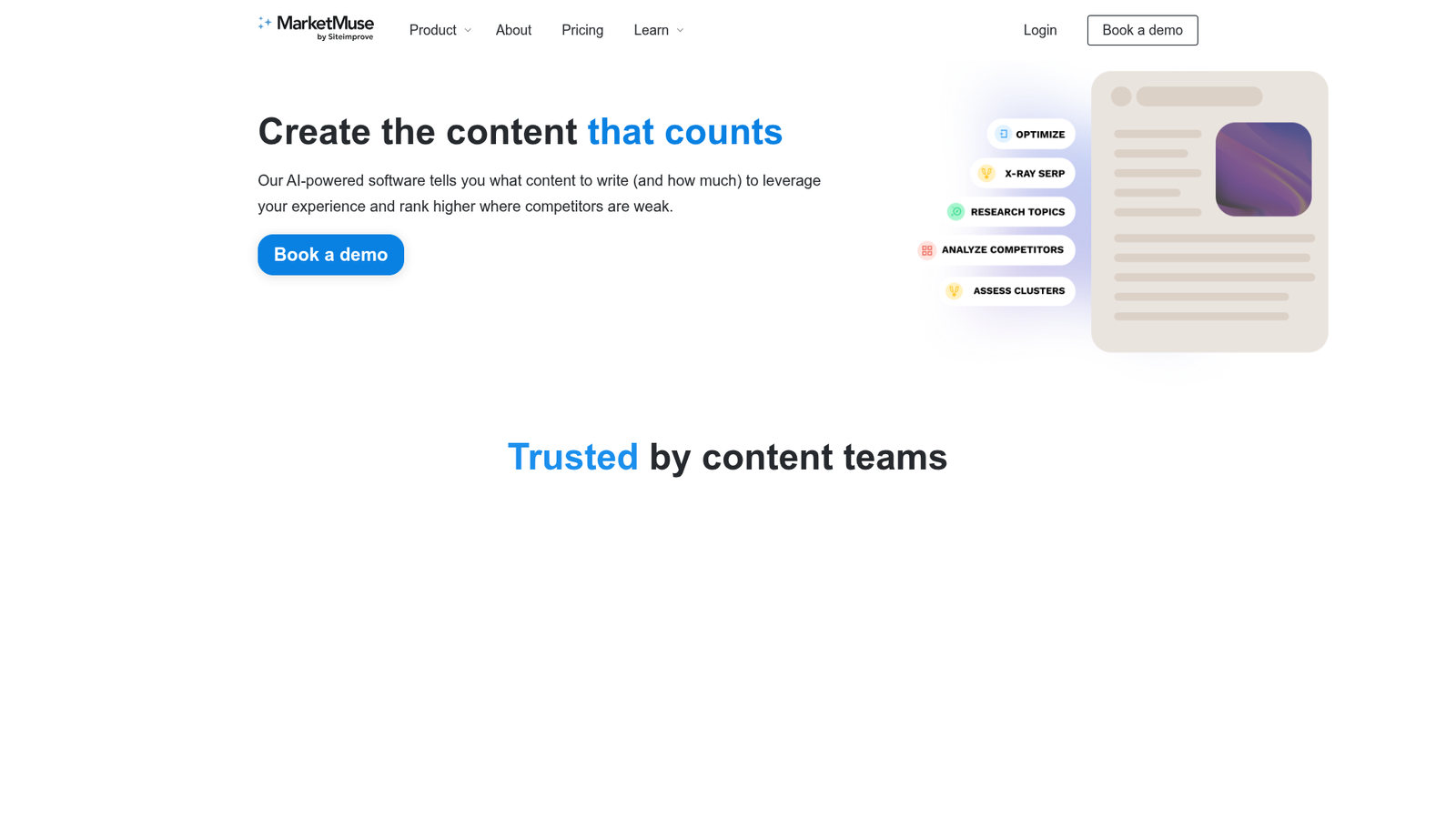
MarketMuse is built around topic models, personalized difficulty, and content inventory analysis. It's the planning tool for teams that want to build topical authority methodically rather than chase keywords.
Best for: SaaS content teams planning topic clusters and authority plays.
Key features:
- Topic authority and personalized difficulty scoring.
- Competitor gap discovery and content planning.
- Content briefs and optimization recommendations.
- Site-level inventory and prioritization.
Pros:
- Strong strategic planning depth.
- Useful for mapping cluster coverage at scale.
- Free plan available for evaluation.
Cons:
- Steeper learning curve than scoring-first tools.
- Pricing is quote-based, which complicates budgeting.
Pricing: Free plan (1 user, 10 queries/mo). Optimize, Research, and Strategy tiers are quote-based.
G2 rating: 4.6/5
Not ideal for: Lean teams wanting fast execution rather than strategic planning depth.
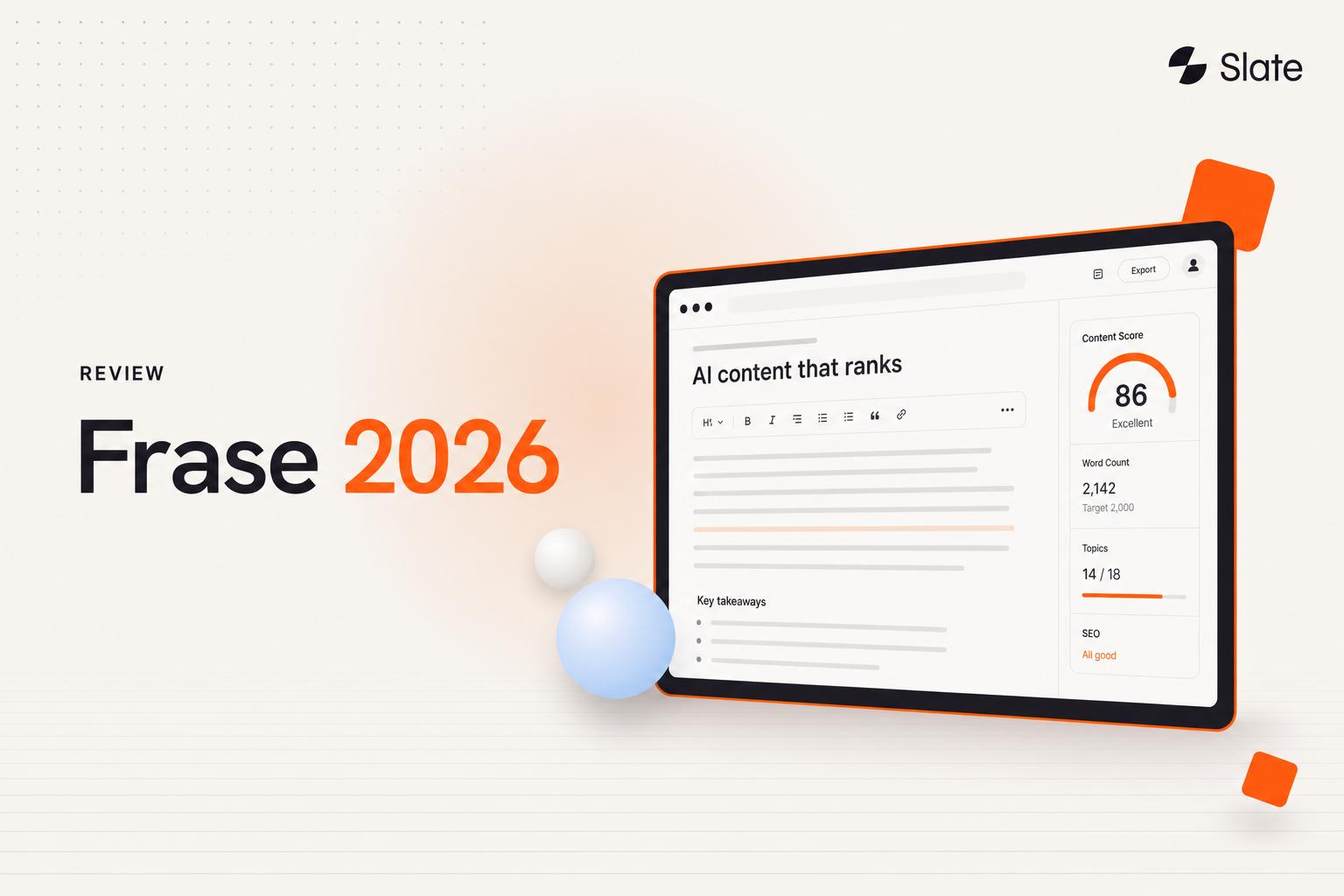
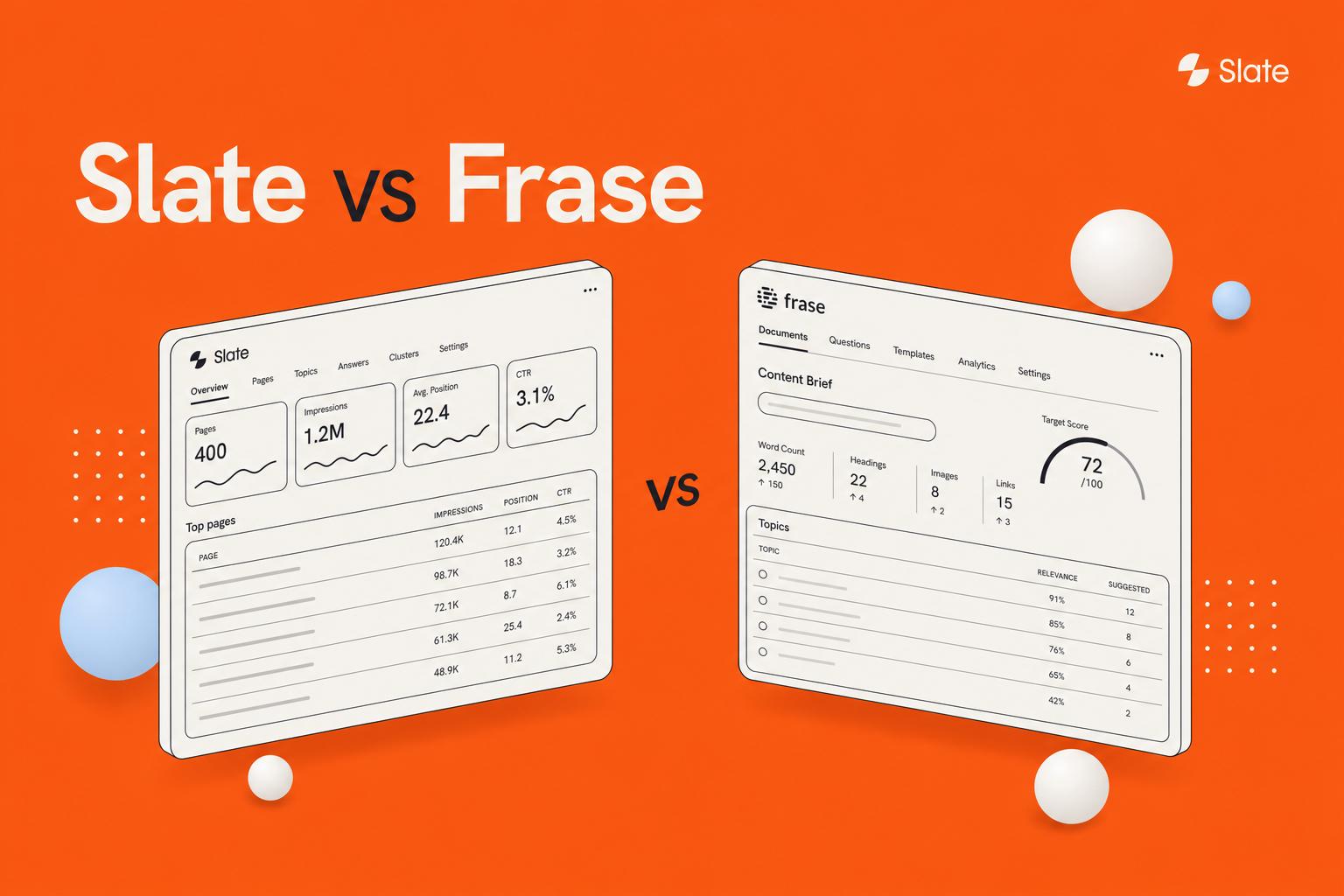
7. Frase - Best For Content Briefs On A Budget
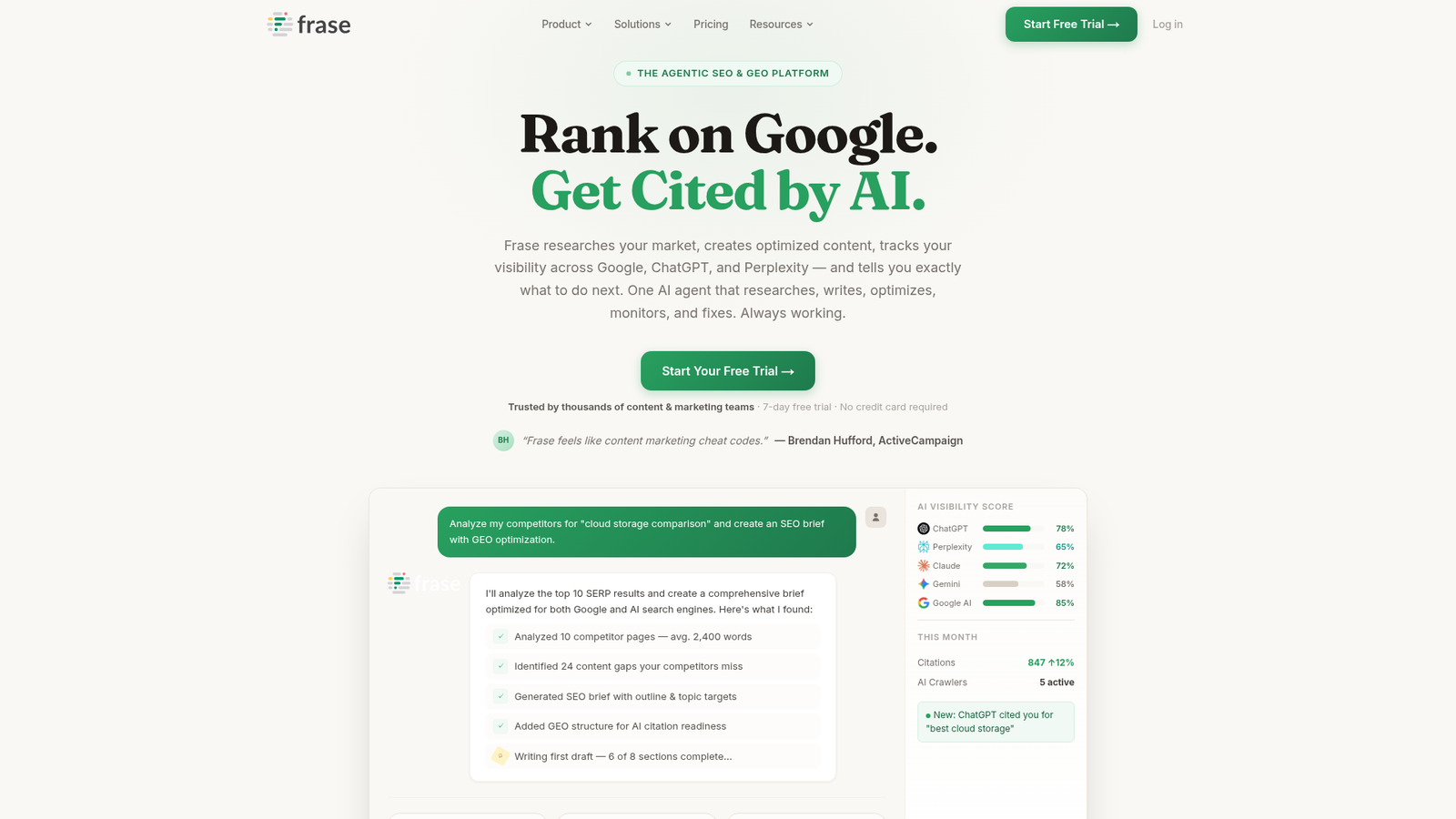
Frase compresses SERP research into fast content briefs and now layers in an AI agent plus AI visibility tracking. It's a practical choice for small teams that need to ship briefs and drafts quickly.
Best for: Small SaaS teams that need to produce briefs and first drafts fast. See also AI tools for SaaS content marketing.
Key features:
- AI Agent for research, writing, and optimization.
- SERP research and competitor analysis.
- AI visibility tracking across Google and AI engines.
- Site audits with GEO recommendations.
Pros:
- Fast brief creation.
- Reasonable price point for small teams.
- Useful AI visibility coverage at entry tier.
Cons:
- Workflow controls are thin for larger, governed teams.
- Less suited to enterprise content operations.
Pricing: Starter $49/mo, Professional $129/mo, Scale $299/mo, Enterprise custom. 7-day free trial; annual billing saves 20%.
G2 rating: 4.8/5
Not ideal for: Enterprise teams that need approvals, governance, and multi-stakeholder workflows.
8. SE Ranking - Best Mid-Market All-In-One Alternative
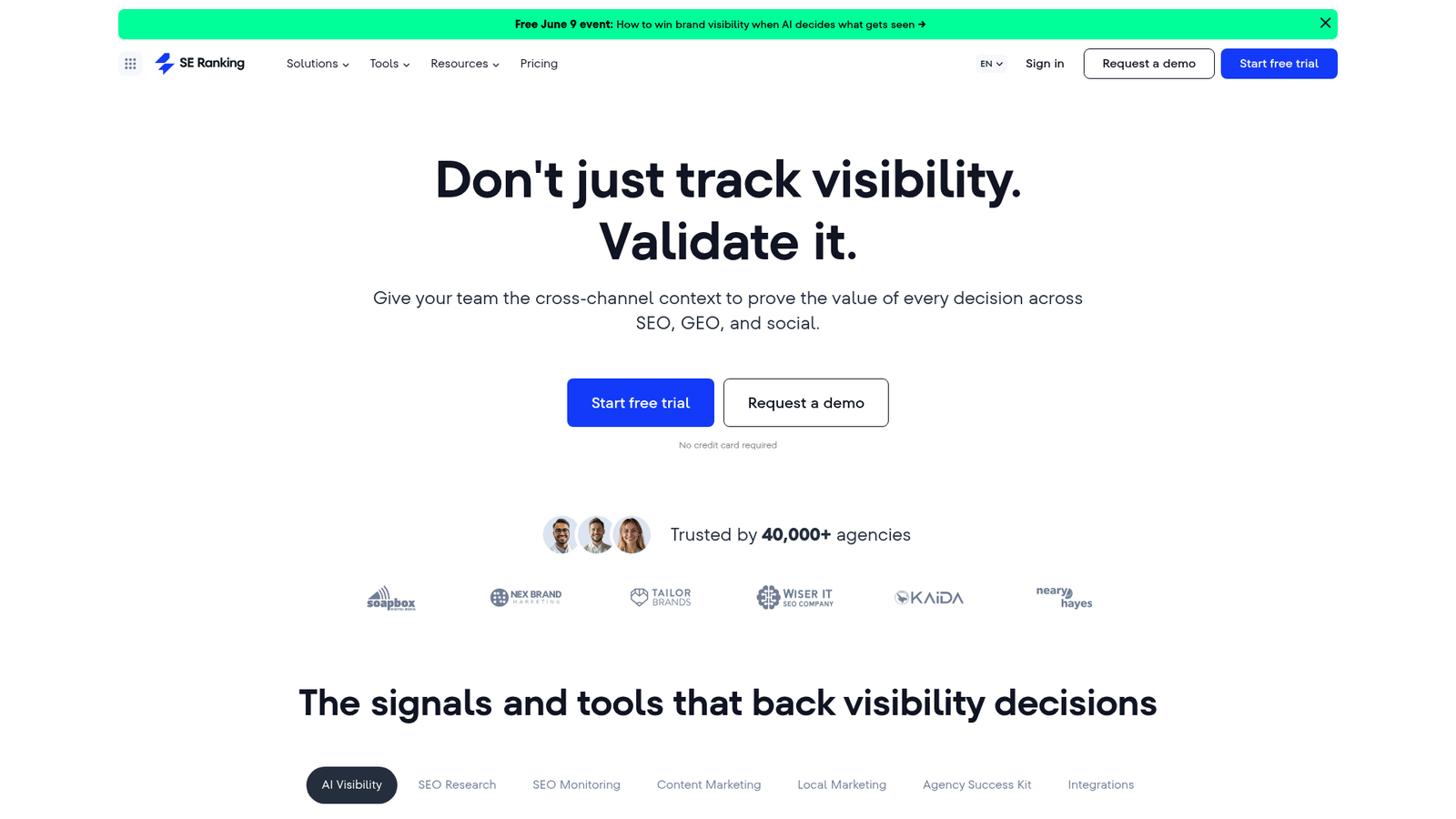
SE Ranking is the practical alternative for teams that want Semrush-style breadth without the suite's price tag. It has expanded into AI visibility tracking across major AI search platforms.
Best for: Mid-market SaaS teams and agencies wanting suite breadth at a lower cost.
Key features:
- AI visibility tracking across major AI search platforms.
- Keyword, competitor, and backlink research.
- Rank tracking and on-page audits.
- Reporting and white-label features for agencies.
Pros:
- Strong value across multiple SEO disciplines.
- Useful AI Overview tracking module.
- Agency-friendly reporting.
Cons:
- Thinner enterprise governance features.
- Some feature depth still trails Semrush and Ahrefs.
Pricing: Core $129/mo ($103.20/mo annual), Growth $279/mo ($223.20/mo annual), Enterprise custom. 14-day free trial.
G2 rating: 4.8/5
Not ideal for: Enterprise environments with heavy governance and approval needs.
9. Writesonic - Best For Fast AI Drafting With Visibility Tracking
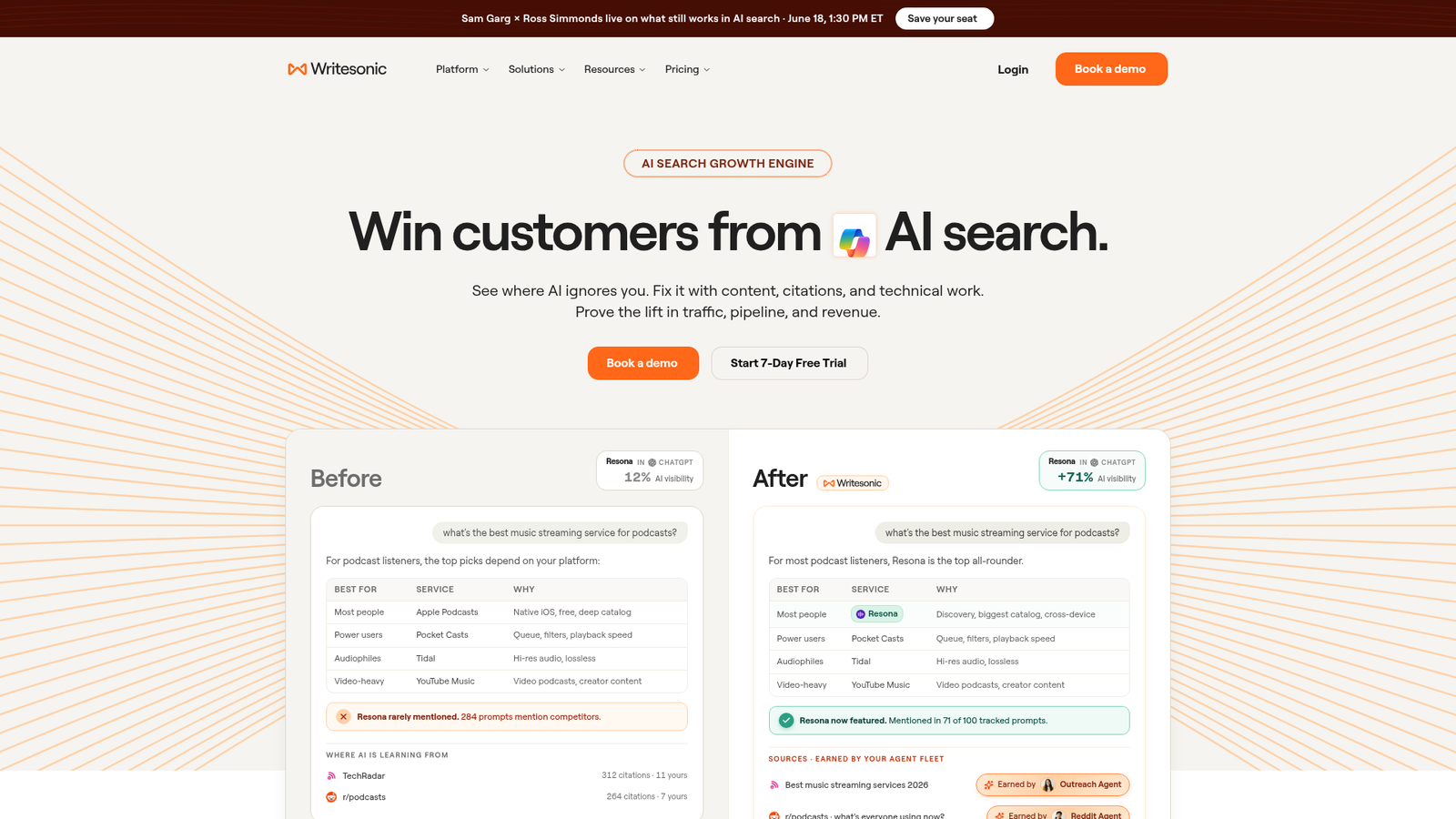
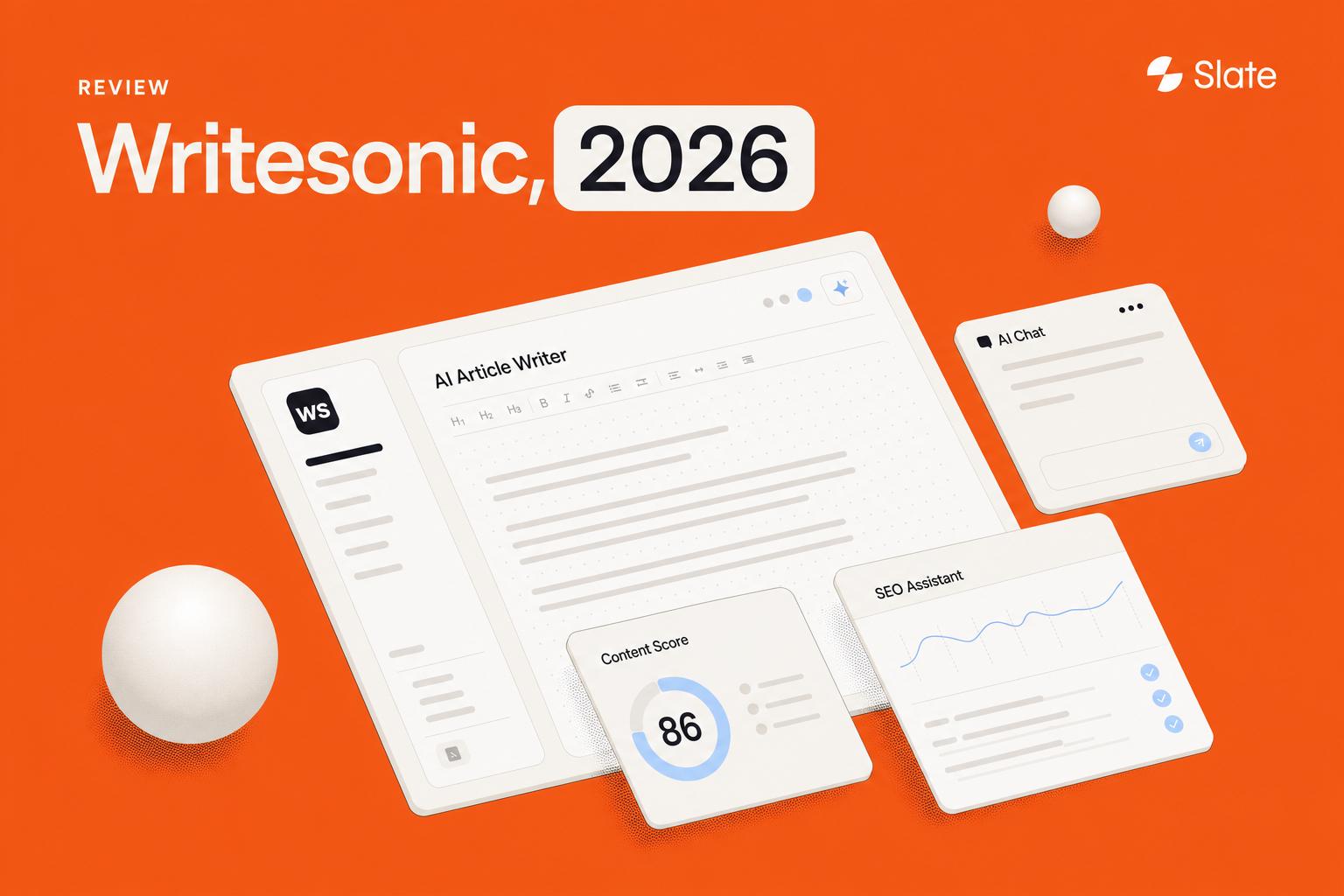
Writesonic combines AI article generation with AI search visibility monitoring and site audit workflows. It's a useful drafting accelerator that has expanded into the AEO space.
Best for: Marketing teams that want AI drafting paired with basic AI visibility tracking.
Key features:
- AI article writing and content workflows.
- AI visibility monitoring across ChatGPT, Gemini, and Google AI Overviews.
- Site audits with AI-driven fixes.
- SEO-aware drafting templates.
Pros:
- Fast generation for drafts at scale.
- Combined drafting and visibility in one tool.
- Action-oriented optimization suggestions.
Cons:
- Governance is limited for brand-strict teams.
- Not a substitute for a dedicated content engineering platform.
Pricing: Starter $99/mo ($79/mo annual), Basic $249/mo ($199/mo annual), Growth $499/mo ($399/mo annual), Enterprise custom. 7-day free trial.
G2 rating: 4.7/5
Not ideal for: Teams needing strict brand control, structured approvals, and refresh systems. See Jasper AI alternatives for additional drafting tools.
10. Alli AI - Best For Technical SEO Automation
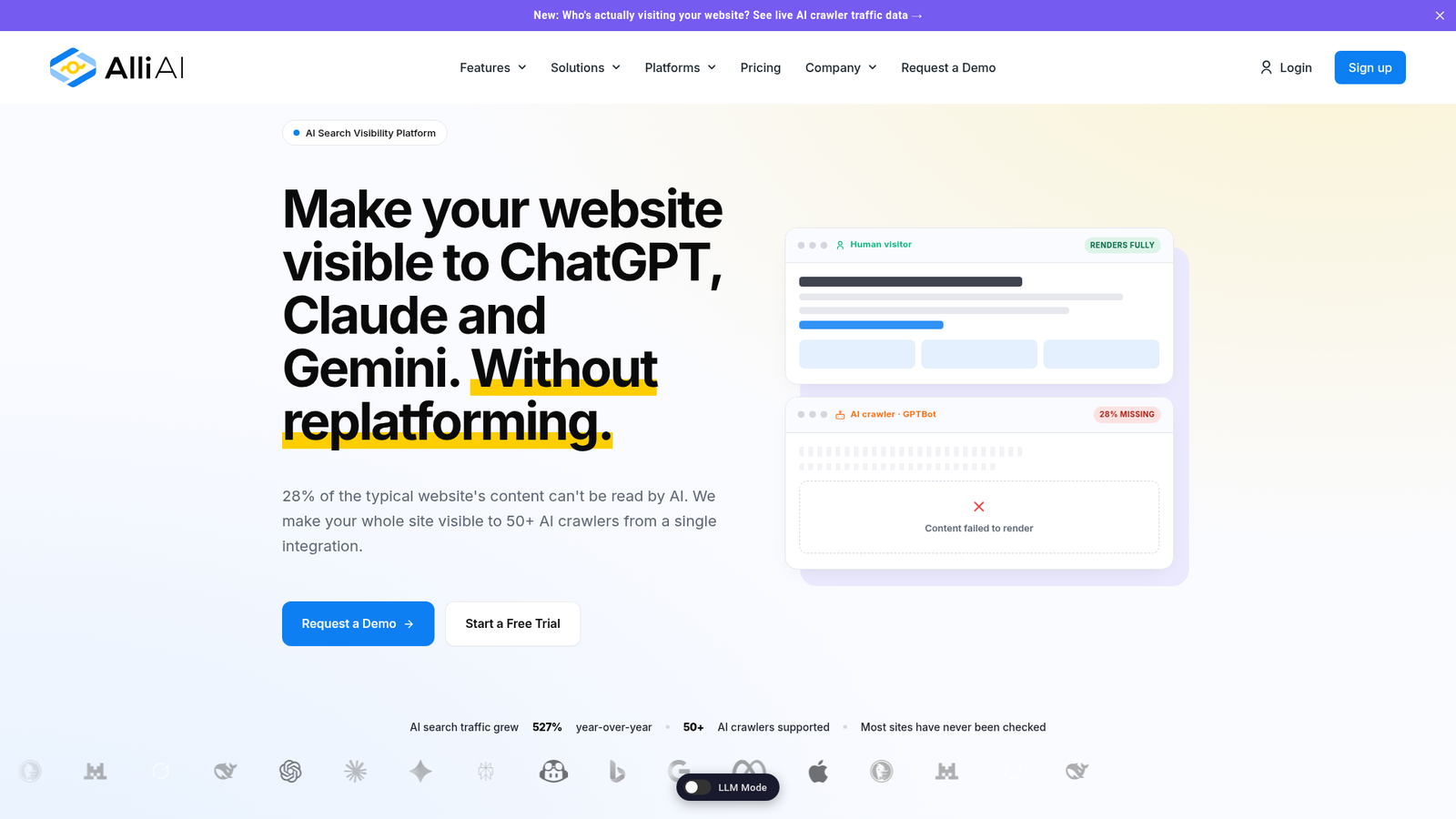
Alli AI focuses on technical SEO implementation at scale - bulk on-page changes, schema, and AI crawler enablement across many sites. It's built for teams whose technical SEO is a real bottleneck. For broader options here, see SEO automation platforms.
Best for: Agencies and multi-site teams executing bulk SEO changes without engineering tickets.
Key features:
- AI crawler enablement for 50+ AI search platforms.
- Bulk on-page SEO automation across many pages.
- Visual browser editor for live SEO changes without CMS access.
- Schema and structured data support.
Pros:
- Reduces engineering dependency for SEO changes.
- Scales to many sites or large URL counts.
- Useful for agencies managing multiple clients.
Cons:
- Technical-only scope; no content strategy or briefs.
- G2 rating trails category leaders.
Pricing: Business $299/mo or $249/mo billed annually (5 sites); Agency $599/mo or $499/mo billed annually (15 sites); Enterprise custom (50 sites). 10-day free trial.
G2 rating: 3.6/5
Not ideal for: Content-first teams looking for briefs, optimization, or AI visibility insights.
11. Conductor - Best For Enterprise SEO Governance
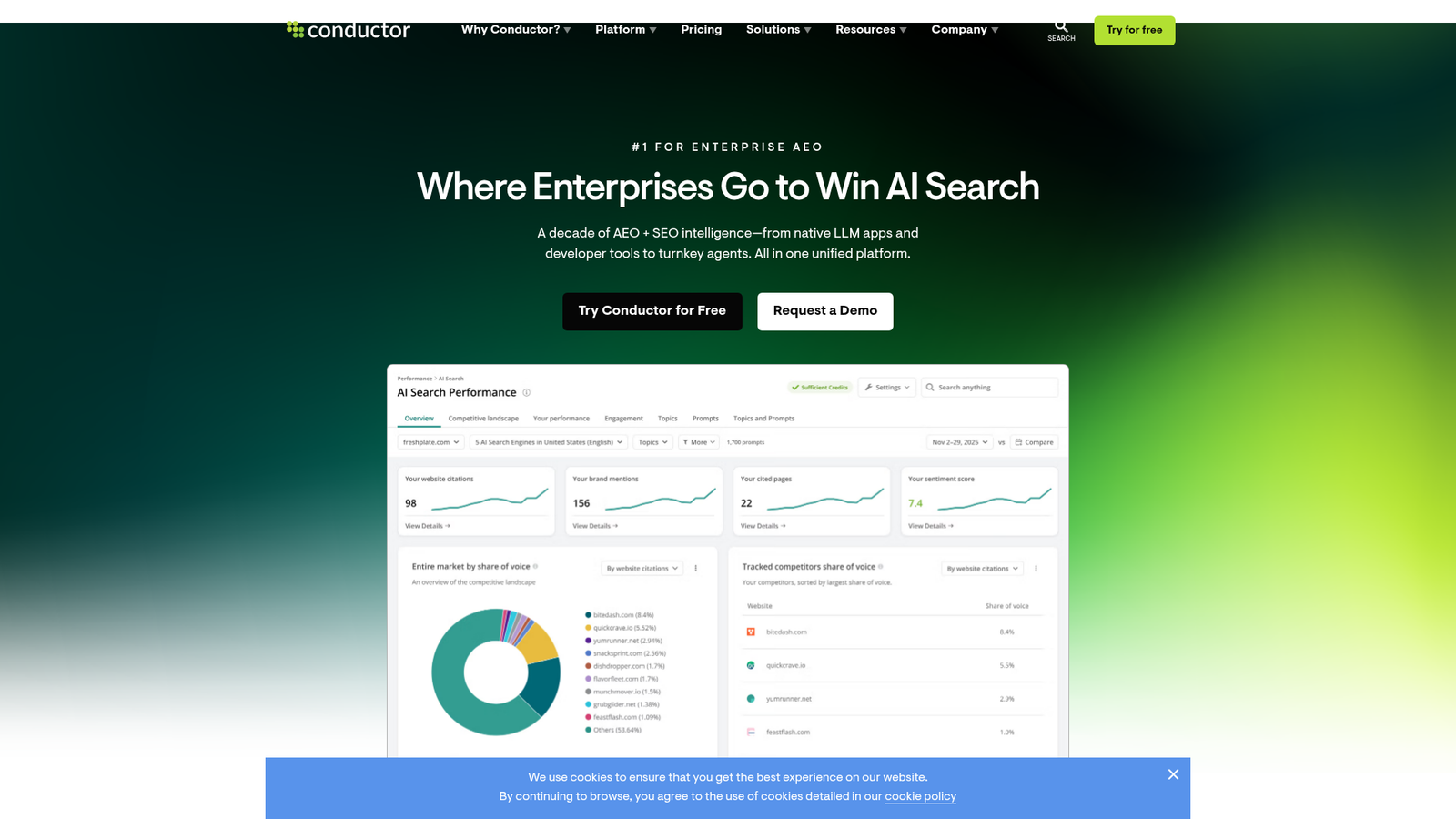
Conductor is the enterprise AEO and SEO platform for organizations that need formal governance, multi-stakeholder reporting, and 24/7 site monitoring. For more enterprise-focused options, see AI SEO tools for enterprise content teams.
Best for: Enterprise marketing and SEO teams with formal governance and stakeholder reporting needs.
Key features:
- AI visibility and AEO/SEO performance tracking.
- AI content generation and optimization.
- 24/7 website monitoring and alerting.
- Enterprise-scale page analysis and keyword tracking.
Pros:
- Enterprise-grade governance and reporting.
- Tight integration of monitoring, content, and visibility.
- Mature implementation support.
Cons:
- Quote-based pricing complicates budgeting.
- Heavier than needed for SMB and early-stage SaaS teams.
Pricing: Essentials, Growth, and Enterprise tiers - all quote-based. Free 3-week trial.
G2 rating: 4.5/5
Not ideal for: Small teams or budget-constrained buyers.
12. Metaflow - Best for agent-powered SEO, AEO, and GTM execution
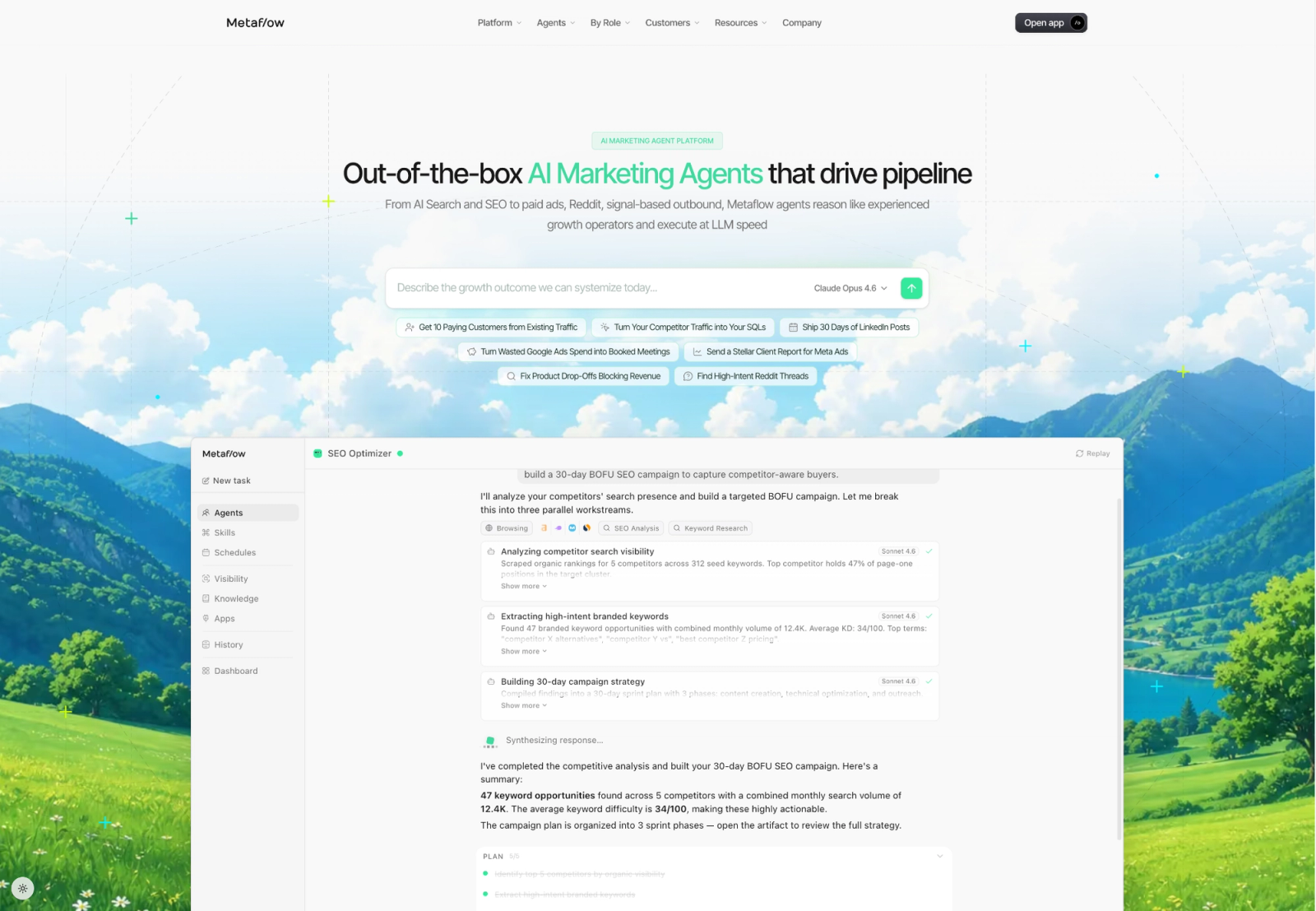
Metaflow is an agentic marketing platform for fast-moving GTM teams that runs SEO, AEO, paid acquisition, and outbound from one connected system instead of a blank agent builder.
Best for: B2B SaaS teams running SEO, AEO, paid acquisition, and outbound from one agentic GTM system.
Key features
- SEO and AEO content built for search rankings, AI Overviews, LLM visibility, and retrieval-friendly answer coverage
- Comparison, alternatives, and programmatic SEO pages produced through agent workflows
- Performance marketing automation across Google Ads, Meta Ads, and LinkedIn
- Signal-based outbound that identifies high-fit accounts and routes qualified interest into the revenue process
Pros
- One agentic system across content, paid, and outbound for B2B SaaS GTM
- Guardrails, QA loops, and evaluation gates keep agent output on track
- Built for AI search visibility, not retrofitted from legacy SEO tooling
Cons
- More platform than teams that only want a single-purpose SEO tool
- Newer entrant with a smaller public track record than incumbents
Pricing: 14-day free trial, then $100/month (Solo Growth); Scale Pro $299/month.
Not ideal for: Teams that want a lightweight, single-channel SEO tool, or an open agent builder to assemble from scratch.
Best AI SEO Tools By Use Case
The right tool depends less on overall feature breadth and more on the specific job you're hiring it for. Here's how the 12 tools above break down by primary use case.
Best AI SEO Tool For Content Briefs
For teams that mainly need fast SERP-driven briefs, Frase is the budget-friendly winner with strong SERP compression and an AI agent. MarketMuse wins for strategic, topic-model-driven briefs. Slate is the right choice when briefs need to be anchored to AI visibility insights and feed into a downstream refresh workflow.
Best AI SEO Tool For Keyword Research
Ahrefs remains one of the deepest research tools in the category, with Semrush as a close alternative when you also need rank tracking and competitive intelligence in one suite. SE Ranking is the budget-friendly runner-up for smaller teams. See also content gap analysis tools.
Best AI SEO Tool For Content Optimization
Surfer SEO and Clearscope are the two most recommended optimizers, with Surfer favored for writer-friendly scoring and Clearscope for editorial workflows. Slate extends optimization into content engineering for teams that want refresh systems, not just one-off edits.
Best AI SEO Tool For AI Search Visibility Tracking
Slate tracks AI search analytics across ChatGPT, Google AI Mode, Google AI Overviews, and Perplexity, and pairs that with execution. Profound is the strongest standalone AI visibility tracker. Semrush and Clearscope cover AI visibility as part of broader suites. See AI tools for topic clusters for related capabilities.
Best AI SEO Tool For Technical SEO
Alli AI wins for hands-on technical SEO automation across many sites, while Semrush is the strongest choice for in-depth site audits inside a broader suite.
Best AI SEO Tool For Content Refresh Workflows
This is where most of the market falls short. Slate is built for refresh workflows across SaaS page types - pricing, comparison, integration, and solution pages - using Power Sheets for bulk refreshes across thousands of URLs. Other tools support refresh in pieces (audits, scoring) but leave orchestration to the team. For a deeper look at the discipline itself, see what content refresh actually means.
Best AI SEO Tools By SaaS Growth Stage
The right stack changes meaningfully as a SaaS company scales. Here's how to think about tooling by growth stage.
Early-Stage SaaS (Pre-Seed To Series A)
Early-stage teams should keep the stack lean and cost-disciplined: one research tool (Ahrefs Starter or SE Ranking) plus one content tool (Frase or a starter content workflow). Focus on bottom-funnel pages - comparison, alternatives, and integration pages - before investing in deeper AI visibility tooling.
Scale-Up SaaS (Series A To B)
This is the stage where AI search visibility starts to matter for category leadership. Recommended stack: Slate for visibility and content execution, Ahrefs or Semrush for research, and a content optimizer if writers need scoring. Refresh workflows become essential as the content library grows past 100 pages.
Mid-Market SaaS (Series B+)
Mid-market teams typically run three to four tools: Slate for content engineering and AI visibility, Semrush for research and competitive intelligence, an optimizer for editorial workflows, and sometimes Conductor for governance. Refresh systems across pricing, comparison, and integration pages become a measurable lever for organic growth.
Agency-Led Or Multi-Brand SaaS Teams
Agencies and multi-brand teams should prioritize multi-workspace support, white-label reporting, and clean stakeholder handoffs. SE Ranking, Alli AI, and Slate all fit this profile, with the right combination depending on whether the agency leads with reporting, technical implementation, or content execution.
Do You Need One AI SEO Tool Or A Full Stack?
Most B2B SaaS teams end up with a stack of two to three tools. One handles research, another handles optimization or content engineering, and a third tracks AI search visibility. The right setup depends on budget, team size, existing stack overlap, and whether AI search visibility is a priority right now.
Scenario 1 - The Lean Stack (2 Tools)
A research tool (Ahrefs or SE Ranking) plus a content engineering platform (Slate or Frase). This works well for early-stage SaaS teams that need to focus content on revenue-driving pages without building a heavy operational stack. Total cost stays under $400/month for most teams.
Scenario 2 - The Balanced Stack (3 Tools)
Research (Ahrefs or Semrush) + optimization (Surfer or Clearscope) + AI visibility execution (Slate). This is the most common scale-up configuration and balances depth, editorial quality, and AI search readiness. Expect roughly $400–$1,200/month depending on tier choices.
Scenario 3 - The Enterprise Stack (4+ Tools)
Add governance (Conductor), technical SEO automation (Alli AI), and dedicated AI visibility (Profound) on top of the balanced stack. This fits mid-market and enterprise SaaS teams with formal reporting, multi-brand portfolios, or significant compliance requirements.
What B2B SaaS Teams Should Prioritize In AI SEO Tools In 2026
The teams pulling ahead in 2026 aren't the ones with the biggest tool stacks - they're the ones whose tools match the new shape of discovery. Five priorities matter most.
AI Search Visibility, Not Just Rankings
Traditional rank tracking misses whether your brand is being cited inside AI answers. Buyers increasingly research products through ChatGPT, Perplexity, Gemini, and Google's introduction of AI Overviews in search results, which means visibility on those surfaces is now a distinct KPI. Tool selection should treat AI visibility tracking as a required input, not a bonus feature.
Citation-Ready, Extractable Content
AI engines reward content that's structured, entity-clear, and easy to extract. That means direct answers near the top, descriptive headings tied to question intent, schema markup and structured data best practices, and FAQ blocks. Optimization tools help with the words; content engineering platforms help with the systems that produce extractable content consistently. For tactical guidance, see how to earn AI citations.
Refresh Workflows For SaaS Page Types
Pricing pages, comparison pages, integration pages, and solution pages don't need one-time optimization - they need refresh systems. Competitors change, products evolve, and AI engines re-evaluate citations regularly. Tools that automate or systematize refresh across hundreds of URLs are dramatically underserved in the current market.
Brand Governance At Scale
Style guides, knowledge grounding, approval flows, and hallucination prevention are now table stakes for any tool generating content. Without governance, AI output drifts toward generic patterns that hurt both brand voice and citation quality. Evaluate governance features as carefully as drafting features.
Stack Rationalization
Every new tool should displace something. Tools that only add a layer - without replacing an existing one - compound cost and operational complexity. Map each shortlisted tool against your current stack and decide explicitly what it replaces before signing.
How To Choose Your AI SEO Stack: A Decision Framework
A practical six-step framework keeps tool selection honest, avoids overlap spending, and validates fit before contracts get signed. For a deeper diagnostic, see this AI SEO checklist.
- Audit your current stack: List every SEO, content, and analytics tool with seat counts and annual cost.
- Define the primary job-to-be-done: Research, optimization, AI visibility, or execution - pick one as primary.
- Score 2–3 finalists: Use the eight evaluation criteria from earlier in this guide.
- Run a 30-day pilot: Test on a real workflow, like refreshing five comparison or integration pages, not in isolation.
- Confirm CMS and integration fit: Verify direct publishing, GSC/GA connections, and CRM hooks.
- Calculate total stack cost: Project the cost at your team size in 12 months, including add-ons and seats.
The teams that get the best ROI from AI SEO tooling are the ones that pick fewer, more deliberate tools - and validate them on real workflows before scaling adoption.
Ready To See Slate In Action?
Slate is built for B2B SaaS teams that want to understand their AI search visibility, engineer citation-ready content, and scale refresh workflows without losing brand control. If you want to compare Slate against your current stack on a real workflow - like refreshing your comparison or integration pages - book a demo and see how it fits your process.
Frequently Asked Questions
What Are The Best AI SEO Tools For SaaS Companies?
The strongest options in 2026 are Slate for AI search visibility plus content engineering, Semrush or Ahrefs for research depth, and Surfer or Clearscope for content optimization. Early-stage SaaS teams often start with one research tool plus one content tool; scale-up and mid-market teams typically add Slate as AI search visibility becomes a measurable channel.
Which AI SEO Tools Are Best For Content Optimization?
For pure on-page optimization, Surfer SEO and Clearscope are the most widely recommended, both with SERP-driven scoring and term suggestions. Teams that also want AI search visibility and refresh systems should evaluate Slate, since its content engineering workflows extend optimization into ongoing refresh programs for comparison, integration, and pricing pages.
Can AI Help With B2B SaaS SEO?
Yes. AI accelerates topic clustering, brief generation, drafting, on-page optimization, internal linking, and refresh workflows. The biggest gains come when AI is paired with human review, strict brand governance, and clearly defined operational workflows - not when teams use AI as an unreviewed content generator. The job-to-be-done is execution leverage, not content volume.
What Is The Best AI Tool For Keyword Research And Content Briefs?
Most SaaS teams pair Ahrefs or Semrush for deep keyword research with a brief-focused tool like Frase or MarketMuse. Teams prioritizing AI search visibility and execution often use Slate for briefs that are anchored to buyers researching products through ChatGPT and other LLMs and feed directly into refresh or publishing workflows. The right pairing depends on workflow depth needs.
Do B2B SaaS Teams Need An All-In-One AI SEO Platform?
Usually not. A focused stack of two to three tools - one research suite, one content engineering platform, and optionally a dedicated AI visibility tracker - outperforms a single all-in-one suite for most SaaS teams. All-in-ones often overlap with existing tools and lag on AI search visibility depth, which inflates cost without adding capability.
How Do You Measure AI Search Visibility Alongside Rankings?
Combine traditional rank tracking with AI visibility monitoring. Track citations and brand appearances in ChatGPT, Perplexity, Gemini, and Google AI Overviews using platforms like Slate or Profound, then correlate that data with organic traffic, conversions, and pipeline. Treat AI visibility as a distinct KPI rather than a sub-metric inside classic rank reports. Understanding the decline in organic click-through rates from AI answers also helps contextualize why AI visibility deserves its own measurement layer.
Which AI SEO Tools Are Best For A 2-Person SaaS Marketing Team?
A lean stack works best: one research tool like Ahrefs Starter or SE Ranking plus one content engineering platform like Slate or Frase. Prioritize workflow speed, CMS integration, and AI visibility coverage over feature breadth. Avoid stacking three optimization tools - at this team size, execution capacity is the bottleneck, not analysis.