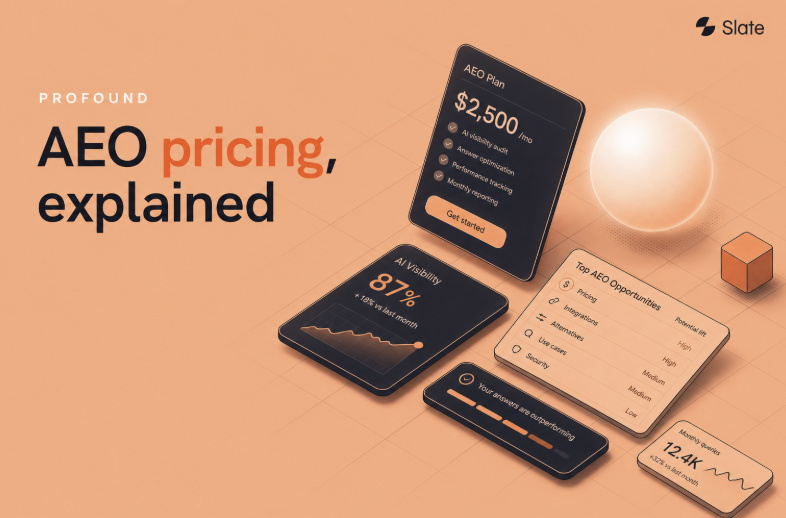
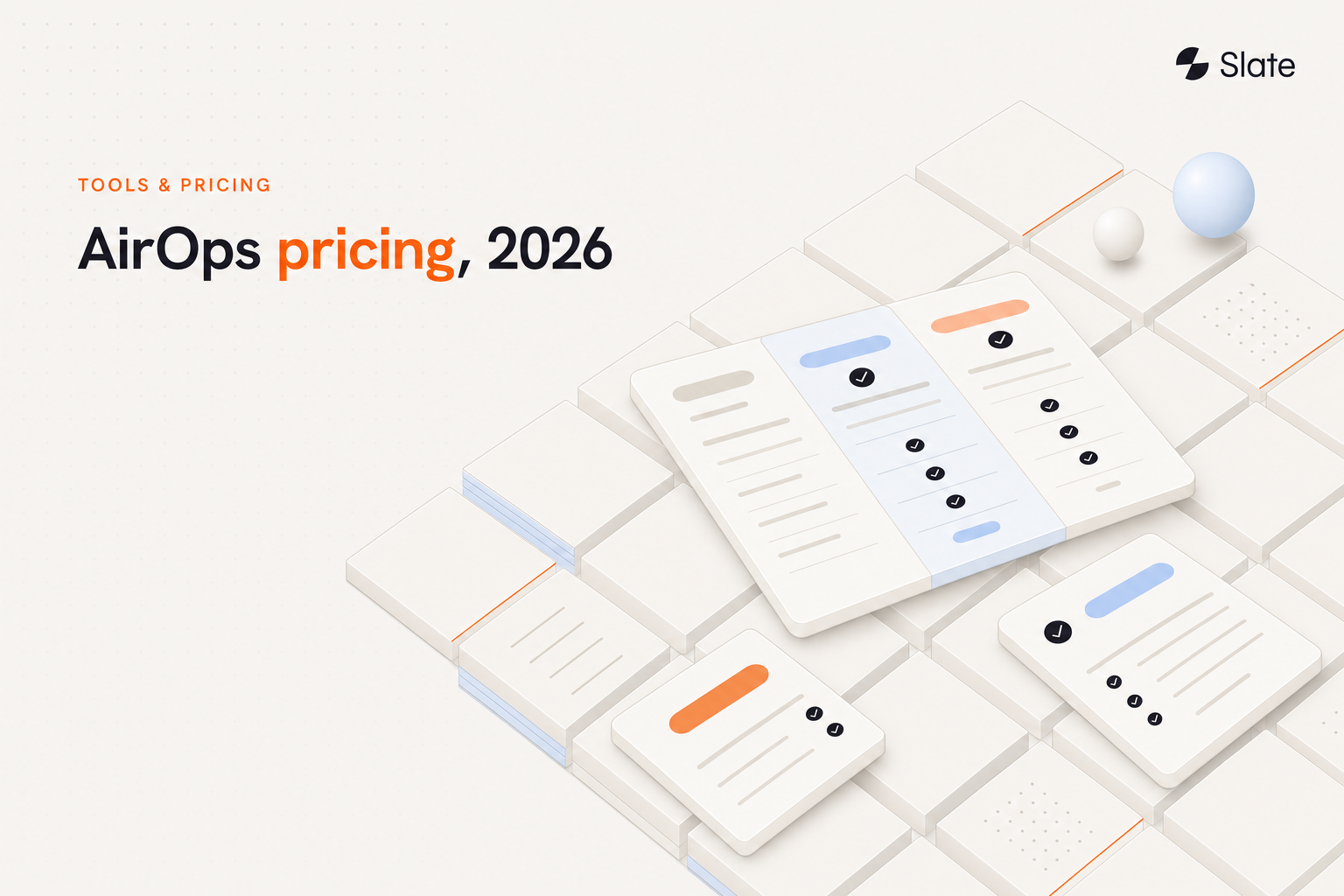
Profound publishes a 7-day free trial and a custom-quoted Enterprise plan. It doesn’t publish a self-serve monthly price, so your number likely comes from a sales call.
Quick answer: Profound AEO pricing includes a free 7-day trial with 50 prompts run daily, limited AI Marketer credits, and coverage across ChatGPT, Gemini, and Google AI Overviews. Enterprise is custom-quoted, with tailored prompt tracking, up to 9 answer engines, dedicated support, SSO/SAML, and SOC 2 compliance.
So price Profound by scope. Prompts, refresh cadence, engines, markets, credits, seats, exports, and support can all change the quote.
Slate is a competing platform. The comparison criteria appear before Slate is evaluated.
Key Takeaways
- Profound’s public pricing is a free 7-day trial plus a custom-quoted Enterprise plan.
- The trial includes 50 prompts run daily for 7 days, limited AI Marketer credits, and coverage across ChatGPT, Gemini, and Google AI Overviews.
- Enterprise adds tailored prompt tracking, up to 9 answer engines, teamwide AI Marketer credits, dedicated support, SSO/SAML, and SOC 2 compliance.
- Enterprise pricing depends on usage scope. Confirm prompts, engine coverage, credits, seats, exports, and refresh cadence.
- Trial coverage is narrower than Enterprise coverage, so use trial data as an evaluation sample.
- Software is one budget line. Review, prioritization, content, technical work, publishing, outreach, reporting, and refresh are the rest.
- Slate starts at $499/month. Free trial, Enterprise, and Agency plans are available.
What Does Profound AEO Cost In 2026?
Profound doesn’t publish a monthly list price.
Its pricing page shows a free 7-day trial and a custom-quoted Enterprise plan. Treat any third-party monthly number as a clue for discovery, because it isn’t a quote you can hand to finance.
The quote depends on data volume. AEO tools run prompt sets against answer engines on a schedule, and cost can rise with prompts, engines, markets, and refresh frequency.
Two buyers can look identical in a procurement spreadsheet and need completely different collection loads. One tracks 80 prompts in one market. Another tracks 800 prompts across 12 markets and 9 engines. Same category, different bill.
Buyer tip: Ask Profound to itemize the quote by usage component. A single annual number can hide the variable that jumps at renewal.
Profound Plans And What Each One Includes
Profound has two public entry points: a short trial and an Enterprise plan.
The trial is useful for evaluation. Enterprise is built for ongoing monitoring across more answer engines and a broader prompt set.
What The Profound Free Trial Gets You
The trial runs for 7 days.
It includes limited AI Marketer credits, 50 prompts run daily, and coverage across ChatGPT, Gemini, and Google AI Overviews.
That’s enough to test a focused prompt set. For example, you can check whether Profound captures your brand for five commercial prompts, a handful of competitor prompts, and a few bottom-funnel category questions.
Seven days gives you a sample. Trend data needs more time.
Evaluation tip: Pick the buying decisions before the trial starts. “Do we appear for our five highest-intent commercial prompts?” is useful. “Let’s poke around for a week” usually turns into screenshots and vibes.
What Profound Enterprise Includes
Enterprise is sold as a tailored package.
Publicly listed inclusions include AI Marketer credits for the whole team, tailored prompt tracking, up to 9 answer engines, dedicated support, SSO/SAML, and SOC 2 compliance.
Credits deserve a careful callout. Profound’s public pricing details don’t explain how credits are consumed, capped, or expanded.
What Drives The Cost Of A Profound Enterprise Quote?
Enterprise AEO quotes usually come down to usage scope.
Ask about prompt volume, refresh frequency, answer-engine coverage, tracked domains, markets, languages, credits, seats, exports, API access, retention, support, and security review.
Prompt Volume And Refresh Frequency
Use this formula early:
Prompts × engines × refresh cadence.
100 prompts across 3 engines weekly is a small program. 100 prompts across 9 engines daily is a much larger collection job, even though both start with “100 prompts.”
Build your prompt set from the business structure: product lines, buyer stages, competitors, and markets. Then use that same scope with every vendor.
Contract tip: Compare prompts × engines × refresh cadence. Prompt count alone is too easy to misread.
Answer Engine Coverage
Profound Enterprise covers up to 9 answer engines. The trial covers 3.
Ask which engines are included in your quote and how often each one refreshes. Also ask whether coverage changes by geography.
Nine engines sounds big, right? Your buyers might care about four. Price the engines your market uses.
Domains, Brands, Markets, And Languages
Multi-brand and multi-market programs add complexity fast.
Each market can need its own prompt set. Each language can need separate review. Each domain can add reporting and governance work.
Ask whether extra brands, domains, markets, and languages are bundled into the base package or priced separately. That answer tells you what year two expansion might cost.
AI Marketer Credits And Usage-Based Components
Profound includes AI Marketer credits in the trial and Enterprise plan.
The public plan details don’t define credit consumption, so ask four questions:
- What consumes a credit?
- What monthly credit use should we expect for this scope?
- What happens at the cap?
- Can unused credits roll over?
Get the answer in writing before signature. Credit rules are a terrible surprise to discover in month two.
Seats, Exports, API Access, And Retention
Clarify viewer, editor, and admin seats.
A CMO who checks a dashboard once a month shouldn’t necessarily cost the same as the person managing prompts every morning.
Then ask about exports, API access, history retention, and post-cancellation data access. If two years of visibility history lives only inside the vendor’s platform, renewal gets awkward fast.
Onboarding, Support, Security Review, And Contract Terms
Enterprise includes dedicated support, SSO/SAML, and SOC 2 compliance.
Security review may leave the subscription price untouched, but it can delay time to value. Procurement, legal, and InfoSec can stretch a neat buying plan into a calendar science project.
Confirm implementation scope, SLA, named contacts, term length, renewal terms, and termination terms.
Contract checklist: Ask whether extra prompts, brands, markets, API access, or agency workspaces trigger separate fees.
The Cost Beyond The Software
The platform fee is only one line.
An AEO program also needs people to review findings, prioritize gaps, brief content, make technical changes, publish pages, earn citations, report results, and refresh pages when answers change.
A monitoring platform can find gaps faster than your team can close them.
If the dashboard surfaces 40 content gaps in month one and the team can complete four by month two, the bottleneck is production capacity.
For teams building the loop internally, how to build an AI search optimization workflow covers the operating model. Slate pricing shows published-price coverage for a platform that includes monitoring and execution.
Is Profound Worth The Price?
Profound fits best when you need multi-engine AI visibility monitoring and already have content, technical, and PR capacity.
Lean teams should be careful. A custom Enterprise quote can buy a lot of dashboard visibility without enough people to act on it.
Strong fit. Multi-brand or multi-region organizations in regulated categories, where brand representation inside AI answers creates risk and where SSO/SAML plus SOC 2 are buying requirements.
Delay the purchase. Single-market SMBs without a writer or web owner, teams that need a published number for budget approval, and organizations without a named AEO owner will struggle to turn monitoring into outcomes.
Profound AEO Pricing Vs. Alternatives: 7 Platforms Compared
The alternatives fall into three buckets: execution platforms, AI visibility monitors, and SEO suites with AI search functionality.
Use the same scoring criteria across vendors: pricing transparency, AI visibility coverage, content production, publishing, search-data integrations, outreach, and enterprise controls.
Slate publishes this comparison and competes with several tools listed below. The same criteria apply to Slate.
1. Slate: Best For AI Visibility Monitoring And Execution
Slate is an agent-driven content, SEO, and AI search optimization platform.
It covers opportunity discovery, production, publishing, outreach, measurement, and refresh in one loop.
Discover: Opportunities surfaces gaps across content, citations, rankings, social engagement, and traffic, so prioritization starts from evidence.
Measure AI visibility: Slate tracks brand presence across six major AI platforms, including sentiment, brand mentions, prompt answers, and keyword tracking.
Measure search performance: Pages brings Google Search Console and GA4 data into the same workspace for clicks, traffic, CTR, and citations.
Produce at scale: Coworker takes plain-language instructions, custom agents capture repeatable work, and Power Sheets handles bulk creation, page updates, refresh, and audits across thousands of URLs.
Publish and outreach: Slate publishes directly to Webflow and WordPress. It also finds link and brand-mention opportunities, enriches contacts, and sends outreach inside the platform.
Research: Native Ahrefs and Semrush access is included without a separate purchase.
Limitation: Slate isn’t a creative proofing tool for video, visual campaigns, or brand review workflows.
Pricing: Slate starts at $499/month. Free trial, Enterprise, and Agency plans are available.
G2 rating: 4.9/5
Book a demo, compare Slate pricing with Profound, or see the full Slate vs. Profound breakdown.
2. Semrush: Best For Teams Already Using A Full SEO Suite
Semrush is a broad SEO platform for keyword research, rank tracking, site audits, and content work.
If your SEO program already runs through Semrush, evaluate its AI visibility functionality inside the same stack.
Limitation: Confirm AI visibility limits, tracking coverage, and publishing capability for the exact plan you’re considering.
Pricing: See current Semrush pricing and plan details.
3. HubSpot: Best For Teams Centralizing AEO Inside HubSpot
HubSpot is used for CRM, content, automation, and reporting.
Teams already running content and marketing workflows in HubSpot may prefer to keep AI search reporting close to that data.
Limitation: Confirm answer-engine coverage, AI search reporting, and plan-level availability before treating HubSpot as a dedicated monitoring tool.
Pricing: See current HubSpot pricing and plan details.
4. Scrunch AI: Best For Enterprise Brand Monitoring Across AI Surfaces
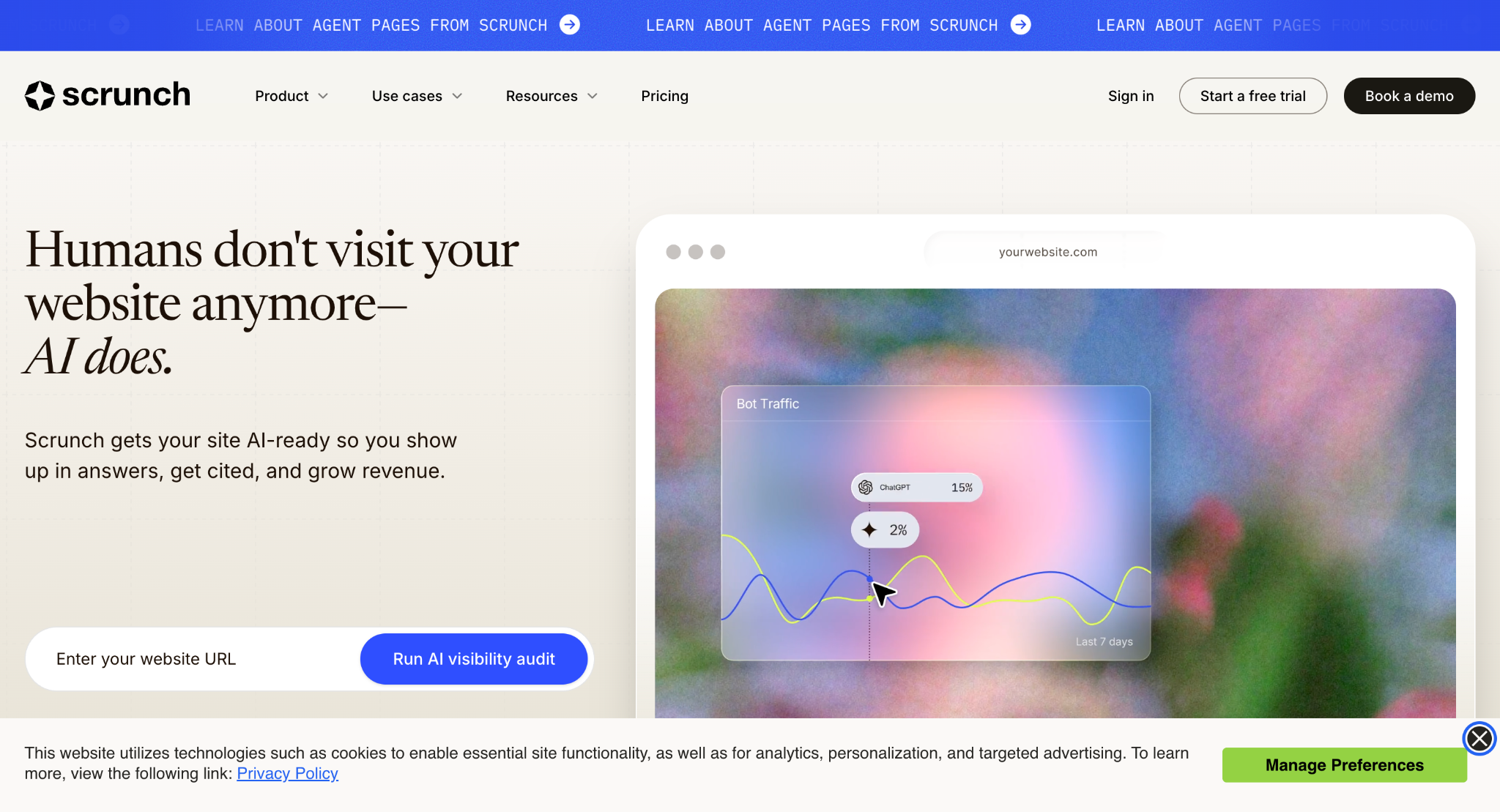
Scrunch AI focuses on how brands appear across AI search experiences.
It can fit organizations evaluating visibility, representation, and brand-risk monitoring as part of an AI search program.
Limitation: Confirm production, publishing, and workflow capabilities if your team needs more than monitoring.
Pricing: Contact Scrunch AI for packaging and pricing.
5. AthenaHQ: Best For Dedicated GEO Tracking
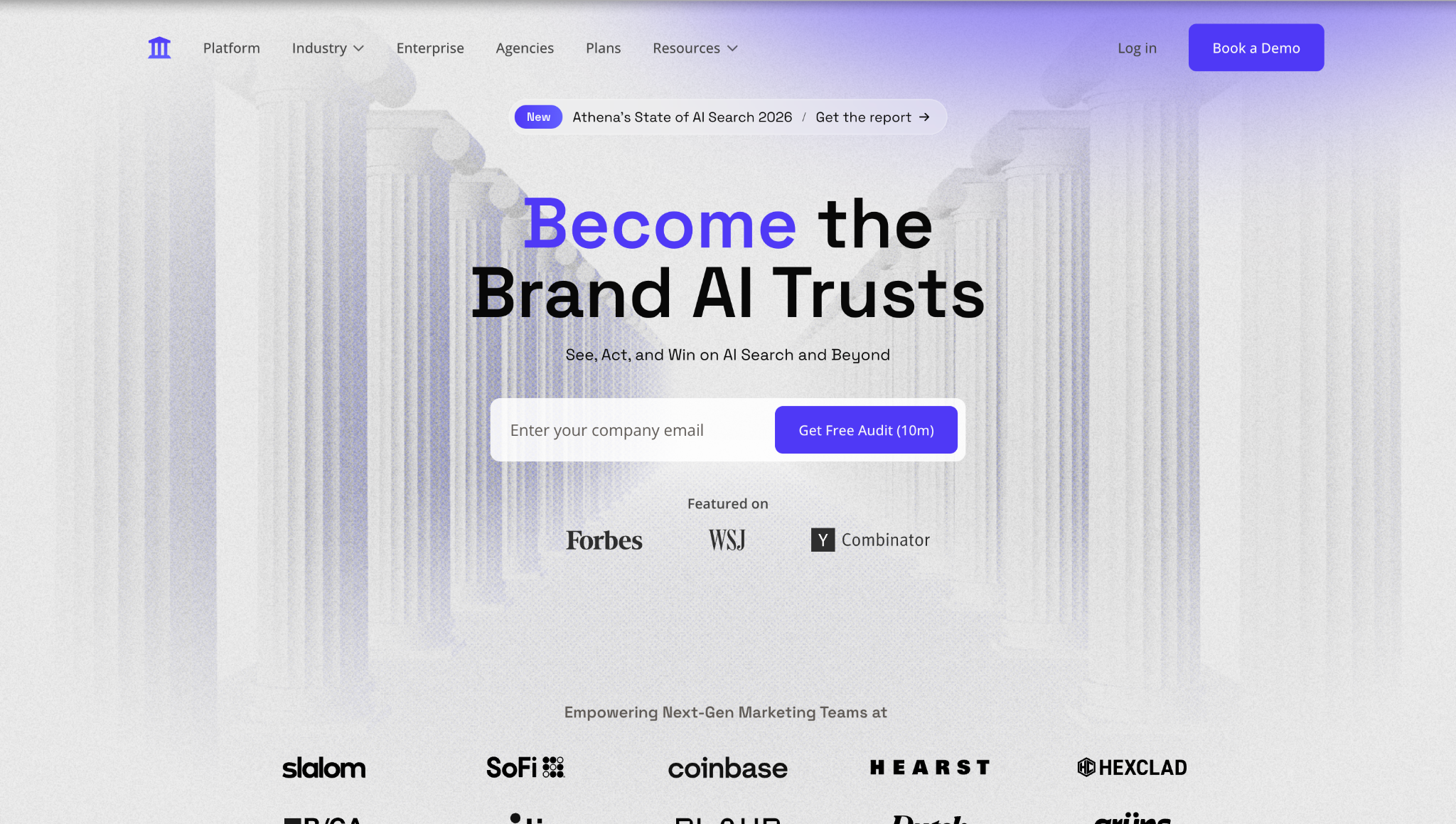
AthenaHQ is a generative engine optimization platform.
It can fit teams that want a dedicated tool for AI search visibility instead of a broad SEO suite.
Limitation: Confirm content production, publishing, integrations, and governance support for your use case.
Pricing: See current AthenaHQ pricing and plan details.
6. Otterly.AI: Best For Lightweight AI Visibility Checks
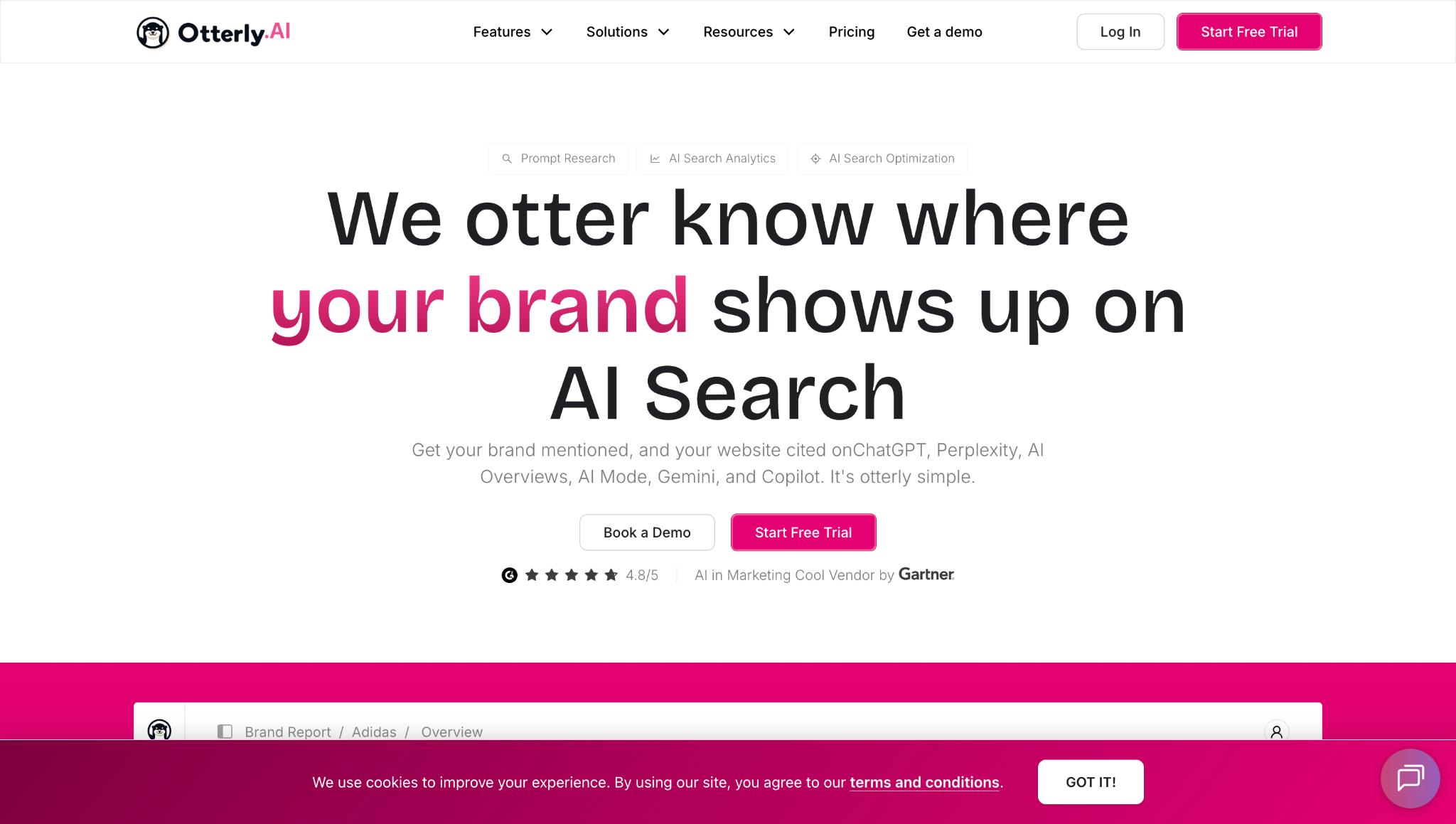
Otterly.AI focuses on AI search visibility monitoring.
It can work for teams that need recurring prompt, mention, link, or citation checks without a larger enterprise monitoring contract.
Limitation: Confirm prompt limits, answer-engine coverage, reporting, and workflow depth before comparing it with enterprise tools.
Pricing: See current Otterly.AI pricing and plan details.
7. Mangools: Best For Budget-Conscious SEO Basics
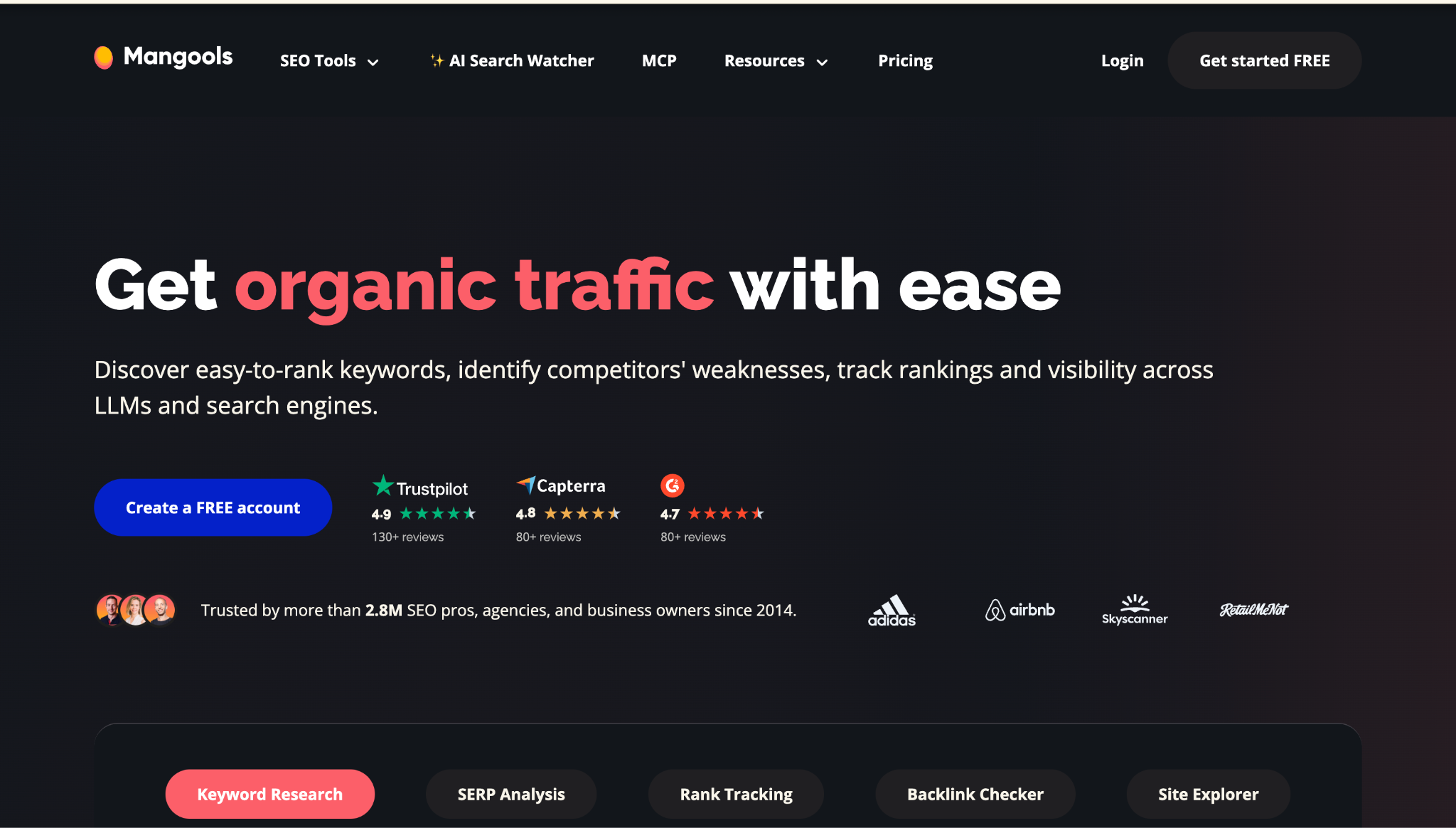
Mangools is an SEO toolset for keyword research, SERP analysis, rank tracking, and backlink work.
It belongs here for teams that need SEO basics before buying dedicated AEO monitoring.
If your site has thin topical coverage and no rank tracking, start there.
Limitation: Confirm whether Mangools meets any AI search monitoring requirement you have.
Pricing: See current Mangools pricing and plan details.
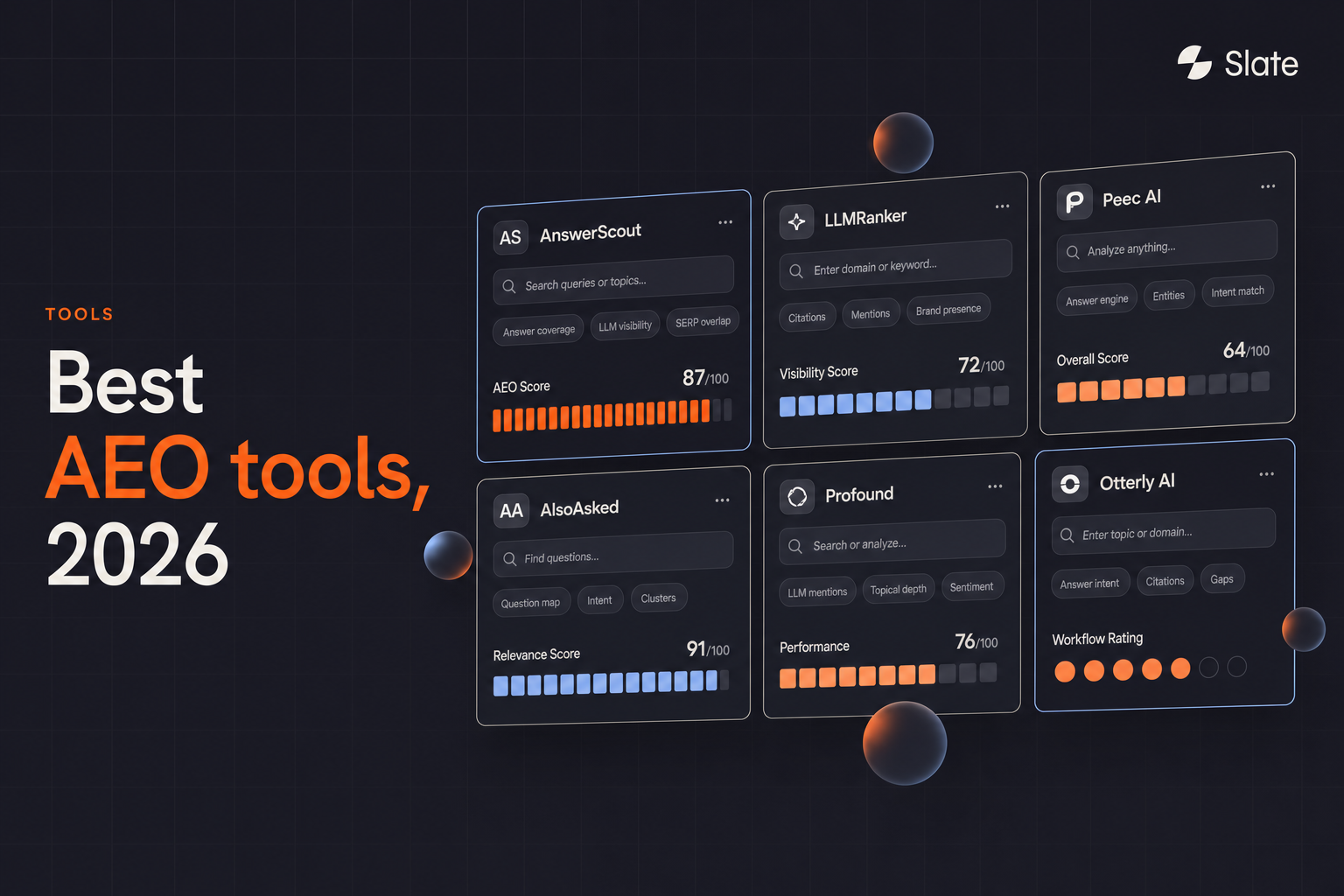
Further reading: best AEO tools, best generative engine optimization tools, AI search visibility tools, AI citation tracking tools, and AI brand monitoring tools.
Profound Vs. Slate: Monitoring AI Visibility Vs. Running The Growth Loop
Profound measures how a brand appears inside AI answers.
Slate measures visibility and helps teams produce content, publish to a CMS, run outreach, and track results in Search Console and GA4.
Choose Profound when your main need is multi-engine monitoring with enterprise security controls, and you already have the team to act on the findings.
Choose Slate when the bottleneck is execution: content production, publishing, outreach, and measurement across one operating loop.
Automation should handle repeatable work, such as bulk refreshes, audits, structured briefs, and reporting. Priorities, approvals, brand standards, and final judgment stay with people.
Book a demo or see the full Slate vs. Profound comparison.
AEO Pricing By Business Size
Budget should follow scope.
Small businesses usually need narrow prompt sets and published pricing. Mid-market teams need monitoring plus production capacity. Enterprises need governance and multi-market coverage. Agencies need workspace separation and per-client economics.
1. AEO Pricing For Small Businesses
Start with a narrow prompt set: your top commercial questions, your core competitors, and one market.
A quote-based Enterprise plan can be oversized for small teams. The contract may assume analysts, writers, and web owners that you don’t have yet.
If your team can’t publish a page this month, buy production capacity before monitoring software.
2. AEO Pricing For Mid-Market Teams
The common failure mode is simple: the platform finds 30 gaps, the team completes 3, and the backlog becomes the deliverable.
Prioritize bulk page updates, direct CMS publishing, and GSC/GA4 measurement in one place. Time from insight to live page is usually the number to watch.
3. AEO Pricing For Enterprise Organizations
Enterprise scope means multiple brands, markets, languages, security review, SSO/SAML, SOC 2 documentation, procurement, and legal.
Profound’s Enterprise plan includes SSO/SAML and SOC 2 compliance, which can be required for larger buyers.
Security review can slow time to value. Enterprise buyers building a larger stack can start with AI SEO tools for enterprise content teams.
4. AEO Pricing For Agencies
Agencies need workspace separation, granular permissions, exportable reporting, reusable templates, approval steps, multi-domain management, per-client cost visibility, and utilization reporting.
Without per-client cost visibility, margin erosion hides until the renewal math gets ugly.
Slate has Agency plans. When comparing vendors, price a representative client because that’s the unit your account leads will manage.
12 Questions To Ask Before Signing An AEO Software Contract
Ask these before you sign:
- Which answer engines, languages, and regions are included in this quote?
- How many prompts, brands, domains, and competitors can we monitor?
- How often do prompts refresh?
- How are prompt sets sourced, customized, and updated?
- How is answer-engine data collected when answers vary between runs?
- Can we export all data, and is API access included?
- Which integrations are included, and what implementation work falls on us?
- If pricing includes credits, what consumes a credit?
- At the usage limit, do we get overage billing, a hard cap, or a forced upgrade?
- How much history is retained, and what happens to it if we don’t renew?
- What are the onboarding scope, support tier, SLA, and named contacts?
- After the platform identifies a visibility gap, what work remains for our team?
Slate perspective: AI visibility data creates value when the team can turn findings into content, publishing, outreach, and measurement. Price the full chain.
How To Measure Whether AEO Spend Is Working
Measure AEO with separate indicators.
Prompt-answer coverage, citation presence, brand mentions, sentiment, share of voice, rankings, clicks, CTR, organic traffic, conversions, and pipeline each tell you something different.
Treat reporting as correlation.
You can show that citation presence rose across a topic cluster while non-branded clicks and assisted conversions rose in the same window. You can also show where competitors gained ground after you left gaps open.
A clean causal line from one AI answer to one closed deal is hard to prove with visibility data alone.
For deeper reporting patterns, see AI search analytics tools.
Frequently Asked Questions
Does Profound Publish Its Pricing?
Partially. Profound publishes the structure: a free 7-day trial and a custom-quoted Enterprise plan. It doesn’t publish an Enterprise dollar amount, and the public pricing page doesn’t show a self-serve paid monthly tier. Treat third-party monthly prices as discovery notes, not budget-approved numbers.
Does Profound Have A Free Trial?
Yes. The trial runs for 7 days and includes limited AI Marketer credits, 50 prompts run daily, and coverage across ChatGPT, Gemini, and Google AI Overviews. That’s narrower than Enterprise coverage, which goes up to 9 answer engines.
How Much Does An Enterprise AEO Platform Cost?
There’s no dependable single range because enterprise AEO contracts are scoped.
Pricing can depend on prompt volume, refresh cadence, engine coverage, domains, brands, markets, languages, credits, seats, data access, security requirements, and support tier. Define your scope once, then ask each vendor to price that same scope.
How Do Profound’s AI Marketer Credits Work?
Profound includes limited AI Marketer credits in the trial and teamwide AI Marketer credits on Enterprise. Public plan descriptions don’t explain credit consumption or caps. Confirm what consumes a credit, expected monthly use for your scope, and what happens when credits run out.
How Many Prompts Should An AEO Program Track?
Build the number from your structure: product lines, buyer stages, competitors, and markets. A single-product company in one market needs a much smaller prompt set than a six-brand multinational. Consistency beats volume here. A smaller prompt set refreshed on a steady cadence will give you cleaner trend data.
Is Profound A Good Fit For Small Businesses?
Usually, no. A custom-quoted Enterprise plan with SSO/SAML and SOC 2 is built for teams with procurement, security review, analysts, and execution capacity.
Small teams usually do better with published-price platforms that also help create and publish content.
Does AEO Replace SEO?
No. AEO and SEO use the same assets: clear, structured, authoritative pages that answer buyer questions. Answer engines cite sources, and those sources are often the pages SEO teams already work on. Interpret AI visibility beside Google Search Console and GA4.
What’s The Difference Between AI Visibility Monitoring And AEO Execution?
Monitoring shows where a brand appears, where it’s cited, and where it’s absent across answer engines. Execution is the work after that: prioritizing gaps, briefing content, writing or updating pages, making technical changes, publishing, earning citations, measuring results, and refreshing pages over time.
Which Profound Alternatives Should I Compare?
For monitoring plus execution, compare Slate. For enterprise monitoring depth, compare Profound with Scrunch AI. For suite-based options, consider Semrush or HubSpot. For lighter monitoring, look at Otterly.AI or AthenaHQ. For SEO basics, consider Mangools. To see Slate’s full loop, book a demo.