The best SEO tools for agencies depend on the workflow slowing the team down. Most agency stacks need some mix of research, technical auditing, content execution, and client reporting.
In 2026, agencies should also check whether a platform tracks AI search visibility and can turn findings into published, measurable work.
Discovery now spans Google and AI answer surfaces, so rank tracking alone doesn’t describe client visibility. Agencies need to see where each client ranks, which AI answers mention or cite it, and which competitors show up in its place.
Key takeaways
Build an agency SEO stack around the steps where client work stalls.
- Pick tools by workflow: Research, delivery, reporting, or AI search visibility.
- Slate ranks first for agencies that need opportunity discovery, publishing, outreach, measurement, and refresh connected.
- Semrush and Ahrefs remain research baselines; both now sell AI visibility features too, and many agencies layer execution and reporting tools alongside them.
- Screaming Frog SEO Spider and Sitebulb fit deep technical crawling across multi-site client portfolios.
- White-label reporting helps package results, but agencies still need a system for completing the work.
- AI search visibility is becoming a distinct agency deliverable with its own monitoring and reporting layer.
At a glance: Agency SEO tool picks
A useful agency stack usually includes more than one SEO tool, but each subscription should earn its place.
Start with the bottleneck, then pick the tool. A reporting dashboard won’t help if research never becomes published work, and another crawler won’t help if the gap is client communication.
How to group SEO tools by agency workflow
We based these picks on each vendor’s published documentation and on what agencies need when they run many client accounts.
For agency buyers, the core categories are:
- Multi-client operations: Client separation, repeatable processes, and portfolio-level views.
- Research depth: Keyword, competitor, backlink, content, and opportunity discovery.
- Technical auditing: Crawling, diagnosis, prioritization, and issue communication.
- Execution: Briefs, page updates, publishing, internal linking, outreach, and refresh.
- Reporting: Dashboards, scheduled reports, client-ready narratives, and data connections.
- AI visibility: Prompt tracking, answer inclusion, mentions, citations, and sentiment.
Single-site consumer plugins, generic project-management tools, and creative proofing platforms sit outside this comparison because they don’t cover the core agency SEO workflow on their own.
What should agencies look for in SEO software in 2026?
Agencies should evaluate SEO software on multi-client management, reporting flexibility, research depth, technical audit capability, workflow automation, integrations, and pricing scalability.
In 2026, add one more criterion: Whether the platform can monitor visibility inside AI-generated answers and turn those findings into content and page actions.
Multi-client and multi-site management
Most tools look fine with a handful of clients; the gaps show up as the roster grows. Agencies need clean account segmentation, client data separation, reusable templates, portfolio views, and permissions that control what internal staff and client users can each see.
A tool can be powerful for one site and still slow the team down when every account needs manual setup.
Research depth and competitor intelligence
Research-first SEO tools help agencies find keyword gaps, competitor movement, content opportunities, and backlink patterns.
For agencies, the question is whether analysts can work across the whole client portfolio without wasting time or running into plan limits.
Technical SEO auditing and prioritization
Technical SEO software should help agencies crawl sites, identify issues, and explain what comes first.
For multi-site portfolios, the handoff is often weak. A crawl produces hundreds of findings, and someone still has to translate those findings into scoped work.
Content production, refresh, and publishing workflows
Content tools should support more than new drafts. Agencies need briefs, guidance, refresh triggers, approvals, bulk edits, and publishing paths into client CMS environments.
Slate supports CMS publishing to Webflow, Sanity, WordPress, and Strapi, which helps when the bottleneck is getting the improvement live.
White-label reporting and client communication
White-label reporting lets agencies brand client-facing SEO communication.
That protects the client relationship and keeps communication consistent. Agencies still need narrative context: why a page was refreshed, why technical work was prioritized, and what happens next.
AI search visibility and citation monitoring
Rankings, mentions, citations, answer inclusion, and sentiment measure different things.
A client can rank in Google, miss AI-generated answers, be mentioned without citation, or be cited in a context that doesn’t match the agency’s positioning work. AI visibility monitoring gives agencies a separate view of discovery across answer engines.
Automation, collaboration and integrations
Automation covers four different jobs: refreshing reports, gathering research, running set workflows, and executing work without a person in the loop.
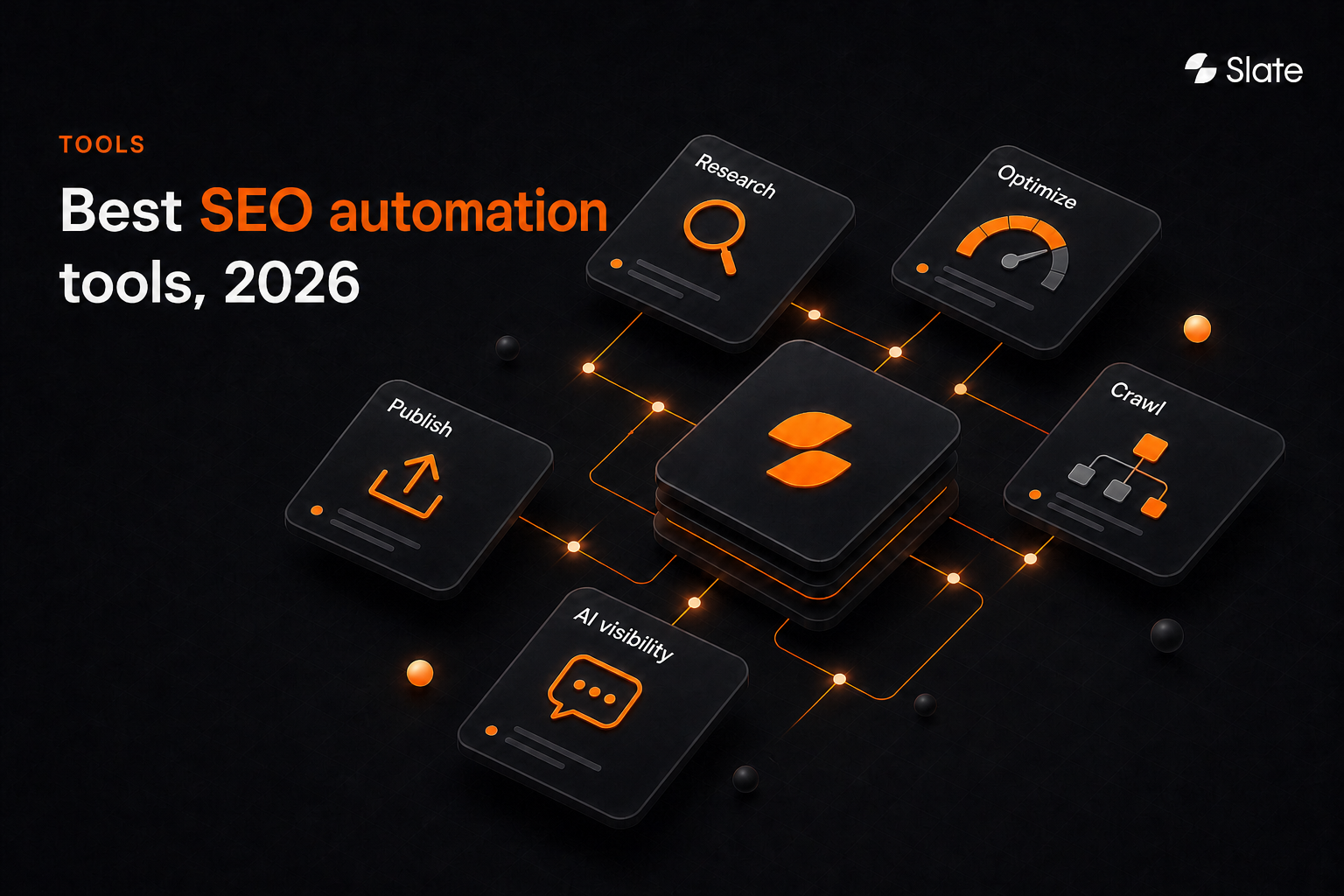
Agencies should separate dashboards that update automatically from systems that create tasks, improve pages, publish changes, or run outreach. Slate’s Workflows, Sheets, SuperBlocks, Opportunities, Pages, Outreach, and Cowork are designed around that operating layer.
Best SEO tools for research and opportunity discovery
Opportunity discovery means finding ranking gaps, keyword gaps, AI visibility changes, suggested prompts, third-party outreach targets, and content decay.
Research tools build the backlog and delivery tools work through it. Agencies that blur those jobs often end up with more recommendations than published improvements.
1. Slate - Best for connected SEO opportunities and AI search visibility
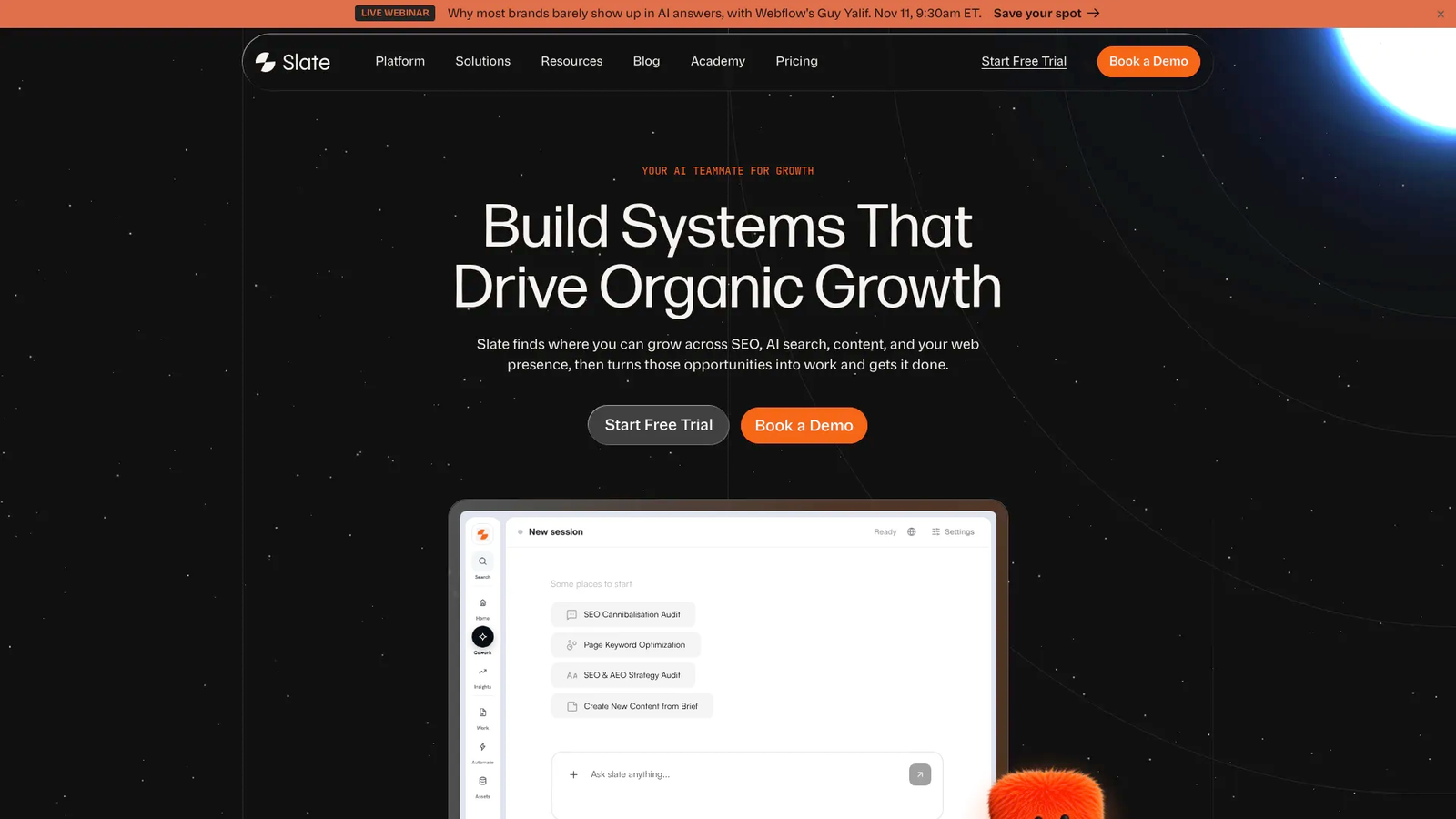
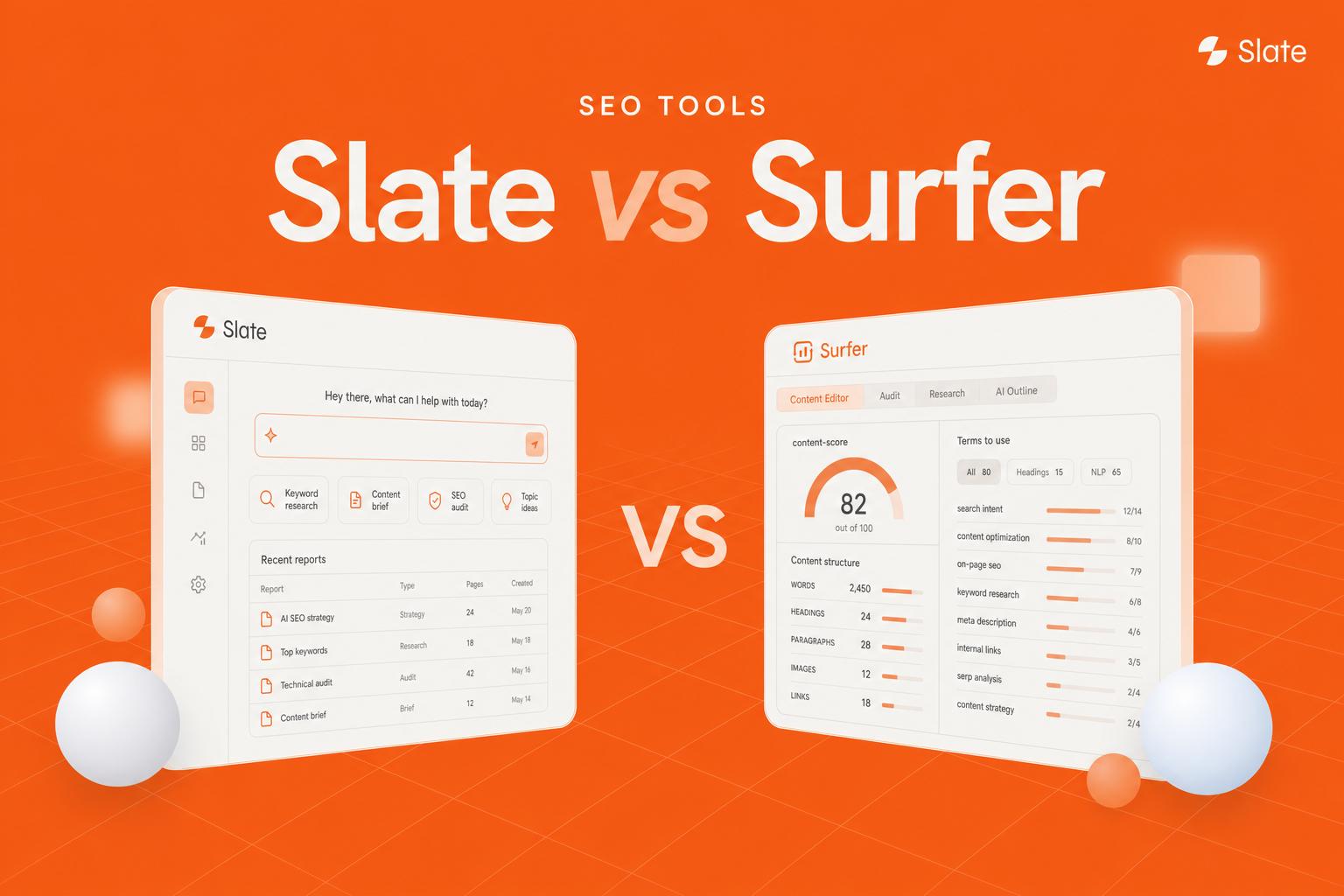
Slate is the strongest fit for agencies that want one connected operating layer for SEO, content operations, outreach, AI visibility, publishing, measurement, and refresh.
Best for: Agencies and organic-growth teams managing SEO and AI search visibility from opportunity discovery through publishing, measurement, and refresh.
What it is: Slate is an end-to-end, agent-driven content and SEO automation platform. Teams can delegate work in plain language through Cowork, build repeatable workflows, use Sheets for bulk work, and use SuperBlocks as prebuilt workflow components.
Slate’s Opportunities product covers keyword gaps, AI visibility topic changes, suggested prompts, third-party outreach targets, and content decay. That helps agencies standardize how analysts identify work across client accounts. Each opportunity can be assigned to a teammate or to the Slate agent, and Slate measures the impact after it’s accepted.
Slate’s AI Visibility tracker (also called AI Search Analytics) tracks ChatGPT, Google AI Mode, Google AI Overviews, and Perplexity on every plan. Claude and Gemini are add-on answer packs, and Enterprise follows the same setup.
Slate also includes Semrush data (no separate Semrush account needed), Ahrefs data in Workflows, Pages for combining Google Search Console and GA4 performance signals, Outreach (marketed as Offsite) for third-party outreach workflows, and CMS publishing to Webflow, Sanity, WordPress, and Strapi. Agencies can identify a content decay issue, build a refresh workflow, publish updates, and monitor performance without moving every step into a separate system.
Agency fit: Slate is strongest when the agency’s bottleneck is execution velocity, repeatability, or AI visibility reporting. It is less relevant for teams that only need a single-purpose crawler or a presentation-only client dashboard. See how Slate works for marketing agencies.
Pricing: Growth $499/month; Scale $999/month; Agency $2,000/month; Enterprise custom. Growth includes 1 user and 1 workspace. Scale and above come with custom user and workspace counts. Annual billing saves 20%. A 14-day free trial is available.
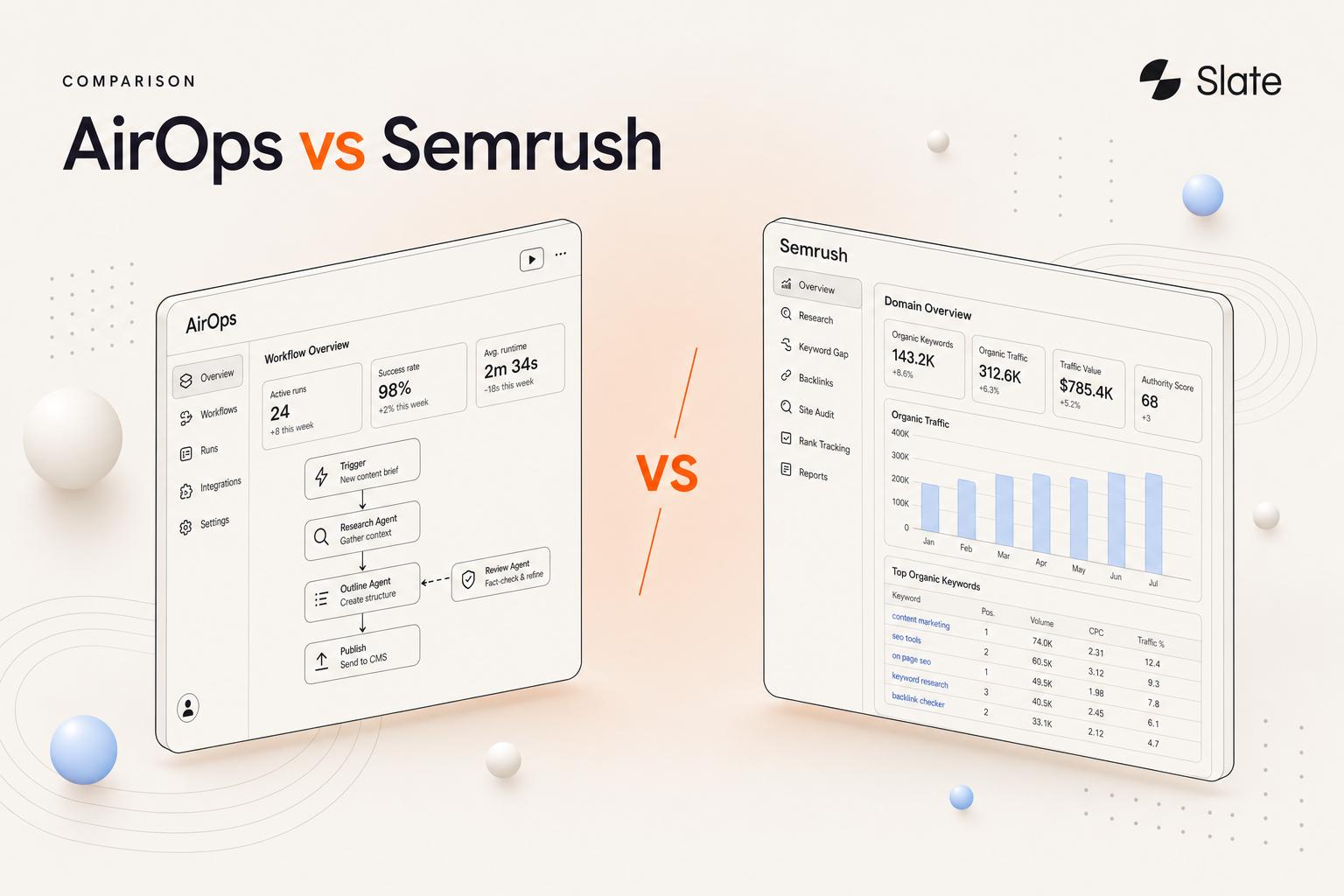
2. Semrush - Best for broad competitive research
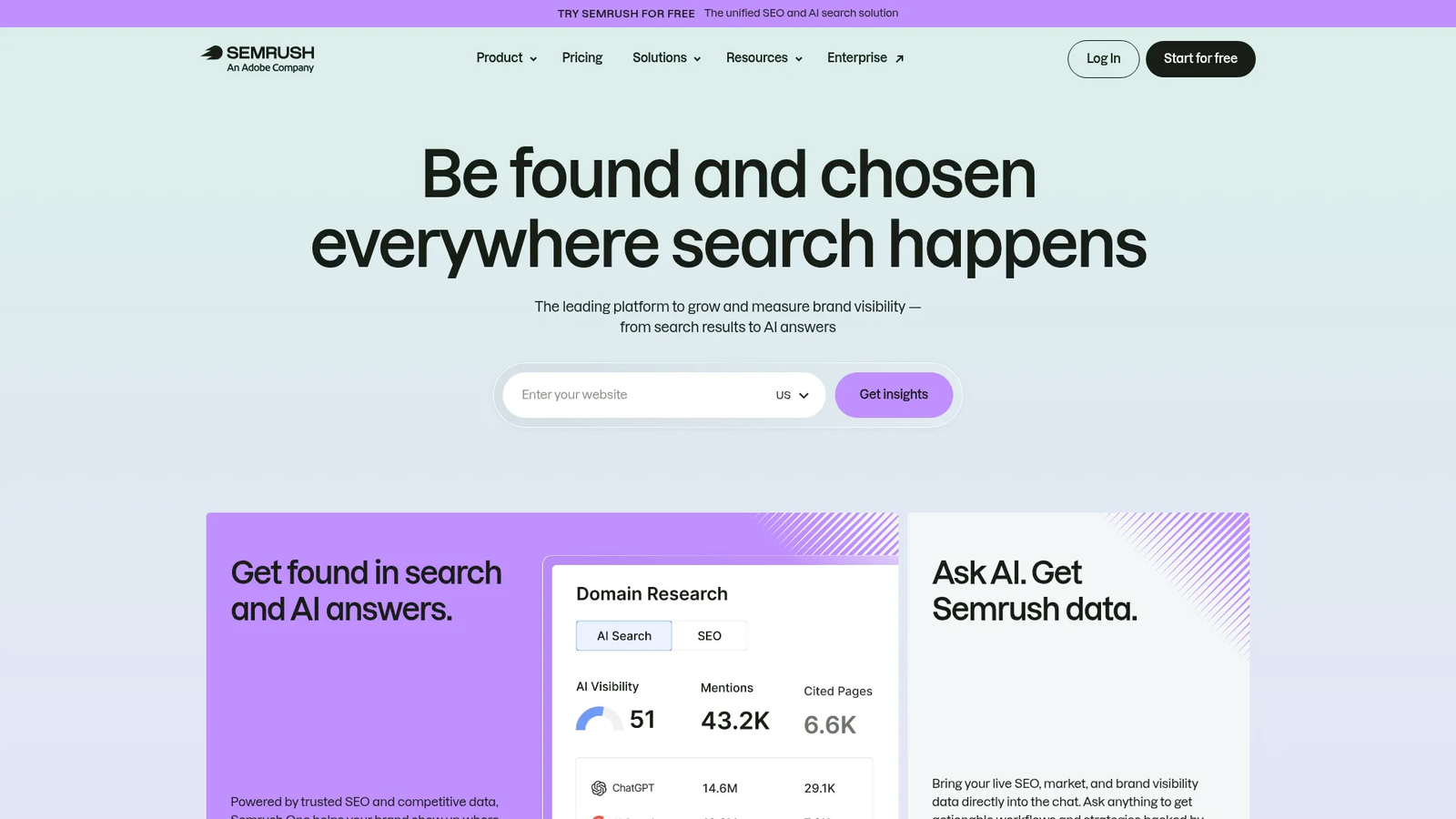
Semrush fits agencies that need a broad research baseline across keywords, competitors, and market discovery.
Best for: Agencies that need broad keyword and competitive research across multiple clients.
Semrush is useful when the immediate constraint is visibility into the market: which competitors are present, which topics are active, and where the agency should look next.
Semrush has also added AI visibility tracking through its SEO + AI Search plans and the AI Visibility Toolkit add-on, so agencies already on Semrush can start there before adding a dedicated platform.
Agencies already on Slate get Semrush data inside the platform, which helps when research signals need to feed execution workflows directly.
3. Ahrefs - Best for backlink and competitor analysis
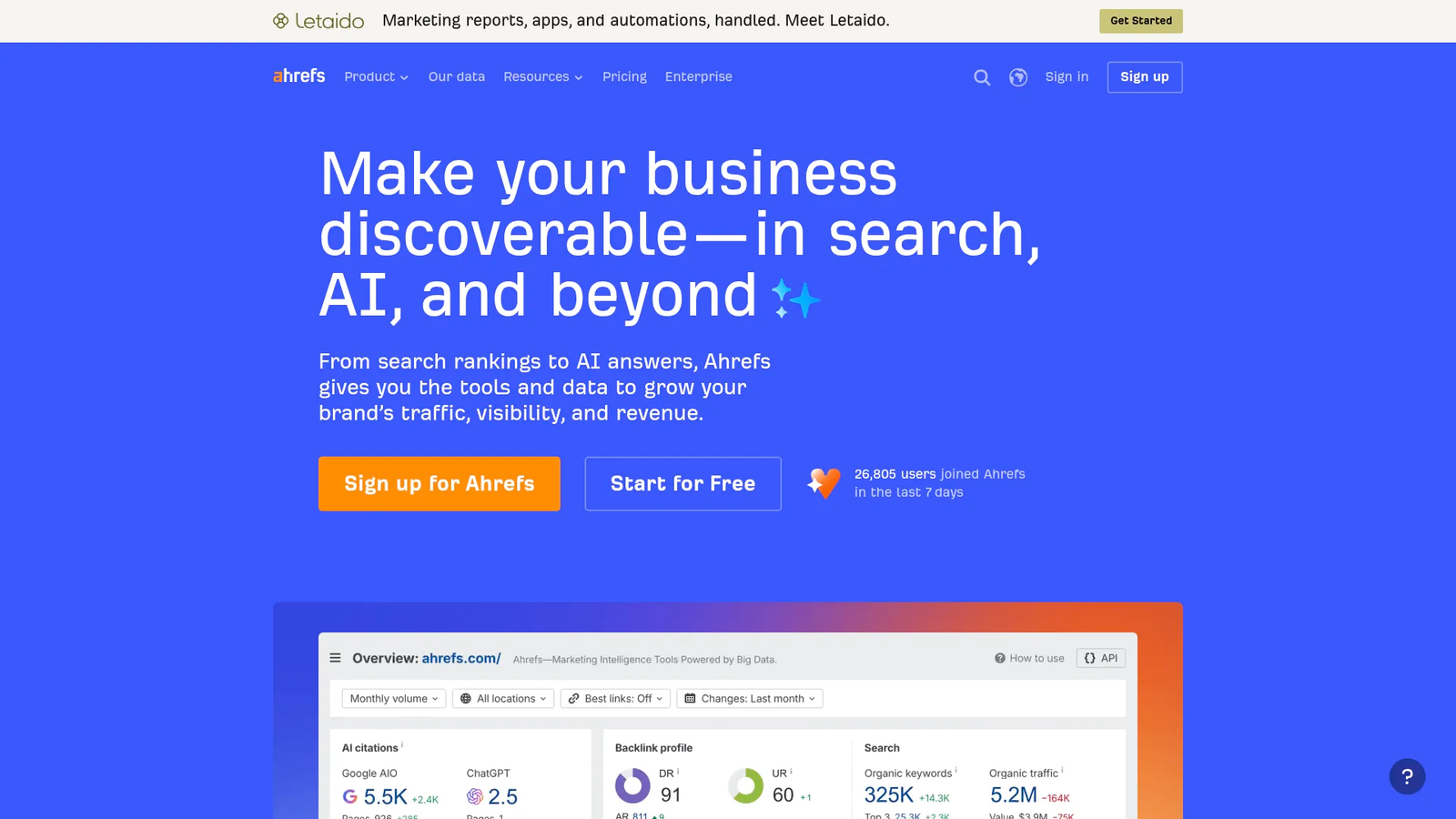
Ahrefs is a common pick for agencies focused on backlinks, competitor analysis, and content gaps. Its Brand Radar adds mention and citation tracking in AI answers (see our AI citation tracking tools guide).
Best for: Agencies that prioritize backlink and competitor analysis.
Agencies should compare the weekly workflows that depend on Ahrefs. If one team uses it heavily for competitor investigation while another relies on a different dataset for keyword planning, the overlap may be justified.
Stack tip: Before renewing overlapping research subscriptions, agencies should audit which teams use each dataset weekly and whether the findings reliably become published client work.
4. SE Ranking - Best for cost-efficient agency rank tracking
SE Ranking fits agencies that want rank tracking and monitoring at a lower price than the larger suites. Its Agency Pack adds client seats and white-label reports, and AI search tracking is sold as an add-on.
Best for: Agencies that need cost-conscious rank tracking and client visibility monitoring.
For agency buyers, the evaluation point goes beyond whether rankings can be tracked. The account structure, reporting workflow, and limits need to match the number of clients, locations, devices, and keywords the team manages.
Choose SE Ranking when recurring rank monitoring is the central need and the agency already has separate processes for strategy, production, publishing, and reporting. For a wider comparison, see our SEO rank tracking software guide.
Best SEO tools for delivery and technical execution
Delivery is where findings become published changes: crawl issues get resolved, briefs get written, pages get improved, internal links are added, content is refreshed, and updates are republished.
The common failure point is the handoff between the tool that finds the issue and the person responsible for doing the work.
5. Screaming Frog SEO Spider - Best for deep technical crawls
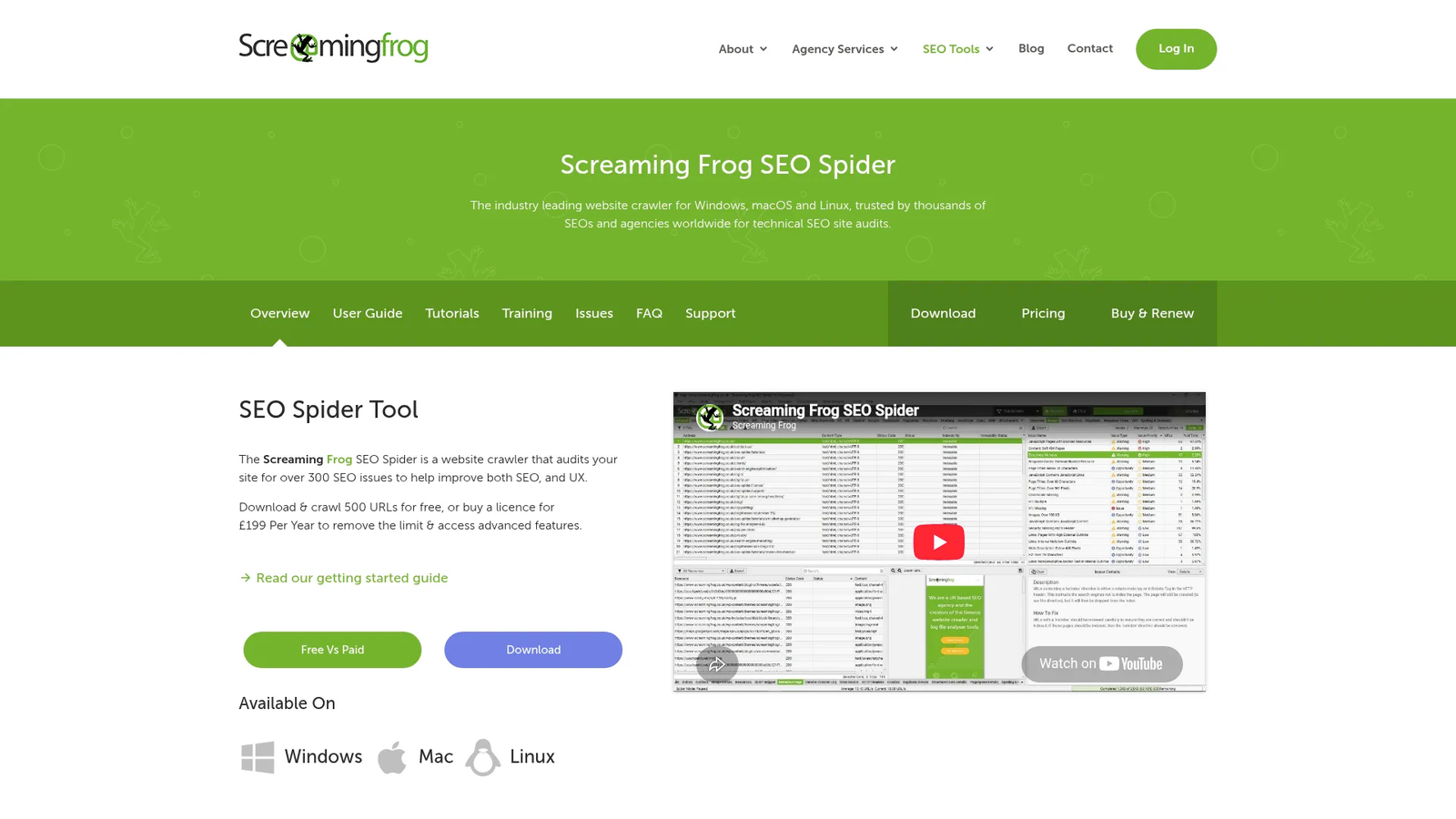
Screaming Frog SEO Spider is a specialist fit for agencies that need deep technical crawling.
Best for: Technical SEO teams that need a crawler-first workflow.
The main agency question is how crawl findings become client-ready priorities. A technical specialist may know which issues should come first, but account managers and clients often need a clearer sequence: what should be addressed now, what can wait, and what business risk the issue creates.
6. Sitebulb - Best for audit prioritization and client-ready technical reports
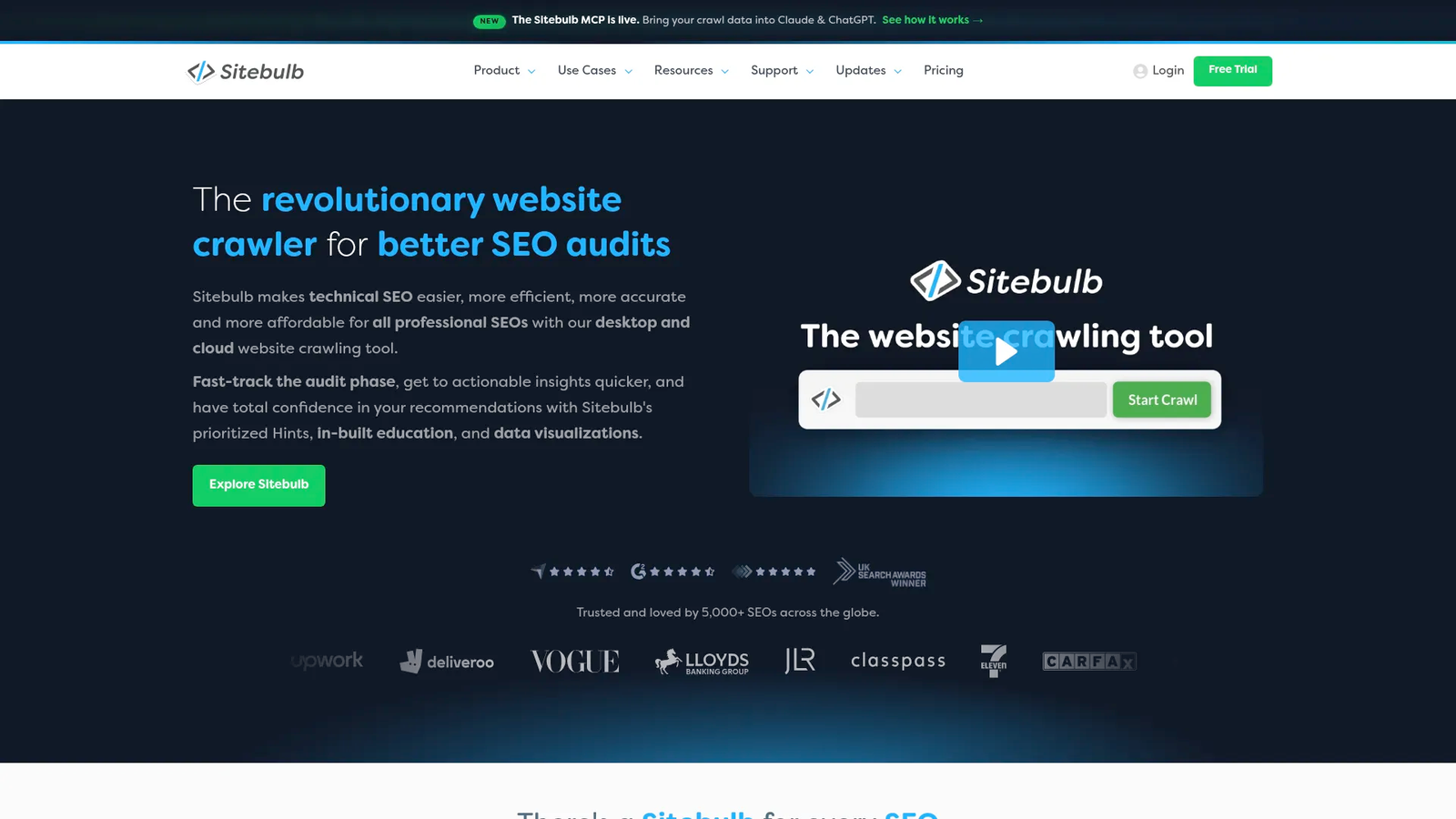
Sitebulb fits agencies that want technical audit work to be easier to prioritize and communicate.
Best for: Technical SEO teams that need audit prioritization and report-ready outputs.
For agencies, that communication layer can save time. A crawl may identify the issue, but the report needs to explain why the client should respond. Sitebulb is a technical delivery tool; it doesn’t cover content operations or AI visibility.
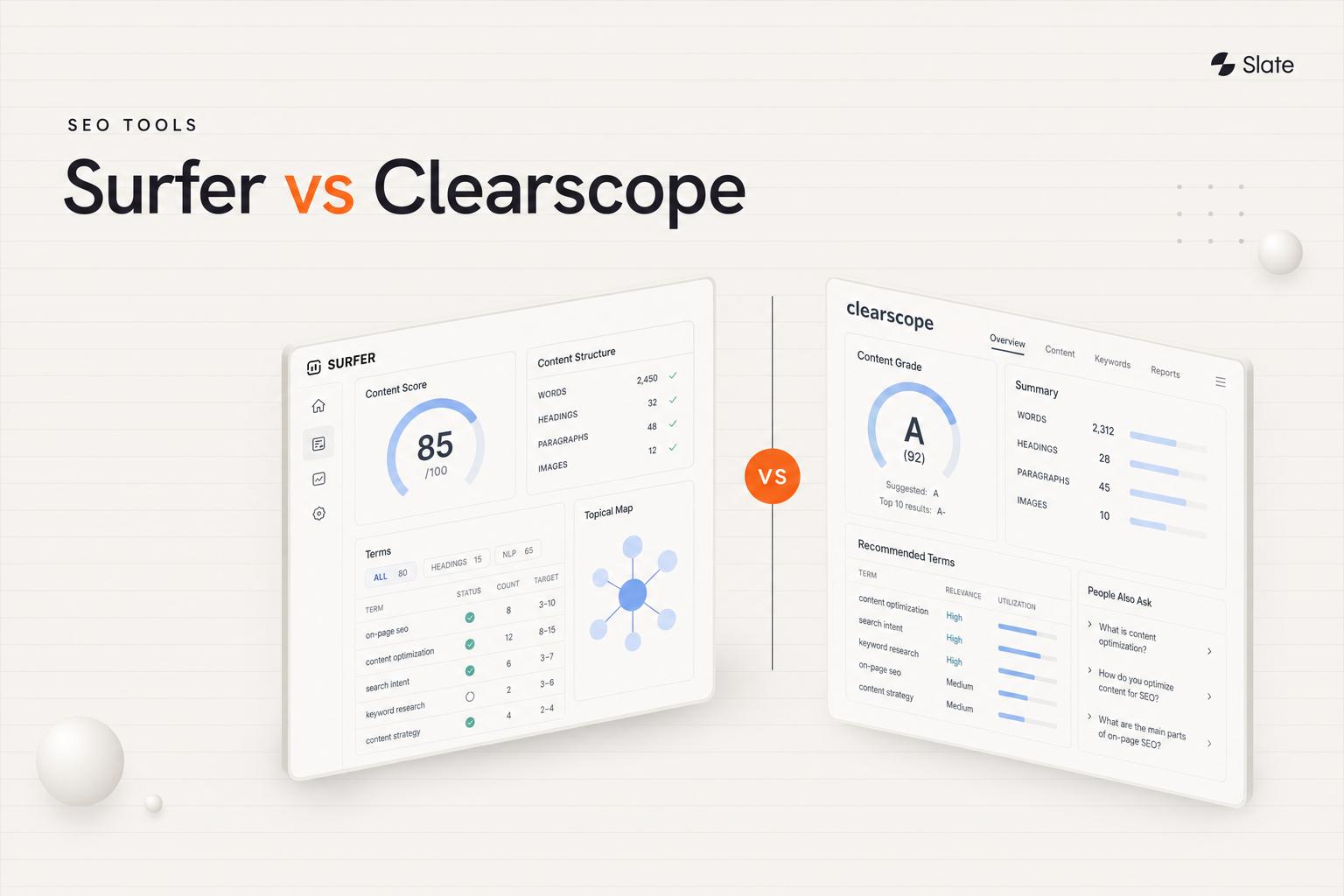
7. Surfer - Best for on-page content scoring
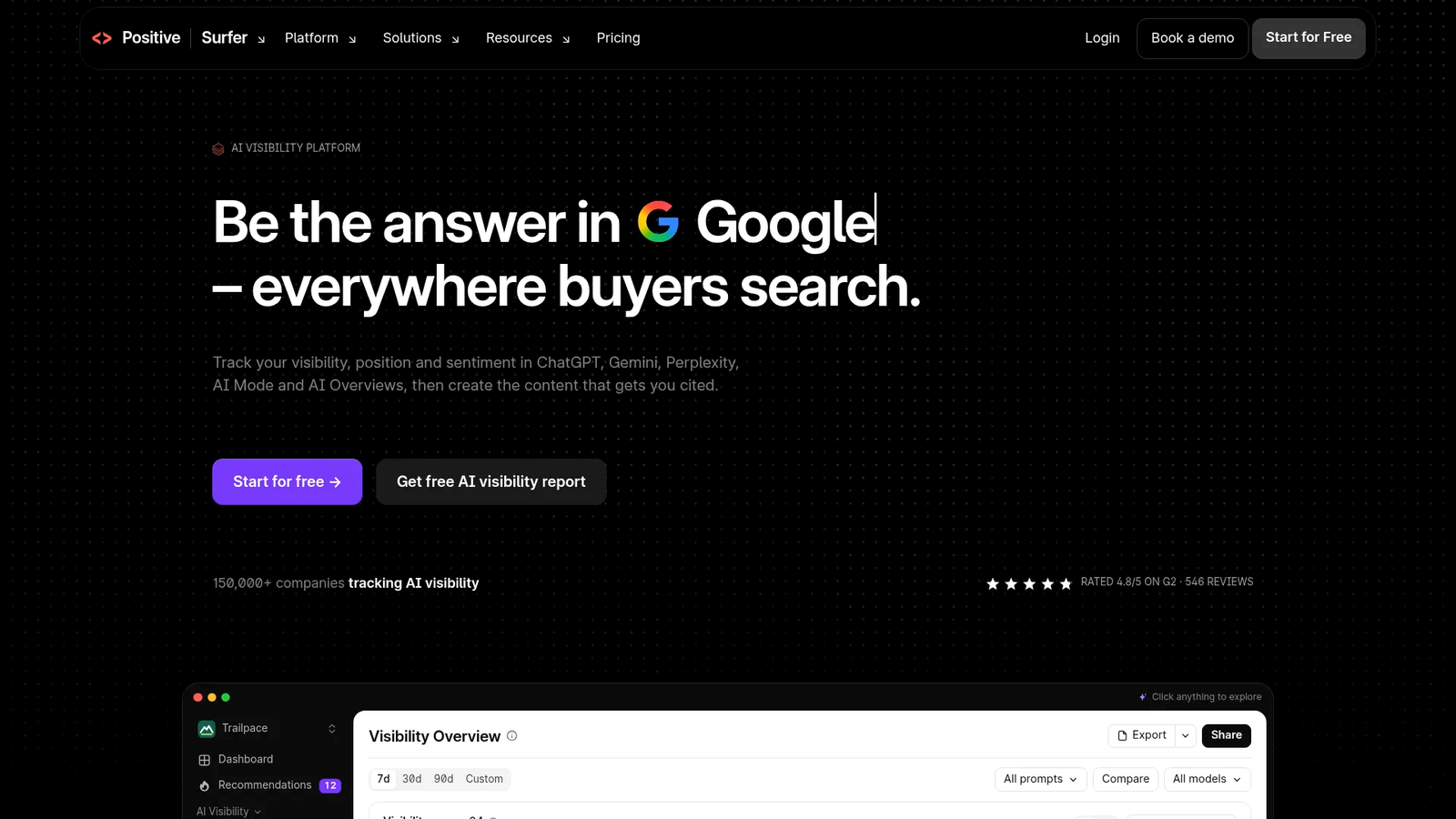
Surfer fits agencies that need page-level content guidance. It also has an AI Tracker for monitoring brand visibility in AI answers.
Best for: Agencies improving on-page content against SERP-informed guidance.
Content scoring can help standardize editorial review, but it isn’t a ranking guarantee. Agencies still need judgment around search intent, brand positioning, information gain, internal linking, and whether the page deserves to exist.
8. Clearscope - Best for editorial content briefs
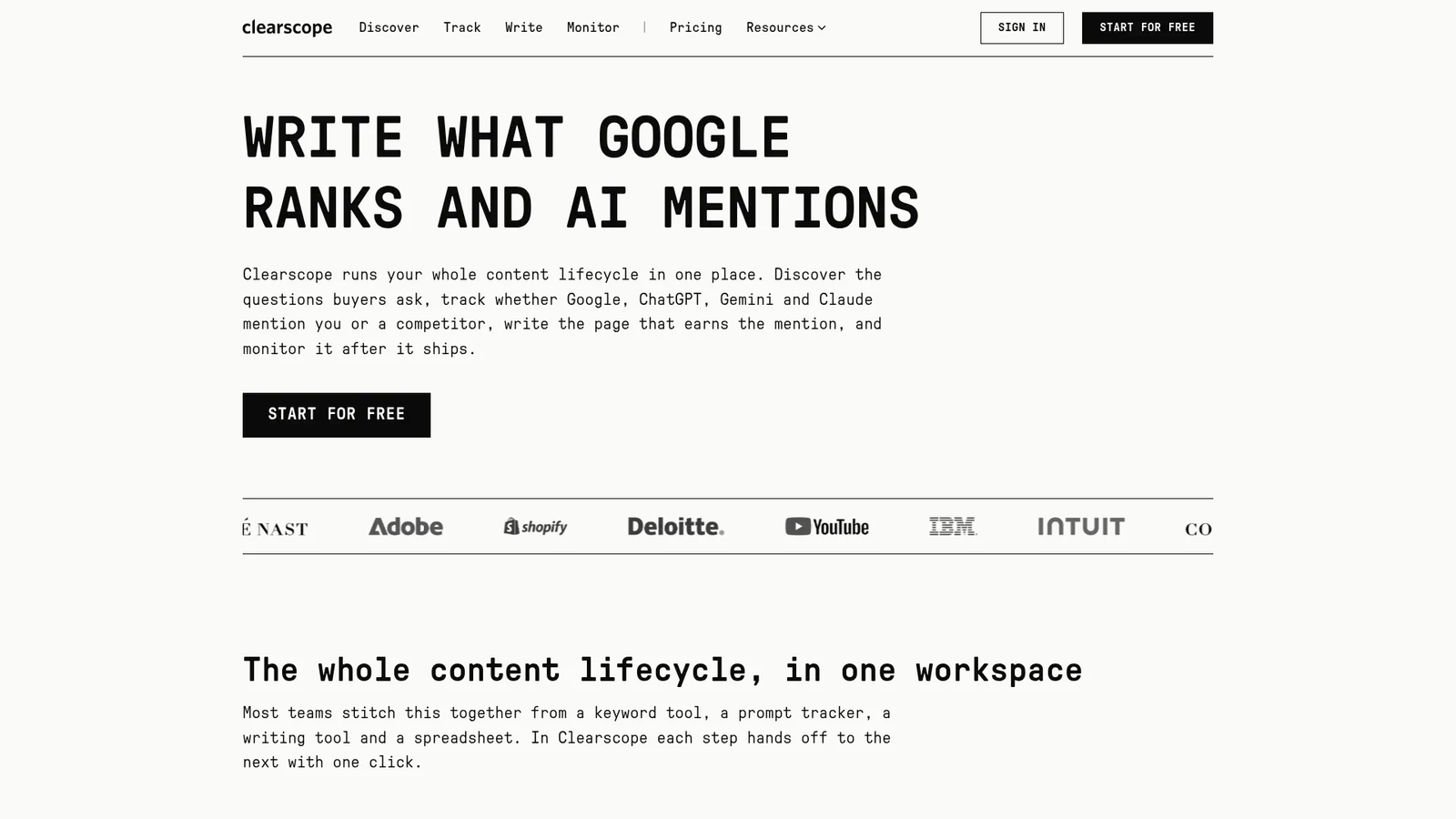
Clearscope fits editorial teams that want clearer briefs and term coverage guidance before content reaches drafting.
Best for: Agencies producing briefs and improving editorial content.
Its role is narrower than an end-to-end SEO operating system. Clearscope can help shape the article or refresh brief, but agencies still need separate workflows for opportunity discovery, technical auditing, approvals, publishing, outreach, and performance reporting.
Where Slate fits in delivery
Slate fits delivery when the agency needs to move from insight to published work across many URLs.
Sheets supports bulk content workflows; Workflows provides a visual builder for repeatable processes; SuperBlocks gives teams reusable workflow components; and CMS publishing supports Webflow, Sanity, WordPress, and Strapi. Prebuilt agents such as the Internal Linking Agent and Content Refresh Engine cover common delivery jobs.
Best SEO reporting tools for agencies and multi-client management
The best SEO reporting tools for agencies centralize performance data, automate recurring reports, support branded dashboards, and make results understandable to clients.
Look past the visuals: reporting software should support account-level segmentation, scheduled delivery, annotations, reliable data connections, and a clear link between completed work and performance changes.
9. AgencyAnalytics - Best for white-label multi-client reporting
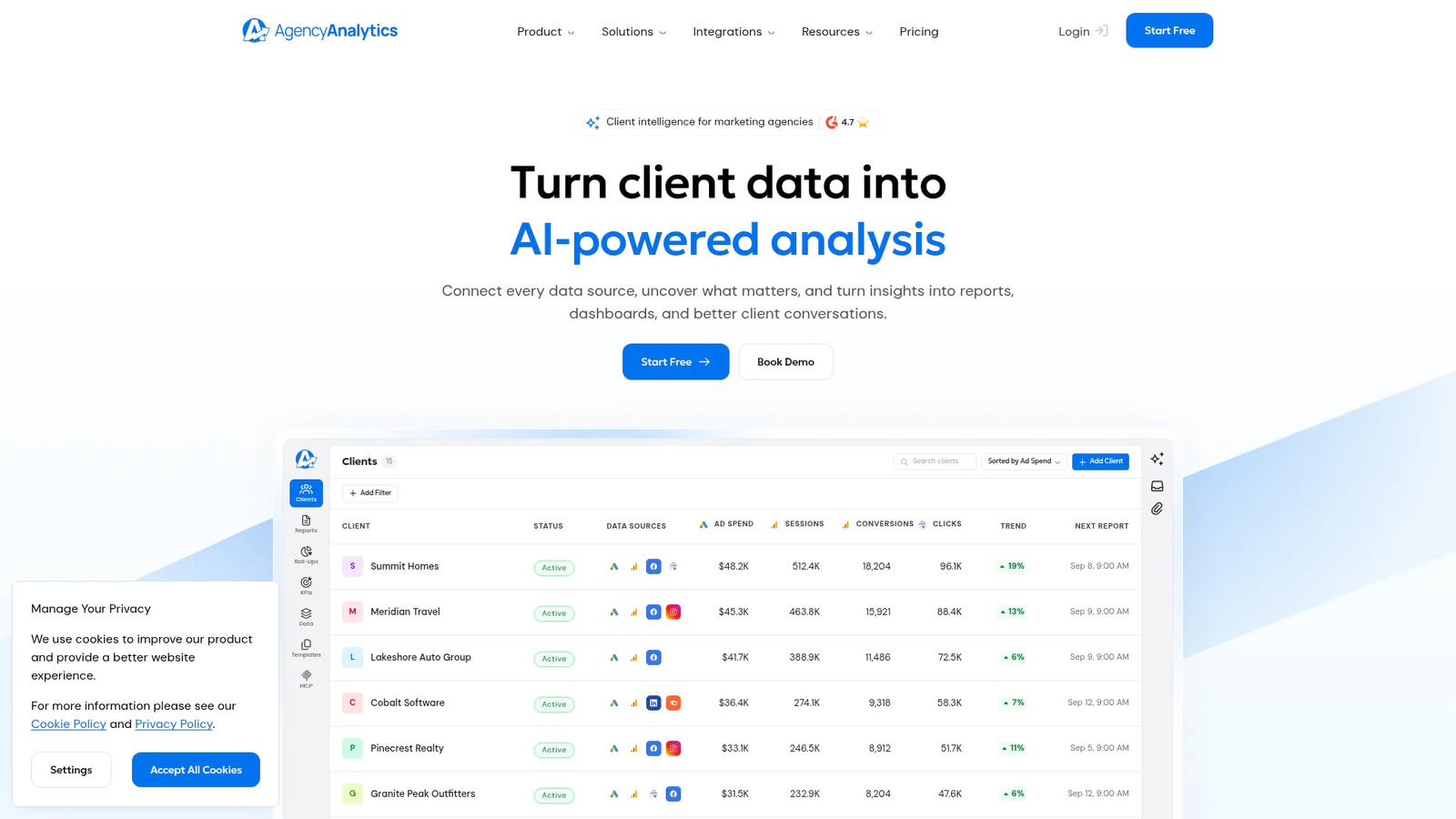
AgencyAnalytics fits agencies that need white-label client reporting across multiple accounts.
Best for: Agencies that need branded client dashboards and recurring report delivery.
This is useful when account managers spend too much time assembling monthly reports manually. A reporting layer helps communicate results, but it doesn’t create the SEO work behind those results.
10. Whatagraph - Best for multi-source marketing reporting
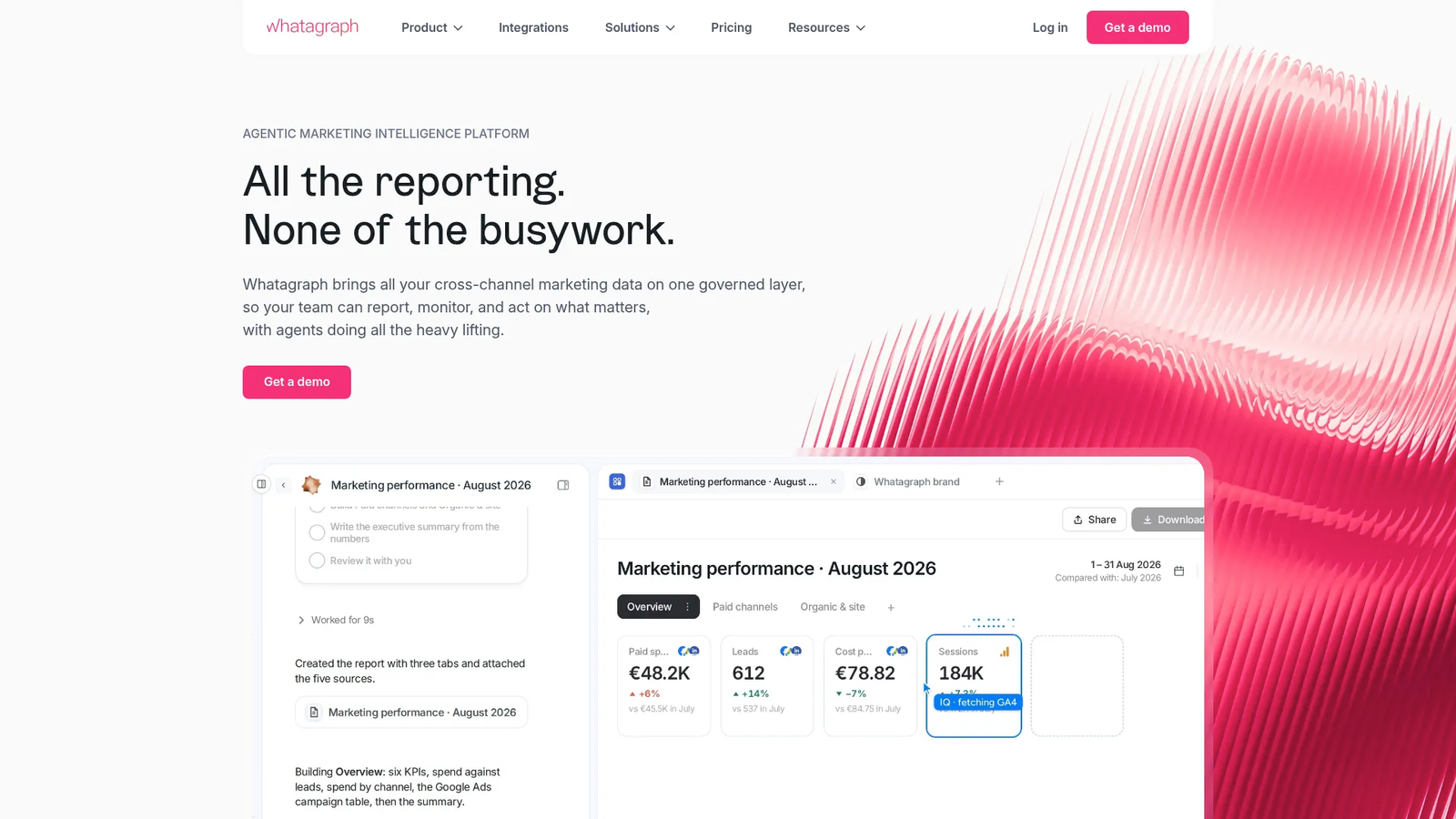
Whatagraph fits agencies that report across multiple marketing channels, not just SEO.
Best for: Agencies building multi-source marketing reports.
For SEO teams, the value depends on the quality of the connected sources and the agency’s reporting model. If the client wants one executive-facing view of performance, a cross-channel reporting platform can reduce manual assembly.
11. Data Studio (formerly Looker Studio) - Best for fully custom no-cost dashboards
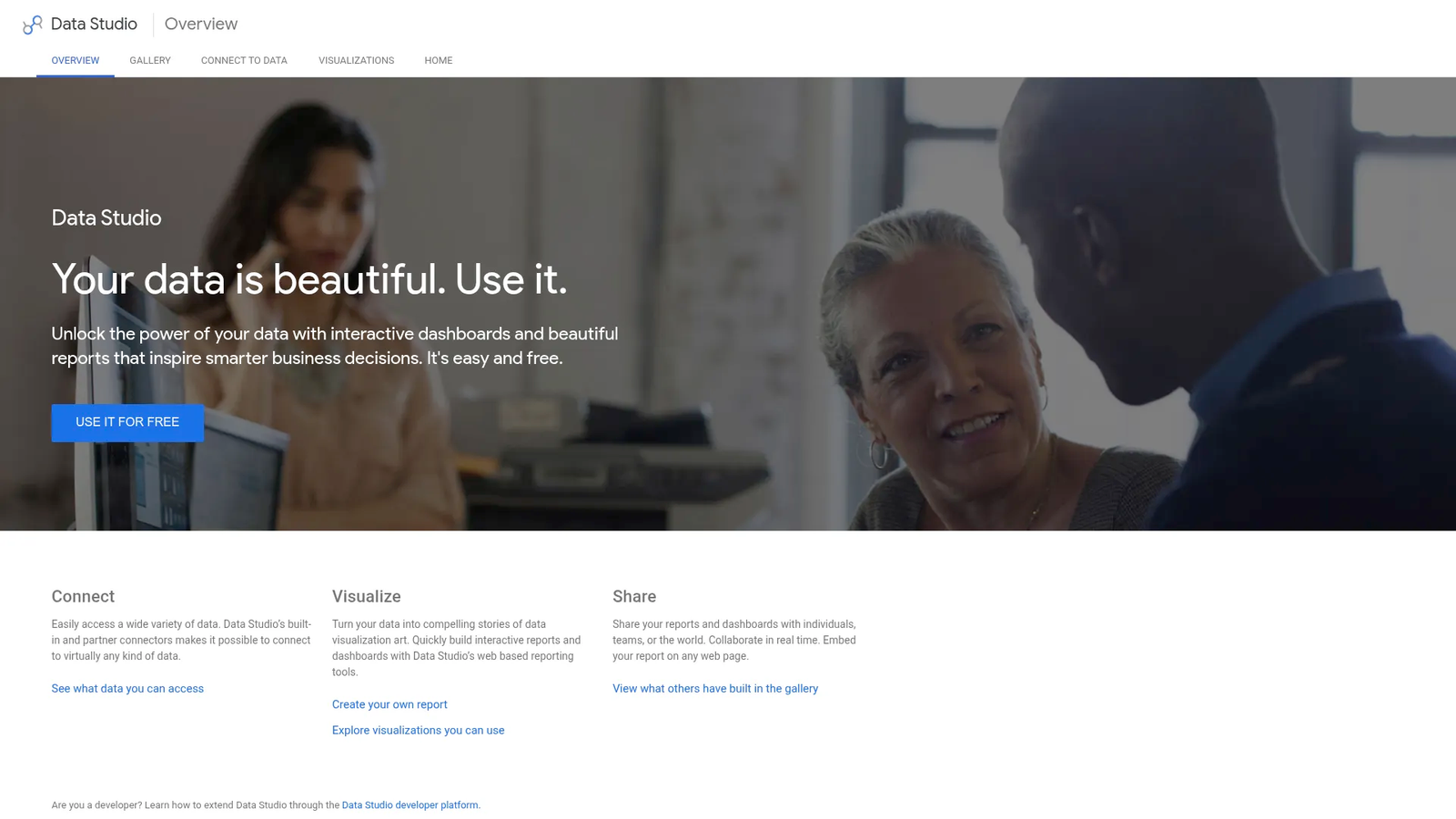
Data Studio (Google renamed Looker Studio back to Data Studio in April 2026) fits agencies that want custom dashboards and have the internal skill to maintain them.
Best for: Agencies with analytics capacity and custom reporting requirements.
The tradeoff is maintenance: someone has to manage connectors, schema changes, broken charts, and client-specific logic. Data Studio is best for teams that want flexibility more than packaged SEO reporting.
How Slate handles reporting differently
Slate’s reporting value is that performance monitoring sits closer to the work itself.
Pages combines Google Search Console and GA4 signals with AI visibility metrics, so agencies can connect what changed, why it was prioritized, and what should happen next. AI Visibility reports can also be shared by link or exported to Excel for client delivery.
Best tools for local SEO agencies
Local SEO agencies need location-level rank tracking, Google Business Profile workflows, citation consistency monitoring, and review tracking across every client location.
Multi-location and franchise accounts add another requirement: reporting that rolls up by region while still allowing location-level investigation.
12. BrightLocal - Best for local SEO and Google Business Profile workflows
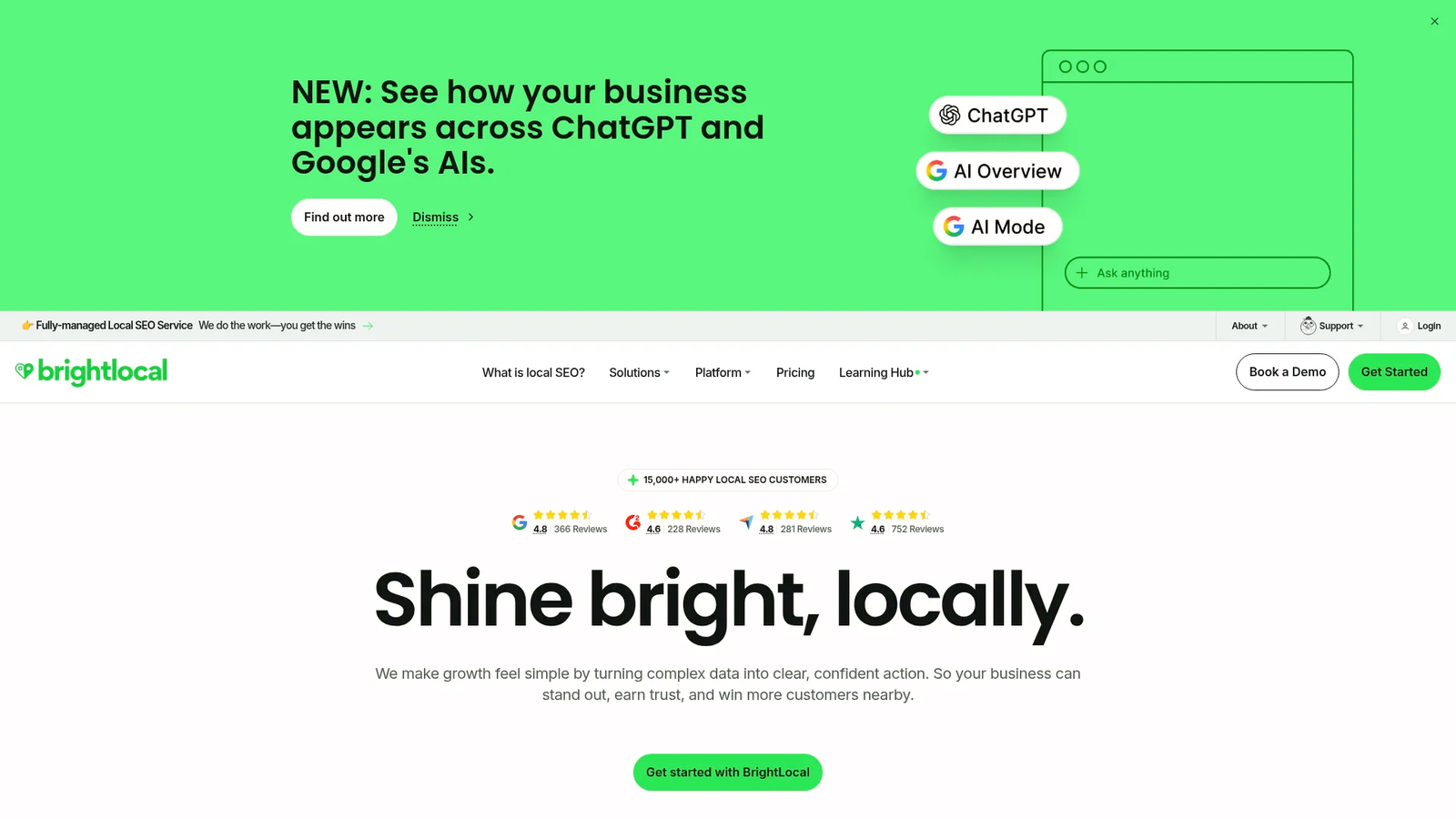
BrightLocal fits agencies focused on local SEO workflows, especially when location-level visibility and local search reporting are central to client value. It also offers white-label reports for agency delivery.
Best for: Agencies managing local SEO and Google Business Profile work.
Local SEO has a different operating model from national content SEO. Agencies need to manage location-level visibility, local citations, reviews, and performance differences across cities, regions, or branches.
What to add for multi-location client portfolios
For multi-location clients, the hard part is consistency at scale.
Agencies need repeatable processes for location-page updates, content refreshes, internal linking, and local information governance. Slate’s Sheets can fit when the agency needs bulk workflows across large URL sets, especially when location pages require repeated improvement or refresh patterns.
Where AI search visibility fits in an agency stack
AI search visibility measures whether a brand appears accurately in AI-generated answers, recommendations, and citations.
For agencies, it creates a reporting and improvement layer alongside traditional rankings, showing where clients are absent, misrepresented, or outperformed in AI-driven discovery.
Report each signal separately. A brand can be mentioned without being cited, cited without being recommended, or rank well in Google while missing from AI answers. A workable agency setup tracks prompt sets mapped to each client’s services, then follows brand mentions, citations, sentiment, and share of voice against named competitors over time, and turns each gap into content, outreach, or page work.
We compare the tools and walk through a client-reporting workflow in our guide to AI visibility tools for marketing agencies, and explain which numbers to put in front of clients in which AI search metrics to track. In Slate, AI Visibility, Opportunities, Outreach, Workflows, Pages, and CMS publishing sit in one platform, so the team that spots a gap can publish the fix and re-measure it.
Recommended SEO tool stacks by agency model
The right stack depends on client complexity, reporting requirements, data governance, and the agency’s workflow bottleneck.
Use the models below as starting points, then remove tools that duplicate the same job without improving delivery quality.
Revisit the stack as the agency grows, and watch where work slows down: discovery, production, publishing, reporting, or client approvals.
How to avoid SEO tool sprawl
Agencies often use more than one SEO tool because research, crawling, reporting, and content production have different requirements.
The goal is a connected stack with minimal overlap and clear handoffs from insight to execution to measurement.
Slate can reduce coordination across research, production, publishing, outreach, and measurement workflows. Specialist tools may still be useful, but agencies should be deliberate about where specialist depth is needed.
How to evaluate an SEO tool before rolling it out across clients
Agencies should test SEO software against client workflows before expanding it across the portfolio.
A trial should prove data accuracy, permissions, reporting, publishing, usage limits, exports, and AI visibility coverage under normal operating conditions.
Use a 30-day evaluation window:
- Load two client accounts, including one complex account.
- Compare key data against Google Search Console and another trusted source.
- Run one complete reporting cycle, including client delivery.
- Test permissions and client data separation with another team member.
- Test one publishing or integration path in a safe environment.
- Model keyword, crawl, prompt, seat, and usage limits against the largest client.
- Export data and confirm the agency can keep the information it needs.
- Review AI visibility coverage, prompt tracking, and measurement cadence.
- Document handoff points that still require manual work.
- Price the stack against the expected 12-month client count.
By day 30, the agency should know whether client work moves with fewer handoffs than before.
Which SEO tool stack is right for your agency?
The right SEO tool stack removes the agency’s biggest bottleneck while keeping client data, reporting, execution, and quality control connected.
In 2026, agencies should evaluate traditional SEO capabilities alongside AI search visibility, then validate every platform against client workflows.
- If research is the gap, start with a research-first platform such as Semrush or Ahrefs.
- If client reporting is the gap, start with AgencyAnalytics, Whatagraph, or Data Studio.
- If execution and AI visibility are the gap, start with Slate.
FAQs about SEO tools for agencies
What are the best SEO tools for agencies?
The best SEO tools for agencies depend on the workflow. Slate is the strongest fit for connected SEO operations and AI visibility. Semrush and Ahrefs fit research workflows, Screaming Frog SEO Spider and Sitebulb fit technical crawling, AgencyAnalytics and Whatagraph fit reporting, and BrightLocal fits local SEO programs.
What SEO software do most agencies use?
A typical agency stack includes a research platform, a technical crawler, analytics data sources, a reporting layer, and content production tools. AI visibility tracking is increasingly becoming a separate layer because rankings, AI answer inclusion, mentions, citations, and sentiment are different forms of discovery.
Do agencies need both Semrush and Ahrefs?
Some agencies use both, but the decision should be based on workflow use. If teams rely on different datasets every week, overlap may be justified. If one platform is rarely used, the agency should compare research needs, seat structure, usage limits, and how often findings become client work.
What is the best SEO reporting tool for agencies?
The best SEO reporting tool depends on whether the agency needs presentation or connected execution. AgencyAnalytics, Whatagraph, and Data Studio fit reporting workflows. Slate fits agencies that want reporting closer to production, so teams can connect performance changes to completed work, prioritization logic, and next actions.
What is white-label SEO reporting?
White-label SEO reporting means dashboards, reports, portals, and recurring updates can be presented under the agency’s brand. It helps protect the client relationship and keep communication consistent. Strong reporting still needs context, including what changed, why the work mattered, and what the agency recommends next.
What is AI search visibility and why should agencies track it?
AI search visibility measures how a brand appears in AI-generated answers, recommendations, mentions, and citations. Clients may be visible in traditional search while missing from AI answers. Agencies should report rankings, mentions, citations, answer inclusion, sentiment, and competitor presence separately.
Can one tool replace an agency’s entire SEO stack?
Rarely. Specialist crawlers, research platforms, reporting tools, and local SEO tools can still be useful. Consolidation is realistic across selected workflows, especially when one platform connects opportunity discovery, content production, publishing, outreach, measurement, and refresh. The goal is fewer handoffs, even if a few specialist tools stay.
How much should an agency budget for SEO tools?
Budget depends on client count, keyword volume, crawl size, AI prompt tracking, seats, exports, reporting needs, integrations, and whether the agency needs specialist tools. A low starting price can become expensive at portfolio scale if limits force upgrades before the workflow is mature.