Your competitors are getting cited by AI. You're not.
That's the real content gap problem in 2026 - and most tools aren't built to solve it. Traditional gap analysis tells you which keywords you're missing. It doesn't tell you why ChatGPT, Perplexity, or Google AI Overviews reach for your competitor's content instead of yours when a user asks a question you should own.
AI Overviews reduce clicks on the #1 organic result by 58%' (Ahrefs, December 2025 data, published 2026)
The right content gap analysis tools for AI search don't just show you missing keywords. They help you understand what information you're not providing that causes AI models to cite someone else.
This guide covers 12 tools that address both dimensions - the traditional keyword and topic gaps, and the emerging AI citation gaps that most SEO teams are still flying blind on.
What is content gap analysis for AI search?
Content gap analysis, in its traditional form, means identifying the keywords and topics your competitors rank for that you don't. You run a competitor comparison in Ahrefs or Semrush, export a list of missing keywords, and build a content calendar around them. That process still has value. It's just no longer sufficient.
In 2026, a content gap isn't only a keyword you don't rank for. It's information you don't provide that causes AI models to cite your competitors instead of you. That's a fundamentally different problem - and it requires a different diagnostic approach.
When Google's AI Overview answers a query about "best project management software for remote teams," it doesn't pull from the page with the most backlinks. It pulls from the source that most completely and clearly answers the question, covers the relevant entities, and demonstrates genuine expertise. If your content is missing key data points, comparisons, or structured context that a competitor's page includes, the AI cites them. You get nothing.
Forrester's 2026 research found that content providing unique "information gain" ranks three times higher in AI responses than content that rehashes existing consensus. HubSpot's State of Marketing Report found that 73% of SEO professionals agree AI tools are becoming an important part of their SEO strategy' (HubSpot 2026 State of Marketing Report).
The tools in this list address both the traditional keyword gap problem and this newer AI citation gap problem. Some do both. Some specialize in one. We'll tell you exactly which is which.
How we evaluated these tools
We assessed each tool against six criteria, weighted toward AI search relevance since that's where most teams have the biggest blind spots right now.
- AI search relevance: Does the tool help identify gaps specifically for AI Overviews, LLM citations, or AI-generated answers - not just traditional SERP rankings?
- Content gap identification depth: Does it go beyond keywords to analyze topics, entities, information gain, and content structure?
- Competitor analysis capabilities: Can it benchmark your content against competitors at meaningful scale?
- Ease of use: Is it accessible to mid-level content strategists, not just technical SEOs with Python skills?
- Pricing and value: Does the feature set justify the cost for a typical content team?
- Integration: Does it fit into existing SEO and content workflows without requiring a full stack rebuild?
We weighted AI search capabilities heavily. That's the gap most teams need to close in 2026, and it's the dimension where competitor articles on this topic offer almost no guidance.
The 12 best content gap analysis tools for AI search in 2026
The list starts with the most AI-search-forward options, moves through established SEO platforms with strong gap analysis features, and ends with specialized tools that serve specific use cases. Every tool has a clear reason to be here.
1. Slate - AI-first content gap analysis for citation optimization
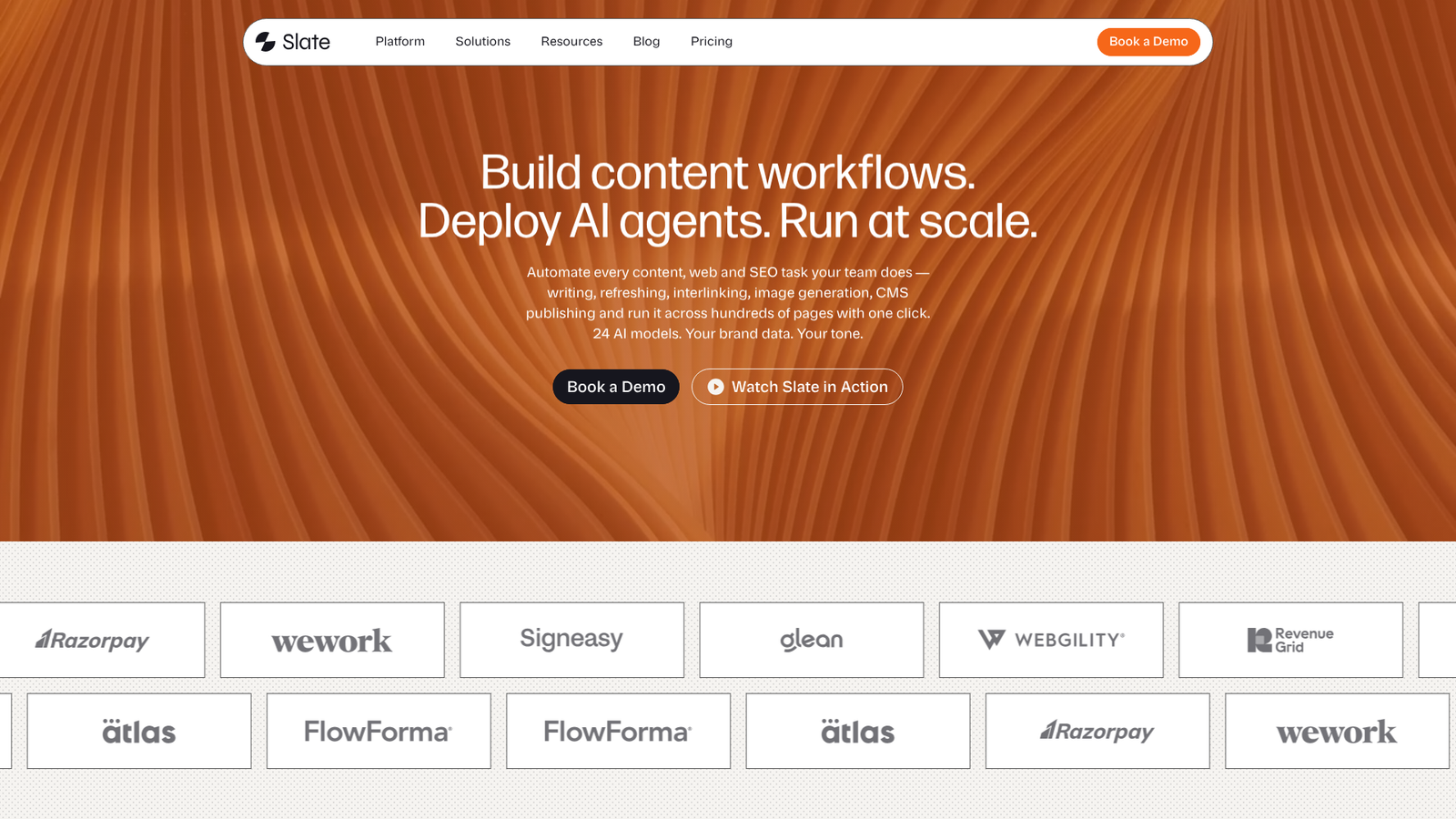
Slate is built specifically for the AI search era, helping content teams identify and close the gaps that prevent their content from being cited by AI models.
Where traditional tools show you keywords you're missing, Slate analyzes your content through the lens of AI citability - examining entity coverage, information completeness, and structural clarity against the sources AI models actually reference. It's designed for teams who've already mastered keyword gap analysis and now need to understand why their well-optimized content still isn't appearing in AI-generated answers.
Best for: Content strategists and SEO managers who need to close AI citation gaps, not just keyword gaps.
Key strengths
- AI citation gap identification across ChatGPT, Perplexity, and Google AI Overviews
- Entity and information completeness scoring against top-cited sources
- Content structure analysis aligned with how LLMs parse and extract information
- Competitor citation benchmarking at the topic and page level
- Actionable recommendations tied directly to AI search visibility improvements
Pricing: Starting at $199/month
2. Ahrefs - industry-standard content gap analysis at scale
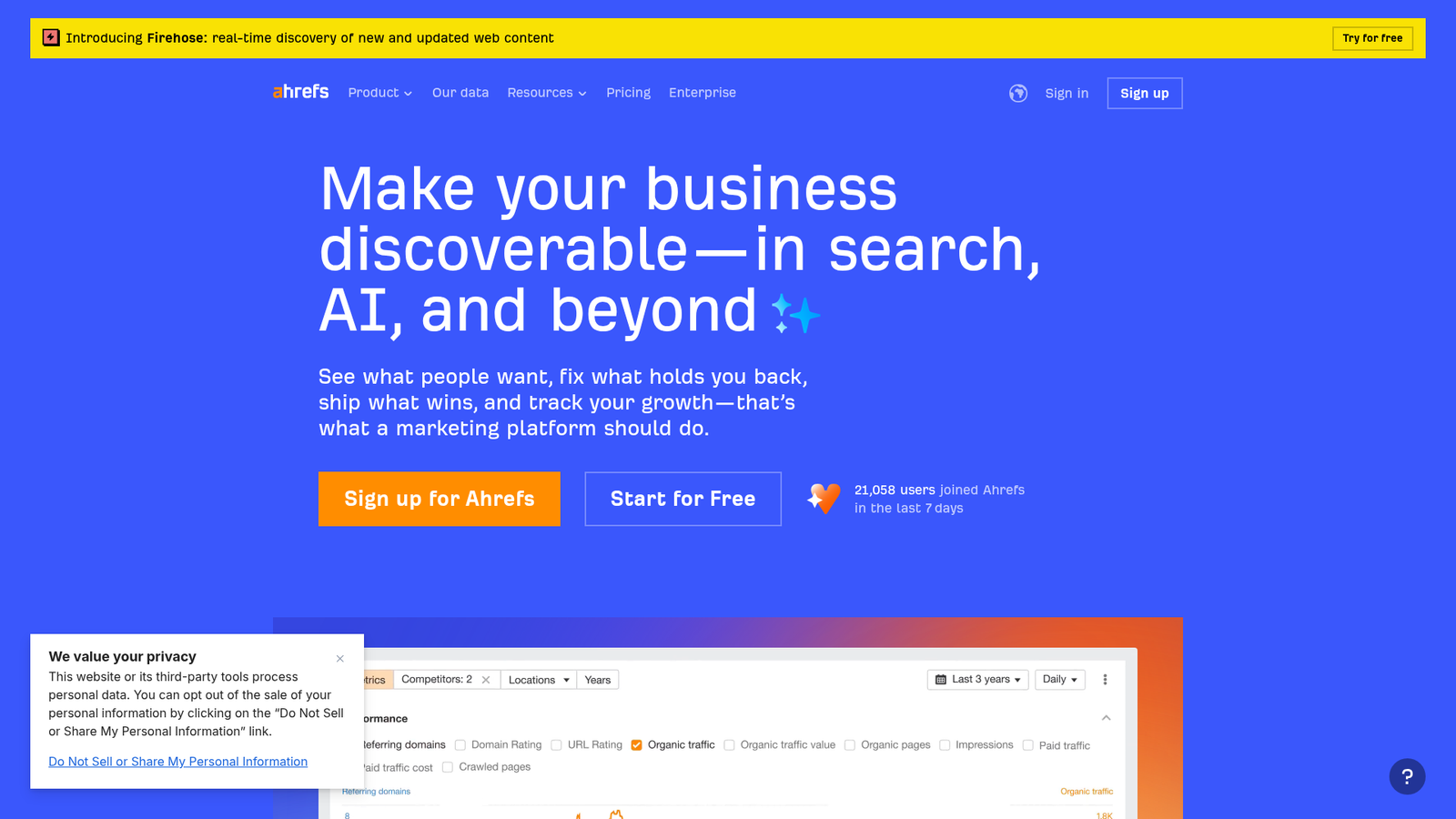
Ahrefs is the benchmark for keyword-level content gap analysis, with a Content Gap tool that remains one of the most reliable in the industry.
The workflow is straightforward: enter your domain alongside two to four competitor domains, and Ahrefs surfaces every keyword those competitors rank for that you don't. Content Explorer extends this to topic-level discovery, letting you find high-traffic content ideas your site hasn't addressed. For traditional SEO gap analysis, it's hard to beat the depth and accuracy of Ahrefs' data.
The honest limitation: Ahrefs is built for keyword and backlink intelligence, not AI citation analysis. It won't tell you why your content isn't appearing in AI Overviews or which information gaps are causing AI models to prefer a competitor's page. For that dimension, you'll want to pair it with a tool like Slate or Otterly.ai.
Best for: SEO managers who need comprehensive keyword gap data and are comfortable pairing it with a separate AI search monitoring tool.
Key strengths
- Content Gap tool compares up to five competitor domains simultaneously
- Content Explorer surfaces topic-level gaps with traffic and backlink data
- Site Audit identifies existing content quality issues alongside gaps
- Keyword difficulty and traffic potential scoring for gap prioritization
- Extensive backlink data for understanding competitor authority on gap topics
Pricing: Starts at $129/month (Lite plan)
3. Semrush - comprehensive keyword and topic gap intelligence
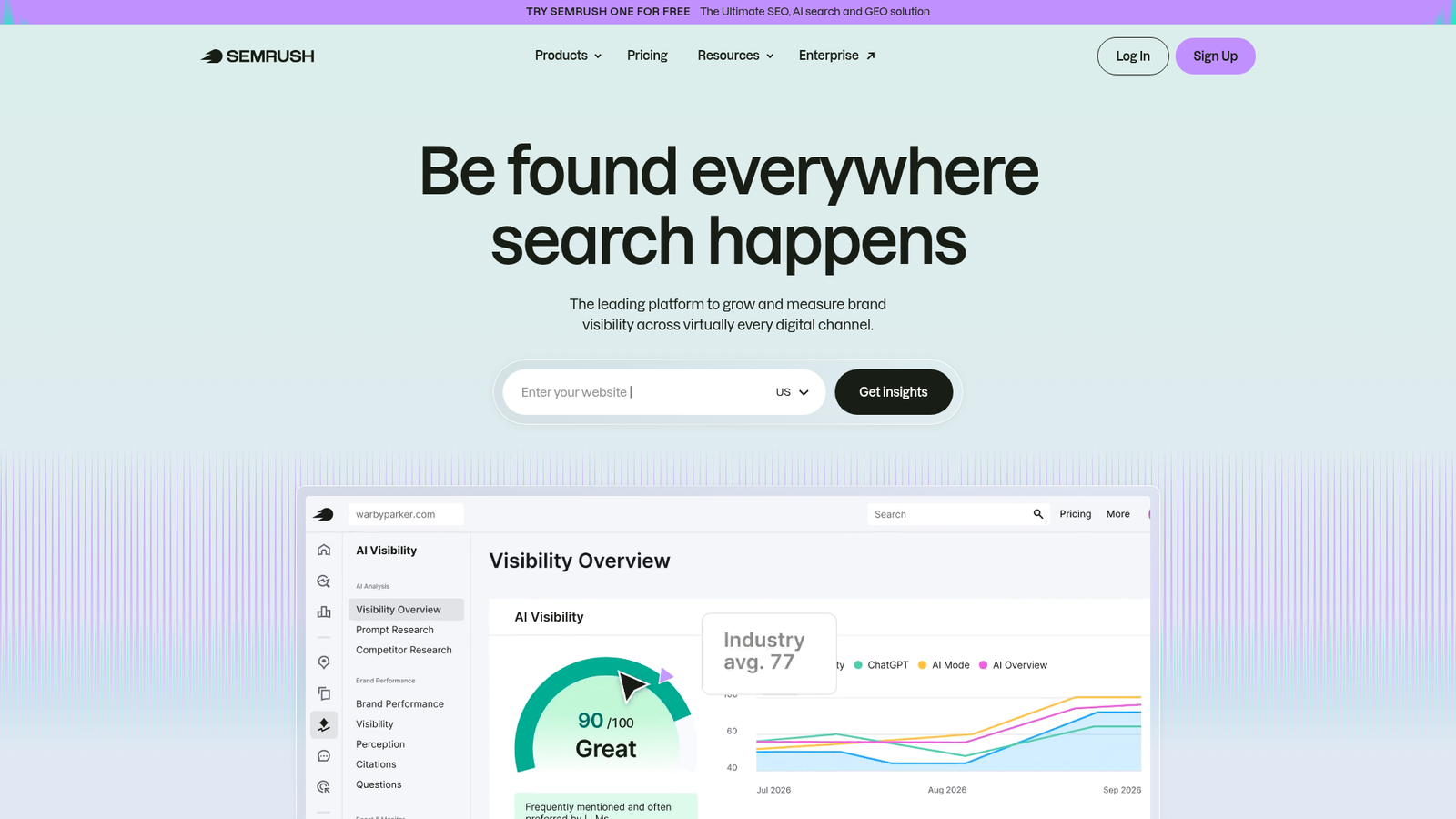
Semrush offers arguably the most complete traditional content gap analysis suite available, combining keyword gap analysis, topic research, and content optimization in a single platform.
The Keyword Gap tool lets you compare up to five domains across organic, paid, and PLA keywords, with filtering options that make it easy to isolate high-value opportunities. The Topic Research tool goes a level deeper, surfacing subtopics and questions your content doesn't address - which is particularly useful for identifying the kind of comprehensive coverage that AI models reward. The SEO Content Template then helps you optimize new content against the top-ranking pages for your target keyword.
Semrush has been adding AI-adjacent features, including its Copilot AI assistant, but its core gap analysis remains oriented toward traditional SERP performance rather than LLM citation optimization. It's a powerful platform for the keyword and topic layer of your gap analysis - just not the AI citation layer.
Best for: Content teams that want keyword gap analysis, topic research, and content optimization in one platform without managing multiple subscriptions.
Key strengths
- Keyword Gap tool supports up to five competitor domains with advanced filtering
- Topic Research surfaces subtopics and questions for comprehensive content coverage
- SEO Content Template benchmarks new content against top-ranking competitors
- Position tracking with AI Overview appearance monitoring (limited)
- Copilot AI provides automated gap identification suggestions
Pricing: Starts at $139.95/month (Pro plan)
4. RivalFlow AI by SpyFu - AI-powered head-to-head content comparison
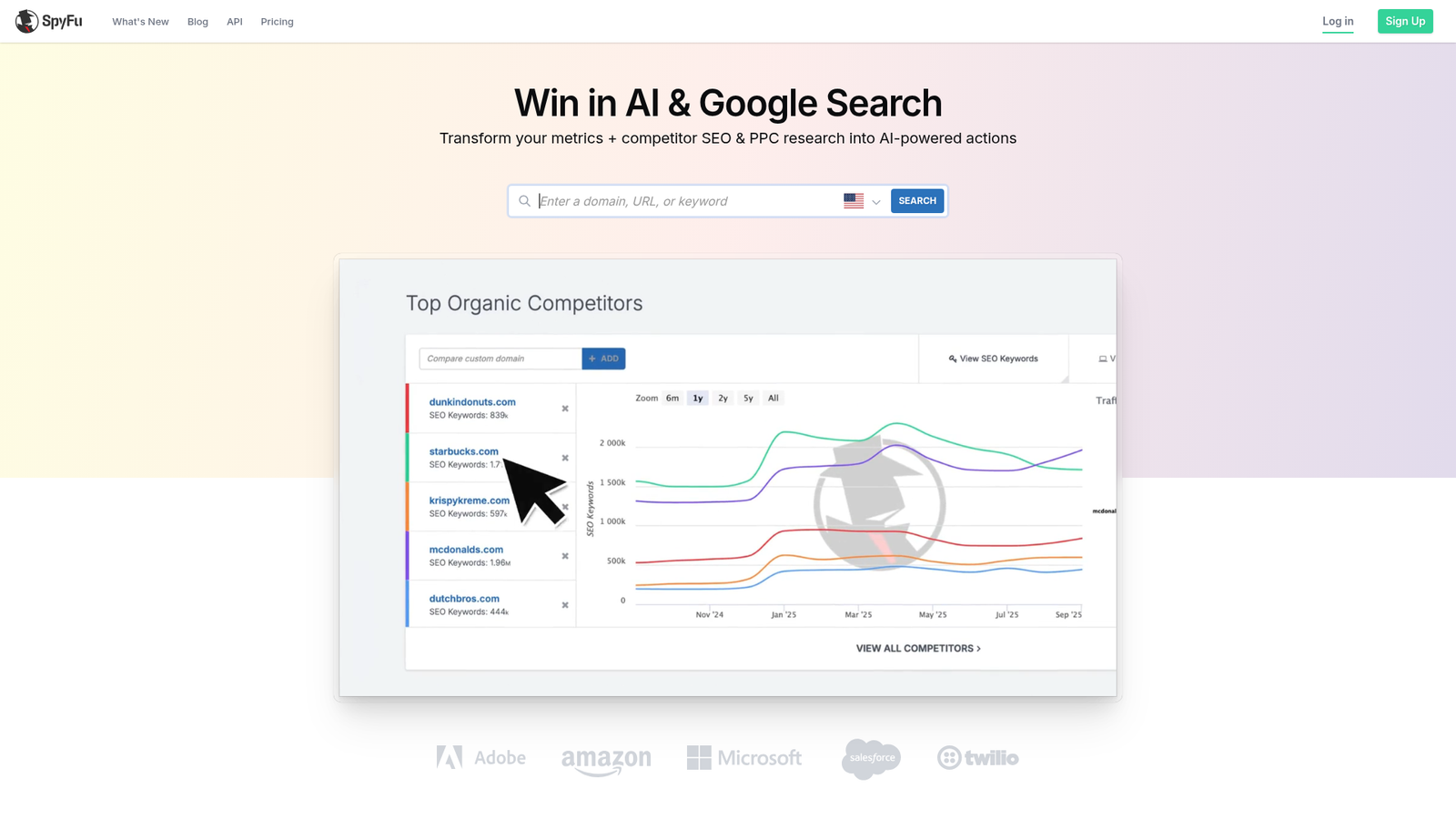
RivalFlow AI takes a different approach to content gap analysis: instead of comparing domains at scale, it compares your specific page against a specific competing page and identifies exactly what information you're missing.
This page-level focus makes it uniquely valuable for AI search optimization. When you know a competitor's page is being cited in AI Overviews for a query you should own, RivalFlow AI can tell you precisely what that page covers that yours doesn't - the specific data points, explanations, and context that represent your information gap. It then generates concrete suggestions for what to add. That's the kind of actionable, information-gain-focused analysis that moves the needle on AI citations.
The limitation is scope: RivalFlow AI works best as a page-level optimization tool, not a site-wide gap discovery tool. Use it after you've identified which pages need improvement, not to find new content opportunities from scratch.
Best for: Content teams optimizing existing pages to compete for AI citations on specific high-value queries.
Key strengths
- Direct page-to-page content comparison with specific information gap identification
- AI-generated suggestions for what content to add or expand
- Information gain analysis aligned with AI model citation preferences
- Integrates with SpyFu's broader keyword intelligence data
- Accessible interface that doesn't require technical SEO expertise
Pricing: Starts at $79/month. RivalFlow is also bundled into SpyFu's Pro + AI plan at $119/month and the Team/Agency plan at $249/month. 14-day free trial. Annual billing saves 25%.
5. Infranodus - knowledge graph-based topical gap discovery
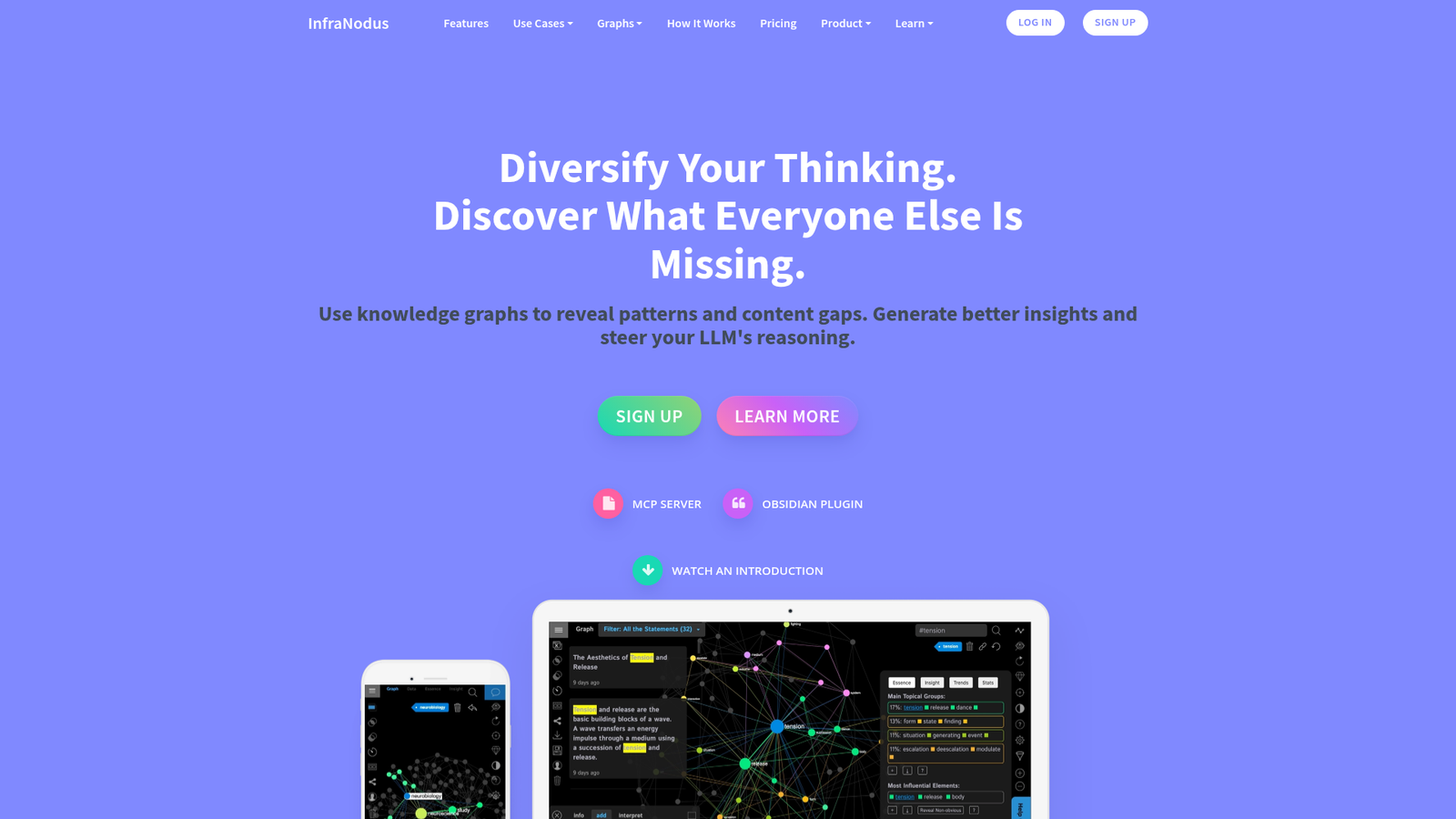
Infranodus approaches content gap analysis through AI-powered knowledge graphs - a method that's more technically sophisticated than keyword comparison but also more aligned with how LLMs actually organize and retrieve information.
The tool maps your content as a network of connected concepts, then identifies "structural gaps": missing connections between topics that represent opportunities to deepen your coverage. This mirrors the entity-relationship logic that underlies how large language models understand content. If your content on "content marketing" connects well to "SEO" but has a weak connection to "content distribution" and "audience segmentation," Infranodus surfaces that as a gap - even if you technically have pages on those topics.
The competitor discourse analysis feature extends this to your competitors' content, showing you which conceptual connections they've built that you haven't. For advanced content strategists who think in terms of topic clusters and semantic relationships, this is a genuinely differentiated tool. It has a steeper learning curve than most on this list, and it's not a replacement for keyword-level gap analysis - it's a complement to it.
Best for: Advanced content strategists who want to analyze topical coverage at the entity and concept level, not just the keyword level.
Key strengths
- Knowledge graph visualization reveals structural gaps in topical coverage
- Competitor discourse analysis maps conceptual gaps between your content and theirs
- Information gain scoring identifies where your content adds unique value
- Aligns with LLM entity-relationship logic for AI search optimization
- Text network analysis works on existing content, competitor content, or raw research
Pricing: Starts at €19/month (~$21 USD) on the Individual plan (no text-processing limit). Enterprise dedicated-instance plans from €9,900/year + €2,900 setup. Annual billing saves ~35%.
6. Otterly.ai - track your visibility in AI search results
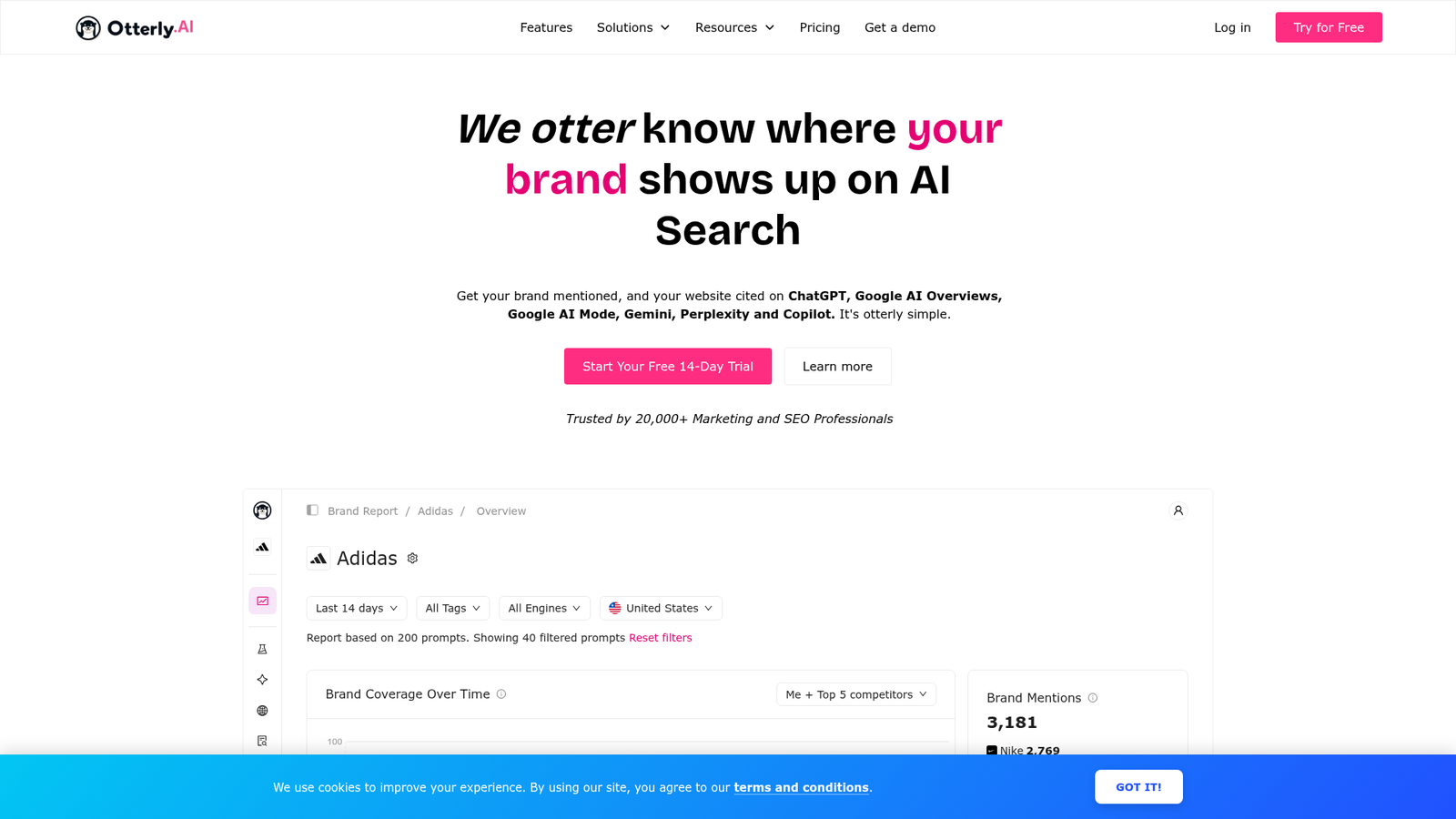
Otterly.ai does something none of the other tools on this list do: it monitors whether your brand and content actually appear in AI-generated answers across ChatGPT, Google AI Overviews, and Perplexity.
The gap analysis value here is diagnostic. You define a set of queries you should be cited for, Otterly.ai checks which AI platforms are answering those queries and whether your content is the cited source, and it shows you exactly which competitors are getting cited instead. That's your AI citation gap, quantified. It's the baseline audit that should precede any AI search optimization effort.
The important caveat: Otterly.ai is a monitoring and measurement tool, not a content optimization tool. It tells you where your gaps are, not how to fill them. You'll need to pair it with RivalFlow AI, Infranodus, or Slate to move from diagnosis to action. But as a starting point for understanding your actual AI search visibility, it's essential.
Best for: SEO managers and content teams who need to establish a baseline of their current AI search citation visibility before optimizing.
Key strengths
- Monitors AI citation presence across ChatGPT, Perplexity, and Google AI Overviews
- Tracks which competitors are cited for your target queries
- Provides share-of-voice metrics for AI search visibility
- Alerts when your citation status changes across monitored queries
- Clean reporting interface suitable for client or stakeholder presentations
Pricing: Starts at $29/month (Lite, ~10–15 tracked prompts); Standard $189/month (100 prompts); Premium $489/month (400 prompts); Enterprise custom.
7. SEOBoost - content optimization with built-in gap analysis
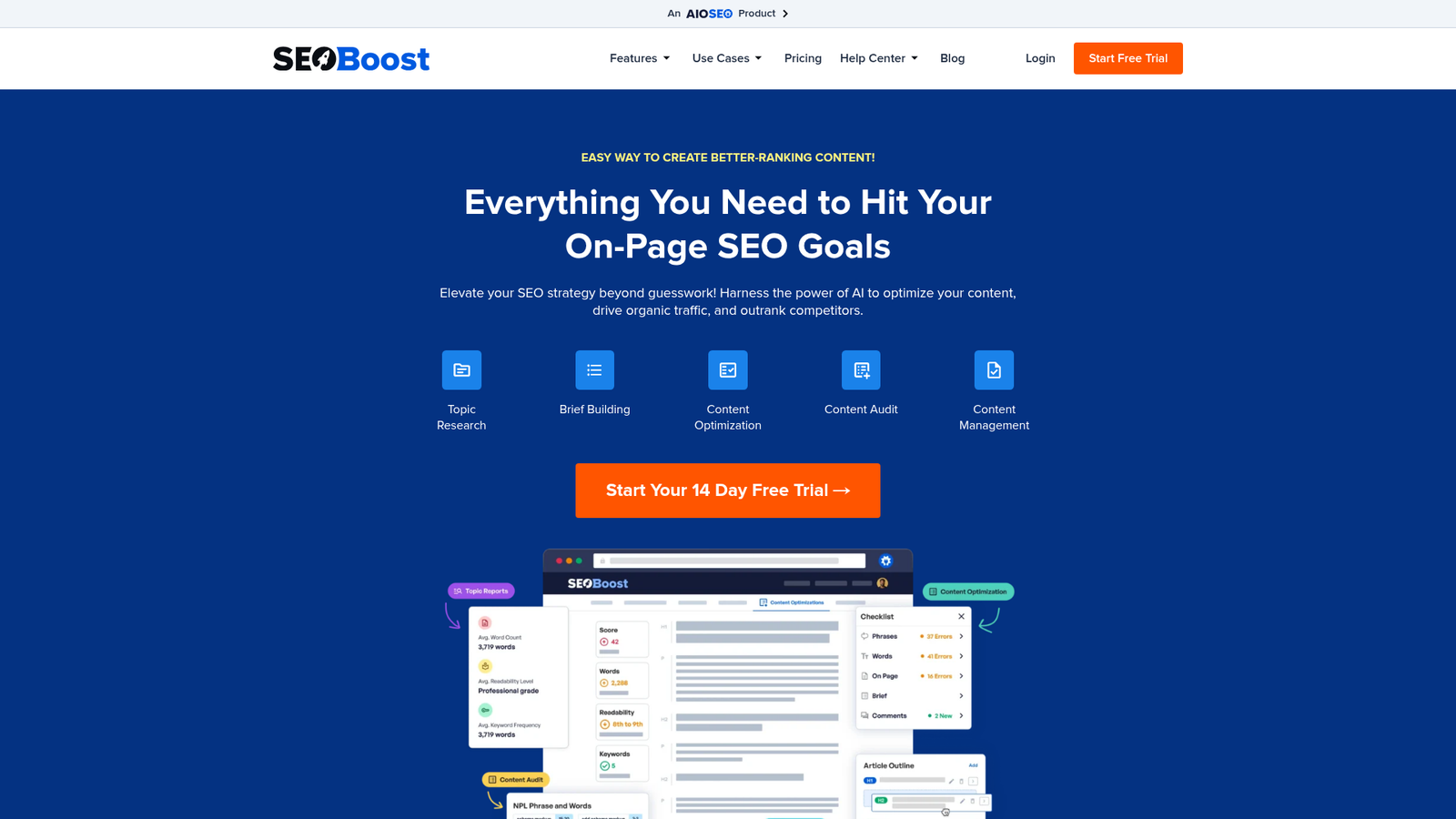
SEOBoost combines content gap analysis with content optimization in a workflow designed for content teams who want to move from gap identification to content creation without switching tools.
Its Topic Reports feature analyzes the top-ranking pages for your target keyword and identifies the topics, questions, and terms your content is missing. The Content Audit tool then applies similar logic to your existing content, flagging pages that are underperforming relative to what competitors cover. In terms of workflow integration, it sits closer to Surfer SEO and Clearscope than to Ahrefs or Semrush - it's more about optimizing content you're writing than discovering net-new content opportunities.
The AI search limitation is real: SEOBoost optimizes for traditional SERP performance, not AI citation likelihood. Its gap analysis is keyword and topic-driven, not entity or information-gain-driven. That said, for teams that need a streamlined content optimization workflow with gap analysis built in, it's a solid mid-market option.
Best for: Content writers and editors who want gap analysis and optimization guidance in a single tool without the complexity of enterprise SEO platforms.
Key strengths
- Topic Reports identify missing topics and questions versus top-ranking competitors
- Content Audit flags underperforming pages with specific improvement recommendations
- Content editor integrates gap data directly into the writing workflow
- More accessible pricing than Ahrefs or Semrush for smaller teams
- Covers on-page optimization signals alongside topical gap identification
Pricing: Starts at $30/month. 14-day free trial. Special introductory pricing may apply on first-year sign-ups, with full-price renewals after 12 months.
8. Moz - domain-level gap analysis and SERP monitoring
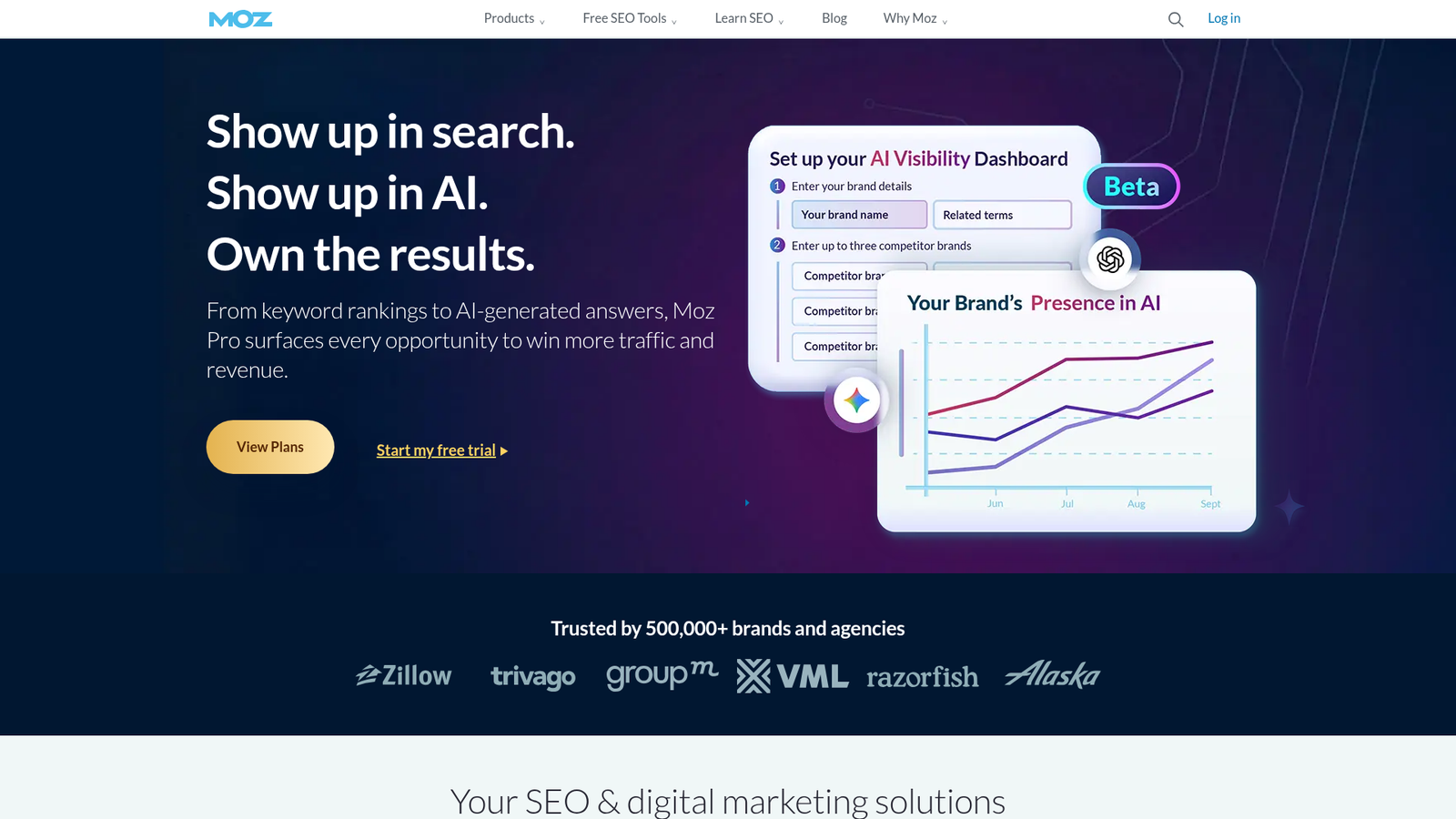
Moz is a reliable choice for domain-level competitive analysis, with gap analysis features that work best when you need a broad view of where your content authority falls short relative to competitors.
The Keyword Explorer provides solid keyword gap data, and the True Competitor feature automatically identifies which domains compete most directly with yours - useful for teams that aren't sure which competitors to benchmark against. Domain Authority metrics give you a sense of the authority gap you're dealing with on specific topics, which helps prioritize which gaps are realistically closeable in the near term.
Where Moz falls short relative to Ahrefs and Semrush is granularity. The content gap analysis is less detailed, the keyword database is smaller, and there's no equivalent to Semrush's Topic Research or Ahrefs' Content Explorer for topic-level discovery. For AI search gap analysis, Moz offers limited functionality. It's best used as a complementary tool for authority benchmarking rather than as a primary gap analysis platform.
Best for: Teams that prioritize domain authority benchmarking and want a simpler interface than Ahrefs or Semrush for competitive keyword gap work.
Key strengths
- True Competitor feature automatically identifies your most relevant SERP competitors
- Keyword Explorer with gap analysis across organic keyword data
- Domain Authority metrics for benchmarking content authority gaps
- MozBar browser extension for quick competitive analysis during research
- Accessible interface with a gentler learning curve than enterprise alternatives
Pricing: Starts at $49/month (Starter, monthly billing) or $39/month (Starter, annual billing). Standard $99/month; Medium $179/month; Large $299/month.
9. LowFruits - low-competition keyword gap finder
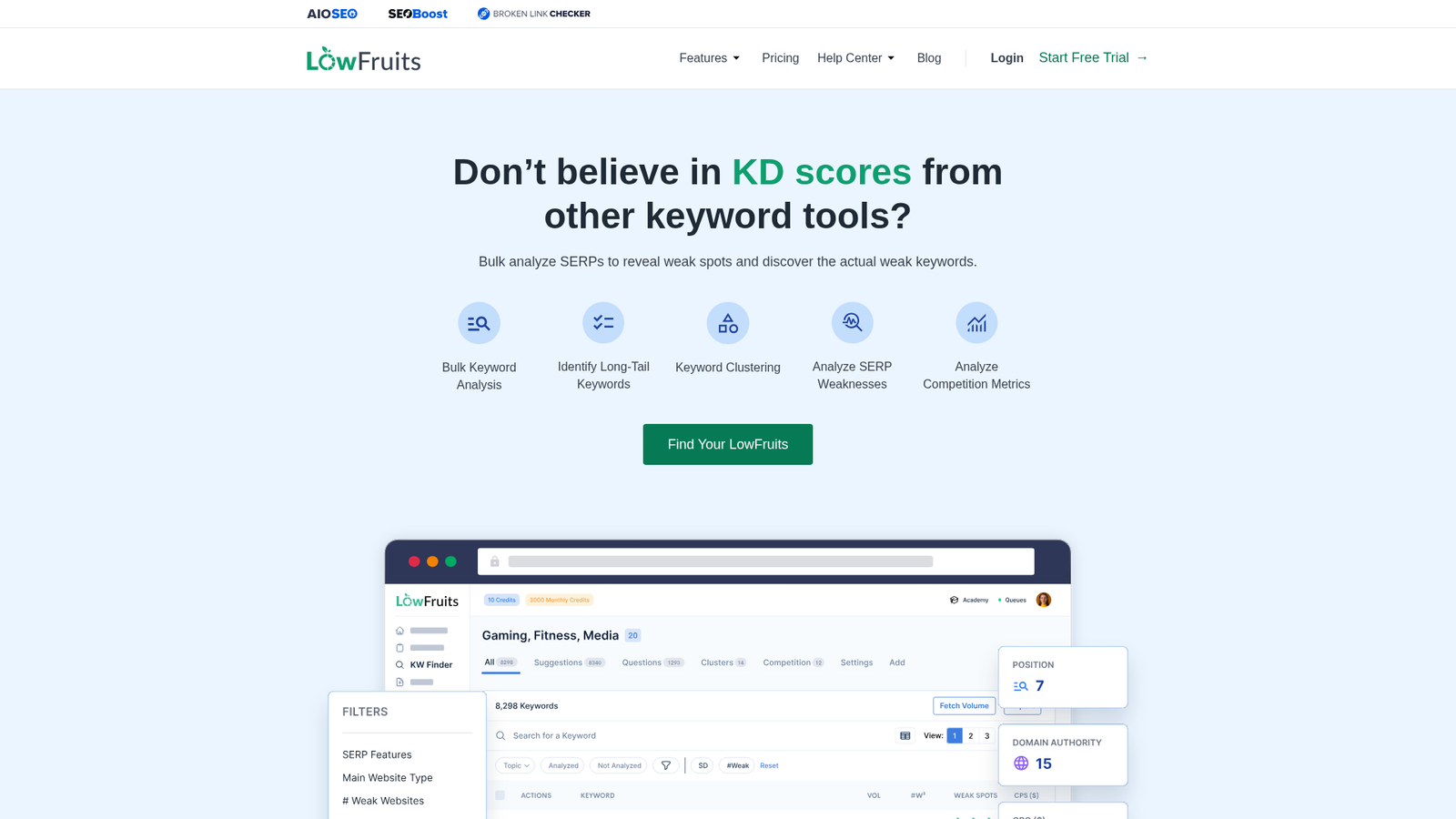
LowFruits finds a specific type of content gap that larger tools often miss: keyword opportunities where the current ranking pages are weak - forums, thin content, or low-authority sites that a well-written piece could displace.
The SERP analysis identifies "weak spots" in search results by analyzing the authority and content quality of pages currently ranking for a keyword. For AI search, this has an underappreciated application: low-competition, high-information-gain topics are exactly the kind of queries where a comprehensive, well-structured piece can earn AI citations quickly. If a query is currently answered by a Reddit thread or a thin listicle, there's a clear opportunity to become the authoritative cited source.
LowFruits isn't a full-featured gap analysis platform - it doesn't do competitor domain comparisons or topic cluster mapping. But as a tool for finding specific keyword gaps where you can realistically win, it's cost-effective and focused.
Best for: Content teams and freelancers looking for specific keyword gaps where competition is weak and a strong piece can earn both rankings and AI citations.
Key strengths
- SERP weakness analysis identifies keywords where current ranking content is thin or low-authority
- Keyword clustering groups related opportunities for efficient content planning
- Affordable credit-based pricing model suits teams with variable research needs
- Filters for forum and UGC dominance - prime AI citation opportunity signals
- Integrates with Google Search Console for first-party data enrichment
Pricing: Standard subscription from $21/month (3,000 monthly credits) or $249/year (~$20.75/month annualized). Premium subscription from $62/month (10,000 monthly credits). Pay-as-you-go credit bundles: 2,000 credits for $25, 5,000 for $60, 10,000 for $100, 50,000 for $250.
10. AnswerThePublic - question-based content gap discovery
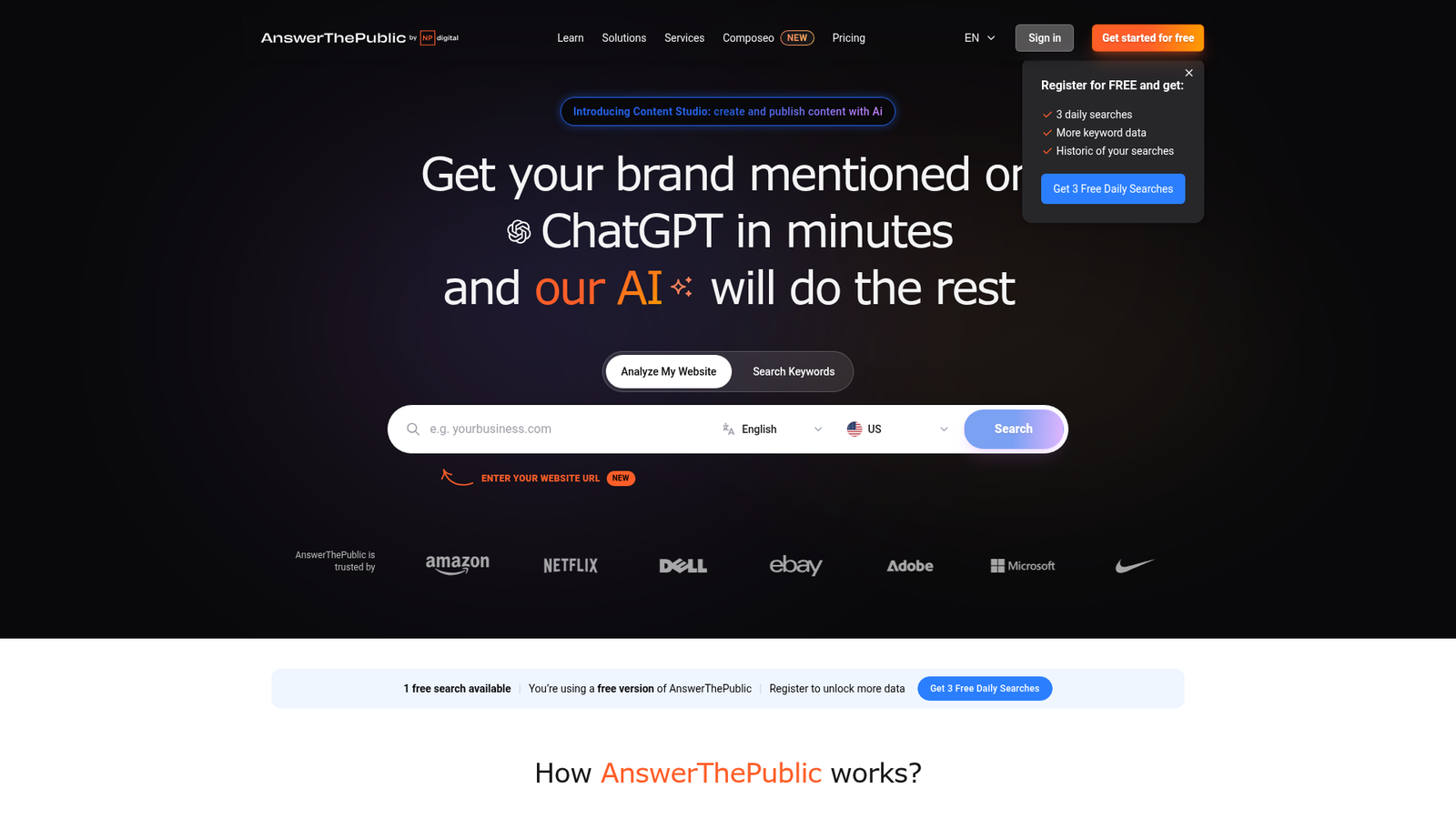
AnswerThePublic maps the questions, comparisons, and prepositions people search around any topic - making it one of the most useful tools for identifying the question-based content gaps that AI models are specifically designed to answer.
This matters more than it might seem. AI models are trained on question-and-answer patterns. When a user asks a conversational query, the AI looks for content that directly and comprehensively answers that question. If your content covers a topic but doesn't explicitly address the questions your audience is asking, you're leaving AI citation opportunities on the table. AnswerThePublic surfaces those questions at scale, organized visually by type (what, how, why, when, which, who).
The honest limitation: AnswerThePublic is an idea generation tool, not a competitive gap analysis tool. It doesn't tell you which questions your competitors have answered and you haven't - it tells you which questions exist. You'll need to cross-reference with your own content audit to identify the actual gaps.
Best for: Content strategists building new content briefs and wanting to ensure comprehensive question coverage for AI search citability.
Key strengths
- Visual question mapping across six question types for any seed keyword
- Comparison and preposition queries reveal nuanced content angles
- Trend data shows which questions are growing in search volume
- Free tier available for limited daily searches
- Integrates well with keyword tools for volume validation
Pricing: Free tier available. Pro plan: $99/month (monthly billing) or $79/month (billed annually). Enterprise $399/month (billed annually).
11. Google Search Console + GA4 - free first-party gap intelligence
Google Search Console and GA4 don't appear on most content gap analysis tool lists. They should. They're the only tools on this list that show you gap data based on your actual audience's behavior - not a third-party keyword database.
In Search Console's Performance report, queries where you have significant impressions but low click-through rates are gap signals: you're showing up, but your content isn't compelling enough to earn the click. Pages with declining impressions over a 90-day window often indicate AI search displacement - queries where an AI Overview is now answering the question before users reach your result. GA4 extends this by showing you which pages are losing organic traffic, helping you prioritize which gaps to address first.
The limitation is that these tools are reactive, not proactive. They show you gaps that already exist in your current content; they don't help you discover new topic opportunities you've never covered. For a complete gap analysis workflow, you start here to understand your baseline, then use Ahrefs, Semrush, or Slate to discover new opportunities.
Best for: Any team that wants to start gap analysis without spending money - and every team should start here before investing in paid tools.
Key strengths
- Impression-to-CTR gap analysis reveals underperforming content with real audience data
- Declining impressions data surfaces potential AI search displacement
- Query data shows exact language your audience uses - valuable for AI search optimization
- GA4 traffic trend analysis identifies pages most urgently needing gap remediation
- Completely free with no usage limits
Pricing: Free
12. AlsoAsked - topic clustering and People Also Ask mining
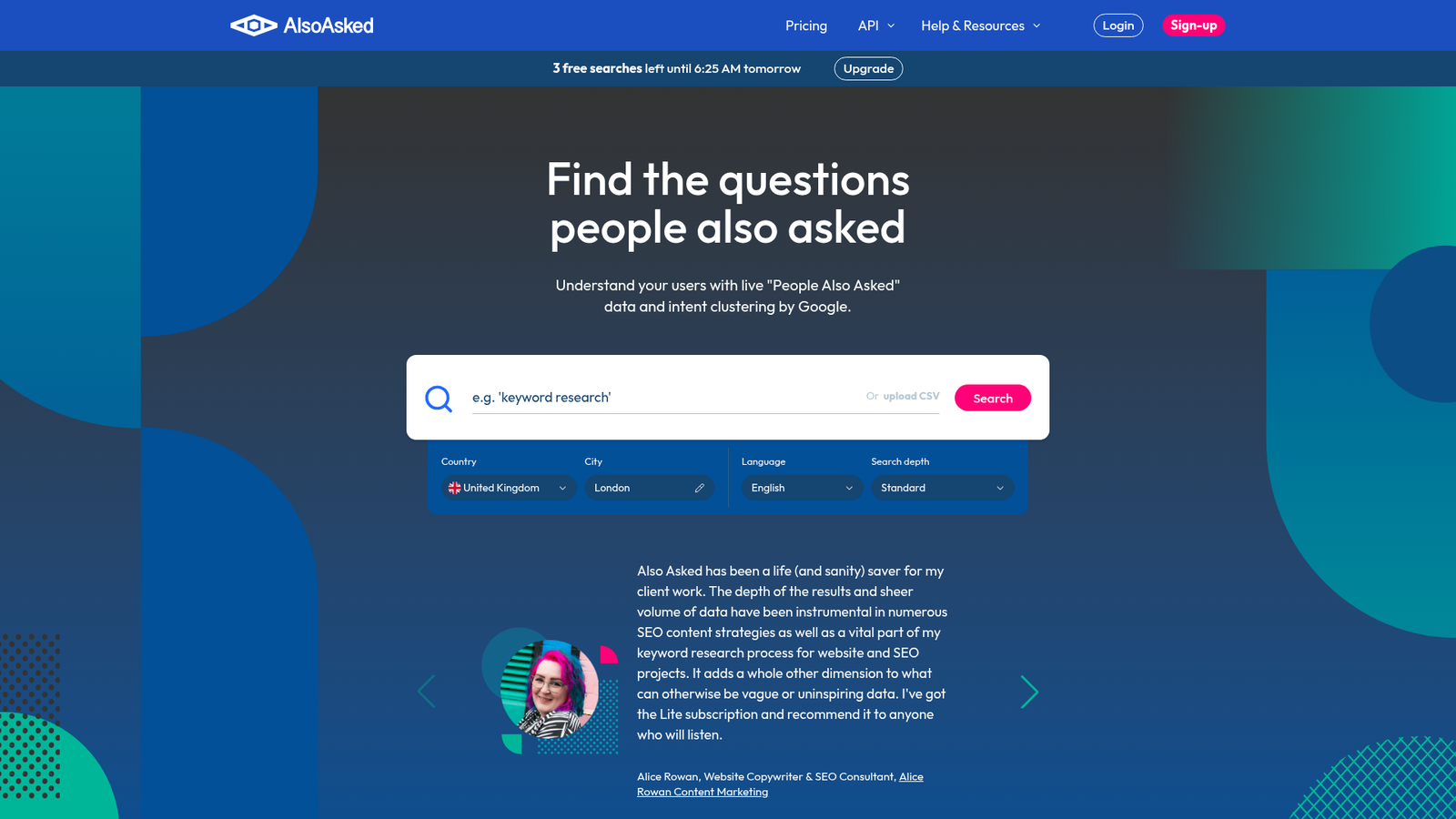
AlsoAsked maps the "People Also Ask" graph for any query, showing you the branching tree of follow-up questions that Google associates with your target topic.
For AI search gap analysis, PAA data is particularly valuable. These are the exact follow-up questions that AI models are designed to answer in a single response. When a user asks a broad question, the AI tries to anticipate and answer the natural follow-ups - which means content that comprehensively covers the PAA tree for a topic is structurally better positioned for AI citations than content that answers only the primary question.
AlsoAsked lets you export these question trees and map them against your existing content to identify which subtopics you're not covering. It's a focused tool with a specific use case, but that use case is directly relevant to AI search optimization. At its price point, it's one of the highest-value additions to a content team's toolkit.
Best for: Content strategists who want to identify subtopic gaps using PAA data and ensure their content comprehensively covers the question clusters AI models prioritize.
Key strengths
- PAA tree visualization maps branching follow-up questions for any seed query
- Exportable question data for content brief development and gap mapping
- Country and language filtering for international content gap analysis
- Identifies question clusters that signal AI Overview coverage opportunities
- Affordable pricing makes it accessible for freelancers and small teams
Pricing: Starts at $12/month (Basic, 100 credits); Lite $29/month (includes CSV downloads); Pro $47/month (1,000 credits). 20% discount on annual billing. Free searches return a PNG of the question tree (no CSV export).
Content gap analysis tools comparison table
Tools with AI search features help you identify gaps in LLM citations and AI Overview appearances - not just traditional keyword rankings. "Partial" indicates tools that surface question or topic data relevant to AI search but don't directly monitor AI citation status.
How to run a content gap analysis for AI search: a step-by-step framework
No competitor article provides a workflow specifically for AI citation gap analysis. This six-step process combines traditional gap analysis with the AI citation lens that matters in 2026.
Step 1 - audit your current AI search visibility
Before you can close gaps, you need to know where they are. Use Otterly.ai to monitor which of your target queries trigger AI Overviews and whether your content is cited. For queries where you're not cited, note which competitors are. This is your baseline - the specific AI citation gaps you're working to close.
If you're not ready to invest in a monitoring tool, run manual checks: search your 20 most important queries in Google and note which pages appear in AI Overviews. It's slower, but it gives you the same diagnostic picture.
Step 2 - identify traditional keyword and topic gaps
Run a standard competitor gap analysis using Ahrefs, Semrush, or Slate. Export the keywords and topics your competitors rank for that you don't. This gives you the volume-based opportunity list that traditional SEO gap analysis is designed to produce.
Cross-reference this list with your AI citation audit from Step 1. Queries where you have both a keyword gap and an AI citation gap are your highest-priority targets.
Step 3 - analyze competitor content for information gain
For each high-priority gap, use RivalFlow AI or Infranodus to go deeper than keywords. What specific information does the competitor's cited page provide that yours doesn't? Look for unique data, original frameworks, comprehensive entity coverage, and explicit answers to follow-up questions.
Forrester's 2026 research found that content with genuine information gain ranks three times higher in AI responses. This step is where you identify exactly what "information gain" means for each specific gap you're targeting.
Step 4 - map entity and structured data gaps
Check whether your content covers the key entities - people, products, concepts, statistics - that AI models associate with your target topics. Use AlsoAsked and AnswerThePublic to identify the question clusters and subtopics that should be covered.
Review your schema markup. Structured data helps AI models understand and extract your content accurately. Missing or incomplete schema is a gap that's often faster to close than a content gap.
Step 5 - prioritize gaps by AI citation potential
Score each gap on four dimensions: search volume, AI Overview prevalence for that query, information gain opportunity (how much better you can cover it than current cited sources), and your existing topical authority. Prioritize gaps where you have established authority but missing information - those are the fastest wins.
Gaps where you have no topical authority and face strong competitors are longer-term plays. Don't ignore them, but don't let them crowd out the near-term opportunities.
Step 6 - create and optimize content to fill gaps
Write content that provides genuine information gain: original data, expert perspectives, comprehensive entity coverage, and explicit answers to the question clusters you identified in Steps 3 and 4. Follow structured content guidelines to ensure your content signals the experience, expertise, authoritativeness, and trustworthiness that AI models are trained to prefer.
Implement structured data. Use clear headings and logical flow. Update existing content with the specific information gaps you identified - sometimes a targeted update to an existing page outperforms creating a new one.
What makes content citable by AI models: the information gain framework
Understanding why AI models cite certain sources helps you build content that earns citations systematically, not by accident. Six factors consistently determine AI citability.
Information gain
Does your content provide information not found - or not found as clearly - in other sources? AI models are designed to surface the most complete and unique answer to a query. Content that restates what every other source already says adds no information gain and gets deprioritized. Content that includes original data, a unique framework, or a more complete explanation of a complex concept earns citations.
Entity completeness
Does your content cover all the relevant entities associated with your topic - the people, products, concepts, statistics, and relationships that a comprehensive treatment would include? AI models organize knowledge as entity relationships. Content that covers entities incompletely signals to the model that a more complete source exists elsewhere.
Structured data
Schema markup helps AI models understand and extract your content accurately. FAQ schema, HowTo schema, and Article schema all make your content more parseable. This isn't a magic citation trigger, but missing structured data is a gap that's worth closing.
E-E-A-T signals
Experience, Expertise, Authoritativeness, and Trustworthiness are the signals AI models use to assess source quality. Author credentials, original research, citations from authoritative sources, and a track record of accurate information all contribute. Content from recognized experts on a topic gets cited more than content from anonymous or low-authority sources.
Content freshness
AI models prefer up-to-date content with recent data. A page that was comprehensive in 2023 but hasn't been updated since may lose citations to a competitor who published a fresher version. Regular content updates with current statistics and examples are a meaningful AI search signal.
Clarity and structure
Well-organized content with clear headings, explicit definitions, and logical flow is easier for AI models to parse and cite accurately. If a model has to work to extract the answer from your content, it may cite a clearer source instead. This is one of the most actionable improvements most content teams can make without adding new information.
Choosing the right tool for your needs
The right combination depends on your situation. Here's a practical recommendation by use case.
If you're focused on traditional SEO plus AI search
Start with Ahrefs or Semrush for keyword and topic gap analysis - both have the depth and data quality for serious SEO work. Layer in Slate for AI citation gap analysis and Otterly.ai for ongoing monitoring. This combination covers the full spectrum from keyword gaps to AI citation gaps.
If you're a content team optimizing existing pages
RivalFlow AI is your primary tool for page-level information gap analysis. Pair it with SEOBoost for content optimization guidance during the rewrite. AlsoAsked helps you ensure you're covering the full question cluster for each page.
If you're on a budget
Start with Google Search Console and GA4 - they're free and give you first-party gap data that paid tools can't replicate. Add AnswerThePublic's free tier for question-based gap discovery and AlsoAsked at $15/month for PAA mapping. LowFruits at $25/month rounds out a capable budget stack. You can run a solid gap analysis workflow for under $50/month.
If you're an advanced strategist
Infranodus for knowledge graph and entity-level gap analysis, Slate for AI citation intelligence, and Ahrefs for keyword depth. This combination gives you the most complete picture of both traditional and AI search gaps - and aligns with the AI SEO frameworks that are defining best practice in 2026.
Start closing your AI content gaps today
Content gap analysis in 2026 means more than finding keywords you're missing. It means understanding what information you're not providing that causes AI models to cite your competitors instead of you. The tools in this list address both dimensions - start with an AI visibility audit using Otterly.ai or manual checks, layer in keyword gap data from Ahrefs or Semrush, and use Slate to connect those gaps to your actual AI citation performance.
If you want a starting point built specifically for the AI search era, try Slate to identify your AI citation gaps and get actionable recommendations for closing them. You can also explore content operations best practices to build a repeatable gap analysis workflow your whole team can run.
Frequently asked questions
What is content gap analysis for AI search?
Content gap analysis for AI search is the process of identifying what information, topics, and entities your content is missing that would make it more likely to be cited by AI models like ChatGPT, Google AI Overviews, and Perplexity. It goes beyond traditional keyword gap analysis to examine information completeness, entity coverage, and structural clarity - the factors that determine whether an AI model cites your content or a competitor's. The goal isn't just to rank for more keywords; it's to become the source AI models reach for when answering your target queries.
How is AI search content gap analysis different from traditional SEO gap analysis?
Traditional SEO gap analysis finds keywords your competitors rank for that you don't - it's fundamentally a keyword and ranking exercise. AI search content gap analysis identifies the information, entity coverage, and structural elements that make competitors' content get cited by AI models while yours doesn't. The shift is from "what keywords am I missing" to "what information am I missing that causes AI models to prefer another source."
Which keyword tool can find content gaps?
Ahrefs' Content Gap tool and Semrush's Keyword Gap tool are the two most widely used options for keyword-level gap analysis - both let you compare your domain against multiple competitors and surface keywords they rank for that you don't. For AI-specific gaps that go beyond keyword rankings, you need tools that analyze information completeness and citation patterns, such as Slate, RivalFlow AI, or Otterly.ai. The keyword tools give you the opportunity list; the AI-focused tools tell you why you're not being cited even for topics you technically cover.
How do you do a content gap analysis step by step?
Start by auditing your current AI search visibility using Otterly.ai or manual Google searches to establish which queries cite competitors instead of you. Then run a traditional keyword and topic gap analysis using Ahrefs or Semrush to identify content opportunities by volume. Analyze competitor content for information gain using RivalFlow AI or Infranodus, map entity and structured data gaps, prioritize gaps by AI citation potential, and finally create or update content to fill the highest-priority gaps. The full six-step framework is covered in detail in the "How to Run a Content Gap Analysis for AI Search" section above.
What is information gain and why does it matter for AI search?
Information gain is the unique value your content provides that isn't available - or isn't as clearly expressed - in competing content. AI models are designed to surface the most complete and authoritative answer to a query, which means they prioritize sources that add something beyond the existing consensus. Google has patented an 'information gain' scoring concept that rewards content providing novel insight beyond what already exists in the index.
Yes - Google Search Console and GA4 are fully free and provide first-party gap intelligence based on your actual audience's search behavior. AnswerThePublic offers a free tier for limited daily searches, and AlsoAsked has a free option for basic PAA mapping. LowFruits is an affordable paid option starting at $25/month for teams that need more than free tools provide. The free tools are reactive - they show you existing gaps in your current content - so pairing them with a paid tool for proactive opportunity discovery gives you a more complete picture.
How often should you run a content gap analysis?
A comprehensive gap analysis - covering keyword gaps, topic gaps, and AI citation gaps - works well on a quarterly cadence. AI search visibility monitoring should happen monthly at minimum, since AI search results update dynamically and evolve significantly faster than traditional SERP rankings. In practice, most teams benefit from setting up continuous monitoring for AI citations using a tool like Otterly.ai, then running deeper gap analysis quarterly to identify new content opportunities and reassess priorities based on what's changed.
Can AI tools replace manual content gap analysis?
AI tools accelerate the gap analysis process dramatically - what used to take days of manual competitor research now takes hours - but they can't fully replace human judgment. Tools identify gaps; humans decide which gaps are strategically worth filling based on business goals, audience needs, brand positioning, and resource constraints. A tool can tell you that a competitor's page covers 12 entities your page doesn't. Only you can decide whether those entities are relevant to your audience and worth the investment to address. Use AI tools to do the diagnostic work faster, then apply human judgment to prioritize and act.