SEO delivery starts to strain when reporting, prioritization, production, publishing, and client communication all need the same senior attention. Another dashboard rarely solves the operating problem.
SEO agency management software helps agencies run SEO work across multiple client accounts from one system. Depending on the platform, it can bring rank tracking, audits, backlink research, and client reporting into one place. Some platforms also cover content workflows, publishing, measurement, and AI search visibility.
In 2026, discovery spans Google and AI answer platforms, so agencies need an operating model that connects insight to completed work. The right choice depends on whether the bottleneck is analysis, reporting, delivery, or agency operations.
Key Takeaways
For agencies running 20+ accounts, the best SEO agency management software reduces recurring handoffs while keeping strategy, review, and client judgment under human control.
- SEO agency management software centralizes multi-client delivery across research, reporting, workflows, publishing, measurement, and account visibility.
- The category splits into SEO intelligence suites, reporting specialists, technical crawlers, agency operations platforms, and execution platforms.
- Scaling beyond 20 accounts is primarily a throughput problem; recurring handoffs create more friction than a lack of dashboards.
- White-label reporting helps client communication, but it leaves production work untouched.
- AI search visibility reports should include prompt sets, platforms tracked, collection dates, baselines, and clear limits.
- Slate ranks first for agencies that need insight-to-published-work execution across client accounts through agent-driven workflows, bulk operations, publishing, measurement, and refresh.
What Is SEO Agency Management Software?
These platforms differ by focus: intelligence, reporting, technical diagnosis, business operations, or execution.
An agency shopping for SEO account management software should first decide whether the team needs better visibility, coordination, or throughput. Those sound similar in a sales demo, but they create different implementation paths.
The Five Categories Buyers Confuse
Buyers often group agency SEO management software under “all-in-one,” but that phrase hides important tradeoffs. A platform can be broad for SEO data and still require separate tools for client operations, content execution, or deep technical crawling.
The buying mistake is treating these as interchangeable. If the agency’s blocker is reporting, a dashboard tool may help. If opportunities sit in spreadsheets for weeks before anyone publishes anything, the agency needs an execution layer.
Why Running 20+ SEO Clients Breaks Most Agency Tool Stacks
At lower account volume, talented strategists can compensate for scattered systems. They remember which client needs a refresh, which content brief is stuck, and which report needs a manual explanation.
Once the portfolio grows, that memory-based model gets fragile.
An agency can manage 20+ SEO clients without adding headcount. It standardizes recurring workflows, automates data collection and reporting, ranks work by expected impact, reuses templates, and runs execution from one place. The goal is to remove manual handoffs between research, content, publishing, outreach, and measurement.
Reporting: Reporting periods become assembly work when data and task status live in separate places.
Prioritization: The loudest client, newest message, or most recent ranking drop can pull work away from higher-impact opportunities.
Execution Lag: A strategist may find the opportunity in one system, brief it in another. Production happens somewhere else, and the work then waits on a separate publishing queue.
Quality Drift: Without reusable workflows and review gates, delivery quality depends too heavily on each strategist’s personal habits.
Account Blind Spots: Ranking and traffic changes often surface during reporting instead of triggering an earlier investigation.
New Service Pressure: Clients now ask about AI search visibility, but many agencies have not built a repeatable way to baseline and report it.
The Headcount Math: Adding people increases capacity linearly. Removing a recurring handoff improves the same process across every client that uses it. Agency scaling depends on a repeatable delivery system.
For SEO agency project management software, ask a sharper question. Does it connect the task to the SEO opportunity, the content asset, the publishing step, and the measurement loop?
What To Look For In SEO Agency Management Software
Start with the agency’s bottleneck. A team drowning in report production should not buy the same system as a team stuck between approved briefs and CMS implementation.
SEO agency management software should support multi-client account organization, rank tracking, technical audits, and competitor research. For reporting, look for white-label reports, automated dashboards, Google Search Console integration, and GA4 integration. Agencies running content programs should also evaluate bulk updates, CMS publishing, approval workflows, outreach, and AI search visibility monitoring.
Translate Agency Bottlenecks Into Features Needed
A useful buying process turns software features into operating outcomes. Identify which capability removes the most repeated friction at 20+ active accounts.
The Nine Evaluation Criteria We Used
Use these criteria to compare agency SEO management software without getting distracted by surface-level feature overlap.
- Multi-client organization and permissions.
- Rank and visibility tracking.
- Technical audit depth.
- Backlink and competitor research.
- White-label reporting and client access.
- Content workflow and production.
- Publishing and execution.
- AI search visibility.
- Pricing model and scaling cost.
A strong proof of concept should include two or three representative accounts, not a polished sandbox. Include one technically complex client, one content-heavy client, and one account where reporting is currently painful.
The 10 Best SEO Agency Management Software Platforms In 2026
The best SEO management software for agencies depends on whether the agency needs better research, reporting, or operations, or faster execution. This ranking puts Slate first for agencies whose constraint is moving from opportunity to completed, published, measured work.
1. Slate - Best For Agent-Driven SEO And AI Search Execution Across Multiple Client Accounts
Verdict: Slate is the strongest fit for agencies that need more than SEO reporting or research.
Best For: Agencies managing multi-client organic programs where the operating bottleneck is execution.
Category: Agent-driven SEO, content, and AI search execution platform.
Agency Fit: It fits best when an agency needs a repeatable loop from opportunity discovery to production, publishing, measurement, and refresh.
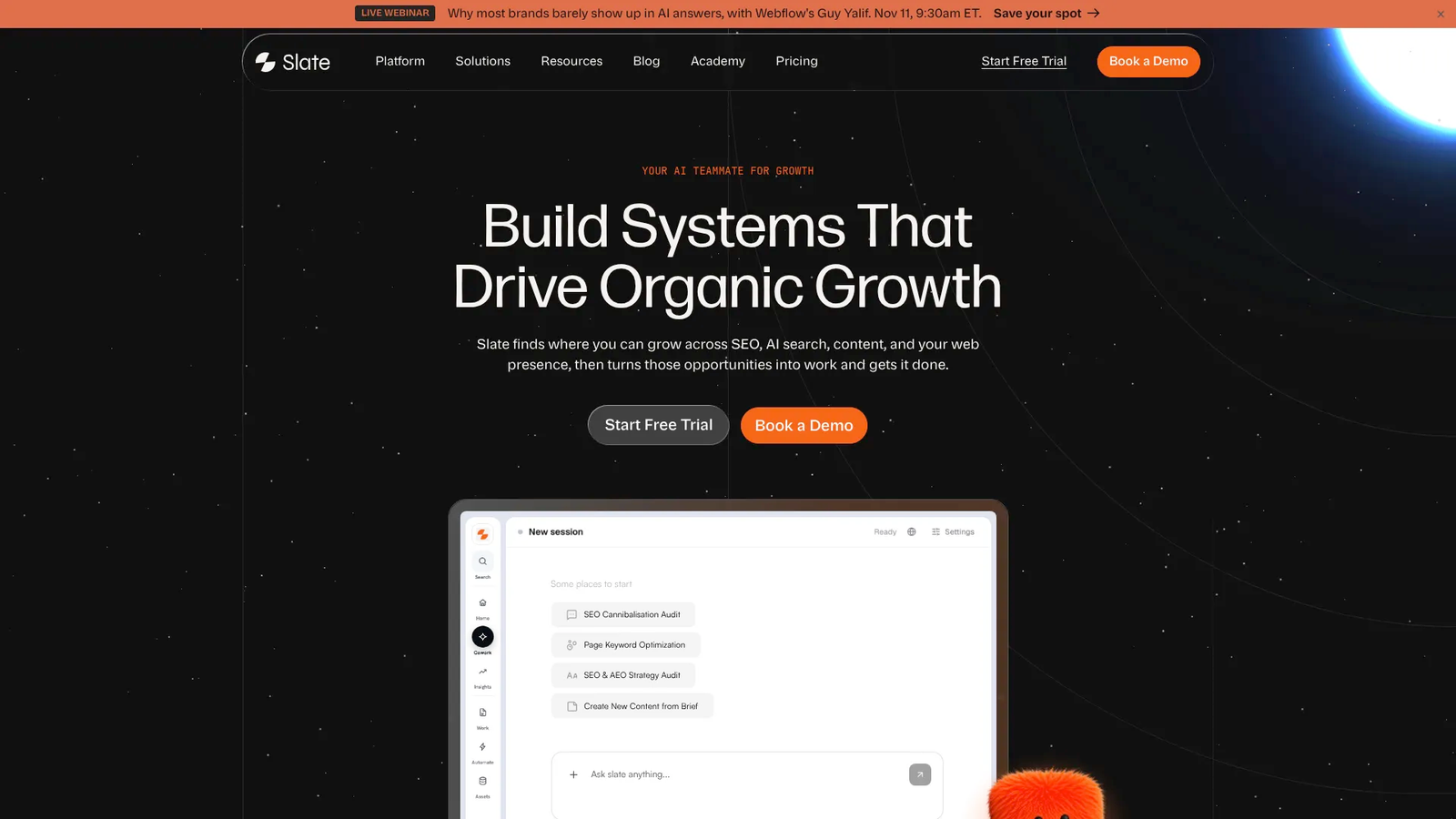
Slate runs repeatable SEO and content work across accounts through Cowork agents, Workflows, bulk Sheets, and reusable SuperBlocks. Opportunities queues the next task from AI visibility, keyword, and page data. Pages tracks Google Search Console and GA4 data next to AI citations. AI Search Analytics covers ChatGPT, Google AI Mode, Google AI Overviews, and Perplexity on every plan. Claude and Gemini are add-ons on other plans, and Enterprise includes all six platforms.
Approved work publishes straight to Webflow, Sanity, WordPress, or Strapi, and Outreach handles off-site work. Semrush data is built in with no separate account, and Ahrefs data runs in workflows. Agency mode gives each client its own workspace, Brand Kit, health score, and shareable report. It’s a paid add-on in packs of 25 workspaces for selected organizations, not yet offered on trials or annual plans. Slate doesn’t cover finance, payroll, invoicing, time tracking, or full PSA functions.
Pricing: For the agency plan, the price is $2,000/month, For individual brands, Slate offers Growth at $499/month, Scale at $999/month, and Enterprise as custom. Annual billing saves 20%. Slate offers a 14-day free trial. Growth includes 1 user; Scale and above have custom user counts.
2. Semrush - Best For Agencies Evaluating An SEO Intelligence Suite
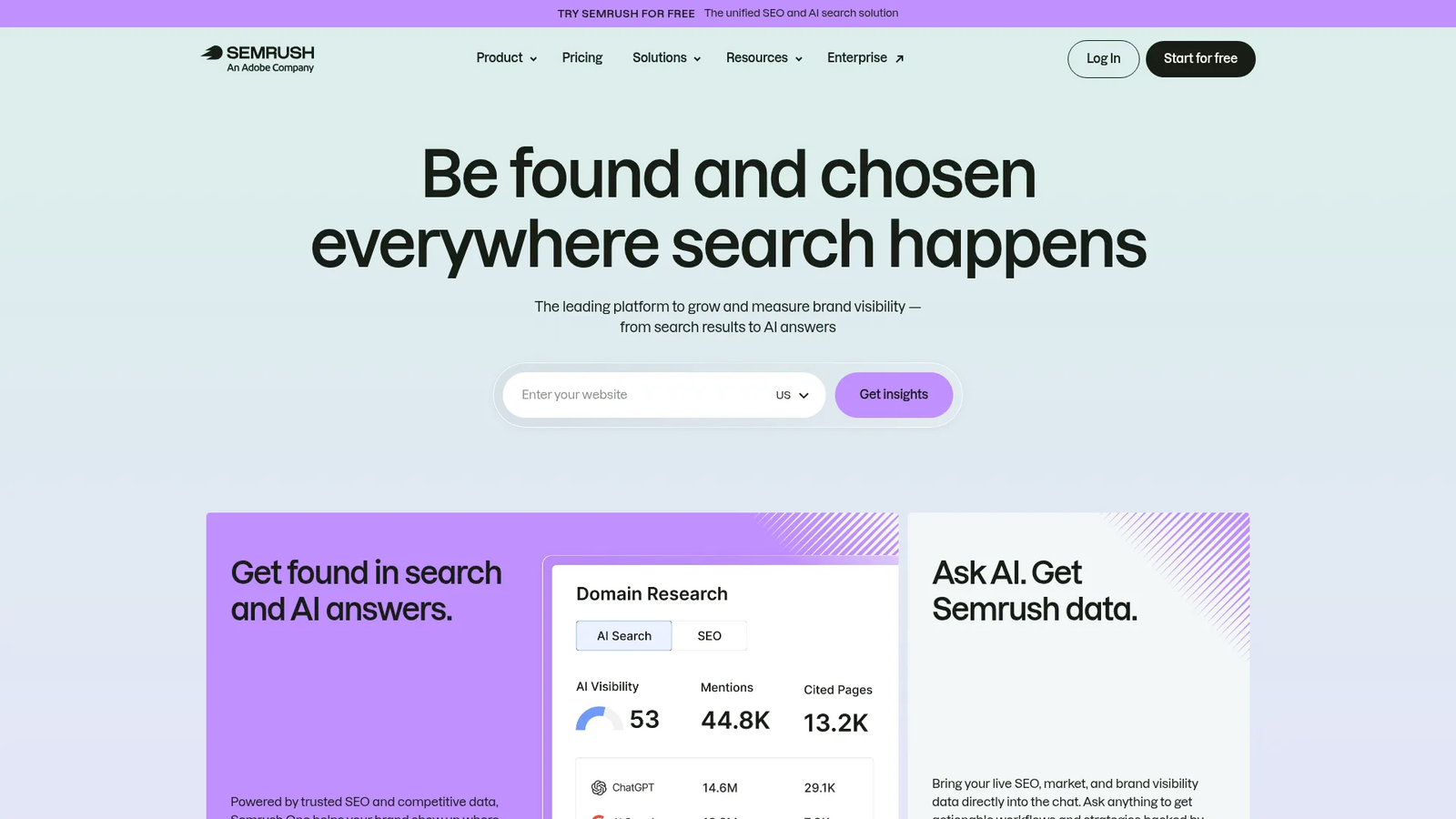
Verdict: Semrush belongs on the shortlist when the agency’s evaluation centers on SEO intelligence instead of delivery execution.
Best For: Agencies comparing research-suite options.
Category: SEO intelligence suite.
Agency Fit: It fits best when the buying team wants to evaluate keyword, competitor, backlink, audit, and visibility research in one research-oriented environment.
If research is the blocker, a research suite can improve discovery and planning. If publishing, content refresh, approvals, or measurement handoffs are the bigger issue, the agency should test how work moves after the team finds insights.
Use the demo to examine client organization, reporting options, permissions, integrations, usage limits, and add-ons. AI visibility is one of those add-ons: Semrush’s AI Visibility Toolkit costs $99 per month and covers one domain, so the cost grows with every client tracked. Semrush has been part of Adobe since April 2026.
3. Ahrefs - Best For Agencies Evaluating Link And Competitor Research
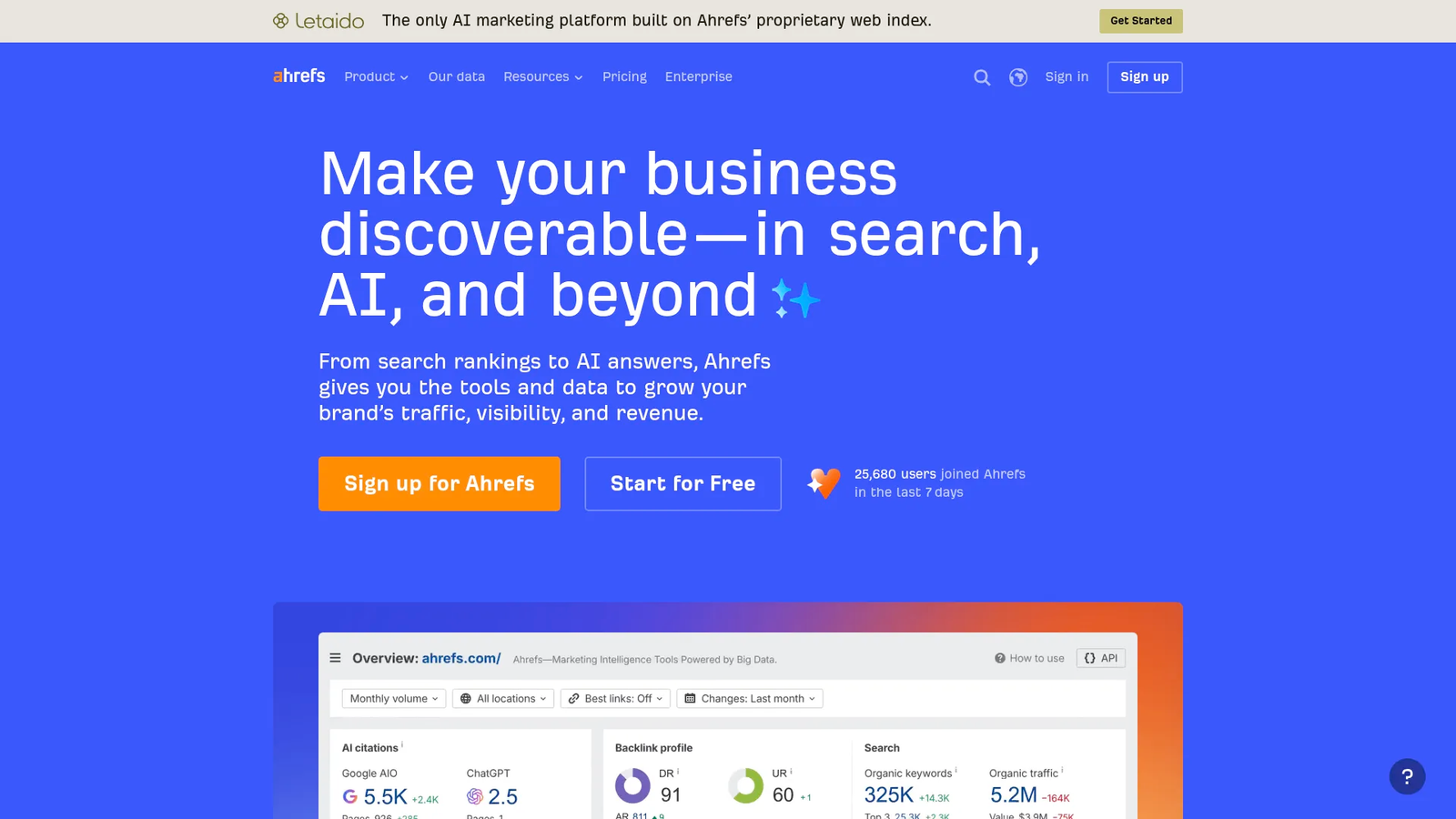
Verdict: Ahrefs is worth evaluating when backlink and competitor research are central to the agency’s SEO programs.
Best For: Agencies that prioritize link intelligence and competitive discovery.
Category: SEO research suite.
Agency Fit: It fits best when the team needs research depth and already has separate systems for content production, client reporting, approvals, and publishing.
In a 20-client operating model, evaluate Ahrefs by how well its insights translate into action. Test whether findings can become prioritized tasks, briefs, outreach targets, or refresh queues without creating another manual handoff.
Ask about client organization, exports, reporting workflow, AI visibility scope, and pricing model during evaluation. For AI search, Ahrefs sells Brand Radar, which monitors brand visibility across six AI platforms.
4. AgencyAnalytics - Best For White-Label Client Reporting And Dashboards
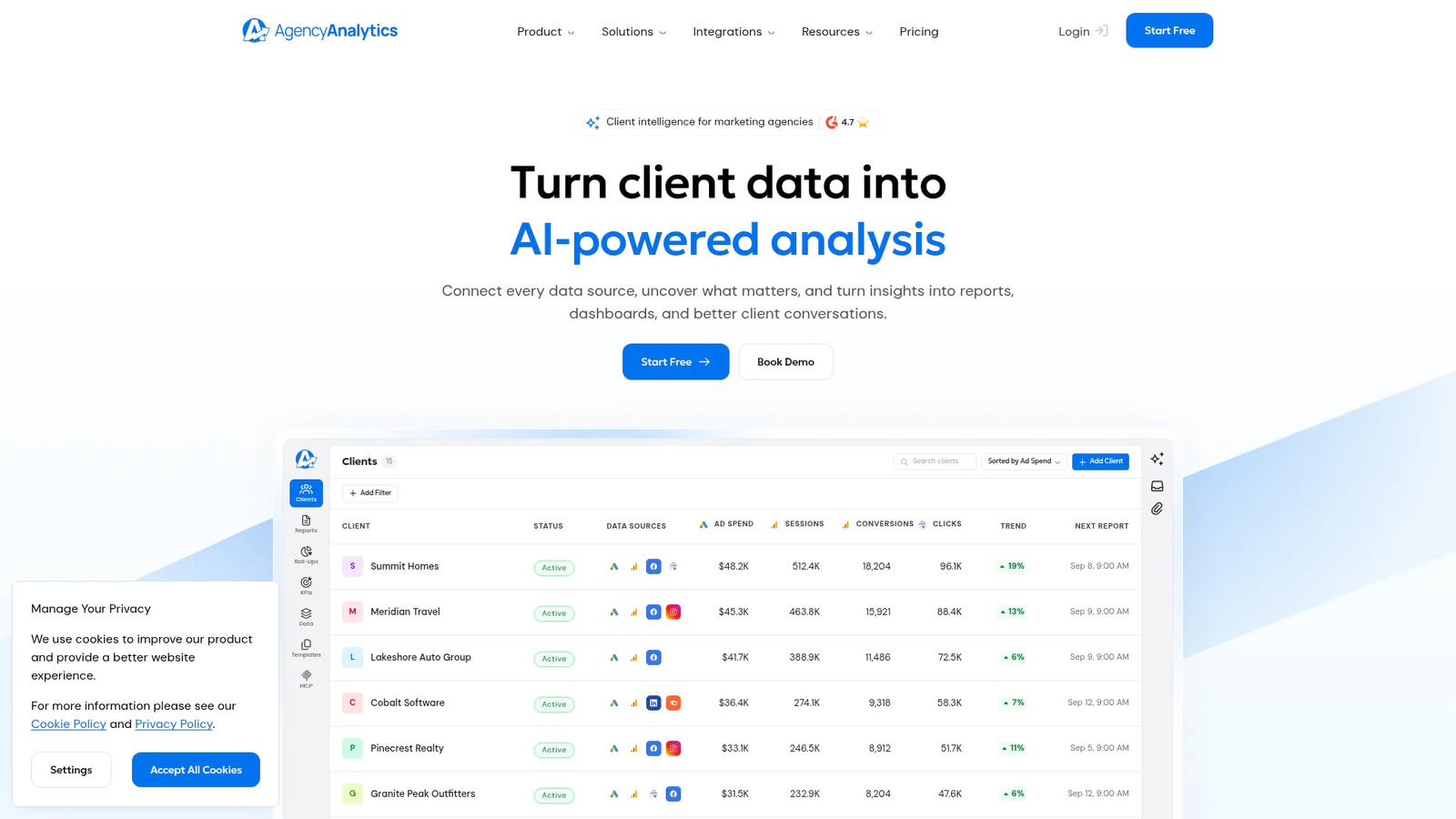
Verdict: AgencyAnalytics is a strong category fit when the agency’s visible pain is client reporting.
Best For: Agencies that need branded dashboards and recurring client-facing reports.
Category: Reporting and dashboard platform.
Agency Fit: It fits best when account managers need a clearer way to present performance across clients.
White-label reporting solves a common agency problem: Clients need controlled access, consistent formatting, and a clear view of results. But reporting is a presentation layer. It leaves prioritization, content production, publishing, and refresh work elsewhere.
During a trial, test dashboard setup, client access, scheduled reporting, and permission tiers. Also check how the tool surfaces exceptions before the report is due. AgencyAnalytics prices per client: $20 per client per month billed annually or $25 monthly, with Rank Tracker and AI Tracker sold as add-ons.
5. SE Ranking - Best For Agencies Comparing Value-Oriented SEO Platforms
Verdict: SE Ranking belongs in the evaluation when an agency wants to compare SEO management software for agencies through a cost-conscious lens.
Best For: Smaller agencies building a more structured SEO stack.
Category: SEO platform candidate.
Agency Fit: It fits best when the agency needs to compare core SEO tooling, reporting, client access, and packaging in a single buying cycle.
The practical test is whether the platform reduces the team’s highest-friction work. If the agency’s issue is client-ready visibility, examine reporting. If the issue is stalled production, examine how insights move into briefs, reviews, publishing, and refresh.
White-label reports need SE Ranking’s paid Agency Pack, which requires a Pro or Business plan on annual billing, so confirm packaging and limits before quoting a client.
6. Screaming Frog SEO Spider - Best For Deep Technical Audit Workflows
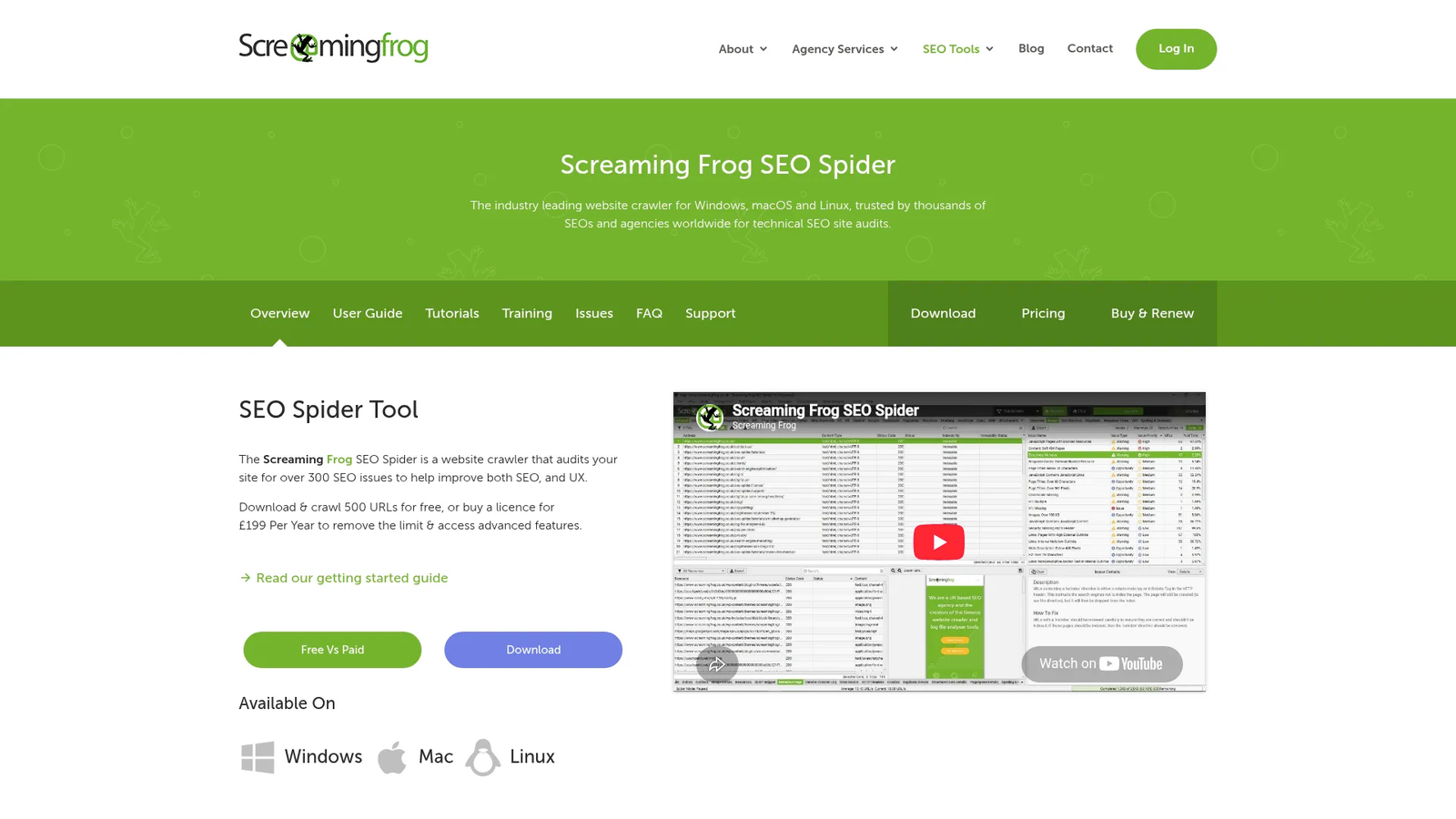
Verdict: Screaming Frog SEO Spider is a specialist option for agencies that need technical crawling in their stack.
Best For: Technical SEO teams and audit-heavy retainers.
Category: Technical crawler.
Agency Fit: It fits best when the agency needs detailed site diagnosis and has operators who know how to turn crawl findings into prioritized recommendations.
A crawler can uncover issues that dashboards miss. Agencies should decide where crawl data goes next: Into a client report, an implementation ticket, a content refresh workflow, or a technical backlog.
The free version crawls up to 500 URLs. A licence costs £199 a year and renews annually. It removes the crawl limit and adds integrations such as Search Console and PageSpeed Insights.
7. Sitebulb - Best For Technical Audit Reporting
Verdict: Sitebulb is worth evaluating when technical audit communication is a major part of the agency’s delivery model.
Best For: Agencies that need technical audit outputs clients can understand.
Category: Technical audit platform.
Agency Fit: It fits best when the team must turn technical diagnosis into clear recommendations for client stakeholders.
Audit reporting matters most when clients need to understand why an issue deserves priority. If repairs run through separate task tools, developer queues, and content workflows, the agency still needs a process that carries the work to completion.
Sitebulb sells both a desktop app and Sitebulb Cloud for larger crawls and shared team access. Published prices differ by region and source, so confirm the current plan with the vendor.
8. SEOcrawl AI - Best For Agencies Evaluating Visibility And Reporting Workflows
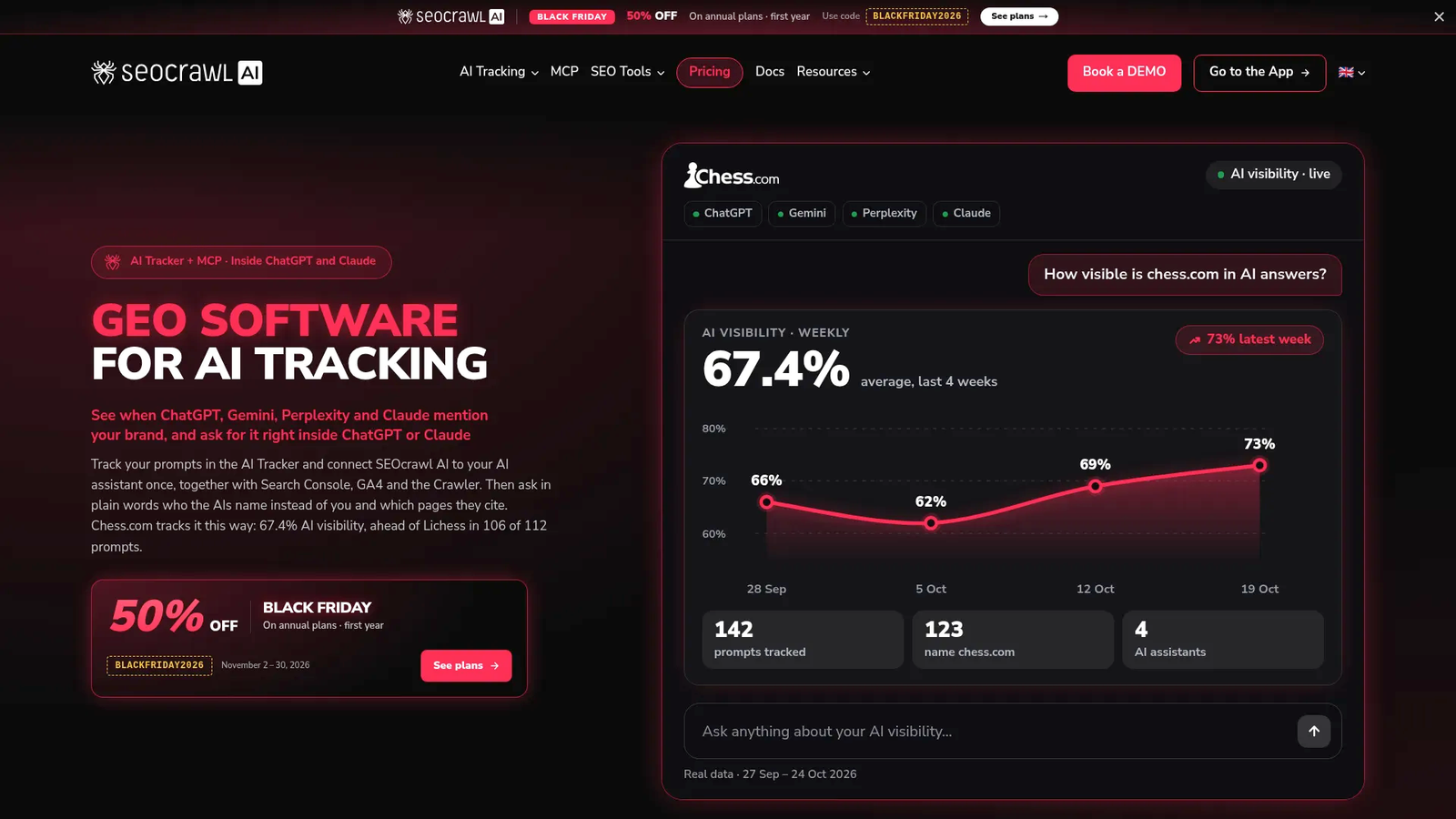
Verdict: SEOcrawl AI belongs on the shortlist when the agency is comparing visibility monitoring and reporting workflows.
Best For: Agencies examining rank, traffic, and AI-related reporting needs.
Category: SEO visibility and reporting candidate.
Agency Fit: It fits best when leadership wants to see how the platform surfaces performance changes across multiple accounts.
For any AI-related reporting platform, agencies should insist on a clear methodology. The report should show what the agency tracked, when it collected the data, and how it measures change over time. That keeps AI search visibility from becoming a vague narrative layered onto standard SEO reporting.
SEOcrawl AI combines GSC and GA4 dashboards, rank tracking, and a crawler. Its AI Tracker covers ChatGPT, Claude, Gemini, Perplexity, and Copilot. Its Agency plan is €399 per month for up to 200 projects, with white-label reports and read-only client dashboards.
9. ClickUp - Best For SEO Agency Project Management
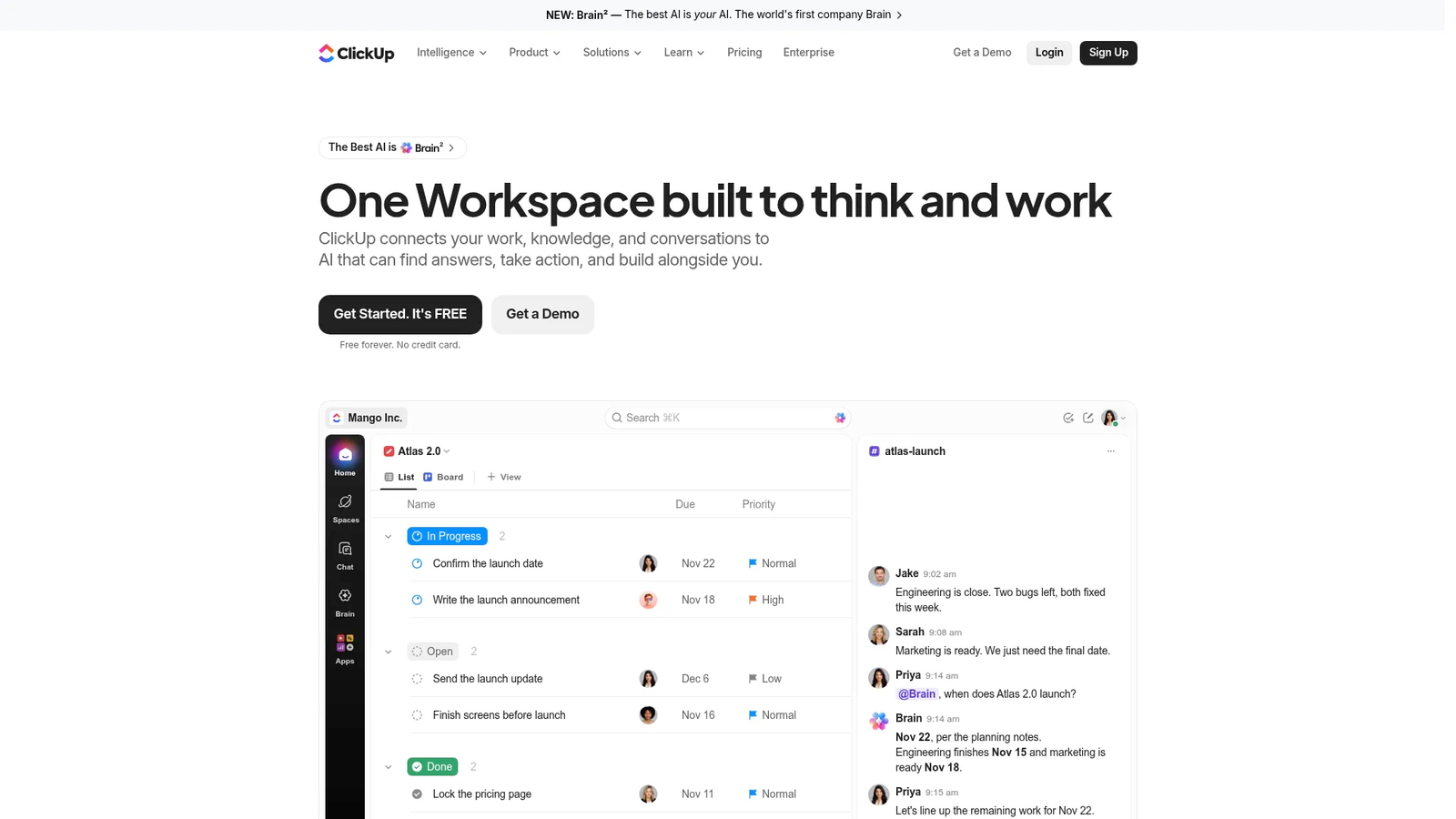
Verdict: ClickUp can help coordinate SEO work, but project management is separate from SEO execution.
Best For: Agencies that need task structure and recurring retainer workflows.
Category: Project management software.
Agency Fit: It fits best when the problem is coordination and other tools handle SEO data and publishing.
The best project management software for SEO agencies helps make ownership visible. It can support task templates, recurring workflows, and client-facing status views, depending on configuration and plan. It doesn’t replace rank tracking, technical audits, backlink research, AI search visibility reporting, or CMS publishing.
Use ClickUp when the agency already has SEO intelligence and execution systems but needs better task discipline.
10. Scoro - Best For Agency-Wide Business Operations
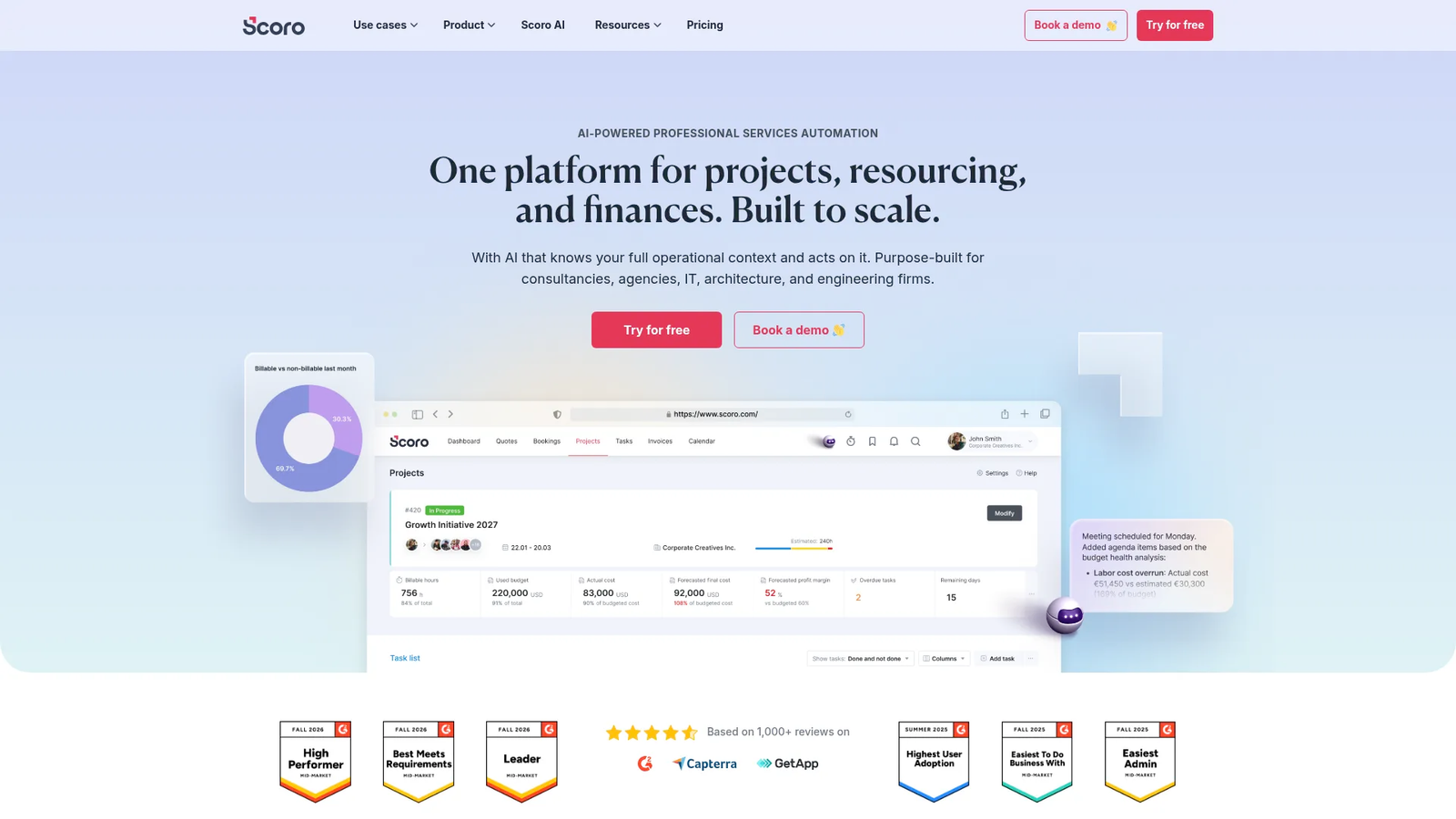
Verdict: Scoro fits evaluations where the agency is solving broader business operations, not SEO execution alone.
Best For: Agencies reviewing agency-wide operational systems.
Category: Agency operations platform.
Agency Fit: It fits best when leaders need visibility across sales, delivery, resourcing, and business operations.
An agency operations platform can help leadership manage the business around the work. Agencies should treat Scoro as complementary to SEO delivery software when they need both operational oversight and search-specific execution workflows.
Scoro is a professional services automation (PSA) platform. It covers quoting, projects, resource planning, time tracking, and invoicing in one system. Check current plans and permissions with the vendor.
SEO Agency Management Software Compared
The clearest way to compare multi-client management features in agency SEO software is to separate category fit from execution depth. A reporting tool, a crawler, and an execution platform may all sit in the same buying conversation, but they solve different operating problems.
Table A - Feature And Fit Matrix
Table B - If Your Agency Needs To… Decision Matrix
How To Build A 20-Client SEO Operating System
A 20-client SEO operating system is a repeatable loop. It makes work visible and prioritizes it consistently. It then moves the work through production and approval, publishes it, measures the result, and feeds the next refresh cycle.
20-Client SEO Operating Loop: Discovery → Prioritization → Production/Updates → Approval → Publishing → Outreach → Measurement → Refresh.
Running every account through the same loop stops each strategist from inventing a separate process.
Standardize Account Structure And Build A Prioritization Queue
Start by standardizing each account record: Client goals, tracked domains, priority page types, core topics, reporting cadence, access needs, and approval requirements. Without this structure, the team has no stable way to compare work across clients.
Then build a prioritization queue using eight factors:
- Client business priority.
- Revenue relevance of the page or cluster.
- Opportunity size.
- Urgency.
- Implementation effort.
- Confidence.
- Content readiness.
- Expected time to impact.
Use it as a decision framework. The score helps account teams explain why one task moves ahead of another. It also stops strategists from defaulting to the newest request over the highest-value work.
Production, Approval, And Publishing
The delivery chain usually looks simple on paper: Brief → draft → internal review → client approval → CMS implementation. In practice, each arrow can become a delay if the work lives in disconnected documents, messages, and CMS queues.
Direct CMS publishing can reduce friction when review gates are clear. Slate supports publishing to Webflow, Sanity, WordPress, and Strapi. Agencies can then move approved work into the CMS without rebuilding the asset in another system.
For SEO agency workflow management software, the question is whether each step carries context forward. The brief should know the opportunity. The draft should know the brief. The published page should connect back to measurement.
Measurement And The Content Refresh Loop
Mature retainers don’t run only on net-new keyword research. They also need a refresh loop for declining URLs, lost rankings, content decay, outdated information, competitor displacement, and missed citation opportunities.
Run the refresh workflow on a schedule. Monitor pages for clicks, traffic, CTR, citations, and performance changes, and route a page into the queue when it needs action. That is where multi-client SEO management software becomes an operating system and stops being a reporting archive.
Which SEO Tasks Should Agencies Automate First?
Automation should remove coordination work, not judgment. If an agency starts with recurring data pulls, monitoring, audits, and structured content operations, the payoff is cleaner and safer. The best candidates are frequent, rules-based, and easy to review. Strategy, brand voice, compliance-sensitive claims, and the client relationship stay with people. Our guide to building content and SEO automation systems covers which tasks to automate and where to keep human review. Our roundup of SEO automation tools compares the tools that run them.
All-In-One Platform Or Multi-Tool Stack? How To Decide
Most agencies land on a hybrid: One execution and reporting core, plus one or two specialist tools for deep technical crawling and link intelligence. The decision should be driven by where handoffs cost the most time.
Use these four questions before consolidating the stack:
- How many active accounts does the agency manage?
- Does the agency need white-label reporting included or as an add-on?
- Where does work stall most often: Research, production, approval, or publishing?
- What is the monthly software budget across the full stack, including add-ons and manual coordination?
A multi-tool stack can work if handoffs are intentional. It becomes expensive when every account manager has to rebuild context across research tools, spreadsheets, documents, reporting dashboards, project boards, and CMS workflows.
Is White-Label Reporting Enough To Scale An Agency?
White-label reporting helps agencies present results professionally, but it leaves the work required to produce those results in place. Scaling delivery also needs opportunity prioritization and repeatable content and technical workflows. It needs review processes, publishing capacity, and measurement tied to completed work.
A branded report can show the client what happened. It cannot decide what should happen next, create the asset, route the review, publish the update, or run the refresh loop.
What Does SEO Agency Management Software Cost?
SEO agency management software cost depends on the pricing model and account volume. Seats, tracked projects, domains, data limits, add-ons, API access, white-label needs, and client portals all move the price. The visible subscription price is only part of the decision.
The hidden cost is manual coordination. A cheaper stack may force account managers to move findings from research tools into documents, project boards, and reporting dashboards. Count that operating burden in the buying decision.
The Stack-Cost Worksheet
Use this worksheet before buying another platform. The goal is to understand whether the agency is reducing complexity or adding one more tool.
Run a stack-cost review before procurement. Agencies often discover that the most expensive part of the stack is the work required to connect it.
How To Switch Platforms Without Disrupting Live Client Work
Tool migration should protect client continuity. The goal is to change the operating system without clients noticing a drop in reporting or delivery quality.
- Inventory clients, projects, keyword sets, report templates, integrations, and access permissions.
- Pilot on two or three representative accounts before moving the full book.
- Run parallel reporting for one cycle to preserve continuity.
- Rebuild report templates and permission tiers before broader rollout.
- Train strategists and account managers separately because their system use differs.
- Tell clients about dashboard changes before the first new report arrives.
Demo questions should be practical:
- How does multi-client permissioning work?
- Can clients receive view-only access?
- What happens to exports and retained data?
- Can we template workflows across accounts?
- Which CMS publishing integrations does it support?
- Which AI search platforms does it track?
- What does the base plan include, and what costs extra at our account volume?
A good migration starts small, preserves reporting continuity, and gives the team enough time to rebuild habits around the new system.
How Should Agencies Report AI Search Visibility To Clients In 2026?
Agencies should report AI search visibility as an emerging discovery signal alongside traditional organic metrics. Useful reporting can include tracked prompt answers, brand mentions, citations, sentiment, and change over time. Establish a baseline first and clearly explain the limits of AI platform measurement. Report the prompt set, platforms tracked, collection dates, and change against that baseline. Don’t present a single-day snapshot as a trend, and don’t promise citations. Our breakdown of AI search metrics explains which signals carry the most weight. Our guide to AI visibility tools for agencies covers prompt libraries, baselines, and monthly reporting per client.
The Verdict: Choosing Your Agency’s SEO Operating Core
The right SEO agency management software depends on where delivery breaks. If research is the bottleneck, evaluate SEO intelligence suites. If reporting is the bottleneck, evaluate dashboard and white-label reporting platforms. If execution is the bottleneck, prioritize a system that carries work from opportunity to publishing to measurement.
Slate is the clearest fit in this comparison for agencies that need multi-client execution. It covers AI search visibility, SEO workflows, content operations, CMS publishing, outreach, measurement, and refresh. It isn’t a full PSA replacement, so don’t evaluate it as one.
Agencies managing 20+ accounts win or lose capacity in the loop: Discover the opportunity, prioritize the work, produce it, approve it, publish it, measure it, and refresh it.
Frequently Asked Questions
What is the best SEO agency management software?
The best choice depends on the agency’s bottleneck. Research-heavy teams should evaluate SEO intelligence suites. Reporting-heavy teams should look at dashboard platforms, and audit-heavy teams at crawlers. Execution-constrained teams need systems that connect opportunities to publishing, measurement, and refresh. Slate fits the agent-driven execution use case.
What software do SEO agencies use to manage multiple clients?
Agencies usually combine SEO suites, reporting platforms, technical crawlers, project management tools, agency operations software, and execution platforms. The best client management software for SEO agency teams depends on whether the agency needs better client visibility, stronger delivery workflows, or broader business operations.
What is the difference between SEO software and agency management software?
SEO software focuses on search work such as rankings, audits, content, backlinks, visibility, and reporting. Agency management software usually covers broader business operations such as sales, resourcing, utilization, and financial visibility. Some platforms overlap, but don’t treat them as identical categories.
Can clients get view-only access to SEO dashboards?
Client access depends on the platform, plan, permission model, and how the agency configures the workspace. Agencies should evaluate whether clients can see only the right accounts, reports, dashboards, and status views without gaining access to internal strategy notes or draft work.
Is white-label reporting worth paying for?
White-label reporting is useful when clients need branded reports, controlled access, and consistent performance communication. It is less useful as a standalone scaling strategy. Reporting shows what happened; it does not automatically prioritize work, produce content, approve updates, publish pages, or run refresh workflows.
Can SEO agency software replace a project management tool or CRM?
Sometimes there is partial overlap, but category fit is important. SEO execution software can manage search-specific workflows, while project management and CRM systems often handle broader task coordination or sales processes. Slate is not a full PSA, finance, payroll, invoicing, or universal CRM replacement.
What should be included in a monthly SEO client report in 2026?
A monthly report should cover rankings and Google Search Console and GA4 performance. It should also list technical issues resolved, content published or refreshed, and links or mentions earned. Add AI search visibility baselines where relevant, and close with next-period priorities. The strongest reports connect completed work to observed performance changes.
Should agencies report on AI Overviews and AI search visibility?
Yes, when the agency has a baseline and a clear methodology. AI search visibility can be useful alongside traditional organic metrics, but agencies shouldn’t treat it as a conventional ranking or promise it as an outcome. Reports should show prompts, platforms, dates, mentions, citations, and trend direction.
How much should an agency budget for its SEO software stack?
Base the budget on account volume, users, and tracked domains. Then add keyword limits, reporting needs, integrations, AI search visibility requirements, specialist tools, and add-ons. Agencies should also include the cost of manual handoffs when comparing tools, because disconnected systems can create hidden operating expense.