Does your content toolstack look something like this today?
- Ahrefs/Semrush (keyword research)
- Google Docs (drafting)
- ChatGPT (ideation and getting scolded)
- Webflow (publishing)
- GA4 and Search Console (analytics)
There's nothing inherently wrong with this setup. But you probably don’t have any intelligence passing between these tools, apart from the one poor content marketer trying their best to pull all the strings.
Previously, along with a manual team, this could have still gotten you results, as Google’s algorithms were fairly straightforward - at least, compared to the beast that is AI.
Today, those gaps have become much more expensive.
Content now has to perform in traditional Google SERPs as well as AI answer engines like ChatGPT, AI Overviews, Claude, Perplexity, Gemini…a near-endless list.
Look, most content underperformance in 2026 is not a talent or strategy problem, but more of an infrastructure problem.
Which is why you need something more centralized that can integrate your content system into a coherent, consistent machine. Something that takes insights from point A and passes them on to point B.
And here’s where a content operations platform fits in.
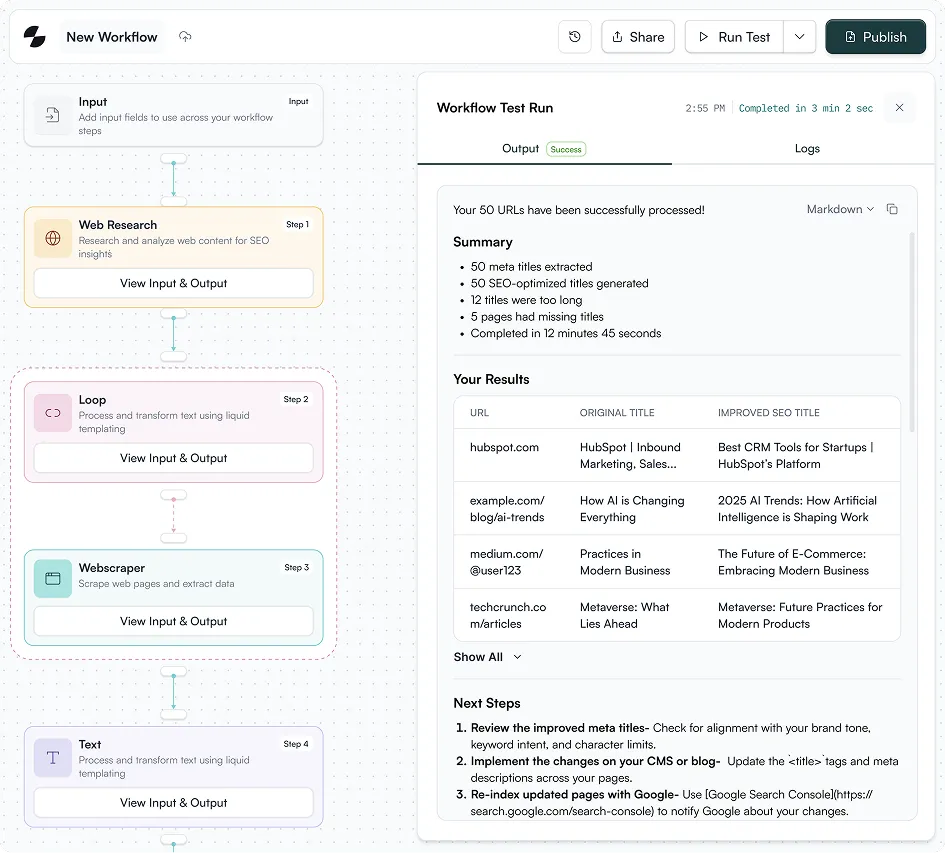
That is why we felt it was important to address this question comprehensively: how exactly is a content operations platform useful today?
And that’s what we cover in this article.
Why Content Operations Matters in 2026
As with all content operations discussions, there are two angles to this: from the perspective of an agency and from that of an in-house team.
The pain of broken content ops hits agencies first; they feel it at scale:
When you're running content engines for multiple clients, each with different standards, approval chains, and publishing cadences, process failures don't just cause “slow downs.” They can go as far as eating into your margins.
There are three common agency-side content operation breaking points:
- Poor client inputs: There's no system of record, so every new request starts from scratch. Vague briefs, outdated personas, and limited SME access force agencies to guess positioning. This triggers revision cycles that destroy timelines.
- Content diversity without differentiation: Agencies produce blogs, case studies, landing pages, comparison pages, and thought leadership. But most run every content type through the same production process.
- Performance pressure: Many agencies report first-level metrics (traffic, impressions) because those are easy to capture. The metrics proving ROI (pipeline influence, AI visibility) require analytics that most agencies simply don't have.
The in-house version of this problem is the other side of the coin:
The cracks here are architectural rather than process-driven.
There are no defined content pillars tied to the product. Teams default to "what keywords should we target?" instead of "what does our product solve, and how do we map content territories to those capabilities?"
Now, what does this lead to? Topically scattered blogs that neither build authority nor help AI models understand what the brand is an expert in.
Add to this a decentralized publishing process. Marketing, product marketing, engineering, and sales enablement all publish content with no centralized governance.
As a result:
- Brand voice fractures across touchpoints
- Duplicate content confuses search engines and AI models
- Internal linking breaks
- Content decay accelerates
The dual-discovery landscape today has exposed these operational cracks more than before, when teams could hide behind “volume.”
“Publish enough…some of it will stick.”
That logic collapses when AI engines evaluate citation-worthiness based on content quality, update frequency, and topical coherence.
What Is a Content Operations Platform?
A content ops platform is the connective layer between every step of your content process. It orchestrates the entire lifecycle from research to publishing to performance tracking to refresh, passing intelligence between each stage.
Where SEO tools are “instruments” and a CMS is a “stage,” a content ops platform is the production system that coordinates the entire show.
What Does a Content Operations Platform Do?
In functional terms, a modern content ops platform provides:
- Unified research combining SEO data and AI visibility data in one view
- Automated content creation workflows that carry research context, competitive gaps, and optimization requirements into drafts
- Brand voice governance built into the system
- Publishing integrations that eliminate the copy-paste-reformat cycle between your creation environment and your CMS
- Performance tracking that spans both Google and AI platforms
These platforms have emerged as a category because the dual-discovery landscape makes disconnected operations actively harmful for your organic growth:
- When your research tool doesn't know what your AI tracker sees, you're making topic decisions with half the data.
- When your creation workflow doesn't carry optimization intelligence from research, you're creating content that needs structural rewrites after it's "done."
These platforms, like Slate, are a minimum viable infrastructure for content that performs in 2026's discovery landscape.
Benefits of a Content Operations Platform
A content operation platform is your best friend from start to finish, helping you at every step of the content lifecycle.
Let's walk through each one: where it breaks, and how to fix it:
- Topic Research & Opportunity Identification
- Content Briefing & Creation
- SEO & AEO Optimization
- Publishing & Pushing Live
- Performance Tracking & Measurement
- Content Refresh & Decay Management
Step 1: Topic Research & Opportunity Identification
Topic research is where teams evaluate:
- What to write about
- Which keywords to target
- How competitive the landscape is
- Whether there's an opportunity worth pursuing
In most setups today, this means pulling data from an SEO tool, running some manual analysis, and making a call on what needs to go in the content.
The process works, but it has some serious blind spots.
Where It Breaks
It is completely blind to AI visibility, which accounts for a large share of traffic today.
Teams have no way to see if competitors are already being cited by ChatGPT, Perplexity, or Gemini for the topics they're evaluating.
A team could spend weeks building content around a topic where a competitor already owns the AI answer, and they'd have no idea about it.
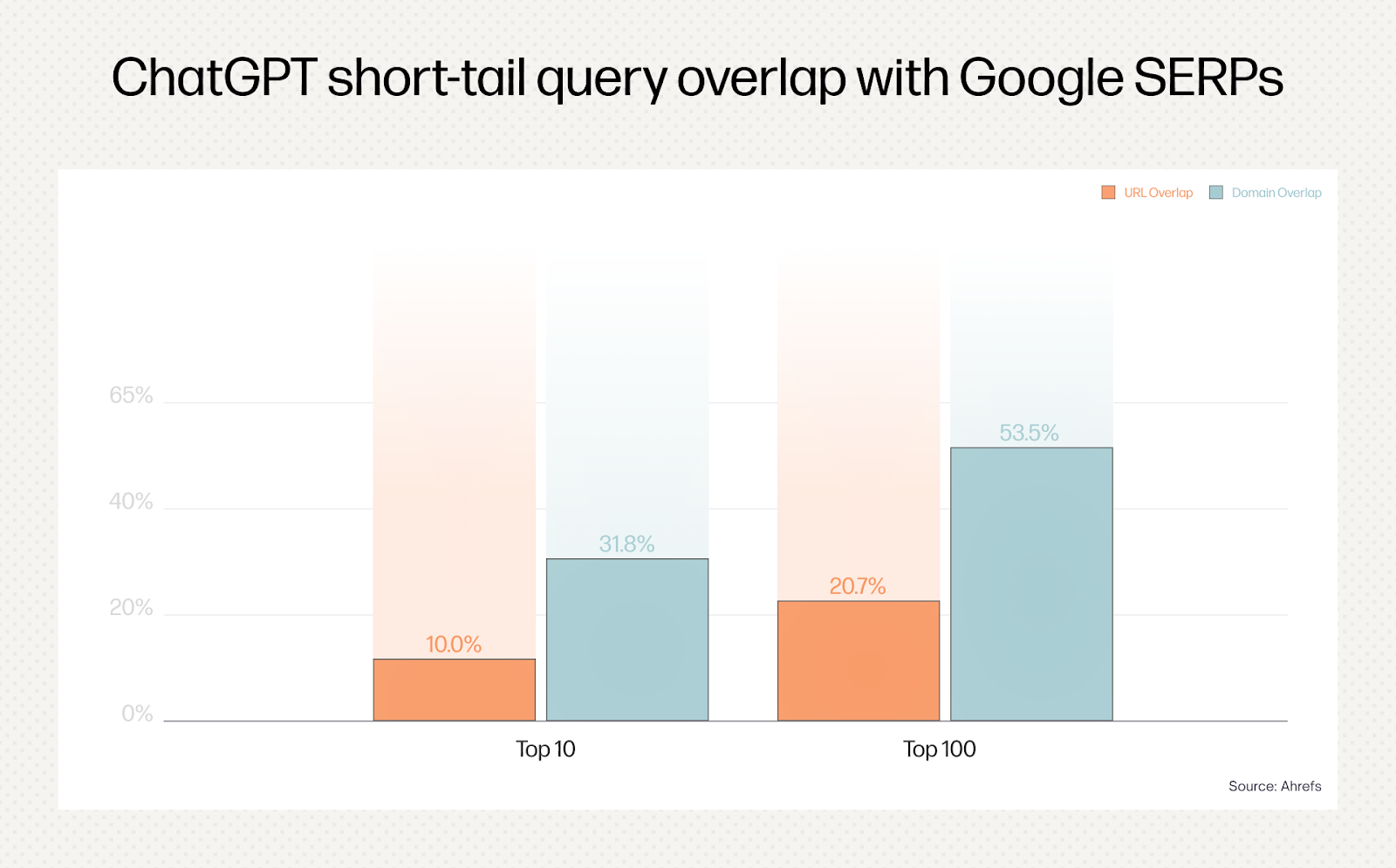
Only 10% of ChatGPT's short-tail query results overlap with Google SERPs. That means a completely separate competitive landscape exists that most workflows don't even acknowledge.
There's also no persistent research layer that accumulates intelligence over time. Every new content initiative begins with the same manual pull-and-compare routine.
Ultimately, teams default to the one metric they have: search volume. Or they fall back on editorial intuition.
Neither accounts for the dual-discovery reality.
How a Content Ops Platform Fixes This
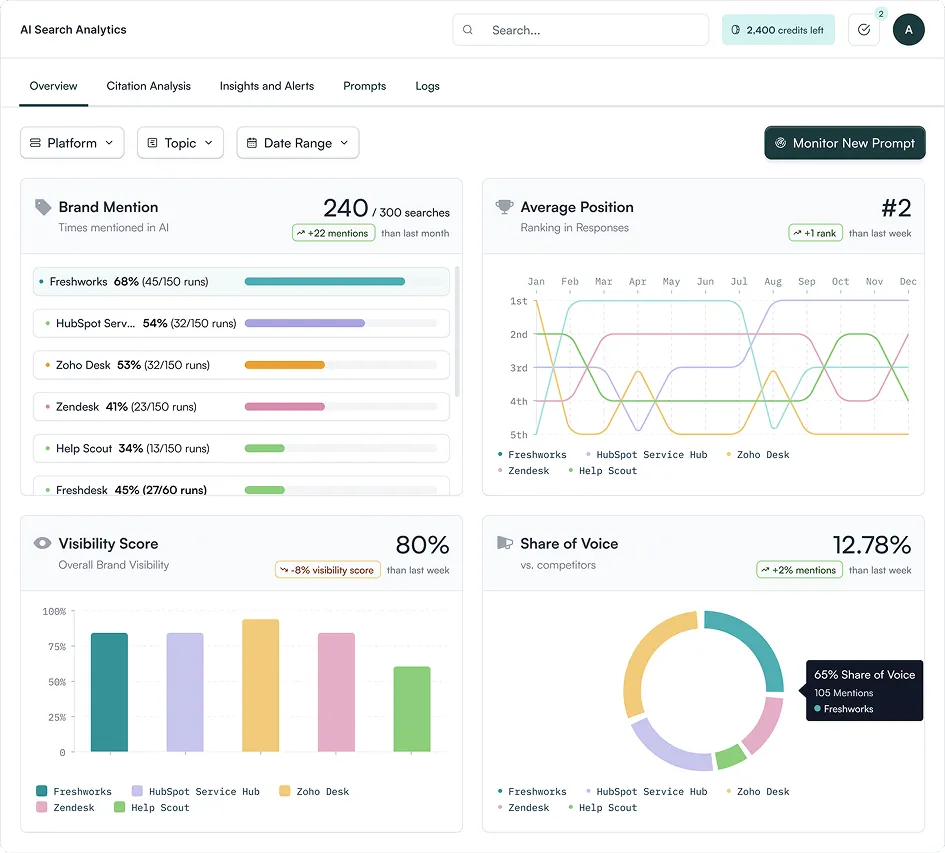
- AI search analytics that track citation visibility - for both you and competitors - across AI platforms alongside traditional SERPs.
- Impact-based topic prioritization that scores opportunities using AEO potential and competitive positioning.
- SEO metrics connected to GSC/GA4.
- Live keyword data integration from existing SEO tools without manual CSV exports,
Once you've identified the right topics, the next failure point is the handoff to creation. It's where most of the research intelligence you just gathered disappears.
Step 2: Content Briefing & Creation
This is where research turns into assets.
The SEO analysis needs to translate into a brief, the brief needs to guide a writer (or an AI tool), and the output needs to be on-brand, optimized, and ready for Google and AI engines.
Where It Breaks
Research intelligence doesn't survive the handoff to writers.
A strategist spends hours analyzing SERPs, identifying content gaps, and mapping competitive angles.
Then they hand the writer a…keyword and a loose brief in a Google Doc.
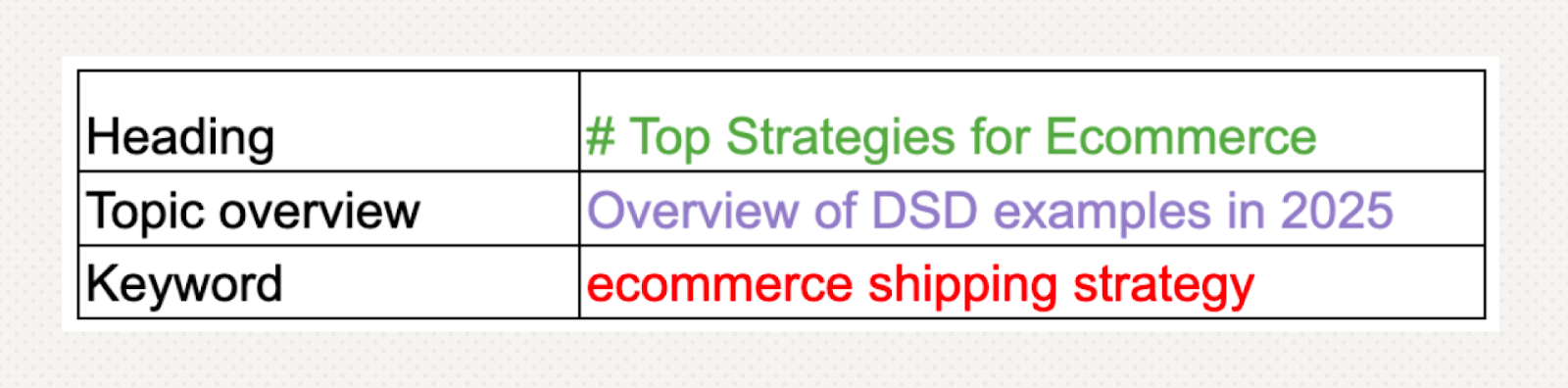
All the competitive context, SERP structure insights, and audience intent signals: lost in darkness.
The writer starts from scratch.
And if the writer’s idea of creating the content is a generic AI prompt, all hell breaks loose.
There is a deeper problem here.
Most teams treat AI as a drafting tool rather than integrating it into a structured content engineering workflow where the AI receives brand rules, competitive context, and optimization requirements as inputs.
The difference between "use AI to write a draft" and "feed AI your brand voice, competitor analysis, SERP gaps, and AEO requirements, then generate a draft" is the difference between a generic output and production-ready content.
How a Content Ops Platform Fixes This
- SERP data, competitive gaps, and AEO requirements are loaded into every draft automatically.
- The research intelligence is directly reflected in the drafting engine
- Brand voice is encoded into the system, so every output aligns with identity without manual editing.
- Dual-discovery optimization is built into the creation process.
- Differentiated workflows for different content types.
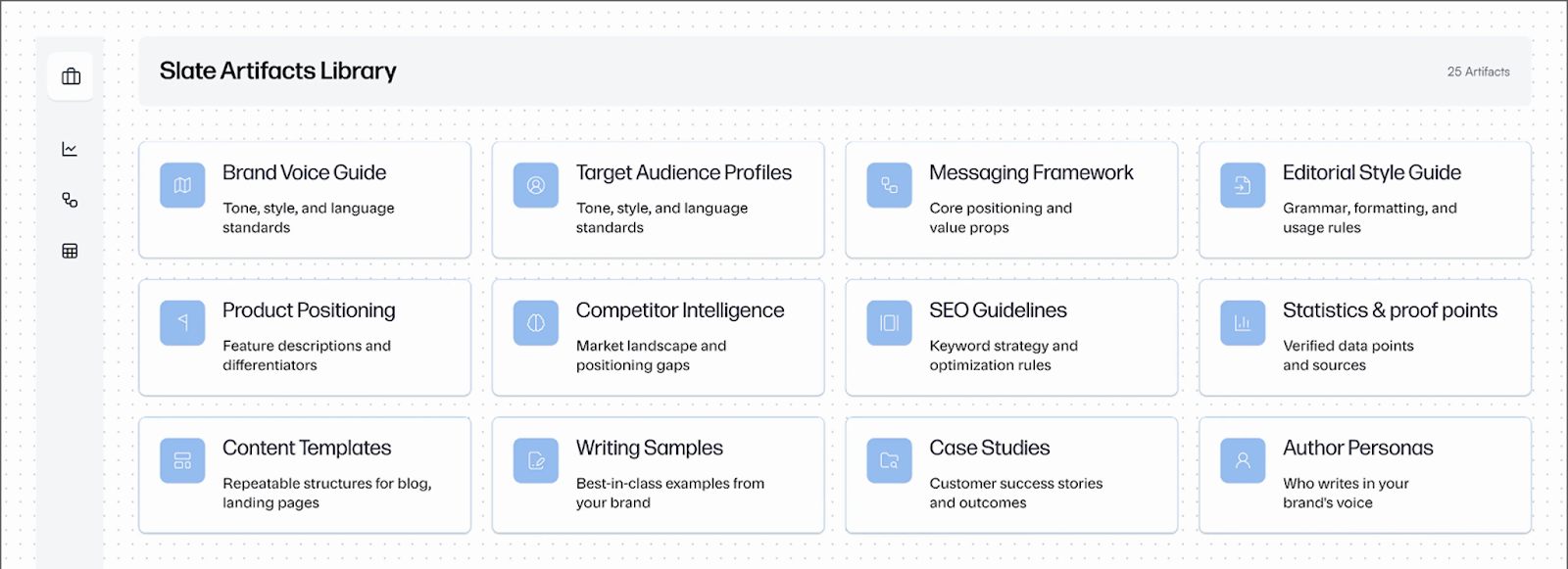
Here’s an example of how a “brandkit” looks in Slate, with info about your company, audience, features, usp, competitors and more:
Even when creation goes well, most teams bolt optimization on afterward. That's like checking the blueprint after the building is up.
Step 3: SEO & AEO Optimization
Optimization is the process of ensuring your content is structured to perform well in search, both traditional and AI-driven.
This includes heading hierarchy, entity coverage, semantic depth, internal linking, and increasingly, whether the content is formatted in a way that AI engines can extract and cite.
Most teams treat this as a separate step that happens after writing. And that's the root of the problem.
Where It Breaks
Here's how the typical workflow goes:
- Content gets written, reviewed, and "finalized"
- Someone runs it through an optimization tool and discovers “it needs changes”
- Suddenly, you try to address missing subtopics, wrong heading hierarchy, and insufficient entity coverage
This triggers a rewrite cycle that frustrates writers, delays publishing, and often produces “Frankenstein content” that's been patched rather than built right.
Why does this happen?
Because optimization data lives in a different tool than the creation environment.
How a Content Ops Platform Fixes This
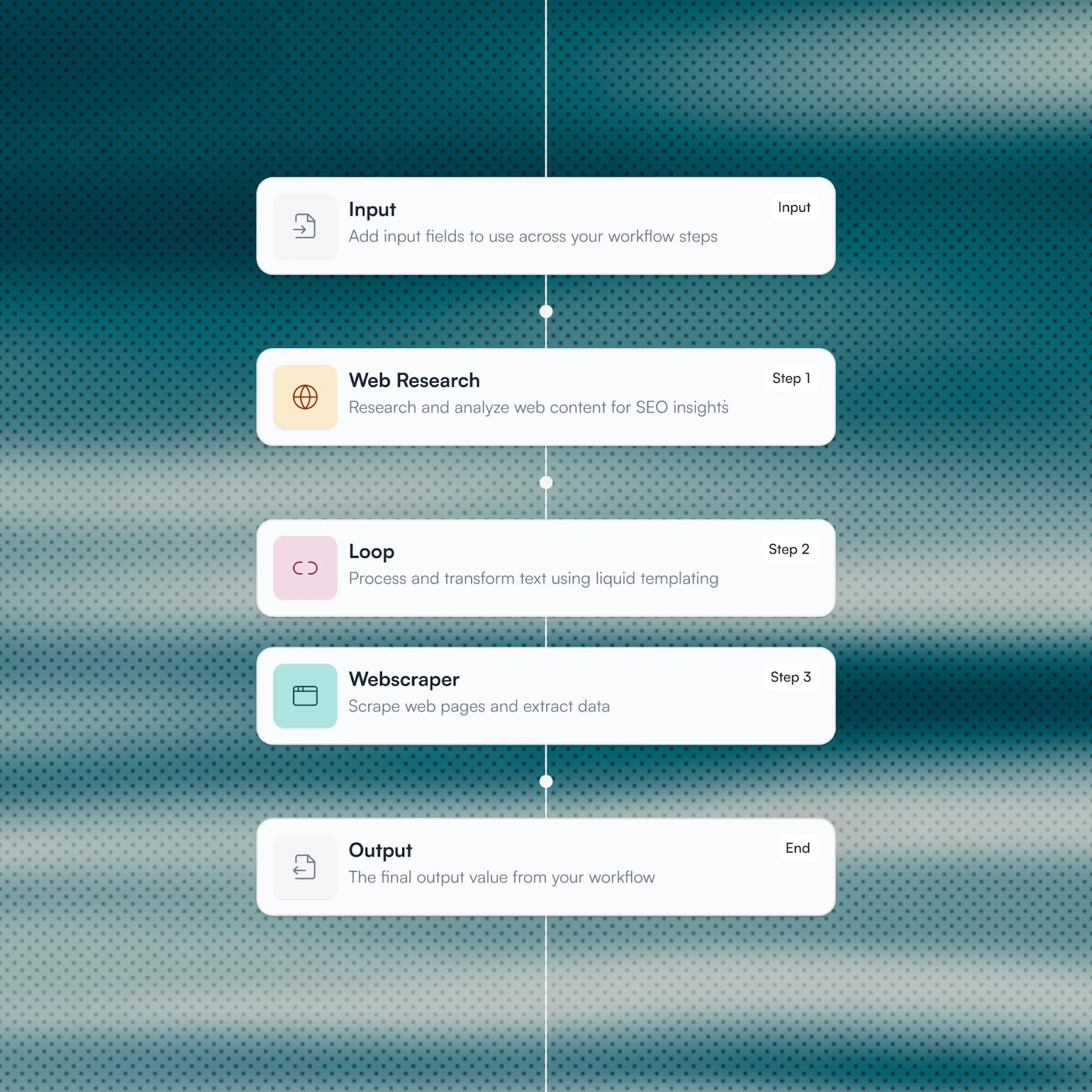
- Optimization intelligence is woven into the creation workflow from step one
- Content comes out already structured for dual discovery, not patched afterward
- AEO best practices are encoded into reusable workflow components
With optimized content ready, the next bottleneck is surprisingly analog: getting it live.
Step 4: Publishing
Publishing is the step where finished content goes from your creation environment to your CMS and onto the live site.
It includes formatting, metadata, internal linking, image configuration, and quality checks.
Sounds simple. In practice, it's one of the biggest time sinks in the entire lifecycle.
Where It Breaks
Here's what publishing a single piece actually looks like:
- Copy content from Google Docs into the CMS
- Reformat headings and lists (they never transfer cleanly)
- Add meta titles and descriptions
- Configure featured images
- Set categories and tags
- Add internal links
- Check mobile preview
That's at least 30-60 minutes per piece. For a team publishing 20+ pieces per month, that's 10-20 hours of pure production overhead. The equivalent of a part-time hire doing nothing but copy-paste.
Those are hours that could go toward strategy, analysis, or creation.
For teams that need to create pages at scale (location pages, comparison pages, feature pages, integration pages), the absence of programmatic publishing infrastructure is a direct project killer.
How a Content Ops Platform Fixes This
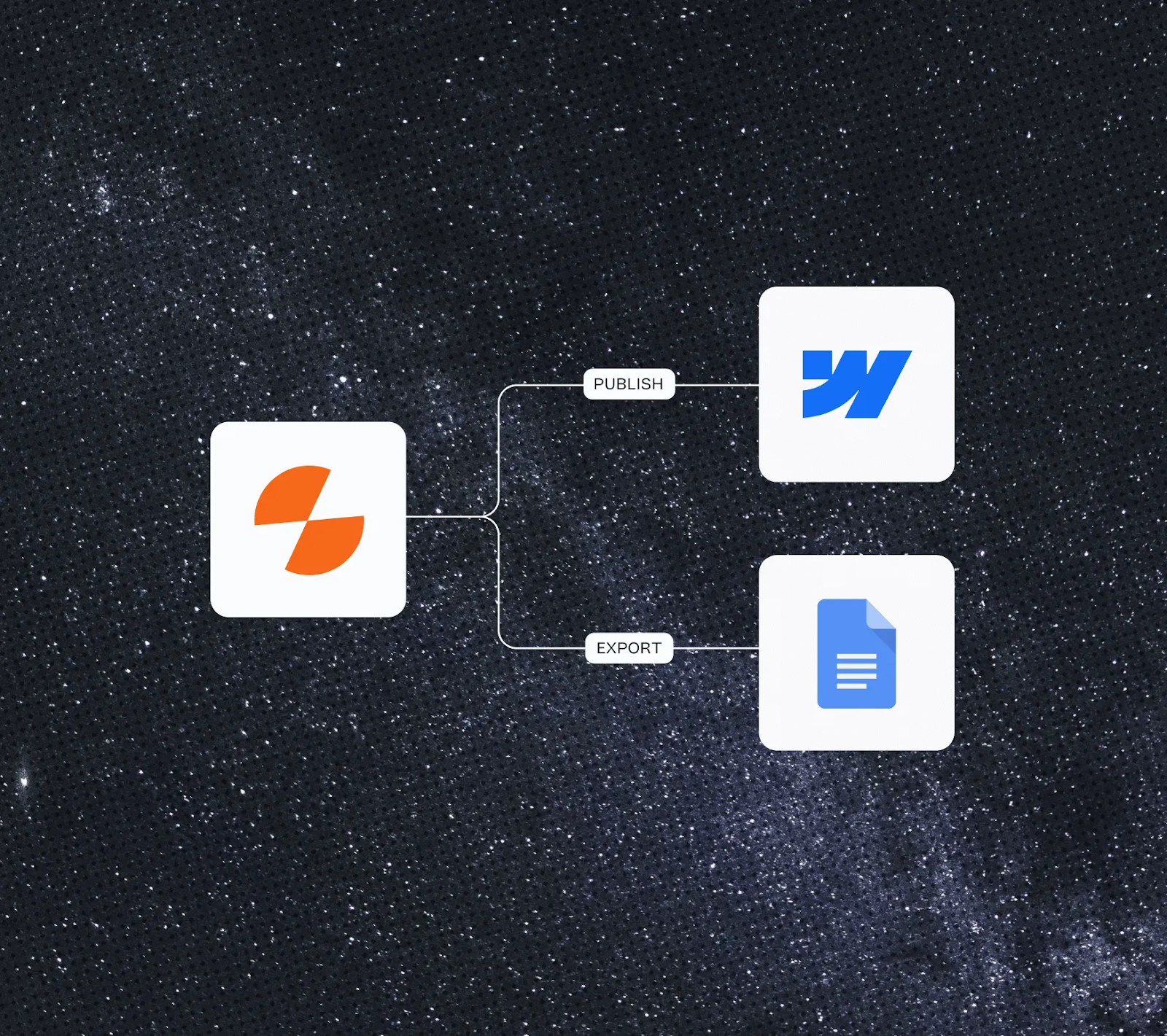
- Direct CMS integrations (WordPress, Webflow) that eliminate the copy-paste-reformat cycle entirely.
- Content moves from workflow to published page with metadata intact.
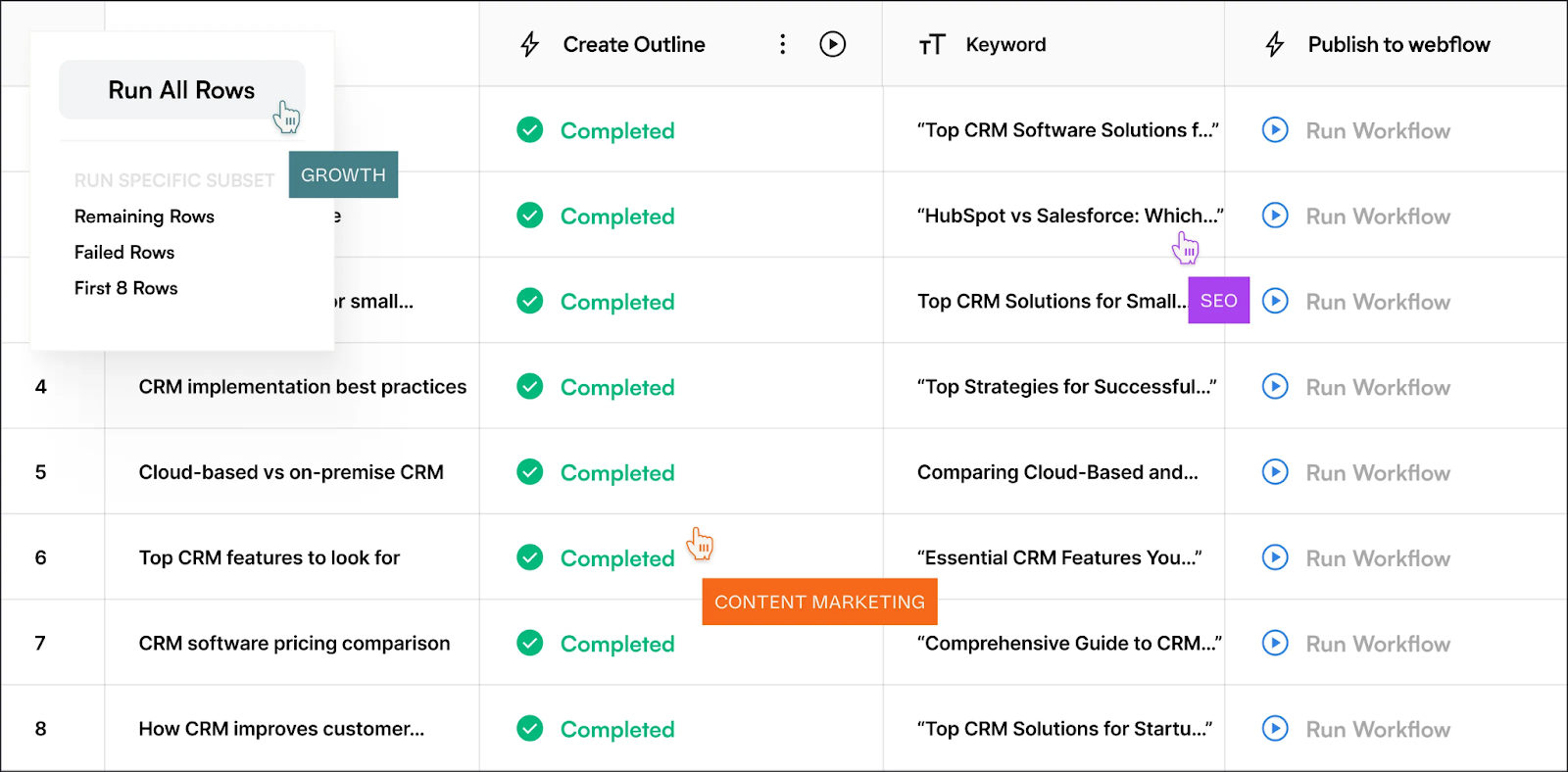
- Bulk and programmatic publishing from a spreadsheet interface, where 1,000 pages require the same effort as 10.
Step 5: Performance Tracking & Measurement
Performance tracking is how teams understand whether content is working:
- What's ranking
- What's driving traffic
- What's converting
- What's declining
It's also the feedback loop that should inform:
- What gets refreshed
- What gets expanded
- Where to invest next
Where It Breaks
Half the discovery landscape goes unmeasured.
This is the most consequential gap in current content operations. Most teams track Google rankings, organic traffic, and maybe some conversion metrics. That's it.
But there’s no data on whether ChatGPT, Perplexity, or Gemini cite your brand when prospects ask about your category. No share-of-voice measurement across AI platforms.
Teams are making optimization decisions based on half the picture, and increasingly, it's the less important half.
There's also no workflow connecting the performance signal to a remediation action. The gap between "this page is declining" and "this page has been updated" is where content decay accelerates.
The problem isn't a lack of data.
It's that data lives in analytics tools while action happens in separate creation tools, with a project management tool awkwardly trying to bridge them.
How a Content Ops Platform Fixes This
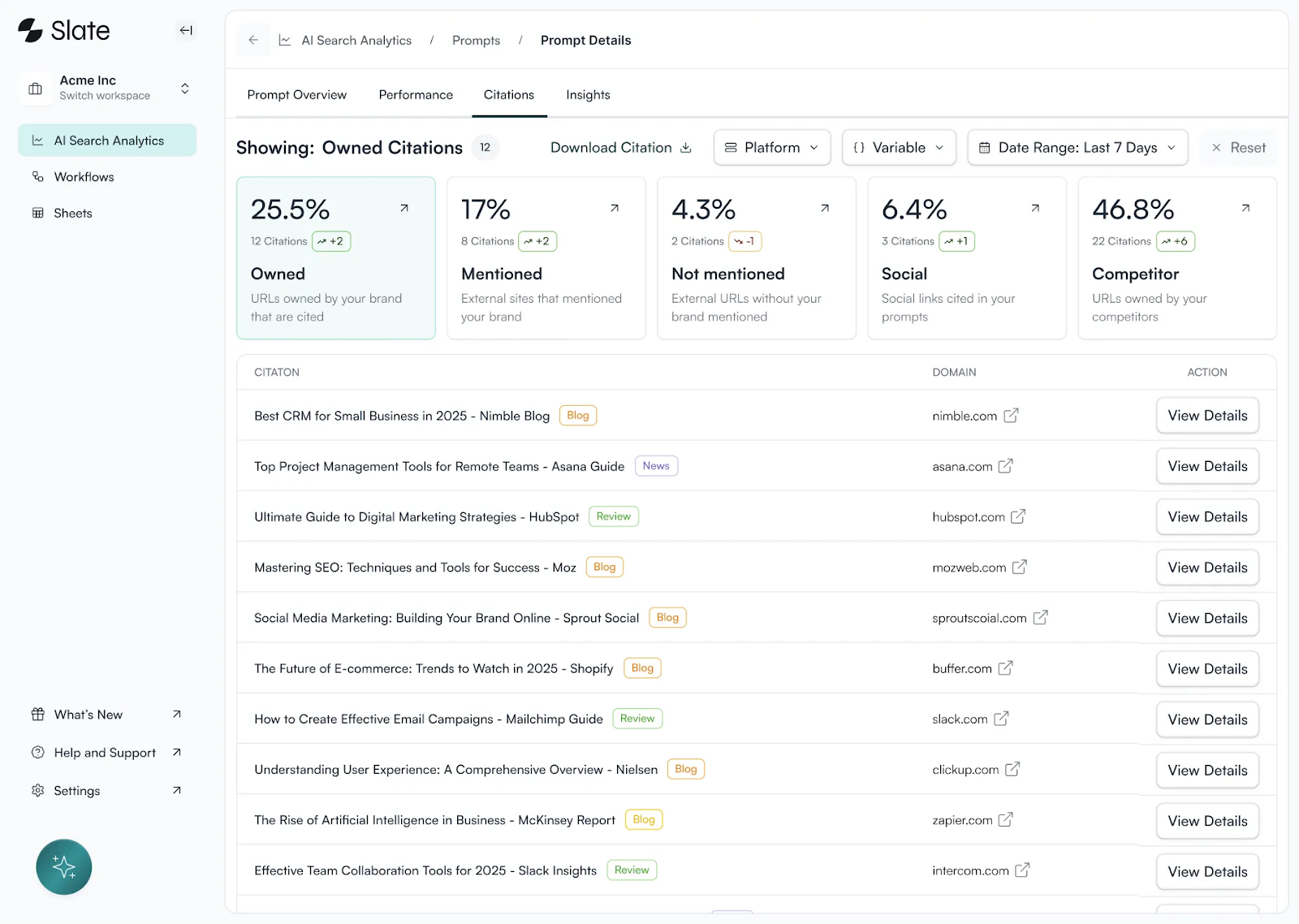
- Performance tracking across Google and AI platforms in a single dashboard.
- When performance signals indicate decay, automated remediation workflows trigger rather than sitting in a report waiting for someone to act.
- Share of voice is measured across AI platforms so teams can see who gets cited for their target queries and identify the gaps.
And when measurement reveals what every content library eventually faces (decay), most teams discover they have no scalable way to fix it.
Step 6: Content Refresh & Decay Management
Content refresh is the process of updating existing pages to maintain (or improve) their rankings, traffic, and AI citation presence.
This includes:
- Re-analyzing the competitive landscape
- Updating outdated data, adding new subtopics
- Restructuring for current optimization standards
- Republishing
Every content library needs this. Very few have a system for it.
Where It Breaks
Content decay is invisible until the damage is done.
A page performs well for 6-12 months, then starts a slow decline. Rankings slip incrementally: position 3 to position 5 to position 8.
By the time someone notices in a quarterly audit, the page has lost visibility, and the competitive landscape has shifted.
The reason decay stays invisible: there's no system continuously monitoring freshness signals and alerting teams before rankings tank.
A thorough content refresh involves re-analyzing the SERP, identifying new subtopics, updating statistics, adding fresh examples, and restructuring for current AI optimization requirements. That takes 2-4 hours per page.
Here's how the math works for a mid-size B2B blog:
Factor
Number
Total blog pages
200+
Pages needing refresh per quarter
50-75
Hours per refresh
2-4
Total quarterly refresh hours
100-300
That's essentially a full-time role. Most teams can't staff for this, so they refresh only the most visible pages and let the rest decay.
How a Content Ops Platform Fixes This
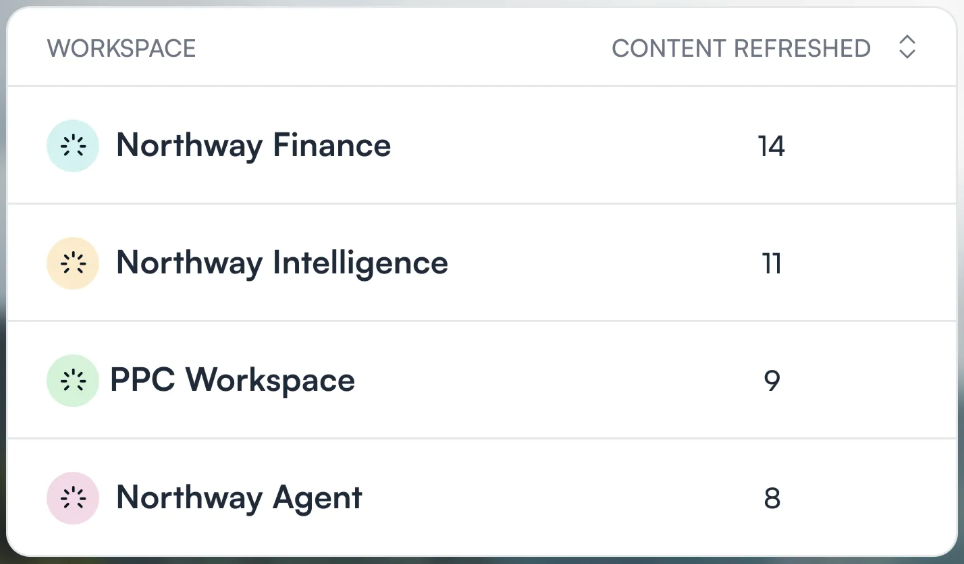
- Continuous automated decay detection that flags declining pages before rankings tank. Proactive, not reactive.
- Impact-based refresh prioritization scoring pages on freshness, topical authority, AEO readiness, and business value.
- Bulk refresh operations at scale through a spreadsheet interface where URLs go in one column and the workflow runs in the next.
- Automated remediation through agentic workflows that execute deep refreshes.
Conclusion
Six stages; each has specific breakpoints.
However, the real cost of broken content operations isn't any single stage failing: it's the compounding effect of broken handoffs between stages.
- Research intelligence lost at the creation handoff means content needs post-facto optimization
- Post-facto optimization means delays
- Delays mean the content is already aging by the time it's live
- Aging content means decay
- Decay means refresh
…which starts the research cycle again, without the original context
The fix isn't better people or a better strategy.
It's engineering: building systems that continuously research, create, optimize, publish, measure, and refresh content across both discovery systems.
And that’s exactly the idea behind a platform like Slate:
- Every cycle gets faster because the system retains context
- Every refresh builds on what the last one learned
- Every new piece of content benefits from intelligence accumulated across the library
The teams that keep stitching tools together with manual handoffs will keep compounding their losses. Slate closes these gaps seamlessly.
Try out Slate today.
FAQs
What is a content operations platform, and how is it different from a CMS?
A CMS stores and publishes content. A content ops platform orchestrates the entire lifecycle: research, creation, optimization, publishing, measurement, and refresh, passing intelligence between each stage. Think of a CMS as the warehouse and a content ops platform as the supply chain.
How is a content ops platform different from SEO tools like Ahrefs or Semrush?
SEO tools provide intelligence for research and tracking. A content ops platform consumes that intelligence and connects it to creation, optimization, and publishing workflows. It integrates with SEO tools rather than replacing them.
How does a content ops platform help with AI search visibility?
By tracking citation visibility across AI platforms, scoring content for AEO readiness, and embedding AI optimization practices into creation workflows. Not as a bolt-on, but as a native part of how content is built.
Can a content ops platform replace AI writing tools like ChatGPT?
It doesn't replace AI generation. It governs it. The platform provides the research context, brand rules, and optimization requirements that make AI outputs production-ready rather than generic.
What ROI should I expect from a content operations platform?
The primary ROI comes from three sources: time savings on manual handoffs and publishing, improved content performance from embedded optimization, and visibility gains from systematic AI search coverage. It's operational efficiency plus performance improvement.
How does a content ops platform handle content refresh at scale?
Through automated decay detection, prioritized scoring, and bulk refresh workflows that can process hundreds of URLs with the same effort as processing ten.
Do I need a content ops platform if my team is small?
Small teams benefit most because they have the least capacity for manual handoffs. A platform automates the operational overhead that would otherwise consume a disproportionate share of a small team's time.
How do I measure success if AI search doesn't drive clicks?
AI visibility metrics include citation frequency, share of voice across AI platforms, brand mention tracking, and competitive positioning in AI answers. These are leading indicators of brand authority and consideration, even when they don't produce direct traffic.