If your content team operates through a calendar and a CMS, does that count as content operations?
Not quite.
Content operations is the full system: the people, processes, tools, and governance that move content from “idea” to “published asset” that shows a business outcome. It includes:
- Who decides what gets made
- How it gets approved
- Where it gets distributed
- How its impact is tracked
The reason this has become a C-suite conversation is that content now has to perform in two discovery systems simultaneously: Traditional search (Google SERPs) and AI answer engines (ChatGPT, Perplexity, Gemini).
And while there are lots of overlaps between the type of content that works in both places, this has led to poor outcomes for many teams in terms of traffic and pipeline.
Ultimately, this has exposed operational cracks that teams could previously hide behind volume.
In this article, we’ll look at content operations pain points from two lenses: that of an in-house team and an agency.
We’ll go through where teams make mistakes, how they lead to pain points, and how to solve them. We’ll also include examples of companies that have been smart about their content operations.
Let's break down the company-side pain points first.
Company-Side Pain Points: Content Architecture
Here are the major issues faced by in-house content teams:
No Defined Content Pillars Tied to the Product
Which of these two questions leads to more predictable results?
Question A: What keywords should we target?
Question B: What does our product solve, and how can we map content territories to those capabilities?
Sadly, many teams stop with just the former.
And months later, they end up with a blog full of topically scattered posts that don't reinforce each other, build topical authority, or help AI models understand what the brand is an expert in.
When content pillars aren't anchored to the product's value propositions, the team produces awareness-stage content that never connects to consideration or decision-stage assets.
They miss out on:
- Internal linking logic
- Entity relationships for AI systems
- Clear narrative arc across the library
To make the problem worse, most teams don't even have a single content ecosystem.
Keyword research lives in Ahrefs or Semrush, briefs get drafted in Google Docs, project tracking sits in Clickup, and performance is pulled from GA4 and Search Console.
Each tool does its job, but none of them connect the loop from "what should we create" to "what performed well."
Ultimately, this affects your content velocity because you are constantly guessing what to do.
Decentralized Publishing Across Departments
In most mid-stage B2B companies, content gets published by marketing, product marketing, engineering, sales enablement, and sometimes customer success.
Each with their own cadence, quality bar, and timelines.
The problem here isn't that multiple teams create content. It's that no one governs the whole as a centralized system.
This leads to a few disadvantages:
- Brand voice fractures across touchpoints. The blog sounds different from the help center, which sounds different from the changelog.
- Duplicate or conflicting content confuses both search engines and AI models about which URL is the canonical authority.
- Internal linking breaks because teams don't know what other teams have published.
- Content decay accelerates because no single team owns the refresh cycle across all assets.
Decentralized publishing also decentralizes performance data. With analytics being a big skill gap, content teams either wait for someone to interpret the numbers or default to surface-level metrics like traffic because those are easy to pull without help.
No Distribution Strategy and Revenue Goal
For most company-side teams, content operations end at the publish button.
The article goes live, gets shared once on LinkedIn, and sits. There is no amplification plan, repurposing workflow, or syndication strategy.
And most importantly: no revenue goal tied to the content.
When content has no revenue accountability, it becomes impossible to justify investment in the operations. It starts to be seen as a cost center by leadership. This potentially leads to understaffing and overpressure.
It becomes a vicious cycle: lower resources - lower quality - fewer results - lower resources.
Agency-Side Pain Points: Process Bottlenecks
Now, let's look at the other side of the equation.
Poor Client Inputs
One of the biggest pain points agencies face is often the quality of client input.
This could be in the form of:
- Vague briefs
- Outdated personas
- Limited access to experts
When the input is weak, the agency is forced to guess at positioning, tone, technical depth, and audience intent.
The output, naturally, misses the mark, triggering revision cycles that eat into margins and destroy timelines.
There is a deeper structural problem here as well - there's no system of record.
Client context, past performance data, strategic decisions, feedback from previous rounds: all of it lives in Slack threads, scattered Google Docs, or someone's memory
Many agency-client relationships lack a formalized input loop: no shared content architecture document, agreed-upon content pillars, or a recurring SME interview cadence that is documented.
Every new content request starts from scratch rather than building on a shared foundation.
Agency teams typically solve this by co-creating content architectures with clients upfront.
Content Diversity Without Differentiation
Agencies produce a wide range of content types: blogs, whitepapers, case studies, landing pages, email sequences, social copy, etc.
But most use essentially the same production process for all of them.
This is a big inefficiency because each content type has different research requirements, approval stakeholders, and performance metrics:
This issue is solved by content engineering that builds differentiated workflows for each content type, with specific input requirements, quality checkpoints, and output standards.
And that’s exactly what you get to do with Slate, by inputting your unique customization into your workflows.
Performance Pressure
Agencies are under constant pressure to prove content ROI, and this can often lead to inconsistent and hurried outputs.
Moreover, most agencies don't have the measurement infrastructure needed to accurately prove ROI.
They report on first-level metrics (traffic, impressions, social shares) because those are easiest to capture. The more important ones (pipeline influence, revenue attribution, AI visibility) require integrated analytics.
With AI Search, this problem has only gotten worse, as it's tough for agencies to demonstrate (or improve) their content's performance across the full discovery landscape.
The volume and speed expectations make this even harder. Agencies are running several marketing engines simultaneously, each with different client standards, approval chains, and publishing cadences.
How Pain Points Compound: SEO and AI Visibility Cost
Content Ops Failures Become SEO Failures
Here are some of the many ways in which this happens:
- When content has no architecture, there's no internal linking strategy
- When content decays because no one owns the refresh cycle, rankings erode quietly
- When multiple departments publish overlapping content, keyword cannibalization splits authority across pages
Most teams diagnose these as "SEO problems" and try to fix them with SEO tactics: more backlinks, better keywords.
But the root cause could be more operational.
Hidden Cost of AI Invisibility
The newer and less understood consequence of broken content ops is AI invisibility.
AI answer engines like ChatGPT, Gemini, and Perplexity don't just look at keywords and backlinks. They evaluate citation-worthiness.
Content produced without structured operations will likely be inconsistent in quality, irregular in update frequency, and scattered in topical focus.
The operational fix is similar to the one that fixes SEO
- Structured content architecture
- Consistent refresh cycles
- Centralized governance
But you now need visibility into both systems to know where you stand.
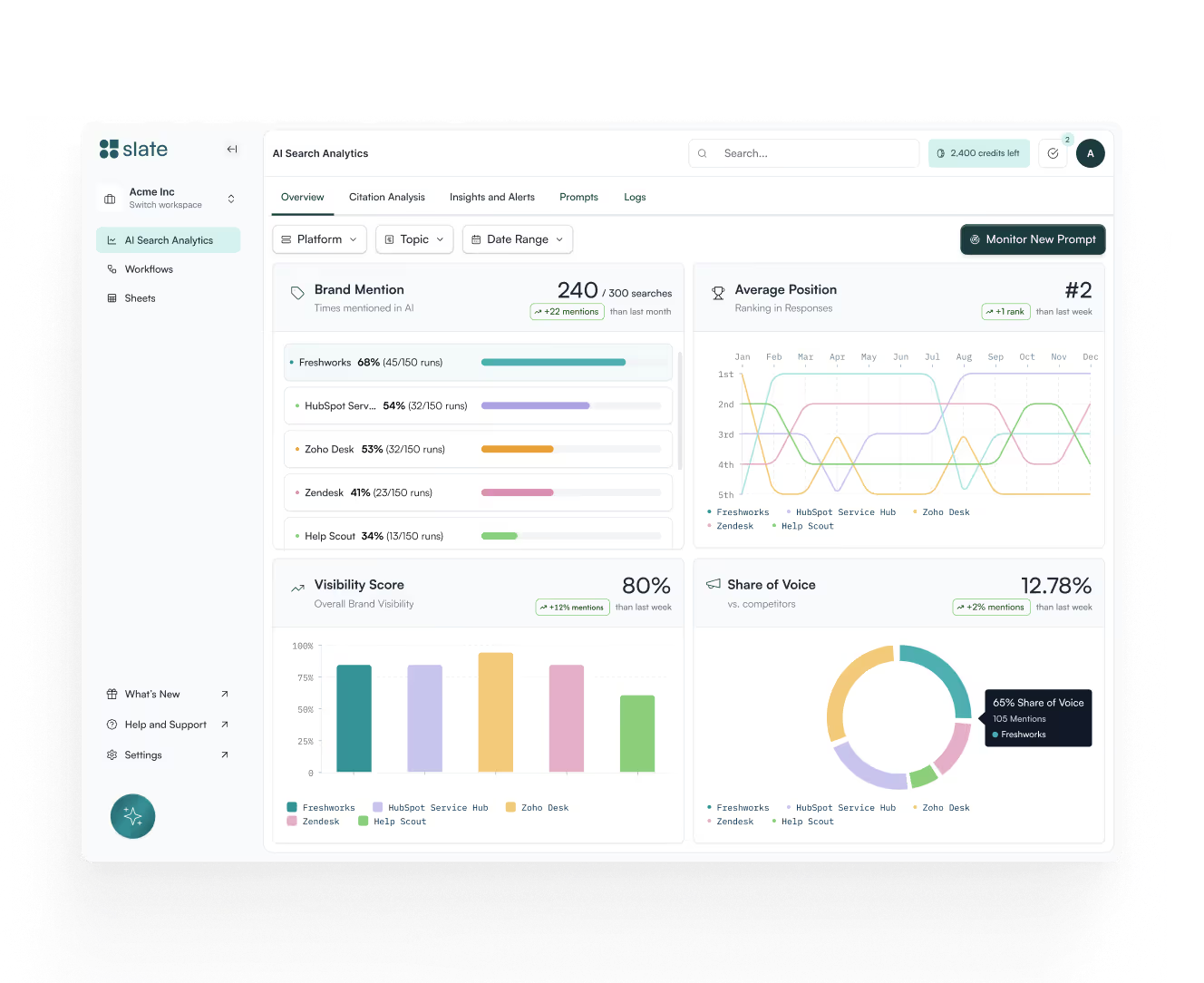
Slate's AI tracker, for example, monitors brand visibility across ChatGPT, Gemini, Claude, Perplexity, and Google AI Overviews, making it a natural fit for modern content ops stacks.
How to Build Solid Content Operations
Content Architecture as the Foundation
Fixing content ops starts with building (or rebuilding) the content architecture.
This is the structural blueprint that defines content pillars, content types, audience segments, and how they map to the product's value propositions and the buyer journey.
Approval Workflows
Approval workflows are where most content operations stall.
The problem isn't that approvals exist. It's that they're informal, sequential, and unclear about who has final authority.
A single blog post might need sign-off from the content manager, product marketing, legal (in regulated industries), and the VP of Marketing.
Modern content operations solve this with parallel approval workflows that define clear roles: who reviews for accuracy, who reviews for brand voice, who reviews for compliance, and who has final publish authority.
Subject Matter Expert Integration Loops
One of the most persistent pain points across the industry is getting SME input into content.
SMEs are busy. They don't think in content briefs. Scheduling interviews is a coordination nightmare.
The fix isn't to make SMEs write content. It's to build lightweight integration loops that extract their expertise efficiently:
- Structured 15-minute interview templates
- Async Loom/video input options
- Content briefs that pre-populate with research
For agencies, especially, this means building SME access into the client contract itself.
Processes Connecting Content to Revenue
Measurement is where content operations either prove their value or remain a cost center.
Companies with optimized content operations have marketing cycle times that are 240% faster than average B2B firms.
That improvement comes from measuring the right things:
How Companies and Agencies Can Do This Better
For In-House Teams: Centralize Governance
The mistake most companies make is trying to centralize content production, forcing all content through a single team. This creates bottlenecks and frustrates the departments that need content quickly.
The better approach is to centralize content governance in terms of
- Architecture
- Approval workflows
- Brand guidelines
- Measurement framework
Let product marketing write their own case studies. Let engineering write their own docs.
But ensure every piece flows through a centralized system that enforces quality standards, prevents duplication, applies consistent metadata, and tracks performance.
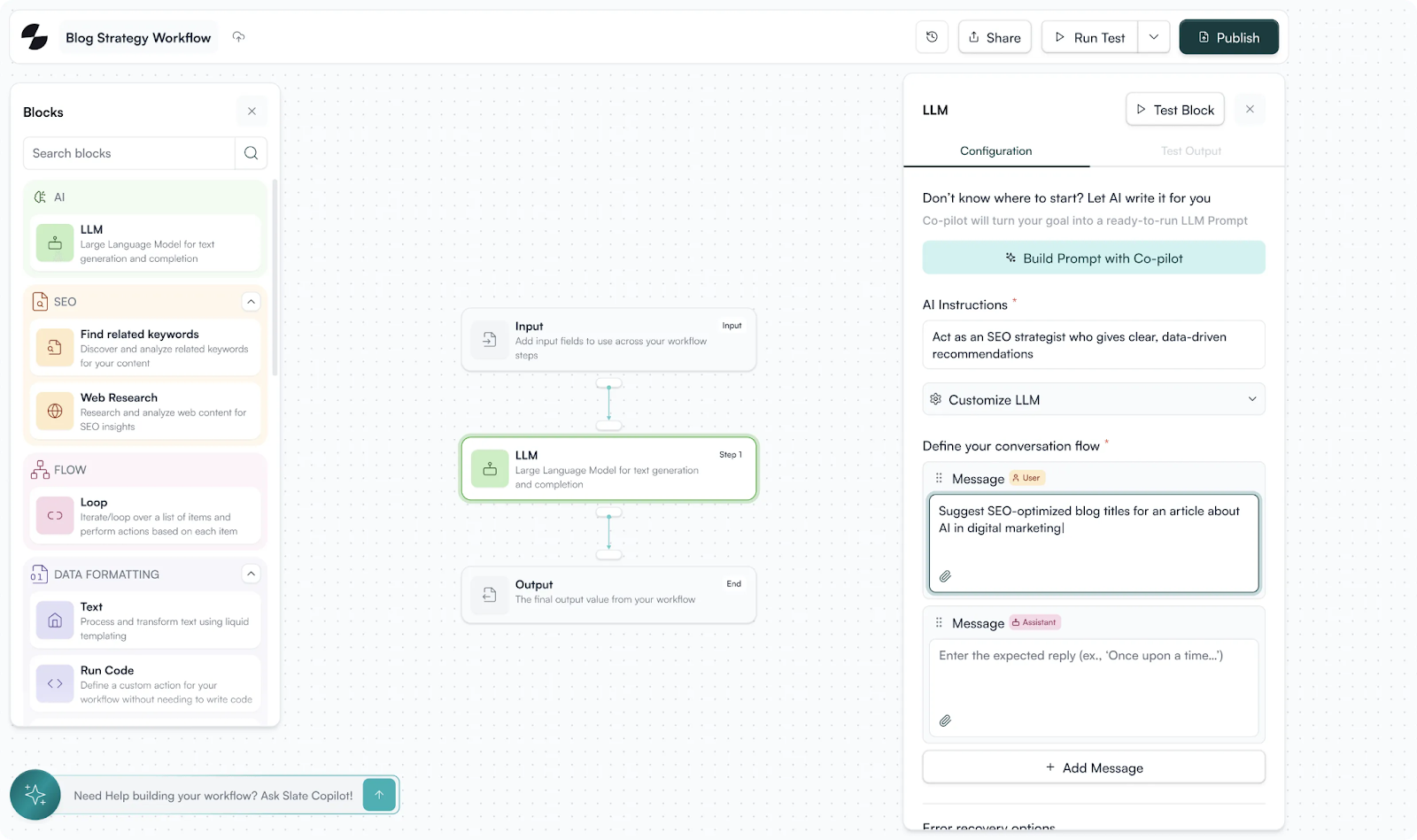
Tools like Slate do this by connecting content production with visibility tracking across both Google and AI platforms, so teams can centralize governance without centralizing people.
For Agencies: Invest in Content Engineering
The agencies seeing great results in 2026 are those that shifted from selling content deliverables to selling content systems.
Instead of promising "10 blog posts per month," they promise:
- Content architecture
- Differentiated workflows per content type
- Integrated SME loops
- Measurement dashboards that prove ROI
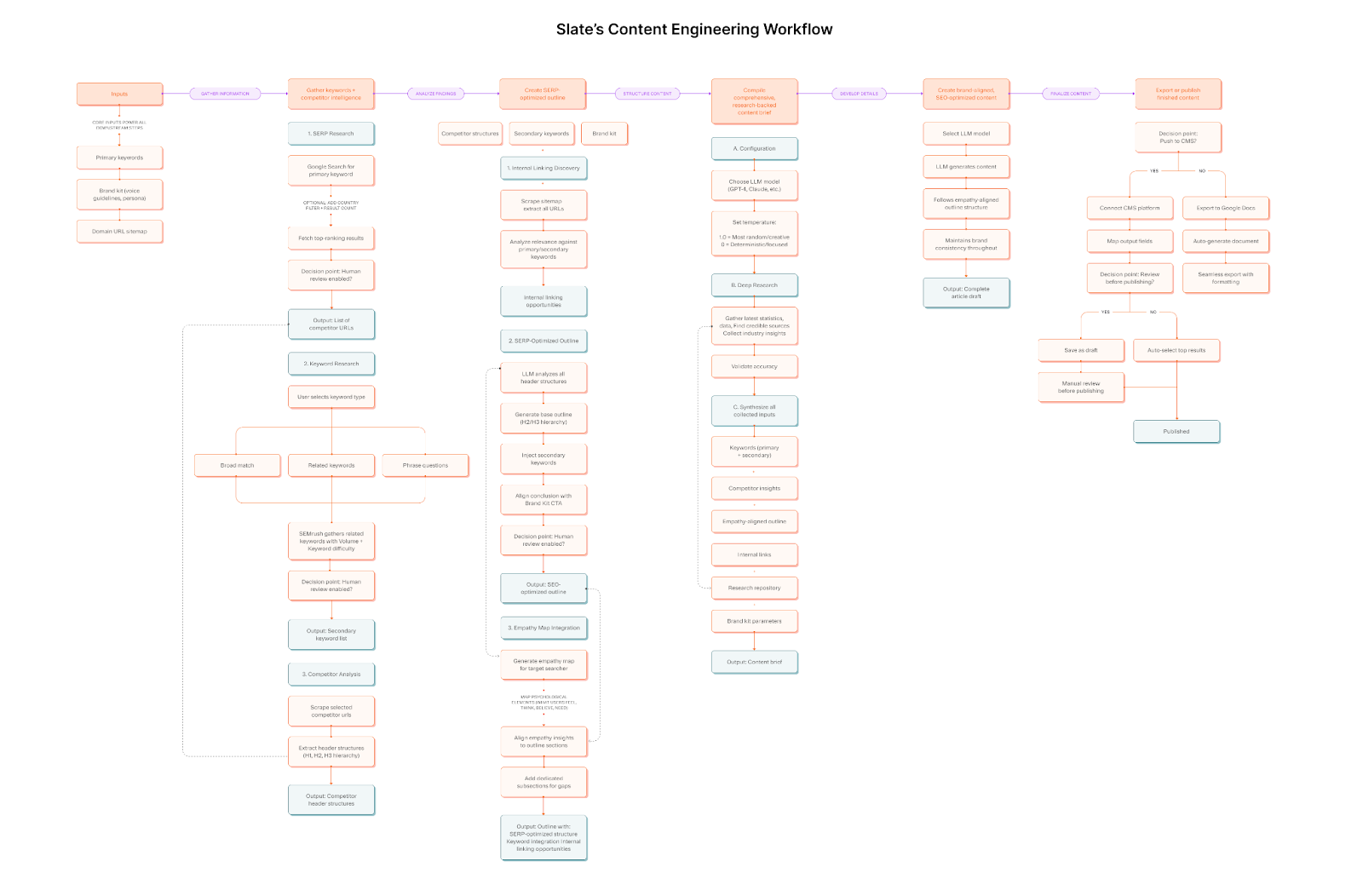
These agencies are investing in workflow automation, building templatized research and brief-creation processes, and using AI-powered content engineering platforms like Slate to automate the repetitive parts of production.
This is “content engineering”: treating content production as a systematic, repeatable process in addition to a creative art that depends on writers.
The Future of Content Ops: Content Engineering with Specialized Platforms
Most teams run content ops on a patchwork of Google Docs, their CMS, and maybe an SEO tool like Ahrefs or Semrush.
Not that these are bad tools. They are great. Each tool does its job.
But none of them connect the full loop from topic identification to production to publishing to performance tracking to refresh signals.
When your SEO tool flags a decaying page, it doesn't automatically trigger a refresh workflow in your production system. When your production system publishes a new article, it doesn't monitor whether that article gets cited by AI answer engines.
This leads to a reactive loop where problems are discovered weeks after they've already cost rankings and visibility.
Content Engineering Platforms: The Emerging Solution
A new category of tools is emerging that solves this: content engineering platforms that unify the entire content operations loop.
These platforms combine visibility tracking, content production workflows (with built-in approval, quality checks, and brand governance), and automated refresh cycles that detect and fix content decay before it costs rankings.
Slate is built specifically for this.
Its recommendation engine analyzes each page's AEO score across multiple AI platforms, competitive context, and SEO metrics (connected to GSC and GA4) to prioritize what to fix first.
It then deploys agentic workflows that research and write citation-ready content and execute deep refreshes on existing content.
Examples of Brands That Got Content Operations Right
Now that we’ve walked through content operations conceptually, lets look at a few examples of companies that have gotten it right.
HubSpot: Content Architecture as a Systematic Growth Engine
HubSpot solved content operations by building content architecture first and scaling output second.
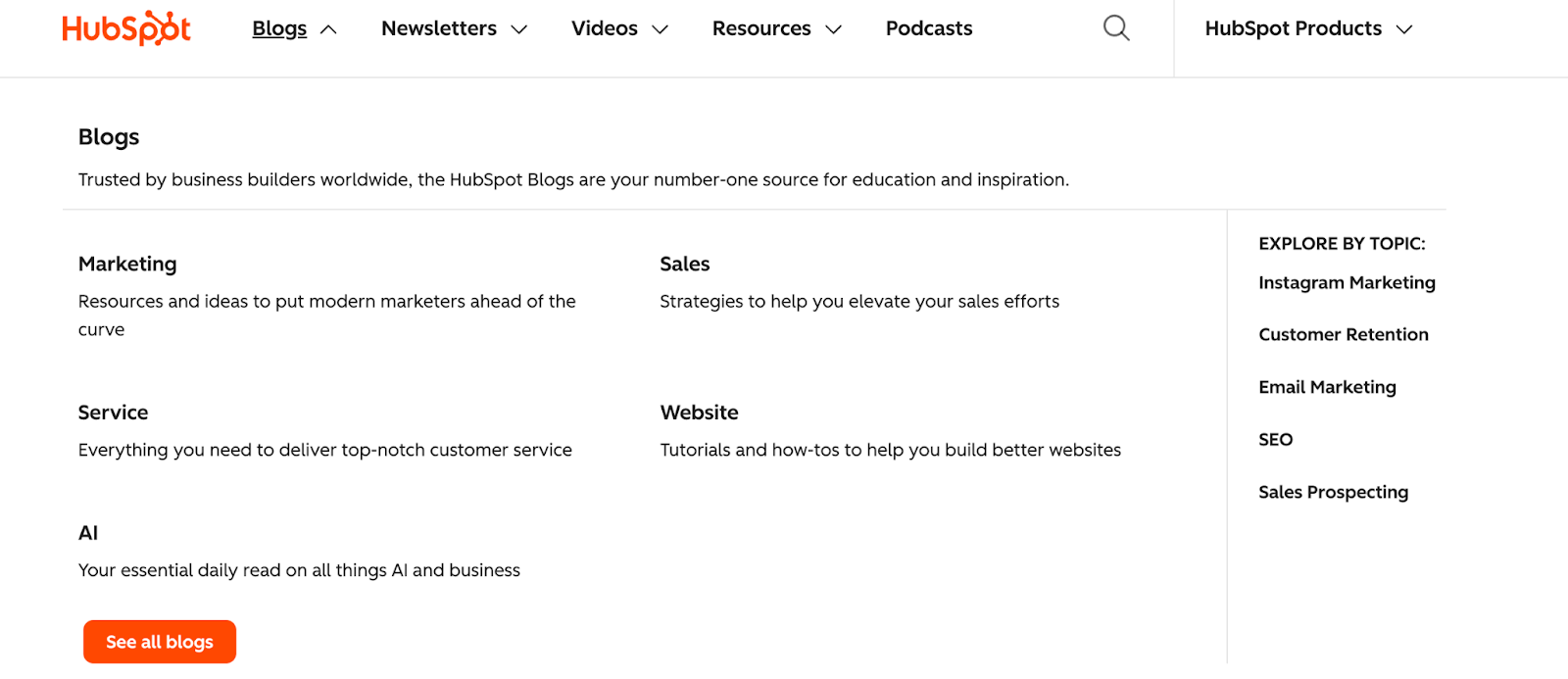
They transitioned 10,000+ blog posts into a pillar-cluster model: a structured content architecture that grouped all content into topic clusters anchored by comprehensive pillar pages, with subtopic blog posts linked systematically back to them.
An automated clustering system sorted the entire blog into this structure, and the editorial process was rebuilt around it.
The results: The blog doubled the number of keywords it ranked for, saw significant increases in page-one positions, and doubled keywords ranking in positions 1-3.
Zapier: Programmatic Content Operations at Scale
Zapier built a programmatic SEO system that automatically generates dedicated pages for every app it supports and every integration combination, producing over 50,000 templated pages.
The operational system is what makes this work: templatized page structures with consistent data inputs, app partners submitting content during onboarding, and hierarchical internal linking across four tiers.
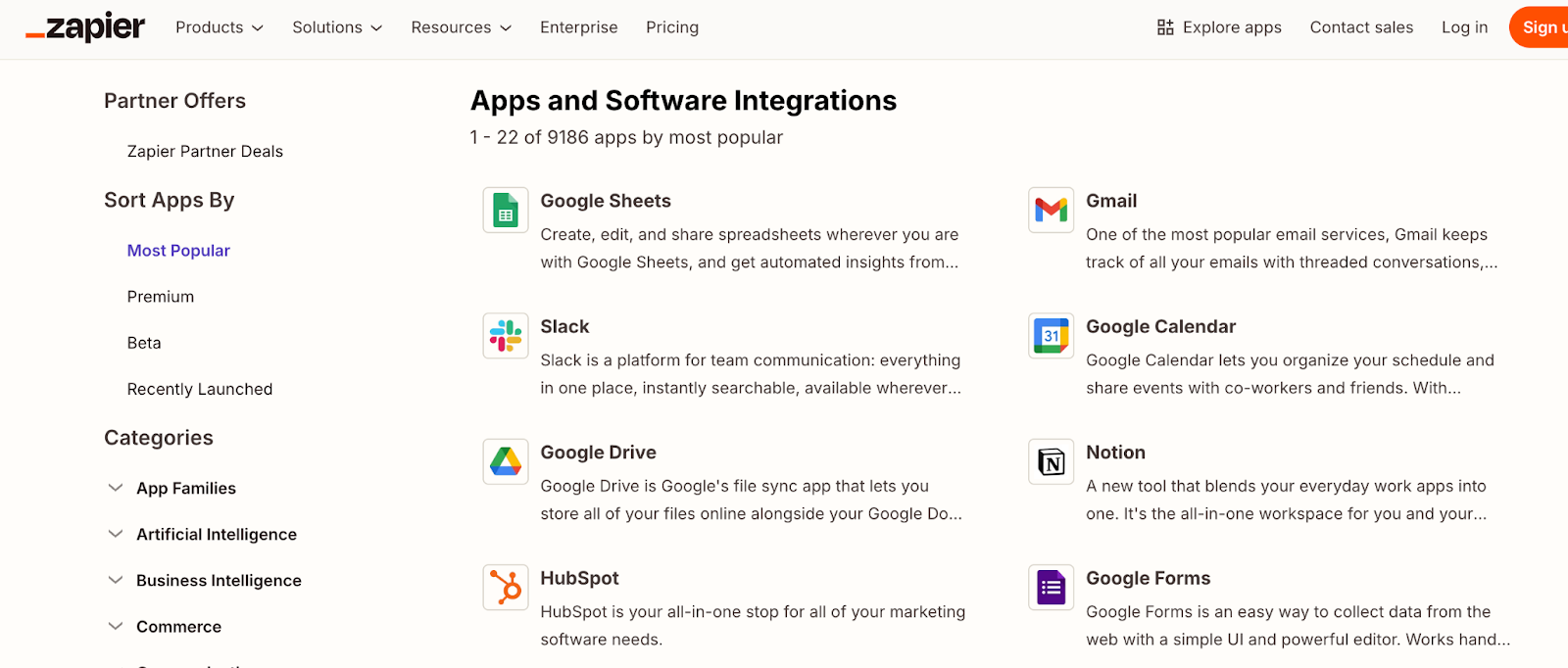
The results: Zapier quadrupled its organic traffic from approximately 1.19 million to nearly 5 million monthly visitors within three years. Today, the site generates over 6 million monthly organic search visits.
Closing Thoughts on Content Operations Pain Points
Every pain point in this article stems from a single structural gap: content teams are organized around production, not outcomes.
Briefs get written. Drafts get approved. Articles get published. But no one owns what happens before and after: the internal linking, the decay monitoring, the AI citation tracking, the revenue attribution.
The change happening in 2026 is from content operations as project management to content operations as engineering.
Every asset today should have a defined lifecycle, every workflow should have quality checkpoints, and visibility across Google and AI platforms should be tracked from a single system.
Platforms like Slate are purpose-built for this shift, connecting production, approval, performance tracking, and automated refresh into one loop.
FAQs
1. What is content operations?
Content operations is the system of people, processes, tools, and governance that manages the full lifecycle of content, from strategy and production through distribution, measurement, and refresh. It's the operational layer that ensures content is produced consistently, at quality, and at scale.
2. What are the most common content operations pain points?
The most common pain points include a lack of content architecture tied to business goals, decentralized publishing without governance, missing approval workflows, limited SME access, no post-publish distribution strategy, inability to measure content's impact on revenue, and content decay without systematic refresh processes.
3. How is content operations different from content strategy?
Content strategy defines what content to create, for whom, and why. Content operations defines how that content gets produced, approved, published, distributed, and maintained.
4. Why does content operations matter for SEO?
Content ops directly impacts SEO through internal linking governance, content freshness (refresh cycles), prevention of keyword cannibalization, and topical authority building. Without structured ops, SEO fixes are tactical band-aids over systemic problems.
5. How do content operations affect AI search visibility?
AI answer engines prioritize content that demonstrates topical authority, freshness, and structured information. Broken content ops, scattered topics, stale pages, inconsistent quality, signal to AI models that a brand isn't a reliable source, reducing citation likelihood.
6. What tools do modern content teams use for content operations?
Modern teams use a combination of content engineering platforms (like Slate), project management tools, and CMS platforms. The trend is toward unified platforms that connect visibility tracking, content production, and performance measurement.
7. How can agencies improve their content operations?
Agencies improve by shifting from delivering content assets to building content systems: co-creating content architectures with clients, building differentiated workflows per content type, formalizing SME input loops, and investing in measurement that proves pipeline impact.
8. What is content engineering?
Content engineering is the practice of treating content production as a systematic, repeatable process, with defined inputs, structured workflows, quality checkpoints, and measurable outputs, rather than a purely creative activity dependent on individual contributors.