Is someone even considered to be working in SEO if they’ve not had several “AI and SEO” debates over the past two years?
Jokes aside, a lot of the conversation has leaned toward extremes:
- SEO is dead
- Optimizing for AI is the same as SEO
Neither is accurate.
SEO is very much active, and while there are similarities, AI SEO is its own beast.
With traditional playbooks falling short, marketing teams should understand which investments still hold up and which to pause.
In this article, we break down what has truly changed because of AI, what hasn't, and how discovery looks today.
We spoke to SEO experts, combined our own insights, and put together a reality check.
Let’s dive in.
What Has Changed in SEO Because of AI (So Far)
There have been three big changes in how day-to-day SEO works.
“The Great Decoupling” of Rankings and Clicks
Three to four years ago, if you ranked higher, you got more clicks. The relationship between the two was consistent enough that you could plan around it.
That is no longer holding up.
A page can now rank #1 and receive fewer clicks than it did ranking #3 in 2021, thanks to AI Overviews satisfying the query before the user ever scrolls to the blue links.
In fact, an Ahrefs study found that AI Overviews decrease CTRs by as much as 58%.
It’s not that rankings don't matter. In fact, this varies from one AI platform to another. But the relationship between ranking and traffic is no longer linear.
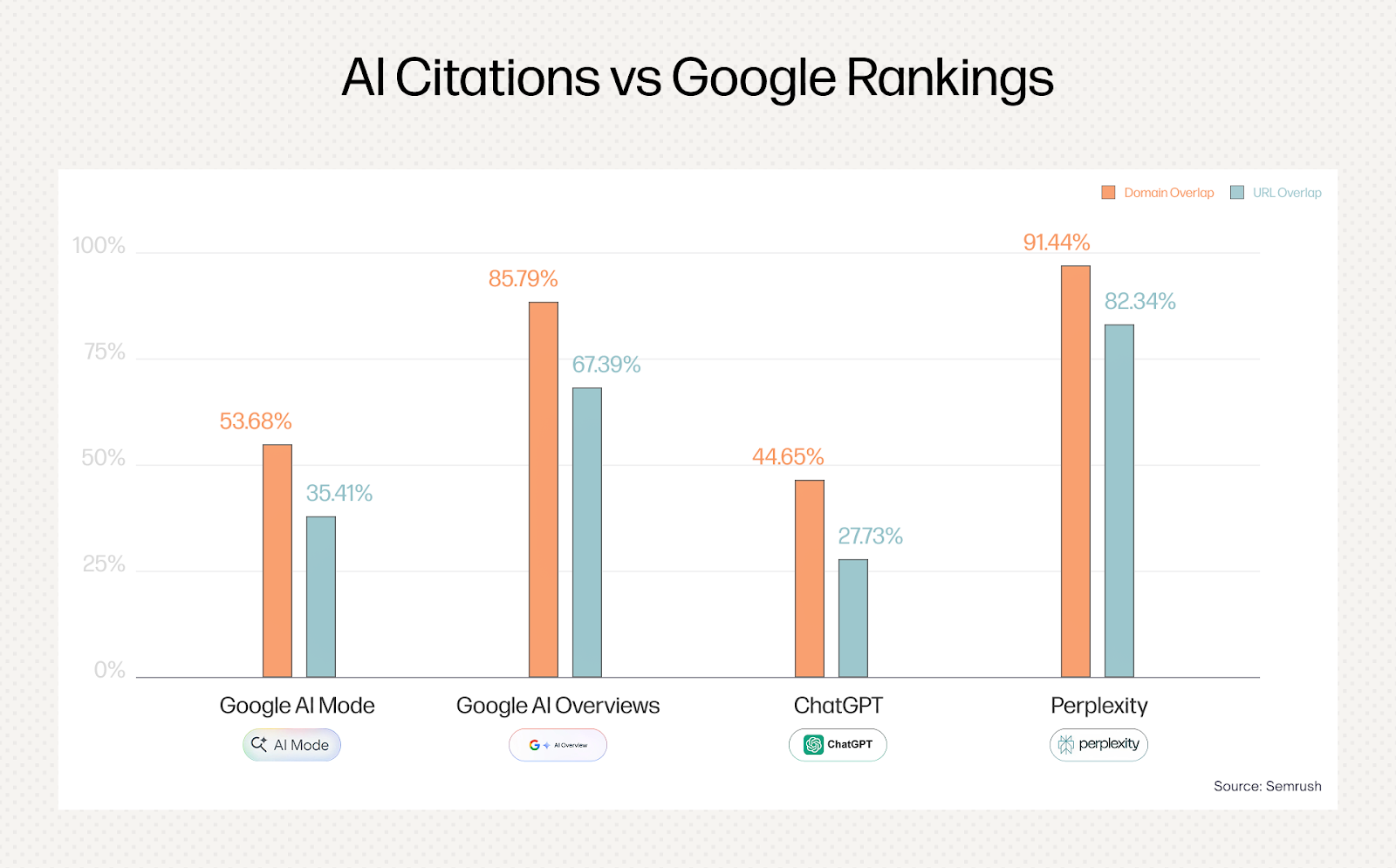
Many SEOs have observed this pattern in their Search Console data: impressions doubling while CTR drops from 1.5% to under 0.5%. The pages are showing up more often, but people aren't clicking through.
“We’ve recalibrated our mental models,” says Anand, an SEO Expert at Slate. “What used to be a reliable leading indicator (rank improvements) now requires additional context to interpret. It's less a failure of SEO and more a measurement problem that calls for new KPIs alongside the traditional ones.”
From Keywords-first to Entities-first
AI systems don't retrieve pages the way traditional crawlers do. LLMs understand entities (brands, products, concepts, people) and the relationships between them.
This is why a page that's optimized purely for keywords but isn't associated with a recognized entity in Google's knowledge graph faces an uphill battle for AI citation.
Ultimately, this is reflected in brands that invested in structured data, a Wikipedia presence, or consistent entity naming across the web, being cited more in AI Overviews today.
Higher Quality Threshold, But Better Production Dynamics
AI tools have made content production faster and cheaper, so we’d expect lower bars for what ranks.
The opposite is what’s happened, fortunately.
“When everyone can produce baseline-quality content instantly, you stand out through original research, unique data, genuine expertise, and proprietary insights,” shares Anand. “What AI changed was just workflow efficiency.”
What Has Not Changed, Despite All the AI Noise
Some SEO basics remain remarkably consistent:
Google is Still Where People Start
Google still processes over 9 billion searches daily.
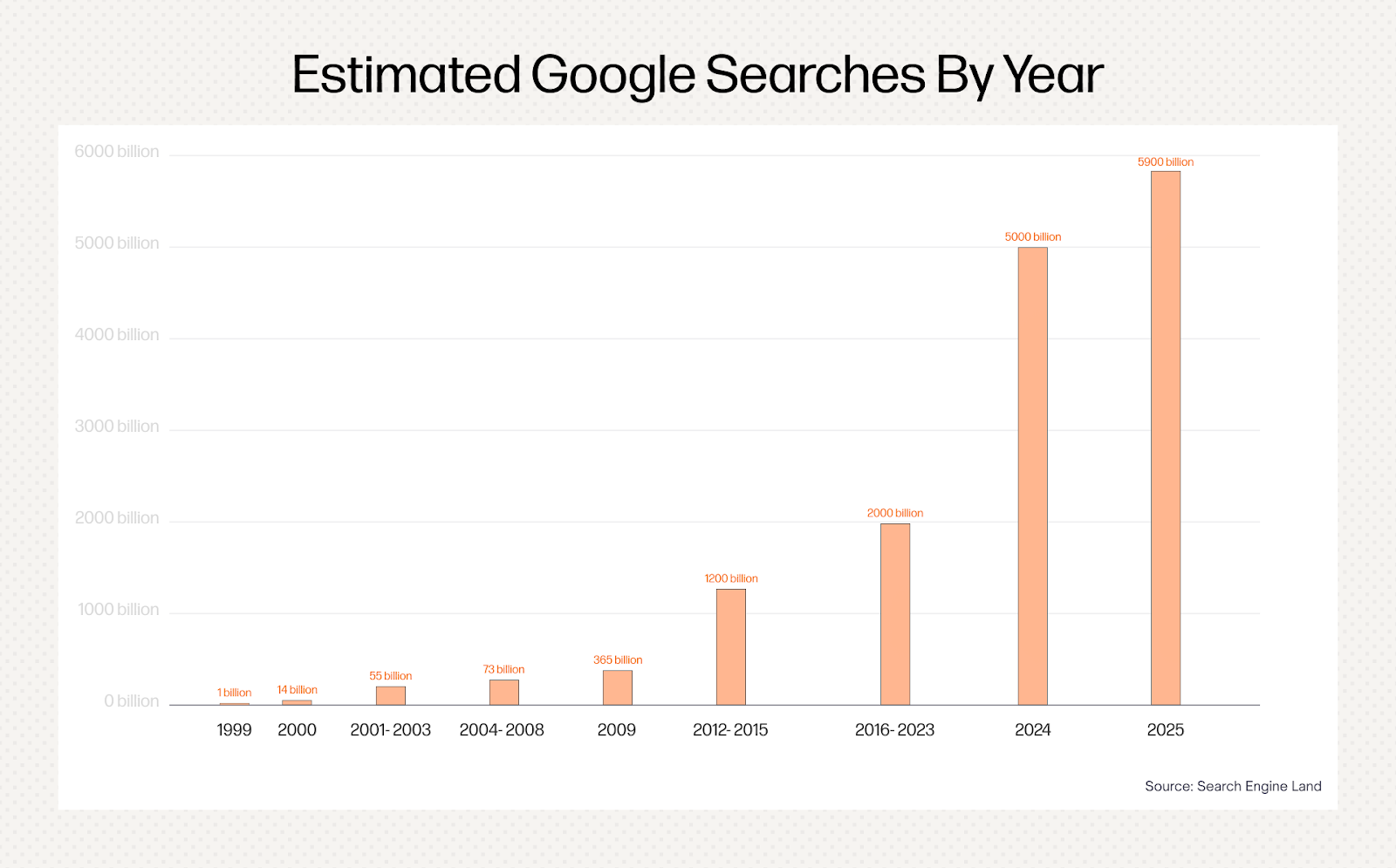
Traditional search usage still accounts for 10.55% of web sessions in the US, while AI tool usage sits just at 0.55% (Source).
Many of those users are going back and forth between AI tools and Google within the same research session, using each tool for different parts of their journey.
So this change from traditional search to AI-first discovery is happening over years, not months
This gives teams just enough time to adapt rather than scramble.
Quality Signals Still Determine Who Wins
While the mechanisms behind how AI retrieves and presents content are evolving, the signals that determine “which content AI shows” are very consistent with traditional SEO:
- Credibility of the source
- Depth of coverage
- Recency of information
- Alignment with user intent
E-E-A-T isn't a Google-specific framework; it's what any retrieval system needs to differentiate useful content from noise.
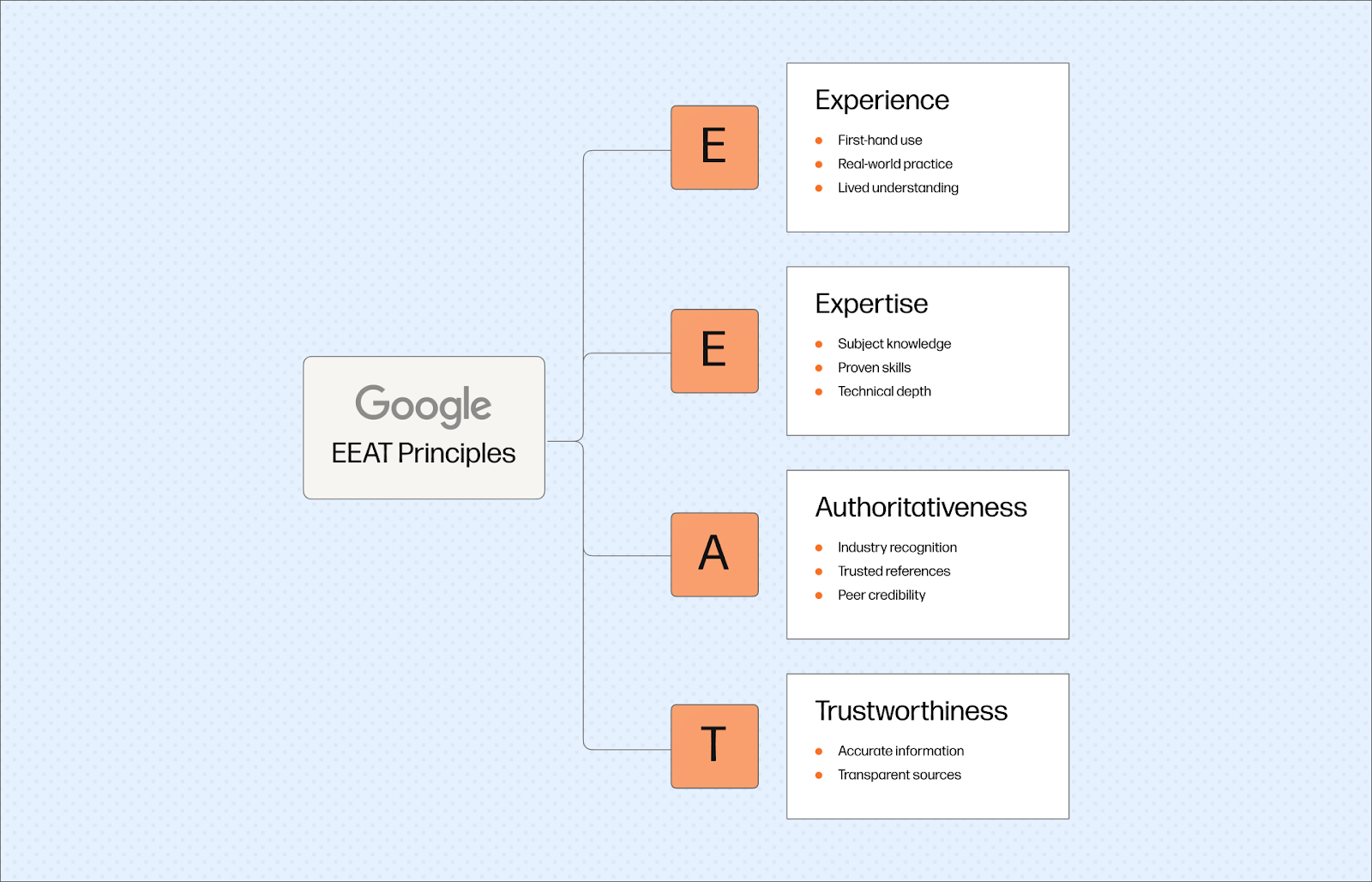
This is why brands that invested in genuine expertise and authority over the past decade are the same ones being cited by AI systems today.
The Fundamental Job-to-be-done Hasn't Changed
Whether buyers use Google, ChatGPT, or Perplexity, the underlying behavior is constant:
- Discover solutions (Awareness)
- Evaluate options (Consideration)
- Make decisions (Decision)
There’s our good ol’ content funnel.
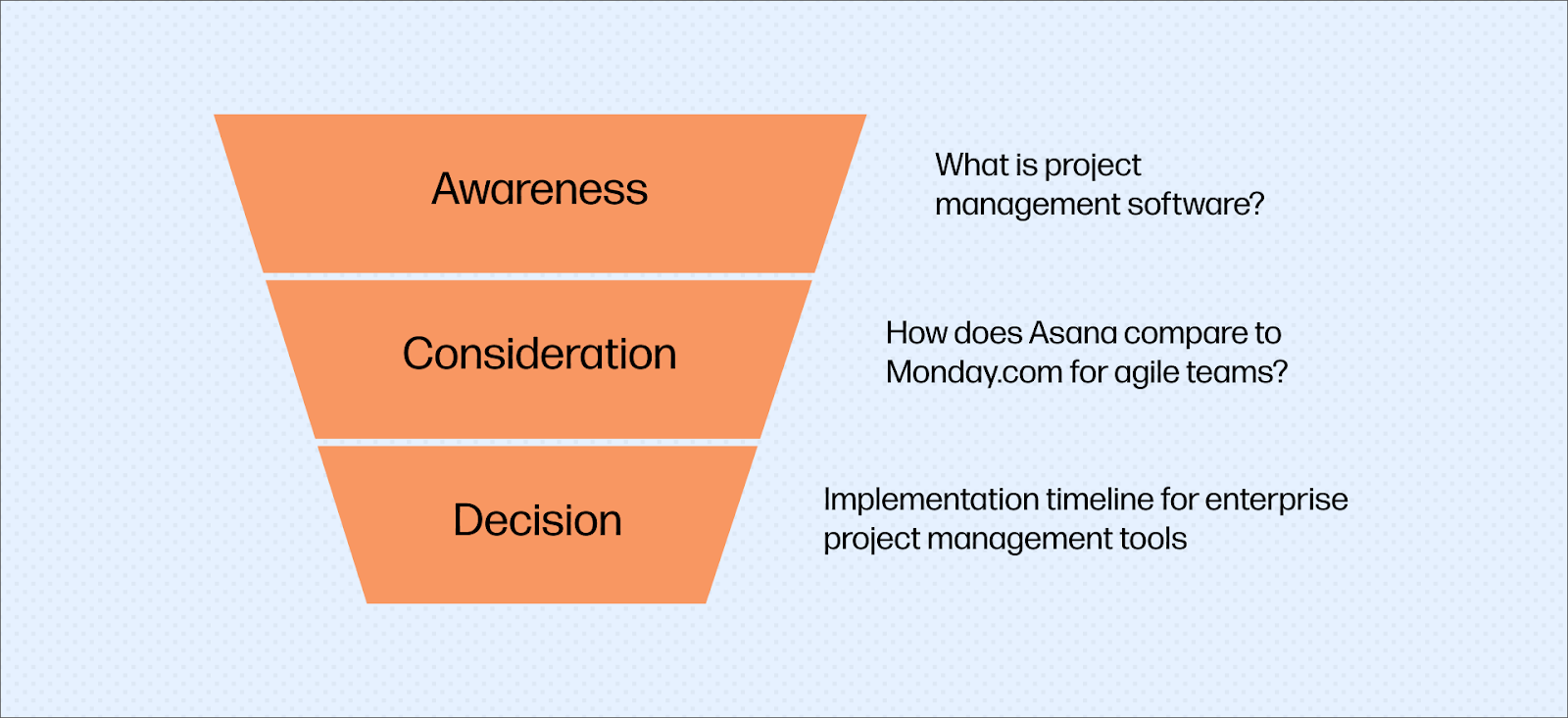
“The platforms are multiplying, but the need they serve is the same, and the brands that serve that need will capture attention regardless of which tool the buyer uses,” according to Akshay Krishnan, who closely tracks the changing SEO system.
How People Discover and Evaluate Information Today
While the overall funnel is more or less the same, user journeys within it have gotten complex.
Let’s take an example scenario.
Complex B2B Journeys
Consider how a VP of Marketing evaluates project management tools today.
She's unlikely to start by typing "best project management software" into Google.
More likely, she opens ChatGPT and asks something specific: "What are the top project management tools for a 50-person SaaS company with remote teams?"
She gets a conversational answer with a shortlist and brief reasoning for each recommendation. From there, she opens Perplexity to compare specific features across those options in more depth, maybe asking about pricing tiers or integration capabilities.
Then she Googles the brands that came up to verify their credibility, scanning review sites, G2 ratings, and landing pages to see if the product matches what the AI suggested.
Then she searches "[Brand] vs [Brand]" for deeper comparison content that helps her narrow the field further.
That's at least four platforms touched before she visits a single vendor's website.
This is the kind of multi-platform, non-linear journey that is becoming standard for informed B2B buyers, and it changes what "being visible" means for any brand.
Fragmented Search Behavior
Different types of queries are migrating to different platforms, and the pattern is fairly consistent:
What This Fragmentation Means for SEO Strategy
This means “optimize for the full journey.”
Content needs to be:
- Citable by AI tools (structured, authoritative, entity-rich)
- Discoverable in traditional search
- Present in the validation channels
Your content strategy needs to account for the fact that a single buyer might encounter your brand across three or four channels before they ever land on your site.
The emergence of AI search platforms also means brands now need to plan visibility not only “channel-wise” but also “system-wise”: traditional SERPs and AI citations.
Each operates on different mechanics. A brand can dominate Google's page one for a cluster of keywords but be absent from ChatGPT's responses to the same queries, and vice versa.
It’s crucial to address both systems, recognizing that a gap in either one creates a blind spot in how buyers discover and evaluate your brand.
Why Traditional SEO Playbooks Break Down
Intent, not Keywords
AI systems don't match keywords; they interpret intent and assess whether content truly satisfies the underlying need.
A page optimized for "best email marketing software for small business" with thin, keyword-stuffed content will be outperformed by a comprehensive guide that never uses that exact phrase but genuinely helps someone evaluate email software options.
Apart from usefulness, the pages that perform well in AI search also anticipate follow-up questions, provide specific examples, and demonstrate expertise.
To put it in simple words, this is all that AI considers strongly: Does the content help someone complete the task they set out to do?
Entities, not Pages
Traditional SEO optimized individual pages in isolation: pick a keyword, write a page, build links, rank. Each page was treated as its own unit of optimization.
AI systems evaluate entities across their entire web presence.
A single well-optimized page means little if the brand doesn’t have factors like:
- Entity coherence
- Consistent naming across different platforms,
- Structured data connecting concepts
- Knowledge panel presence (ex. Wikipedia)
“Brands with technically inferior content outperform those with excellent individual pages: their entity is recognized and trusted across the web, so the AI system can confidently cite them,” says Akshay.
Visibility, not Traffic
For years, we all treated traffic as the north-star metric.
AI Overviews took the star and blasted it.
Thousands of users see your content but never click through, so your “traffic” data does not give you the full picture. It’s the overall visibility that matters, and this was initially hard to track because they are not well-defined.
However, tools are getting better every day. For example, Slate gives you a “Visibility Score,” which is a single metric that quantifies your performance across tracked keywords and platforms
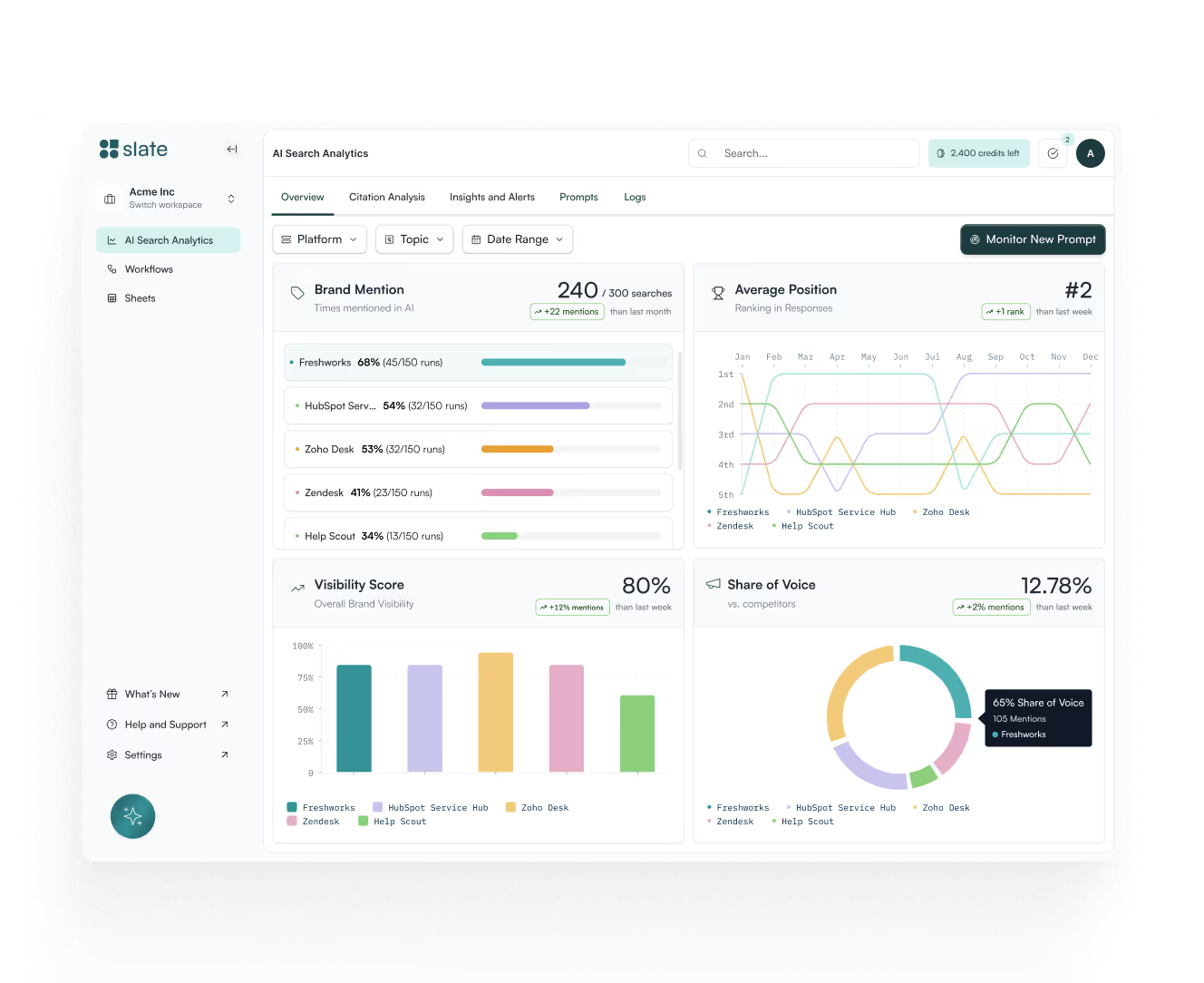
The "zero-click visibility" challenge, hence, is about being present in the answer even without generating a click.
And this challenge is faced by about 60% of Google searches today.
Other Common Mistakes SEO Teams are Making
- Publishing high volumes of thin, keyword-targeted content that AI systems largely ignore.
- Obsessing over exact-match keywords when semantic relevance carries more weight.
- Building links purely for authority metrics without considering whether those links contribute to entity recognition.
- Measuring success only through traffic without tracking AI visibility.
- Treating SEO as a siloed channel rather than connecting it to PR, brand, and content strategy.
What Will Continue to Matter in SEO Over the Next 3-5 Years
This is perhaps the most debated topic in recent marketing history.
Without going into crazy predictions, and purely going by logic, these three factors will continue to hold up:
- Topical Authority
- Entity Recognition
- Content Quality
Topical Authority
Topical authority remains the most durable SEO investment.
AI systems, whether Google's algorithms or LLM-based retrieval, evaluate whether a source is genuinely authoritative on a topic by looking at the depth and breadth of coverage.
A brand that publishes one excellent article cannot compete with one that has 50 interconnected pieces demonstrating comprehensive expertise across the category.
“The reason topical authority is so valuable is that it compounds in ways individual pages don't: each new piece of quality content on your core topics strengthens every other piece in the cluster,” shares Abishek, who creates content for Slate.
This compounding effect is what makes long-term SEO investment an unfair advantage that's difficult for late entrants to replicate, because you can't shortcut years of accumulated depth.
Entity Recognition
If AI systems don't recognize your brand as a distinct, trustworthy entity in your domain, you're competing at a disadvantage regardless of content quality.
The investments here (structured data, consistent brand mentions across authoritative sources, Wikipedia presence, knowledge panel cultivation) could take years to build and are difficult for competitors to replicate quickly.
This is also what makes entity recognition a strategic moat, just like topical authority: the longer you've been building it, the wider the gap becomes between you and a competitor who starts later.
Content Quality
Certain types of content consistently earn more AI citations than others. Here are the major influencing factors:
Some Common SEO Success Traits of Brands
Brands that perform well across both traditional search and AI citation tend to share a few common traits.
- They treat SEO as a long-term brand investment rather than a traffic acquisition channel.
- They've built genuine expertise in their domains over years, not months.
- They have strong entity recognition and a consistent presence across platforms.
- They measure success through multiple lenses, including brand search volume, AI citations, and share of voice in their category, alongside organic traffic.
About the last point: only 22% of marketers have set up LLM brand visibility or traffic monitoring, which means there's still a huge first-mover advantage.
How do these priorities translate into day-to-day strategy and team focus?
Let's get into the practical side.
What an AI-Resilient SEO Strategy Looks Like
Optimizing for Two Systems at Once
Traditional SERP rankings and AI citation share some signals (authority, quality, relevance) but differ in key mechanics, as previously discussed.
This means teams need to track both systems independently, because performance in one doesn't predict performance in the other.
The goal is dual-system visibility: ensuring your brand shows up in both the ranked results and the AI-generated answers for your key queries.
Slate is built for exactly this challenge, combining traditional SERP tracking with AI visibility monitoring so teams can see both dimensions from a single view and identify where the gaps are between ranking presence and citation presence.
Right Prioritization
The way strategic SEO teams allocate effort is changing, and the table below captures the general direction:
Understanding Where Human Judgment Matters
AI tools are strong at data analysis, pattern recognition, and first-draft production. They're less reliable for original insight, expertise, and strategic prioritization.
Basically, AI can't do well are exactly the parts that drive differentiation in a market flooded with AI-generated content.
Slate sits at this intersection: automating the research-write-refresh loop while preserving space for human judgment on strategy.
Adapting to SEO Operations of Today
A few operational changes are reshaping how high-performing teams work:
With a clearer picture of what strategy looks like, the last question is one that comes up in nearly every leadership conversation:
Will SEO Still Be Worth Investing In, and How Should Leaders Think About It?
SEO isn't dying, but traffic-only SEO certainly is.
What's worth investing in is organic visibility across the full discovery ecosystem: traditional search, AI platforms, and the validation channels users check before purchasing.
This is a larger opportunity than the old definition of SEO covered.
“SEO is better evaluated as brand building than performance marketing. You don't ask 'what was the ROI of last month's brand awareness?’ because the value compounds over years,” says Anand when asked about why there is a disconnect in SEO evaluation. “Organic visibility works the same way.”
The brands that underinvest now will find customer acquisition increasingly expensive as competitors occupy AI-era real estate.
The investments that matter most (topical authority, entity recognition, content freshness) all take time to build.
What Happens to Brands That Deprioritize
The consequences play out in two phases, and the second is harder to reverse:
Phase 1
In the first 6 to 12 months, traffic declines are often masked by other factors or dismissed as algorithm volatility.
The early warning sign is usually declining branded search, meaning fewer people searching for your brand name specifically.
This indicates reduced top-of-funnel awareness, but because it's a lagging indicator, teams often miss it until the gap has widened.
Phase 2
The delayed impact shows up at the 18 to 36 month mark:
Customer acquisition costs rise across all channels as organic discovery dries up and paid channels have to compensate for what organic used to deliver.
Sales cycles lengthen because prospects aren't being pre-educated by your content before they enter the pipeline; they come in cold, requiring more sales touches to reach the same outcome.
Competitors who maintained investment have occupied the AI-era visibility positions that are hardest to reclaim.
Closing Thoughts
SEO in 2026 and beyond is about building the organic visibility infrastructure that makes your brand discoverable, credible, and citable across every platform where buyers look for answers.
Companies that understand this are increasing SEO investment into tools that enable this change.
They're measuring different things (share of voice in AI responses, entity recognition, citation presence, brand search volume alongside organic traffic).
The playbook has changed, but the economics of compounding organic visibility remain as strong as ever.
If you want to use a platform that builds, runs, and scales today’s SEO as a synchronized system, try out Slate.
Slate is the only GEO platform that connects AI search monitoring directly to automated content execution.
Frequently Asked Questions
1. Is SEO dead because of AI?
No. SEO is very much active, but traffic-only SEO is dying. What matters now is organic visibility across traditional search, AI platforms, and validation channels.
2. What's the difference between traditional SEO and AI SEO?
Traditional SEO optimizes for rankings and clicks; AI SEO optimizes for citations and entity recognition across your entire web presence.
3. How do AI Overviews affect my organic traffic?
AI Overviews can decrease CTRs by as much as 34.5% because they satisfy queries before users scroll to the blue links.
4. Should I still invest in SEO in 2025 and beyond?
Absolutely. Organic visibility compounds over years like brand building. Brands that underinvest now will face higher customer acquisition costs as competitors occupy positions that are difficult to reclaim.
5. What type of content gets cited by AI tools?
Content with original data, expert-attributed insights, comprehensive coverage, structured clarity, and freshness signals consistently earn more AI citations.
6. How should I measure SEO success in the AI era?
Track share of voice in AI responses, citation presence, entity visibility across platforms, and brand search volume alongside organic traffic.
7. What is entity-based SEO and why does it matter?
Building recognition of your brand as a distinct, trustworthy entity through structured data, consistent mentions, and knowledge graph presence. AI systems evaluate your entire web presence, not individual pages.
8. Will AI-generated content hurt my SEO?
Not if it provides genuine value. You stand out through original research, unique data, and proprietary insights. AI changed workflow efficiency, not what makes content valuable.