Content teams in 2026 are not short on ideas or talent.
What's breaking is the infrastructure between the idea and the published page.
The handoffs, the approvals, the research-to-publish chain: all of it was designed for a simpler era.
When content only had to rank on Google, informal processes could survive. A shared Google Doc, a Slack thread with the brief, a "you know what to do" to the writer.
That era is over.
Content now has to perform across Google SERPs, AI answer engines (ChatGPT, Perplexity, Gemini, AI Overviews, Claude), and multi-channel distribution simultaneously. Each of these has different optimization requirements, quality signals, and competitive dynamics.
When the process holding all of this together is informal, performance failures are a given:
A missed optimization requirement at the brief stage creates a rewrite cycle after publication-
A rewrite cycle delays the piece-
A delayed piece is already aging by the time it goes live-
….And aging content decays faster in AI discovery than it ever did in traditional search.
Most teams have some version of a “process,” but more often than not, it lives in someone's head, in scattered Slack threads, or in a Google Doc nobody references.
It isn't codified, repeatable, or connected to anything else.
Each stage of content production (research, briefing, writing, optimizing, publishing, measuring) operates in its own silo. Intelligence from one stage doesn't flow to the next.
This creates rework, delays, and content that underperforms despite the team's effort.
In this article, we walk through the content operations processes that mature teams follow, stage by stage.
We look at how each process has evolved, where it commonly breaks, and how modern content operations platforms help teams systematize what was previously ad-hoc.
Think of it as a practical operating guide for content operations in 2026.
Why Standard Content Operations Processes Matter in 2026
Before diving into the specific processes, let’s understand why standardizing them has become urgent in 2026.
Content teams today don't just “publish to a blog.”
A single content asset may need to be optimized for Google organic, structured for AI citation, repurposed for social, and adapted for email or sales enablement. Each channel has different formatting, optimization, and measurement requirements.
When the process for handling this complexity is informal and depends on one person remembering to do everything, things get missed systematically.
The core reason: AI answer engines evaluate content differently than traditional search engines. They assess citation-worthiness based on:
- Topical authority
- Content freshness
- Structural clarity
And more. We’ve discussed it in detail in our AI SEO guide - do check it out here.
This means operational failures (inconsistent update cycles, scattered topical focus, poor internal linking) don't just hurt SEO anymore. They make brands invisible in AI discovery.
And then there's the collaboration problem.
In most B2B organizations, content isn't produced by a single team. Marketing, product marketing, engineering, and sales all create content, often with no shared standards, approval workflows, or centralized tracking.
Without standard processes governing this, you’re left with:
- Brand voice inconsistency
- Duplicate content
- Broken internal linking
- Accelerated content decay
Operations processes to the rescue-
They reduce friction, errors, and rework. They make handoffs predictable. They ensure that intelligence from research flows into creation, creation flows into optimization, and performance data flows back into planning.
Without them, every content initiative starts from scratch, and the team never compounds its learning.
The Content Operations Lifecycle Today
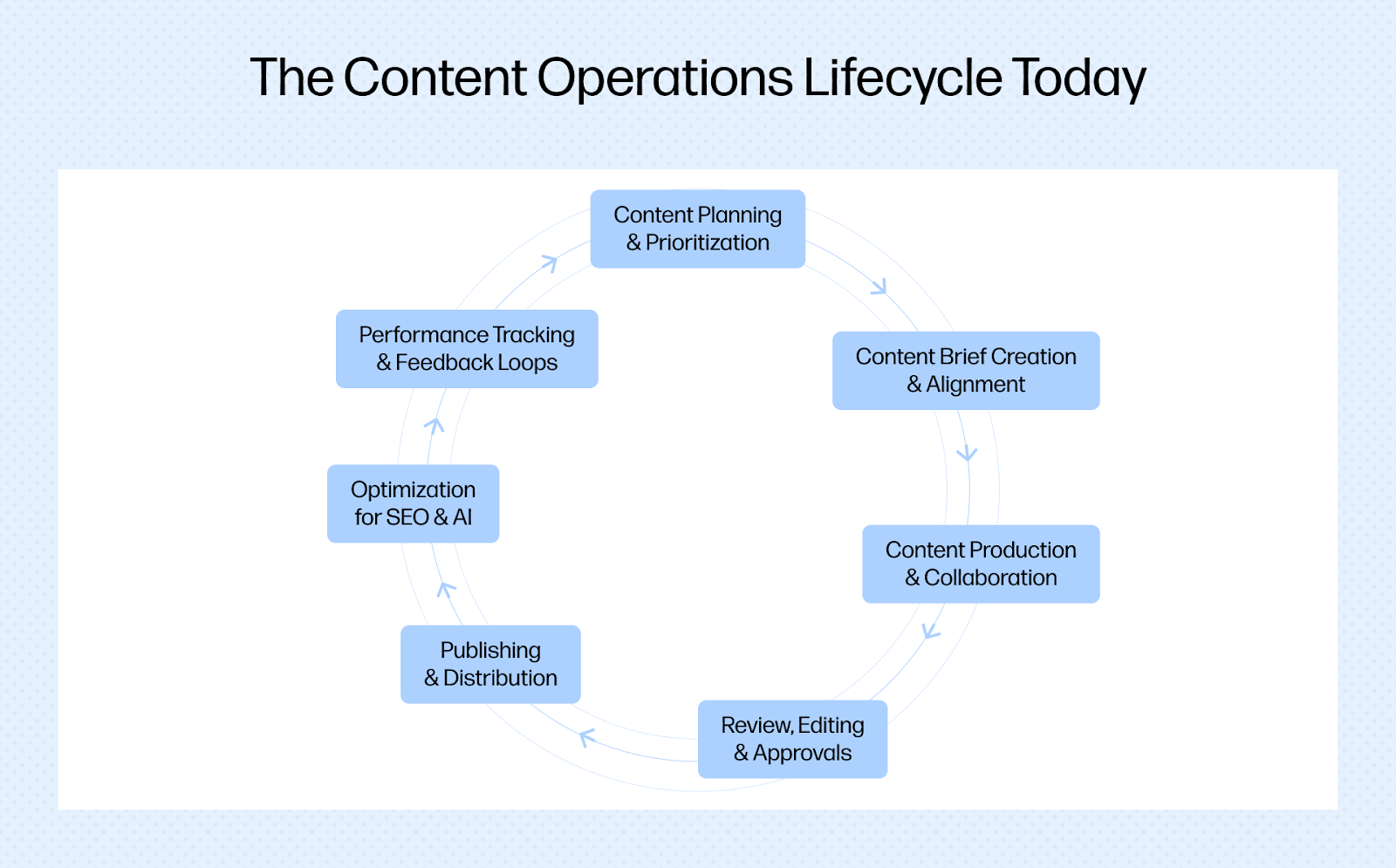
Mature content teams today organize their work around a lifecycle model with six to seven interconnected stages.
The key insight isn't the stages themselves (most teams can name them).
It's that the lifecycle is a loop, not a straight line.
Performance data feeds back into planning. Refresh cycles feed back into research. Each cycle should be faster and smarter than the last because the system retains context from previous iterations.
The standard stages are:
- Content Planning & Prioritization
- Content Brief Creation & Alignment
- Content Production & Collaboration
- Review, Editing & Approvals
- Publishing & Distribution
- Optimization for SEO & AI
- Performance Tracking & Feedback Loops
While these stages appear sequential, in practice they overlap and feed into each other.
Now let's break each of these processes down.
Content Operations Processes (Step-by-Step)
Content Planning & Prioritization
Key questions this process answers:
- What topics should we invest in next, and why?
- Which opportunities have the highest business impact relative to effort?
- How do our competitors' content footprints compare?
How this used to work
Teams pulled keyword data from an SEO tool, sorted by volume and difficulty, cross-referenced with editorial intuition, and built a content calendar in a spreadsheet.
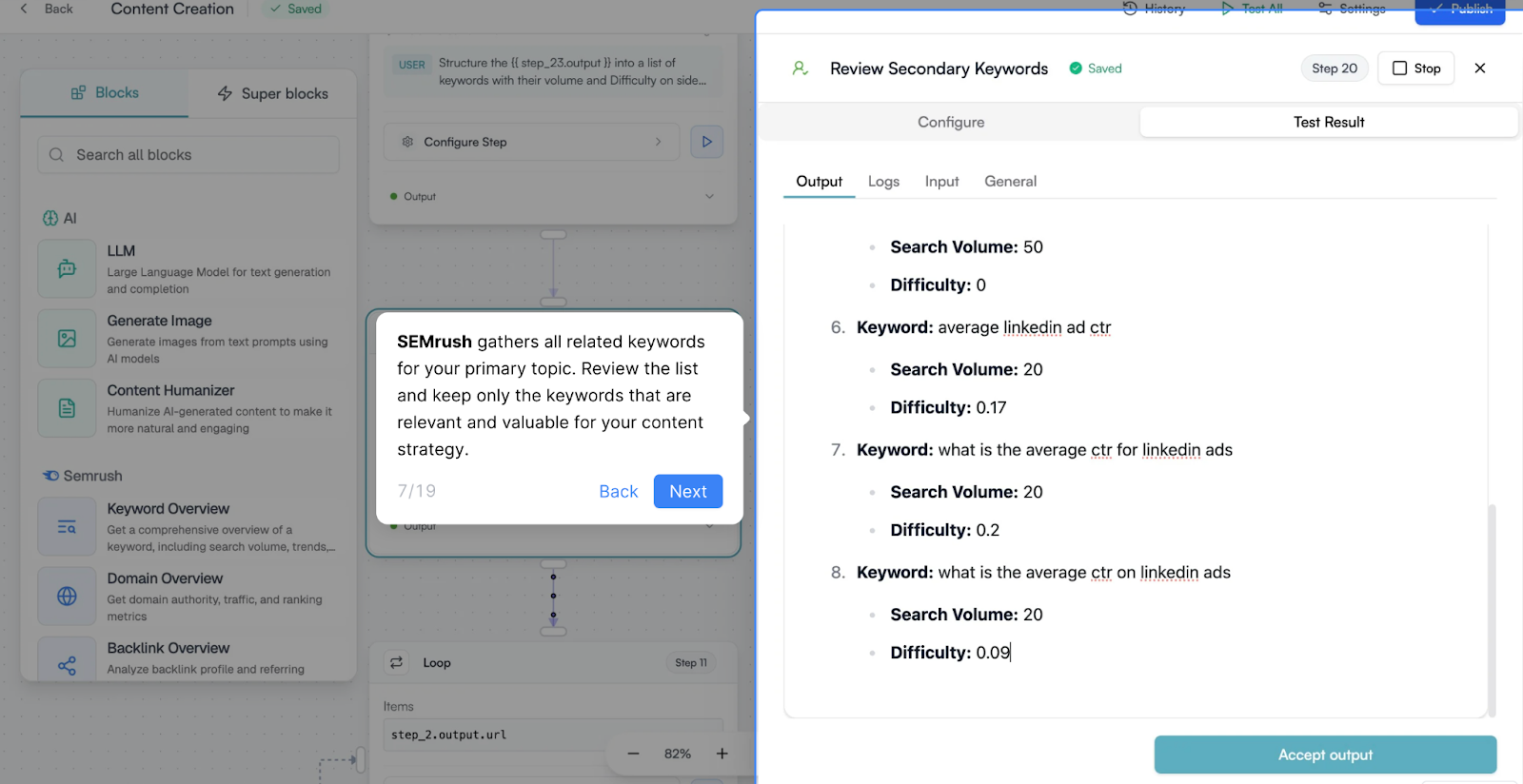
The process was manageable when the only question was "what should we rank for on Google?"
Common breakdowns
- No formalized intake system
- Driven by stakeholder requests and competitor reactions
- Volume-first prioritization
How leading teams do this today
Planning now requires evaluating opportunities across two discovery systems. And those two landscapes don't fully overlap.
Only 10% of ChatGPT's short-tail query results overlap with Google SERPs.
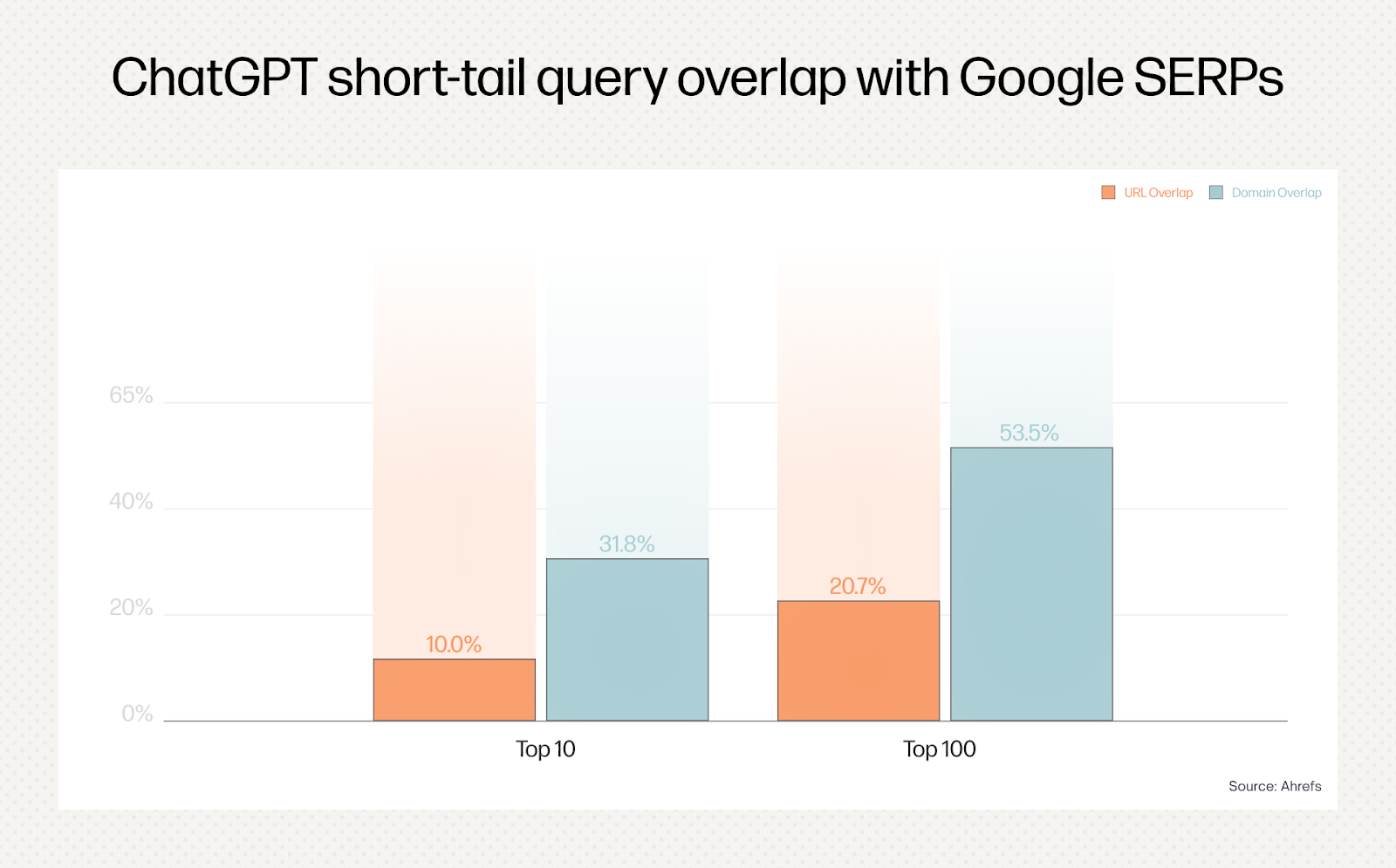
A topic with high search volume might already be dominated by a competitor in AI citations, while an adjacent topic with lower volume might represent an uncontested opportunity in AI discovery.
Teams today must start using centralized planning systems that combine traditional SEO metrics with AI visibility data, scoring topics by composite impact rather than search volume alone.
This also means connecting planning to the company's content architecture, ensuring every new piece strengthens topical clusters and entity relationships.
Once topics are prioritized, the next challenge is translating that strategic intent into something a writer can actually execute on: the content brief.
Content Brief Creation & Alignment
Key questions this process answers:
- What specific audience is this content for, and what's their intent?
- What competitive gaps does this piece need to fill?
- What structural and semantic requirements does this piece need to meet?
How this used to work
A strategist performed SERP analysis, identified target keywords, and handed the writer a document containing a target keyword, a rough outline, and maybe a competitor reference link.
The depth of the brief depended entirely on who created it. Institutional knowledge about the brand, audience, and competitive landscape lived in people's heads, not in the brief itself.
When writers changed, that context was lost. When AI tools were used for drafting, they received none of this context, producing generic outputs that required heavy manual editing.
Common breakdowns:
- Inconsistent brief quality
- Research intelligence loss
- Critical context exists only in individuals' memories
How leading teams do this today
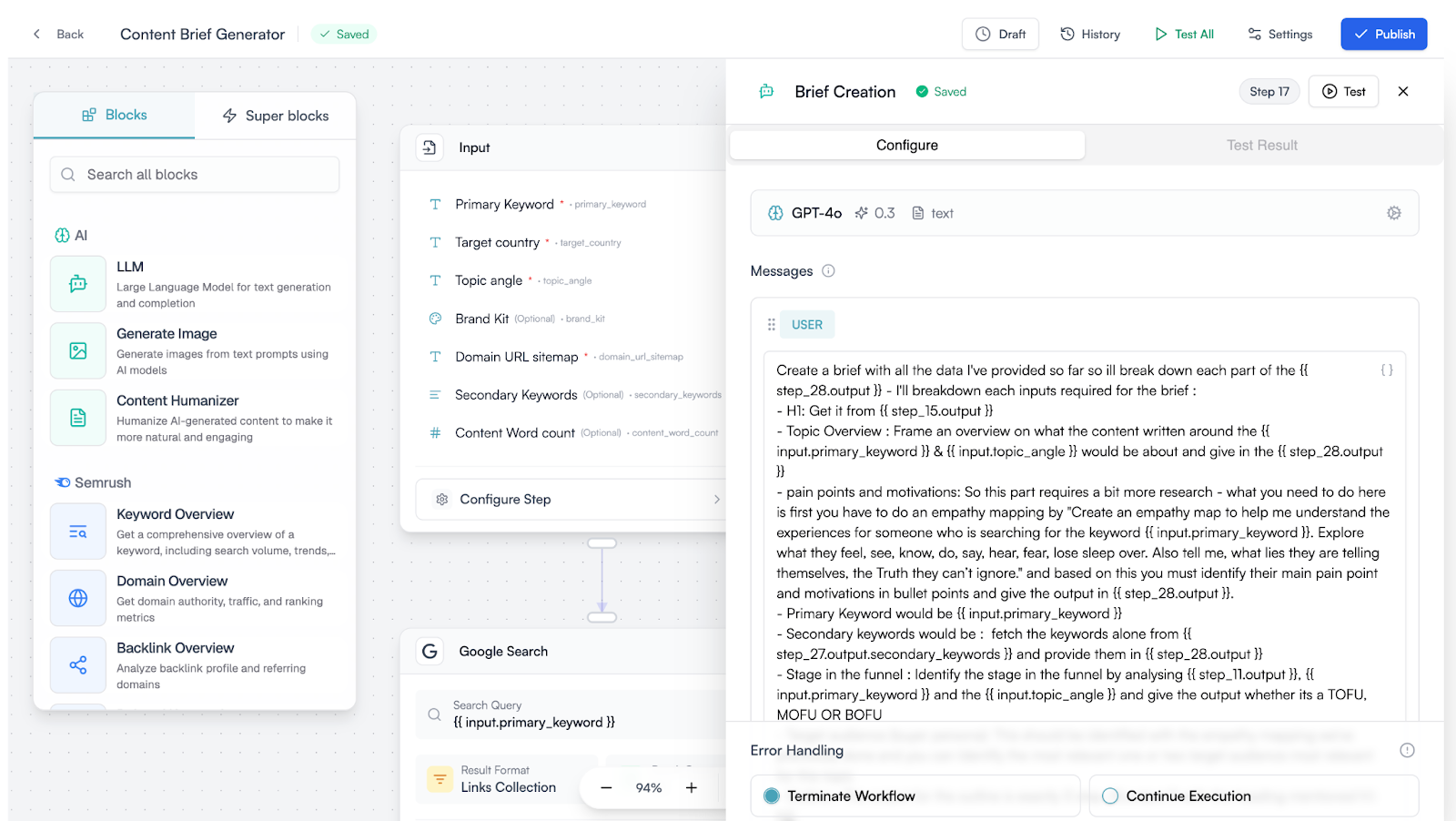
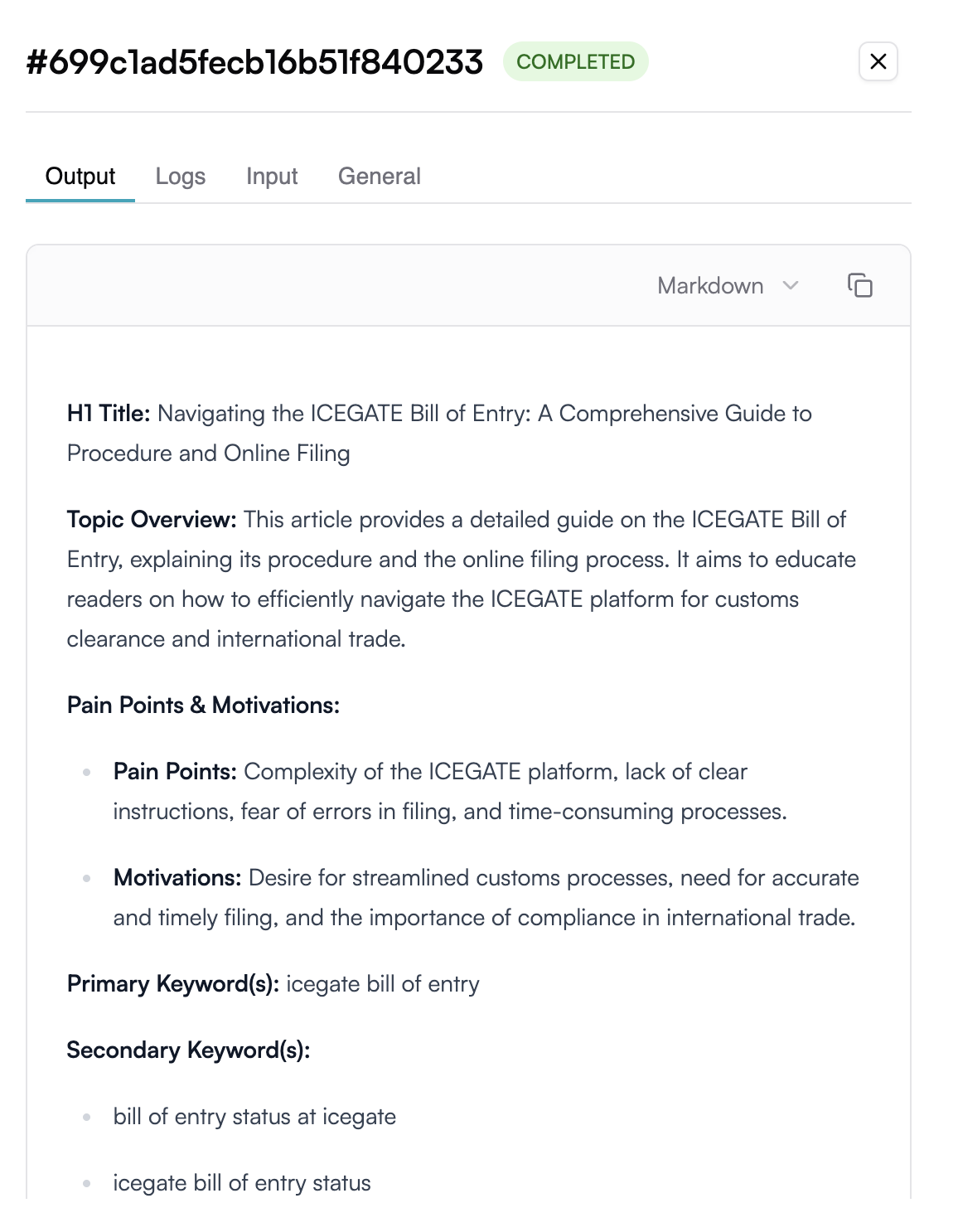
The brief has become an engineered document, not a loose handoff note.
They carry forward the full research context: SERP structure analysis, competitive content gaps, entity and semantic requirements, audience intent mapping, and brand voice guidelines.
Through platforms like Slate, this intelligence is embedded in the brief automatically rather than manually reconstructed by each strategist.
During drafting, it receives the brief's full context (brand rules, competitive positioning, optimization requirements) as structured inputs. The result is outputs that are closer to production-ready rather than generic first drafts.
With a well-structured brief in hand, the focus shifts to turning it into an actual asset. And this is where the complexity of collaboration enters the picture.
Content Production & Collaboration
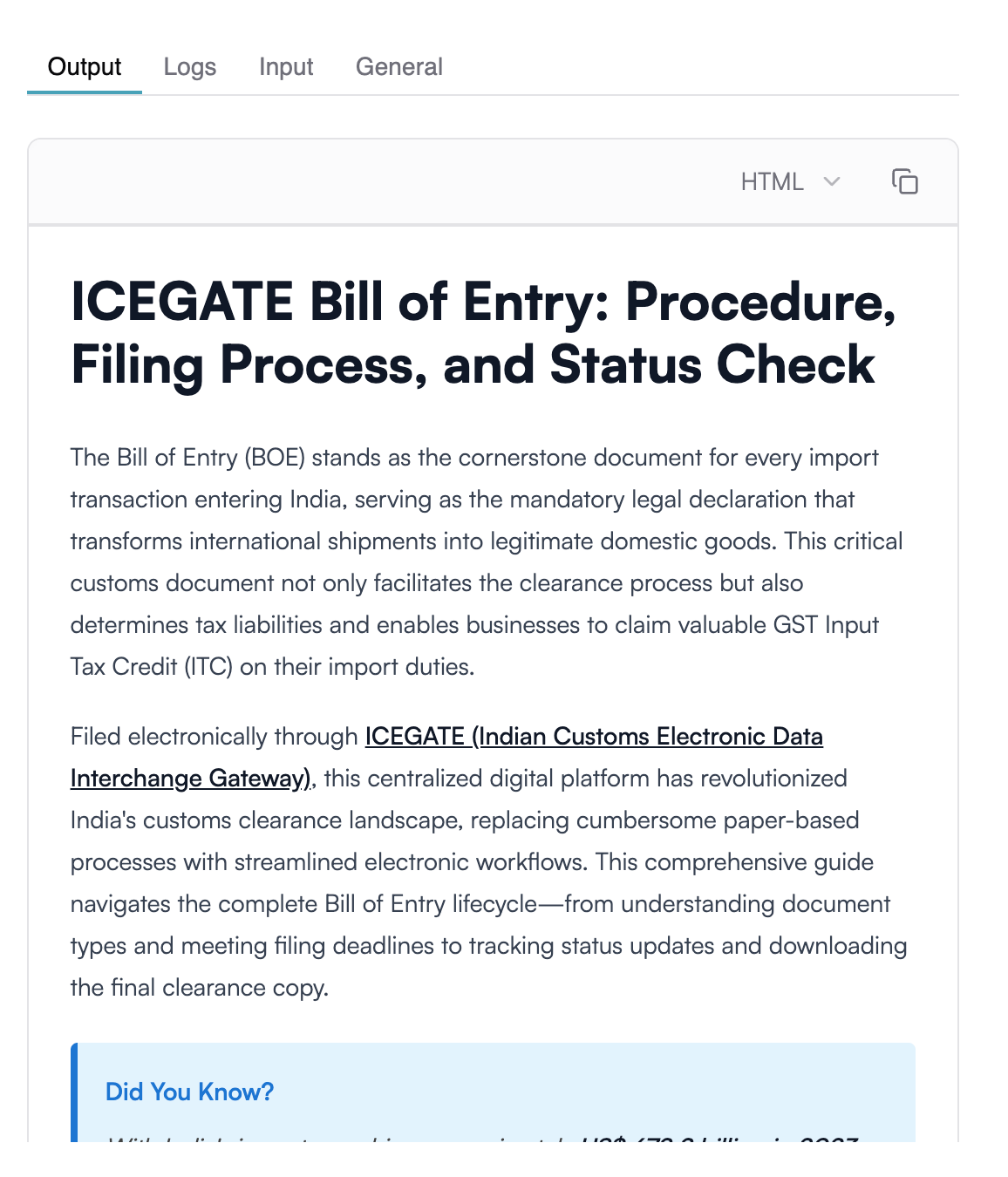
Key questions this process answers:
- Who is responsible for producing this piece, and what's their deadline?
- How do contributors collaborate without losing context?
- Where does the current version of this content live at any given moment?
How this used to work
Content lived in Google Docs. Feedback happened in comments. Version control was a filename convention: "Blog_v3_FINAL_FINAL_reviewed.docx."
Multiple people editing the same piece led to conflicting changes. External writers (freelancers, SMEs) received a brief via email, worked in isolation, and submitted a draft with limited context about what had changed since the brief was written.
Common breakdowns:
- Context loss between research and creation
- Multiple versions circulate simultaneously
- Disjointed contributor workflows
How leading teams do this today
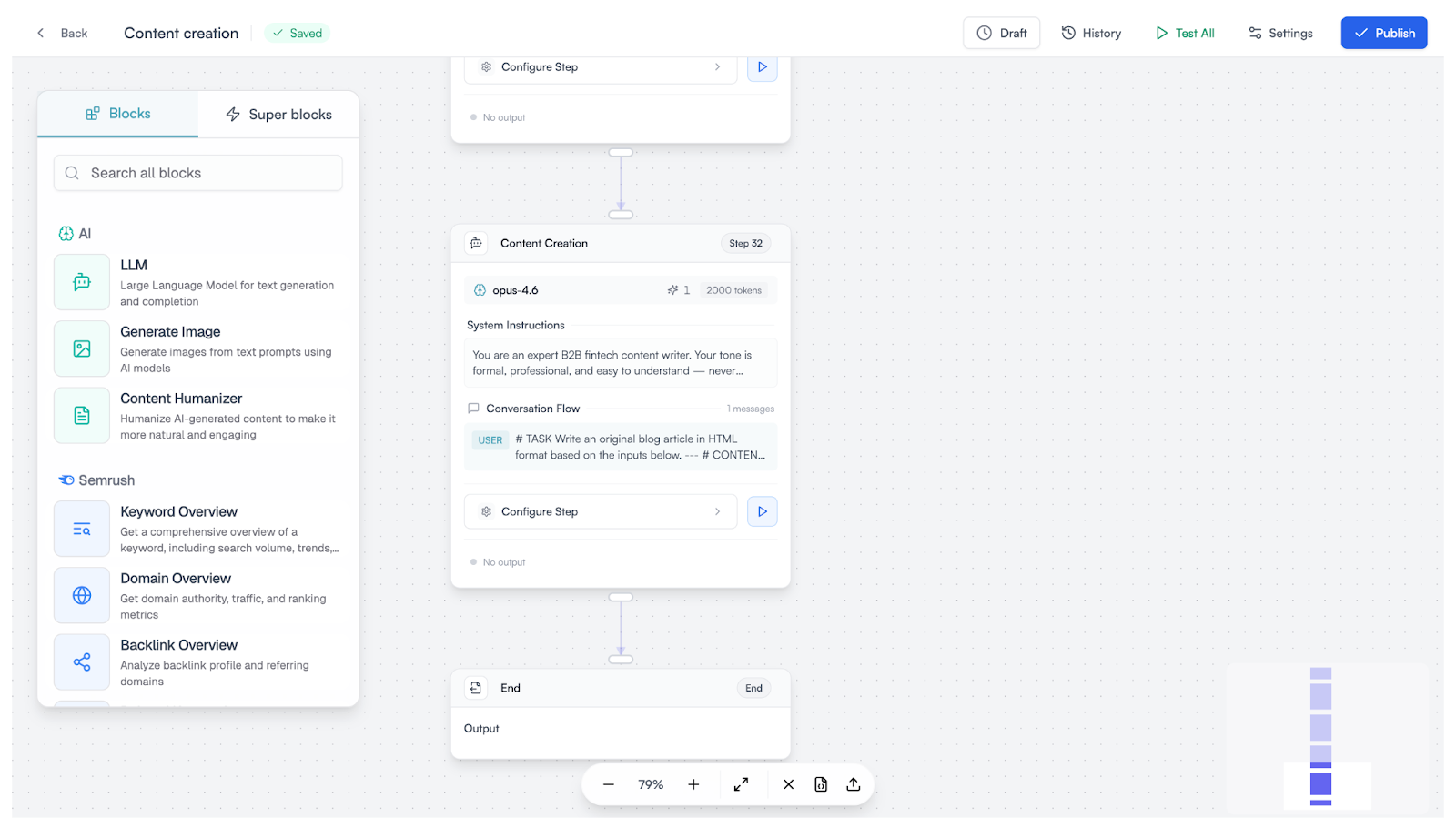
Today, this is done through single-source-of-truth environments where drafting, feedback, and optimization happen in one place.
The content carries its brief, research context, and optimization requirements with it through the production process.
The writing agents work within an environment that surfaces the information they need alongside the draft itself.
This eliminates context loss during handoffs and version confusion across collaborators.
Production generates the raw asset. What happens next, the review and approval cycle, is where many teams experience their most painful bottleneck.
Review, Editing & Approvals
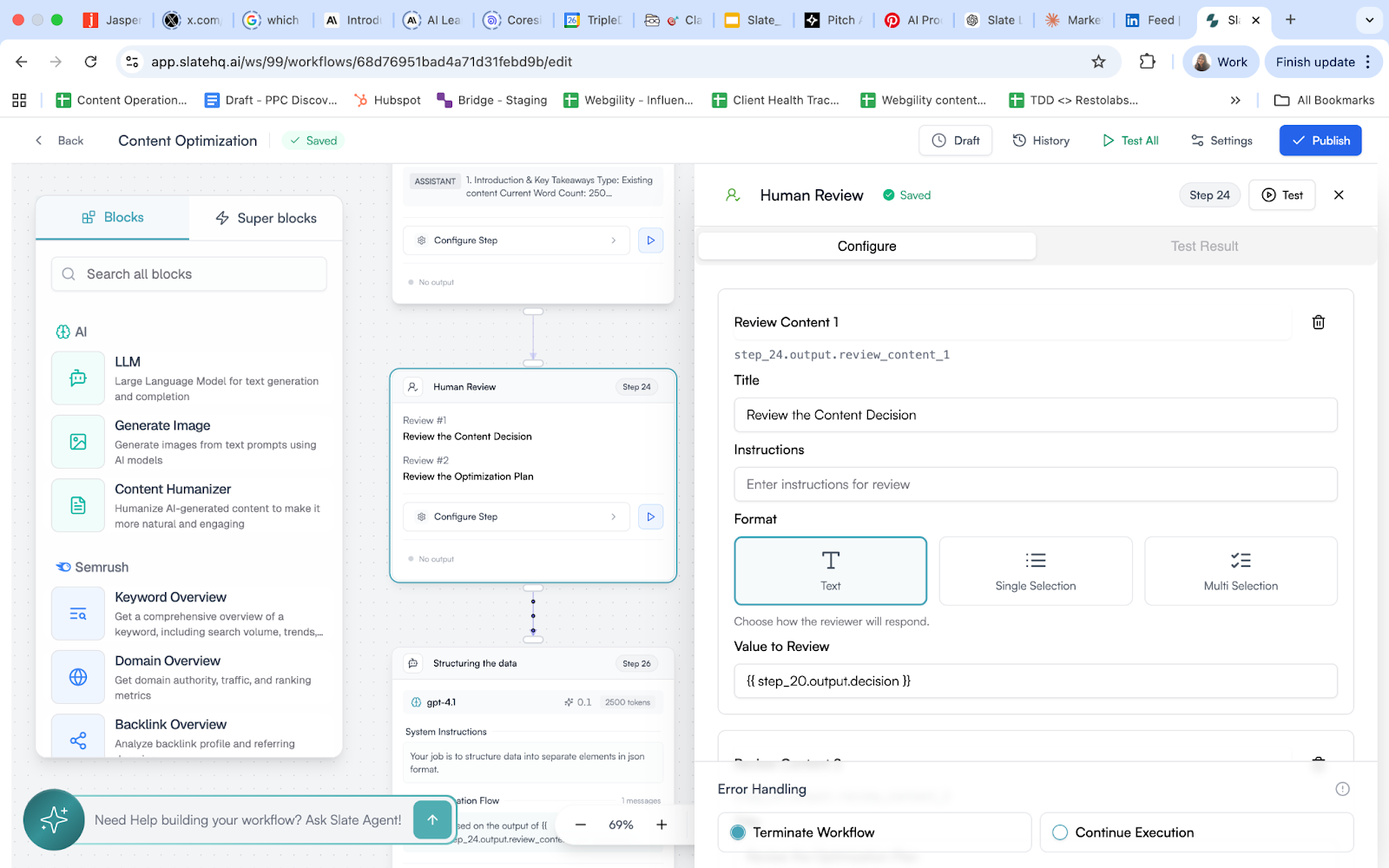
Key questions this process answers:
- Is this content factually accurate, on-brand, and editorially sound?
- Does it meet the SEO and AI optimization requirements defined in the brief?
- Who needs to approve it before it can go live, and what's their turnaround?
How this used to work
The writer submitted a draft. The editor reviewed it. Then it went to a stakeholder (product marketing, legal, VP) for approval.
Each handoff was sequential, meaning a single reviewer holding the draft for three days delayed the entire timeline. There was no defined SLA for review turnaround. Ownership of final approval was ambiguous.
And SEO checks, if they happened at all, were bolted on at the end, triggering rewrite cycles that frustrated everyone.
Common breakdowns:
- Sequential bottlenecks
- Unclear ownership.
- Optimization as an afterthought
How leading teams do this today
Modern content operations platforms bundle editorial, SEO, and stakeholder reviews concurrently, not sequentially.
Each review step has a defined scope (accuracy, brand voice, optimization, compliance). Optimization checks are integrated into the review process itself, not treated as a separate step after editorial sign-off.
Approved content needs to go live. And the publishing step, which seems simple, is often one of the biggest hidden time sinks.
Publishing & Distribution
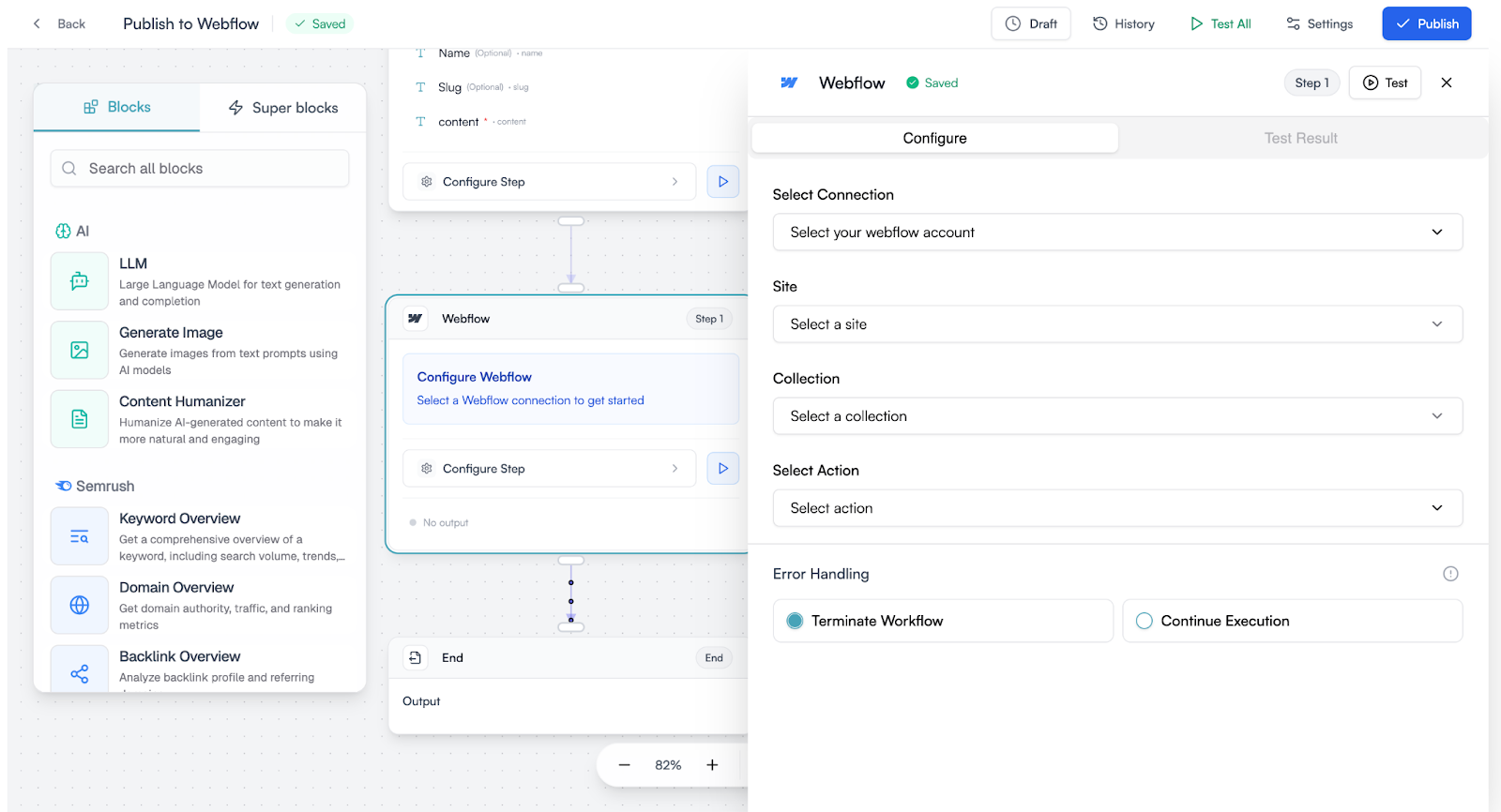
Key questions this process answers:
- Is the content fully formatted, tagged, and linked before it goes live?
- Does the metadata (title tags, descriptions, schema) match the optimization requirements?
- Are internal links configured to strengthen the broader content architecture?
How this used to work
The publishing workflow looked like this:
- Copy content from Google Docs into the CMS
- Reformat headings that didn't transfer cleanly
- Manually add meta titles, descriptions, featured images, categories, tags, and internal links
- Check mobile preview
Publishing a single piece manually took 30-60 minutes of pure formatting overhead. For a team publishing 20+ pieces monthly, that was 10-20 hours of production time, the equivalent of a part-time role dedicated to copy-pasting and reformatting.
For teams needing programmatic pages (comparison pages, integration pages, location pages), the absence of bulk publishing infrastructure was a direct project killer.
Common breakdowns:
- Manual reformatting overhead
- Missed internal linking
- No readiness checks
How leading teams do this today
The creation environment connects directly to the CMS (WordPress, Webflow), so content moves from workflow to published page with formatting and metadata intact.
Internal linking is guided by the content architecture established during planning, not left to individual judgment at publish time.
Teams that need to create pages at scale (hundreds or thousands of templated pages) use spreadsheet-driven publishing interfaces where bulk operations take the same effort as single-page publishing.
The operational focus shifts from "getting content live" to "ensuring content goes live correctly."
Content Optimization for SEO & AI
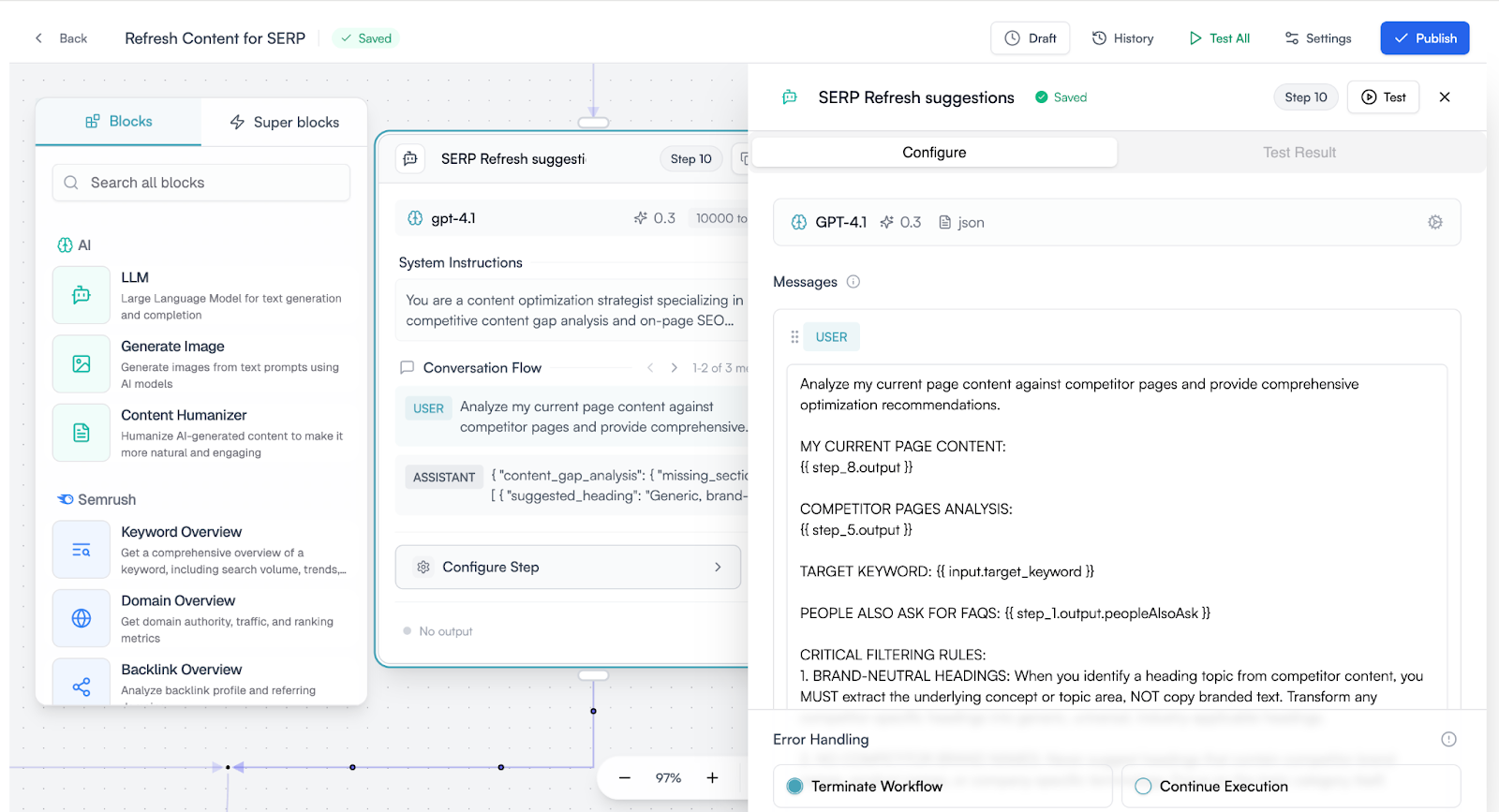
Key questions this process answers:
- Is this content structured for both traditional SERP rankings and AI citation eligibility?
- Does it cover the entities, subtopics, and semantic depth required for topical authority?
- Is the heading hierarchy, FAQ structure, and information architecture optimized for how AI systems extract and present information?
How this used to work
Content was written, reviewed, and finalized. Then someone ran it through an SEO tool and discovered it needed structural changes:
- Missing subtopics
- Incorrect heading hierarchy
- Insufficient entity coverage
This triggered rewrite cycles that produced "Frankenstein content," pieces that had been patched and bolted together rather than built correctly from the start.
The root cause: optimization intelligence lived in a separate tool from the creation environment, so it was always applied retroactively.
Common breakdowns:
- Post-production optimization
- Google-only optimization
- Publish-and-forget
How leading teams do this today
Optimization is embedded into the creation workflow from the beginning.
The research and briefing stages already carry forward SERP structure analysis, entity requirements, and competitive gap data. The drafting environment surfaces optimization signals in real time, not as a post-production audit.
For AI search readiness, this means content is structured with clear, extractable answers, proper heading hierarchy that AI systems can parse, and sufficient topical depth to signal authority.
The distinction between "optimizing for Google" and "optimizing for AI citation" is becoming a design decision made at the brief stage, not a retrofit after publication.
Performance Tracking & Feedback Loops
Key questions this process answers:
- Which content assets are driving traffic, conversions, and pipeline?
- Which pages are declining, and how fast?
- What should we create, refresh, or retire based on performance data?
How this used to work
Teams tracked Google rankings, organic traffic, and perhaps some conversion metrics in GA4 and Search Console. Performance reviews happened quarterly, if at all.
The data lived in analytics tools while the content lived in the CMS and the project management lived in a separate tool entirely. The gap between "this page is declining" and "this page has been updated" was where content decay compounded silently.
Common breakdowns:
- Half the landscape is unmeasured
- No closed-loop learning
- Delayed response to decay
How leading teams do this today
Two critical evolutions have happened here.
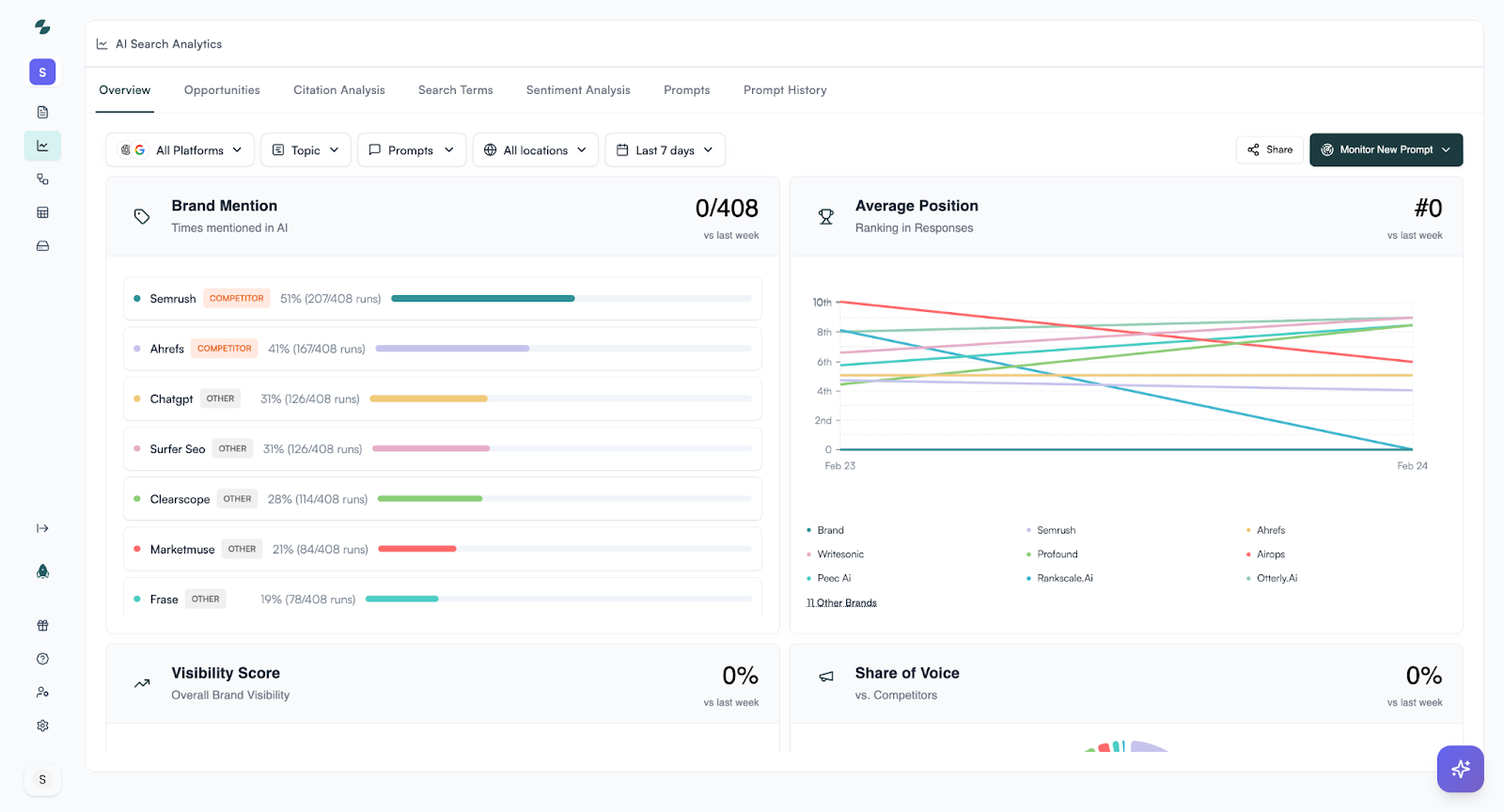
First, measurement now spans both Google and AI platforms. Teams track citation visibility, share of voice in AI answers, and competitive positioning across ChatGPT, Perplexity, Gemini, not just traditional SERP rankings.
Second, performance data is directly connected to action workflows. When a page signals decay (declining rankings, lost AI citations, outdated statistics) the system triggers a refresh workflow rather than generating a report that waits for someone to act on it.
This creates a closed loop: performance intelligence feeds directly back into the planning and prioritization process, making each content cycle more informed than the last.
These seven processes form the operational backbone. But the way teams implement them evolves as the organization matures.
How Content Operations Processes Evolve With Maturity
Not every team implements all seven processes at the same level of sophistication.
Content operations maturity describes how systematized, repeatable, and data-driven a team's processes are:
The jump from "defined" to "systemized" happens when intelligence starts flowing between stages automatically:
- A brief that auto-populates with SERP data instead of requiring manual research
- An optimization check that runs during drafting instead of after
- A publish workflow that carries metadata from the brief instead of asking someone to re-enter it
The jump from "optimized" to "AI-ready" happens when the team designs for both discovery systems natively, rather than bolting AI considerations onto existing processes:
- Planning evaluates AI citation opportunity alongside search volume
- Briefs include structural requirements for AI extractability
- Performance tracking covers share of voice across LLMs
The entire system, from the first planning decision to the last refresh trigger, accounts for how content gets discovered in 2026.
Where Content Operations Processes Break Down
The real cost of broken content operations isn't any single process failing. It's the compounding effect of broken handoffs between processes:
- Research intelligence lost at the briefing handoff means post-publication optimization
- Post-publication optimization means delays
- Delays mean the content is already aging by the time it's live
- Aging content means decay
- Decay means refresh
…which starts the research cycle again, without the original context
Each break creates downstream work that multiplies.
Here's how these process failures compound into visibility losses:
Teams usually diagnose these as talent problems ("we need better writers"), strategy problems ("we need better keywords"), or tool problems ("we need a better SEO platform").
But the root cause is almost always operational: the processes that connect research to creation to publishing to measurement are either missing or broken. Fixing the process fixes the output.
For a deeper look at these pain points, see our guide on content operations pain points.
How to Improve Your Content Operations Processes
Start with content architecture, not content production.
The first step isn't producing more content. It's defining the structural blueprint.
This means:
- Establishing content pillars tied to the product's value propositions
- Mapping content types to funnel stages
- Defining audience segments
- Creating the internal linking logic that connects it all
Without this foundation, every operational improvement is built on sand.
Codify approval workflows with clear ownership.
Define who reviews for what (accuracy, brand voice, optimization, compliance), set turnaround SLAs, and run reviews in parallel rather than sequentially. The goal is to make the approval process predictable and time-boxed, not informal and open-ended.
Build lightweight SME integration loops.
Getting subject matter expert input into content is a persistent challenge. Instead of expecting SMEs to write, build structured 15-minute interview templates, async video input options, and briefs that pre-populate with research so SME time is spent on insight.
Connect measurement to action.
Performance tracking is only valuable if it triggers action.
Build workflows where:
- Declining performance signals automatically initiate refresh processes
- AI visibility gaps inform the next planning cycle
- Content ROI is measured against pipeline influence
The gap between "we know this page is declining" and "someone has actually updated it" is where most content decay happens. Closing that gap operationally is worth more than any single piece of new content.
Invest in a connective layer, not more point tools.
Most teams already have an SEO tool, a project management tool, an authoring tool, and a CMS.
What they don't have is a platform that connects these stages, passing intelligence from research to briefing to creation to optimization to publishing to measurement and back to planning.
This is the connective layer that transforms disconnected processes into a coherent content operations system. For more on what this looks like in practice, see our breakdown of the benefits of a content operations platform.
Conclusion
The seven content operations processes covered in this article aren't unique to large teams or enterprise budgets. They're the standard lifecycle that any content team follows.
The question is whether those processes are ad-hoc or systematic, disconnected or connected, manual or automated.
High-performing teams win by systematizing these processes. They ensure that:
- Intelligence flows from one stage to the next
- Every cycle is faster and smarter than the previous one
- The system is designed for visibility across both traditional search and AI platforms
Slate is built to support and execute every stage of this lifecycle, from research and planning through creation, optimization, publishing, measurement, and refresh.
This is the content operations platform that serves as the connective layer between these stages, built for marketing teams of today.
FAQs
What are content operations processes?
Content operations processes are the repeatable workflows that govern how content moves from idea to published asset to measurable outcome. They include planning, briefing, production, review, publishing, optimization, and performance tracking, and the handoffs that connect each stage.
How many processes should a content ops team have?
Most mature teams operate around six to seven core processes that map to the content lifecycle. The number matters less than how well they're connected. Seven well-integrated processes outperform twenty disconnected ones.
How are content operations processes different from workflows?
A workflow is the specific sequence of tasks within a single process (e.g., the steps to review and approve a draft). A content operations process is broader: it defines what needs to happen, who's responsible, what the inputs and outputs are, and how it connects to the processes before and after it.
Do small teams need formal content operations processes?
Small teams benefit most from defined processes because they have the least capacity for rework. When a three-person team loses research context at the briefing handoff, that rework consumes a disproportionate share of their available time. Even lightweight process documentation reduces waste significantly.
What is the best platform for managing content operations?
The best platform connects the full content lifecycle (research, creation, optimization, publishing, measurement, and refresh) in a single system. Platforms like Slate are purpose-built for this, integrating visibility tracking across both Google and AI platforms with content production workflows, brand governance, and automated refresh capabilities.